
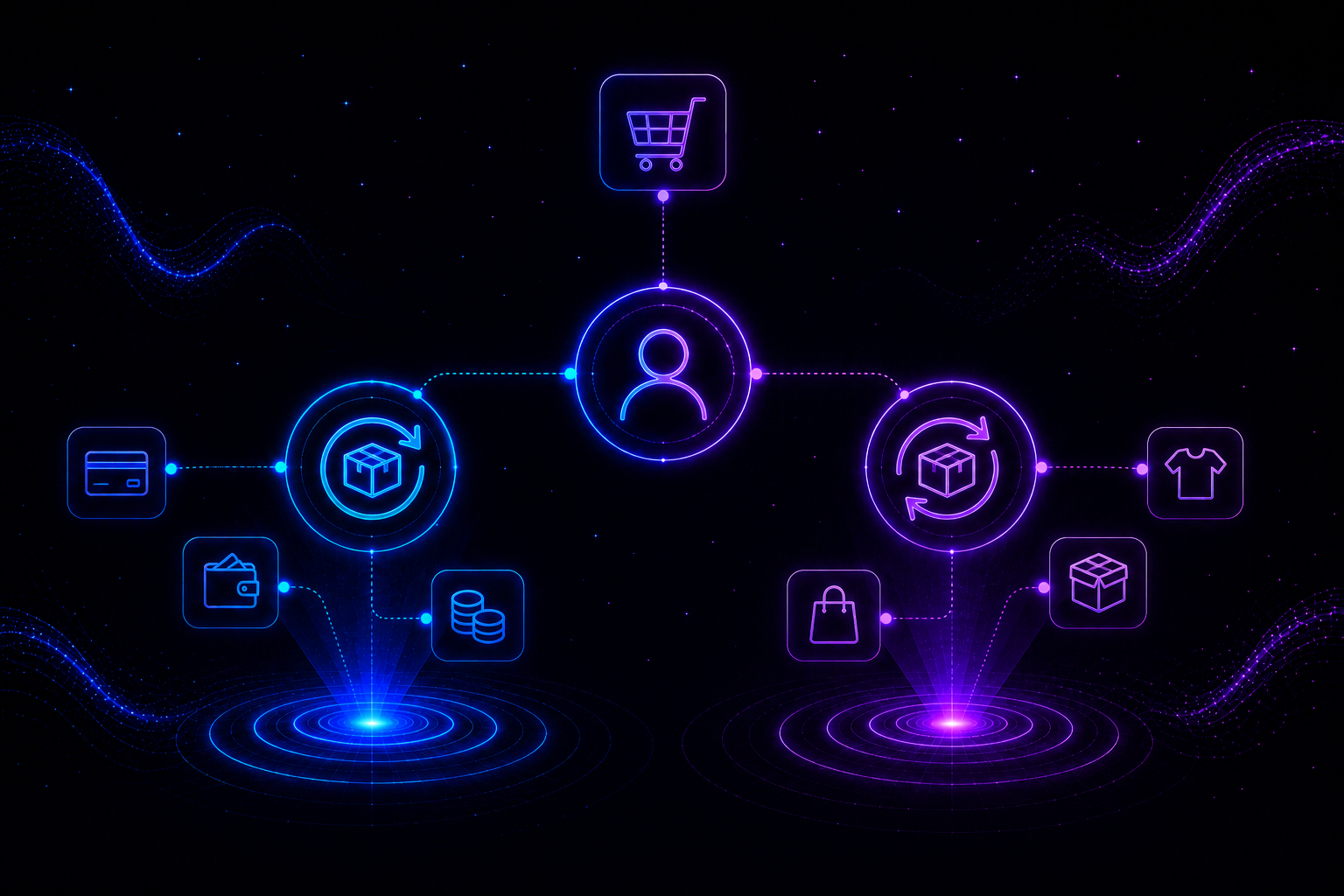
Summarize with AI
Key Takeaways
- Replacing multiple disconnected support tools with a unified helpdesk removes the tab-switching that delays refund and exchange resolution for agents.
- AI agents resolve refund status queries automatically, deflecting up to 60% of return-related tickets without any human agent involvement.
- A self-service exchange workflow captures customer details upfront, checks policy eligibility automatically, and initiates replacements without agent intervention for standard cases.
- Automated refund status updates at submission, processing, and completion eliminate the follow-up contacts that double your support ticket volume.
- AI analytics on return ticket data reveal which products and SKUs are driving the most refund volume so teams can reduce it at the source.
Refund and exchange requests are among the most repetitive, high-volume tickets in customer support, yet most teams still resolve them manually, one at a time.
For D2C brands, Shopify merchants, B2B SaaS companies, and SMBs, return-related contacts represent 20 to 30% of total monthly support volume. Each manually handled refund ticket costs up to $12 in agent time, and that cost scales directly with order volume.
The experience that creates that cost usually looks like this:
I ordered a jacket as a birthday gift for a friend → received the wrong size → messaged the brand on Instagram → got an automated reply with a return form link → filled it out → received a reply 3 days later saying exchanges were not available for sale items → asked for a refund instead → waited another 48 hours with no update → followed up twice → refund finally processed 9 days after my first message.
One return request. Nine days. Five contacts. The customer lost, and a negative review posted the same afternoon.
Support teams handling refund and exchange requests at scale run into the same problems every day:
- Refund and exchange requests land in the same queue with no workflow separation, so agents apply the wrong process
- Order lookup happens manually in a separate tab before the agent can even begin to respond to the request
- Customers follow up after 24 hours with no update, turning one ticket into two or three repeat contacts
- Peak sale and post-holiday periods spike return volumes 3 to 4 times overnight, and the same team is expected to absorb it
You will learn how to automate refund requests in customer support, separate refund and exchange workflows, reduce follow-up contacts, and handle return volume at scale without expanding your support team.
A Quick Comparison: Manual vs AI-Automated Refund and Exchange Handling
Why Refund and Exchange Requests Are Hard to Manage at Scale
1. Volume grows with orders, but workflows do not
Most support teams build their refund process when order volumes are manageable. A D2C brand processing 300 monthly orders can handle returns without much friction.
The same team processing 3,000 orders is in a different situation. Ecommerce customer service workflows that worked at small scale become the bottleneck at growth stage. Return tickets do not increase gradually: they spike in clusters post-sale, post-holiday, and post-product launch, arriving faster than the queue can absorb them.
2. Refunds and exchanges need separate workflows but share the same queue
A refund reverses a payment. An exchange checks inventory, initiates a dispatch, and coordinates with logistics. They look identical in the queue but need completely different resolution paths.
When both request types land in the same undifferentiated queue, agents apply the wrong process or escalate unnecessarily, creating a return support backlog that grows faster than the team can clear it. I returned a damaged hoodie and asked for a replacement → the agent processed a refund → no replacement was dispatched → I followed up three days later → the agent restarted from scratch → 9 days to resolve what should have taken 20 minutes.
3. Manual order lookups slow every resolution before it starts
Before responding to any return request, an agent must confirm the order, check payment status, verify the purchase date against the return window, and confirm item eligibility. When the helpdesk and order system are separate tools, this adds 5 to 10 minutes per ticket.
For a team handling 200 return tickets a week, that is 20 to 35 agent-hours spent retrieving information instead of resolving problems. Reducing repetitive support questions of this type is what separates a support operation that scales from one that does not.
How to Automate Refund and Exchange Requests in Customer Support with AI?
1. Use AI agents to resolve refund status queries automatically
Most refund contacts are information requests, not judgment calls. When AI is connected to live order and payment data, it resolves the majority of these without any agent involvement.
Common queries AI resolves automatically:
- "Has my refund been processed?" answered using live payment gateway data with no agent required at any step
- "When will my replacement ship?" resolved using dispatch records and carrier tracking pulled in real time
- "Does my item qualify for return?" checked against policy documents and the customer's purchase date automatically
- "Why hasn't my refund appeared in my account?" answered with accurate payment processing timeline data
- "Can I exchange this instead of returning it?" routed to the exchange workflow or a human agent based on eligibility
2. Build self-service workflows for standard exchange requests
Customers reaching out for an exchange already have what an agent would need: order number, item received, and preferred replacement. A self-service flow captures this upfront and processes standard cases automatically without any human step.
What a self-service exchange flow handles:
- Eligibility checks against return policy windows run automatically before any agent sees the incoming request
- Replacement dispatch initiated for in-policy exchanges without human involvement at any stage of the process
- Inventory confirmation checked in real time so customers know availability before the exchange is confirmed
- Immediate confirmation sent to the customer the moment the exchange is initiated, removing follow-up contacts
- Out-of-policy cases routed to an agent with all submitted customer details pre-populated, so nothing is re-entered
3. Route complex refund cases to agents with full context already attached
Not every refund can be automated. High-value orders, policy exceptions, and disputed damage cases require human judgment. The difference is whether the agent receives the case with context or has to reconstruct it.
What agents receive when AI escalates a complex refund:
- Full conversation history from every channel the customer used, compiled into one view before the agent opens the ticket
- Order status and payment details pulled directly from the order management system with no manual lookup required
- Return policy eligibility already verified so the agent starts with a decision to make, not a lookup to run
- Sentiment flag indicating customer frustration level so the agent can calibrate their response before they reply
- Suggested next action from the AI copilot based on similar past cases and resolution outcomes from the team
4. Automate refund and exchange status notifications across every channel
Most follow-up contacts happen because customers hear nothing after submitting a return. Proactive automated notifications sent at key stages remove the silence that generates these repeat contacts without any agent involvement.
Notification triggers that eliminate follow-up tickets:
- Request received confirmation sent immediately after submission with a reference number and clear resolution timeline
- Processing update sent when the refund reaches the payment gateway stage so customers know progress is happening
- Completion confirmation with the exact refund amount and expected bank processing time sent on the same day
- Exchange dispatch alert with carrier name and tracking number sent the moment the replacement order ships
- Delay notification sent proactively when processing runs past the stated timeline, with an updated estimate included
5. Connect AI to your knowledge base to answer return policy questions instantly
Policy questions generate a large share of refund contacts. When AI is connected to a current knowledge base, it resolves these before a ticket ever reaches the agent queue.
Return policy queries AI handles directly from the knowledge base:
- "What is your return window?" answered with the exact policy terms and applicable dates based on the customer's order
- "Can I return a sale item?" checked against the current policy and the customer's specific purchase category automatically
- "How long does a refund take?" answered with the accurate processing timeline based on the payment method used
- "Do I need to send the item back first?" clarified from the policy with the next steps outlined in the same message
- "What is your exchange policy?" explained with eligibility criteria and specific steps pulled from the knowledge base directly
How to Reduce Refund and Exchange Ticket Volume Before It Builds
1. Set clear return policies customers can find without contacting support
A customer who cannot find your return policy will contact support to ask about it. Reducing this contact starts with visible, plain-language policy placement at every post-purchase touchpoint the customer encounters.
Where to place return policy information:
- Product pages with a visible return window summary near the add-to-cart button, not buried in a footer link
- Order confirmation emails with a plain-language return and exchange summary and a direct link to the full policy
- Checkout page with the return window stated clearly before payment is confirmed, so it is not a surprise afterward
- Post-purchase message via WhatsApp or SMS with a one-line return policy summary sent within 24 hours of delivery
- Customer account page with a direct link to the FAQ and return portal so customers can self-serve without opening a ticket
2. Send proactive refund and exchange status updates before customers follow up
A refund that takes 5 business days generates follow-up contacts on day 2, day 3, and day 4 when customers hear nothing in between. Automating refund and exchange status updates at every key stage eliminates most of this volume before it forms.
The update points that remove follow-up contacts:
- Submission confirmation sent immediately with a reference number, timeline, and what happens next stated clearly
- Processing update sent when the refund reaches the payment gateway so customers know something is actively happening
- Completion confirmation with the exact refund amount and expected bank processing time sent on the day of resolution
- Exchange dispatch notification with tracking number and estimated delivery date sent the moment the replacement ships
- Delay alert sent proactively if processing runs long, with a revised timeline so customers do not need to follow up
3. Use AI analytics to find which products are generating the most returns
High return volume is a product signal, not only a support problem. The data sitting inside refund tickets tells merchandising, quality, and product teams what to fix before the next order cycle generates the same tickets.
What AI return analytics reveal:
- Top returning SKUs with the most common return reason per product identified automatically from resolved ticket data
- Channel breakdown showing which support channels generate the highest refund volume and longest average resolution time
- Repeat contact patterns from the same customers for the same product category, signaling a recurring fit or quality issue
- Support conversations as product insights that reduce return volume at the source rather than just managing the queue
- Resolution time by return type showing whether refunds or exchanges take longer and where the workflow bottleneck sits
How QuantumDesk Helps Automate Refund and Exchange Requests
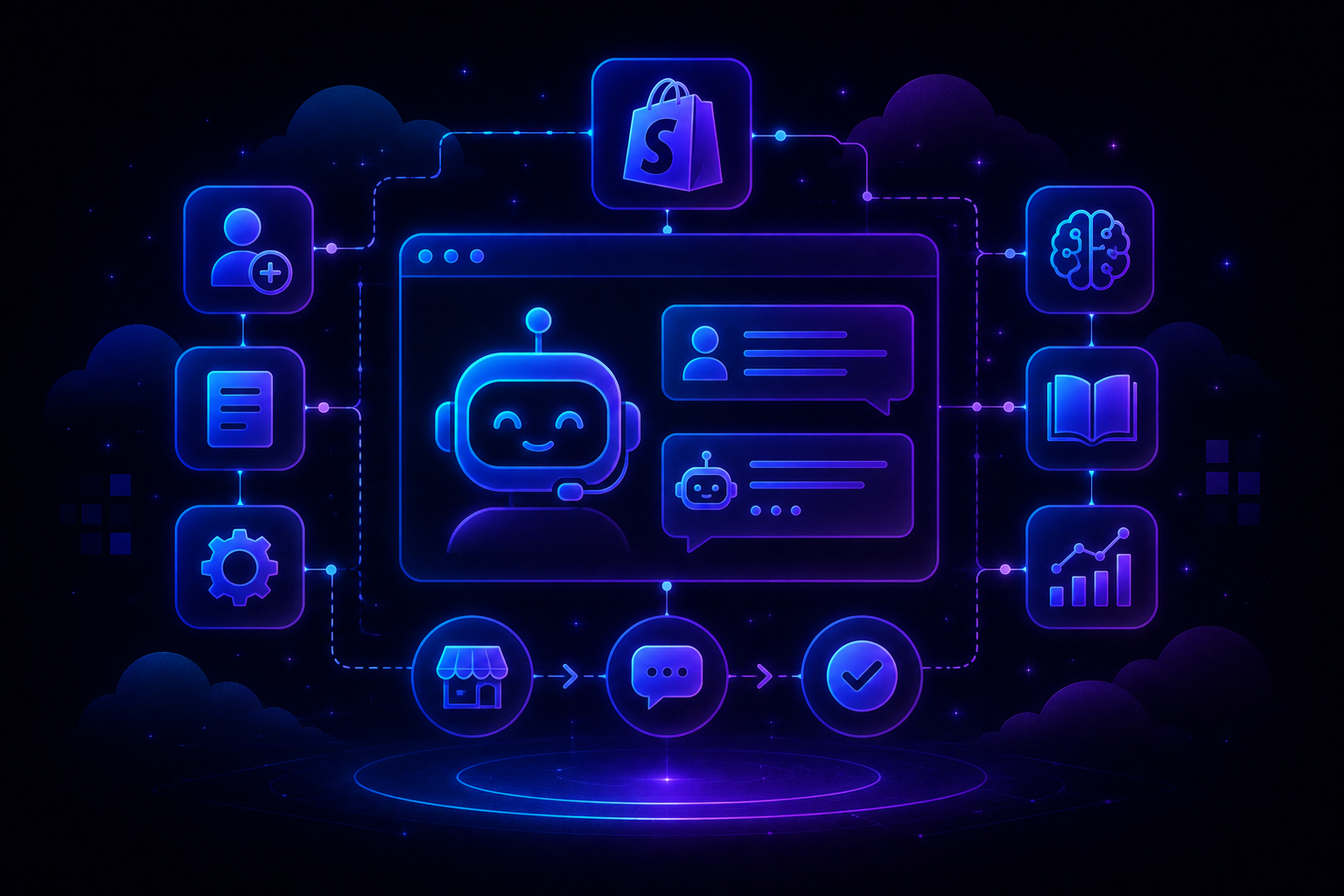
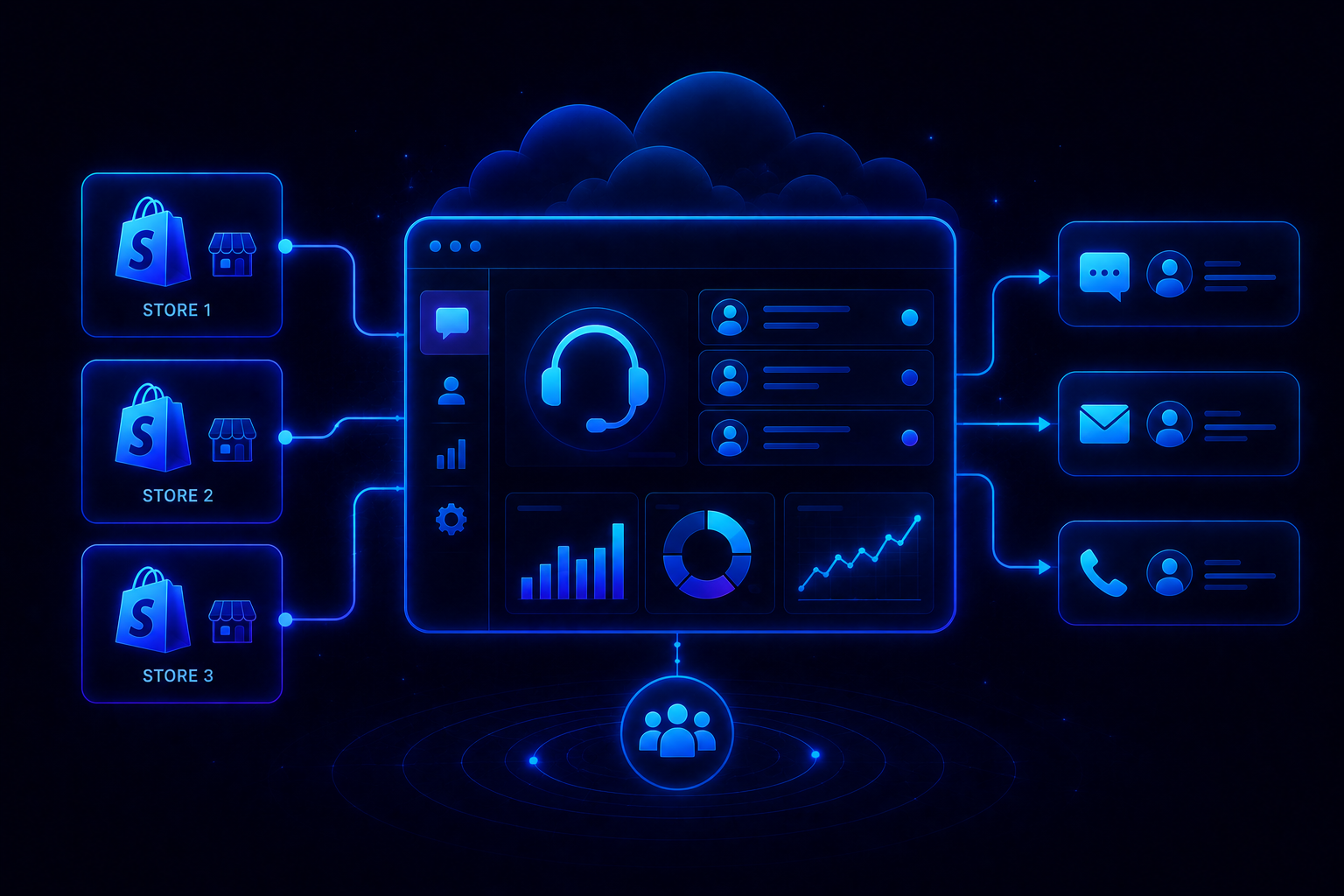
QuantumDesk is an AI-native customer service platform built for D2C brands, Shopify merchants, B2B SaaS teams, and SMBs that manage high refund and exchange volumes across multiple support channels.
Rather than routing every return request to a human agent, QuantumDesk resolves the ones that can be automated and escalates the ones that cannot with full order context already attached. For Shopify brands, order history, payment status, and customer profile pull directly into every support conversation without an agent opening a second tab. This is where the ai native customer service benefits are most visible: the intelligence and the order data live in the same platform from day one, not connected after the fact.
Administrators track AI resolution rates on return-related tickets, monitor escalation patterns, and use customer satisfaction metrics on post-return interactions to continuously improve how automated resolutions are performing across the team.
Key Capabilities of QuantumDesk
- Quantum AI resolves refund status queries and return policy questions automatically using live order and payment data
- AI-curated inbox separates refund requests from exchange requests and flags priority cases before an agent opens the queue
- Quantum AI Copilot surfaces order details, conversation history, and suggested next actions for every escalated refund case
- Native Shopify integration pulls order and customer data directly into the support conversation with no tab-switching required
- Admin analytics tracks AI resolution rates, escalation patterns, and return ticket volume by channel and product category
Ready to see how it works? Book a demo to explore QuantumDesk for your team.
Frequently Asked Questions
1. What is the fastest way to automate refund requests in customer support?
Connecting AI to live order and payment data lets it resolve refund status queries instantly without agent involvement, handling most standard return contacts automatically in under 30 seconds.
2. Can AI handle exchange requests without human agents?
AI automates standard exchange requests when eligibility is clear. Complex cases, policy exceptions, and high-value orders are routed to agents with full context and order details already pre-loaded.
3. Why do refund and exchange requests need separate workflows?
Refunds and exchanges follow different resolution paths. Mixing them in one queue causes agents to apply the wrong process, creating delays, repeat contacts, and preventable escalations that extend resolution time significantly.
4. How do proactive status updates reduce refund ticket volume?
Customers follow up when they hear nothing after submitting a return request. Sending automated updates at submission, processing, and completion eliminates the uncertainty that generates most follow-up contacts.
5. How does AI analytics help reduce return volume over time?
AI identifies which SKUs generate the most return requests and the top reasons per product. Teams use this data to fix sizing, description, or quality issues at the source before the next order cycle.




.avif)