Summarize with AI
Key Takeaways
- QuantumDesk is the best overall pick for small businesses, resolving order, billing, and support queries automatically across every channel without a bolted-on AI add-on.
- Tidio leads for lean SMBs and small ecommerce stores, offering zero-coding rapid setup that scrapes your website or FAQ docs instantly.
- Freshdesk is the strongest value and ticket-routing pick, with Freddy AI providing text summarization, auto-triaging, and canned response suggestions.
- Gorgias remains the top choice for Shopify-based stores, automatically processing returns and order tracking through deep Shopify macro automations.
- The most important buying consideration is whether the AI executes multi-step actions like returns and refunds, not just answers generic FAQ questions.
Small businesses field the same billing and shipping questions daily, and most tools weren't built for AI automation on a tight budget. I tested 10 options built for small teams.
It's built for lean ecommerce owners and budget-conscious teams in Shopify, HubSpot, or Zoho who need AI that resolves tickets, not just routes them. See our best customer support software for small business guide for more.
This guide breaks down what each tool resolves versus deflects, where AI-native platforms like QuantumDesk outperform legacy helpdesks, and how to pick the right fit for your budget.
Quick Tabular Comparison of the Top AI Customer Service Software for Small Businesses in 2026
How Did We Choose These 10 AI Customer Service Software for Small Businesses?
I shortlisted these 10 tools by testing each one against real small-business support workflows instead of relying on vendor claims about automation depth or pricing. For a broader field comparison, see our best help desk software for small business guide.
- Verified action execution by testing whether each tool could complete returns, refunds, and ticket routing, not just draft a reply.
- Evaluated AI accuracy by testing billing and policy questions to check for hallucination risk across real conversations.
- Reviewed verified ratings on G2 and Capterra, filtering for small-business and solo-owner feedback rather than enterprise reviews.
- Read Reddit and small-business community threads to see which tools owners actually kept running past the free trial.
- Compared channel coverage across web chat, email, WhatsApp, and social, since small-business support rarely runs through one channel alone.
- Benchmarked pricing models against typical small-business ticket volume to flag tools that get expensive fast as usage grows.
In-Depth Review of the Best 10 AI Customer Service Software for Small Businesses in 2026
1. QuantumDesk – Best AI-Native Customer Service Platform for Small Businesses

QuantumDesk is an AI-native customer support platform built for small businesses that want AI resolving tickets from day one instead of paying for a seat-based helpdesk that scales cost faster than headcount.
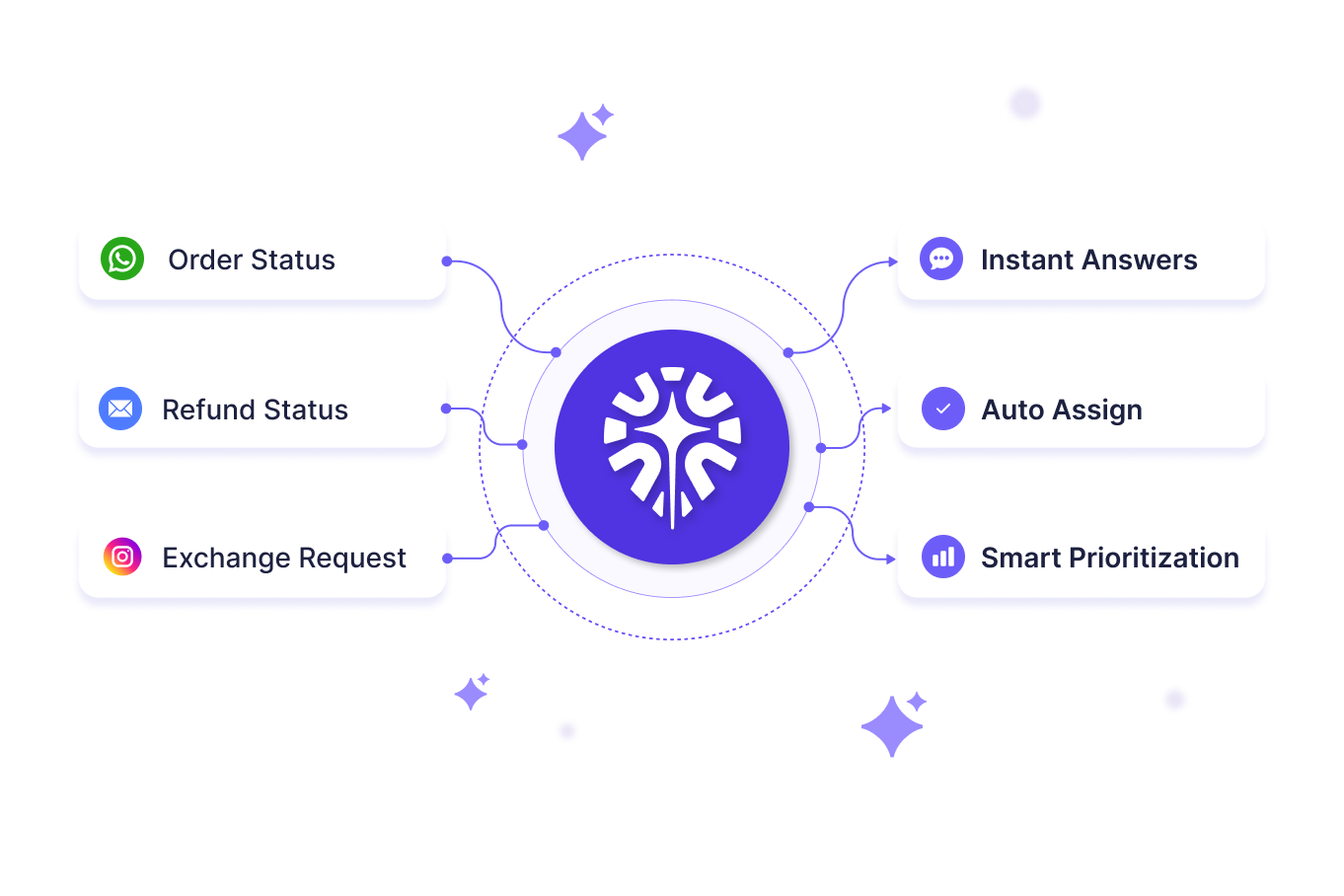
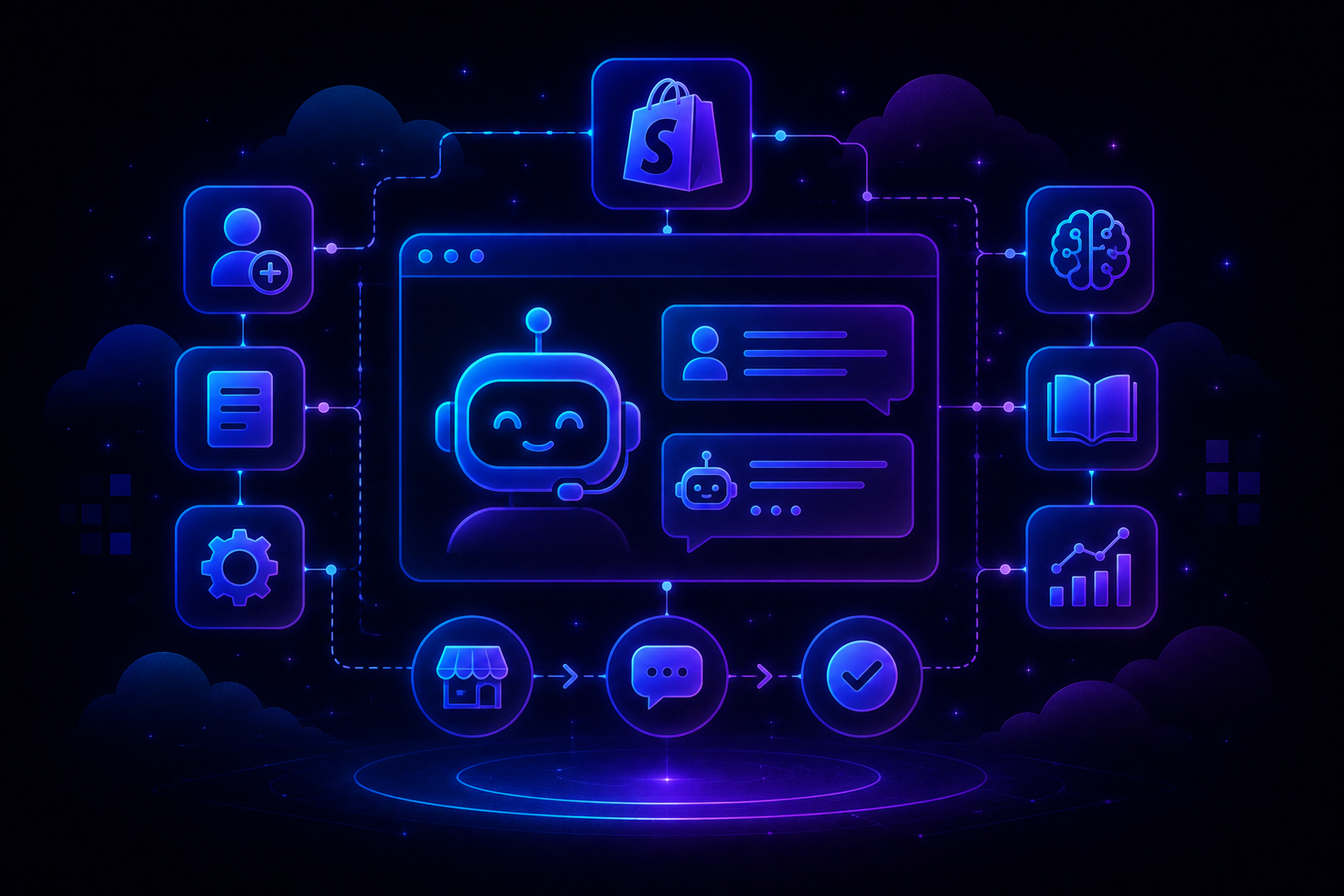
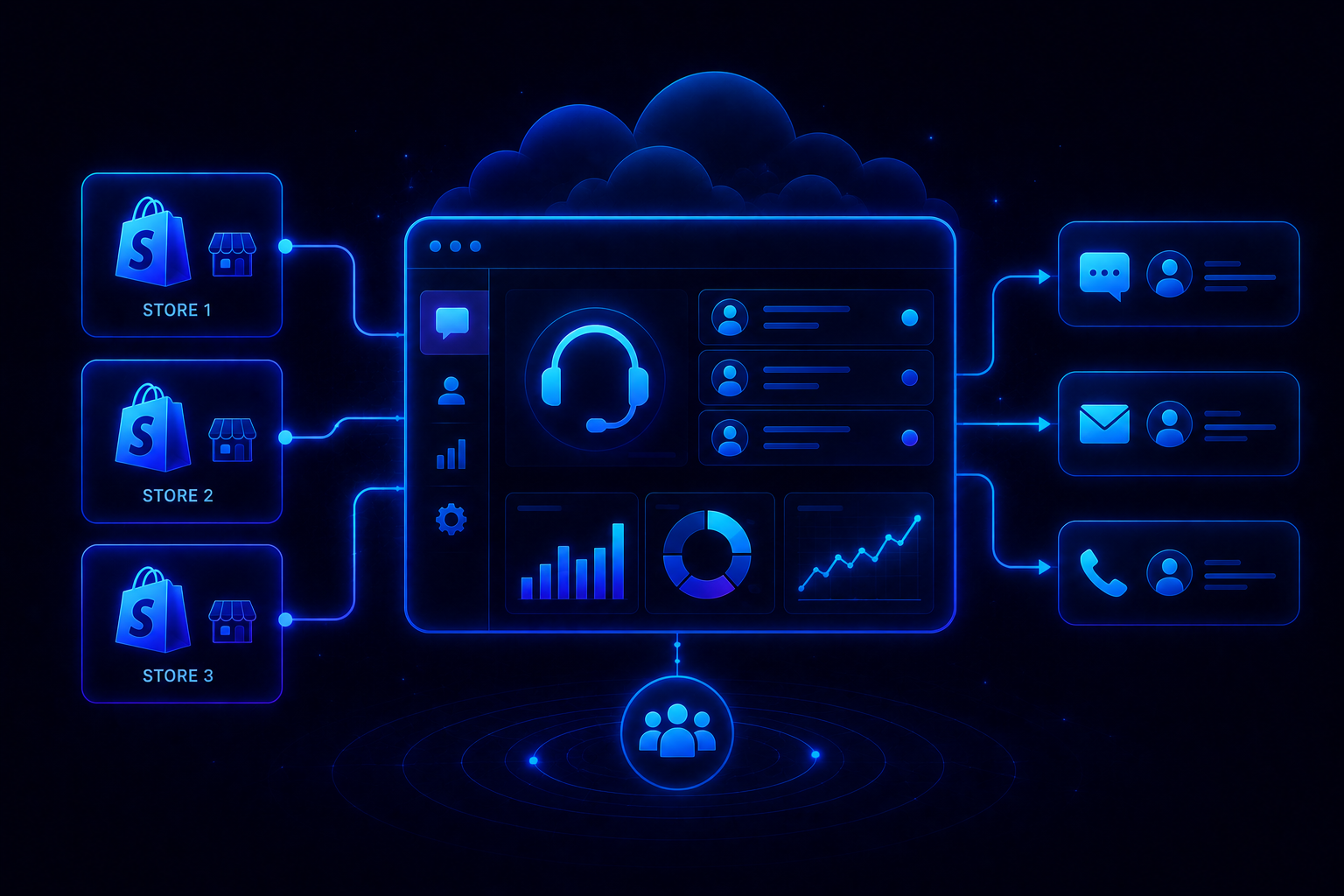
Quantum AI handles repetitive queries automatically across order status, billing, and account questions, while the Unified Inbox centralizes every channel into one workspace for small teams.
What sets it apart is native Shopify order data inside every conversation, paired with resolution-based pricing instead of the per-seat licenses that punish small teams.
Key Features
- Quantum AI resolves repetitive queries automatically across order status, billing, refunds, and account questions, without an agent touching the ticket.
- Native Shopify integration surfaces live order data, tracking, and purchase history directly into every conversation for ecommerce small businesses.
- Unified Inbox centralizes WhatsApp, email, Instagram, and live chat into one workspace, useful for small teams without dedicated channel owners.
- AI-Curated Inbox prioritizes incoming tickets by urgency, sentiment, and customer value so small teams handle the highest-impact conversations first.
- Quantum AI Copilot drafts replies and summarizes conversations in real time, cutting onboarding time for new hires.
Pros
- AI is embedded into the workflow from day one, removing the need to budget separately for a standalone AI add-on.
- Resolution-based pricing keeps costs aligned with ticket volume instead of per-seat licenses that scale faster than small-business revenue.
- Native Shopify integration ships built in, giving ecommerce small businesses live order data without third-party connector delays.
Cons
- Fewer established small-business case studies compared to incumbents that have served support teams for years.
- Deepest native integration currently centers on Shopify, so non-ecommerce businesses get a more general feature set.
Best Use Case
Small businesses, especially Shopify sellers, that need AI resolving tickets automatically without an enterprise-level budget.
When to Choose QuantumDesk
Choose QuantumDesk when your small business needs AI-native automation and outcome-based pricing that scales with ticket volume, not headcount.
Pricing
QuantumDesk follows a resolution-based pricing model where small businesses pay for AI-resolved tickets rather than per-seat licenses. Visit the QuantumDesk pricing page for a tailored quote.
2. Tidio (Lyro AI) – Best for Lean SMBs and Small Ecommerce Stores
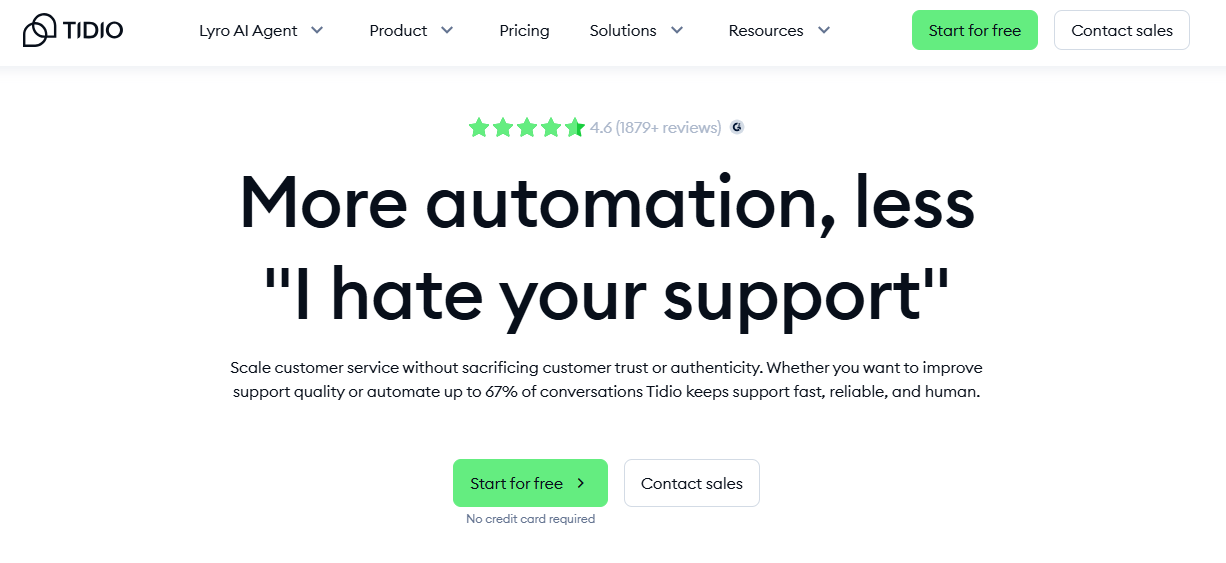
Tidio scrapes your website or FAQ docs to answer questions instantly, built for lean SMBs and small ecommerce stores wanting a zero-coding, rapid setup.
It features a shared inbox and a free tier, with Lyro AI resolving up to 67% of customer queries automatically once trained on your content.
Key Features
- Lyro AI trains directly on your website or FAQ docs, skipping the manual knowledge-base setup most tools require.
- Shared inbox centralizes conversations across channels for small teams working without dedicated channel owners.
- Free tier gives lean SMBs a genuine starting point before support volume justifies a paid plan.
Pros
- Effortless onboarding suits small-business owners without dedicated technical or support staff.
- Lyro resolves up to 67% of routine queries automatically once trained on store content.
- Free tier removes the financial risk of testing AI support before committing.
Cons
- Lacks the deep multi-system automated workflows found in higher-end, enterprise-grade tools.
- AI resolution depth is shallower than platforms built for complex, multi-step disputes.
- Less suited to high-volume teams needing enterprise-grade routing as the business scales.
Best Use Case
Lean SMBs and small ecommerce stores that need a working AI chatbot live fast without a technical team.
Pricing
Tidio starts around $24.17 a month for 100 billable conversations, with a free plan also available. Compare Tidio alternatives with deeper automation.
3. Freshdesk (Freddy AI) – Best Value and Ticket Routing for Growing Teams
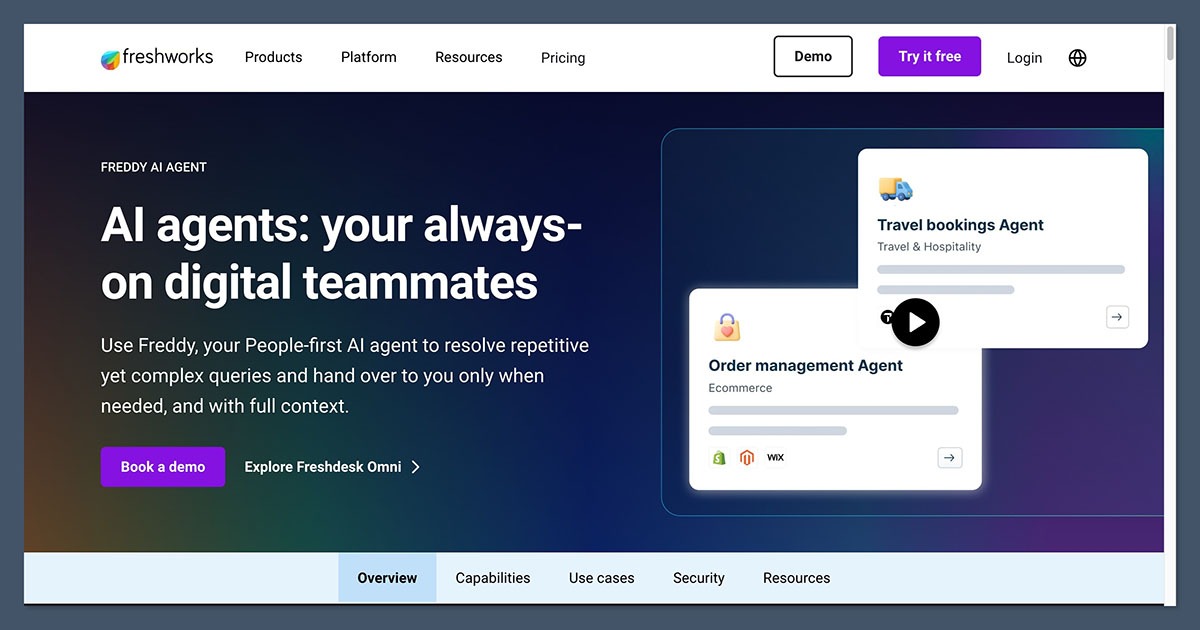
Freshdesk pairs a budget-friendly helpdesk with Freddy AI, providing text summarization, auto-triaging, and canned response suggestions through an easy-to-use no-code studio.
It's built for growing teams that need transparent, budget-friendly pricing and solid agent assistance without a complex implementation.
Key Features
- Freddy AI auto-triages incoming tickets and suggests canned responses to speed up agent replies.
- AI text summarization condenses long threads so agents can respond without reading full history.
- No-code studio lets non-technical teams configure automation workflows without engineering support.
Pros
- Transparent, budget-friendly pricing suits small teams comparing total cost against enterprise alternatives.
- Auto-triaging reduces manual ticket sorting, a common bottleneck for small support teams.
- No-code studio keeps setup accessible without a dedicated technical hire.
Cons
- AI resolution depth is shallower than platforms built for complex, multi-step workflows.
- Advanced automations often require upgrading to higher-priced tiers.
- Native ecommerce order actions are thinner than platforms purpose-built for Shopify.
Best Use Case
Growing small teams that need budget-friendly agent assistance and reliable ticket routing.
Pricing
Freshdesk starts around $29 per agent monthly billed annually, with Freddy AI features layered on top. See the official Freshdesk pricing page for current tiers. Compare Freshdesk alternatives built AI-first.
4. Gorgias (AI Agent) – Best for Independent Ecommerce Brands on Shopify
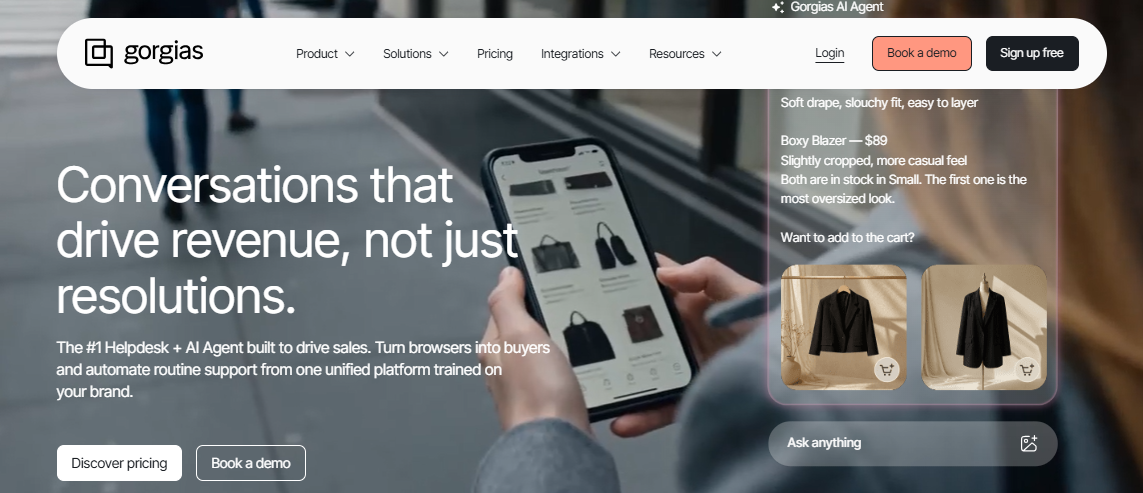
Gorgias AI Agent automatically processes returns, looks up order tracking numbers, and integrates deep Shopify macro automations, built specifically for independent ecommerce brands on Shopify or Shopify Plus.
It's the top-rated CX platform among online merchants, handling order actions directly inside the ticket rather than just answering questions about them.
Key Features
- AI Agent processes returns and order tracking automatically inside the native ticket view.
- Deep Shopify macro automations handle repetitive order and shipping questions without agent involvement.
- Autonomous post-purchase support pairs with a pre-purchase shopping assistant for the full customer journey.
Pros
- Deepest ecommerce-native integration on this list, purpose-built for Shopify and Shopify Plus stores.
- Trusted by a large base of online merchants, giving it a mature deployment track record.
- Macro automations speed up repetitive replies during launch spikes and flash sales.
Cons
- Pricing runs higher than most SMB-focused competitors at $300 to $360 a month.
- Not suited for software-as-a-service or service-based businesses outside ecommerce.
- AI resolution costs stack on top of ticket-based pricing as a separate line item.
Best Use Case
Independent ecommerce brands on Shopify or Shopify Plus that need order actions handled automatically.
Pricing
Gorgias starts around $300 per month billed annually, or $360 per month billed monthly. Compare Gorgias alternatives built AI-first from day one.
5. HubSpot Service Hub – Best All-in-One Platform Linking Service, CRM, and Marketing
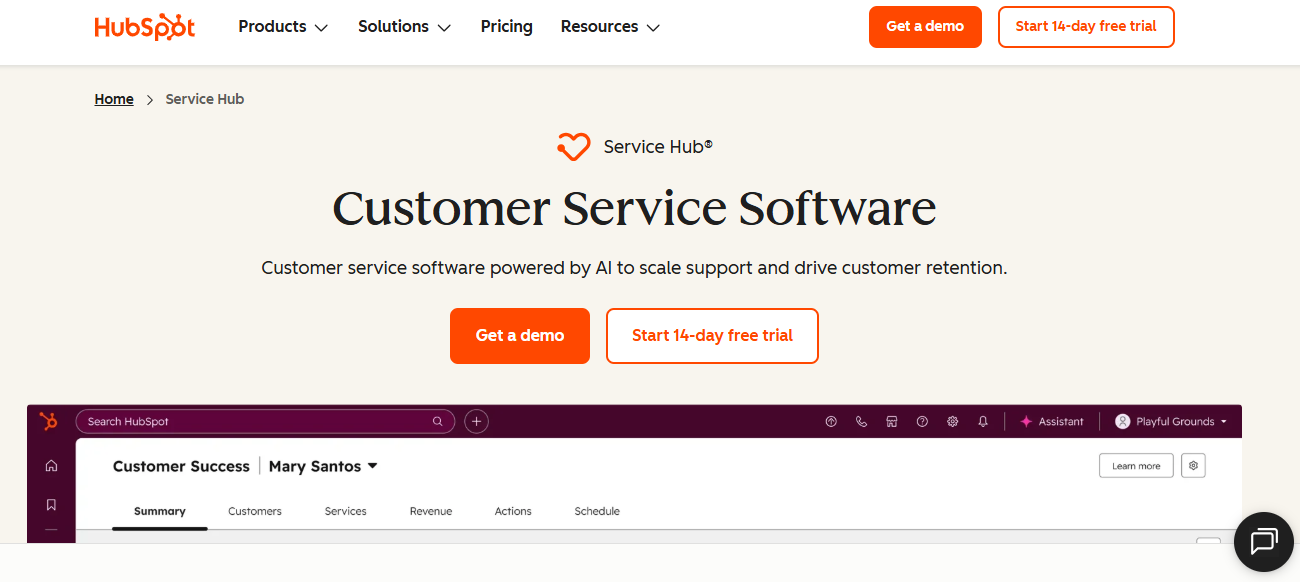
HubSpot Service Hub learns directly from your existing CRM customer records, auto-routes leads, and simplifies case tracking, built for businesses wanting service linked to CRM and marketing.
It's praised as a scalable option for small businesses operating with limited staff who want unified customer data across the funnel.
Key Features
- Native ticketing ties every support conversation to the same CRM record used by sales and marketing.
- Automated ticket routing directs incoming requests to the right team member without manual sorting.
- AI-assisted resolution surfaces suggested replies drawn from existing knowledge base content.
Pros
- Unified customer data across marketing, sales, and service is powerful for HubSpot-committed businesses.
- Scalable option that grows with a small business without requiring a platform switch later.
- Familiar interface reduces onboarding time for teams already using HubSpot daily.
Cons
- Value depends heavily on existing HubSpot investment; standalone, better options likely exist.
- AI resolution depth is shallower than platforms built AI-first for autonomous support.
- Pricing climbs quickly once a business needs higher-tier plans for full features.
Best Use Case
Small businesses already committed to HubSpot that want unified customer data across the funnel.
Pricing
HubSpot Service Hub starts around $10 per seat monthly billed annually, rising on higher tiers. See the official HubSpot pricing page for current tiers.
6. Botpress – Best for Tech-Adjacent Teams Wanting No Per-Seat Fees
Botpress offers a free developer studio, open API, and "hot handoffs" that keep AI active during human escalation, built for small tech-adjacent teams wanting an advanced, multi-channel AI platform without per-seat software fees.
It passes through LLM costs directly, holding a 4.5/5 rating on G2 and Capterra for resolving highly complex, action-required workflows autonomously.
Key Features
- Free developer studio and open API let technical teams build custom, multi-step workflows.
- Hot handoffs keep AI active alongside a human agent during escalation instead of going silent.
- Pass-through LLM costs avoid the seat-based markup common on other platforms.
Pros
- No seat-based pricing keeps costs predictable regardless of team size.
- Strong 4.5/5 rating on G2 and Capterra for resolving complex, action-required workflows.
- Hot handoff design avoids a jarring bot-to-human transition mid-conversation.
Cons
- Requires technical setup and ongoing maintenance that non-technical teams may find difficult.
- Less out-of-the-box polish than platforms built specifically for support teams rather than developers.
- Best value depends on conversation volume, which can be harder to forecast than seat-based pricing.
Best Use Case
Tech-adjacent small teams that want full control over multi-channel workflows without per-seat fees.
Pricing
Botpress passes through LLM usage costs directly, with no fixed seat-based pricing.
7. Intercom (Fin AI) – Best Full-Featured Support Platform for Growing Businesses
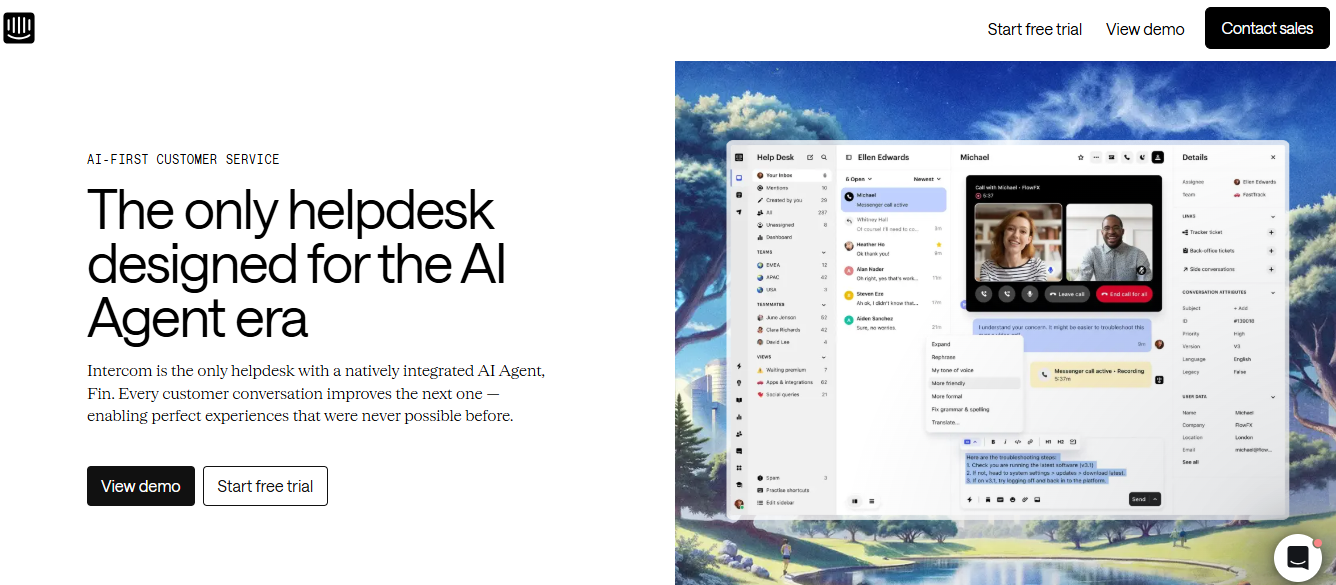
Intercom's Fin AI agent charges only for successful resolutions, built for small to mid-sized businesses needing a full-featured support platform rather than a narrow point solution.
It resolves queries autonomously grounded in your help center content, with proactive messaging and CRM integrations layered on top.
Key Features
- Fin AI Agent resolves queries autonomously and charges only for successful resolutions at $0.99 each.
- Proactive messaging triggers engage customers based on in-app behavior before they need to ask for help.
- CRM integrations pull customer data to personalize responses without starting from scratch on each ticket.
Pros
- Outcome-based pricing means you pay only for tickets Fin actually resolves.
- Full-featured platform covers chat, proactive messaging, and support in one place.
- Highly accurate resolution grounded strictly in documented help center content.
Cons
- Per-resolution pricing can get expensive quickly if conversation volume spikes unexpectedly.
- Less suited to ecommerce-specific transactional queries like order tracking without added connectors.
- Higher total cost of ownership once seats and resolutions are combined at scale.
Best Use Case
Small to mid-sized businesses wanting a full-featured support platform with outcome-based AI pricing.
Pricing
Intercom starts around $29 per seat monthly, with Fin AI billed separately at $0.99 per resolution. See Intercom's official pricing page for current rates. Compare Intercom alternatives built AI-first from day one.
8. Zendesk AI – Best for Mid-Market Teams Already Using Zendesk
Zendesk AI Agents span messaging, email, voice, and forms, built for organizations already on Zendesk or needing enterprise-grade governance.
Copilot provides autonomous agents with intelligent triage and intent detection, though pricing complexity can make it costly for smaller teams.
Key Features
- Copilot provides autonomous agents with intelligent triage and intent detection across channels.
- Admin and developer controls support marketplace extensibility for teams with technical resources.
- AI spans messaging, email, voice, and forms from one established platform.
Pros
- Enterprise governance and a deep app ecosystem suit teams with complex routing needs.
- Broad omnichannel coverage spans chat, email, phone, and social in one platform.
- Mature platform with a long track record across support team sizes.
Cons
- Pricing complexity and add-on fees can be costly for smaller support teams.
- AI capabilities are billed as a separate add-on on top of per-seat plans.
- AI resolution depth lags AI-native platforms built for full autonomous resolution.
Best Use Case
Mid-market teams already using Zendesk that want AI automation without switching platforms.
Pricing
Zendesk Copilot starts around $19 per agent monthly, with the AI add-on priced at roughly $50 per agent. See the official Zendesk pricing page for full tiers.
9. Zoho Desk (Zia) – Best Budget-Conscious Pick for the Zoho Ecosystem
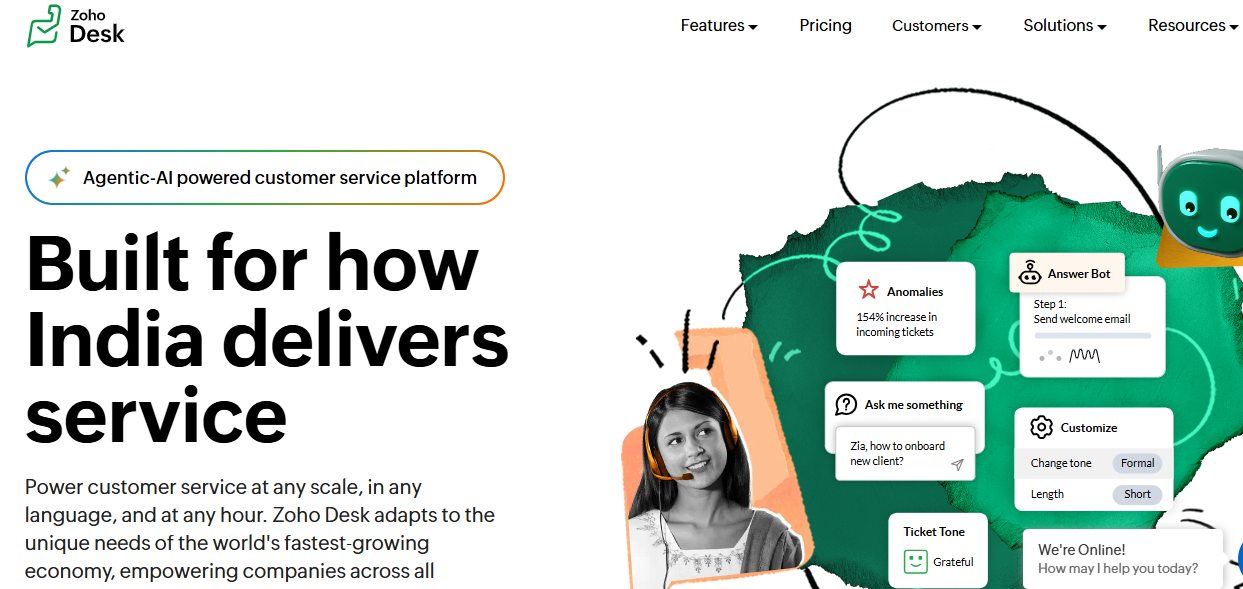
Zoho Desk's Zia AI provides sentiment analysis to help agents prioritize frustrated customers, built for budget-conscious teams already working inside the Zoho ecosystem.
It offers generative replies, auto-tagging, and predictions at some of the lowest per-agent pricing on this list.
Key Features
- Zia AI flags customer sentiment so agents can prioritize frustrated customers before they escalate.
- Generative replies and auto-tagging speed up repetitive responses across common ticket categories.
- Native Zoho ecosystem integration keeps sales, marketing, and support data connected.
Pros
- Lowest entry pricing on this list, accessible for the tightest small-business budgets.
- Tight integration with Zoho apps suits teams already invested in that ecosystem.
- Sentiment analysis helps small teams triage frustrated customers before issues escalate.
Cons
- Value depends heavily on existing Zoho investment; standalone, better options likely exist.
- Some cutting-edge features are limited by region or early-access rollout.
- AI resolution depth is shallower than platforms built AI-first for autonomous support.
Best Use Case
Budget-conscious small businesses already working inside the Zoho ecosystem.
Pricing
Zoho Desk starts around $8.75 per user monthly billed annually, among the lowest entry points on this list.
10. Help Scout – Best for Clean, Email-First Support
Help Scout combines a shared inbox, Docs knowledge base, and Beacon AI, built for growing businesses that want clean, email-first support without a steep learning curve.
Beacon AI is a virtual agent that resolves queries 24/7 from your knowledge base, with agent drafts and summaries reducing manual reply time.
Key Features
- Beacon AI resolves routine queries 24/7 directly from your knowledge base content.
- Shared inbox and Docs keep small teams organized without a complex ticketing structure.
- Agent drafts and summaries reduce the time spent reading context before replying.
Pros
- Clean, email-first interface appeals to small teams that value simplicity over feature depth.
- Minimal admin overhead makes it easy to maintain without a dedicated ops hire.
- Resolution-based AI pricing after the trial keeps costs tied to actual usage.
Cons
- Lighter automation depth than AI-native competitors built for autonomous resolution.
- Primarily designed around email, limiting fit for WhatsApp- or social-first teams.
- Per-resolution costs can vary, making budgeting less predictable at scale.
Best Use Case
Growing businesses that want clean, email-first support with straightforward AI assistance.
Pricing
Help Scout starts around $25 per user monthly, with AI resolutions billed per-resolution after the trial. See Help Scout pricing for a full breakdown.
How to Choose the Best AI Customer Service Software for Small Businesses?
Small-business customer service needs go beyond what most general-purpose AI platforms were built to handle. A billing question at 11pm is not the same as a ticket filed through a formal support portal. These five factors help you shortlist the right AI customer service software before committing to a plan.
1. Evaluate AI Capabilities
Test whether the AI resolves multi-step issues like returns, refunds, or billing changes autonomously, not just classifies and drafts replies for a human, since this is the exact gap between an ai copilot vs ai agent customer support model.
2. Check Automation Workflows
Confirm the tool can execute actions like order updates or account changes automatically rather than only deflecting questions to an agent, because shallow automation still routes complex tickets back into the queue.
3. Verify Integrations
Check whether the platform connects natively to your existing stack, especially Shopify, HubSpot, or Zoho if you're already using one, since fragmented integrations force agents to switch tabs constantly.
4. Assess Scalability
Evaluate whether pricing scales with ticket volume rather than a rigid seat count, since a small business's support volume can spike overnight around a sale or launch.
5. Compare Pricing and ROI
Compare free tiers, per-seat, and per-resolution pricing against your realistic monthly ticket volume, and factor in add-on fees before committing to a plan you'll quickly outgrow or overpay for.
Why is QuantumDesk the Best AI Customer Service Software for Small Businesses?
QuantumDesk is built for small businesses that need AI resolving tickets automatically from day one, without paying enterprise prices for capabilities a lean support team won't use for years.
Every other platform on this list asks small businesses to choose between a cheap chatbot, a CRM-locked tool, or ecommerce-specific automation. QuantumDesk does not force that trade-off.
Key Capabilities of QuantumDesk
- Quantum AI resolves repetitive queries automatically, eliminating ticket volume across support, billing, and order questions without agent involvement.
- Unified Inbox centralizes WhatsApp, email, Instagram, and live chat, useful for lean teams without dedicated channel owners.
- Native Shopify integration surfaces live order and purchase history for ecommerce small businesses without third-party connectors.
- Real-time admin dashboard gives owners visibility into AI resolution rates and CSAT trends without a dedicated ops hire.
- Resolution-based pricing keeps costs aligned with ticket volume instead of charging per seat as the team grows.
This is the practical case for how ai reduce customer service cost: automation and multichannel coverage built into the same architecture instead of assembled from separate vendors, a difference that shows up directly in small business customer service outcomes.
Pick the platform that fits your small business's channel mix, ticket volume, and budget. See how QuantumDesk handles support for your team → Book a Demo
Frequently Asked Questions About AI Customer Service Software for Small Businesses
What are the best AI customer service software for small businesses?
In my testing, the best AI customer service software for small businesses in 2026 are QuantumDesk, Tidio, Freshdesk, Gorgias, and HubSpot Service Hub.
QuantumDesk leads for AI-native automation on small-business-friendly pricing, Tidio leads for zero-coding ecommerce setup, and Freshdesk leads for budget-friendly ticket routing.
Which AI customer service software is best for SMBs?
Tidio and QuantumDesk are the best options for small teams that want low-cost entry and fast setup without complex configuration.
Tidio's free tier covers routine FAQ deflection, while QuantumDesk's resolution-based pricing keeps costs aligned with actual ticket volume as the business grows.
How do I choose the right AI customer service software for my small business?
Start with your channel mix and existing tech stack before comparing AI accuracy, since the right tool depends on where your customers already reach out.
Ecommerce sellers should evaluate QuantumDesk or Gorgias, Zoho users should look at Zoho Desk, and HubSpot-committed teams should consider HubSpot Service Hub.
Is there a free AI customer service software for small businesses?
Yes, Tidio offers a free plan with basic Lyro AI capabilities, and several platforms like Freshdesk and HubSpot offer free entry tiers.
Free tiers suit small businesses testing AI deflection before committing to a paid plan, though most outgrow them once ticket volume expands.
What features should I look for in AI customer service software for small businesses?
Prioritize AI that executes actions like refunds or order updates automatically, plus native integration with your existing stack like Shopify or HubSpot.
AI that only deflects to generic FAQ links does little to reduce the repetitive tickets filling a small team's inbox.




.avif)