Summarize with AI
Key Takeaways
- QuantumDesk is the best AI-native pick for B2B SaaS companies that want modern automation, account-aware support, and scalable service without legacy constraints.
- Fini delivers the most accurate account-aware resolution for complex SaaS configurations, with a reasoning-first architecture built for multi-tier accounts and zero-hallucination design.
- Enjo is the strongest option for Slack and Teams-based B2B support, resolving tickets inside shared customer channels without a separate support portal.
- Intercom Fin leads for product-led SaaS teams running support primarily through in-app chat, onboarding flows, and feature adoption messaging.
- Zendesk AI is the default enterprise choice for large SaaS organizations already standardized on Zendesk workflows and omnichannel ticketing at scale.
- Account-aware resolution, channel coverage, and integration depth are the three most critical factors when evaluating AI support platforms for B2B SaaS companies.
B2B SaaS support is not a simpler version of consumer support. Your customers are technical, account configurations are complex, and a single unresolved ticket can affect an entire company's adoption of your product.
I tested 10 AI customer support platforms built for B2B SaaS teams across Slack, email, in-app chat, and portal workflows, from early-stage companies to enterprise SaaS organizations.
This guide breaks down what each platform actually does for SaaS customer support, where account-aware AI outperforms generic ticket routing, and how to shortlist two or three tools that match your channel mix, team size, and automation depth.
Quick Comparison of the Top AI Customer Support Software for B2B SaaS in 2026
How Did We Choose These 10 AI Customer Support Software for B2B SaaS?
I shortlisted these 10 platforms by testing each inside real B2B SaaS support workflows and benchmarking actual AI resolution depth rather than taking vendor marketing claims about automation rates and account-aware accuracy at face value.
- Verified real user ratings across G2 and Capterra, filtering specifically for B2B SaaS teams rather than ecommerce or consumer support use cases.
- Evaluated account-aware resolution depth as the defining B2B differentiator, benchmarked against b2b customer service best practices across all platform types.
- Reviewed Reddit and niche SaaS community threads to surface real complaints and praise beyond polished marketing claims about AI resolution accuracy.
- Benchmarked channel coverage across Slack, Teams, in-app chat, and email, since B2B SaaS teams rarely rely on a single support channel.
- Compared pricing models for teams handling 300 to 5,000 monthly tickets, evaluating per-seat and resolution-based structures across team sizes.
- Assessed integration depth with CRM, product databases, and existing help desks, since AI resolution depends heavily on available live data.
In-Depth Review of the Best 10 AI Customer Support Software for B2B SaaS in 2026
1. QuantumDesk – Best AI-Native Support Platform for B2B SaaS

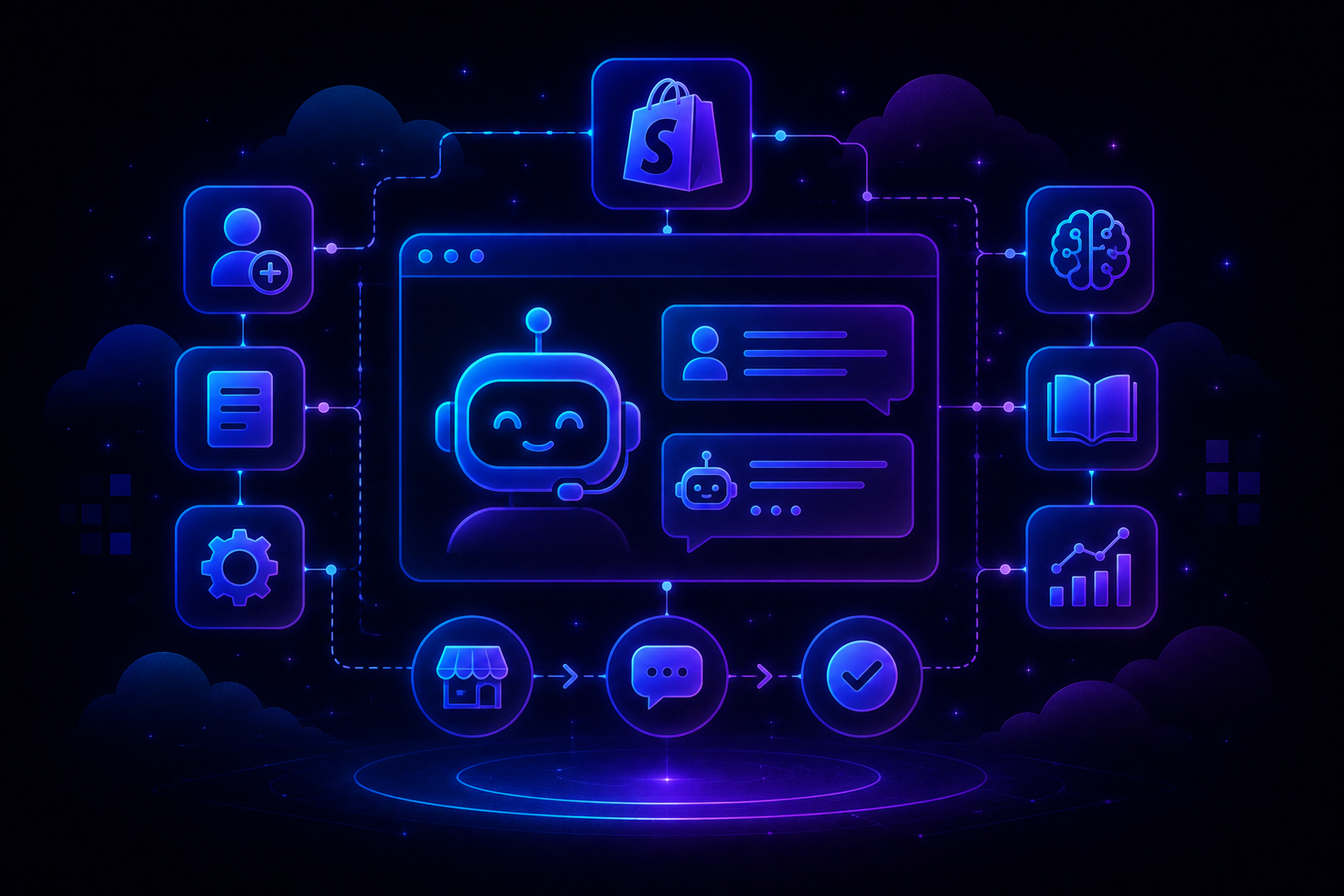
QuantumDesk is an AI-native customer support platform built for B2B SaaS companies that want to automate L1 queries, preserve account context across every conversation, and scale support without proportionally growing headcount or paying enterprise prices for partial workflow coverage.
Quantum AI handles repetitive support queries: configuration questions, billing requests, and product FAQs, without entering an agent queue. The Unified Inbox centralizes every channel in one workspace, and native Shopify integration surfaces order and account context directly into every conversation.
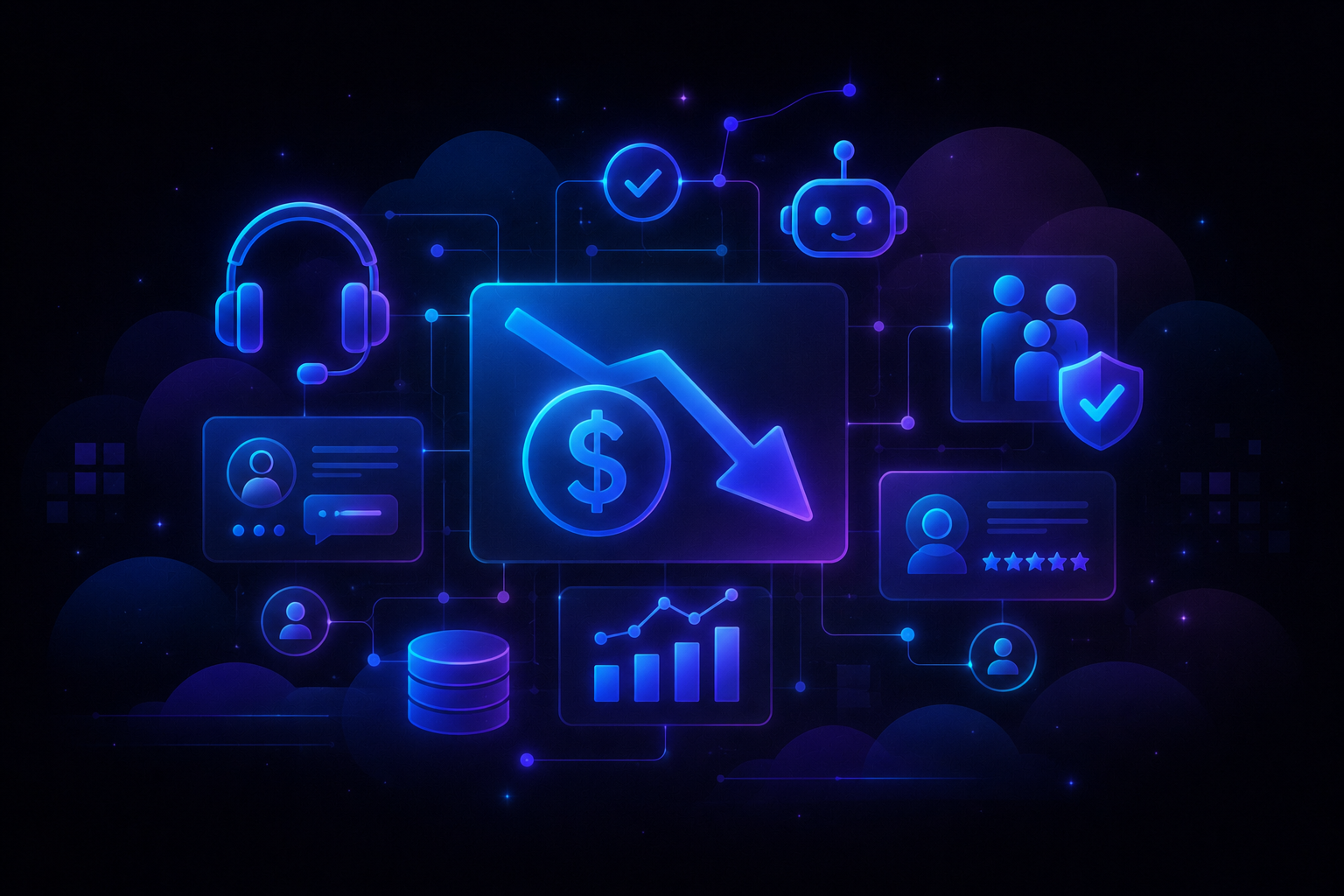
What sets QuantumDesk apart is the resolution-based pricing model. Teams pay for AI-resolved tickets, not per-seat AI licenses, which keeps cost aligned with actual value delivered as B2B SaaS support volume grows.
Key Features
- Quantum AI resolves repetitive B2B support queries like configuration requests, onboarding questions, and billing lookups automatically, without an agent touching the ticket
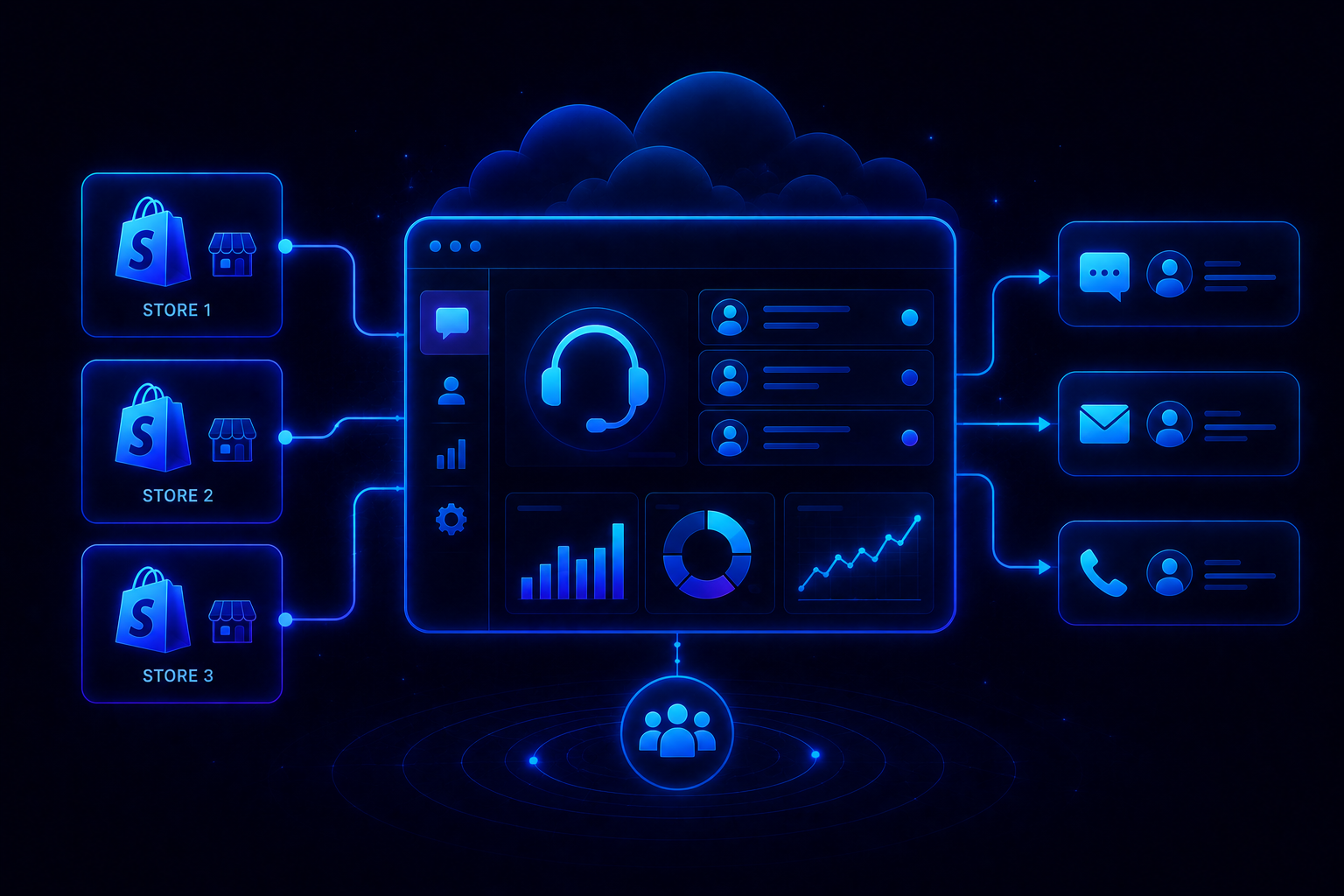
- Unified Inbox centralizes email, live chat, and messaging channels into one workspace with full account context and conversation history preserved across every agent interaction
- AI-Curated Inbox prioritizes incoming tickets by urgency, sentiment, and account tier so agents always handle the highest-impact B2B conversations first rather than triaging manually
- Quantum AI Copilot drafts replies and summarizes account threads in real time, reducing the time agents spend reading history before responding to complex queries
- Native Shopify integration surfaces order history and customer data directly into every conversation, eliminating manual lookups during B2B account support
- Admin Analytics tracks resolution rates, response times, and escalation patterns so support leaders identify bottlenecks before they affect account health or renewal decisions
Pros
- AI is embedded into every support workflow from day one, eliminating the need to budget separately for a standalone AI add-on
- Resolution-based pricing keeps costs aligned with outcomes, making monthly support costs more predictable than per-agent licenses that scale with headcount regardless of AI performance
- Built for modern SaaS support workflows rather than adapted from a legacy help desk platform with AI layered on top after the fact
Cons
- Still in BETA, so enterprise-grade controls and deeper B2B-specific workflow integrations are expanding but haven't yet reached the maturity of decade-old category leaders
- Fewer established B2B SaaS case studies compared to incumbents that have been serving enterprise teams for a decade or more with documented deployment histories
Best Use Case
B2B SaaS companies that need AI resolving repetitive L1 queries automatically while agents focus on complex, account-specific conversations requiring human context and judgment.
When to Choose QuantumDesk
Choose QuantumDesk when your B2B SaaS support volume is growing faster than your headcount and you want AI embedded into every conversation from day one, not sold as a separate add-on.
Pricing
QuantumDesk follows a resolution-based pricing model where teams pay for AI-resolved tickets rather than per-seat AI licenses. Visit the QuantumDesk pricing page or contact the team directly for a tailored demo walkthrough.
2. Fini – Best for Complex, Account-Aware B2B SaaS Support
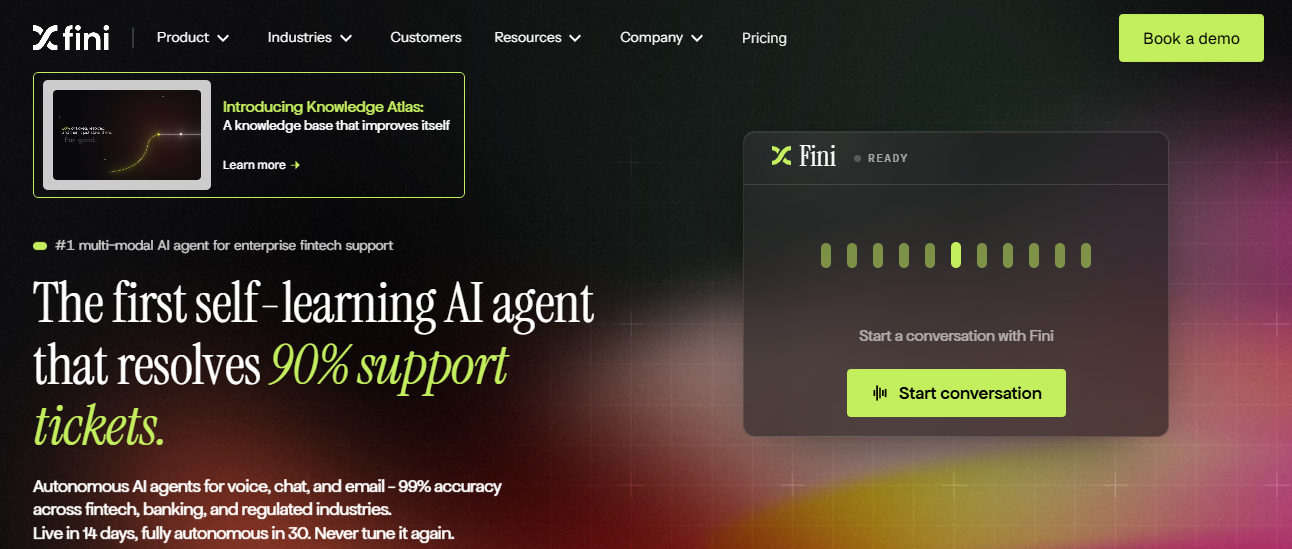
Fini is an AI support platform built for B2B SaaS companies with complex product configurations, multi-tier user accounts, and technical queries that require reasoning beyond a simple FAQ lookup.
Its reasoning-first architecture processes account context before responding, reducing hallucinations on technical B2B queries where accuracy matters more than speed. For B2B SaaS, AI that handles complexity accurately is more valuable than AI that deflects quickly.
Key Features
- Reasoning-first engine processes account context before responding, reducing hallucination rates on complex, configuration-specific B2B SaaS queries
- Multi-helpdesk API connections integrate with existing ticketing systems so Fini layers on top of current infrastructure without requiring a full platform migration
- Zero-hallucination design prioritizes accuracy over response volume, making it more suited to technical B2B SaaS queries than general-purpose consumer AI
Pros
- Account-aware resolution handles complex SaaS configurations and admin settings that simpler AI platforms return incorrect or generic answers for
- Reasoning-first architecture reduces the accuracy risk that matters most in B2B SaaS, where a wrong answer on a configuration question can cause real account damage
- Flexible integration connects to multiple help desk systems, avoiding forced platform migrations for teams already invested in existing infrastructure
Cons
- Less established brand recognition compared to category incumbents, which matters when buying decisions require vendor credibility and documented enterprise case studies
- Narrower channel coverage than full omnichannel platforms, so teams running heavy Slack or Teams support alongside portal workflows may hit gaps
- Pricing is less transparent than platforms with published per-seat or per-resolution pricing visible on their website
When to Choose Fini
Choose Fini when your B2B SaaS product has complex configurations, admin settings, or multi-tier accounts where AI reasoning accuracy matters more than channel breadth.
Pricing
Fini's pricing is available directly on the Fini website, typically structured around resolution volume and integration scope for B2B SaaS teams.
3. Enjo – Best for Slack and Microsoft Teams Support

Enjo is a B2B support platform built specifically for teams that manage customer relationships inside shared Slack Connect or Microsoft Teams channels, where customers expect direct, real-time responses rather than portal ticket submissions.
It brings AI-assisted resolution, ticketing context, and account history directly into the channels customers already use, with unlimited human seats so teams aren't penalized as conversation volume grows across multiple customer Slack workspaces.
Key Features
- Native Slack Connect and Teams integration resolves B2B support tickets directly inside shared customer channels without routing them to a separate ticketing portal
- Integrates with Salesforce, Zendesk, Jira, and ServiceNow so account context and ticket history flow into Slack without requiring agents to switch tools mid-conversation
- Unlimited human seats keep pricing predictable as the number of agents managing Slack and Teams channels grows alongside the customer base
Pros
- Feels native to how B2B SaaS support already works in companies that use Slack Connect or Teams as the primary customer communication layer
- Deep integrations with enterprise tools mean agents and AI both work with live account data rather than generic product documentation
- Unlimited seat model avoids the per-agent pricing spike that hurts teams scaling support across many customer channels simultaneously
Cons
- Narrow fit outside Slack and Teams support, so teams running heavy email, in-app chat, or voice support channels need a different primary platform
- Smaller brand recognition than enterprise incumbents, which can be a procurement barrier for larger SaaS organizations with formal vendor approval processes
- Less suited to consumer or ecommerce support, where channel mix skews toward email, WhatsApp, and social rather than shared Slack or Teams workspaces
When to Choose Enjo
Choose Enjo when most of your B2B customer support already runs inside shared Slack Connect or Microsoft Teams channels and you need AI and ticketing layered natively on top.
Pricing
Enjo's pricing is available directly on the Enjo website, with plans designed around channel volume and integration requirements for B2B SaaS teams.
4. Intercom Fin – Best for Product-Led SaaS with In-App Messaging
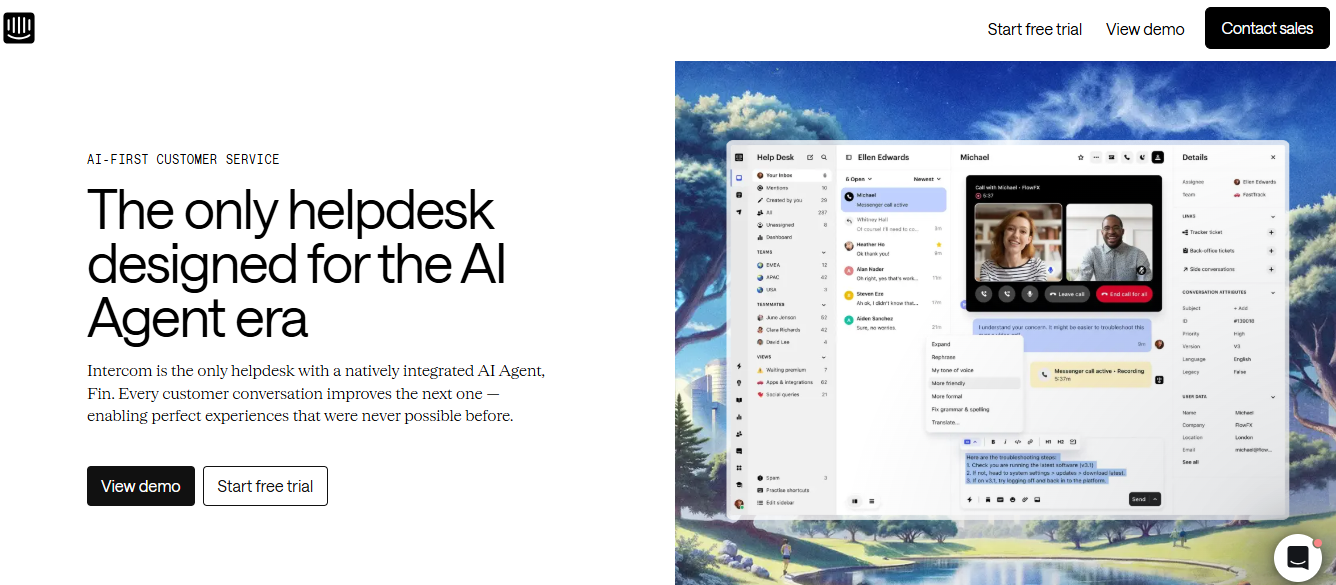
Intercom is a customer messaging platform built for product-led SaaS teams that want conversational support inside the product. Fin AI reads directly from your knowledge base to resolve complex queries end-to-end without scripted bot flows.
Intercom centralizes in-app chat, email, and help center content into one workspace, and its proactive outbound messaging triggers based on user behavior to catch issues before customers file a ticket.
Key Features
- Fin AI resolves complex queries autonomously by reading your connected knowledge base rather than relying on pre-scripted conversation flows
- In-app messaging keeps support inside the product, so users never have to leave to get help during onboarding or feature adoption
- Proactive outbound messaging triggers on user behavior to catch issues before they become support tickets
Pros
- Fin AI genuinely resolves tickets end-to-end rather than routing them, which is rare among chat-first platforms at this price tier
- Proactive messaging reduces reactive support volume by catching common friction points before customers have to file a complaint
- Feels native inside the product for SaaS teams already running support through in-app chat rather than a separate help desk portal
Cons
- Per-resolution AI pricing on top of per-seat fees can get expensive quickly for SaaS teams with high in-app conversation volume
- Omnichannel coverage outside in-app chat and email is thinner than platforms built for Slack-heavy or voice-heavy B2B support environments
- Less suited to B2B account-level support where agents need to manage context across multiple users within the same customer organization simultaneously
When to Choose Intercom Fin
Choose Intercom Fin when in-app conversations drive most of your support volume and Fin AI's knowledge-base resolution matters more than Slack-native or account-level omnichannel coverage. Teams evaluating Intercom alternatives may find better pricing flexibility for B2B SaaS workflows.
Pricing
Intercom's pricing starts on a per-seat basis, with Fin AI resolutions billed separately on a per-resolution basis as in-app conversation volume scales.
5. Zendesk AI – Best for Large Enterprise SaaS on Zendesk
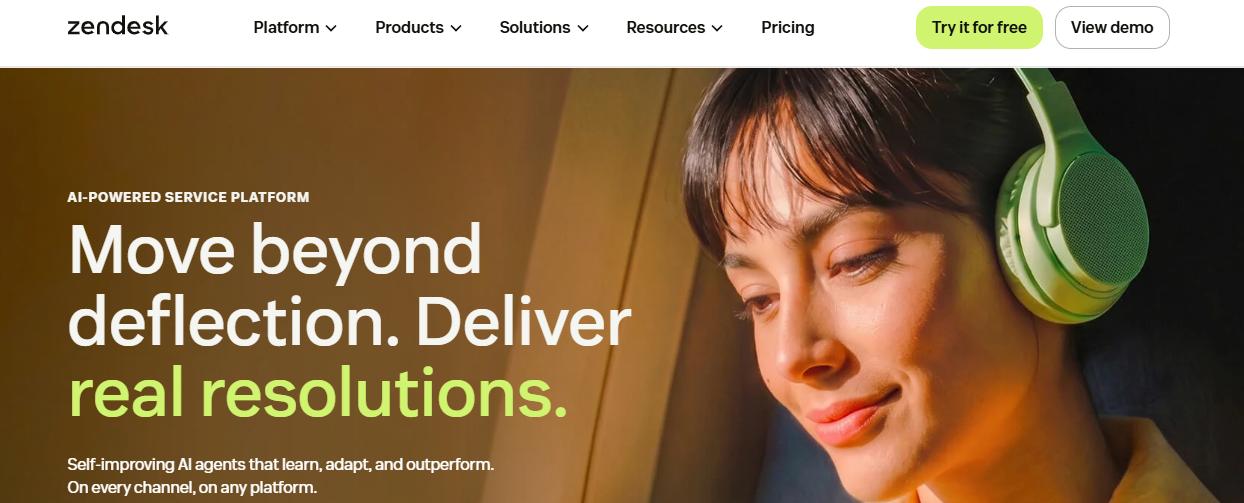
Zendesk is an established customer service platform with AI intent detection, routing, and agent-assist tools built on top of a mature ticketing system designed for large, multi-team support operations running omnichannel workflows at enterprise scale.
Its AI layer analyzes incoming tickets for intent and sentiment, routes them to the right team automatically, and surfaces suggested replies from historical ticket data inside every agent conversation.
Key Features
- AI intent and sentiment detection routes tickets automatically to the right team, macro, or escalation path based on incoming ticket content
- Agent Copilot suggests replies drawn from historical ticket data and knowledge base articles inside every live conversation without requiring separate configuration
- Deep integration ecosystem connects to hundreds of tools across CRM, commerce, and internal engineering systems
Pros
- Largest integration ecosystem in the category, which matters for enterprise B2B SaaS organizations running complex, multi-tool support stacks across departments
- Mature platform with over a decade of ticketing refinement, so core workflows rarely break under heavy enterprise-scale load
- Advanced routing handles complex multi-team structures that newer AI-native platforms are not yet built to support at enterprise ticket volume
Cons
- AI features are priced as an add-on on top of per-agent licensing, which raises total cost quickly as teams scale both headcount and automation needs
- Setup and configuration require more expertise than newer AI-native platforms built for faster, lower-friction onboarding experiences
- Pricing climbs steeply for SMBs relative to platforms designed specifically for smaller SaaS teams and support volumes
When to Choose Zendesk AI
Choose Zendesk AI when your organization already runs a large, multi-team support operation and needs enterprise-grade routing and integration depth more than AI-native pricing. Teams exploring Zendesk alternatives will find AI-native options with stronger resolution autonomy.
Pricing
Zendesk's pricing starts on a per-agent basis across several tiers, with AI features priced as add-ons that increase total cost as ticket volume and automation requirements grow.
6. Ada – Best Standalone AI Resolution Engine for Large Enterprises
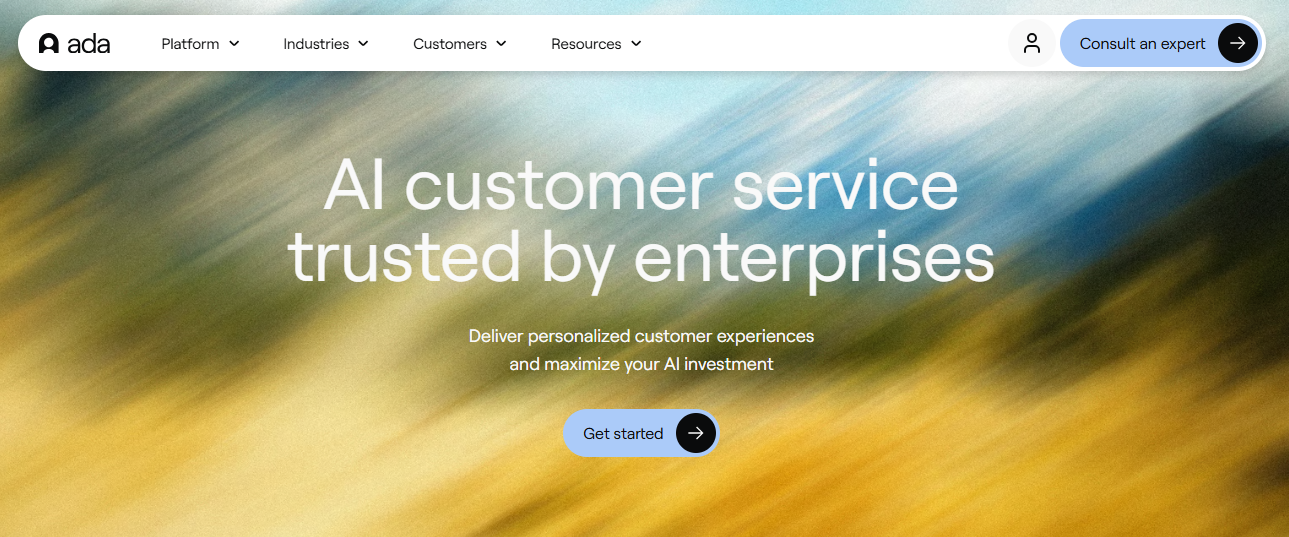
Ada is a standalone AI resolution layer built to sit in front of existing support systems, CRM tools, and knowledge bases, handling customer queries autonomously across multiple languages and enterprise systems without replacing the infrastructure underneath.
It works as a cross-system AI agent for large SaaS organizations that need multilingual support coverage and autonomous resolution across more than one CRM or help desk platform simultaneously.
Key Features
- Standalone AI reasoning layer integrates with multiple CRMs and support tools without requiring teams to migrate off existing infrastructure
- Multilingual support coverage handles B2B SaaS customer queries across languages and regions without separate localization configuration per market
- Cross-system automation resolves queries by pulling context from multiple connected tools rather than a single knowledge base
Pros
- Works on top of existing infrastructure, so large enterprises avoid the disruption and cost of a full help desk migration to add AI resolution
- Multilingual capability serves global B2B SaaS organizations that support customers across multiple languages with the same AI accuracy
- Autonomous resolution across systems makes Ada more suited to complex enterprise environments than single-platform AI tools
Cons
- Enterprise-focused pricing makes Ada less accessible to early-stage or mid-market SaaS companies with tighter support budgets
- Implementation requires significant technical setup to connect multiple systems, configure resolution flows, and tune accuracy before going live
- Less suited to teams wanting AI-native help desk features like a unified inbox, ticket management, or built-in analytics baked into the same platform
When to Choose Ada
Choose Ada when your large enterprise SaaS organization needs autonomous, multilingual AI resolution that works across multiple existing CRM and support systems without a full platform migration.
Pricing
Ada's pricing is quoted directly by their sales team based on resolution volume, language coverage, and the scope of system integrations required.
7. Freshdesk Freddy AI – Best Cost-Conscious Mid-Market Option
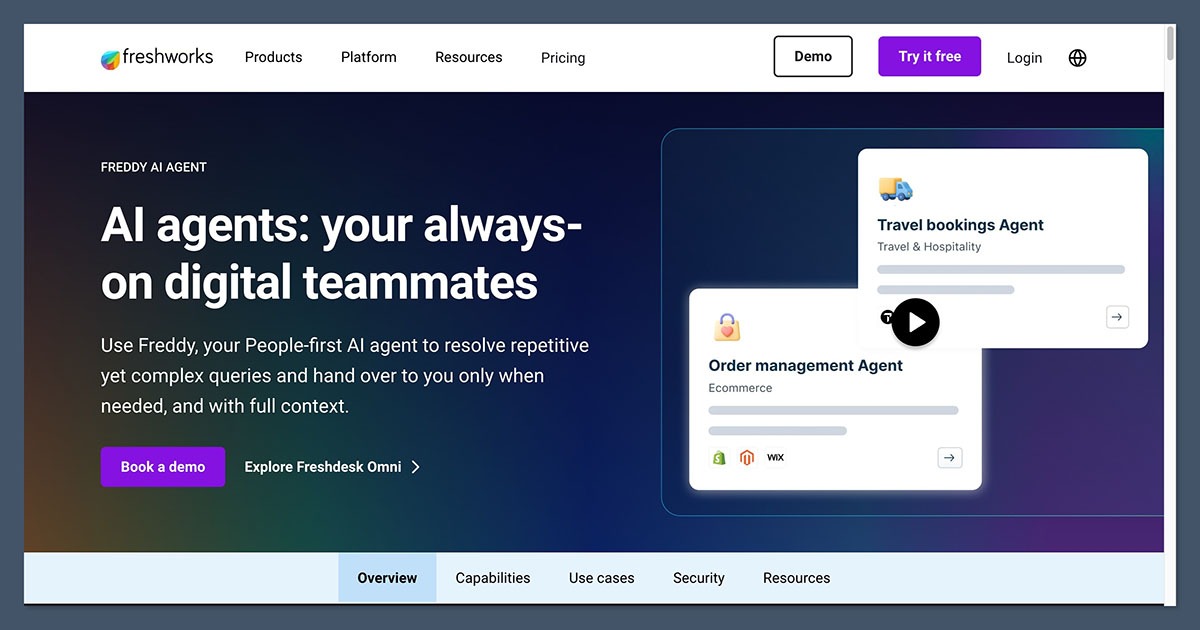
Freshdesk is a ticketing platform built for mid-market support teams, with Freddy AI layered on top to handle deflection, ticket summarization, and suggested replies at a mid-market price point that sits below most enterprise help desk platforms.
Freddy AI reads incoming tickets to suggest knowledge base solutions, summarizes long threads, and resolves simple queries through a self-service bot before they reach an agent queue.
Key Features
- Freddy AI suggests knowledge base solutions for agents handling incoming tickets across every channel
- Self-service bot resolves simple queries before tickets reach an agent, reducing total ticket volume for common, repetitive questions
- AI-generated summaries cut the time agents spend reading long conversation threads before they can respond
Pros
- Mid-market pricing sits below enterprise platforms while delivering meaningful AI-assisted deflection and agent productivity improvements
- Freddy AI is easy to activate without the lengthy configuration cycles that some enterprise platforms require before AI goes live
- Good fit for mid-market SaaS teams that want AI assistance without months of onboarding or a dedicated implementation team
Cons
- AI resolution depth is shallower than AI-native platforms built to handle full conversations end-to-end without agent involvement
- Freddy AI pricing is tiered separately from core ticketing plans, adding another budget line item to account for as automation needs grow
- Less suited to complex B2B account queries that require reasoning across configuration history, multi-user access, or cross-department context
When to Choose Freshdesk Freddy AI
Choose Freshdesk Freddy AI when speed to AI value matters more than resolution depth and your mid-market SaaS team wants assistance without months of implementation overhead. Teams outgrowing Freddy AI can explore Freshdesk alternatives with deeper resolution autonomy.
Pricing
Freshdesk's pricing runs across several per-agent tiers, with Freddy AI capabilities priced separately depending on usage level and plan tier.
8. Salesforce Agentforce – Best for Salesforce-Native Enterprises
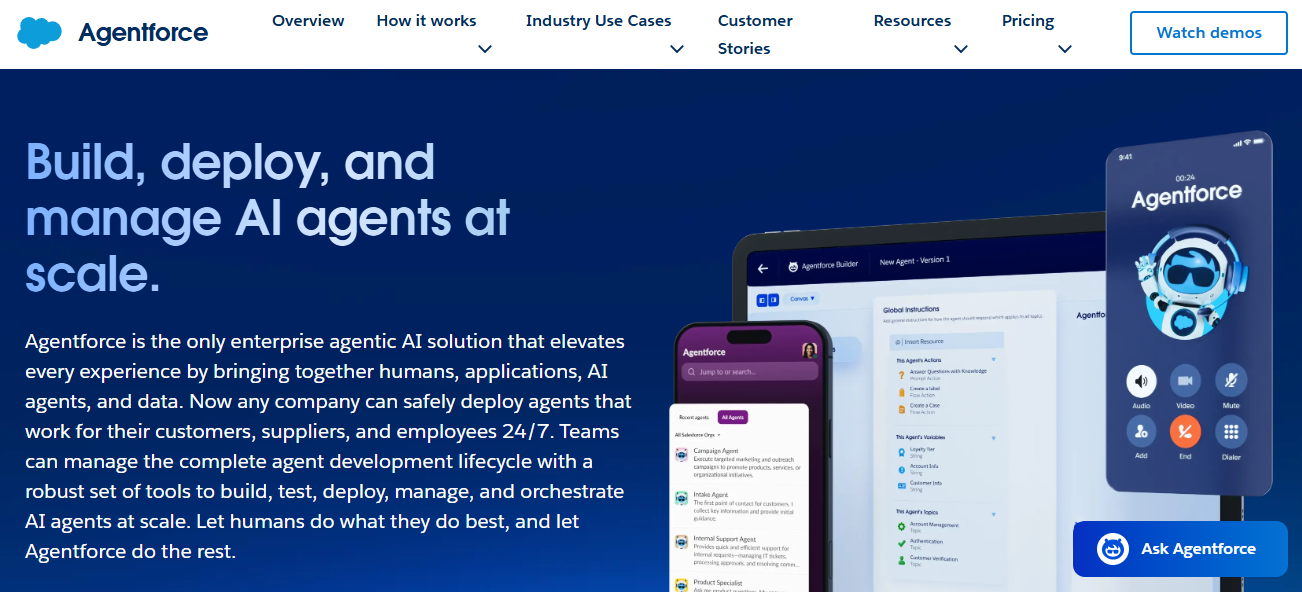
Salesforce Agentforce is an AI-native support layer built into Salesforce Service Cloud, designed for enterprise SaaS teams that already run their full customer lifecycle inside the Salesforce ecosystem and want AI embedded directly into existing workflows.
It handles case routing, knowledge base resolution, and agent assistance inside Service Cloud without requiring a separate platform, which suits large organizations that have standardized on Salesforce across sales, success, and support teams.
Key Features
- AI embedded natively inside Salesforce Service Cloud handles case routing and resolution within the platform teams already use daily
- Access to full Salesforce CRM data means AI resolution pulls from complete account, opportunity, and contact history rather than a standalone knowledge base
- Automated case handling routes incoming support requests and suggests resolutions based on historical case data inside the Salesforce environment
Pros
- No migration required for enterprises already standardized on Salesforce, since Agentforce activates within existing infrastructure
- Full CRM context gives AI resolution access to the richest account data of any platform on this list for Salesforce-native organizations
- Familiar interface reduces adoption friction for support teams already working inside Salesforce Service Cloud daily
Cons
- Only viable for Salesforce-native teams, which makes Agentforce irrelevant for SaaS companies running support on any other help desk platform
- Enterprise-level investment is required before Agentforce delivers meaningful AI automation at scale across a B2B SaaS support operation
- Implementation complexity requires Salesforce expertise and administrator involvement that smaller SaaS teams often cannot staff internally
When to Choose Salesforce Agentforce
Choose Salesforce Agentforce when your enterprise SaaS organization is already fully standardized on Salesforce Service Cloud and wants AI embedded without adding another vendor.
Pricing
Salesforce Agentforce pricing is embedded within Salesforce Service Cloud plans and quoted directly by the Salesforce sales team based on seats, modules, and resolution volume.
9. Front – Best for Collaborative, Relationship-Focused B2B Support
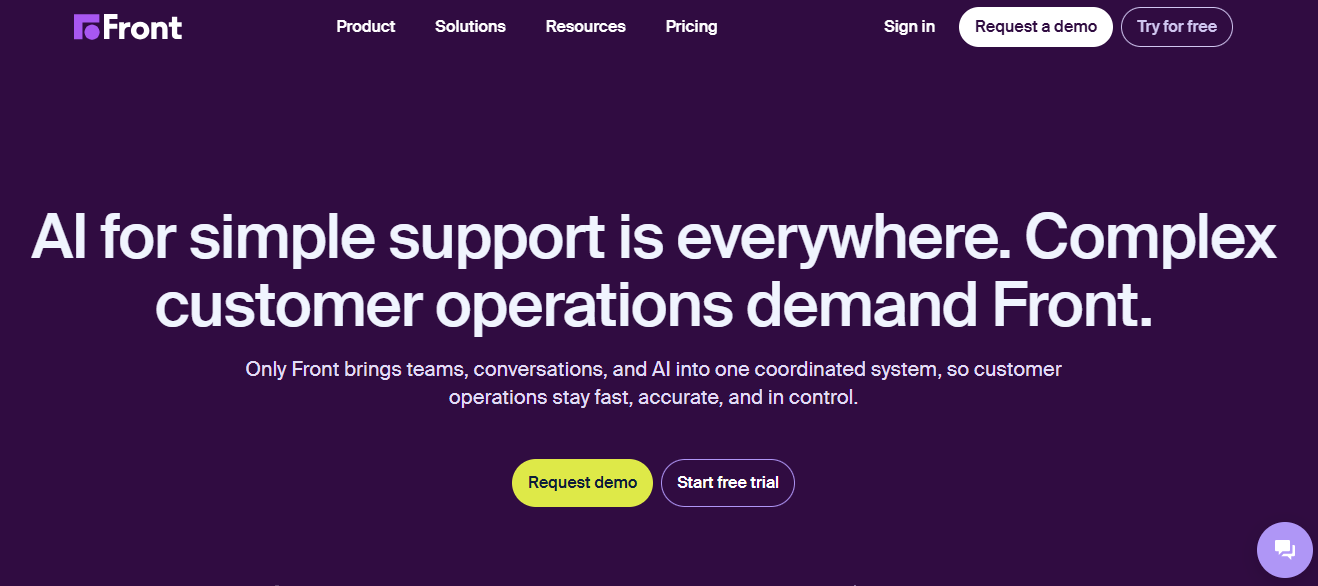
Front is a shared inbox platform built for B2B teams that want every conversation to carry full account context and reach the right team member, keeping support human and relationship-driven without sacrificing operational visibility.
Its AI features assist agents with suggested replies and conversation summaries rather than replacing human judgment, which suits B2B SaaS teams where account relationships require personalized responses over automated resolution.
Key Features
- Shared inbox with full account context surfaces complete conversation history and customer data alongside every incoming message for any agent picking up the thread
- AI-assisted reply suggestions draft responses based on conversation history and past resolutions without removing the agent from the loop
- Team collaboration tools allow internal notes, assignments, and handoffs inside each conversation thread without the customer seeing internal discussion
Pros
- Human-first design keeps AI as an assistant rather than an autonomous resolver, which suits B2B SaaS teams where account relationships require judgment and nuance
- Full conversation context prevents agents from ever asking a customer to repeat themselves or providing a response that ignores prior interactions
- Clean, accessible interface reduces training time for support teams that prioritize usability over deep automation configuration
Cons
- Lower AI resolution autonomy compared to platforms where AI handles full ticket categories without agent involvement, limiting automation depth for high-volume teams
- Less suited to high-volume ticket queues where automation depth and autonomous resolution are more valuable than relationship-driven, human-first workflows
- Narrower integration ecosystem than enterprise help desk platforms built around complex, multi-tool support stacks
When to Choose Front
Choose Front when your B2B SaaS support model is relationship-driven and you need AI assisting agents rather than replacing them. Teams needing more automation depth may benefit from reviewing Front alternatives before committing.
Pricing
Front's pricing runs on a per-seat basis across several tiers. Current plan details are available directly on the Front pricing page.
10. Help Scout – Best Simple AI-Assisted Support for Smaller SaaS
Help Scout is a shared inbox platform built for smaller SaaS teams that want clean, human-friendly support with light AI assistance without the complexity of enterprise help desk configuration or the overhead of AI-native automation platforms.
Its AI features help agents respond faster with suggested replies and draft assistance, while the platform keeps operational simplicity as the primary design principle. This suits early-stage SaaS teams focused on building customer relationships before scaling to automated resolution workflows.
Key Features
- AI-assisted reply drafting helps agents compose responses faster without requiring a full AI resolution layer or automation configuration
- Shared inbox keeps team-wide conversation visibility so every agent has full context before picking up a thread
- Simple onboarding gets smaller SaaS teams live quickly without dedicated implementation support or Salesforce-level configuration overhead
Pros
- Simple, clean interface reduces onboarding time and suits smaller SaaS teams without dedicated support operations resources
- Human-friendly design keeps support feeling personal, which matters for early-stage SaaS companies where every customer relationship is high stakes
- Affordable pricing makes Help Scout accessible for SaaS teams at seed or Series A stage before support volume justifies a full AI-native platform investment
Cons
- Limited AI resolution autonomy compared to platforms that handle full ticket categories without agent involvement at scale
- Less suited to growing SaaS teams with high ticket volume that need automation to cover L1 queries without proportionally growing support headcount
- Fewer integrations with enterprise tools like Salesforce, Jira, or data warehouse systems that larger SaaS organizations depend on
When to Choose Help Scout
Choose Help Scout when your SaaS team is small, support volume is manageable, and you want clean AI-assisted support without automation complexity. Growing teams often explore Help Scout alternatives as ticket volume and automation needs increase.
Pricing
Help Scout's pricing runs on a per-user basis across several tiers. Current plan details are available on the Help Scout pricing page.
How to Choose the Best AI Customer Support Software for B2B SaaS?
B2B SaaS support has requirements that most consumer-focused AI platforms were never designed to handle. An account with 50 users and a dedicated CSM is not the same as a single consumer filing a shipping complaint.
These five factors help narrow the shortlist before signing a contract or committing to a platform migration.
1. Evaluate AI Capabilities
What it is: AI capabilities for B2B SaaS means account-aware resolution, not just intent detection or keyword-based FAQ matching across incoming tickets.
Why it matters: Platforms built on reasoning-first architecture handle complex multi-user account queries more accurately than add-on AI layers. Understanding current AI customer service trends helps teams distinguish genuine AI resolution from rebranded automation.
2. Check Automation Workflows
What it is: Automation in B2B SaaS support covers onboarding queries, billing questions, and feature documentation at scale without agent involvement.
Why it matters: Automation quality directly determines how much L1 volume your agents never need to touch, which is the most direct path to scaling support without growing headcount proportionally.
3. Verify Integrations
What it is: Integration depth determines whether AI can reference live CRM data and account configurations to answer specific B2B queries accurately.
Why it matters: Platforms without live CRM access can only answer generic product questions, not the account-specific queries that define B2B SaaS support and affect renewal decisions.
4. Assess Scalability
What it is: Scalability covers how the platform handles ticket spikes during launches, onboarding waves, and enterprise renewals without emergency reconfiguration or sudden cost increases.
Why it matters: A platform that works at 500 monthly tickets often buckles at 5,000 if automation and routing were not built to flex with volume, forcing a painful migration at peak pressure.
5. Compare Pricing and ROI
What it is: Pricing models range from per-seat to per-resolution, each with different cost implications as team size and ticket volume grow across the business.
Why it matters: Resolution-based pricing rewards teams that automate L1 queries effectively, while per-seat models penalize growth regardless of how much AI actually resolves.
Why Is QuantumDesk the Best AI Customer Support Software for B2B SaaS?
QuantumDesk earns the top spot because it is built for B2B SaaS companies that need AI resolving L1 queries automatically, preserving account context, and scaling support without paying enterprise prices for partial workflow coverage.
Every other platform on this list asks B2B SaaS teams to choose between AI-native design, SMB-friendly pricing, or account-level context. QuantumDesk does not force that trade-off.
Learn more about the benefits of AI-native customer service that separate platforms built on AI foundations from those with AI layered on top.
Key Capabilities of QuantumDesk:
- Quantum AI resolves repetitive B2B support queries automatically, eliminating L1 ticket volume without requiring agents to process each one individually
- Unified Inbox centralizes every channel into one workspace with account context and conversation history preserved across every agent and every interaction
- AI-Curated Inbox prioritizes tickets by sentiment and account tier so agents always handle the highest-impact B2B conversations rather than triaging manually
- Quantum AI Copilot drafts replies and summarizes account threads in real time, reducing the time agents spend on history before responding to complex queries
- Resolution-based pricing keeps cost aligned with outcomes rather than charging per seat for AI that may only touch a fraction of daily ticket volume
Pick the platform that fits your B2B SaaS support volume, channel mix, and account complexity. See how QuantumDesk works for your team → Book a Demo
Frequently Asked Questions About AI Customer Support Software for B2B SaaS
What are the best AI customer support software for B2B SaaS?
In my testing, the best AI customer support software for B2B SaaS in 2026 are QuantumDesk, Fini, Enjo, Intercom Fin, and Zendesk AI, each built for a different channel mix and account complexity level.
QuantumDesk leads for AI-native automation. Fini leads for complex account-aware resolution. Enjo leads for Slack and Teams support.
The right choice depends on your channel mix and whether you need AI built in from day one or layered on existing infrastructure. The best B2B help desk software roundup covers the wider category.
Which AI customer support software is best for SMBs?
QuantumDesk is the best AI customer support pick for SMB SaaS teams that want AI-native automation without enterprise pricing or a lengthy implementation timeline.
Its resolution-based pricing keeps costs aligned with actual support volume rather than headcount, and Quantum AI handles L1 queries automatically from day one without a separate add-on.
Freshdesk Freddy AI is worth a look for SMBs already on Freshdesk that want a fast path to AI-assisted deflection at mid-market pricing.
How do I choose the right AI customer support software for B2B SaaS?
Start with your channel mix: Slack-first teams should evaluate Enjo, product-led SaaS teams should evaluate Intercom Fin, and Salesforce-native enterprises should evaluate Agentforce before anything else.
Then evaluate account-aware resolution depth, CRM integration, and pricing model on real ticket volume rather than sandbox demos. Run a focused proof of concept on two or three shortlisted tools before committing to a contract.
Is there a free AI customer support software for B2B SaaS available?
Yes. Freshdesk, Help Scout, and Intercom all offer free or starter tiers with limited AI capabilities, though most cap agents, resolution volume, or AI feature depth at the free tier level.
Free tiers suit small SaaS teams testing AI-assisted workflows before committing to a paid plan. Most B2B SaaS teams with meaningful volume outgrow free tiers quickly and need a paid plan for account-level context and resolution at scale.
What features should I look for in AI customer support software for B2B SaaS?
Prioritize account-aware resolution, channel coverage across Slack, Teams, email, and in-app chat, and integration depth with your CRM and product database before evaluating secondary features.
AI that only answers generic FAQs is not suited to B2B SaaS support. Look for platforms where AI references live account data and hands off to agents with full context preserved.
Pricing model transparency and first contact resolution benchmarks are worth evaluating during any proof of concept.



.avif)