Summarize with AI
Key Takeaways
- QuantumDesk is the best overall pick for small businesses, resolving live chat, WhatsApp, and Instagram queries automatically without a bolted-on AI add-on.
- Tidio leads for ecommerce and ease of use, with Lyro AI setting up in minutes by scanning your FAQ or website content.
- Freshchat is the most budget-friendly multichannel pick, automating repetitive queries with plans starting around $15 to $19 per agent monthly.
- Intercom's Fin AI leads for scaling service businesses, resolving tier-one tickets accurately by grounding answers strictly in your help center docs.
- The biggest shift in this category, per AI customer service trends, is blending instant AI replies with seamless human handoff instead of leaving customers stuck in a bot loop.
Small businesses field the same pricing, shipping, and account questions on live chat every day, and most tools were never built to balance AI automation with a human touch on a tight budget. I tested 10 AI live chat software built for small teams.
It's built for solo ecommerce owners, budget-conscious service businesses, and small teams already living in Zoho, HubSpot, or Shopify who need AI that resolves chats instead of just answering with a canned reply. See our full best live chat software for ecommerce guide for a deeper ecommerce-specific breakdown.
This guide breaks down what each tool actually resolves versus deflects, where AI-native platforms like QuantumDesk outperform live chat widgets with AI bolted on afterward, and how to shortlist the right fit for your budget and channel mix.
Quick Tabular Comparison of the Top AI Live Chat Software for Small Businesses in 2026
How Did We Choose These 10 AI Live Chat Software for Small Businesses?
I shortlisted these 10 tools by testing each one against real small-business live chat workflows instead of relying on vendor claims about setup speed or automation depth.
- Verified setup speed by testing how quickly each tool could go live using existing FAQs, website content, or help docs.
- Evaluated AI accuracy by testing routine pricing, shipping, and account questions to check for hallucination risk on real conversations.
- Reviewed verified ratings on G2 and Capterra, filtering specifically for small-business and solo-owner feedback rather than enterprise reviews.
- Read Reddit and small-business community threads to see which tools owners actually kept running past the free trial.
- Compared channel coverage across web chat, WhatsApp, Instagram, and email, since small-business support rarely runs through one channel alone.
- Benchmarked pricing models against typical small-business conversation volume to flag tools that get expensive fast as usage grows.
In-Depth Review of the Best 10 AI Live Chat Software for Small Businesses in 2026
1. QuantumDesk – Best AI-Native Live Chat Platform for Small Businesses

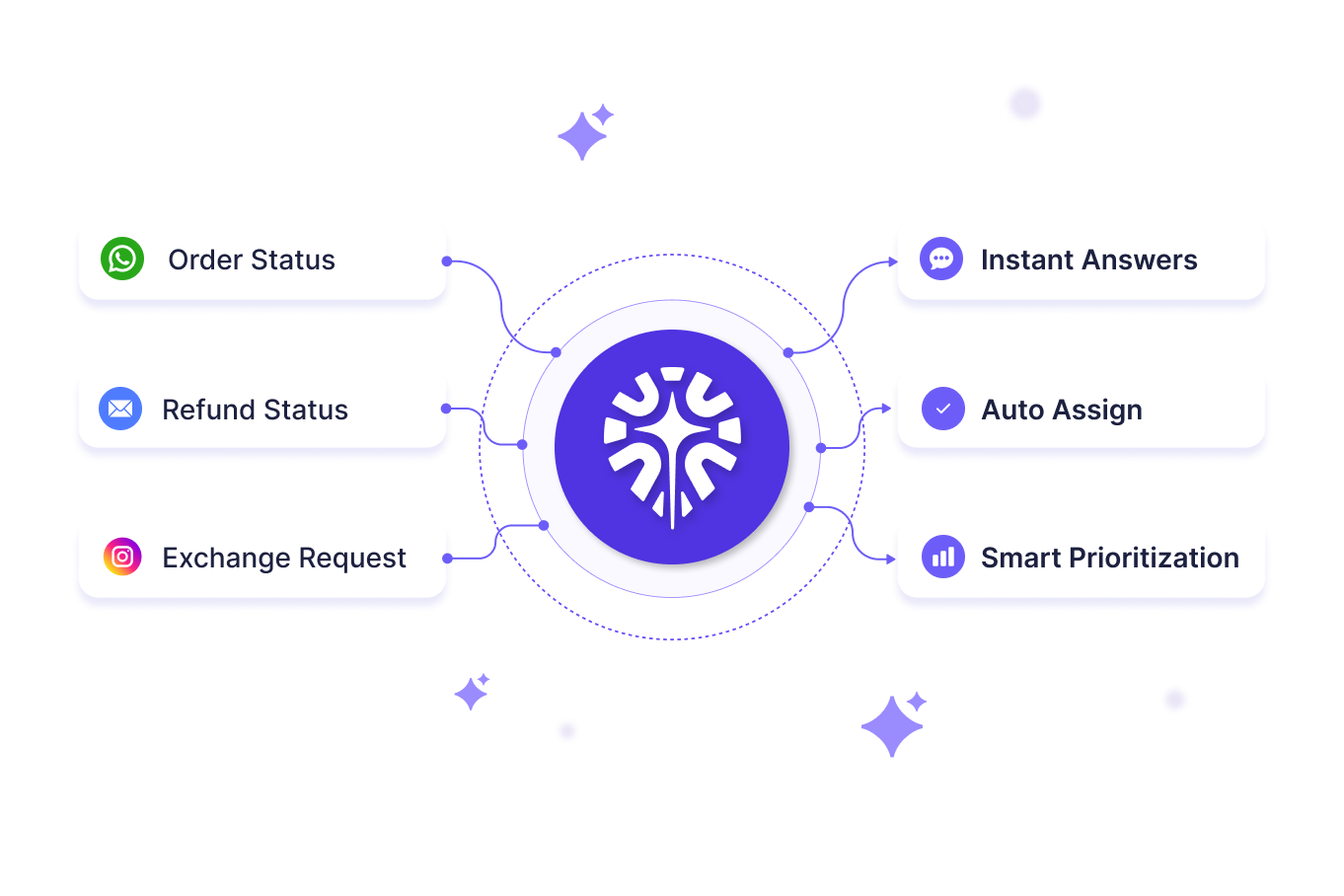
QuantumDesk is an AI-native customer support platform built for small businesses that want AI resolving live chat, WhatsApp, and Instagram queries from day one instead of paying for a seat-based tool that scales cost faster than headcount.
Quantum AI handles repetitive queries automatically across pricing, shipping, and account questions, while the Unified Inbox centralizes every channel into one workspace for small teams.
What sets it apart is native Shopify order data inside every live chat conversation, paired with resolution-based pricing instead of the per-seat licenses that punish small teams.
Key Features
- Quantum AI resolves repetitive live chat queries like order status, pricing, and account questions automatically, without an agent touching the chat.
- Native Shopify integration surfaces live order data, tracking, and purchase history directly into every conversation for ecommerce small businesses.
- Unified Inbox centralizes WhatsApp, email, Instagram, and live chat into one workspace, useful for small teams without dedicated channel owners.
- AI-Curated Inbox prioritizes incoming chats by urgency, sentiment, and customer value so small teams handle the highest-impact conversations first.
- Quantum AI Copilot drafts replies and summarizes conversations in real time, cutting onboarding time for new hires.
Pros
- AI is embedded into the workflow from day one, removing the need to budget separately for a standalone AI add-on.
- Resolution-based pricing keeps costs aligned with conversation volume instead of per-seat licenses that scale faster than small-business revenue.
- Native Shopify integration ships built in, giving ecommerce small businesses live order data without third-party connector delays.
Cons
- Fewer established small-business case studies compared to incumbents that have served live chat teams for years.
- Deepest native integration currently centers on Shopify, so non-ecommerce businesses get a more general feature set.
Best Use Case
Small businesses, especially Shopify sellers, that need AI resolving live chat automatically without an enterprise-level budget.
When to Choose QuantumDesk
Choose QuantumDesk when your small business needs AI-native automation and outcome-based pricing that scales with conversation volume, not headcount.
Pricing
QuantumDesk follows a resolution-based pricing model where small businesses pay for AI-resolved conversations rather than per-seat licenses. Visit the QuantumDesk pricing page for a tailored quote.
2. Tidio (Lyro AI) – Best for Ecommerce and Ease of Use
Tidio offers a smooth combination of live chat and an approachable AI conversational bot named Lyro, built for small ecommerce shops on Shopify and WooCommerce and solo owners.
It sets up in minutes by scanning your FAQ or website content, with real-time visitor tracking that lets you see what people are browsing before they ask a question.
Key Features
- Lyro AI trains directly on your FAQ and website content, skipping the manual knowledge-base setup most tools require.
- Real-time visitor tracking enables proactive chat triggers at exactly the right moment in a shopper's browsing session.
- Native Shopify, WordPress, and BigCommerce integrations make it a natural fit for ecommerce brands.
Pros
- Free plan is a genuine starting point, not a crippled demo, letting owners test with real conversations.
- Hyper-simple setup gets a working chatbot live in minutes, not days or weeks.
- Lyro reduces routine ticket volume effectively where most queries are repetitive pricing or shipping questions.
Cons
- Lacks the deep multi-system automated workflows found in higher-end, enterprise-grade tools.
- AI resolution depth is shallower than platforms built for complex, multi-step disputes.
- Less suited to high-volume teams needing enterprise-grade routing as the business scales.
Best Use Case
Small ecommerce shops and solo owners that need a working AI chatbot live in minutes on a tight budget.
Pricing
Tidio offers a free plan with 50 billable conversations, plus paid tiers starting around $24 to $29 a month. Compare Tidio alternatives with deeper automation.
3. Freshchat (Freddy AI) – Best Budget-Friendly Multichannel Live Chat
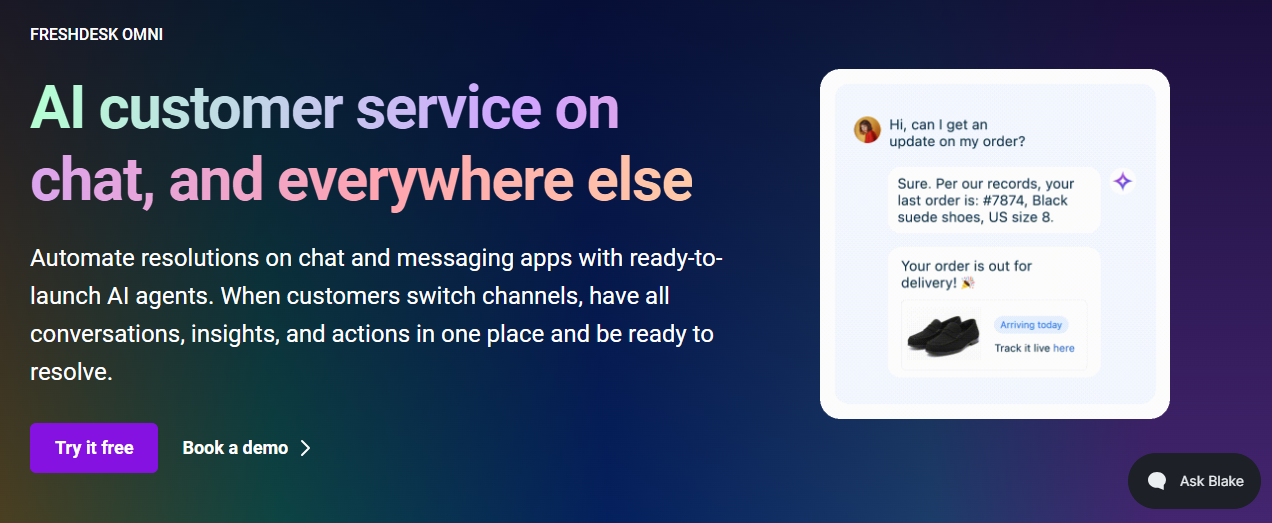
Freshchat is the messaging component of the Freshworks suite, powered by Freddy AI, built for budget-conscious small businesses that want AI-powered support without stitching together multiple vendors.
It automates repetitive queries while keeping a clean unified team inbox for smooth human takeover, with strong localized support and regional messaging integrations.
Key Features
- Freddy AI automates repetitive queries across WhatsApp, web, mobile, SMS, and Facebook Messenger out of the box.
- Unified agent desktop blends bot and human interactions in one view, avoiding context-switching between platforms.
- Deep Freshworks ecosystem integration connects messaging directly with Freshdesk and Freshsales.
Pros
- Free plan supports up to 10 agents, letting small teams run a real pilot without a credit card.
- Budget-friendly pricing makes multichannel AI support accessible to smaller teams.
- Strong multilingual capability suits small businesses serving diverse, international customers.
Cons
- AI resolution depth is shallower than platforms built for complex, multi-step workflows.
- Higher-tier plans are needed to unlock deeper automation as conversation volume grows.
- Native ecommerce order actions are thinner than platforms purpose-built for Shopify.
Best Use Case
Budget-conscious small businesses that want messaging, support, and CRM under one Freshworks roof.
Pricing
Freshchat offers a free plan for up to 10 agents, with Growth plans starting around $15 to $19 per agent monthly. See the official Freshworks pricing page for current tiers. Compare Freshdesk alternatives built AI-first.
4. Intercom (Fin AI) – Best for Scaling Service Businesses
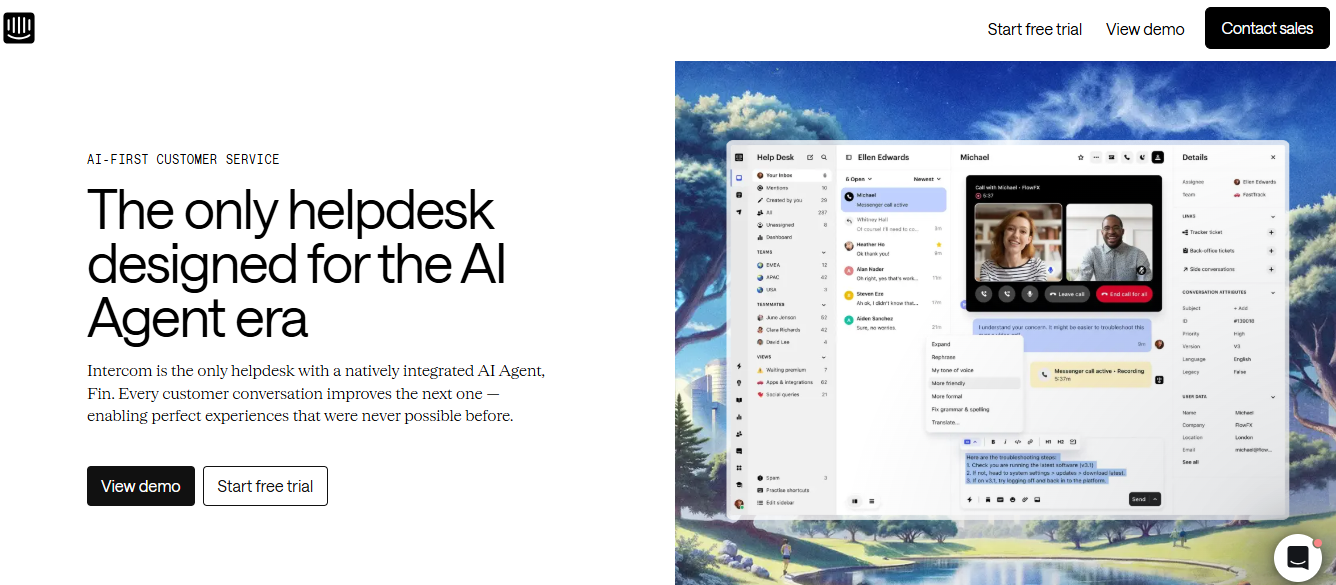
Fin AI resolves a high percentage of tier-one support tickets accurately by grounding its answers strictly in your help center docs, reducing strain on small teams.
It's built for growing digital service or tech-forward small businesses with higher budgets that need combined AI support and lead qualification.
Key Features
- Fin AI Agent resolves queries autonomously, grounded strictly in help center content to minimize hallucination risk.
- Proactive messaging triggers engage customers based on in-app behavior before they need to ask for help.
- CRM integrations with Salesforce, HubSpot, and Freshdesk pull customer data to personalize responses instantly.
Pros
- Highly accurate resolution with minimal hallucination risk grounded strictly in documented policies.
- Proactive messaging reduces frustration and improves feature adoption for service-driven small businesses.
- Multilingual support across 45+ languages suits businesses serving international customers.
Cons
- Premium pricing structure with a per-resolution fee can get expensive as conversation volume climbs.
- Less suited to ecommerce-specific transactional queries like order tracking without added connectors.
- Higher total cost of ownership once seats and resolutions are combined at scale.
Best Use Case
Growing service or tech-forward small businesses that want accurate, tier-one resolution with lead qualification built in.
Pricing
Intercom Fin is priced per outcome at roughly $0.99 per resolution, on top of seat-based plans starting near $29 per seat. See Intercom's official pricing page for current rates. Compare Intercom alternatives built AI-first from day one.
5. Zoho SalesIQ (Zia AI) – Best for Teams Already in the Zoho Ecosystem
Zoho SalesIQ features Zia AI to answer visitor questions, track user navigation in real time, and automatically log chat transcripts and lead info straight into your CRM.
It's built for businesses already utilizing Zoho CRM or looking for deep visitor tracking without adding a separate live chat vendor.
Key Features
- Zia AI answers routine visitor questions while tracking real-time browsing behavior on your website.
- Chat transcripts and lead info log automatically into Zoho CRM without manual data entry.
- Native Zoho ecosystem integration keeps sales, marketing, and support data in one connected system.
Pros
- Economical entry pricing makes it accessible for small businesses on a tight budget.
- Deep visitor tracking gives context on browsing behavior before a chat even starts.
- Native CRM logging removes manual work for teams already running Zoho.
Cons
- Value depends heavily on existing Zoho investment; standalone, better options likely exist.
- AI resolution depth is shallower than platforms built AI-first for autonomous support.
- Less suited to businesses running WhatsApp or Instagram as primary support channels.
Best Use Case
Small businesses already using Zoho CRM that want visitor tracking and chat logged natively.
Pricing
Zoho SalesIQ offers a free tier for low traffic, with paid plans starting around $7 to $19 per operator monthly.
6. ManyChat – Best for Social Commerce and Messaging-First Businesses
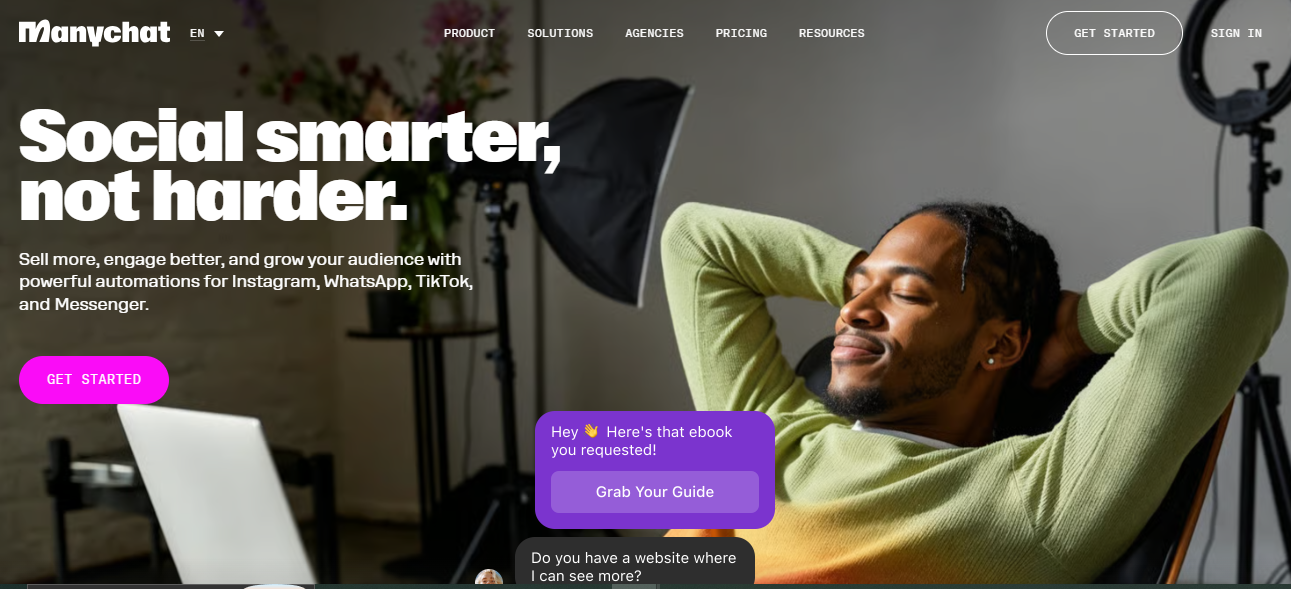
ManyChat is a chat marketing and automation platform designed to help businesses engage customers across social messaging channels like Instagram, Facebook Messenger, and WhatsApp.
If most of your sales happen via Instagram DMs or WhatsApp, this is the strongest fit, with a no-code visual builder for interactive chatbots.
Key Features
- Visual drag-and-drop builder creates interactive chatbots for Instagram, Messenger, and WhatsApp without code.
- Seamless integrations with Shopify, PayPal, and Google Sheets connect chat directly to sales workflows.
- Lead capture flows turn social conversations into qualified pipeline around the clock.
Pros
- Purpose-built for social-first businesses where most customer conversations already happen in DMs.
- No-code builder keeps setup accessible for non-technical small-business owners.
- 24/7 instant responses improve conversion on the messaging apps customers already use daily, a core driver of increase customer engagement strategies.
Cons
- Less suited to businesses running primarily web-based live chat or email support.
- AI resolution depth is shallower than platforms built for complex, multi-step disputes.
- Limited helpdesk-style ticket management compared to full customer support platforms.
Best Use Case
Social-first small businesses and ecommerce brands selling primarily through Instagram and WhatsApp DMs.
Pricing
ManyChat's Pro plan starts at $15 a month for up to 500 contacts.
7. Zendesk AI – Best for Small Teams Already Using Zendesk
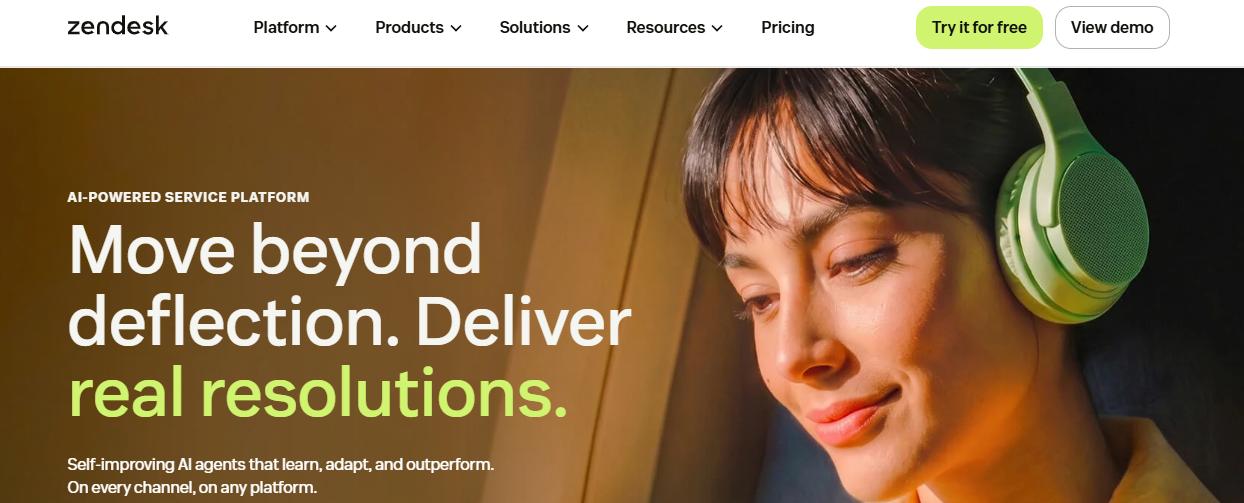
Zendesk AI is an embedded AI layer within the Zendesk customer service suite, the lowest-friction path to adding automation if your team already lives in Zendesk.
It deflects routine support tickets using your existing knowledge base and passes full conversation context to a human agent when escalation is needed.
Key Features
- AI-powered ticket deflection uses your existing knowledge base content across email, web chat, and social.
- Human handoff with full context ensures customers never have to repeat themselves after escalation.
- Built-in analytics dashboard tracks automated resolution rates alongside agent performance.
Pros
- Lowest-friction path to automation for teams already running Zendesk, with no platform migration required.
- Omnichannel inbox centralizes email, web chat, and social in one established platform.
- Knowledge base auto-suggestions speed up both bot and human replies.
Cons
- Pricing runs steep across Suite tiers, plus a separate $50 per agent AI Copilot add-on.
- AI usage is metered separately from the seat price, complicating total cost estimates.
- AI resolution depth lags AI-native platforms built for full autonomous resolution.
Best Use Case
Small teams already using Zendesk who want AI automation without switching platforms.
Pricing
Zendesk Suite plans run $55 to $115 per agent monthly, with the AI Copilot add-on priced at $50 per agent. See the official Zendesk pricing page for full tiers. Compare Zendesk alternatives built AI-first from day one.
8. HubSpot Chatbot – Best for Small Businesses Already Running HubSpot
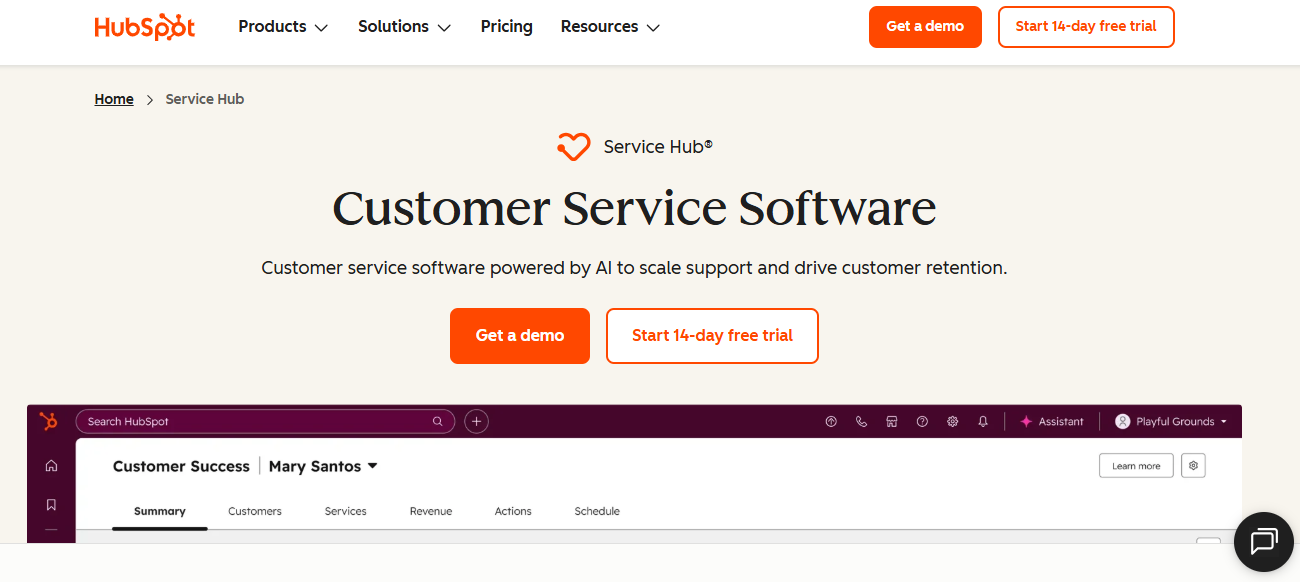
HubSpot includes a chatbot inside its CRM and marketing suite, capturing leads and syncing them directly into your HubSpot pipeline.
It's built for small businesses already committed to HubSpot that want unified customer data across marketing, sales, and service.
Key Features
- No-code chatbot builder captures leads and qualifies them before routing to sales or support.
- Native ticketing ties every chat conversation to the same CRM record used by sales and marketing.
- Free tier includes basic chat and ticketing before a business needs to pay.
Pros
- Unified customer data across marketing, sales, and service is powerful for HubSpot-committed businesses.
- Free entry tier lowers the barrier for small teams testing a chat workflow.
- Familiar interface reduces onboarding time for teams already using HubSpot daily.
Cons
- Value depends heavily on existing HubSpot investment; standalone, better options likely exist.
- AI resolution depth is shallower than platforms built AI-first for autonomous support.
- Pricing climbs quickly once a business needs higher-tier plans for full features.
Best Use Case
Small businesses already committed to HubSpot that want unified customer data across the funnel.
Pricing
HubSpot Service Hub pricing starts around $20 per seat monthly, rising toward $150 per seat on higher tiers. See the official HubSpot pricing page for current tiers.
9. Chatbase – Best for Training AI on Your Own Documents

Chatbase lets you train a chatbot on your own content fast, so you upload docs and it answers directly from your knowledge base.
It suits small teams that want a smart FAQ bot without the deeper multichannel or CRM features bundled into full support platforms.
Key Features
- Custom training on uploaded docs and Notion content builds a knowledge-grounded FAQ bot quickly.
- No-code setup gets a working chatbot live without engineering support.
- Focused feature set keeps the tool simple for teams that only need FAQ automation.
Pros
- Fast, no-code setup suits teams that want a smart FAQ bot without complexity.
- Training directly on existing documents keeps answers grounded in accurate, current content.
- Affordable entry pricing suits small teams testing AI chat for the first time.
Cons
- Limited multichannel coverage compared to platforms built for WhatsApp and Instagram natively.
- No native CRM or helpdesk ticketing, so it works best as a standalone FAQ layer.
- Less suited to businesses needing order actions or transactional workflow automation.
Best Use Case
Small teams that want a fast, no-code FAQ bot trained directly on their own documents.
Pricing
Chatbase pricing starts around $40 a month for small-team usage tiers.
10. Drift – Best for Sales-Driven Small Businesses
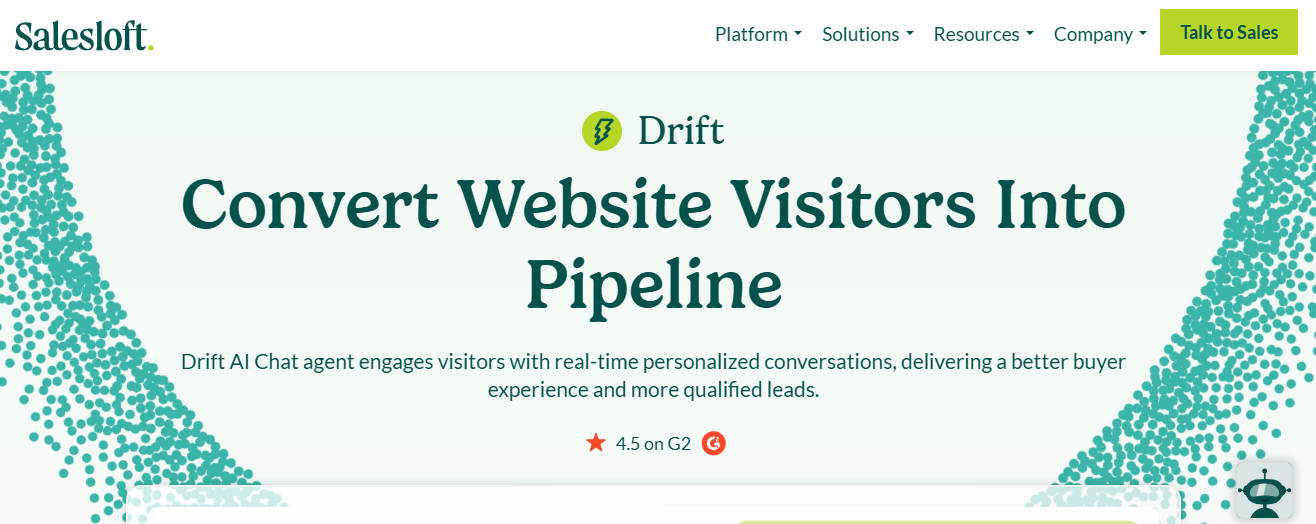
Drift focuses on conversational marketing and sales chat, engaging website visitors and booking meetings automatically for sales teams.
It fits small businesses with an active sales motion that want live chat to qualify leads and drive pipeline, not just answer support questions.
Key Features
- Conversational marketing chat qualifies website visitors and books meetings without manual follow-up.
- Sales-tuned AI turns traffic into booked meetings faster than a generic support chatbot.
- Integrates with common sales tools to route qualified leads straight to a rep.
Pros
- Purpose-built for sales conversations, a stronger fit than general support-first chat tools.
- Automatic meeting booking removes manual back-and-forth from the sales qualification process.
- Fits naturally into businesses that already run an active outbound or inbound sales motion.
Cons
- Less suited to post-purchase support use cases like order tracking or returns.
- AI resolution depth for support-style queries lags platforms built for customer service first.
- Pricing and feature depth lean toward sales teams rather than support-only small businesses.
Best Use Case
Sales-driven small businesses that want live chat to qualify leads and book meetings automatically.
Pricing
Drift pricing is quoted based on team size and usage; contact their team for a small-business quote.
How to Choose the Best AI Live Chat Software for Small Businesses?
Small-business live chat needs go beyond what most general-purpose AI platforms were built to handle. A pricing question at 11pm is not the same as a ticket filed through a formal support portal. These five factors help you shortlist the right AI live chat software before committing to a plan.
1. Evaluate AI Capabilities
Test whether the AI resolves routine questions like pricing, shipping, and account status using your actual content, not just generic scripts, since this directly shapes how to improve online customer service on a small team's tightest resource: time.
2. Check Automation Workflows
Confirm the tool blends instant AI replies with human handoff smoothly rather than leaving customers stuck in a customer service chatbot loop, since a bad handoff undoes the goodwill instant responses build.
3. Verify Integrations
Check whether the platform connects natively to your existing stack, especially Shopify, Zoho, or HubSpot if you're already using one, and confirm coverage across WhatsApp and Instagram.
4. Assess Scalability
Evaluate whether pricing scales with conversation volume rather than a rigid seat count, since a small business's chat volume can spike overnight around a sale or launch.
5. Compare Pricing and ROI
Compare free tiers, per-seat, and per-resolution pricing against your realistic monthly conversation volume, and factor in add-on fees before committing to a plan you'll quickly outgrow or overpay for.
Why is QuantumDesk the Best AI Live Chat Software for Small Businesses?
QuantumDesk is built for small businesses that need AI resolving live chat automatically from day one, without paying enterprise prices for capabilities a lean team won't use for years.
Every other platform on this list asks small businesses to choose between a cheap chatbot, a CRM-locked tool, or ecommerce-specific automation. QuantumDesk does not force that trade-off.
Key Capabilities of QuantumDesk
- Quantum AI resolves repetitive queries automatically, eliminating chat volume across pricing, shipping, and account questions without agent involvement.
- Unified Inbox centralizes WhatsApp, email, Instagram, and live chat, useful for lean teams without dedicated channel owners.
- Native Shopify integration surfaces live order and purchase history for ecommerce small businesses without third-party connectors.
- Real-time admin dashboard gives owners visibility into AI resolution rates and CSAT trends without a dedicated ops hire.
- Resolution-based pricing keeps costs aligned with conversation volume instead of charging per seat as the team grows.
This is the practical difference between a chatbot and small business customer service built to actually scale: automation and multichannel coverage in the same architecture instead of stitched together from separate vendors.
Pick the platform that fits your small business's channel mix, conversation volume, and budget. See how QuantumDesk handles support for your team → Book a Demo
Frequently Asked Questions About AI Live Chat Software for Small Businesses
What are the best AI live chat software for small businesses?
In my testing, the best AI live chat software for small businesses in 2026 are QuantumDesk, Tidio, Freshchat, Intercom Fin AI, and Zoho SalesIQ.
QuantumDesk leads for AI-native multichannel automation, Tidio leads for ecommerce ease of use, and Freshchat leads for budget-friendly multichannel coverage.
Which AI live chat software is best for SMBs?
Tidio and QuantumDesk are the best AI live chat options for small teams that want fast setup and predictable costs without complex configuration.
Tidio's Lyro AI handles routine FAQ deflection in minutes, while QuantumDesk's resolution-based pricing keeps costs aligned with actual conversation volume as the business grows.
How do I choose the right AI live chat software for my small business?
Start with your channel mix and existing tech stack before comparing AI accuracy, since the right tool depends on where your customers already message you.
Ecommerce sellers should evaluate QuantumDesk or Tidio, Zoho users should look at Zoho SalesIQ, and social-first brands should consider ManyChat.
Is there a free AI live chat software for small businesses?
Yes, Tidio and Freshchat both offer free plans with basic AI capabilities built for small teams and early-stage businesses.
Free tiers suit businesses testing AI deflection before committing to a paid plan, though most outgrow them once conversation volume and channel needs expand.
What features should I look for in AI live chat software for small businesses?
Prioritize AI that blends instant replies with smooth human handoff, plus native integration with your existing stack like Shopify, Zoho, or HubSpot.
Live chat that only deflects to generic FAQ links does little to reduce the repetitive questions filling a small team's inbox.




.avif)