Summarize with AI
Key Takeaways
- QuantumDesk is the best AI-native pick for Shopify D2C brands that want live order data surfaced into multichannel support across WhatsApp, email, and Instagram with native ecommerce automation.
- Gorgias leads for Shopify-native D2C support with order tracking, refund workflows, and macro-driven automation inside a single help desk dashboard.
- Fini AI delivers high-accuracy reasoning for D2C brands where policy-based automation and low hallucination risk matter more than channel breadth.
- Tidio Lyro AI suits small D2C stores that want fast AI chat setup and affordable deflection without complex implementation or enterprise-tier investment.
- Ecommerce integration, channel coverage, and AI accuracy are the three most critical factors when evaluating AI support tools for D2C brands.
- The best D2C AI support platform depends on whether your brand is Shopify-first, multichannel-focused, or prioritizing a high-accuracy AI reasoning layer.
D2C customer support is not a scaled-down version of enterprise helpdesk. Your customers expect instant answers on WhatsApp and Instagram, every order query carries a refund risk, and one slow response can end a brand relationship the team spent months building.
I tested 10 AI support platforms built for D2C brands across Shopify, email, WhatsApp, and Instagram to identify which tools surface live Shopify order data natively into every conversation and handle returns without agent involvement.
This guide breaks down what each platform does for ecommerce customer service, where AI-native platforms with built-in Shopify integration outperform bolt-on add-ons, and how to shortlist the right fit for your Shopify setup, channel mix, and D2C growth stage.
Quick Comparison of the Top AI Support Tools for D2C Brands in 2026
How Did We Choose These 10 AI Support Tools for D2C Brands?
I shortlisted these 10 platforms by testing each inside real D2C support workflows and evaluating actual ecommerce integration depth rather than taking vendor marketing claims about Shopify connectivity and AI resolution rates at face value.
- Verified ecommerce integration depth by testing native Shopify order data access, refund automation, and tracking lookup speed, separating platforms with built-in Shopify connectors from those relying on third-party apps across all 10 tools.
- Evaluated AI accuracy by testing refund policy reasoning, return workflows, and order-specific resolution to surface hallucination risk on real D2C queries.
- Reviewed real user ratings across G2 and Capterra, filtering for D2C and Shopify brand use cases rather than B2B or enterprise teams.
- Benchmarked channel coverage across WhatsApp, Instagram, email, and live chat, since D2C brands rarely run support through a single channel.
- Measured each platform's ability to reduce repetitive support questions by testing deflection depth on order status, returns, refunds, and tracking queries.
- Compared pricing models for teams handling 500 to 10,000 monthly tickets, evaluating per-seat, per-resolution, and flat-rate structures across D2C team sizes.
In-Depth Review of the Best 10 AI Support Tools for D2C Brands in 2026
1. QuantumDesk – Best AI-Native Support Platform for D2C Brands

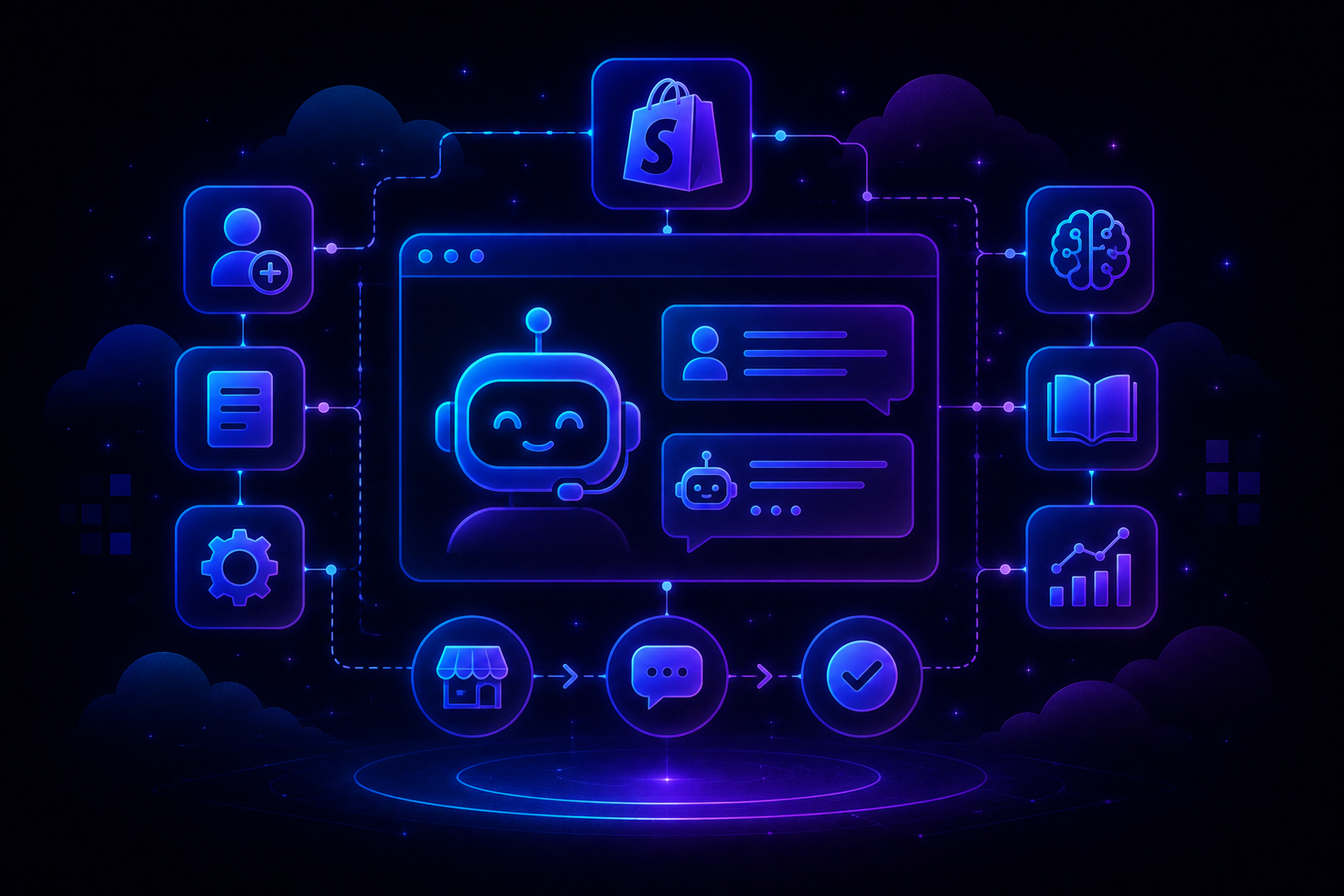
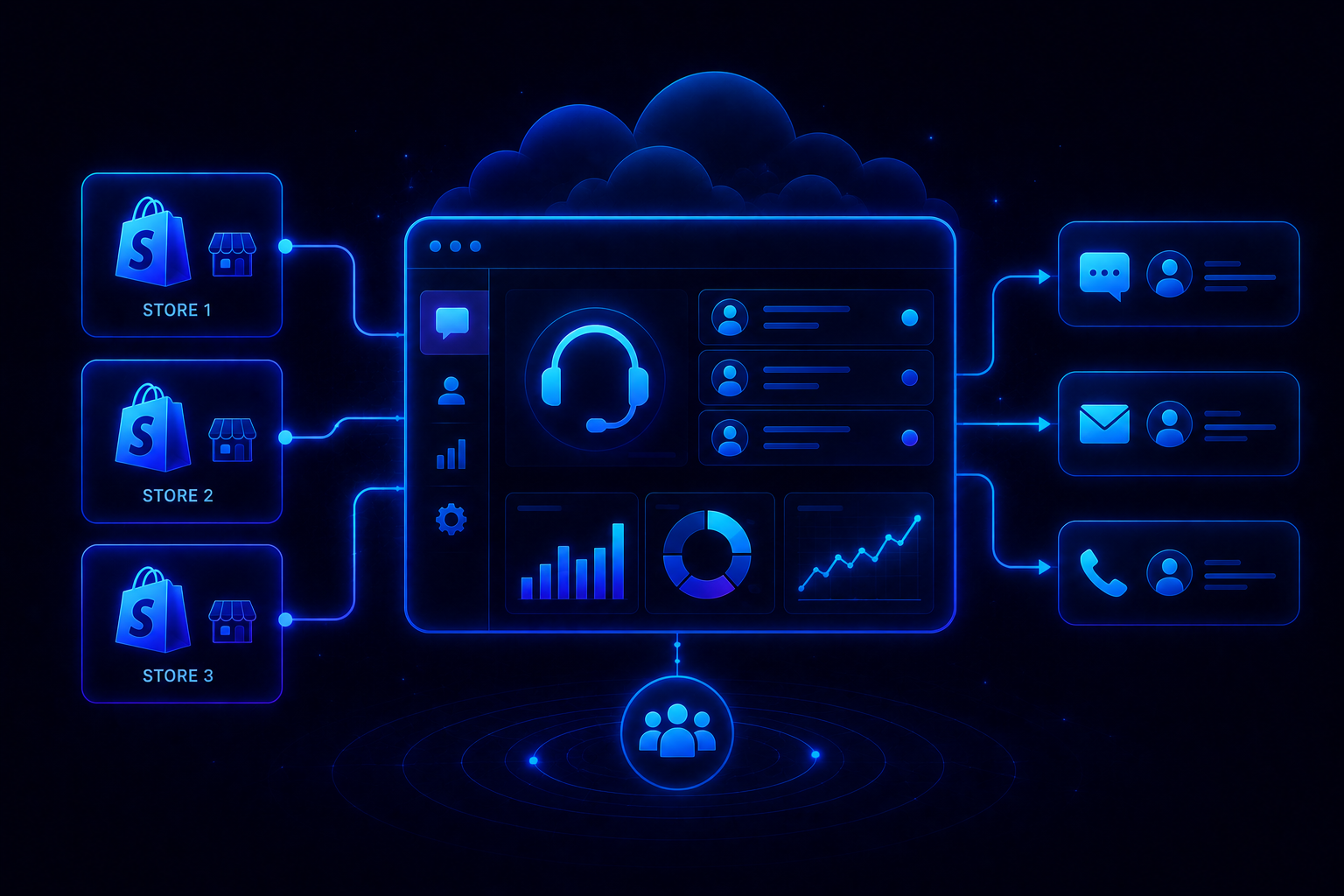
QuantumDesk is an AI-native customer support platform built for Shopify D2C brands that want to automate order queries, handle multichannel conversations across WhatsApp, email, and Instagram, and resolve tickets using live Shopify data without growing headcount or paying enterprise-tier prices.
Quantum AI handles repetitive D2C queries automatically: order status, tracking, refund requests, and return policy questions, without an agent touching the ticket. The Unified Inbox centralizes WhatsApp, email, Instagram, and live chat in one workspace.
What sets QuantumDesk apart is the native Shopify integration that surfaces live order status, tracking, and purchase history directly into every conversation, paired with a resolution-based pricing model where D2C teams pay for AI-resolved tickets, not per-seat AI licenses.
Key Features
- Quantum AI resolves repetitive D2C support queries like order status, tracking updates, refund requests, and return policy questions automatically, without an agent touching the ticket
- Unified Inbox centralizes WhatsApp, email, Instagram, and live chat into one workspace with full conversation history preserved across every agent and every interaction
- Native Shopify integration surfaces live order status, tracking, refund history, and purchase data directly into every conversation so agents and AI resolve Shopify queries without switching tabs or copying order details manually
- AI-Curated Inbox prioritizes incoming D2C tickets by urgency, sentiment, and customer tier so agents always handle the highest-impact conversations first
- Quantum AI Copilot drafts replies and summarizes order history in real time, reducing the time agents spend reading context before responding to complex queries
- Admin Analytics tracks resolution rates, response times, and escalation patterns so support leaders identify bottlenecks before they affect D2C customer retention
Pros
- AI is embedded into every support workflow from day one, eliminating the need to budget separately for a standalone AI add-on
- Native Shopify integration is built in rather than added via third-party connector, so order data flows into every conversation without configuration delays
- Resolution-based pricing keeps D2C support costs aligned with outcomes, making costs more predictable than per-agent licenses that scale with headcount regardless of AI performance
Cons
- Still in BETA, so enterprise-grade controls and deeper ecommerce workflow integrations are expanding but haven't yet reached the maturity of established category leaders
- Fewer established D2C case studies compared to incumbents that have been serving ecommerce teams for a decade or more with documented deployment histories
Best Use Case
Shopify D2C brands that need AI resolving order status, tracking, and return queries automatically using live Shopify data, while agents focus on complex disputes, refund negotiations, and high-value customer conversations.
When to Choose QuantumDesk
Choose QuantumDesk when your Shopify D2C brand needs live order data inside every support conversation, multichannel coverage across WhatsApp, email, and Instagram, and ecommerce-native automation built in from day one, not sourced from a third-party add-on.
Pricing
QuantumDesk follows a resolution-based pricing model where D2C teams pay for AI-resolved tickets rather than per-seat AI licenses. Visit the QuantumDesk pricing page or contact the team for a tailored demo.
2. Gorgias – Best Shopify-Native Help Desk with AI’
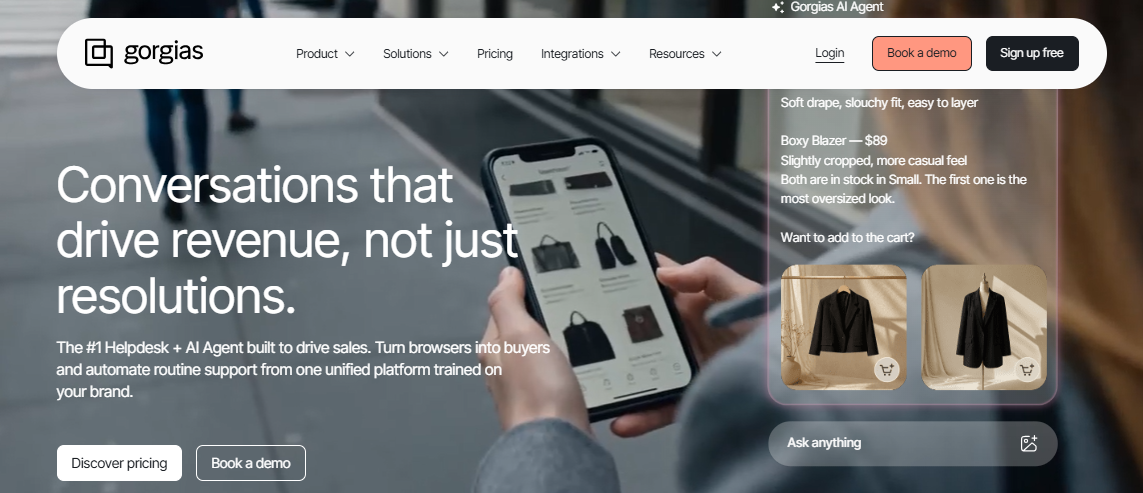
Gorgias is a Shopify-native help desk built for D2C brands that want order tracking, refund processing, and return workflows directly inside the support dashboard, without switching between tools or manually copying order details for every ticket.
Its macro system lets agents respond to common D2C queries in one click, with live Shopify data pulled into every ticket. Revenue statistics connect support performance directly to D2C sales outcomes.
Key Features
- Native Shopify order actions let agents issue refunds, cancel orders, and process returns directly inside the Gorgias dashboard without switching tools
- Macro-driven automation handles repetitive D2C ticket categories with pre-built templates populated with live order data from Shopify in one click
- Revenue statistics track which support conversations generate sales, linking D2C support performance directly to ecommerce revenue and conversion outcomes
Pros
- Deepest Shopify integration on this list, with native order actions, refund processing, and return workflows that no other platform on this list matches natively
- Macro library speeds up repetitive D2C responses, handling order delays, wrong items, and refund status with pre-filled templates in one click
- Revenue statistics link support to sales outcomes, a critical metric for D2C brands measuring how service quality affects conversion and repeat purchases
Cons
- Shopify-centric design limits usefulness for D2C brands selling across multiple platforms or needing support channels beyond Shopify's native ecosystem
- AI resolution depth is shallower than AI-native platforms that handle full ticket categories autonomously without requiring a macro template or agent selection
- Per-ticket pricing can escalate quickly for high-volume D2C brands during peak seasons, promotional events, or product launches that spike support demand
When to Choose Gorgias
Choose Gorgias when your D2C brand is Shopify-first and needs native order actions, refund workflows, and macro automation inside a single help desk. Teams exploring Gorgias alternatives will find AI-native options with stronger autonomous resolution.
Pricing
Gorgias's pricing is based on support ticket volume with plans designed for D2C Shopify brands at different growth stages.
3. Fini AI – Best High-Accuracy AI Reasoning Layer for D2C
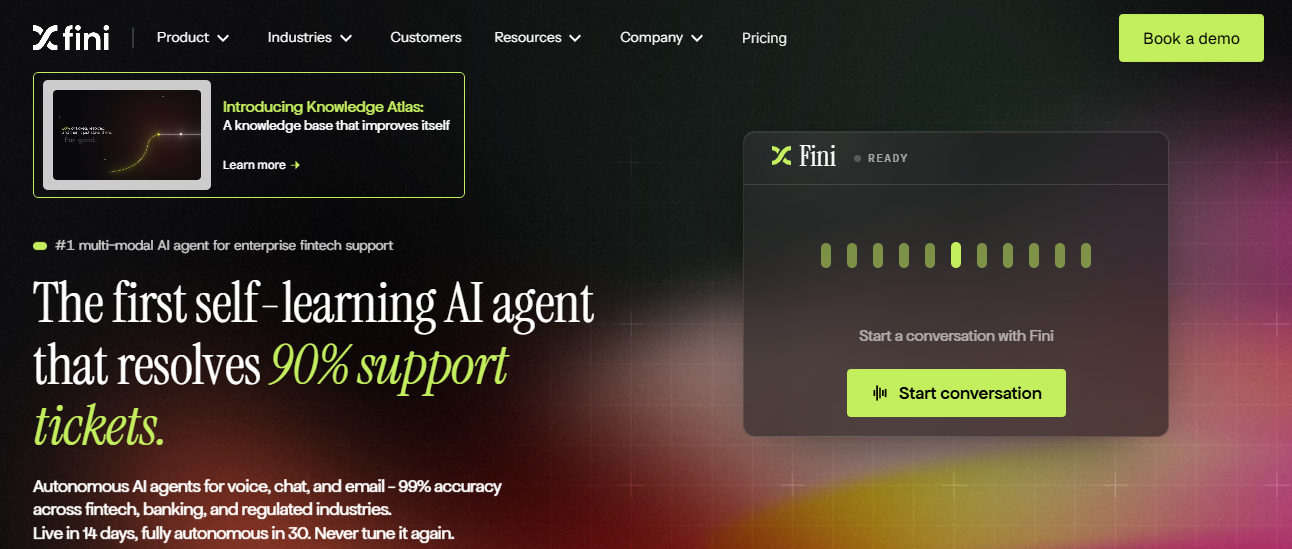
Fini AI is a high-accuracy AI support layer built for D2C brands that need to automate policy-based queries: refund eligibility, return windows, subscription changes, and product-specific FAQs, without risking wrong answers that damage customer trust.
Its reasoning-first architecture processes the full context of a query before responding, reducing hallucination on complex D2C policy questions where accuracy matters more than deflection speed.
Key Features
- Reasoning-first engine processes full query context before responding, reducing hallucination rates on complex D2C policy and return eligibility queries
- Multi-helpdesk API integration layers Fini AI on top of existing ticketing systems without requiring D2C brands to migrate off current infrastructure
- Policy-based automation handles refund eligibility, return windows, and subscription change queries with consistent, rule-governed accuracy that AI add-ons often miss
Pros
- High-accuracy reasoning reduces the hallucination risk that hurts D2C brands most when AI generates wrong answers about refund or return policies at scale
- Sits on top of existing infrastructure, so D2C brands avoid a full platform migration to add high-accuracy AI to their current help desk setup
- Reasoning-first architecture is more suited to complex D2C policy queries than retrieval-based AI that surfaces documentation without interpreting the customer's actual intent
Cons
- Narrower channel coverage than full omnichannel platforms, so D2C brands running WhatsApp, Instagram, and email at scale may hit channel gaps
- Less known in D2C circles compared to Shopify-native platforms, which matters when brand teams need vendor credibility before approving the purchase
- Pricing is less transparent than platforms with published per-seat or per-resolution rates, requiring a direct conversation with Fini AI's sales team
When to Choose Fini AI
Choose Fini AI when your D2C brand has complex refund policies, return windows, or subscription rules that require reasoning-first accuracy and minimal hallucination risk.
Pricing
Fini AI's pricing is resolution-based and structured around query volume and integration scope. Details are available directly from the Fini AI team.
4. Tidio (Lyro AI) – Best Budget-Friendly AI Chat for Small D2C Stores
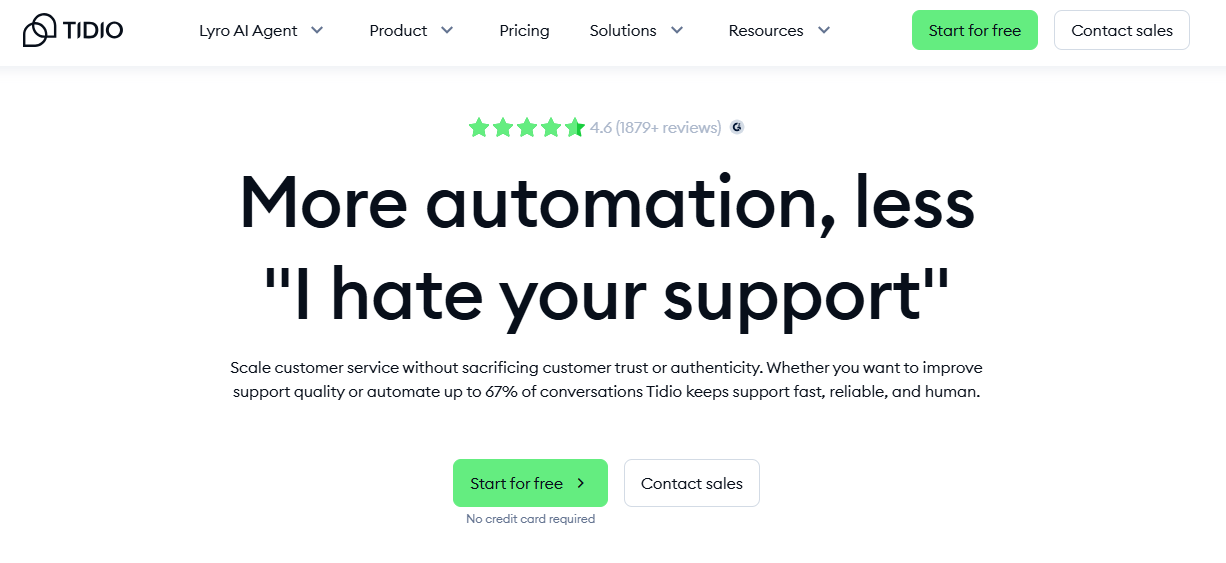
Tidio is an AI chat platform for small to medium D2C stores that want fast setup, affordable pricing, and chat deflection for routine buyer questions without the configuration overhead of enterprise-grade help desk platforms.
Lyro AI, Tidio's conversational AI layer, handles routine D2C queries like order status, product FAQs, and shipping timelines in real time, reducing the volume of tickets that reach human agents during peak periods.
Key Features
- Lyro AI handles routine D2C queries like order status, shipping timelines, and product FAQs in real-time chat without requiring a human agent to intervene
- Quick setup gets D2C stores live with AI chat deflection in hours rather than the days or weeks required by enterprise-grade platforms with full configuration cycles
- Affordable pricing tiers make Tidio accessible for small D2C brands at seed or early growth stage before support volume justifies a full platform investment
Pros
- Fastest setup of any platform on this list, which matters for small D2C stores that need AI working before the next product launch or promotional campaign
- Budget-friendly pricing keeps D2C support costs low during early growth stages when every expense line requires justification across the team
- Lyro AI reduces routine ticket volume effectively for small D2C stores where the majority of queries are repetitive order and shipping questions
Cons
- AI resolution depth is shallower than AI-native platforms built for complex, multi-step D2C workflows like return disputes or multi-order account queries
- Limited omnichannel reach compared to platforms that cover WhatsApp, Instagram, and email natively without additional third-party integrations required
- Less suited to high-volume D2C brands that need enterprise-grade routing, deep Shopify automation, and AI resolution across thousands of monthly tickets
When to Choose Tidio
Choose Tidio when your D2C store is small to medium, support volume is manageable, and fast AI chat setup matters more than deep ecommerce automation or omnichannel breadth.
Pricing
Tidio's pricing offers free and paid tiers, with Lyro AI resolutions priced separately above a monthly free conversation limit.
5. Siena AI – Best Empathetic, On-Brand AI Voice for Shopify
Siena AI is an empathetic AI support platform built for D2C and Shopify brands that want on-brand, voice-consistent customer conversations rather than generic AI responses that feel disconnected from the brand's tone and values.
It uses brand voice training to align AI-generated responses with the specific tone, vocabulary, and style the D2C brand uses across its website, marketing, and customer communication channels.
Key Features
- Brand voice training aligns AI-generated replies with the D2C brand's specific tone, vocabulary, and style rather than defaulting to generic support language
- Empathetic response design produces support replies that reflect the emotional intelligence of a trained brand ambassador rather than a standard scripted chatbot
- Shopify integration connects product and order data to every conversation so Siena AI resolves Shopify-specific queries in the brand's voice
Pros
- On-brand voice consistency across every AI-generated reply, which matters for premium D2C brands where tone is a core part of the customer experience
- Empathetic AI responses reduce the cold, robotic tone that most AI-generated support messages carry, improving satisfaction for premium D2C brand interactions
- Designed for D2C and Shopify from the ground up rather than adapted from a B2B enterprise platform with D2C features added on afterward
Cons
- Narrower use case than full-stack help desk platforms, making Siena AI less suitable for D2C brands that also need strong ticketing and omnichannel routing
- Less coverage outside Shopify ecosystems for D2C brands selling across multiple platforms, marketplaces, or non-Shopify ecommerce environments simultaneously
- Smaller brand recognition compared to established help desk platforms, which can be a procurement barrier for larger D2C organizations with formal approval processes
When to Choose Siena AI
Choose Siena AI when your premium D2C brand treats tone and voice as non-negotiable and wants AI that sounds like your best support agent, not a generic chatbot.
Pricing
Siena AI's pricing is available directly from their sales team and is typically structured around resolution volume and brand configuration scope.
6. Yuma AI – Best Deep Shopify Automation Partner
Yuma AI is a Shopify-focused automation platform built for D2C brands that want deep workflow automation with outcome-based pricing rather than a traditional per-seat license that charges regardless of AI performance.
It handles complex Shopify ecommerce tasks including order modifications, return processing, and subscription management autonomously, with pricing tied directly to AI-resolved outcomes rather than tickets touched.
Key Features
- Deep Shopify workflow automation handles order modifications, cancellations, returns, and subscription changes without requiring agent involvement or manual macro templates
- Outcome-based pricing model charges only for AI-resolved tickets, aligning Yuma AI's cost with actual automation value delivered to D2C support teams
- Complex ecommerce action execution enables AI to take multi-step actions inside Shopify rather than just surfacing information or deflecting to a human agent
Pros
- Outcome-based pricing aligns cost with value, making Yuma AI more predictable than per-seat models for D2C brands with fluctuating seasonal support volume
- Deepest Shopify automation of any AI-only platform, handling multi-step order workflows that pure chat or FAQ deflection tools cannot execute independently
- Purpose-built for Shopify D2C workflows rather than adapted from a general-purpose AI layer that treats ecommerce as a secondary use case
Cons
- Shopify-dependent architecture makes Yuma AI less relevant for D2C brands operating on WooCommerce, Magento, or headless ecommerce platforms
- Narrower channel coverage than omnichannel platforms that handle WhatsApp, Instagram, and email natively alongside deep Shopify order automation
- Smaller integration ecosystem compared to established help desk platforms with certified app marketplaces, which limits flexibility for complex D2C tech stacks
When to Choose Yuma AI
Choose Yuma AI when your D2C brand runs primarily on Shopify, support volume is high, and deep ecommerce automation with outcome-based pricing matters more than omnichannel breadth.
Pricing
Yuma AI follows an outcome-based pricing model where D2C teams pay per AI-resolved ticket. Current plan details are available on the Yuma AI website.
7. Intercom Fin – Best for D2C Brands Already on Intercom
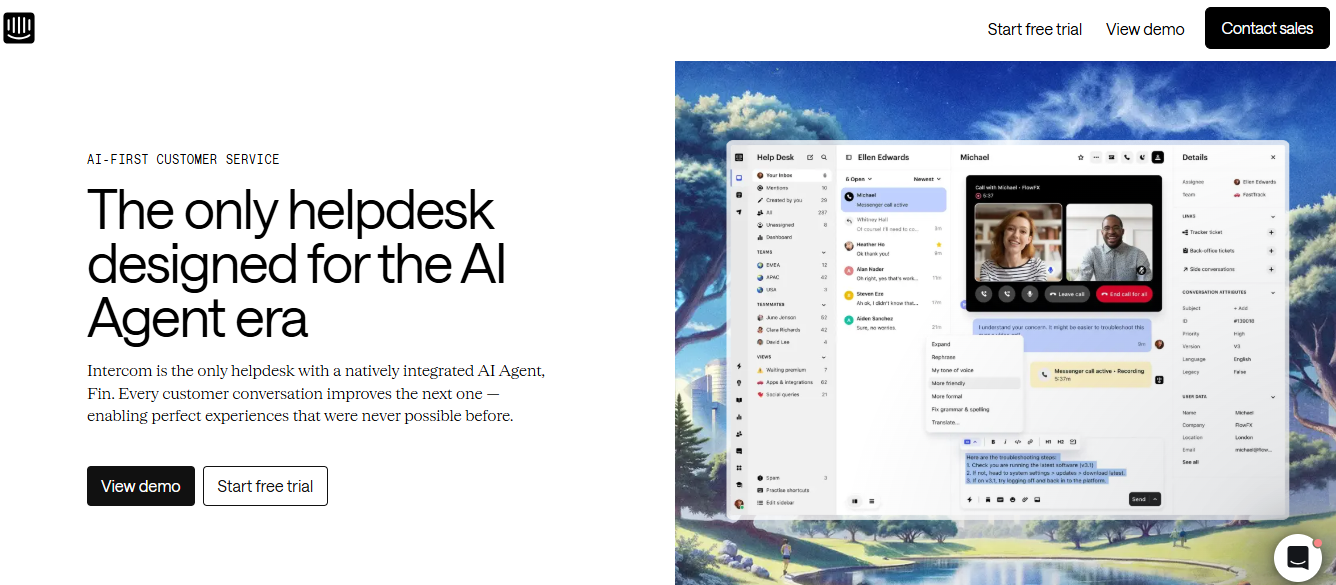
Intercom Fin is the AI resolution layer inside Intercom's messaging platform, designed for D2C brands already using Intercom for customer communication, onboarding, and product engagement.
Fin AI resolves queries autonomously from connected knowledge bases, handling product FAQs, refund policies, and order-related questions in-app or via email without requiring agent intervention for common request types.
Key Features
- Fin AI resolves queries autonomously from connected knowledge bases, handling common D2C questions without requiring scripted bot flows or manual agent selection
- In-app messaging integration keeps D2C support inside the product experience rather than routing customers to a separate help desk portal
- Proactive outbound messaging triggers on customer behavior to address common D2C friction points before they become reactive support tickets
Pros
- Tight integration with Intercom's messaging ecosystem makes Fin AI the easiest path to AI resolution for D2C brands already standardized on Intercom
- Genuine end-to-end resolution rather than deflection routing, which is rare among chat-first platforms at Intercom's mid-market price tier
- Proactive messaging reduces reactive ticket volume by catching common D2C friction points in the product experience before customers file a complaint
Cons
- Per-resolution Fin AI pricing on top of per-seat fees escalates quickly for D2C brands with high in-app conversation volume or seasonal demand spikes
- Less suited for D2C brands outside Intercom's ecosystem, making switching costs high for any team that has not already standardized on Intercom messaging
- Weaker Shopify order data integration compared to purpose-built D2C platforms that surface live order context natively into every support conversation
When to Choose Intercom Fin
Choose Intercom Fin when your D2C brand is already standardized on Intercom messaging and Fin AI's in-app resolution covers most of your support volume without requiring a platform migration.
Pricing
Intercom's pricing runs on a per-seat basis, with Fin AI resolutions billed separately on a per-resolution model as conversation volume scales.
8. Gladly – Best for High-Touch, Voice-Heavy Premium D2C
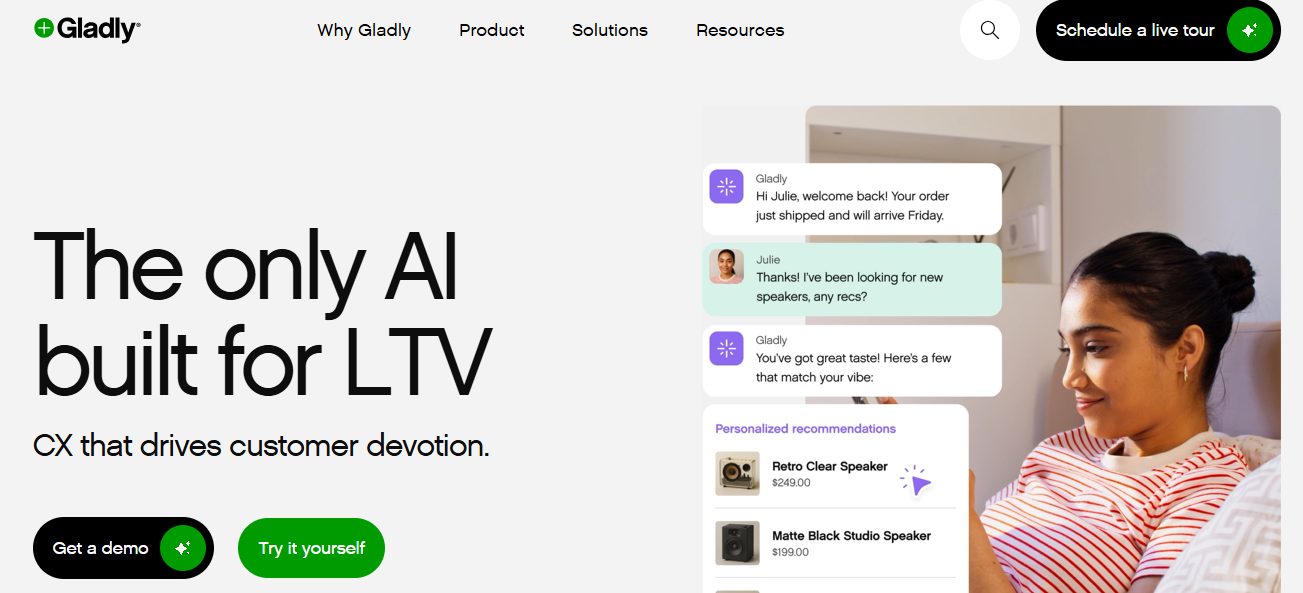
Gladly is a customer service platform built for premium D2C and retail brands that want to support customers through voice, email, and chat within a people-based conversation model rather than a traditional ticket-and-resolve workflow.
Its people-first design threads all customer interactions into a single lifetime conversation view rather than separating them into individual tickets, which suits high-touch D2C brands where relationship continuity matters as much as resolution speed.
Key Features
- People-based conversation model threads all customer interactions across channels into a single lifetime view rather than isolated tickets that lose context between contacts
- Native voice support handles D2C phone queries inside the same platform as digital channels, without requiring a separate voice infrastructure or third-party integration
- AI assistance helps agents compose replies and surface relevant customer history during live conversations without removing the agent from the workflow
Pros
- Relationship-first design suits premium D2C brands where customers expect to be recognized across every interaction, not re-identified in a new support ticket
- Strong voice channel support for D2C brands where phone remains a primary contact method alongside email and live chat
- Lifetime conversation view prevents agents from ever asking a D2C customer to repeat prior interactions or explain context from a previous contact
Cons
- Higher price point than most AI-focused platforms on this list, making Gladly less accessible for small to mid-market D2C brands with tighter support budgets
- Lower AI resolution autonomy compared to AI-native platforms that handle full ticket categories without agent involvement, limiting automated deflection depth
- Less suited for brands needing deep Shopify automation where AI executes order modifications, return processing, and refund workflows without agent intervention
When to Choose Gladly
Choose Gladly when your premium D2C brand prioritizes relationship depth, voice support, and high-touch customer service over AI resolution autonomy and automated deflection volume.
Pricing
Gladly's pricing is enterprise-focused and quoted by their sales team based on agent count, voice channel usage, and support volume requirements.
9. Kustomer – Best CRM-Centric Support for High-Volume D2C Retail
Kustomer is a CRM-centric customer service platform built for high-volume D2C and retail brands that want customer profiles, full order history, and AI-assisted support unified in a single workspace rather than managed across separate tools.
Its customer timeline view surfaces every order, interaction, and communication a D2C brand has had with each customer, giving agents full context before responding rather than piecing together history from multiple tabs.
Key Features
- CRM-style customer timeline shows every past order, interaction, and communication history so agents work from complete D2C customer context in every conversation
- AI-assisted routing and automation handles classification and simple query resolution before routing to the right agent or workflow for more complex D2C issues
- Deep ecommerce integrations pull order data, subscription history, and purchase patterns from connected D2C platforms directly into every customer profile view
Pros
- Richest customer data view on this list, which matters for D2C brands that use purchase history and customer value to inform support priority and resolution approach
- CRM and support unified in one platform, eliminating the need to switch between a separate CRM and help desk during complex D2C customer conversations
- Strong for high-volume D2C retail that needs both deep customer insights and scalable ticket management across large support teams and multiple channels
Cons
- Higher implementation complexity than simpler AI chat or ticketing platforms, which can slow deployment for smaller D2C brands without a dedicated technical team
- Less Shopify-native than Gorgias or Yuma AI for D2C brands that need deep order action automation rather than customer timeline visibility
- Price point is enterprise-focused and can be difficult to justify for early-stage D2C brands with limited support volume or headcount
When to Choose Kustomer
Choose Kustomer when your high-volume D2C brand needs rich customer profiles, full purchase history, and CRM-integrated support rather than pure AI deflection depth or Shopify-native automation.
Pricing
Kustomer's pricing is enterprise-focused and quoted by their sales team based on agent count, data volume, and integration requirements.
10. Freshdesk – Best General-Purpose Ticketing with AI for D2C
Freshdesk is a general-purpose ticketing platform that D2C brands use when they need broad multichannel support at a mid-market price point without committing to a Shopify-native or AI-native platform that requires higher investment to deploy.
Freddy AI layers deflection and agent assistance on top of Freshdesk's core ticketing system, handling FAQ deflection and ticket summarization while agents manage the full queue across email, chat, and social channels.
Key Features
- Freddy AI deflects common D2C queries including product FAQs and policy questions through a self-service bot before tickets reach the agent queue
- Multichannel ticketing handles email, chat, phone, social, and WhatsApp in one platform without requiring separate tools for each individual channel
- Shared inbox and team collaboration keep D2C support organized across agents with assignment rules, ticket prioritization, and internal conversation notes
Pros
- Broad channel coverage at a mid-market price point that suits D2C brands needing multichannel support without Shopify-native or AI-native platform investment
- Freddy AI activates quickly without lengthy configuration, which matters for D2C teams that need AI working before the next product launch or sale event
- Established platform with strong support documentation and a large third-party integration library, reducing onboarding time for D2C teams without dedicated ops resources
Cons
- AI resolution depth is shallower than AI-native platforms that handle full ticket categories autonomously without agent involvement at scale
- Shopify integration is not native, requiring third-party apps or custom API connections that add setup time and ongoing maintenance overhead for D2C teams
- Freddy AI is priced separately from core ticketing plans, adding another budget line item that grows as automation usage and ticket volume increase over time
When to Choose Freshdesk
Choose Freshdesk when your D2C team needs broad multichannel ticketing at a mid-market price and Shopify-native automation or AI-native resolution depth is not the primary requirement.
Pricing
Freshdesk's pricing runs across several per-agent tiers, with Freddy AI capabilities priced separately depending on usage level and plan selection.
How to Choose the Best AI Support Tool for D2C Brands?
D2C support has requirements that most general-purpose AI platforms were not designed to handle. An order-tracking query at 11pm on Instagram is not the same as a B2B enterprise ticket filed through a help desk portal.
These five factors help D2C brands shortlist the right AI support tool before committing to a contract or platform migration.
1. Ecommerce and Shopify Integration Depth
What it is: Ecommerce integration means the platform can read live order data, process refunds, and trigger return workflows without switching between tools.
Why it matters: AI that cannot access your Shopify order data can only answer generic FAQs. The best help desk software for Shopify connects directly to order records to resolve D2C queries accurately.
2. AI Accuracy and Hallucination Risk
What it is: Hallucination risk measures how often AI generates plausible-sounding but incorrect answers about refund policies, return windows, or product specifications.
Why it matters: A wrong answer on a refund policy creates a support escalation and erodes customer trust. D2C brands with strict return rules need AI that reasons accurately, not just quickly.
3. Multichannel Coverage
What it is: Multichannel coverage tracks how many channels the platform handles natively, from WhatsApp and Instagram to email, live chat, and social direct messages.
Why it matters: D2C customers contact brands on the channel they prefer, not the one the brand set up first. Omnichannel customer service requires a platform that handles WhatsApp, Instagram, and email in one workspace.
4. Automation Depth and Setup Complexity
What it is: Automation depth measures how much of the D2C ticket volume the platform can resolve without agent involvement, from order status queries to full return processing.
Why it matters: Shallow customer service automation deflects FAQs but cannot execute return workflows or update order records, so automation depth directly reduces the headcount required to handle D2C volume.
5. Pricing Model and Scalability
What it is: Pricing models for D2C support range from per-seat to per-ticket to per-resolution, each with different cost implications as order volume and support demand grow.
Why it matters: Per-seat models penalize D2C brands during promotional spikes that double ticket volume without doubling the permanent support team size or adding long-term overhead.
Why Is QuantumDesk the Best AI Support Tool for D2C Brands?
QuantumDesk earns the top spot because it is built for Shopify D2C brands that need live order data surfaced into every support conversation, AI resolving queries across WhatsApp, email, and Instagram automatically, and pricing tied to AI-resolved outcomes rather than agent seats.
Every other platform on this list asks D2C teams to choose between Shopify-native depth, multichannel coverage, or AI-native pricing. QuantumDesk does not force that trade-off.
Learn more about the benefits of AI-native customer service that separate platforms built on AI foundations from those with AI layers added on top of legacy help desk infrastructure.
Key Capabilities of QuantumDesk:
- Quantum AI resolves D2C order queries automatically, eliminating ticket volume on order status, tracking, refunds, and returns without requiring agents to process each one
- Unified Inbox centralizes WhatsApp, email, Instagram, and live chat in one workspace with full customer and order context preserved across every interaction
- Native Shopify integration surfaces live order status, tracking, and purchase history directly into every conversation so agents and AI both resolve Shopify queries from complete ecommerce context without switching tabs or copying order details manually
- AI-Curated Inbox prioritizes tickets by urgency, sentiment, and customer value so agents focus on the highest-impact D2C conversations rather than triaging manually
- Resolution-based pricing keeps D2C support costs aligned with outcomes rather than charging per seat for AI that may resolve only part of daily ticket volume
Pick the platform that fits your D2C brand's channel mix, ecommerce stack, and automation depth. See how QuantumDesk works for your team → Book a Demo
Frequently Asked Questions About AI Support Tools for D2C Brands
What are the best AI support tools for D2C brands?
In my testing, the best AI support tools for D2C brands in 2026 are QuantumDesk, Gorgias, Fini AI, Tidio, and Siena AI, each suited for a different ecommerce model, channel mix, and automation depth.
QuantumDesk leads for AI-native multichannel support. Gorgias leads for Shopify-native order actions. Fini AI leads for high-accuracy policy reasoning.
The right choice depends on your channel mix, Shopify setup, and whether you need an AI-native platform or a Shopify-specific help desk. Explore the best AI customer service tools for a broader view of the category.
Which AI support tool is best for Shopify D2C stores?
QuantumDesk is the best AI support platform for Shopify D2C stores that want multichannel automation across WhatsApp, email, and Instagram with native Shopify integration built in from day one.
Gorgias is the best Shopify-native help desk for brands that prioritize order actions, refund macros, and Shopify-embedded workflows over AI-native resolution depth and multichannel coverage. The right pick depends on whether you need a full AI-native platform with Shopify connected, or a Shopify-first help desk with AI added on top.
How do I choose the right AI support tool for a D2C brand?
Start with your channel mix: WhatsApp-heavy D2C brands should evaluate QuantumDesk, Shopify-only brands should look at Gorgias, and brands with strict return policies should start with Fini AI.
Then evaluate ecommerce integration depth, AI accuracy on policy queries, and pricing against your actual monthly ticket volume. Run a proof of concept on two or three shortlisted platforms before committing to a contract.
Is there a free AI support tool for D2C brands?
Yes. Tidio and Freshdesk both offer free or starter tiers with limited AI capabilities. Free tiers suit small D2C stores testing AI chat deflection before committing to a paid plan.
Most D2C brands with meaningful support volume outgrow free tiers quickly and need paid plans for ecommerce integrations, multichannel coverage, and AI resolution at scale.
What features should I look for in AI support tools for D2C?
Prioritize ecommerce and Shopify integration depth, channel coverage across WhatsApp, Instagram, and email, and AI accuracy on refund and return policies before evaluating secondary features.
AI that cannot access your Shopify order data cannot resolve the queries that matter most to D2C customers. Keeping up with AI customer service trends helps teams distinguish genuine resolution from rebranded deflection.




.avif)