Summarize with AI
Key Takeaways
- Customer service response templates help teams cut response times and maintain a consistent brand voice across every support channel.
- Agents should always personalize placeholders to keep every interaction human, empathetic, and authentic before sending.
- The LAST method (Listen, Apologize, Solve, Thank) helps handle upset customers by acknowledging specific frustration and pivoting to a concrete solution.
- Templates work best for predictable, high-volume scenarios such as general inquiries, complaints, refund requests, and escalation handoffs.
- AI-assisted teams need dedicated handoff templates that prove context was retained so customers never have to repeat themselves.
Support agents spend most of their day answering the same questions. The channel changes. The question rarely does.
For D2C brands, Shopify stores, B2B SaaS teams, and SMBs, this repetition has a real cost. According to HubSpot, 90% of customers expect an immediate response, while agents today handle 30% more tickets than they did two years ago.
I messaged a D2C brand about a wrong item → waited 18 hours → received a reply asking for my order number → I had included it → replied again → waited 12 more hours → disputed the charge.
That delay was not a product failure. It was a response failure. A well-structured template library is one of the most direct ways to reduce repetitive support questions before they compound into lost customers and negative reviews.
- Use pre-written templates to respond faster without sacrificing empathy or accuracy
- Personalize key placeholders so every message feels specific to that customer's situation
- Organize templates by scenario so agents find the right reply in under 10 seconds
- Update your library quarterly as products, policies, and support channels change
You will learn how to use customer service response templates for every common scenario, with ready-to-use examples and tips for keeping each response human.
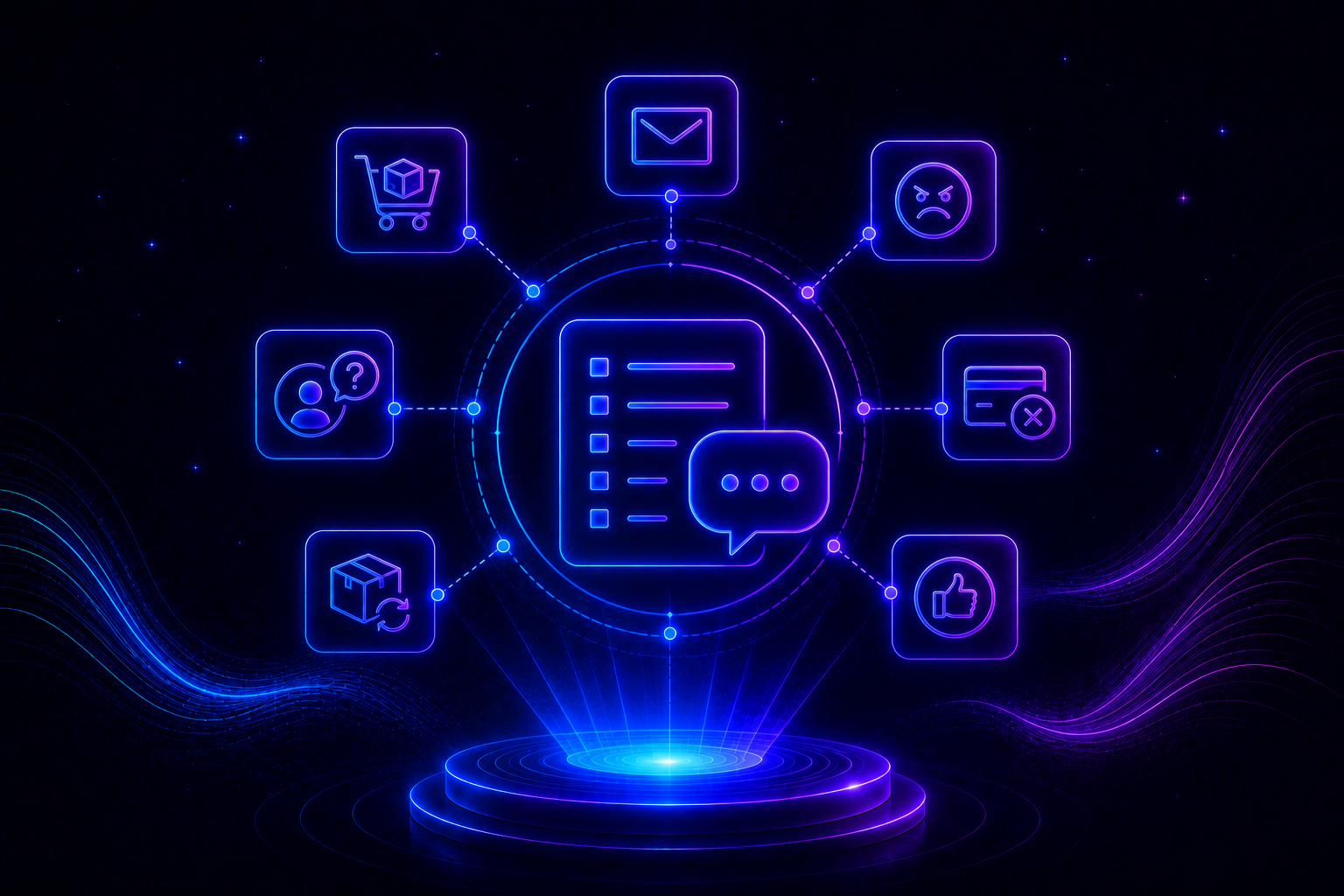
A Quick Overview of Response Templates by Scenario
What Are Customer Service Response Templates?
A customer service response template is a pre-written message that agents select, personalize with specific customer details, and send to resolve common inquiries quickly and consistently.
Also called canned responses or saved replies, they live inside your helpdesk and are accessible in one click. Unlike automated responses that go out without human review, a template is a starting point agents read, adapt, and send with intent.
Why Every Support Team Needs a Template Library
Understanding the key elements of customer service makes it easier to identify which scenarios benefit most from a template approach.
- Faster resolution times so agents skip blank-page delays and respond in seconds rather than minutes on the most common ticket types
- Consistent brand voice across every agent from week one to year three, delivering replies with the same accuracy and tone regardless of experience level
- Reduced agent burnout by removing repetitive writing from daily workflows and freeing mental energy for complex, high-stakes conversations
- Fewer follow-up tickets when templates answer the question fully the first time and include the customer's logical next step
Customer Service Response Templates for First Contact and General Inquiries
First contact sets the tone for the entire interaction. These templates keep the opening confident, warm, and specific to what the customer actually sent.
Template 1: Initial Greeting
Subject: We received your message
Hi [Customer Name],
Thanks for reaching out to [Company Name]. I'm [Agent Name] and I'm looking into your message now.
I will get back to you with a solution by [timeframe]. If you have screenshots or additional details, feel free to share them here.
Best, [Agent Name]
Template 2: Returning Customer Greeting
Subject: Great to hear from you again
Hi [Customer Name],
Great to hear from you. I can see you have been with us since [date or duration]. Thank you for your continued support.
How can I help you today? I will get right to it.
Best, [Agent Name]
Template 3: Requesting More Information
Before asking for anything, acknowledge what the customer already shared. Asking for information they already provided is one of the fastest ways to signal that no one read their message.
Subject: Quick question before I get started
Hi [Customer Name],
Thanks for reaching out. To resolve this as quickly as possible, could you share:
- [Specific detail 1, e.g., order number or account email address]
- [Specific detail 2, e.g., a screenshot of the error message]
Once I have these, I will get straight to it.
Best, [Agent Name]
Template 4: General How-To Answer
Subject: Here is how to [task]
Hi [Customer Name],
Happy to help with this. Here is how to [task]:
1. [Step 1]
2. [Step 2]
3. [Step 3]
You can also find a full step-by-step guide here: [Resource Link]
Let me know if anything is unclear and I will walk you through it.
Best, [Agent Name]
Template 5: Confirming a Resolution
Subject: Your request has been resolved
Hi [Customer Name],
I am glad to let you know that [issue] has been resolved. You should see this reflected within [timeframe].
If anything looks off, just reply here and I will jump back in immediately.
Best, [Agent Name]
Customer Service Response Templates for Complaints, Refunds, and Order Issues
These are the highest-stakes conversations in any support queue. For D2C brands and teams managing ecommerce customer service, complaints about order delays, wrong items, and refund timelines account for the majority of escalations and negative reviews.
B2B teams face similar pressure. B2B customer service best practices recommend dedicated templates for contract disputes, billing clarifications, and SLA breach communications.
Template 6: Handling an Upset Customer
Apply the LAST method (Listen, Apologize, Solve, Thank) in every complaint response. Acknowledging the frustration specifically, not generically, is what separates a template that defuses the situation from one that makes it worse.
Subject: We hear you. Here is what we are doing now.
Hi [Customer Name],
Thank you for sharing this. I am sorry about [restate the specific issue]. That is not the experience we want you to have, and it should not have happened.
I have already [specific action, e.g., processed your replacement / issued the refund]. You should see [outcome] within [timeframe].
Thank you for your patience.
[Agent Name]
Template 7: Order Delay Update
Subject: Update on your order [number]
Hi [Customer Name],
Your order [number] is running approximately [X] days behind schedule and is now expected to arrive by [new date].
I wanted to reach out before you had to ask. If you need to make any changes to your order, just reply here and I will handle it right away.
[Agent Name]
Template 8: Wrong Item Received
Subject: We are making this right. Here is what happens next.
Hi [Customer Name],
I am sorry about this. Receiving the wrong item is entirely avoidable and we should have done better.
I have already arranged [replacement / reshipping / refund] for you. A confirmation with tracking will arrive at [email] within [timeframe]. You do not need to return the incorrect item.
[Agent Name]
Template 9: Refund Request (Within Policy)
Subject: Your refund of [amount] has been processed
Hi [Customer Name],
I have processed your refund of [amount]. It should appear on your original payment method within 5 to 7 business days depending on your bank.
Thank you for giving us the chance to make this right.
Best, [Agent Name]
Template 10: Refund Request (Outside Policy Window)
Subject: Your refund request: here are your options
Hi [Customer Name],
I have reviewed your account and your purchase falls outside our standard [X]-day return window. I understand that is not the news you were hoping for.
Here are the options I can offer:
- [Option 1, e.g., store credit for the full amount]
- [Option 2, e.g., exchange for a different item]
Let me know which works best for you and I will set it up immediately.
[Agent Name]
Template 11: Negative Review Response (Public)
Hi [Customer Name], thank you for your feedback. I am sorry your experience did not meet the standard we hold ourselves to. Could you reach out to [email] directly? I would like to understand what happened and make this right personally.
Template 12: Billing Issue or Overcharge
Subject: Correction applied to your account
Hi [Customer Name],
I can confirm there was an error on your [invoice/charge] dated [date]. I have corrected this and [refunded/credited] [amount] to your account.
The updated invoice is attached. Please let me know if you have any questions.
Best, [Agent Name]
Customer Service Response Templates for Escalations and Follow-ups
These templates handle the moments when a ticket needs to move beyond the first-tier agent, and when a conversation needs to be closed with care.
Template 13: Escalating to a Specialist
When escalating, confirm that the specialist already has the full context. A customer who has to re-explain everything they covered in the previous conversation is a customer at serious risk of leaving. Improving first contact resolution depends on smooth, context-preserving handoffs at every stage.
Subject: Your case has been assigned to our specialist team
Hi [Customer Name],
Your request regarding [specific issue summary] requires specialized expertise to resolve correctly. I have escalated your case to our [team name / specialist name] with the full conversation context attached.
You will not need to repeat anything. Expect an update within [timeframe].
[Agent Name]
Template 14: AI-to-Human Handoff
This is the template most libraries omit. When AI hands off to a human, the opening line must prove the agent already has the context. A customer who just explained their issue to an AI and is then greeted with "Can you tell me about the problem?" will not stay.
Hi [Customer Name], I am [Agent Name] and I have reviewed your full conversation. I can see you have been trying to resolve [specific issue] since [timeframe]. You do not need to repeat anything. Let me take it from here.
Template 15: Requesting Customer Patience for Complex Issues
Subject: We are working on this. Update coming by [date].
Hi [Customer Name],
Your issue requires a bit more investigation on our end. I am working on this and will have a full update for you by [specific date and time].
I will come back to you. You do not need to chase this.
[Agent Name]
Template 16: Follow-Up After Resolution
Subject: Checking in on your recent case
Hi [Customer Name],
I am following up to make sure the solution we provided fully resolved [specific issue].
Is everything working as expected? If not, just reply and I will jump back in straight away.
[Agent Name]
Template 17: No Response Follow-Up (After 3 Days)
Subject: Still here if you need us
Hi [Customer Name],
I have not heard back and want to make sure you are all set.
If the issue is resolved, I will go ahead and close this ticket shortly. If you still need help, just reply and I will pick up right where we left off.
[Agent Name]
Template 18: Closing and Requesting Feedback
Subject: Your ticket is now closed. We would love your feedback.
Hi [Customer Name],
I am glad we could get this sorted. Your case is now closed.
If you have a moment, we would genuinely appreciate your feedback here: [CSAT link]. If anything comes up, just reply and you will not need to re-explain a thing.
[Agent Name]
Template 19: Customer Requesting to Speak with a Manager
Subject: Connecting you with our team lead
Hi [Customer Name],
Understood. I am connecting you with [Manager Name], our [role], who will be in touch within [timeframe].
I have shared your full case notes and conversation history so you will not need to repeat anything when they reach out.
[Agent Name]
Template 20: Out of Office / After Hours
Hi [Customer Name], thanks for reaching out. Our support team is currently unavailable but will respond within [timeframe]. If your matter is urgent, please contact us at [email or phone]. We will be back on [day and time].
Tips for Using Response Templates Without Sounding Robotic
A template that goes out unchanged is not a response. It is a form letter. The difference between a template that builds trust and one that erodes it comes down to how agents use it, not the template itself.
Customer service automation handles the predictable queries at scale. Templates handle the human-in-the-loop moments. Both only work if the underlying system is maintained.
1. Fill Every Placeholder Before Sending
A reply that still contains [Customer Name] or [Order Number] in the final message is worse than no template at all. It proves the agent did not read the conversation. Build a pre-send checklist into your workflow: confirm the customer name, the specific issue reference, and every bracketed placeholder is replaced.
2. Match the Tone to the Situation
An upset customer and a general inquiry are not the same scenario. A billing correction and an emotionally charged complaint require different language, warmth, and pacing. Templates should be adapted, not just selected. Treat the template as the structure and the agent's judgment as the voice.
3. Update Templates When Policies or Products Change
Outdated templates create new problems. If a refund window shortens or a product is discontinued, a template referencing the old policy actively harms the conversation. Review your library every quarter and flag any template tied to a policy, pricing, or product that has changed.
4. Know When Not to Use a Template
Some conversations require original responses. Complex technical issues, emotionally raw situations, VIP account complaints, and any interaction where the customer says "I just want to talk to a real person" all need a human-written reply.
The test: if a reasonable observer would think the response feels generated rather than considered, write from scratch.
Tracking customer satisfaction metrics after deploying templates helps teams identify which responses improve CSAT and which need rewriting.
How QuantumDesk Helps Teams Use Response Templates Effectively
Response templates only work when they live inside the conversation itself. When agents have to switch tabs or open a shared document to find a template, they write from scratch under pressure instead.
The result is slower responses, inconsistent tone, and an experience that varies by agent rather than the team. A template library in a shared Google Doc is not a template library for agents handling real-time tickets.
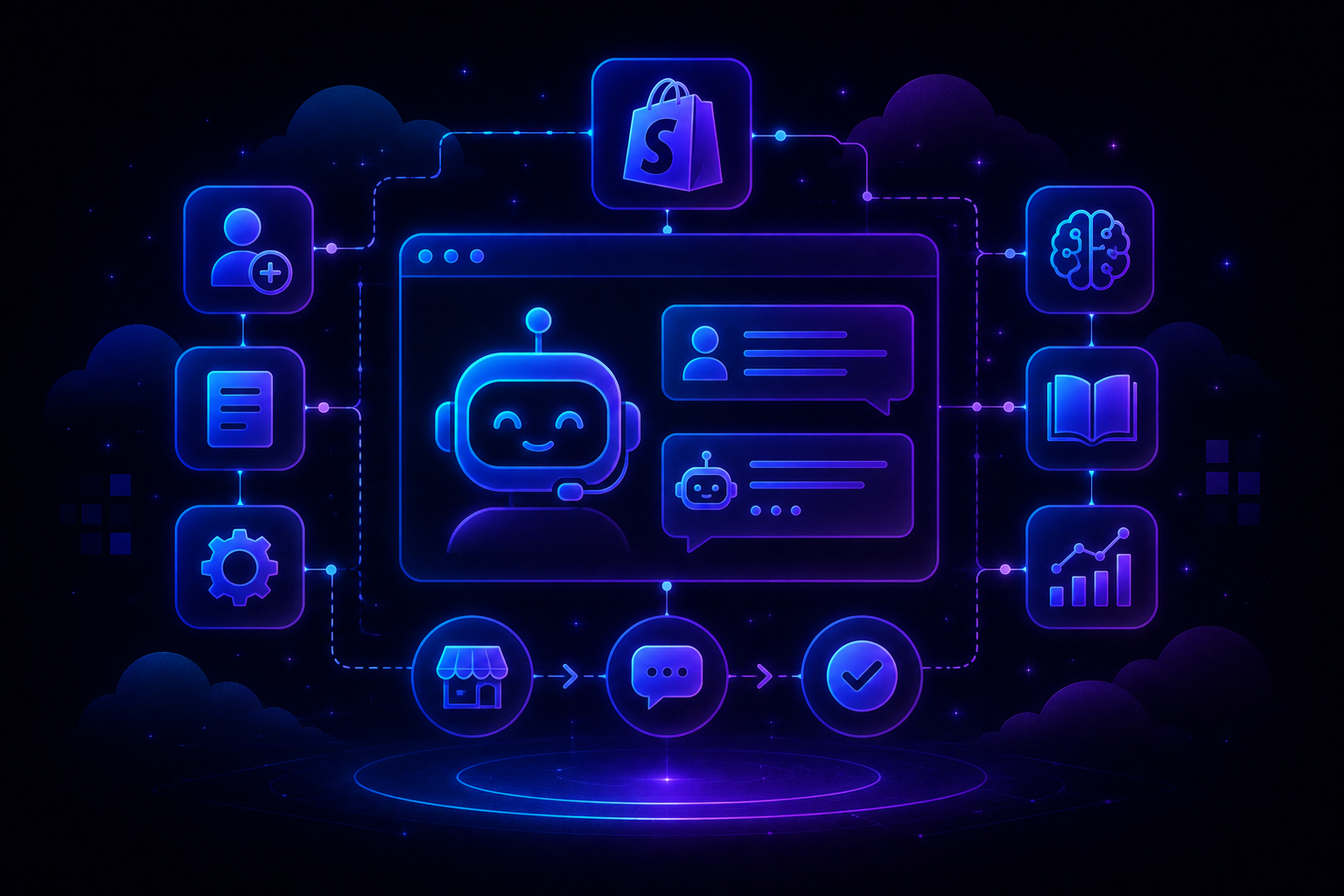
QuantumDesk brings response templates, customer context, and full conversation history into a single agent workspace.
For Shopify brands and D2C teams, an agent handling a wrong-item complaint can pull up order details, select the right template, personalize it with the specific item and resolution timeline, and send in under 60 seconds.
Key QuantumDesk Features That Strengthen Response Template Workflows
- Quantum AI suggests context-aware replies based on full conversation history, reducing the time agents spend selecting and adapting templates
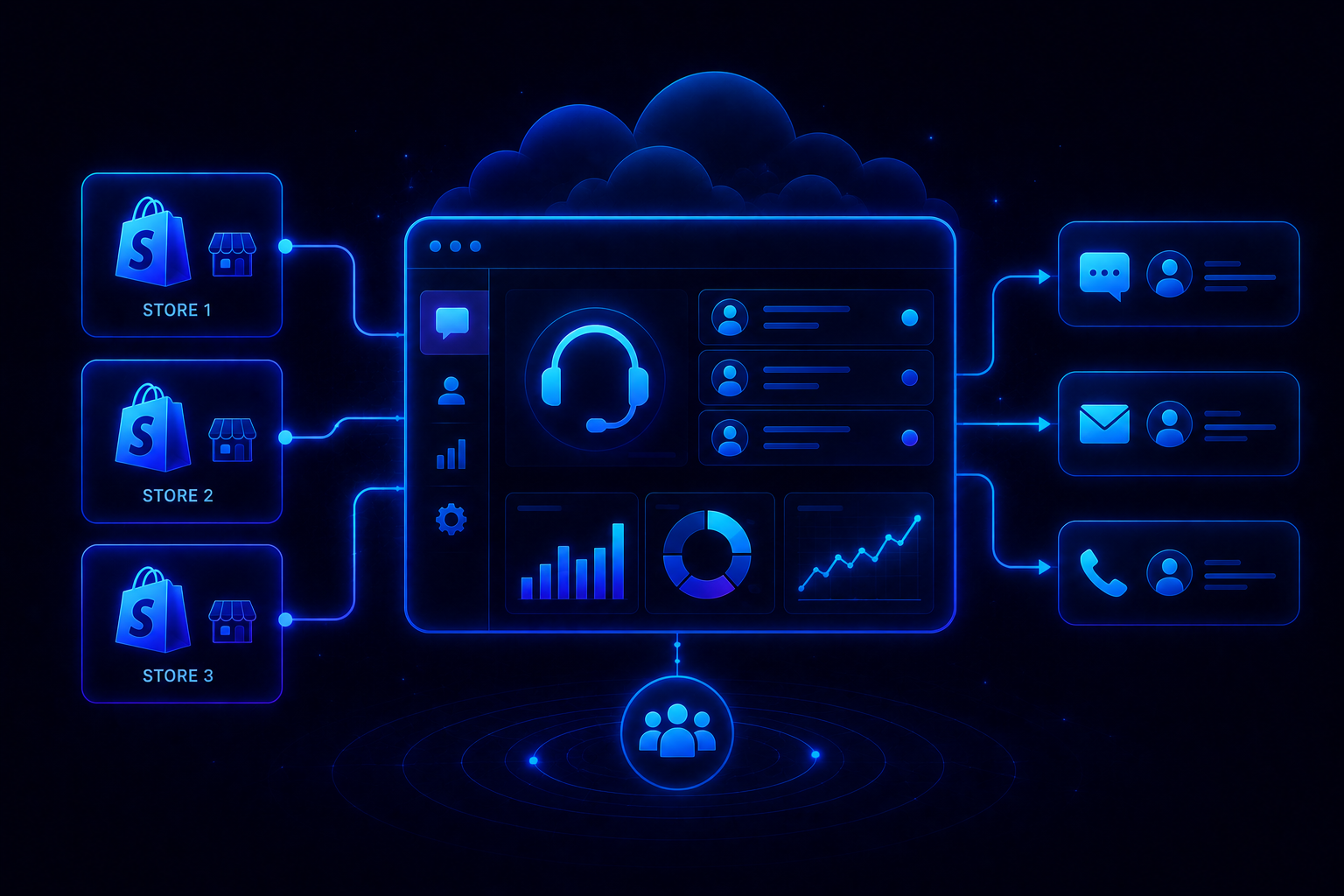
- Unified Inbox centralizes email, WhatsApp, chat, and social conversations so templates reach customers on their preferred channel without any omnichannel customer service gaps or channel-switching overhead
- Quantum AI Copilot assists agents by surfacing the most relevant templates, drafting personalizations, and flagging unfilled placeholders before the message is sent
- AI-Curated Inbox prioritizes incoming tickets by urgency and customer sentiment so agents spend their template time on the right conversations first
- Native Shopify Integration pulls live order and customer data into the conversation context so agents never need to open a second tab to find the information a template needs
- Admin Analytics tracks response time, CSAT, and first contact resolution by template and agent so teams identify what is working and what needs updating
A well-managed template library combined with the right platform is how support teams improve customer satisfaction at scale without adding headcount or sacrificing consistency.
Ready to give your team a smarter way to use response templates? See how QuantumDesk works → Book a Demo
Frequently Asked Questions
What is a customer service response template?
A customer service response template is a pre-written message that agents select, personalize with specific customer and case details, and send to resolve common inquiries quickly and consistently across the support team.
How many response templates does a support team need?
Most teams cover 80% of daily ticket volume with 10 to 15 well-crafted templates. Start with greetings, complaints, refunds, escalations, and follow-ups, then add new templates as repeat patterns emerge.
How do I stop response templates from sounding robotic?
Always fill every placeholder before sending, match the tone to the emotional context of the conversation, and treat templates as starting drafts rather than finished scripts that go out unchanged.
When should agents not use a response template?
Avoid templates for emotionally charged situations, complex technical issues, VIP account complaints, and any interaction where the customer has explicitly asked to speak with a real person.
How does AI change the way teams use response templates?
AI handles routine first-tier queries automatically. The most important templates become the ones for AI-to-human handoffs, where the opening line must prove the agent has full context so customers never have to repeat themselves.




.avif)