Summarize with AI
Key Takeaways
- Scaling support by adding headcount alone breaks down as CAC rises and ticket volume outpaces hiring.
- Pre-purchase messages are sales conversations, and response speed directly correlates with conversion rate.
- Resolving issues generously builds more loyalty than minimizing the cost of each individual ticket.
- Tiered automation and a consolidated tech stack deflect volume without adding agents at the same rate.
- QuantumDesk unifies AI, data, and reporting so D2C teams scale support without scaling headcount or losing quality.
Every D2C brand hits the same wall. Ticket volume grows faster than the team can hire, and quality starts to slip.
A Shopify skincare brand doubles orders during a launch → the support inbox triples overnight → replies slow from minutes to a day → a "is this safe for sensitive skin?" question goes unanswered → she buys elsewhere.
That one unanswered question was a sale and a customer, gone in the same moment.
You will learn about:
- Why pre-purchase support is one of the highest-converting channels a D2C brand has
- How to resolve post-purchase issues in a way that builds loyalty instead of just closing tickets
- Which automation deflects volume without making support feel robotic
- The exact metrics that prove your support strategy is scaling, not just growing
By the end, you will have a strategy that scales ticket volume without scaling headcount or losing what makes support feel human.
D2C Customer Support Strategy at a Glance
Why Scaling Support Usually Costs You Quality
Customer acquisition costs keep climbing, which makes every existing customer more valuable to keep than the last one was to acquire. Brands that respond by hiring alone run into a wall. Headcount grows linearly, but ticket volume during a launch or sale spikes far faster.
The brands that scale well shift from adding people to building infrastructure: automation, proactive alerts, and a support team empowered to act like a growth channel.
That math is easier to see once you calculate your own customer acquisition cost against what a single lost repeat customer actually costs.
Treat Every Pre-Purchase Message as a Sales Conversation
A shopper messaging before checkout is not filing a ticket. They are one honest answer away from converting.
- Respond in under 15 minutes on WhatsApp and Instagram DM, since conversion probability drops sharply with every hour of delay
- Answer, then go one step further by offering unprompted proof, like reviews from customers with the same concern
- Personalize the offer in the moment, since a timely 10% discount inside a real conversation converts better than a generic pop-up
- Remove every remaining click by sending a direct payment link instead of asking the shopper to find the product themselves
This is exactly why improving first response time matters as much for revenue as it does for CSAT.
How to Convert Post-Purchase Issues Into Loyalty?
A resolved complaint often creates more loyalty than a customer who never had a problem at all. How you resolve it decides which way it goes.
- Acknowledge before you solve, since "that's frustrating, let me sort this out" does more for trust than jumping straight to a fix
- Resolve issues with generosity, since going cheap on one ticket often costs more in lost lifetime value
- Ask for a review at the right moment, right after the issue is resolved, not in a generic email days later
- Track the questions that repeat, since they reveal real market research about sizing, ingredients, or shipping confusion worth feeding back into product pages
This is the same connection covered in our guide on how poor customer support and repeat purchases work against each other when resolution feels half-hearted.
Feeding those recurring questions back into support conversations product insights turns your ticket queue into a product research channel.
What Should You Automate to Reduce Agent Workload?
High-volume, low-complexity questions do not need a human. Automating them frees your team for the conversations above that actually need judgment.
- Deploy conversational AI on WhatsApp and Instagram DM to instantly answer order status and shipping policy questions
- Add a dynamic order-tracking portal so shoppers can self-serve WISMO questions without messaging anyone
- Build a searchable knowledge base with short video guides for sizing or usage questions
- Trigger delay notifications automatically the moment a package stalls, before the customer has to ask
- Send tailored onboarding sequences with product-specific instructions to reduce returns and confusion
- Automate replenishment reminders based on average product lifespan to prompt reorders proactively
- Keep templates as a starting point, not a final answer, so agents personalize before sending
Automating this layer alone is one of the fastest ways to reduce repetitive support questions without adding a single agent.
Metrics That Prove Your Support Strategy Is Scaling
Most brands track efficiency alone: response time, resolution time, ticket volume. Few track whether support is actually working as a growth channel.
Tracking these alongside first contact resolution rate turns support from a cost report into a growth dashboard.
How to Scale D2C Customer Support Without Losing Quality
Put the pillars above in this order, and quality holds even as ticket volume climbs.
Step 1: Automate the Predictable First
Deflect WISMO, FAQs, and delay notifications before touching anything else. This is the fastest volume relief available.
Step 2: Give Agents Authority, Not Just Scripts
Let agents resolve common scenarios, discounts, replacements, expedited shipping, without manager approval for every case.
Step 3: Track Revenue, Not Just Cost
Measure support-attributed revenue and review rate alongside response time, so the team is judged on outcomes that matter.
Step 4: Consolidate Before You Hire
Fix a fragmented tech stack before adding headcount. This is exactly how brands scale D2C customer support without increasing headcount.
Step 5: Give Every Agent One Customer View
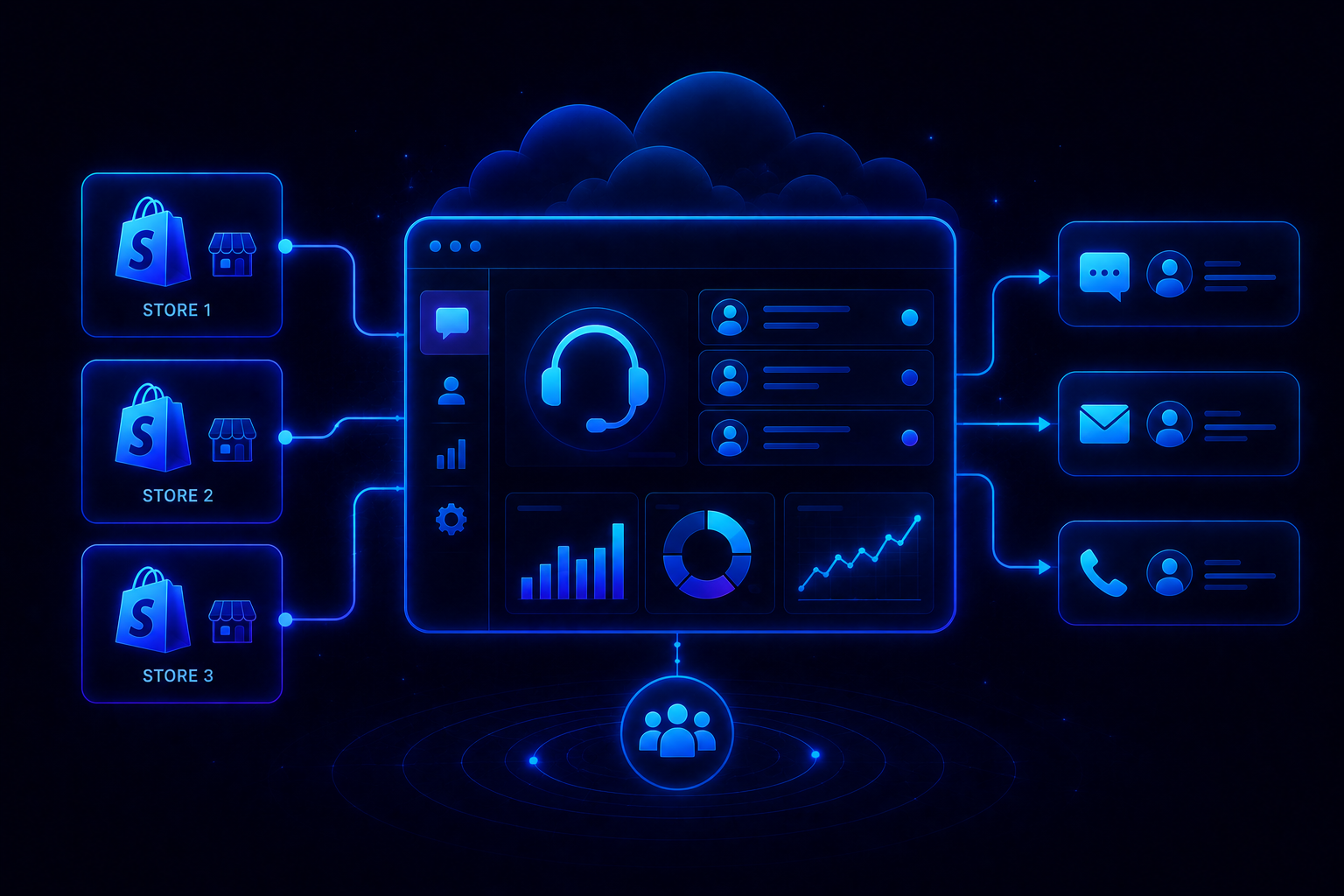
Route Shopify, email, WhatsApp, and social into one workspace, pulling purchase history and loyalty tier into every ticket automatically.
This is the same foundation covered in our guide on how to unify customer support into one inbox, and it removes the repetitive questions that come from agents lacking context.
This five-step sequence is one of the D2C customer support best practices that compounds the longer a brand runs it.
How QuantumDesk Handles D2C Support at Scale Effectively
Every pillar in this guide depends on the same foundation: AI and data that actually see the full customer picture.
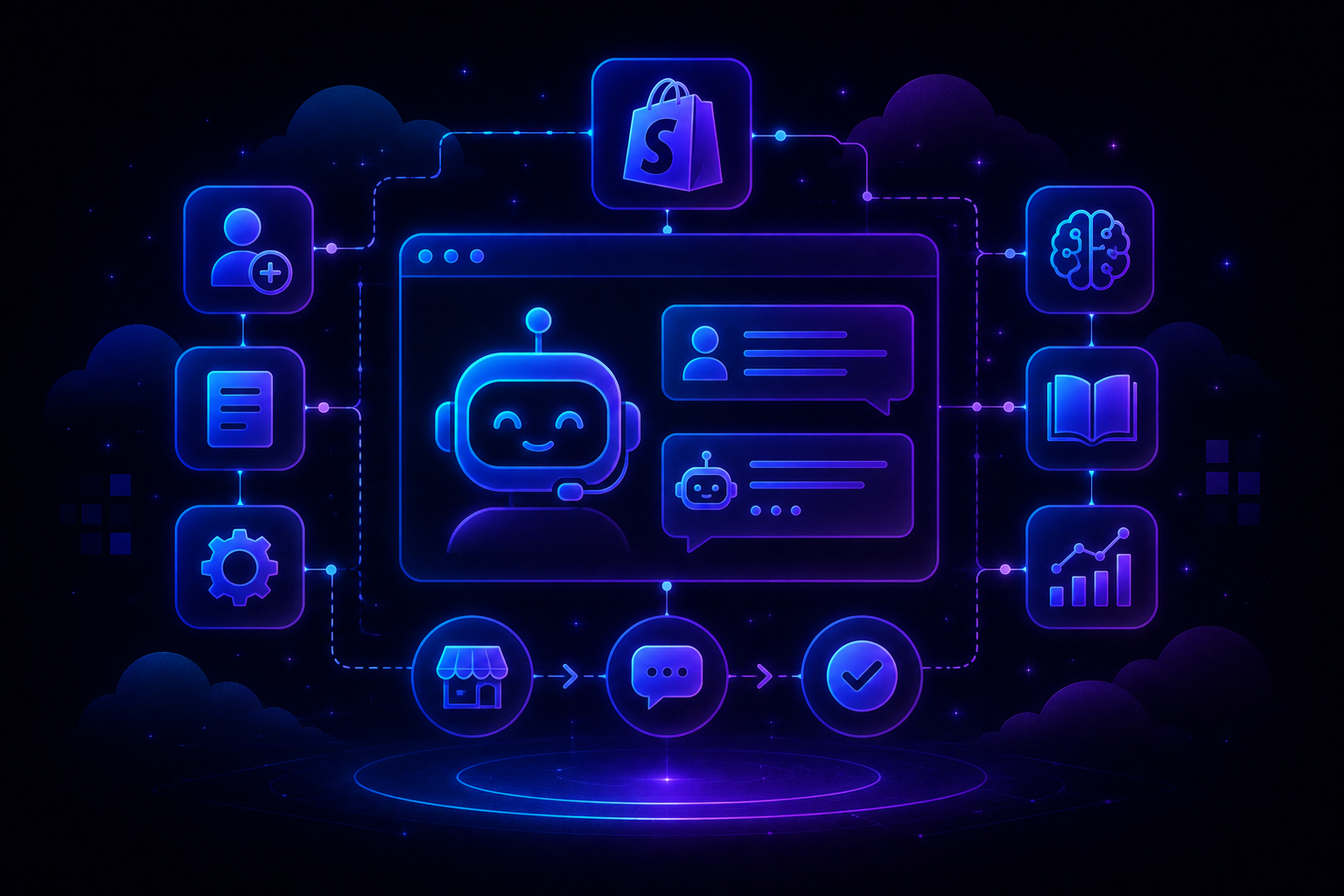
QuantumDesk connects directly to Shopify order and customer data, so Quantum AI resolves repetitive queries while agents focus on the conversations that convert and retain.
That combination is what lets a growing D2C brand track revenue, not just cost, from the very first ticket.
Key QuantumDesk Capabilities
- Quantum AI resolves repetitive queries like order status and returns automatically, freeing agents for sales and retention conversations
- Unified Inbox centralizes email, chat, WhatsApp, and social conversations with full customer context attached
- AI-Curated Inbox prioritizes tickets by urgency, sentiment, and intent before agents open them
- Quantum AI Copilot gives agents full context and suggested replies during live conversations
- Native Shopify Integration surfaces order and customer data directly inside every conversation
- Admin Analytics tracks resolution rates, escalation patterns, and CSAT trends in one dashboard
QuantumDesk does not ask a scaling D2C team to choose between speed and quality. It gives them the context to deliver both.
Frequently Asked Questions
What is a D2C customer support strategy built to scale?
It is a system that shifts support from reactive ticket-closing to proactive, automated, and revenue-driving conversations as order volume grows.
How do you scale D2C support without adding headcount at the same rate?
By automating predictable questions first, giving agents authority to resolve cases, and consolidating every channel into one customer view before adding headcount.
Why does response time matter before a purchase, not just after?
Because pre-purchase messages come from high-intent shoppers, and conversion probability drops sharply the longer a question goes unanswered.
What metrics show whether a support strategy is actually scaling well?
First response time, support-attributed revenue, post-support review rate, repeat purchase rate, and CSAT score together, not response time alone.
What is a good AI-native platform for scaling D2C support?
QuantumDesk unifies AI, Shopify data, and reporting in one platform, so D2C teams scale support without losing quality or hiring ahead of revenue.



.avif)