
Summarize with AI
Key Takeaways
- QuantumDesk leads as the best Gladly alternative with AI embedded across every plan, native Shopify integration, and transparent flat-rate pricing instead of Gladly's enterprise-only quotes.
- Kustomer is the closest match to Gladly's people-first philosophy, replacing fragmented tickets with a continuous, CRM-driven customer timeline.
- Gorgias leads for e-commerce teams, with deep Shopify and WooCommerce integrations and an AI agent that recommends products alongside resolving queries.
- Zendesk and Salesforce Service Cloud suit large-scale enterprise teams needing heavy customization, integrations, and CRM-level customer data.
- Freshdesk and Zoho Desk are the budget-friendly picks, delivering multichannel ticketing at a fraction of Gladly's per-agent cost.
- Pylon stands out for B2B SaaS teams needing Slack and Teams support alongside email and chat, a channel mix Gladly was not built for.
Gladly built its reputation on one idea: customers, not tickets, at the center of support.
But its enterprise-only pricing starts near $180-210 per agent monthly, implementation runs close to two months, and reviewers flag thin automation and reporting for the price.
This guide compares the strongest Gladly alternatives for 2026 across pricing, AI, and channels.
A Quick Comparison of the Top 10 Gladly Alternatives in 2026
What is Gladly?
Gladly is a customer service platform built around a "people, not tickets" philosophy, keeping one continuous timeline for each customer across every channel instead of generating a new ticket number for every interaction.
It targets consumer-facing retail and D2C brands wanting a radically personal support experience, layering Sidekick AI on top of that timeline for both agent assistance and autonomous resolution, at enterprise, quote-based pricing.
Key Features of Gladly
- People-centered timeline unifying every customer conversation across email, chat, SMS, social, and voice into one continuous profile.
- Sidekick AI providing both assisted drafting for agents and autonomous resolution for repetitive queries.
- Native voice support built into the same timeline as digital channels.
- Enterprise onboarding and implementation support tailored for large retail and consumer brands.
Why Are People Looking for Gladly Alternatives?
1. Enterprise-only pricing with no public rate card
Gladly does not publish pricing, and reported quotes from eesel.ai's Gladly pricing breakdown and Hiver's Gladly pricing analysis put Hero and Superhero plans at $180 to $210 per agent per month, with enterprise contracts starting at $100K+ a year before voice and SMS usage are added on top.
2. Long implementation timelines relative to newer platforms
Reviews cited in Hiver's pricing breakdown report roughly two months to implement and close to twelve months to reach ROI, a real cost in team time against platforms that go live in days or weeks.
3. Workflow automation and reporting stay thin for the price
Hiver's roundup of Gladly alternatives notes that teams outgrowing Gladly commonly cite limited workflow automation, thin analytics, and weak knowledge base tooling relative to per-agent cost.
4. Everyday usability friction adds up
Help Desk Migration's comparison points out that simple tasks like organizing and resolving customer queries can require multiple steps, and threads cannot be paused or deferred, complicating queue management for busier teams.
5. Retail-first design is not built for e-commerce actions or B2B workflows
Gladly's people-centered model was built for consumer retail conversations, not commerce actions or B2B ticket routing. Gorgias's own Gladly alternatives guide positions native Shopify order actions as the gap Gladly leaves for e-commerce teams, while B2B teams researching agentic AI for customer service increasingly look toward platforms built around their specific workflow instead.
How Did We Finalize the Best Gladly Alternatives for Evaluation?
This evaluation goes beyond feature checklists. The goal was to assess how each platform performs in real support environments, not on paper.
- Review platform analysis studied verified ratings and written reviews on G2 and Capterra to identify real satisfaction levels and recurring pain points.
- Community and comparison research analyzed independent comparison guides evaluating Gladly against people-centric, e-commerce, and enterprise alternatives.
- SaaS directories and analyst reports got cross-referenced across major SaaS directories to validate market presence and category positioning.
- Capability comparison evaluated each tool against a consistent framework covering AI capabilities, omnichannel coverage, workflow automation, integrations, and pricing transparency.
- Shopify and commerce integration depth assessed whether each platform connects natively to order and customer data or relies on a third-party connector.
- Hands-on evaluation covered the top shortlisted tools directly, assessing automation quality, usability, escalation handling, and support workflow experience.
This methodology gives support teams a practical, unbiased basis for evaluating which platform fits their actual needs.
In-Depth Reviews of the Best 10 Gladly Alternatives in 2026
The tools below were evaluated based on AI capability, channel coverage, ease of deployment, escalation design, and overall value. Each listing follows a consistent evaluation framework for a fair comparison.
1. QuantumDesk – Best AI-Native Customer Support for Shopify and D2C Teams

QuantumDesk is an AI-native customer service platform built for D2C brands and growing consumer teams that want a unified, people-first support experience without Gladly's enterprise-only pricing.
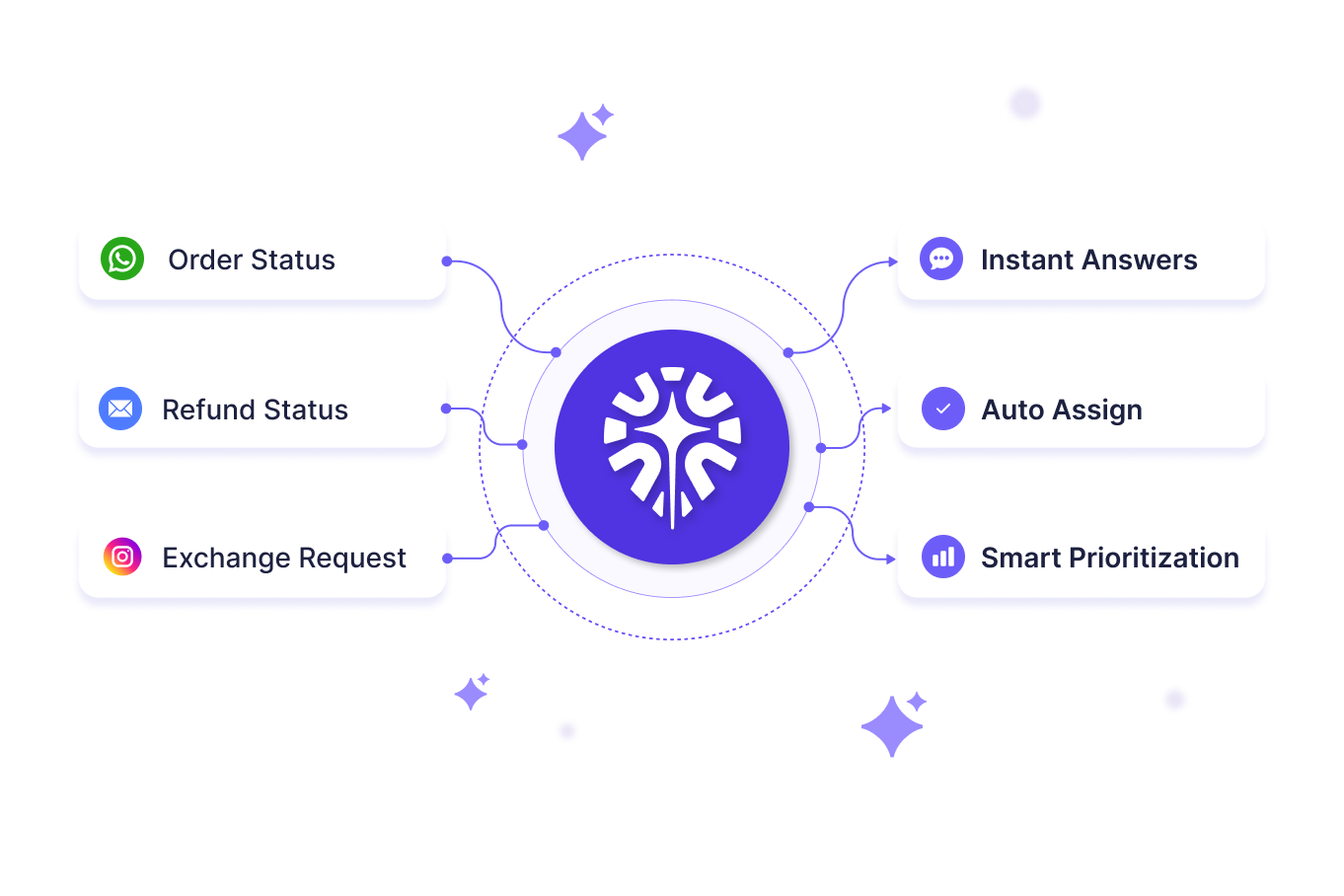
Native Shopify integration puts QuantumDesk closer to how D2C brands actually operate: order status, order history, and customer profiles surface directly inside the conversation, extending Gladly's people-centered philosophy with commerce context that Gladly's retail-first design does not natively pull in.
Teams researching AI-native customer service benefits choose QuantumDesk over Gladly because AI, Shopify context, and unified channel history ship on every plan at flat, transparent pricing instead of a $180+ per-agent quote.
Key features
- AI-native architecture embeds Quantum AI inside ticket workflows for summaries, reply drafting, sentiment detection, and next-step recommendations on every plan.
- Native Shopify integration surfaces order status, order history, and customer profiles directly inside the conversation for any Shopify-connected store.
- Unified omnichannel inbox manages email, WhatsApp, Instagram, Facebook, and web chat in a single workspace without separate product modules.
- AI-curated inbox prioritizes tickets automatically by urgency, sentiment, and intent instead of manual triage.
- Operations command center dashboard gives real-time visibility into ticket movement, assignment gaps, and resolution states for support leaders.
- Transparent flat-rate pricing replaces Gladly's enterprise-only quotes with cost aligned to ticket volume and team stage.
Why choose QuantumDesk over Gladly?
- Gladly's published pricing starts around $180-210 per agent per month with $100K+ enterprise contracts. QuantumDesk uses transparent, quote-based pricing aligned to team stage, not a fixed enterprise floor.
- Gladly takes roughly two months to implement and close to a year to reach ROI, according to reported reviews. QuantumDesk teams typically go live within two weeks.
- Gladly's people-centered timeline was not built for commerce actions. QuantumDesk's native Shopify integration extends that same unified-customer philosophy with order and account context built in.
Pros
- AI embedded across every plan reduces agent workload through summaries, suggested replies, and contextual next steps.
- Predictable flat-rate pricing replaces Gladly's enterprise quote floor with cost tied to actual ticket volume.
- Fast agent ramp time accelerates adoption compared to Gladly's multi-month implementation cycle.
Cons
- Smaller enterprise reference base than Gladly's retail and consumer brand case studies built over its longer market history.
- Newer platform still building the deep voice-channel maturity Gladly has developed for large retail contact centers.
Customer review
Reviewers consistently note QuantumDesk's ability to deliver a unified, people-first support experience without Gladly's enterprise quote floor. Shopify-connected brands specifically call out order context surfacing directly inside conversations.
Pricing
QuantumDesk uses custom, quote-based pricing tied to ticket volume and team stage. See the QuantumDesk pricing page for details.
Ready to Move Off Gladly Without the Enterprise Price Tag? Book a demo with the QuantumDesk team and see how AI-native workflows, flat-rate pricing, and native Shopify integration compare against your current Gladly setup → Book a Demo
2. Kustomer – Best for a CRM-Driven, Chronological Customer View
Kustomer replaces fragmented tickets with a chronological, CRM-driven timeline of customer interactions.
This continuous view pulls conversations from email, SMS, chat, and social into one profile, closely matching Gladly's people-first philosophy, though reviewers note that analytics and customization options stay limited.
Key features
- Chronological customer timeline pulls conversations from email, SMS, chat, and social into one continuous profile.
- CRM-first data model ties support history to structured customer records instead of ticket numbers.
- AI-assisted workflows layer automation and suggested replies on top of the timeline view.
Why choose Kustomer over Gladly?
Kustomer offers the closest architectural match to Gladly's people-first philosophy at a lower published starting price.
Pros
- Continuous timeline view helps agents reference prior interactions without digging through ticket history.
- Multi-channel consolidation brings email, SMS, chat, and social into one profile.
- Lower published pricing than Gladly's enterprise-only quote floor.
Cons
- Limited analytics and customization options compared to more mature reporting platforms.
- Per-seat pricing requires an 8-seat minimum, adding cost for smaller teams.
- AI and channel add-ons like voice and SMS carry additional fees.
Customer review
Kustomer users on G2 praise the timeline view for context continuity, while flagging limited analytics and customization as recurring gaps.
Pricing
Kustomer starts around $89/seat/month with an 8-seat minimum. See the Kustomer pricing breakdown and Kustomer reviews.
3. Gorgias – Best for Retail E-Commerce and Shopify Integration
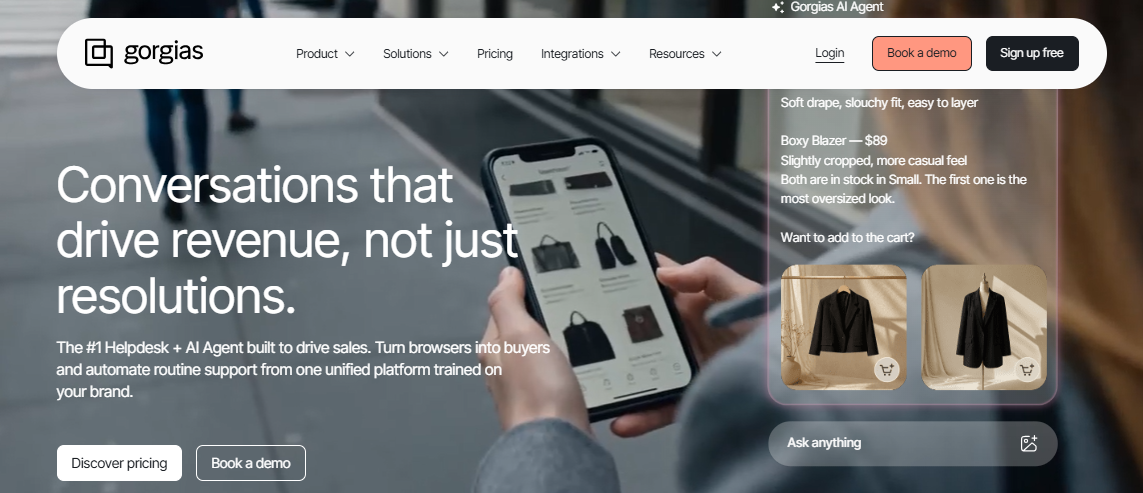
Gorgias is an e-commerce support platform with deep Shopify and WooCommerce integrations.
Its AI agent answers questions, recommends products, and upsells customers, but ticket-volume pricing means costs can spike suddenly during busy sale periods, according to reviewer reports.
Key features
- Native e-commerce integrations connect directly to Shopify and WooCommerce for real-time order context.
- AI agent recommends products and upsells customers alongside answering support queries.
- Omnichannel support manages email, chat, and messaging apps from one interface.
Why choose Gorgias over Gladly?
Gorgias is purpose-built for Shopify order actions, refunds, and upsells that Gladly's retail-first model does not natively support.
Pros
- Order-aware AI agent drives incremental revenue through product recommendations and upsells.
- Lower entry pricing than Gladly's enterprise-only quote floor.
- Purpose-built for e-commerce reduces time-to-value for online retail teams.
Cons
- Ticket-volume pricing creates sudden cost increases during busy sale periods.
- Not a natural fit for B2B support teams outside e-commerce workflows.
- AI resolution fees stack on top of ticket-based plans.
Customer review
Gorgias users on G2 praise the Shopify integration and upsell-driving AI agent, while flagging ticket-volume pricing spikes during peak sales.
Pricing
Gorgias starts around $10/month for 50 tickets. See the Gorgias pricing breakdown and our list of Gorgias alternatives.
4. Zendesk – Best for Large-Scale Enterprise Omnichannel Support
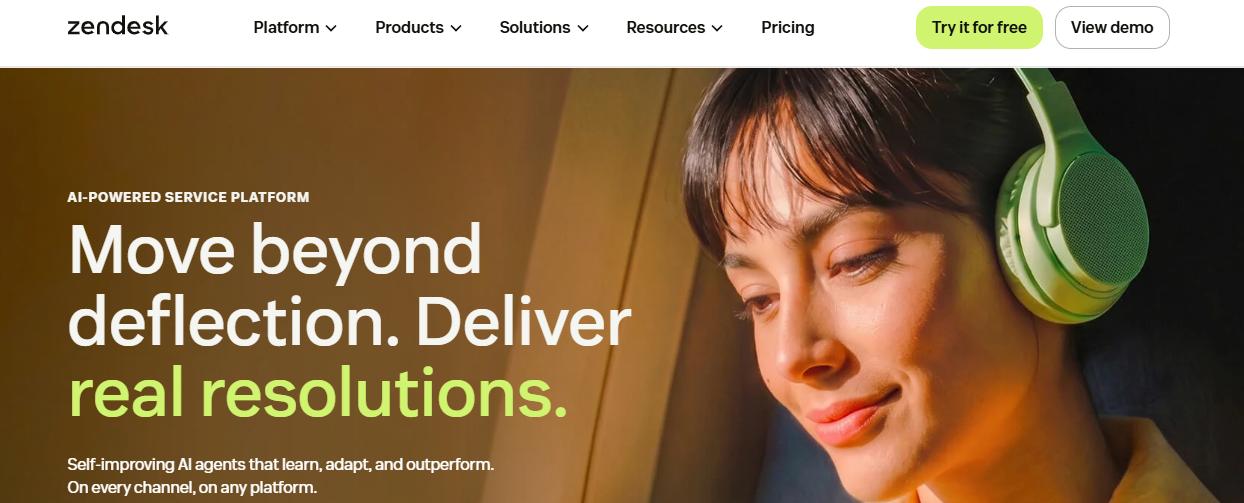
Zendesk is built for large-scale enterprise teams managing high ticket volumes.
Its customization, third-party integrations, and detailed analytics support complex workflows, though customers report complicated setup for new users and additional monthly fees for AI copilot features.
Key features
- Wide customization options support ticket routing, escalation, and SLA management workflows.
- Detailed analytics help teams understand customer needs and work more efficiently.
- Large integration marketplace connects with over 1,500 third-party apps.
Why choose Zendesk over Gladly?
Zendesk's broader integration ecosystem and published per-agent pricing suit teams that find Gladly's enterprise-only model too rigid.
Pros
- Deep customization options adapt to complex, multi-team support workflows.
- Detailed analytics and reporting exceed Gladly's more limited dashboards.
- Published per-agent pricing is more transparent than Gladly's quote-only model.
Cons
- Setup remains complicated for new users without dedicated admin support.
- AI copilot features require additional monthly fees on top of base plans.
- Ticket-centric design lacks Gladly's continuous, people-first timeline view.
Customer review
Zendesk customers on G2 report that setup is complicated for new users, and that AI copilot features require additional monthly fees.
Pricing
Zendesk starts around $19/agent/month. See the full list of Zendesk alternatives and the Zendesk pricing breakdown.
5. Intercom – Best for AI-First, Chat-Led SaaS Support
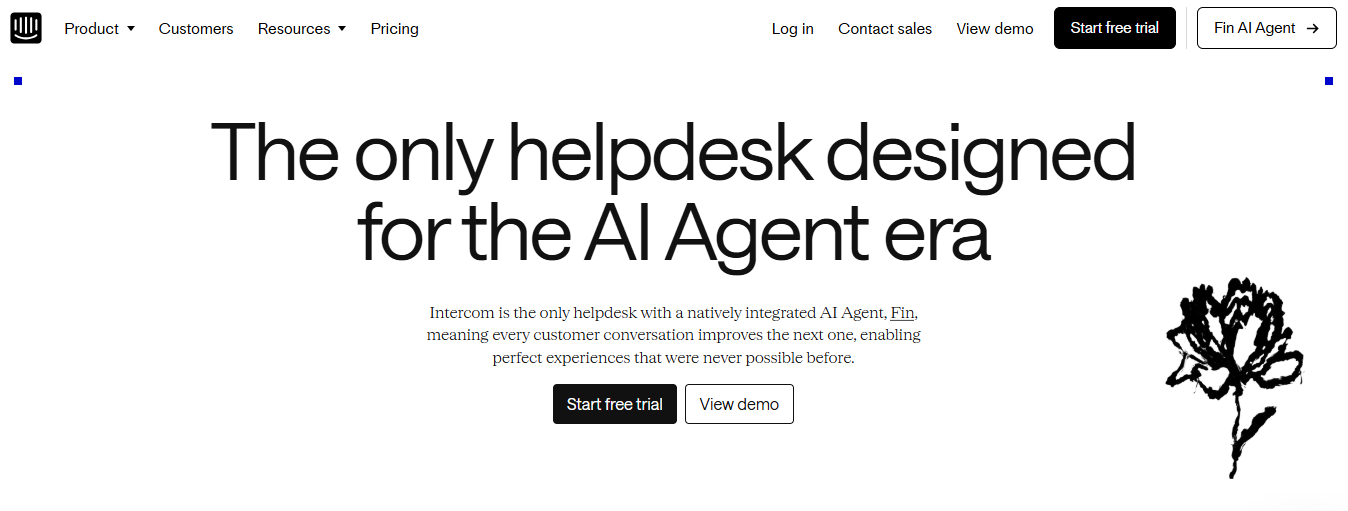
Intercom combines in-app messaging, email, and Fin AI for SaaS support teams.
Fin AI resolves a meaningful share of queries autonomously before reaching a human agent, giving Intercom stronger AI deflection than Gladly's assist-plus-Sidekick model, though per-resolution billing adds cost as volume scales.
Key features
- Fin AI bot resolves queries autonomously once trained against a knowledge base.
- In-app messaging embeds support directly inside the product experience.
- Workflows and automation handle routing, triage, and responses across use cases.
Why choose Intercom over Gladly?
Intercom's Fin AI deflects a larger share of queries autonomously than Gladly's assist-focused Sidekick model.
Pros
- Strong AI deflection reduces agent load on repetitive, well-documented queries.
- In-app messaging suits product-led SaaS growth better than Gladly's retail focus.
- Lower published seat price than Gladly's enterprise-only quote floor.
Cons
- Per-resolution AI pricing causes bills to rise as automation usage scales.
- Less suited for traditional retail or voice-heavy support than Gladly.
- Messenger-first design trades some ticketing depth for chat-led workflows.
Customer review
Intercom users on G2 note strong Fin AI deflection performance, while flagging rising costs from per-resolution billing as volume scales.
Pricing
Intercom starts around $29/seat/month plus per-resolution AI fees. See the Intercom pricing breakdown and our list of Intercom alternatives.
6. Freshdesk – Best for Budget-Conscious Omnichannel Teams
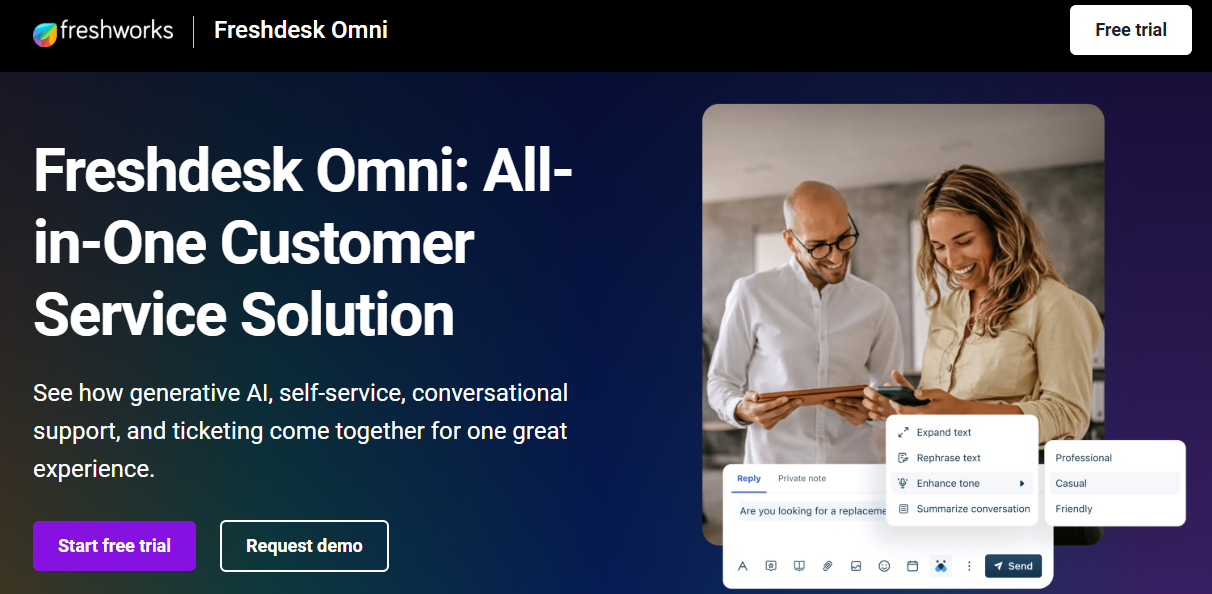
Freshdesk offers multichannel ticketing and automation at a fraction of Gladly's cost.
A strong free and low-cost tier covers most SMB needs without native voice, giving budget-conscious teams a functional alternative to Gladly's $180+ per-agent enterprise pricing.
Key features
- Multichannel ticketing manages support across email, chat, phone, and social channels.
- Freddy AI provides AI-assisted triage and self-service deflection on higher tiers.
- Free tier covers up to 10 agents with core ticketing functionality.
Why choose Freshdesk over Gladly?
- Freshdesk's free and low-cost tiers deliver 60 to 75 percent cost savings against Gladly's enterprise pricing.
Pros
- Free and low-cost plans ease adoption without Gladly's enterprise quote floor.
- Solid ticketing and automation cover most SMB and mid-market use cases.
- Faster time to value than Gladly's multi-month implementation cycle.
Cons
- Native voice support is weaker than Gladly's built-in voice channel.
- AI depth trails platforms built AI-native from the ground up.
- Lacks Gladly's continuous, people-first timeline across channels.
Customer review
Freshdesk users on G2 rate its ease of setup highly, while noting costs rise once AI and omnichannel modules are added.
Pricing
Freshdesk starts around $15/agent/month, with a free tier for up to 10 agents. See the Freshdesk pricing breakdown and our list of Freshdesk alternatives.
7. Pylon – Best for B2B SaaS Teams Needing Omnichannel Support
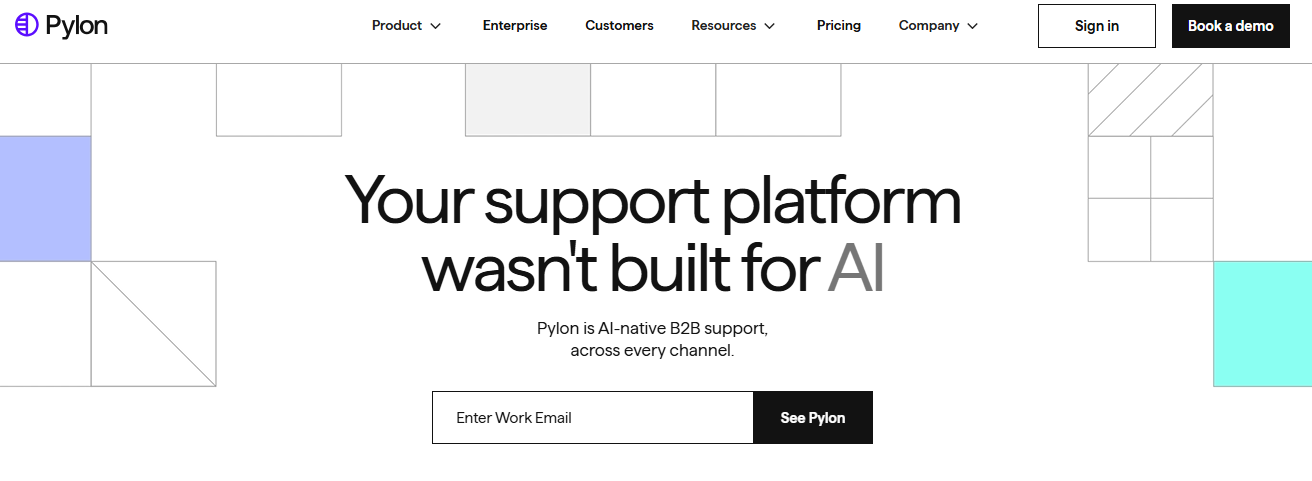
Pylon is an omnichannel platform built specifically for B2B SaaS support teams.
Its single workspace covers email, live chat, Slack, and Teams, with AI tools for drafting replies and sentiment analysis, though it is not built for consumer-facing companies like Gladly serves.
Key features
- Unified workspace covers email, live chat, Slack, and Teams in one platform.
- AI tools draft responses, fill knowledge base gaps, and analyze customer sentiment.
- Built specifically for B2B SaaS support workflows rather than consumer retail.
Why choose Pylon over Gladly?
- Pylon is purpose-built for B2B SaaS support across Slack and Teams, where Gladly's retail-first design does not fit.
Pros
- Slack and Teams support closes a gap most consumer-focused helpdesks leave open.
- AI tools cover drafting, knowledge base gaps, and sentiment analysis in one platform.
- Purpose-built for B2B reduces workflow friction for SaaS support teams.
Cons
- Not a natural fit for consumer-facing or retail support teams.
- Smaller ecosystem overall compared to more established enterprise helpdesks.
- Custom pricing requires direct sales engagement rather than published rates.
Customer review
Pylon is frequently cited as the top pick for B2B SaaS teams wanting Slack and Teams support alongside traditional channels.
Pricing
Pylon uses custom, quote-based pricing. If Pylon itself is not the right fit, see our list of Pylon alternatives for a full comparison.
8. Salesforce Service Cloud – Best for Large Enterprises with Complex Operations
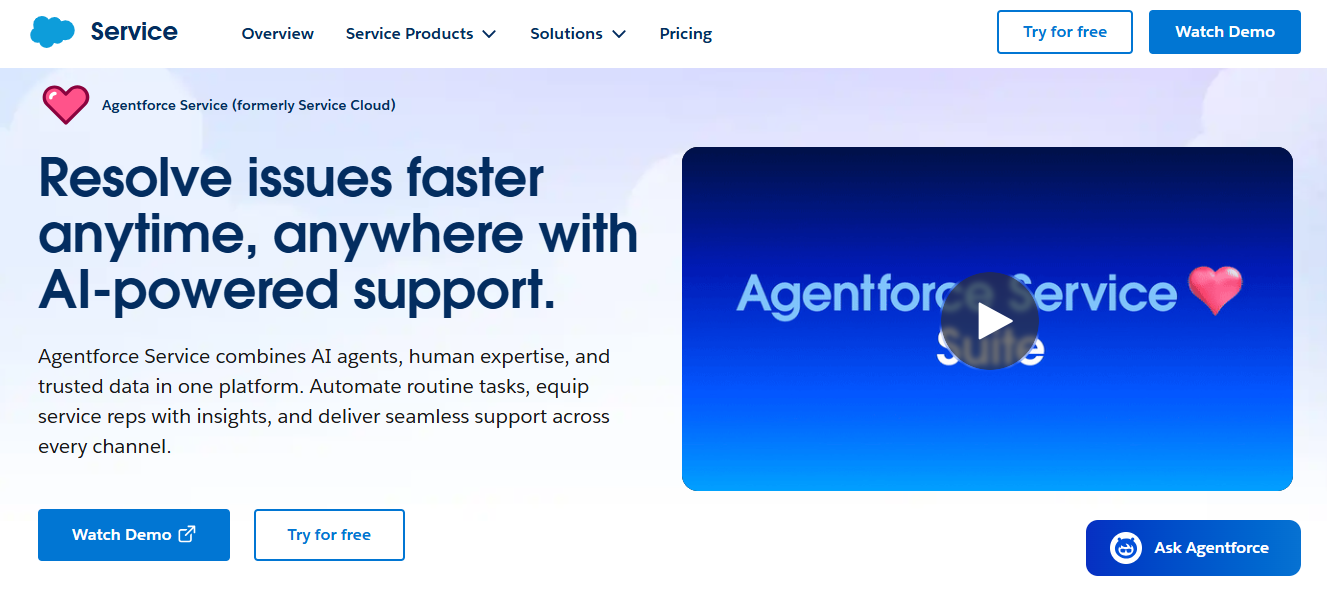
Agentforce Service, formerly Salesforce Service Cloud, targets large organizations with complex support operations.
Centralized customer data and autonomous AI agents draw on full CRM context for accurate answers, though customers report a steep learning curve and difficult setup and customization.
Key features
- Native Salesforce CRM integration connects support cases with accounts and opportunities.
- Autonomous AI agents draw on customer context for accurate, relevant answers.
- 7,000+ AppExchange apps extend the platform across nearly any workflow.
Why choose Salesforce Service Cloud over Gladly?
- Agentforce's deep CRM integration gives enterprises account-level context that Gladly's retail-first model does not centralize.
Pros
- Deep CRM integration provides full customer context across every support interaction.
- Enterprise-grade automation and customization suit complex, multi-team operations.
- Massive app ecosystem covers nearly any integration requirement.
Cons
- Steep learning curve makes setup and customization difficult for new teams.
- Among the most expensive options at scale, similar to Gladly's enterprise pricing.
- Overkill for mid-market teams that do not need full Salesforce customization.
Customer review
Agentforce customers on G2 praise its automation and CRM-driven context, while noting a steep learning curve for new users.
Pricing
Salesforce Service Cloud starts around $25/user/month (Starter), with most enterprise deployments landing well above published entry tiers.
9. Zoho Desk – Best for the Zoho Ecosystem and Lowest Per-Seat Cost
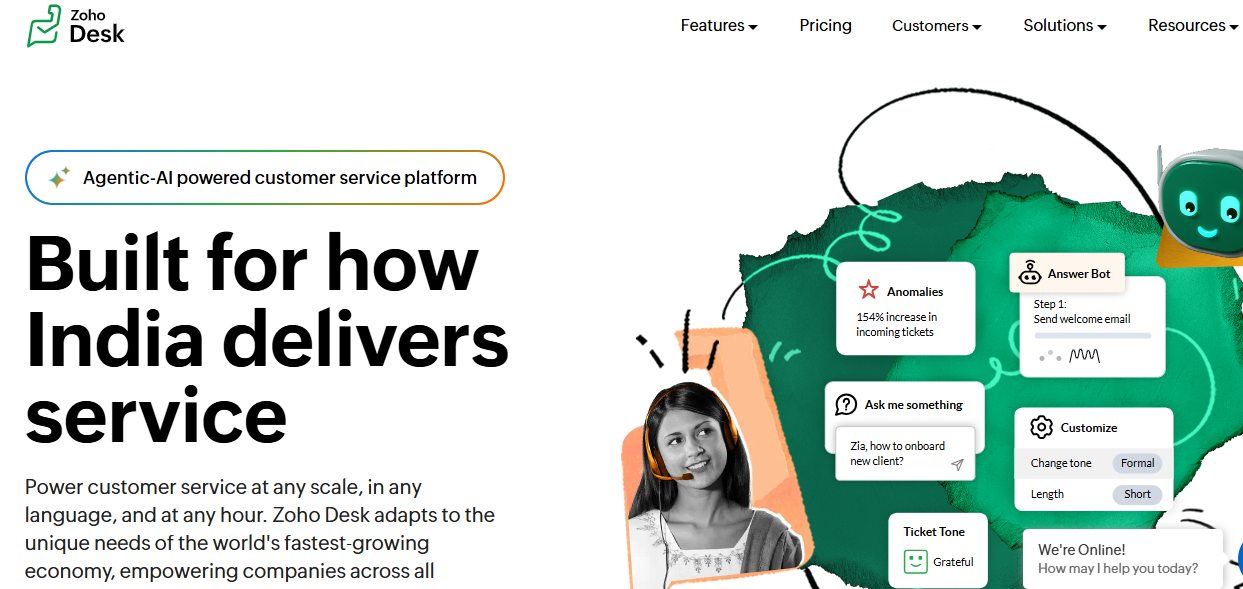
Zoho Desk is the most affordable helpdesk option on this list, by a wide margin.
Structured multichannel support and basic Zia AI tools cover core ticketing needs at a per-seat cost far below Gladly's $180-210 per agent enterprise pricing.
Key features
- Multichannel ticketing spans email, chat, social, phone, and web forms.
- Zia AI provides sentiment analysis, response suggestions, and auto-tagging on higher tiers.
- Deep Zoho integration connects natively to Zoho CRM and other Zoho apps.
Why choose Zoho Desk over Gladly?
- Zoho Desk costs a fraction of Gladly's per-agent price, making it the clear budget pick on this list.
Pros
- Lowest per-seat cost among every alternative compared in this guide.
- Free tier available for up to 3 agents with core functionality.
- Deep Zoho suite integration benefits teams already on Zoho CRM.
Cons
- Basic AI tools trail more sophisticated, AI-native platforms.
- Interface feels dated compared to modern support platforms.
- Lacks Gladly's continuous, people-first timeline across channels.
Customer review
Zoho Desk users praise the affordability and feature breadth, while flagging that Zia AI capabilities remain basic for complex routing.
Pricing
Zoho Desk starts around $7/user/month, with a free tier for up to 3 agents. See our list of Zoho Desk alternatives.
10. Front – Best for Collaborative, High-Touch Support Teams
Front is a shared inbox platform built for collaborative, high-touch support operations.
Its email-native workflow and team collaboration tools suit B2B teams prioritizing internal coordination, though its AI capabilities remain lighter than Gladly's Sidekick or newer AI-native platforms.
Key features
- Shared inbox design lets teams collaborate on live customer conversations in one thread.
- Email-native workflow suits B2B teams prioritizing internal coordination over ticket structure.
- Analytics and integrations support collaborative, high-touch account management.
Why choose Front over Gladly?
Front's shared-inbox model suits collaborative, high-touch B2B teams that do not need Gladly's consumer-focused timeline.
Pros
- Strong team collaboration features suit high-touch, relationship-driven support.
- Email-native design feels familiar for teams moving off shared inboxes.
- High G2 rating reflects strong satisfaction among collaborative support teams.
Cons
- Lighter AI capabilities than Gladly's Sidekick or newer AI-native platforms.
- Less suited for high-volume, ticket-heavy consumer support operations.
- Per-seat pricing climbs as team size and collaboration needs grow.
Customer review
Front users on G2 consistently praise the collaborative, email-native workflow, while noting AI capabilities remain lighter than newer platforms.
Pricing
Front starts around $19-25/seat/month. See our list of Front alternatives for a full comparison.
How to Choose the Best Gladly Alternative in 2026?
1. Pricing model and total cost
Gladly's enterprise-only quotes, often starting at $180-210 per agent, make cost comparison difficult upfront. Evaluate whether the alternative offers published, flat-rate pricing you can model against your actual ticket volume.
2. AI architecture
Not all AI is equal. Teams should evaluate whether the best AI help desk software bundles automation into every plan as a core workflow capability, or sells it as a premium add-on layer the way several Gladly alternatives do.
3. Channel and commerce integration depth
Verify whether the alternative connects natively to Shopify, WooCommerce, or your CRM, and whether it maintains a unified customer view across channels the way Gladly's timeline does. Effective omnichannel customer service depends on native channel coverage, not bolted-on connectors.
4. Implementation speed and admin burden
Gladly's reported two-month implementation and year-long ROI timeline is a real cost in team time. Lean teams benefit from platforms with strong out-of-the-box defaults and self-serve setup.
5. Migration path and integrations
Evaluate the quality of native integrations and the migration tooling each alternative provides. Check whether the vendor offers ticket history import and structured onboarding to minimize switching risk and downtime.
6. Scalability
Consider how each alternative handles growth beyond your current team size. A tool priced for 10 agents can become unpredictable at 50, whether that is per-agent costs compounding or ticket-based pricing spiking during peak season. Match the alternative's scaling model to how your support volume is actually likely to grow over the next 12 to 24 months.
Why is QuantumDesk a Strong Alternative to Gladly?
QuantumDesk suits Shopify-first D2C brands and growing consumer teams that want Gladly's people-centered philosophy without its enterprise-only pricing or multi-month implementation timeline.
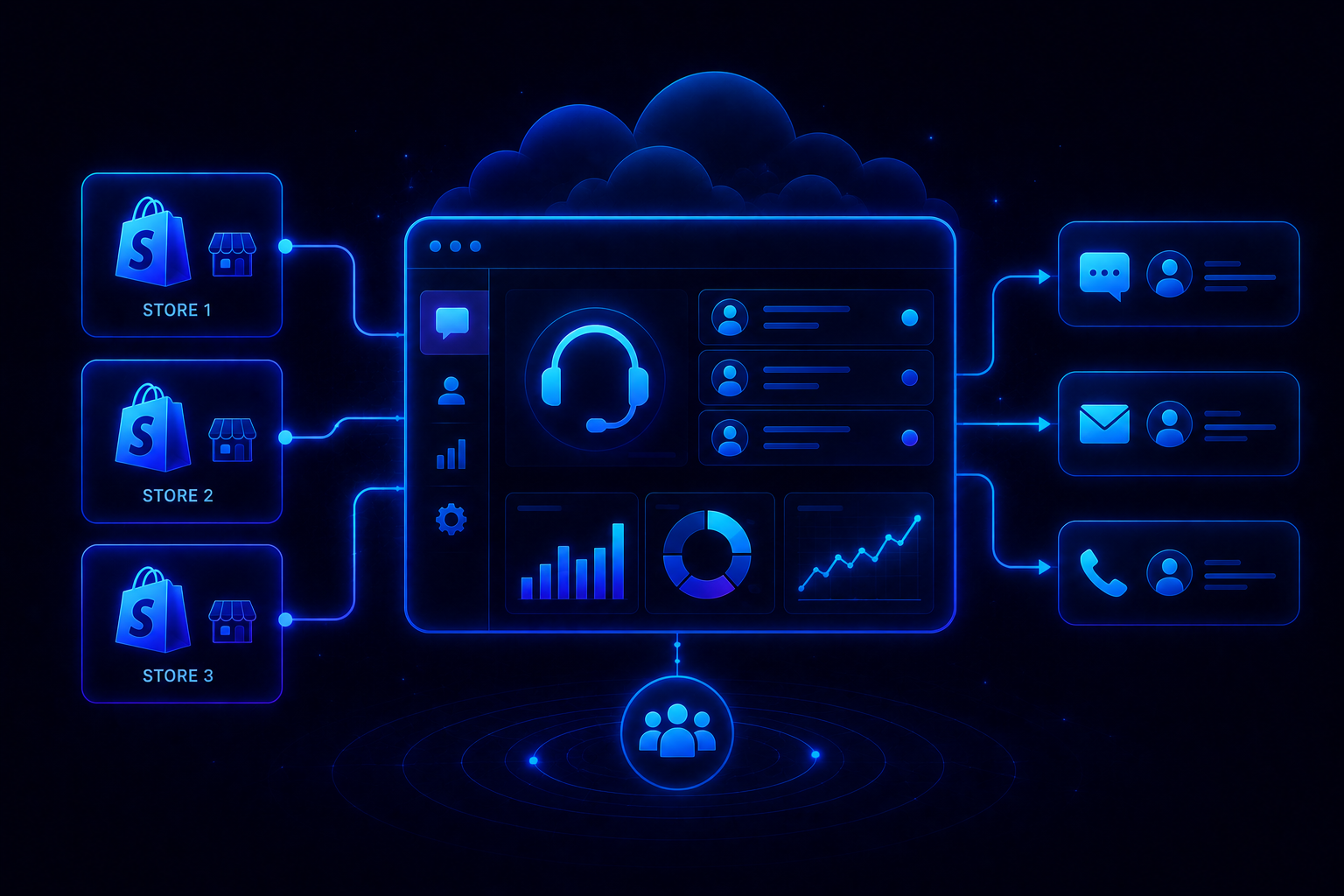
For Shopify brands specifically, QuantumDesk connects directly to store order and customer data, so Quantum AI resolves order status, return, and account queries inside the same unified conversation view, extending Gladly's people-first idea with commerce context Gladly does not natively pull in.
That context ships bundled into every plan at flat, transparent pricing, not a $180+ per-agent enterprise quote.
Key Capabilities of QuantumDesk
- AI-native architecture embeds Quantum AI across every plan for ticket summaries, reply drafting, sentiment detection, and next-step recommendations without separate billing.
- Native Shopify integration surfaces order status, order history, and customer profiles directly inside the conversation the moment a customer reaches out.
- Transparent flat-rate pricing keeps costs predictable as ticket volume and team size grow, replacing Gladly's enterprise-only quote floor entirely.
- Unified omnichannel inbox brings email, WhatsApp, Instagram, Facebook, and web chat into one workspace without requiring separate channel subscriptions.
- AI-curated inbox automatically prioritizes tickets by urgency, sentiment, and customer intent, reducing the manual triage support leads handle daily.
- Lightweight implementation gets most teams live within two weeks, replacing the two-month rollout and year-long ROI timeline reported for Gladly.
Ready to See QuantumDesk Against Your Current Gladly Setup? Explore how QuantumDesk can support your growth with embedded AI and predictable pricing → Book a Demo
Frequently Asked Questions
What are the top Gladly alternatives?
The top Gladly alternatives include QuantumDesk, Kustomer, Gorgias, Zendesk, Intercom, Freshdesk, Pylon, Salesforce Service Cloud, Zoho Desk, and Front. The right choice depends on whether you need a people-centric timeline, deep e-commerce integration, enterprise CRM data, or budget-friendly ticketing.
Is Gladly suitable for large-scale enterprise use?
Gladly is built for large retail and consumer brands, with enterprise onboarding and quote-based pricing that typically starts at $180-210 per agent per month. Teams outside that consumer-retail niche, or those wanting published pricing, often find better fits among the alternatives on this list.
How does QuantumDesk compare to Gladly?
QuantumDesk includes AI, native Shopify integration, and a unified customer view on every plan with transparent, flat-rate pricing. Gladly's enterprise-only quotes start near $180-210 per agent, with implementation running close to two months. QuantumDesk keeps Gladly's people-first philosophy while going live in about two weeks.
What is the best free alternative to Gladly?
Freshdesk and Zoho Desk both offer free tiers suitable for small teams managing core support channels. For teams expecting growth into AI-driven, Shopify-first support, QuantumDesk's custom pricing is worth evaluating early to avoid outgrowing free-tier limitations.
Which Gladly alternative is best for e-commerce brands?
Gorgias and QuantumDesk are the strongest e-commerce picks. Gorgias offers the deepest native Shopify and WooCommerce order actions. QuantumDesk pairs native Shopify integration with a unified WhatsApp, Instagram, and email inbox plus AI embedded across every plan.
Which Gladly alternative is best for B2B SaaS teams?
Pylon is purpose-built for B2B SaaS teams needing Slack and Teams support alongside email and chat. QuantumDesk suits B2B and D2C teams that want AI-native automation and Shopify context without Gladly's consumer-retail focus or enterprise pricing.




.avif)