Summarize with AI
Key Takeaways
- A unified help desk gives agents full Shopify order context, cutting response time across every channel.
- Self-service automation deflects WISMO, sizing, and FAQ questions before they ever become tickets.
- Returns handled well retain revenue through exchanges instead of losing it to refunds.
- Proactive post-purchase support catches shipping delays before customers have to ask.
- QuantumDesk unifies Shopify data, AI, and support so D2C teams execute this strategy without adding headcount.
Most Shopify D2C brands say they are customer-obsessed. Few can point to a support system actually built to prove it.
A shopper messages a Shopify skincare brand about a reaction → gets a generic FAQ link back → posts about it publicly → three potential buyers from their network never convert.
One unresolved message, and the brand loses more than one customer. Top D2C brands treat support as growth infrastructure, not a line item to minimize.
You will learn about:
- The four pillars top D2C brands build their Shopify support strategy around
- How self-service and automation deflect the repetitive questions eating your team's day
- Why returns done right retain revenue instead of losing it
- A step-by-step feedback loop that turns support tickets into product decisions
By the end, you will have a support strategy built for how D2C actually scales in 2026.
Shopify Customer Support Strategy for D2C Brands at a Glance
Why Support Is a Growth Lever, Not a Cost Center
Acquiring a new D2C customer costs 5 to 20 times more than retaining one. That math alone should move support out of the cost column.
89% of companies say excellent customer service directly drives retention, and D2C brands live or die on repeat purchase.
Because D2C brands own their customer data, support is not just troubleshooting. It is one of the few channels with direct access to real buyer intent.
For the fundamentals, see our full Shopify customer support guide.
How to Build a Unified Customer Support Platform for Shopify?
A support platform disconnected from Shopify data slows every reply down. Building it right takes three deliberate steps.
Step 1: Consolidate Every Channel Into One Dashboard
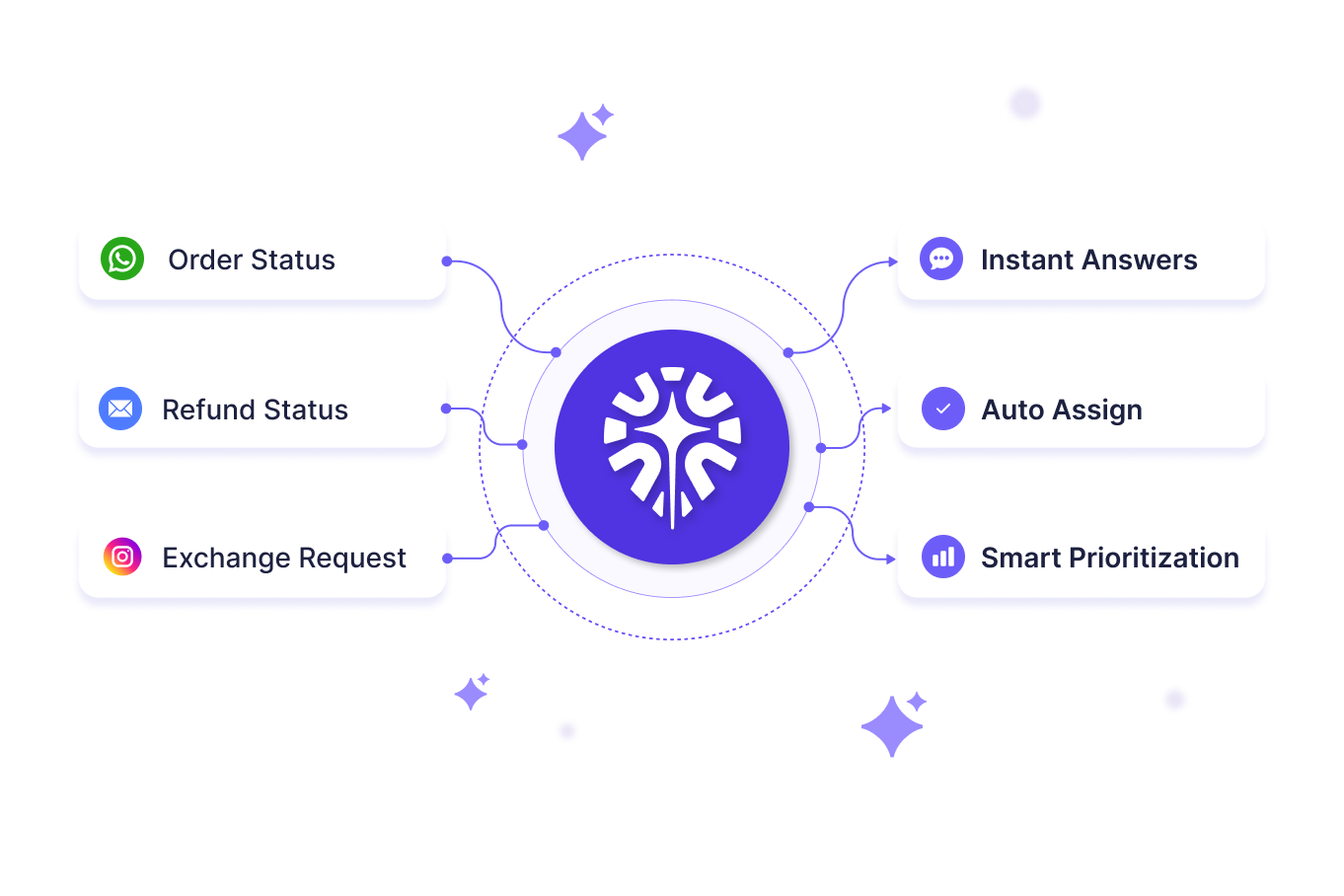
Route Instagram DMs, WhatsApp, email, and live chat into one queue so nothing sits unanswered.
Step 2: Sync Customer and Order Data From Shopify
Pull purchase history, lifetime value, and live inventory into every ticket automatically, with tracking visible on the same screen.
Step 3: Choose the Right Platform for Your Team
Pick a Shopify-native app or an AI-first platform built around your store data, not a generic helpdesk.
This is the same foundation covered in most guides to AI customer support for Shopify, and for good reason: everything else in this guide depends on it. For a side-by-side look at specific platforms, see our Best Help Desk Software for Shopify roundup.
Automate Customer Support Workflows Effectively
High-volume, low-complexity moments, from a sizing question to a stalled shipment, do not need a human touch every time.
- Automate WISMO queries with a prominent order-tracking portal shoppers can check without messaging support
- Use smart chatbots and FAQs to answer sizing, shipping, and policy questions instantly, day or night
- Build visual guides like interactive size charts embedded directly on product pages
- Offer instant exchanges by prompting a size or color swap before a refund is even requested, backed by prepaid labels
- Set clear automated return rules based on product type or final sale status, no manual email thread required
- Flag shipping delays automatically the moment a package stalls in transit, before the customer has to ask
- Send unboxing instructions and collect feedback the day an item delivers and again about a week later
- Provide localized support aligned with regional delivery networks as the brand scales globally
Automating this layer alone is often the fastest way to reduce "where is my order" tickets without adding a single agent.
D2C buyers expect a painless return experience, and returns spike as much as 31% during peak season, which is why brands that push exchanges over refunds work to reduce return support backlog instead of letting it pile up.
Automated status updates on refunds and exchanges close the loop without a shopper ever needing to ask, and this same proactive layer is what lets brands scale D2C customer support without increasing headcount as order volume climbs.
How to Build a Customer Feedback Loop Into Your Support Strategy
Support tickets are a growth signal, not just a queue to clear. Most D2C brands collect this signal and never route it anywhere.
Step 1: Capture Every Signal, Not Just the Loud Ones
Tag every support ticket by theme, not just by status. A handful of angry reviews should not be the only signal shaping decisions.
Step 2: Route Signal to the Right Owner
A sizing complaint routed only to support is half-routed. The same complaint, tagged and sent to the product team, becomes a next-iteration input.
Step 3: Act on the Highest-Priority Themes
Turn recurring complaints into concrete changes: a revised size chart, a new FAQ entry, or an updated product description.
Step 4: Close the Loop With the Customer
Tell customers what changed because of what they said. A short update email is often enough to turn a complaint into loyalty.
This four-stage habit is one of the D2C customer support best practices that compounds the longer a brand runs it.
What Happens When D2C Support Strategy Breaks
Not every brand gets this right, and the gap shows up fastest during a sale.
A Shopify cosmetics brand runs a 24-hour flash sale → WhatsApp and email volume triples overnight → the disconnected helpdesk cannot see Shopify order data → agents ask shoppers to repeat order details → response times stretch past a day.
One bad sale weekend, and shoppers who found the brand through a viral video never come back.
This is exactly the failure mode covered in our guide on how to manage customer support during flash sales. A slow reply during a flash sale exposes exactly how much customer support and repeat purchases depend on each other.
Traditional D2C Stack vs QuantumDesk AI Functionalities
Most of the tactics above get built with three or four separate tools. Here is how that stack compares to a platform designed to do it natively.
Fewer tools stitched together usually means fewer places for a customer's context to get lost.
How QuantumDesk Provides a Modern D2C Support Strategy
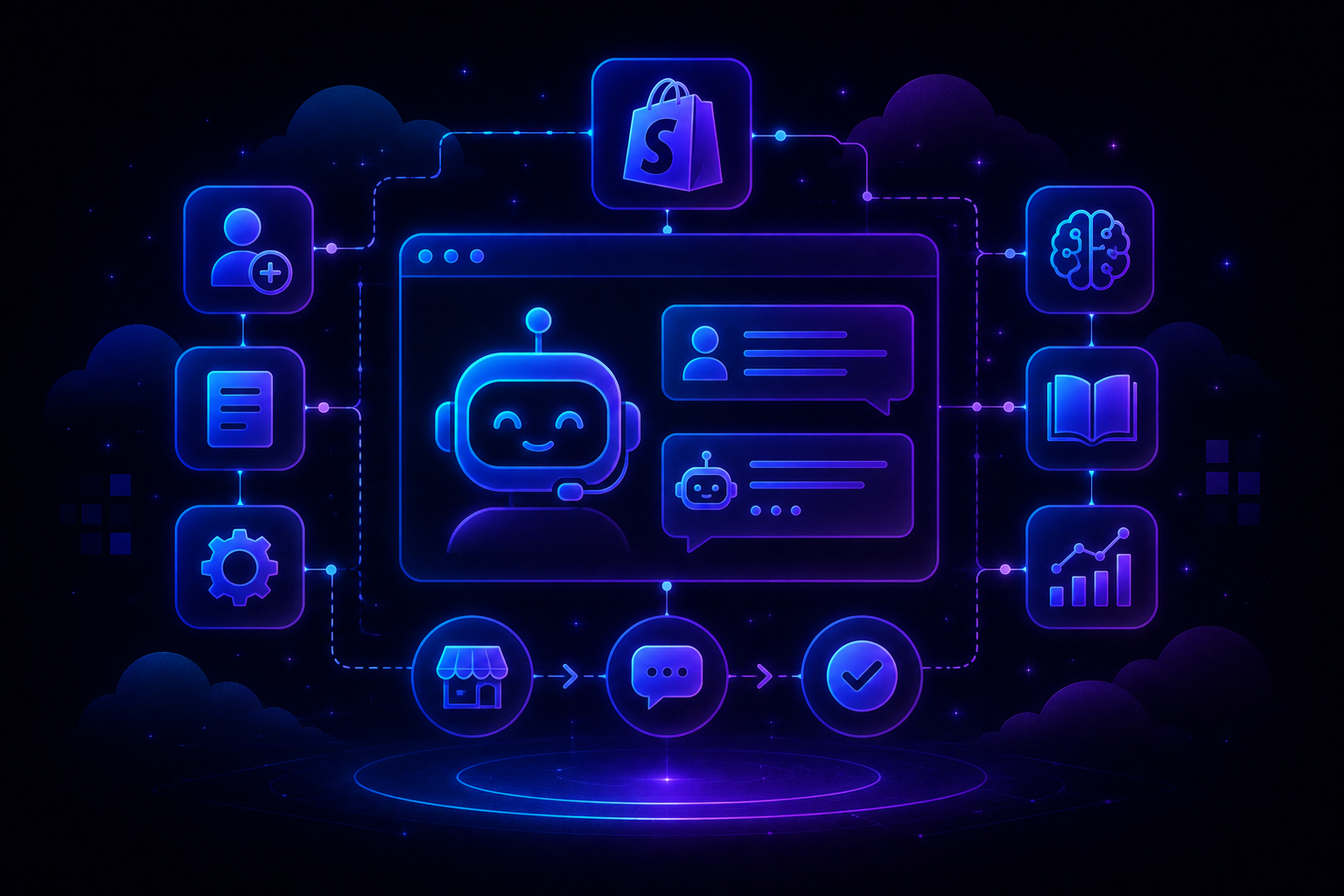
Every pillar in this guide - the unified inbox, the automation, the returns flow, the feedback loop depends on one thing: AI that actually sees your Shopify data.
QuantumDesk connects directly to Shopify order and customer data, so Quantum AI resolves order and account queries without an agent ever opening a second tab.
That native connection is what separates a strategy stitched together from apps and one built on a single AI-native foundation from day one.
Key QuantumDesk Capabilities
- Quantum AI resolves WISMO and return questions automatically using live Shopify order data
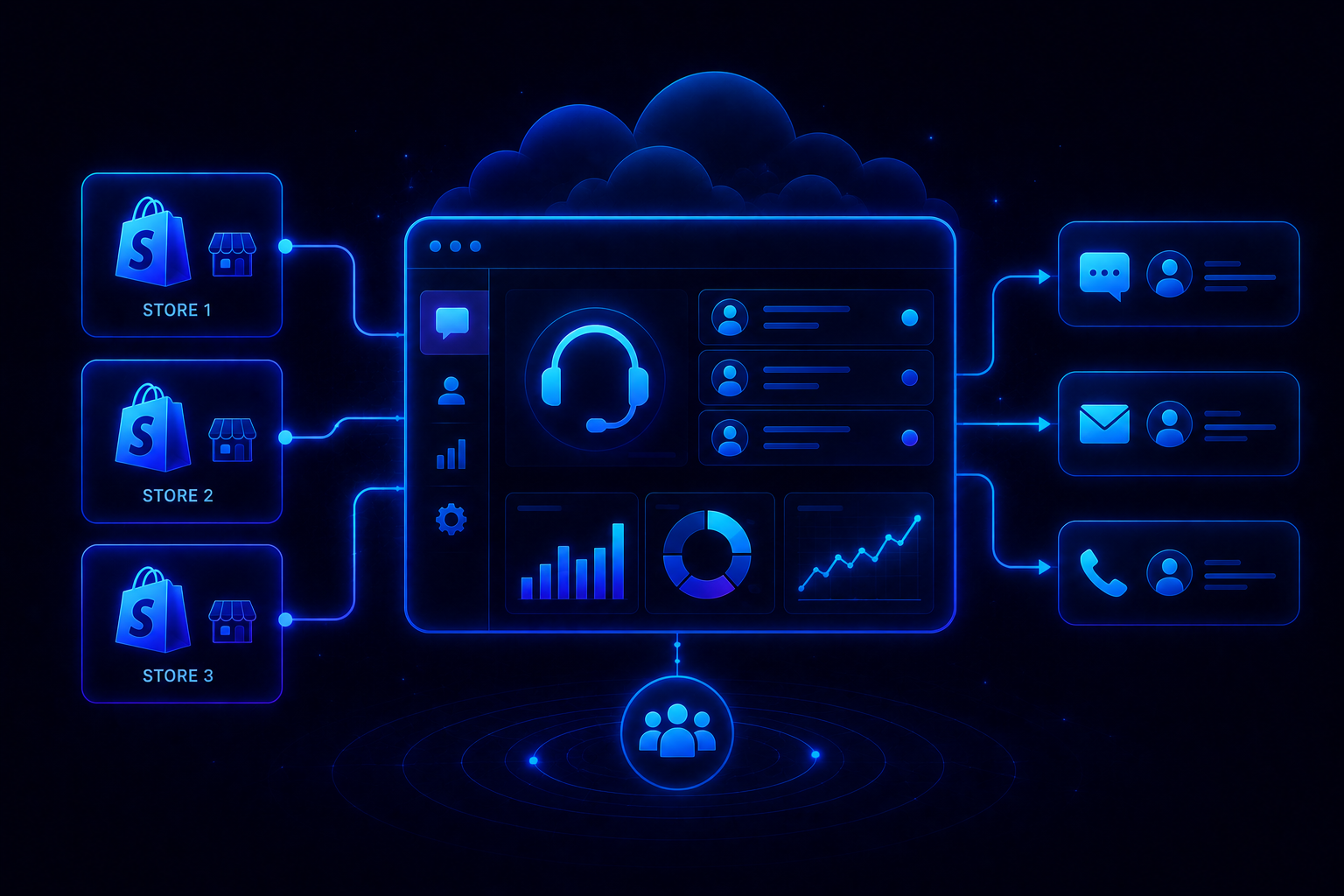
- Unified Inbox centralizes email, chat, WhatsApp, and social messages with full order context attached
- AI-Curated Inbox prioritizes tickets by urgency, sentiment, and intent before an agent opens them
- Quantum AI Copilot gives agents full context and suggested replies during live conversations
- Native Shopify Integration surfaces order and customer data directly inside every conversation
- Admin Analytics tracks resolution rates, escalation patterns, and CSAT trends in one dashboard
QuantumDesk does not replace the judgment a growing D2C team brings to support. It gives that team the Shopify context to use it faster.
Frequently Asked Questions
What is a Shopify customer support strategy for D2C brands?
It is the system a D2C brand builds to answer questions, resolve orders, and manage returns using Shopify data as the foundation, not an afterthought.
What should a D2C brand automate first in Shopify customer support?
Order status and return eligibility first, since they generate the most repetitive volume and are the easiest to resolve with live Shopify data.
How do top D2C brands handle returns without losing revenue?
They lead with exchanges instead of refunds, using automated eligibility checks and prepaid labels so the process never turns into a back-and-forth email thread.
Why does a customer feedback loop matter for Shopify support?
Without routing and ownership, feedback collected in support tickets dies before it reaches product or marketing, wasting the highest-quality signal a brand has.
What is a good AI-native platform for D2C Shopify support?
QuantumDesk connects natively to Shopify data and unifies AI, automation, and reporting in one platform built for how D2C brands actually scale.




.avif)