
Summarize with AI
Key Takeaways
- AI customer service agents handle support queries automatically, reducing pressure on human support teams
- They understand customer intent, take meaningful actions, and continuously improve over time
- AI agents help reduce agent workload significantly and improve response speed across all queries
- They work effectively across chat, email, voice, and messaging channels without switching tools
- AI-native platforms like QuantumDesk make AI agents considerably more effective within support workflows
Customer support demand has increased significantly, with more queries, higher expectations for speed, and growing pressure on support teams. This pressure is most acute for businesses operating on thin support teams while handling high order volumes.
A small apparel brand processing 1,500 monthly orders cannot afford to have two agents spending their entire day answering "where is my order" and "can I exchange my size" when there are actual complaints and escalations sitting unattended in the same inbox.
Support teams struggle with repetitive tasks, slow response times, and the challenge of scaling operations. Managing increasing workloads while maintaining quality creates inefficiencies and limits the ability to deliver consistent customer experiences.
Over 70% of customers expect immediate responses, while support teams report increasing workloads due to rising query volumes across channels.
- Customers expect instant support across all communication channels without delays
- Support teams handle high volumes of queries daily across multiple platforms
- Repetitive queries consume time and slow down overall response efficiency
- Personalization is now expected in every customer interaction
AI customer service agents address these challenges by automating tasks and improving efficiency. This guide explains how they work, their benefits, and real-world applications.
What Is an AI Customer Service Agent?
An AI customer service agent is software that understands customer queries, responds intelligently, and performs actions using artificial intelligence. It can handle conversations, retrieve information, and execute tasks to resolve customer issues without requiring constant human involvement.
Unlike traditional chatbots that follow fixed rules and only answer predefined questions, AI agents understand intent and context. They can make decisions, perform actions, and manage workflows, enabling them to resolve issues instead of simply responding to queries.
For a logistics brand managing hundreds of daily shipment queries, this means the AI does not just tell a customer their order is delayed. It identifies the issue, pulls the tracking data, and responds with the updated delivery window, all without a human agent involved.
This distinction is explored in more depth across comparisons of ai customer service software available today.
- Understands customer intent using natural language processing and contextual analysis of queries
- Retrieves information from systems like CRM, databases, and knowledge bases for accurate responses
- Performs actions such as refunds, updates, bookings, and ticket creation automatically
- Escalates to human agents when queries require judgment or complex decision-making
Modern AI agents can handle both simple and moderately complex customer service tasks, making them essential for improving efficiency and scalability in support operations.
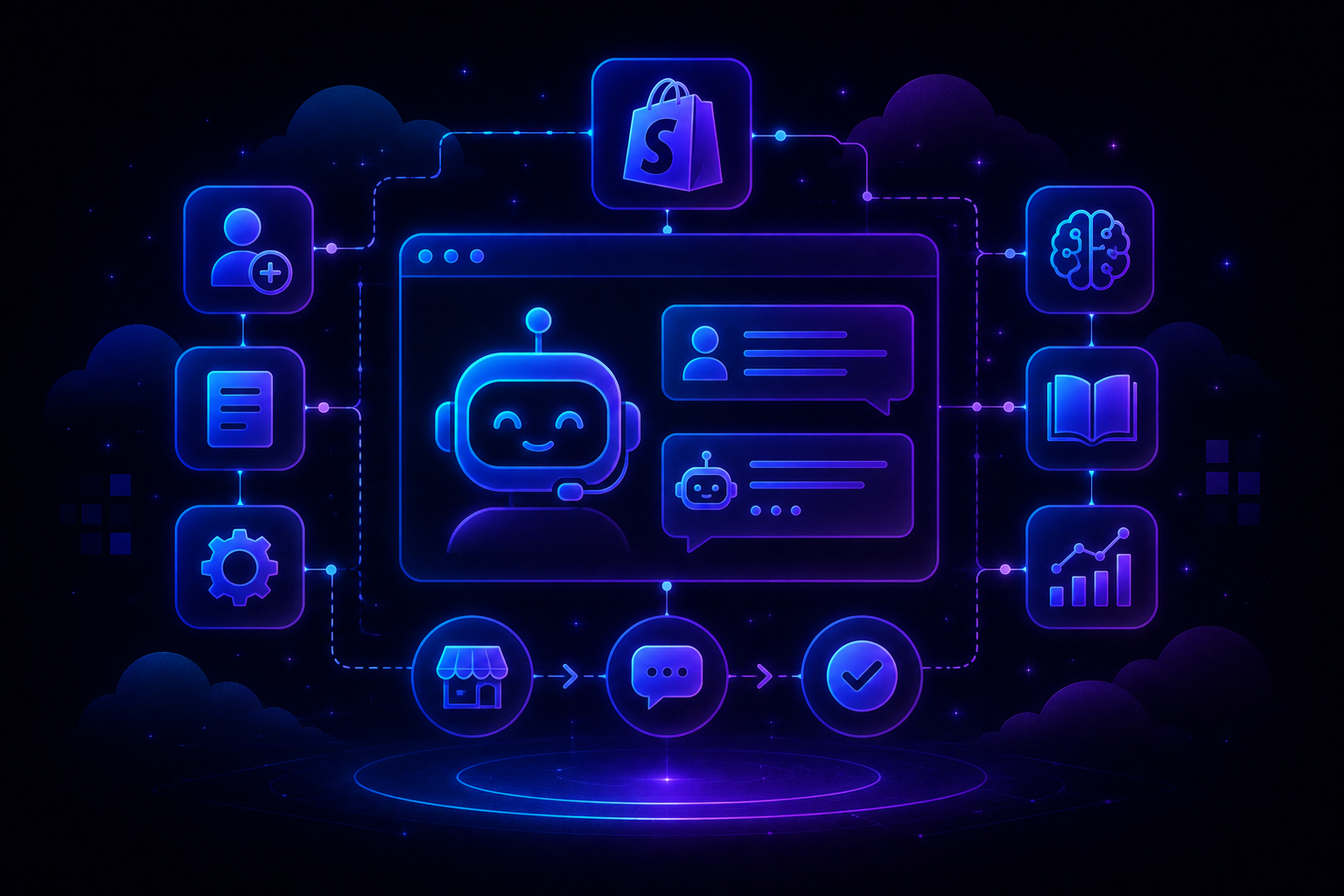
How AI Customer Service Agents Work (Step-by-Step)
Step 1: Understanding Customer Intent
AI analyzes customer input from text or voice and identifies intent, context, and key details to determine what the customer needs.
A customer typing "I got the wrong size, I ordered a medium but received a large" is understood as an exchange request, not just a complaint.
Step 2: Retrieving Relevant Information
AI pulls relevant data from CRM systems, knowledge bases, and backend tools to ensure responses are accurate and context-aware. This includes order history, past interactions, and product details, giving agents and customers a complete picture without manual searching.
Step 3: Taking Actions
AI performs tasks such as processing refunds, updating information, or creating support tickets based on customer requests.
For consumer brands handling return and exchange requests at scale, this step alone eliminates significant manual workload from support teams.
Step 4: Responding to the Customer
AI generates clear and natural responses that address the customer query while maintaining consistency and relevance across channels.
Step 5: Learning and Improving
AI improves over time using feedback, updated data, and refined workflows to enhance performance and accuracy. Sustaining this improvement cycle is what separates high-performing systems from generic ones, and it directly impacts ai customer support accuracy at scale.
Why AI Customer Service Agents Are Important in 2026
Customer expectations and support complexity continue to increase, making traditional support models less effective. Businesses must adapt to deliver faster, more personalized, and scalable support experiences across channels.
1. Higher Customer Expectations
Customers expect fast, personalized, and always-available support across channels, making delayed or generic responses unacceptable in 2026. A customer who experiences next-day resolution from one brand will not tolerate a 48-hour wait from another.
2. More Support Requests Across Channels
Customer queries are increasing across chat, email, social media, and voice, creating higher demand for efficient support systems.
For brands running seasonal promotions or flash sales, this volume can spike overnight with no warning.
3. Need for Personalized Experiences
Generic responses no longer meet expectations, and customers expect tailored interactions based on their history and preferences.
A repeat buyer reaching out about a product quality issue should be treated differently from a first-time customer asking the same question.
4. Growing Pressure on Support Teams
Support teams face repetitive workloads and increasing pressure, leading to inefficiencies that affect both agent performance and customer satisfaction. When agents spend the majority of their day on L1 queries, burnout increases and complex issues get delayed.
5. Shift Toward Automation
Businesses are adopting AI agents to handle customer service automation of repetitive tasks and improve overall support efficiency without proportional headcount increases.
For lean teams at growing consumer brands, this shift is less of a choice and more of an operational necessity.
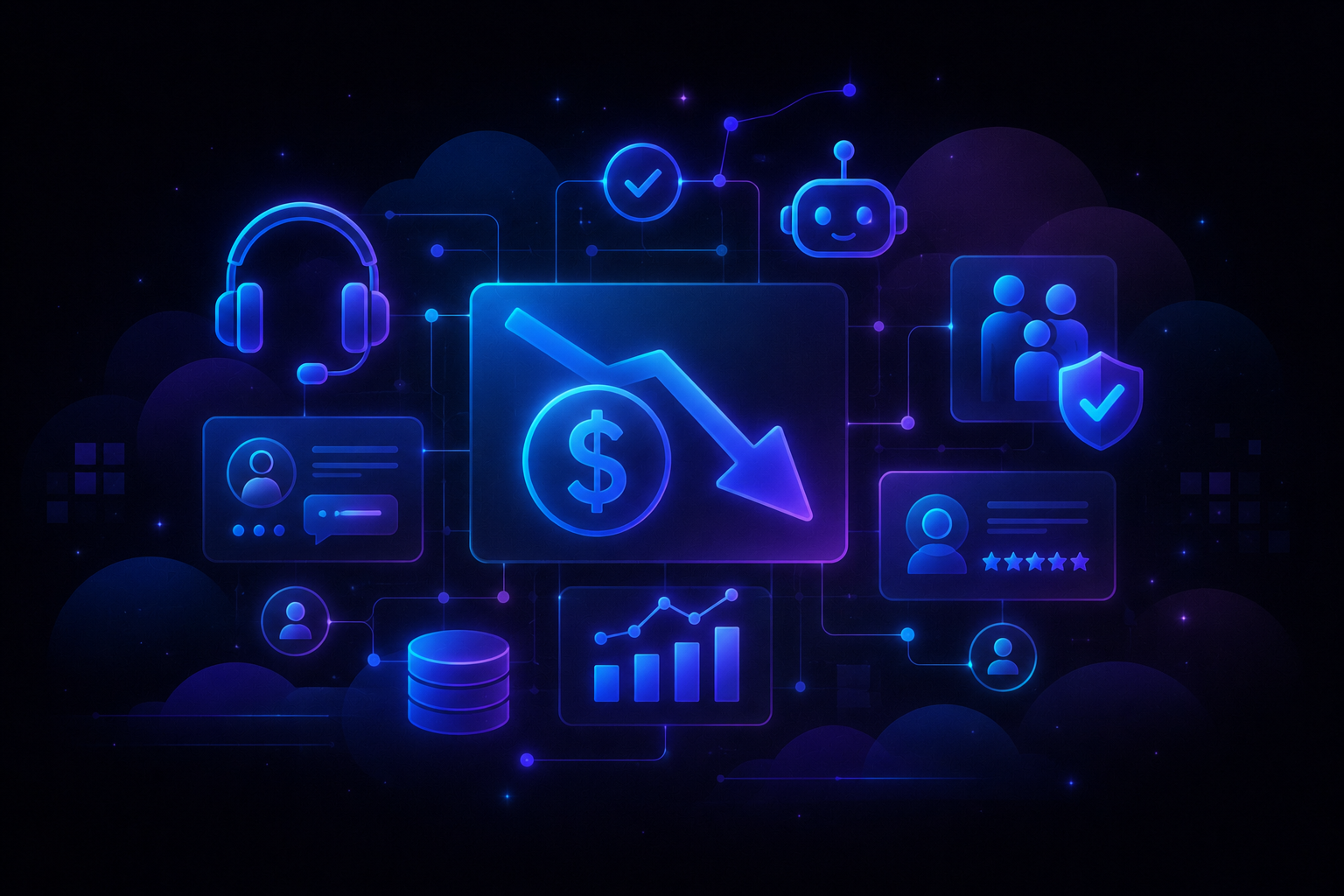
What are the Benefits of AI Customer Service Agents
AI customer service agents improve efficiency, reduce response times, and enhance customer experience. They enable businesses to manage support operations effectively while maintaining quality across interactions.
1. Faster Response Times
AI provides instant responses to customer queries, reducing wait times and improving overall satisfaction across every channel. During high-demand periods like festive sales or new product launches, this speed advantage directly protects customer retention.
2. 24/7 Availability
AI enables round-the-clock support, allowing customers to get help anytime without relying on agent availability or shift schedules. For brands serving customers across multiple time zones, this removes a critical service gap that consistently costs repeat business.
3. Handles High Volumes Efficiently
AI manages multiple conversations simultaneously, allowing businesses to handle increasing support demand without expanding teams proportionally. A support team that previously managed 800 monthly tickets can handle multiples of that volume once AI absorbs the repetitive load.
4. Consistent Responses
AI ensures consistent answers across interactions, reducing errors and maintaining quality standards throughout the support experience. This is particularly important for brands managing multiple agents across channels where inconsistent information erodes customer trust quickly.
5. Personalized Customer Support
AI uses customer data to deliver personalized responses that improve relevance and engagement in every interaction. Knowing a customer's order history, previous complaints, and preferred channel makes every response feel considered rather than automated.
6. Cost Efficiency
AI reduces the need for large support teams by automating repetitive tasks and improving operational efficiency across the board. For early-stage consumer brands managing tight operational budgets, this directly impacts how resources are allocated across the business.
Common Use Cases of AI Customer Service Agents
AI customer service agents are used across various real-world scenarios, helping businesses automate tasks and improve efficiency beyond simple query handling.
1. Handling Customer Queries End-to-End
AI resolves both simple and moderately complex queries without requiring human intervention, improving efficiency and reducing queue backlogs. In apparel, this covers everything from size guides to return window eligibility.
2. Managing Orders and Service Requests
AI handles order tracking, updates, and service requests efficiently across customer interactions without manual processing. For logistics-heavy D2C brands, this is the single highest-volume use case and delivers immediate impact on ticket deflection.
3. Automating Account and Subscription Tasks
AI manages password resets, account updates, and subscription changes without manual effort from support teams.
4. Processing Refunds and Issue Resolution
AI processes refunds, handles complaints, and resolves common issues quickly and accurately across channels. For consumer brands where refund delays are a leading cause of negative reviews, faster AI-driven resolution directly protects brand reputation.
5. Smart Routing and Escalation
AI routes queries to the right team with full context when human intervention is required, preserving conversation history throughout. A frustrated customer escalated after two AI interactions, and they should never have to repeat their issue from scratch.
6. Proactive Support and Notifications
AI sends alerts, reminders, and updates to customers before they need to reach out, reducing inbound query volume. A cosmetics brand can proactively notify customers about a delayed shipment before the complaint arrives.
How QuantumDesk Simplifies Customer Service with AI
AI-native platforms integrate intelligence directly into workflows, unlike traditional tools that add AI as a secondary layer. This enables better performance, tighter operations, and improved handling of customer interactions across every stage.
Quantum AI acts as an AI agent that resolves repetitive queries instantly and manages conversations across channels. It understands intent, maintains context, and ensures handoff to human agents when needed, preserving full conversation history at every transition.
Teams comparing Freshdesk alternatives or Intercom alternatives will find this native architecture delivers meaningfully better outcomes than bolt-on AI layers.
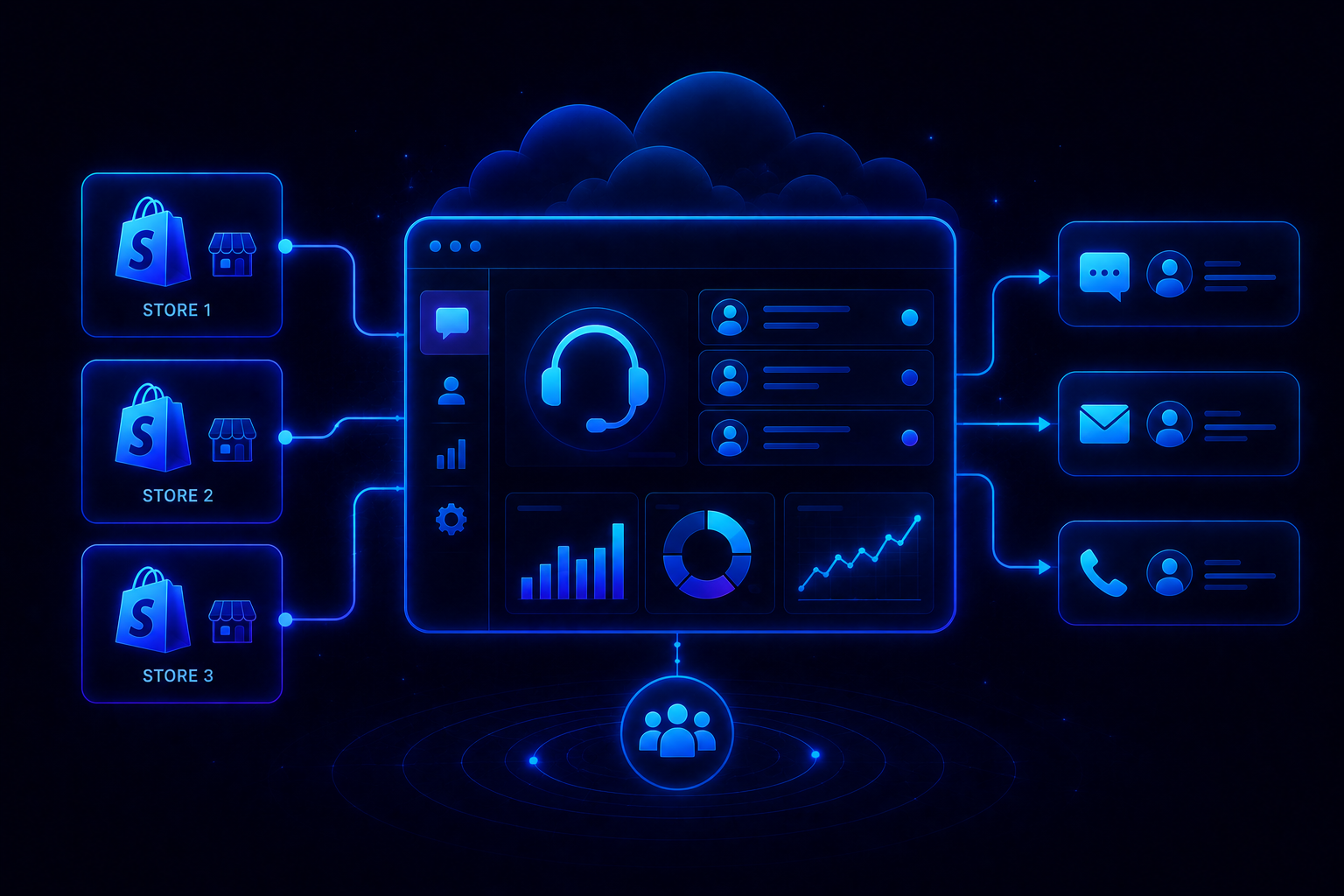
The AI-curated inbox prioritizes tickets by urgency and sentiment, while the AI copilot assists agents with replies, summaries, and next-best actions. The unified workspace and analytics help teams improve efficiency, visibility, and overall support performance continuously.
- Unified inbox across all channels for complete visibility into customer conversations
- Smart routing and prioritization based on intent, urgency, and context
- Automation of workflows and actions to reduce manual effort and improve efficiency
- Real-time insights and assistance to support decision-making and improve performance
This approach improves resolution speed, reduces workload, and helps businesses deliver consistent and scalable customer support experiences. Book a demo to see how QuantumDesk puts these capabilities into practice across your support workflows.
Frequently Asked Questions
What is an AI customer service agent?
An AI customer service agent is software that understands, responds, and takes actions to resolve customer queries automatically using artificial intelligence.
How is an AI agent different from a chatbot?
Chatbots answer predefined questions, while AI agents understand intent, perform tasks, and make decisions to resolve issues end-to-end.
What tasks can AI customer service agents handle?
They handle queries, order tracking, refunds, account updates, routing, and other repetitive customer service tasks efficiently across channels.
Do AI customer service agents replace human agents?
AI agents support humans by handling repetitive tasks, while human agents focus on complex and sensitive interactions that require judgment.
How do AI customer service agents improve over time?
They improve using data, feedback, and updated workflows to enhance accuracy, response quality, and overall support performance.



.avif)