Summarize with AI
Key Takeaways
- AI handles repetitive, high-volume queries faster and at lower cost
- Humans are essential for complex, emotional, and high-value interactions
- A hybrid model delivers the best customer experience and scalability
- Clear routing rules between AI and humans improve resolution speed
- AI-native platforms like QuantumDesk make this split seamless
A customer checking order status expects an instant answer. Someone dealing with a failed payment expects understanding. Not every support interaction needs the same level of intelligence or empathy.
This distinction is especially clear in direct-to-consumer businesses. An apparel shopper asking, "Has my order shipped?" needs speed. A customer who received the wrong product three days before a wedding needs a human. Getting that split wrong in either direction costs the brand either efficiency or trust.
Not every customer query requires human involvement, and not every issue should be automated.
- Routine requests like order tracking, password resets, and return status checks are better handled by AI for speed and consistency.
- Situations involving frustration, urgency, billing disputes, or complex problem-solving still require human judgment and empathy.
Purely automated support remains insufficient for modern expectations.
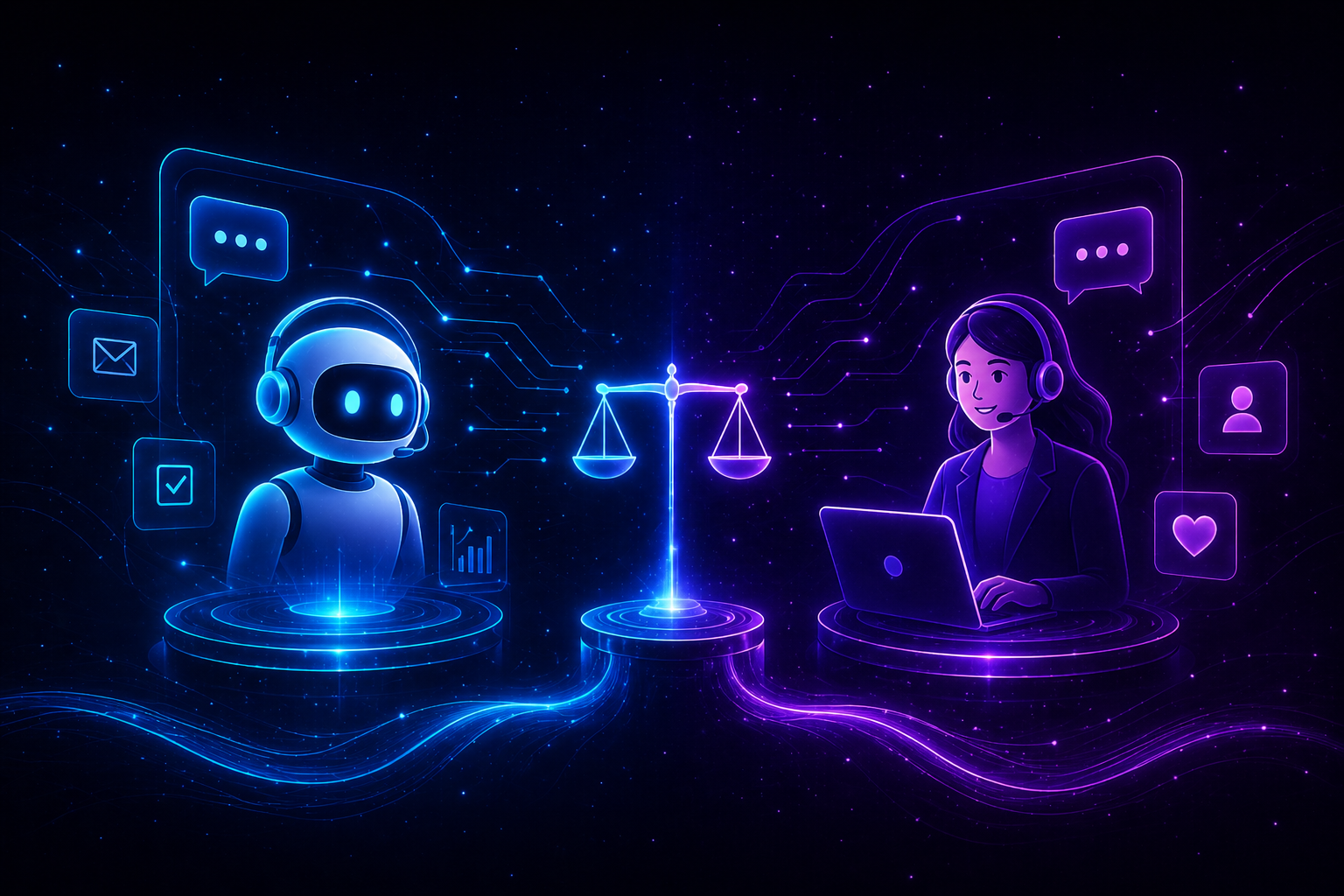
The real challenge is not choosing between AI and humans. It clearly defines what each should handle to create a system that is both efficient and customer-centric.
- Identifying support scenarios where AI delivers faster and more consistent resolutions
- Recognizing situations where human judgment and empathy become critical
- Structuring clear boundaries between automation and human intervention
- Scaling support operations without increasing team size through intelligent workload distribution
You will learn how to design a balanced support model. It improves speed, maintains quality, and scales efficiently without increasing operational complexity.
Why Is "AI vs Human" the Wrong Question?
Customers do not evaluate whether a response comes from AI or a human. They care about how quickly their issue is resolved. They want answers that are accurate, helpful, and relevant.
Most support queries follow predictable patterns, like tracking requests, password resets, and basic product questions, which make up the bulk of volume. For a D2C brand processing hundreds of daily orders, these predictable queries can account for 60-70% of total ticket volume.
Only a smaller portion requires critical thinking or nuanced understanding that ai in customer service alone cannot reliably handle.
- A delivery status request is resolved instantly by AI without needing human involvement
- A billing dispute requires human judgment to review context and make fair decisions
- A frustrated customer needs empathy, which AI struggles to consistently replicate
- Complex technical issues often require back-and-forth reasoning beyond predefined AI workflows
Instead of comparing AI and human support, businesses need a hybrid model. Speed for simple queries. Quality handling for complex or sensitive customer interactions.
What Should AI Handle in Customer Support?
AI performs best when handling high-volume, repetitive, and predictable queries. Speed and consistency are critical in these cases. By automating these interactions, support teams reduce manual workload significantly. Generative AI-powered support agents now achieve 92% accuracy in understanding customer intent, compared to 65–70% for keyword-based bots.
1. Repetitive and Simple Queries
Requests like order tracking, password resets, and FAQs follow clear patterns. AI can instantly resolve these without agent involvement.
For an apparel or lifestyle brand, queries like "where is my order", "what is your return window", and "do you offer exchanges" are answered dozens of times daily and are ideal candidates for full AI resolution. AI resolves routine tickets 3-5 times faster than human agents.
2. Improve Routing and Prioritization?
AI analyzes incoming conversations using intent, urgency, and sentiment signals. It automatically assigns tickets to the right agents. This eliminates manual triaging. Automated categorization reduces delays at the very first step of the support workflow.
3. Real-Time Updates and Notifications
Delivery updates, reminders, and payment confirmations can be handled entirely by AI. For logistics-heavy D2C brands, proactively notifying customers about shipment delays before they reach out removes a significant source of inbound ticket volume. These interactions require accuracy and speed rather than human judgment.
4. Enable Self-Service?
AI enables customers to access answers instantly through chat or knowledge systems. No waiting in queues. This improves customer experience significantly. The median cost per self-service contact is $1.84, compared to $13.50 for agent-assisted contacts.
5. Assist Agents (Copilot Support)?
AI supports agents by summarizing conversations, suggesting responses, and identifying customer intent. Studies show AI-enabled agents achieve a 14% increase in issue resolution per hour and a 9% reduction in handle time. For newer agents still building product knowledge, this type of ai customer service software assistance is especially impactful in maintaining consistent response quality.
What Should Humans Handle in Customer Support?
Human agents are essential for scenarios requiring contextual understanding and emotional intelligence. These interactions often involve ambiguity, high stakes, or customer dissatisfaction. Predefined responses cannot deliver the expected experience. 95% of consumers prefer human support for complicated or sensitive issues.
1. Complex Problem Solving?
Multi-step issues involving technical troubleshooting require deeper investigation. Humans connect multiple pieces of information and adapt dynamically. Human agents resolve 60–80% of complex cases with satisfaction rates between 85% and 90%.
2. Emotional Conversations
When customers are frustrated, angry, or anxious, empathy becomes critical. A customer who ordered a gift that arrived damaged and is now venting across WhatsApp and email needs a human who can acknowledge the situation, take ownership, and rebuild trust. AI responses may sound empathetic but lack the emotional depth required in these moments. In crisis scenarios, trained human responders provide appropriate responses 93% of the time, compared to 80% for AI.
3. Unclear or Open-Ended Requests
Customers sometimes struggle to explain their issues clearly. Humans ask clarifying questions and interpret vague inputs. Current AI systems resolve ambiguity silently, picking one interpretation without asking, which in a consumer context can lead to the wrong action being taken entirely.
4. Sensitive Cases Require Human Judgment?
Billing disputes, compliance concerns, or potential legal risks require careful handling. Human judgment ensures accurate decisions while minimizing risk. 84% of consumers believe human agents are more accurate than AI in these scenarios.
5. High-Value Customers
Interactions with VIP or retention-critical users require personalized attention. For a D2C brand where the top 10% of customers drive a disproportionate share of revenue, these relationships are too valuable to route through a generic automated flow. Human agents provide tailored responses and build the kind of relationships that drive long-term loyalty.
79% of Americans strongly prefer interacting with a human over an AI agent, and that preference intensifies when the stakes are high.
How Should You Decide: AI vs Human Support?
To balance AI and human support effectively, teams need clearly defined decision rules. Without structured guidelines, queries may be mishandled. This leads to delays and poor customer experience.
AI vs Human Decision Table
This framework simplifies decision-making by giving teams a clear routing reference. It reduces ambiguity and improves response times. Teams evaluating ai customer support accuracy should use this table as a starting point.
What Escalation Rules Should You Follow?
Escalation should occur when customers repeat queries multiple times or express frustration. It should also trigger when AI confidence in responses is low.
Three inputs determine escalation thresholds:
- Confidence scoring asks how sure the model is in understanding intent and the correctness of the action
- Risk scoring determines if a situation is too sensitive to automate, such as fraud or billing disputes
- Effort scoring tracks friction signals like repeated intents, multiple retries, and rising sentiment intensity
High-value customers and delayed resolutions should trigger immediate human involvement. Conversations involving unclear intent must be transferred with full context to avoid repetition.
How Do You Build a Hybrid Customer Support Model?
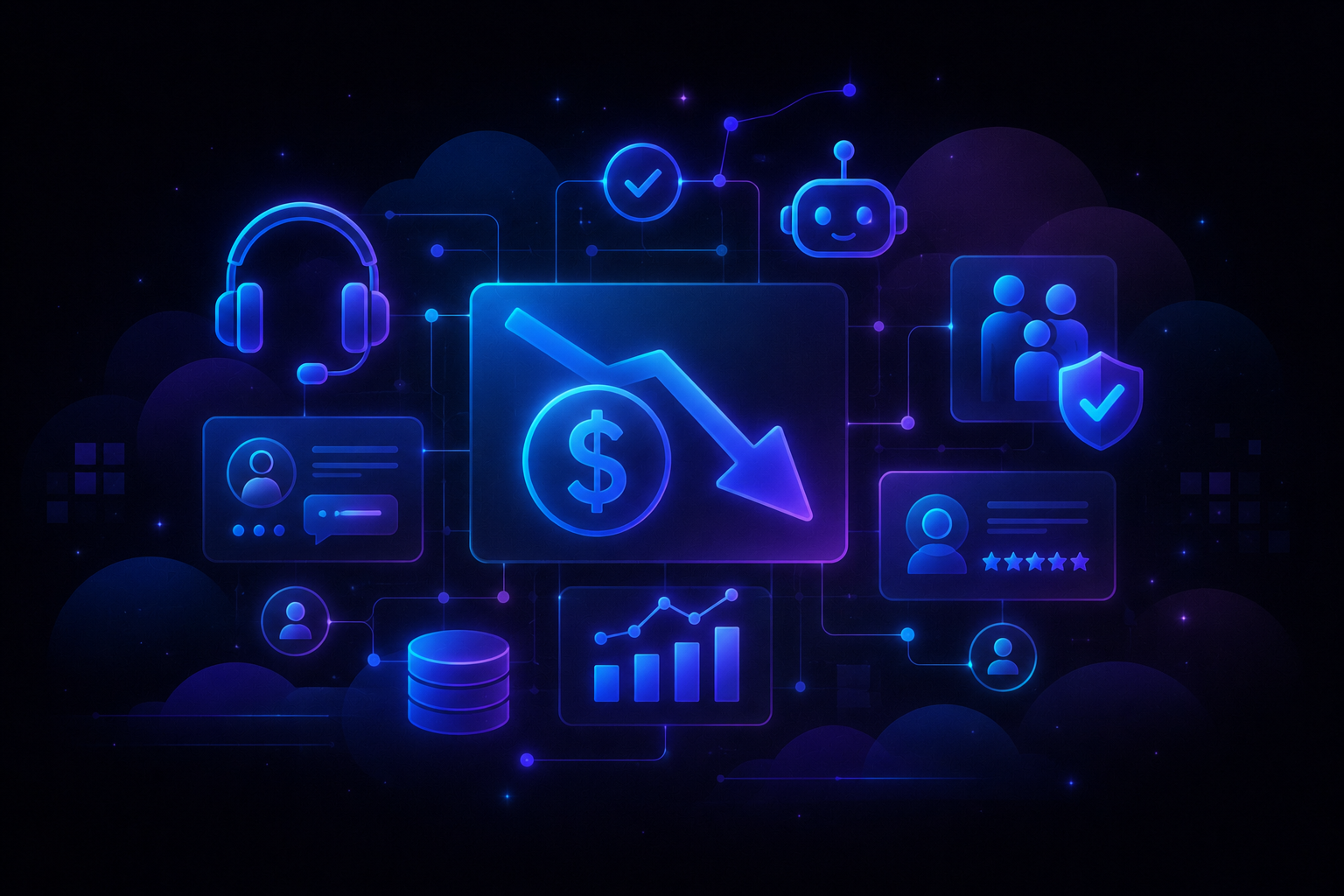
Building an effective hybrid support model requires a structured approach. It combines data analysis, workflow design, and continuous optimization. AI and human agents must collaborate to ensure both efficiency and quality. AI-first organizations reduce support ticket costs from $8–15 to $2–5 per ticket. Response times drop up to 81% with hybrid approaches.
Step 1: Understand Your Support Data
Analyze historical tickets to identify repetitive queries and escalation patterns. For most consumer brands, this analysis quickly reveals that order status, return eligibility, and product FAQs dominate volume and are the fastest wins for automation.
Step 2: Bring All Channels Together
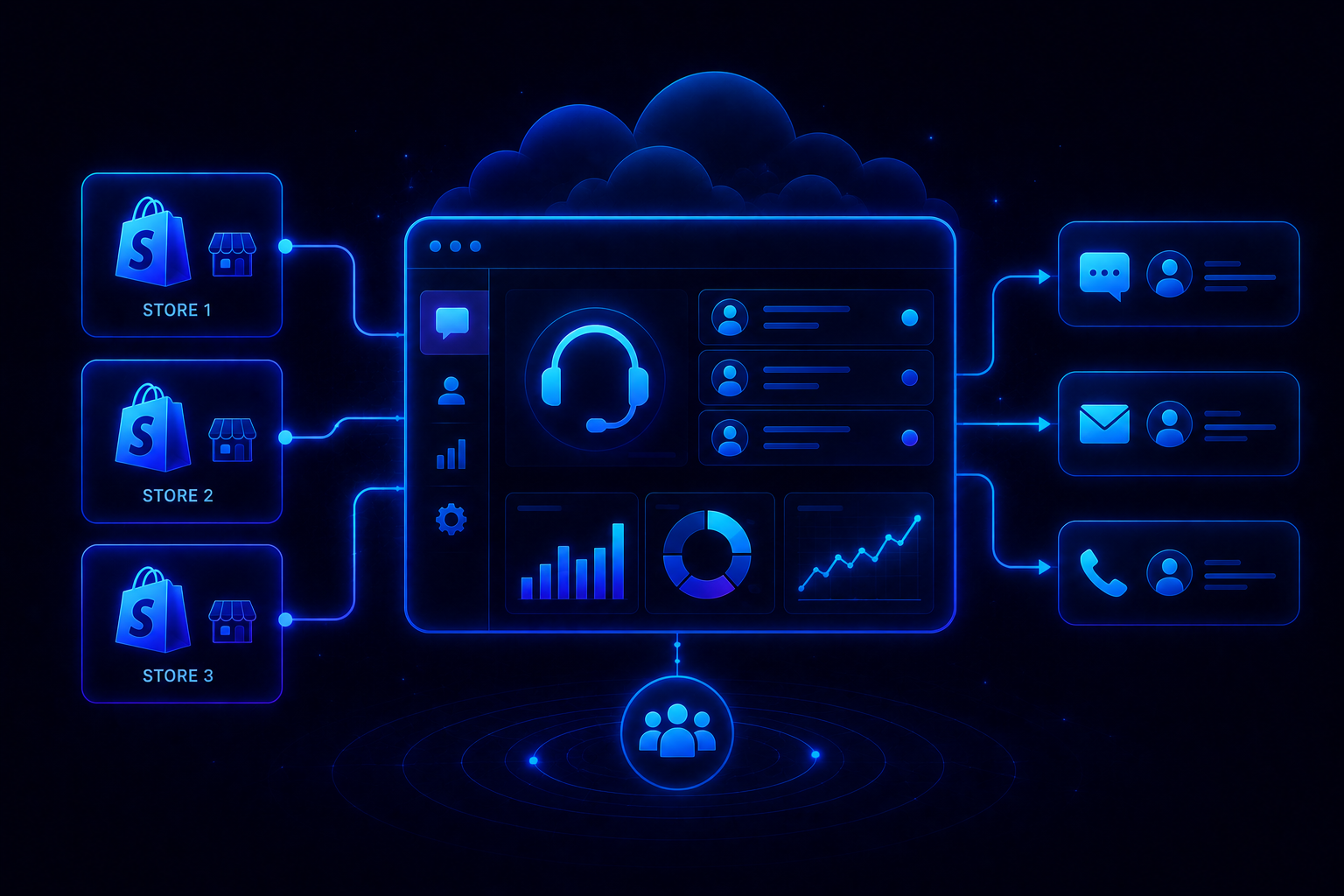
Centralize conversations from email, chat, WhatsApp, and other channels into a unified omnichannel system. D2C brands operating across Instagram DMs, WhatsApp, and email simultaneously cannot build an effective hybrid model if agents are context-switching between disconnected tools.
Step 3: Start AI with Simple Queries
Begin automation with low-risk, repetitive queries. Build confidence and accuracy before expanding AI capabilities gradually.
Step 4: Design Smooth Handoffs
Ensure conversations transferred from AI to agents include complete context and history. A customer who already explained their issue to an AI agent should never be asked to repeat it when they reach a human. This single friction point is one of the fastest ways to undo a positive support experience.
Step 5: Support Agents with AI Tools
Use AI to assist agents with response suggestions, summaries, and intent detection. This reduces cognitive load during interactions and helps smaller teams punch above their weight in terms of volume capacity.
Step 6: Track and Improve Continuously
Monitor resolution times, escalation rates, and satisfaction metrics. Continuously refine the balance between automation and human involvement.
Teams managing small business customer service should note that fragmented knowledge across help centers and CRM notes prevents accurate AI responses. Defining a clear, centralized knowledge base is a prerequisite before expanding automation.
What Are Common Mistakes in AI + Human Support?
Most failures in AI-driven support come from poor implementation, not the technology itself. Without proper planning, businesses create fragmented experiences. Research shows AI customer support fails at four times the rate of other AI-assisted tasks, largely due to implementation gaps.
1. No Easy Way to Reach Humans
Customers become frustrated when they cannot quickly escalate issues.
Example: For a brand where support is the primary post-purchase touchpoint, locking customers inside an automated loop with no clear exit damages trust rapidly.
Losing Context During Handoffs
Forcing customers to repeat information after escalation creates friction.
Example: An apparel customer who already described their size exchange issue to a chatbot should not have to start from scratch when they reach an agent.
Using AI for Emotional Situations
AI struggles to handle emotional conversations effectively.
Example: A customer who received a defective product and is genuinely upset needs acknowledgment, not an automated refund link. Notable failures include chatbots that validated harmful statements or produced disturbing responses.
Outdated Knowledge Base
Incorrect or outdated information reduces AI accuracy.
Example: For brands with frequently changing product lines, return policies, or promotional terms, keeping the knowledge base up-to-date is not optional. It directly determines whether AI responses help or frustrate.
Treating AI as an Add-On
Disconnected AI systems create inefficiencies and prevent collaboration between automation and human agents. When evaluating ai chatbots for customer service, integration depth matters more than feature count.
Example: A cosmetics brand running a separate chatbot, a standalone helpdesk, and a WhatsApp tool that do not talk to each other will find that agents have no visibility into what the AI already told the customer, leading to contradictory responses and a support experience that feels more chaotic than helpful.
How QuantumDesk Balances AI and Human Customer Support
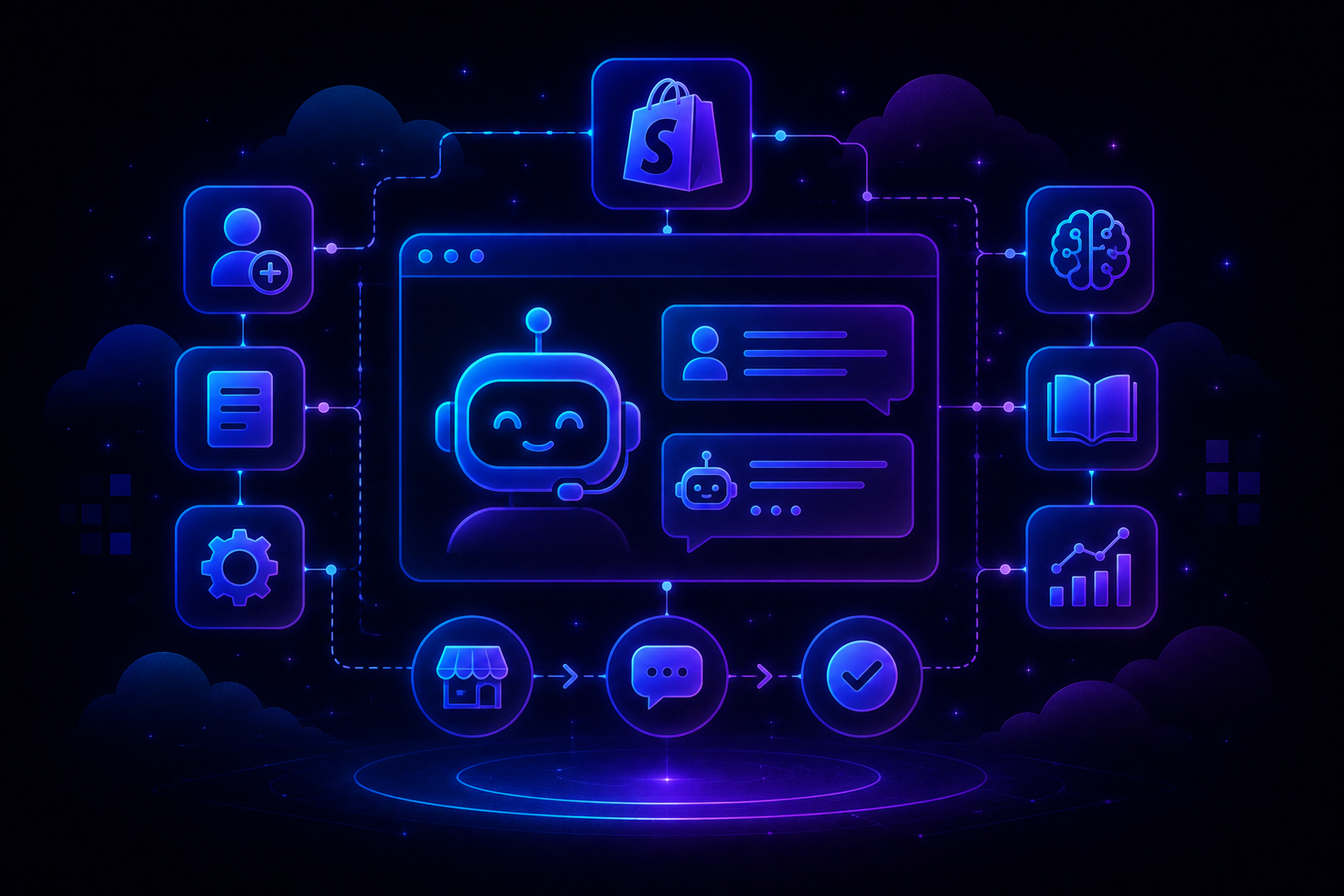
AI-native platforms are built with intelligence embedded into the core system. This allows AI to actively participate across the entire support workflow. The AI-Native customer service benefits compound as volume grows.
- Automatically resolves repetitive customer queries without requiring manual intervention from support agents
- Provides a unified inbox centralizing conversations from all channels into a single workspace
- Intelligently prioritizes incoming tickets based on urgency, sentiment, and customer intent
- Assists agents in real time with response suggestions, summaries, and next best action recommendations
- Delivers actionable insights into support performance for continuous workflow improvement
This approach reduces operational complexity and improves response times. Support teams handle higher volumes without increasing team size. QuantumDesk makes it easier to scale customer support while maintaining quality across every channel. Teams ready to explore this approach can book a demo to see it in action.
Frequently Asked Questions
What is the difference between AI and human support?
AI handles repetitive and predictable queries efficiently. Human support is required for complex, emotional, and high-value interactions that need judgment and empathy. AI excels at speed and consistency, while humans provide contextual understanding and emotional intelligence.
When should AI handle customer support?
AI should handle high-volume, repetitive queries such as FAQs, tracking requests, and basic account issues. Speed and consistency are critical in these scenarios. AI resolves routine tickets three to five times faster than human agents, making it ideal for predictable interactions.
What is a hybrid support model?
A hybrid support model combines AI and human agents. Automation handles simple queries while humans manage complex or sensitive situations. Hybrid models achieve over 90% customer satisfaction, outperforming both human-only and AI-only approaches.
How do you avoid bad AI-to-human handoffs?
Ensure full conversation context, history, and intent are transferred during escalation. Customers should never need to repeat information. Teams that get this right achieve 92.6% satisfaction on bot-to-agent handoffs.
Why should you choose AI-native platforms?
AI-native platforms integrate automation directly into workflows. This enables collaboration between AI and agents while improving efficiency, scalability, and overall customer experience. Intelligence is embedded from the start rather than added as a separate layer.



.avif)