Summarize with AI
Key Takeaways
- AI use cases define specific workflows where automation delivers measurable value in improving customer service efficiency and outcomes
- Businesses use AI to improve response speed, handle scale efficiently, and optimize support operations without increasing team size
- AI enhances both customer and agent experience by automating repetitive tasks while improving interaction quality and resolution speed
- Advanced AI enables proactive and predictive support by identifying issues early and resolving them before customers reach out
- AI-native platforms like QuantumDesk simplify customer service operations by unifying workflows, data, and automation into a single scalable system
Customers now expect instant responses, personalized interactions, and support across channels.
Traditional systems struggle to meet these expectations. For businesses selling directly to consumers, whether in apparel, food, or lifestyle categories, this gap between expectation and delivery is felt immediately.
A customer who ordered a product online and has a complaint expects it to be resolved in the same amount of time it took to place the order. When that does not happen, they leave a review, not a second chance.
Businesses now use AI across omnichannel customer service workflows such as instant order support, intelligent ticket routing, agent assistance, refund automation, and proactive delivery updates. Instead of functioning as a standalone chatbot, AI is increasingly embedded into day-to-day support operations where speed, accuracy, and consistency directly impact customer experience.
AI use cases help businesses:
- Handles repetitive support queries automatically across channels
- Improves response time and accuracy in customer interactions
- Reduces agent workload by automating common tasks
- Enables scalable customer support without increasing team size
You will learn about the most impactful AI in customer service use cases, how they work, and where they deliver the most value. This helps you to identify opportunities to implement AI effectively. It also improves customer experience, operational efficiency, and long-term support scalability.
What Are AI Use Cases in Customer Service?
AI use cases in customer service refer to specific applications where artificial intelligence solves defined support problems. These use cases emphasize outcomes rather than tools.
Resolving queries, reducing response times, and improving operational efficiency are the priorities. A strong AI use case includes clear customer intent, structured workflows, and integration with backend systems. Measurable outcomes such as resolution rates or cost savings define success.
These use cases go beyond answering questions. They enable end-to-end task execution.
For example, instead of only responding to a return request from an apparel customer, an AI use case includes
- Verifying the order
- Checking return eligibility
- Triggering the refund
- Confirming the process within the same interaction
This distinction separates a basic feature from a genuine workflow transformation.
What Is the Importance of AI Use Cases in 2026?
Customer expectations in 2026 are higher than ever. Demand for fast, accurate, and personalized responses spans every channel.
- Delays, repeated interactions, or generic replies negatively impact customer experience and brand perception. For D2C brands where the entire customer relationship is direct and digital, a single poor support experience can end that relationship permanently.
- Support teams face increasing ticket volumes. Scaling efficiently through hiring alone is rarely practical, particularly for early-stage consumer brands operating with lean teams.
- Manual workflows slow down response times. They create bottlenecks that compound as customer bases grow, especially during peak sale periods when query volumes spike overnight.
- AI use cases address these challenges by automating repetitive workflows and improving speed significantly.
Teams handle more queries efficiently without proportional headcount growth. Clearly defined use cases ensure AI delivers measurable outcomes rather than acting as an isolated tool.
What Are the Key AI Use Cases in Customer Service?
AI is applied across multiple customer service workflows. These use cases automate tasks, improve efficiency, and enhance experience.
They represent practical implementations where AI directly impacts resolution speed, cost, and overall service quality.
1. AI Chatbots for Customer Support
AI chatbots for customer service handle high-volume queries. They provide instant support across multiple channels efficiently. For an apparel brand, this means queries like "what is your return policy" or "do you have this in a size small" are resolved instantly without touching an agent's queue.
- Answer FAQs, order status, and basic troubleshooting queries automatically
- Provide 24/7 support without requiring human agent involvement
- Handle multiple conversations simultaneously across channels
- Reduce inbound ticket volume significantly through automation
Chatbots improve response speed while reducing workload on support teams.
2. Intelligent Ticket Routing and Classification
AI automates ticket triaging by identifying intent, urgency, and category in real time. A logistics brand receiving hundreds of daily queries can automatically separate delivery complaints from general inquiries, ensuring urgent escalations reach the right agent within seconds rather than sitting in a shared inbox.
- Automatically tags tickets based on customer intent and query type
- Routes queries to the right team or agent instantly
- Prioritizes tickets based on urgency and impact
- Eliminates manual classification work for support teams
This reduces delays and ensures faster, more accurate ticket handling.
3. AI Agent Assist (Support Copilot)
AI assists support agents with real-time suggestions and contextual information during interactions. An agent handling a complex exchange request from a repeat customer does not need to manually pull up order history, past complaints, and product details separately. AI surfaces all of it in one view.
- Suggests context-aware responses instantly during conversations
- Retrieves knowledge from internal systems and documentation
- Summarizes long conversations for faster understanding
- Reduces time spent searching for answers
Agent assist tools improve productivity and reduce average resolution time.
4. AI-Powered Self-Service Systems
AI enables customers to resolve issues independently without contacting support teams. A cosmetics brand can deploy self-service that guides customers through product recommendations, ingredient queries, and refund eligibility checks without a single agent involved.
- Recommends relevant help articles and guides automatically
- Uses search and intent detection to surface solutions
- Supports customers across web and mobile interfaces
- Reduces dependency on live agents significantly
Self-service improves customer satisfaction while lowering overall support volume.
5. Sentiment Analysis and Emotion Detection
AI analyzes customer messages to detect tone, emotion, and urgency in real time. A customer who messages "I have been waiting three weeks, and this is unacceptable" is flagged as high frustration and high urgency automatically, ensuring they do not wait in the same queue as a standard product inquiry.
- Identifies frustrated or dissatisfied customers quickly
- Flags urgent or high-risk conversations automatically
- Helps prioritize critical tickets effectively
- Improves escalation and response strategy
Understanding sentiment helps teams respond faster and improve customer experience.
6. Automated Ticket Creation and Responses
AI automates ticket creation and generates responses from incoming customer interactions across channels.
- Converts chat or email queries into structured tickets automatically
- Generates replies based on context and historical data
- Reduces manual data entry for agents
- Speeds up first response time significantly
Automation ensures quicker response handling across channels.
7. AI-Powered Knowledge Retrieval
AI retrieves accurate information instantly from internal systems, improving response speed and consistency. For support teams managing a large product catalog, this means agents always surface the right answer without manually searching documentation.
- Searches across documentation, CRM, and past tickets
- Surfaces the most relevant answers quickly
- Supports both agents and customers effectively
- Improves consistency in responses across channels
Faster access to information leads to quicker and more accurate resolutions.
What Are the Advanced AI Use Cases in 2026?
As AI adoption matures, businesses move beyond basic automation. More advanced and proactive use cases now improve experience and efficiency.
Reactive models alone cannot match these capabilities.
1. Predictive Customer Support
AI analyzes historical and real-time data to predict potential issues before they occur.
For a D2C apparel brand, this could mean identifying that a specific product batch is generating higher-than-normal size-mismatch complaints and proactively reaching out to recent buyers before the return requests arrive. Businesses resolve problems before they escalate, reducing inbound queries and improving customer satisfaction.
2. Proactive Customer Engagement
AI sends alerts, reminders, and updates automatically, including delivery delays, renewals, or service notifications. A logistics brand experiencing a courier delay can notify affected customers proactively, turning a potential complaint into a trust-building moment.
3. Voice AI and Smart IVR Systems
AI-powered voice systems enable natural conversations. They replace rigid menu-based IVR.
Customers describe issues directly in their own words. Voice AI received $2.1 billion in venture capital funding in 2024, reflecting widespread enterprise adoption and demand for natural support interfaces.
4. AI-Driven Workflow Automation
Agentic AI automates multi-step workflows such as refunds, scheduling, or account updates across connected backend systems. For a consumer brand processing dozens of daily refund requests, AI orchestrates the entire process from verification to confirmation, reducing resolution times from days to minutes for routine cases.
How Do AI Use Cases Improve Customer Service Outcomes?
AI improves customer service by reducing response times and enabling faster resolution. Customers receive instant answers to routine queries while complex issues are handled more efficiently through intelligent routing and agent assist tools.
The impact is most visible in businesses where support volume and speed are directly tied to revenue. A D2C brand that resolves a size exchange in under five minutes retains the customer. One that takes two days loses them and the review. The comparison between traditional and AI-driven workflows makes this gap clear across every operational dimension.
A Quick Comparison
AI enables faster, more consistent, and scalable customer service operations. Both customer satisfaction and agent productivity improve.
Organizations report first response time reductions of up to 97 percent and ai customer support accuracy improvements when grounding responses in verified knowledge sources.
What Are the Challenges in Using AI in Customer Service?
While AI offers significant benefits, implementing it comes with several operational and technical challenges.
- Poor data quality can negatively impact AI accuracy and response effectiveness
- Integration with existing systems can be complex and time-consuming
- AI may generate incorrect or irrelevant responses in certain scenarios
- Lack of transparency can reduce customer trust in automated systems
- Over-automation can negatively affect experience in complex situations
- Requires continuous monitoring, updates, and optimization for best performance
To overcome these challenges, businesses need a balanced approach. Combining AI automation with human oversight is essential.
Proper data management and continuous improvement ensure long-term effectiveness. Research shows 27% of AI agent production failures trace directly to data quality problems, making foundational data governance a prerequisite for success.
How to Choose the Right AI Customer Service Platform for Your Business?
Many businesses struggle with fragmented tools. Separate systems for chatbots, routing, analytics, and automation create inefficiencies.
This fragmentation limits the full potential of AI in customer service. It also increases operational complexity.
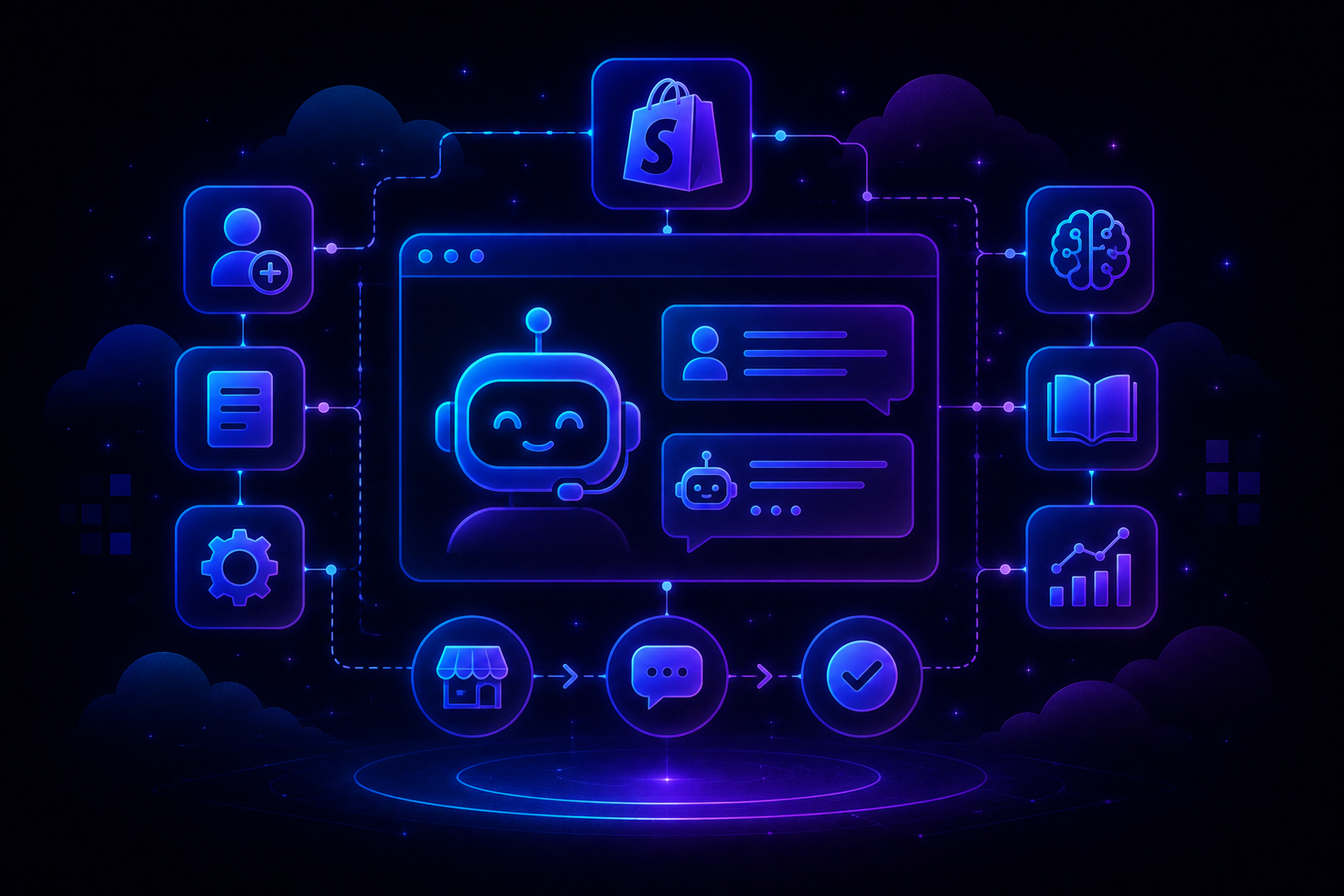
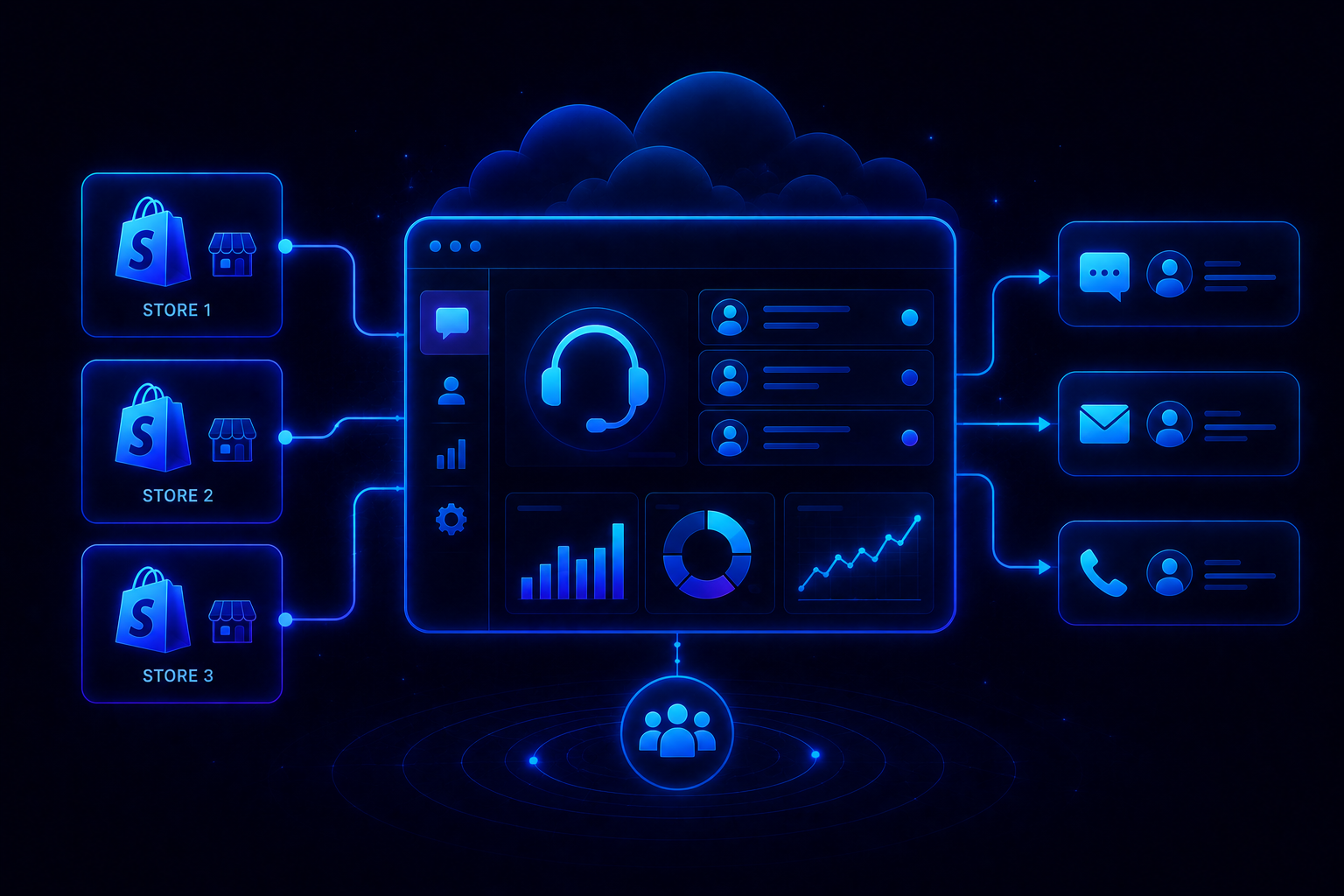
AI-native platforms like QuantumDesk consolidate these capabilities into a single system. Instead of adding AI as a layer on top of existing tools, they integrate automation, decision-making, and workflows into core operations.
This approach reflects the AI-Native customer service benefits that purpose-built platforms deliver.
- Unified customer data across channels for complete visibility
- End-to-end workflow automation across support operations
- Real-time decision-making using AI insights
- Integrations with existing systems and tools
- Scalable infrastructure to support growing customer demand
Choosing the right platform ensures AI delivers measurable results. A unified system simplifies operations and improves both efficiency and customer experience.
Teams looking to evaluate options can explore ai customer service software or book a demo to see how a consolidated platform works in practice.
Frequently Asked Questions
What are the most common AI use cases in customer service?
AI is commonly used for chatbots, intelligent ticket routing, agent assist, self-service systems, and sentiment analysis. Organizations typically start with high-volume, repetitive workflows such as order status inquiries, password resets, and FAQ deflection. These starting points have well-defined structures and generate immediate operational benefits that justify continued AI investment.
How does AI improve customer service efficiency?
AI automates repetitive tasks, reduces manual effort, and improves response speed and resolution time. Organizations deploying unified AI platforms report first response time reductions of up to 97 percent. Agent assist tools help representatives handle 30 to 40 percent more inquiries daily compared to traditional systems, significantly increasing team capacity.
Can AI replace human customer support agents?
No. AI supports agents by handling repetitive tasks while humans manage complex and sensitive issues. Research consistently shows that customer satisfaction drops when AI attempts to handle situations requiring empathy or nuanced judgment. The most effective models combine AI automation for routine work with human expertise for relationship-driven interactions.
What is the difference between AI tools and AI-native platforms?
AI tools solve specific tasks in isolation. AI-native platforms unify workflows, automation, and data into one system. With separate tools, organizations face fragmented data and disconnected processes. Platforms like QuantumDesk embed AI into the entire support workflow, enabling automation, intelligent prioritization, and agent assistance within a single workspace.
How do you choose the right AI use cases to start with?
Start with high-volume, repetitive workflows that have clear structure and measurable impact on efficiency. Order status inquiries, password resets, and basic troubleshooting are common first implementations. These use cases have strong signal-to-noise ratios and well-defined outcomes, making them ideal for demonstrating value before expanding to more complex scenarios.



.avif)