Summarize with AI
Key Takeaways
- Conversational AI enables faster, scalable customer support without requiring proportional increases in team size
- It significantly improves personalization and response quality across every customer interaction
- AI handles repetitive queries efficiently while human agents focus on complex, high-value issues
- Conversational AI works across chat, voice, and messaging channels for consistent support delivery
- AI-native platforms like QuantumDesk improve team efficiency and support outcomes at scale
Customers expect support conversations to feel natural, responsive, and easy to continue across channels. They do not want scripted replies or repeated explanations every time they reach out.
This shift is especially visible in D2C businesses managing large volumes of repetitive support requests. An apparel customer messaging about a wrong size delivered at 10 pm expects the conversation to continue smoothly with context already understood, not a generic reply asking them to raise a ticket again through another channel.
Conversational AI is changing how businesses handle these interactions by making support faster, more context-aware, and easier for customers to navigate.
Support teams struggle to handle growing query volumes while maintaining consistent and accurate responses. Managing multiple channels and repetitive queries makes it difficult to deliver high-quality customer experiences at scale.
Over 75% of customers expect instant responses, and AI adoption continues to rise as businesses focus on improving speed and support efficiency.
- Customers expect instant replies without delays across all communication channels
- Prefer natural and conversational interactions instead of rigid scripted responses
- Use multiple channels during a single support journey
- Expect personalized responses based on past interactions and context
This guide explains conversational AI, how it works, how to implement it, and how businesses use it to improve customer service operations.
What Is Conversational AI in Customer Service?
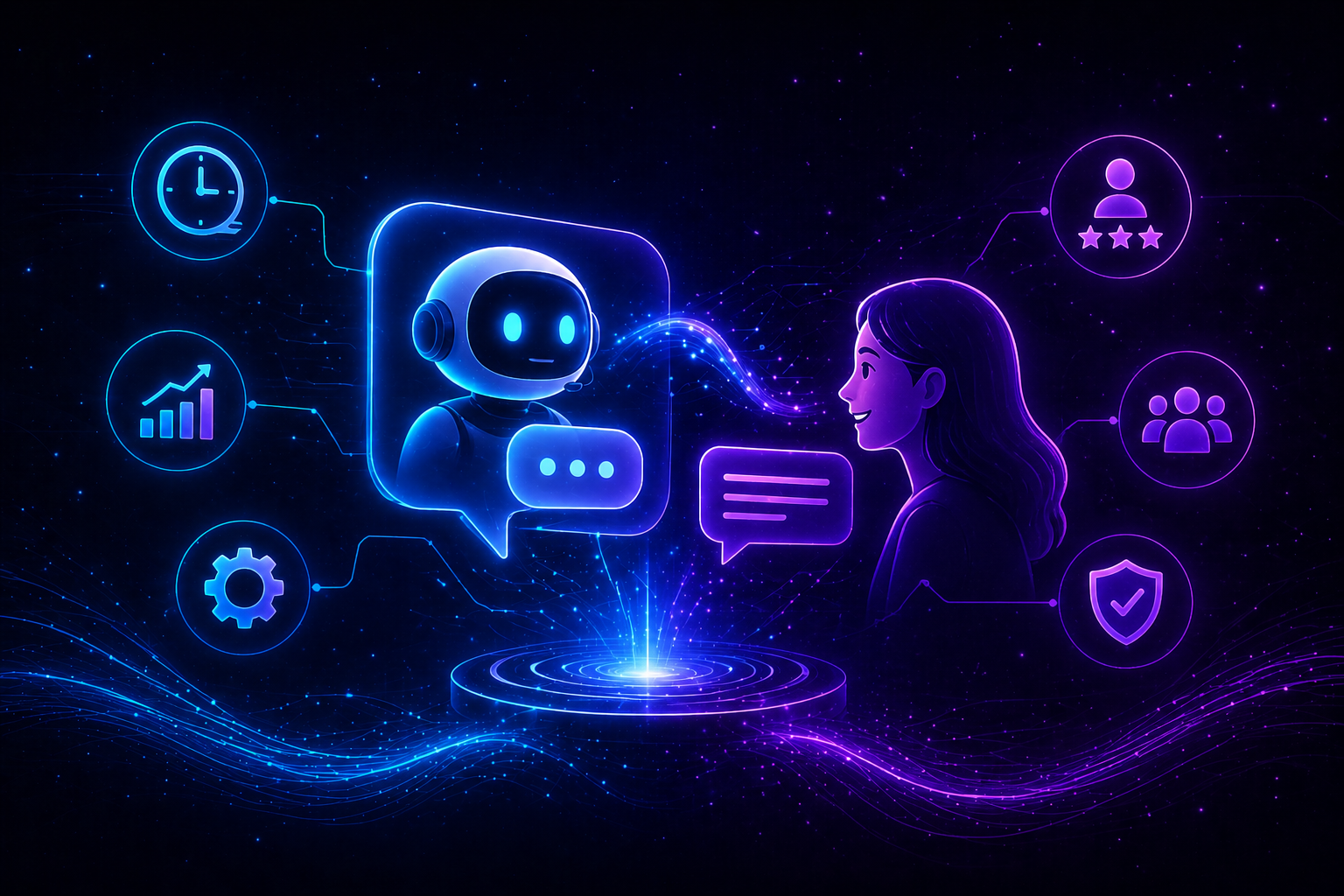
Conversational AI is a technology that understands customer queries and responds using natural language across multiple channels. It enables businesses to interact with customers through automated systems that can handle conversations in a human-like manner.
Unlike traditional chatbots that follow predefined rules, conversational AI focuses on understanding intent and context. This allows it to manage flexible conversations, adapt responses, and handle a wider range of customer queries more effectively.
For a small business D2C brand:
- A rule-based chatbot can only answer "where is my order" if the customer phrases it exactly right.
- Conversational AI understands the same question regardless of how it is worded, pulls the relevant order data, and responds in seconds.
It represents a significant step forward from the scripted, limited interactions most ai chatbots for customer service were known for previously.
- Natural language understanding interprets customer intent and meaning beyond simple keyword matching
- Machine learning continuously improves responses based on interactions and feedback over time
- Knowledge base provides accurate and relevant answers using structured information sources
- Multi-channel support operates across chat, voice, and messaging platforms
Businesses use conversational AI to automate conversations, reduce manual workload, and assist agents in handling customer queries more efficiently.
How Conversational AI Works in Customer Service
1. Understanding Customer Query
AI reads customer input in text or voice format and identifies intent, context, and key information to understand what the customer needs.
2. Processing Information
AI uses training data, knowledge bases, and integrated systems to analyze the query and determine the most appropriate response or action.
3. Responding to the Customer
AI generates natural, conversational responses that align with the customer query while maintaining clarity and consistency across interactions.
4. Learning from Interactions
AI improves over time by learning from past interactions, feedback, and outcomes to enhance response accuracy and effectiveness. Maintaining this improvement loop is central to ai customer support accuracy over the long term.
How to Implement Conversational AI in Customer Service
Step 1: Identify High-Volume Queries
Identify repetitive customer queries such as FAQs and common issues that can be automated efficiently.
For most consumer-facing businesses, this list almost always starts with order status, return eligibility, and refund timelines since these queries alone can account for over half of daily ticket volume.
Step 2: Integrate with Existing Systems
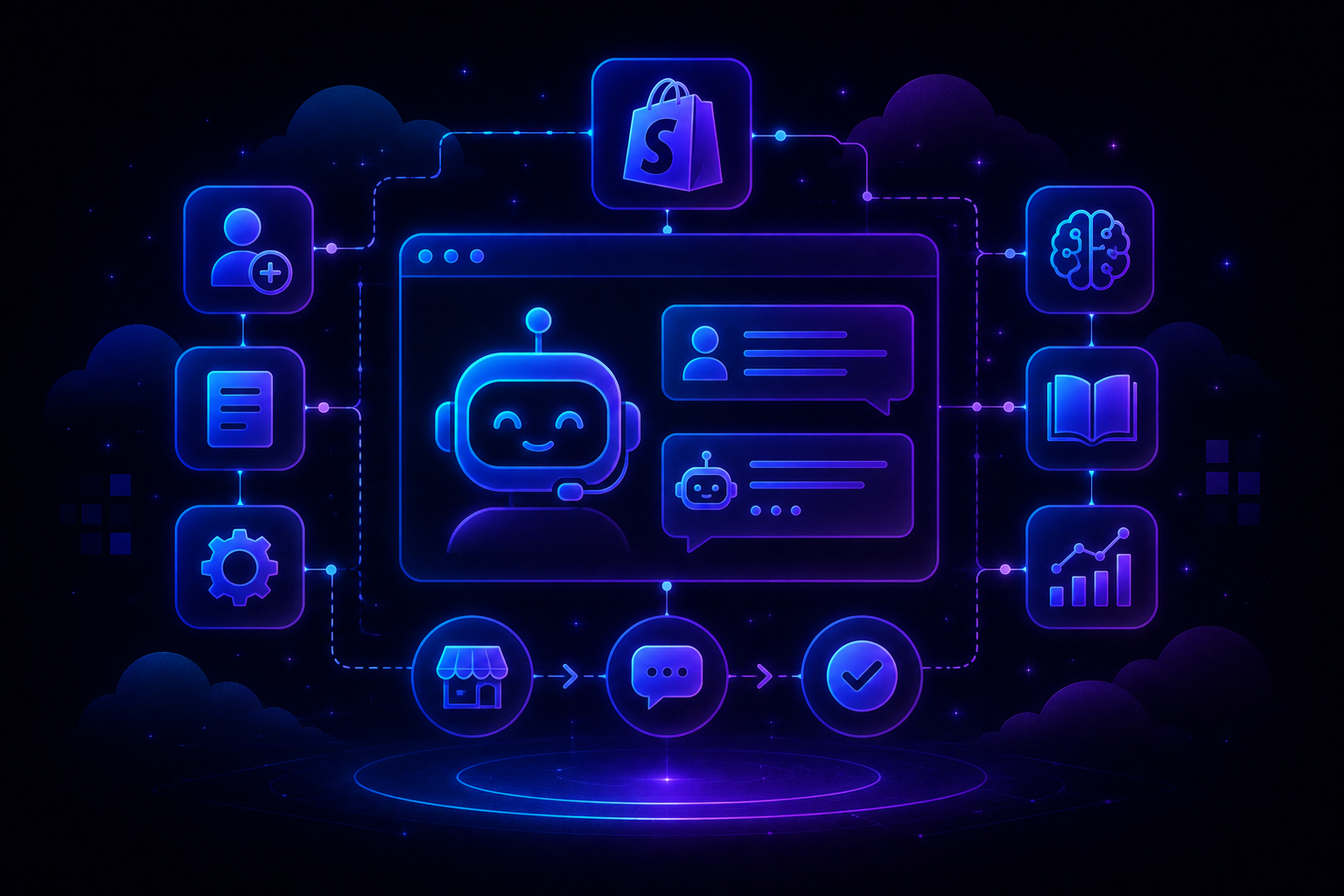
Connect conversational AI with CRM, helpdesk, and communication tools to ensure access to relevant data.
Step 3: Design Conversation Flows
Create structured interaction flows that guide conversations while allowing flexibility for different scenarios.
A cosmetics brand, for instance, might design flows around ingredient queries and skin concern FAQs, while a logistics partner focuses flows on shipment tracking and delivery window updates.
Step 4: Enable Human Handover
Ensure smooth escalation to human agents with complete conversation context and history intact. This is especially critical when a frustrated customer has already interacted with AI across two channels before reaching a human agent.
Step 5: Test and Improve Continuously
Continuously monitor performance, collect feedback, and refine AI models to improve accuracy and response quality.
What are the Benefits of Conversational AI in Customer Service
Conversational AI improves both customer experience and operational efficiency by automating interactions, reducing response time, and supporting agents. It enables businesses to deliver faster, more consistent, and scalable customer support across channels.
1. Faster Response Times
AI provides instant responses to customer queries, reducing wait times and improving overall customer satisfaction across every touchpoint. During peak sale periods when ticket volumes spike overnight, this speed advantage directly protects customer retention.
2. 24/7 Availability
AI enables round-the-clock support, allowing customers to get assistance anytime without relying on agent availability or business hours. For brands selling across time zones, particularly in markets like UAE and the US simultaneously, this removes a significant operational gap.
3. Personalized Interactions
AI uses customer data and history to deliver personalized responses, improving relevance and engagement in support interactions. A repeat customer reaching out about a sizing issue should receive a response that reflects their purchase history, not a generic template.
4. Reduced Agent Workload
Automation of repetitive queries reduces manual effort, allowing agents to focus on complex and high-value interactions. This is one of the core benefits of AI-native customer service that teams consistently report after implementation.
5. Consistent Responses
AI ensures consistent answers across channels, reducing errors and maintaining uniform communication standards throughout the support experience.
6. Scalable Support
AI allows businesses to handle increasing volumes of queries without expanding support teams or operational resources. A small support team that previously capped out at 500 monthly tickets can manage multiples of that volume once conversational AI absorbs the repetitive load.
Common Use Cases of Conversational AI in Customer Service
Conversational AI is widely used across different customer service scenarios, helping businesses automate tasks and improve response efficiency across channels.
1. Answering FAQs and L1 Queries
AI handles frequently asked questions instantly, reducing the need for agent involvement in repetitive queries.
In apparel, this includes questions around sizing guides, fabric care, and return windows that agents answer dozens of times a day.
2. Order and Account Support
AI assists with order tracking, account updates, and basic customer requests efficiently and without manual intervention.
For D2C brands processing high daily order volumes, this single use case alone can deflect a significant portion of inbound tickets.
3. Routing to the Right Team
AI collects information and assigns queries to the appropriate teams based on intent and urgency, ensuring a complaint about a damaged product reaches a senior agent rather than sitting in a general queue.
4. Appointment and Booking Support
AI manages scheduling, booking confirmations, and updates without requiring manual intervention at any stage.
5. Multilingual Support
AI supports multiple languages, enabling businesses to serve a global customer base efficiently and consistently. Particularly relevant for brands operating across markets like the UAE, Europe, and Africa simultaneously.
6. Voice and Call Automation
AI powers voice assistants and IVR systems to handle calls and automate customer interactions at scale.
How QuantumDesk Make Conversational AI More Effective
AI-native platforms integrate conversational AI directly into workflows, unlike traditional tools where AI is added as an afterthought. This enables better performance, tighter integration, and more efficient handling of customer interactions across every stage of support.
Conversational AI resolves common queries instantly across channels while maintaining context across interactions.
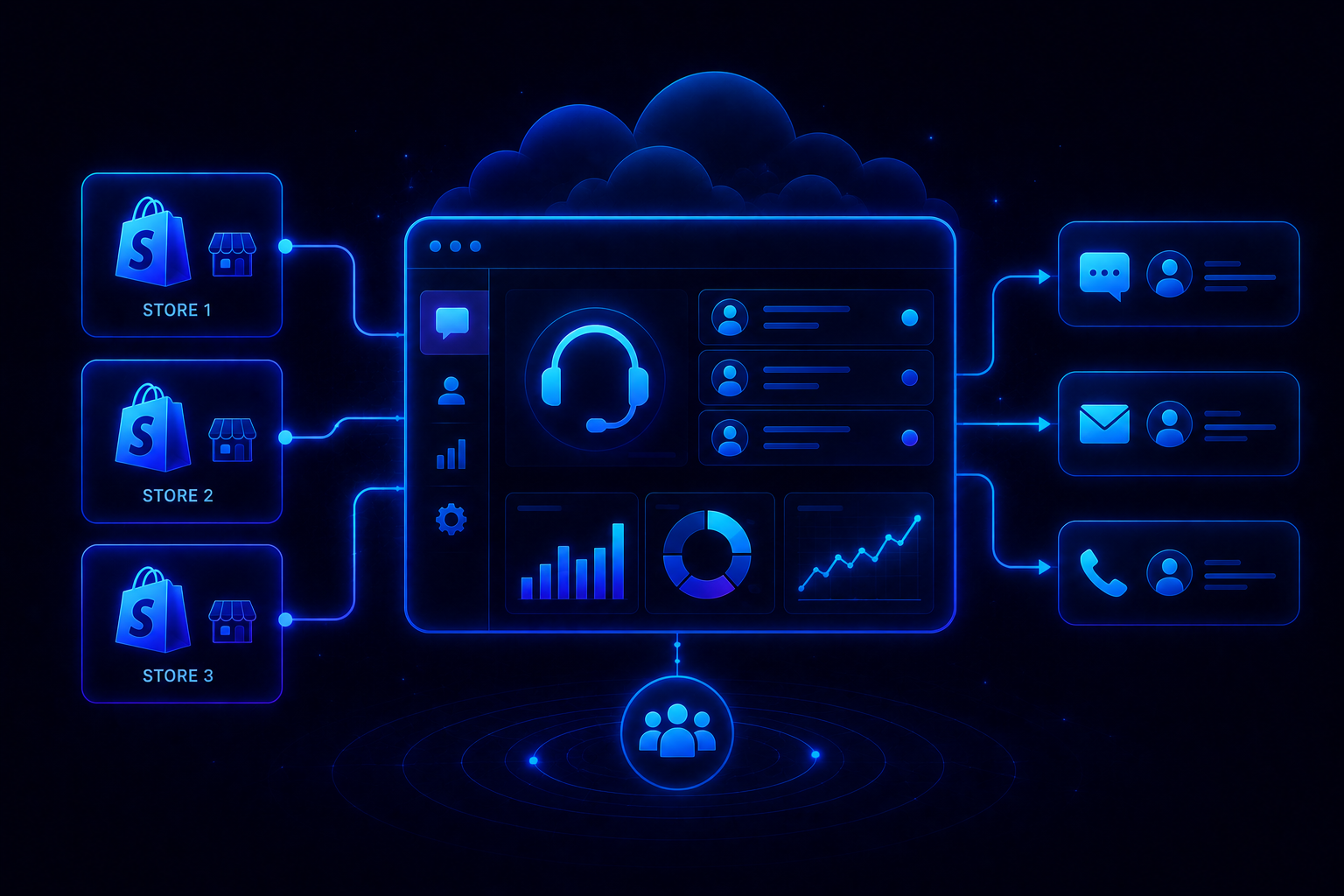
The unified platform centralizes conversations, allowing transitions between AI and agents without delays and ensuring consistent, real-time customer support experiences. Teams evaluating ai customer service software will find that this architecture outperforms tools where AI is bolted onto existing workflows.
Quantum AI assists agents with context-aware responses, summaries, and next-best actions. The AI-curated inbox prioritizes conversations intelligently, while analytics provide insights into resolution patterns, helping teams optimize workflows and continuously improve support performance.
- Unified inbox across all channels for complete visibility into customer conversations
- Smart routing and prioritization based on intent, urgency, and context
- Automation of repetitive queries to reduce workload and improve response speed
- Real-time agent assistance with response suggestions and contextual insights
This approach improves response speed, reduces manual effort, and helps businesses deliver consistent and high-quality customer experiences at scale. Book a demo to see how QuantumDesk puts these capabilities into practice.
Frequently Asked Questions
What is conversational AI in customer service?
Conversational AI uses natural language processing to understand and respond to customer queries, enabling automated and human-like interactions across support channels.
How is conversational AI different from chatbots?
Conversational AI understands intent and context, while traditional chatbots follow predefined rules and limited conversation flows.
What tasks can conversational AI handle?
It handles FAQs, routing, order tracking, account support, and other repetitive customer queries efficiently across channels.
Does conversational AI replace human agents?
Conversational AI supports agents by handling repetitive tasks, while humans focus on complex and sensitive interactions that require judgment.
How can businesses implement conversational AI?
Businesses should identify use cases, integrate systems, design workflows, and continuously improve performance using data and feedback.




.avif)