
Summarize with AI
Key Takeaways
- Multi-channel support significantly increases operational complexity, but AI helps manage it more effectively across platforms
- Customers expect fast, consistent responses on every channel they choose to use
- AI automates repetitive responses and reduces manual workload for overstretched support teams
- AI-native platforms like QuantumDesk centralize all conversations into a single unified workspace
- The future of customer support is centralized, intelligent, and built on AI-driven workflows
Customers now interact with businesses across multiple platforms, including email, live chat, WhatsApp, and social media. For D2C brands in apparel, cosmetics, and lifestyle categories, this often creates confusion for both customers and support teams. A customer who sends an exchange request on Instagram, follows up on WhatsApp, and gets a different answer over email is not coming back.
Each channel represents a different context, expectation, and communication style, making customer service more dynamic but also significantly more complex to manage effectively.
Handling these channels separately creates fragmented workflows, delayed responses, and inconsistent communication. Support teams struggle to maintain context, leading to confusion for both agents and customers across conversations.
More than 75% of customers expect consistent and fast responses across channels, and poor cross-channel experiences often lead to frustration and churn.
- Customers frequently switch between channels during a single support journey
- Expect the same experience and context across all communication platforms
- Demand fast responses regardless of the channel they choose
- Do not want to repeat issues when moving between channels
This guide explains the challenges of multi-channel support, how AI improves efficiency, and how businesses can manage customer conversations across channels effectively.
What Is Multi-Channel Customer Service?
Multi-channel customer service refers to supporting customers across different communication platforms such as email, chat, social media, messaging apps, and phone. Each channel operates independently, allowing customers to choose how they interact with support teams.
This is more evident for D2C brands. Customers are already on WhatsApp, Instagram, and email by default, and they will reach out wherever feels easiest to them.
The business has very less control over which channel a customer picks. However, these channels often function in isolation, creating gaps in communication. This lack of connection leads to inconsistent experiences, missing context, and inefficiencies in managing customer interactions across multiple touchpoints.
- Email - delayed communication often used for formal or detailed support interactions
- Chat - quick website-based support for resolving issues in real time
- Social media - public and private conversations requiring timely and visible responses
- Messaging apps - real-time conversations with expectations of instant replies and continuity
- Phone - voice-based support for complex issues requiring direct human interaction
Multi-Channel vs Omnichannel Customer Service
Multi-channel customer service means offering support across multiple platforms, while omnichannel customer service focuses on connecting those channels into a unified experience where conversations continue without losing context or requiring repetition.
Most businesses still operate in a multi-channel setup with disconnected tools. This makes it difficult to maintain continuity, resulting in fragmented experiences and inefficiencies in handling customer interactions across platforms.
Multi-Channel vs Omnichannel Comparison
AI helps bridge the gap between multi-channel and omnichannel systems by connecting conversations, maintaining context, and enabling more consistent and efficient customer experiences across platforms. Platforms built around AI in customer service are specifically designed to close this gap.
Why Multi-Channel Customer Service Is Important
Customers prefer different platforms based on convenience, urgency, and context.
A D2C apparel shopper might:
Discover a brand on Instagram → Raise a size complaint via DM → Follow up on WhatsApp → Expect a resolution email all within the same day
Businesses must be available across these channels to meet customer expectations and provide flexible support options that align with modern communication behaviors.
- Improves customer satisfaction by allowing customers to choose their preferred communication channel without limitations
- Increases engagement by meeting customers where they already spend time across digital platforms
- Reduces communication gaps by offering multiple touchpoints for customer interaction and support
- Helps collect better customer data across channels, improving insights and decision-making for support teams
Effectively managing multiple channels is critical for delivering consistent customer experiences and ensuring support operations scale efficiently as communication channels and customer interactions continue to grow.
Challenges of Managing Multi-Channel Customer Service
1. Conversations Are Spread Across Channels
Customer messages are handled across different tools and platforms, making it difficult for teams to track interactions and maintain a unified view of ongoing conversations.
For a D2C logistics brand managing order queries across email, WhatsApp, and Instagram simultaneously, this fragmentation means tickets fall through the cracks daily.
2. No Complete Customer History
When customers switch channels, agents often lack visibility into past interactions, resulting in incomplete context and slower resolution times.
3. Repeated Questions Across Channels
Customers often repeat the same queries across multiple channels, increasing workload and frustration while reducing overall efficiency.
In D2C apparel, this is especially common during return and exchange windows where customers follow up across every channel they can find simply because they have not heard back.
4. Manual Handling of Queries
Assigning and managing queries manually slows down response times and increases operational overhead for support teams.
5. Inconsistent Responses
Customers may receive different answers across channels, leading to confusion and reduced trust in the support experience.
For D2C brands where agents handle channels independently, this is one of the fastest ways to damage brand reputation.
6. Hard to Measure Performance
Tracking performance across multiple platforms becomes difficult, making it challenging to measure efficiency, identify issues, and improve support operations effectively.
Key Components of an AI-Driven Multi-Channel Strategy
1. Unified Conversation Platform
AI brings all customer conversations into a single workspace, allowing teams to manage interactions across channels without switching tools and ensuring complete visibility into every customer interaction.
2. AI-Based Routing and Prioritization
AI automatically analyzes queries based on urgency, intent, and sentiment, ensuring that tickets are routed to the right agents quickly and efficiently. This is one of the defining advantages of modern ai customer service software over traditional helpdesk tools.
3. Context Across Channels
AI maintains conversation history and context even when customers switch channels, allowing agents to respond with full awareness of previous interactions.
4. Automation for Repetitive Queries
AI automates common questions across all channels, reducing workload and enabling faster responses without human intervention.
5. Agent Assistance
AI assists agents by suggesting responses, summarizing conversations, and providing context, helping them resolve issues faster and more accurately.
How to Build a Multi-Channel Customer Service Strategy with AI?
Step 1: Map Customer Journeys
Identify where customers interact across channels and understand their expectations at each touchpoint.
Step 2: Choose Key Channels
Focus on the most relevant channels based on customer behavior and business needs.
Step 3: Centralize Customer Data
Bring all customer information and conversation history into a unified system for better context.
Step 4: Add AI for Automation
Use AI to handle repetitive queries and reduce manual workload across channels. AI chatbots for customer service are a practical starting point for automating high-volume L1 queries.
Step 5: Train Support Teams
Ensure agents understand how to work effectively with AI tools and workflows.
Step 6: Monitor and Improve
Track performance metrics and continuously optimize workflows to improve efficiency and customer experience.
Best Practices for Managing Multi-Channel Support with AI
- Maintain consistent communication across channels to ensure customers receive uniform responses regardless of where they reach out
- Preserve context across channels so customers do not need to repeat information when switching platforms
- Use AI to reduce response time by automating repetitive queries and improving efficiency across touchpoints
- Track performance regularly across channels to identify gaps and optimize support workflows continuously
- Balance AI and human support to ensure efficiency while maintaining quality in complex interactions
How QuantumDesk Simplifies Multi-Channel Customer Service with AI
Traditional tools add AI as a feature, limiting its impact. QuantumDesk has AI at its core, enabling management of conversations across channels and improving efficiency across support workflows.
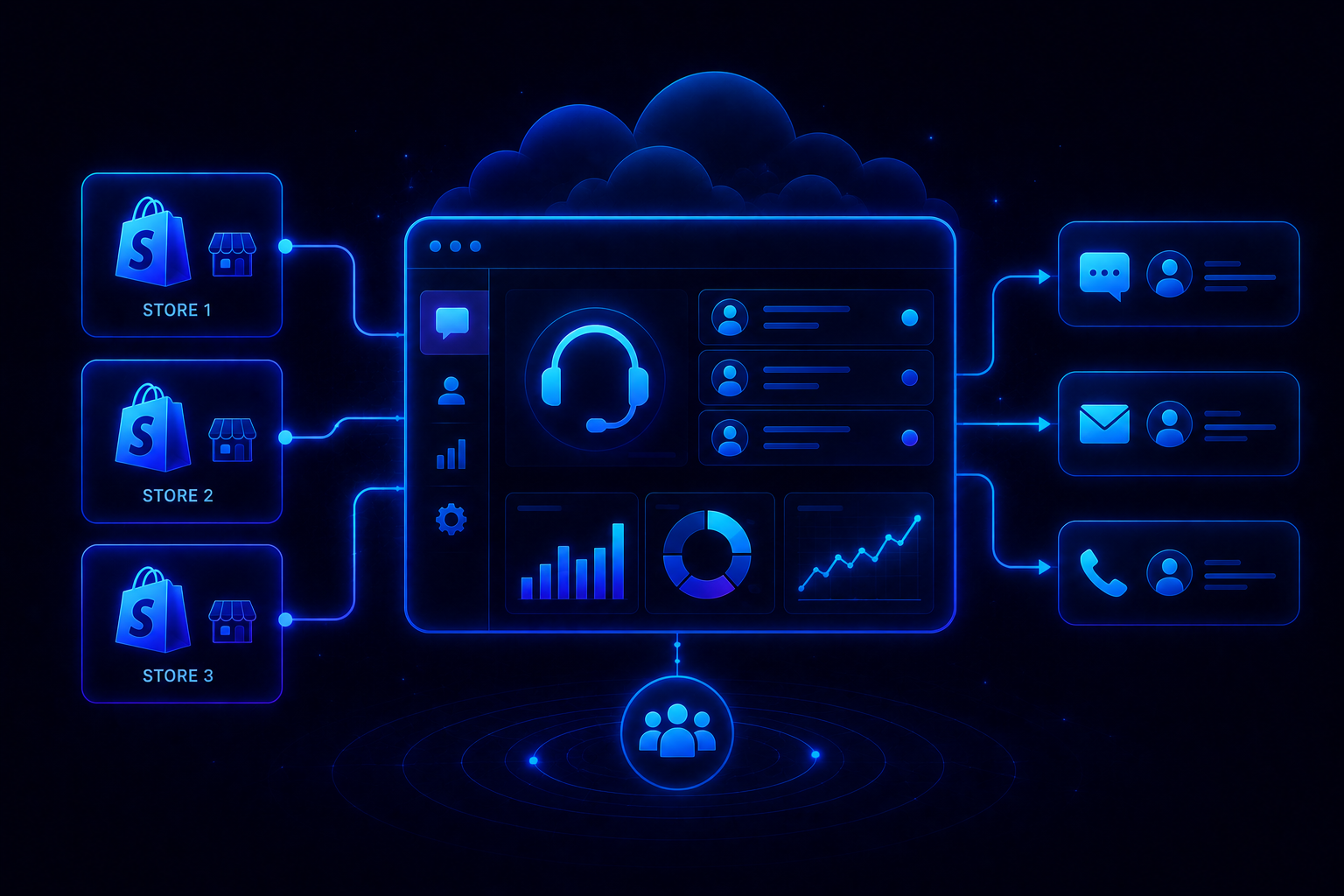
The unified conversational platform centralizes email, chat, WhatsApp, and social media into one workspace, preserving full context.

AI-native automation resolves repetitive queries instantly, reducing channel-switching and ensuring faster, consistent responses across touchpoints. Understanding these benefits of AI-native customer service makes it clear why AI native architecture outperforms traditional bolt-on approaches.
The AI-curated inbox prioritizes conversations based on intent, urgency, and sentiment. Quantum AI assists agents with context-aware replies and summaries, while escalation ensures complex queries move to agents with full history intact.
- Unified inbox that centralizes conversations across all customer communication channels
- Smart routing that assigns queries based on urgency, intent, and customer needs
- Automation of repetitive queries across channels without requiring manual intervention
- Agent assistance through response suggestions, summaries, and contextual insights
This approach improves response speed, reduces workload, and allows support teams to manage growing volumes efficiently without increasing team size or operational complexity.
Explore how QuantumDesk helps you manage multi-channel customer support with AI. Improve response speed, unify conversations, and scale support without increasing workload → Book a demo or learn more to see how AI-native support can transform your operations.
Frequently Asked Questions
What is multi-channel customer service?
Multi-channel customer service means supporting customers across multiple platforms like email, chat, and social media independently.
How is it different from omnichannel?
Multi-channel uses separate systems, while omnichannel connects channels to provide a continuous customer experience across all touchpoints.
How does AI help in multi-channel support?
AI automates queries, routes tickets, and assists agents, improving efficiency and reducing response times across channels.
What are common challenges?
Common challenges include fragmented systems, lack of context, inconsistent responses, and difficulty managing high volumes across channels.
Why use AI-native platforms?
AI-native platforms integrate automation directly into workflows, enabling better efficiency, scalability, and consistent customer experiences across all channels.



.avif)