
Summarize with AI
Key Takeaways
- Modern customers expect fast, personalized, and consistent support across channels, but traditional systems struggle to meet these demands at scale.
- Rising ticket volumes and repetitive queries make manual support inefficient and slow.
- AI-native platforms like QuantumDesk automate routine queries and unify support operations.
- The future of support is intelligent, decision-driven, and powered by AI with human collaboration.
- Early adopters of AI-driven support gain advantages in speed, scalability, and customer experience.
Customer expectations have evolved rapidly. Digital-first experiences, instant messaging, and always-on services have driven this shift.
Today's customers expect the same speed, convenience, and personalization from support interactions as they experience across modern digital platforms. This is especially true for D2C brands in apparel, cosmetics, and lifestyle categories, where a single poor support experience during a return or exchange can cost a repeat customer permanently.
However, traditional support systems struggle to meet these expectations. They are limited by manual workflows, fragmented tools, and an inability to scale efficiently.
Over 70% of customers expect immediate responses. Many switch brands after poor service experiences, making speed and quality critical for improving customer satisfaction and retention. For a D2C apparel brand processing thousands of orders monthly, even a 24-hour delay in resolving a size-mismatch complaint can directly impact repurchase rates and brand trust.
- Instant responses → customers expect quick replies without delays across all channels
- Personalized interactions → support must reflect past conversations and contextual customer data
- 24/7 availability → assistance should be accessible anytime without dependency on business hours
- Consistent journeys → customers should not repeat issues when switching between communication channels
This guide explains modern customer expectations. It covers the challenges businesses face and how AI-driven systems enable scalable, efficient support operations.
What Are Modern Customer Service Expectations?
Customers now expect support to be as fast, intuitive, and responsive as ordering products online. The reference point for acceptable service has shifted dramatically. Email-based interactions with 24-hour response windows are no longer the benchmark. Real-time messaging with near-instant resolution is.
Customers no longer compare experiences only within one industry. They evaluate interactions against the best experiences they have encountered anywhere.
This significantly raises the standard for speed, quality, and personalization across every support touchpoint. For D2C brands in apparel, food, or lifestyle, customers no longer benchmark you against competitors but against the best digital experience they have had anywhere.
- Fast responses → minimal wait time across channels without unnecessary delays or queues
- Omnichannel consistency → same experience and full context maintained across all communication platforms
- Personalization → responses tailored using past interactions, preferences, and behavior patterns
- Self-service → ability to resolve simple issues independently without requiring agent support
- Accuracy → clear, correct, and relevant responses, reducing the need for repeated follow-ups
How Have Customer Expectations Changed?
Customer service has shifted from slow, reactive models to fast, real-time interactions.
Businesses are now expected to provide immediate responses. They must resolve issues proactively rather than waiting for customers to report problems. Approximately 66% of customers now expect responses within minutes rather than hours.
Messaging platforms, mobile-first behavior, and instant digital services have reshaped expectations. Customers now expect continuous availability and consistent experiences regardless of the channel they use.
75% of customers expect round-the-clock access to support across time zones.
A Quick Comparison: How Customer Expectations Have Changed
This shift is forcing businesses to adopt scalable and intelligent systems. Relying on manual workflows that cannot meet modern expectations is no longer viable for competitive organizations.
Why Do Most Businesses Struggle to Meet These Expectations?
Traditional support systems were designed for simpler interactions and lower volumes. They are ineffective in handling the complexity and scale of modern demands. These systems lack the inherent scalability required to handle exponential growth in interactions.
Consider a D2C apparel brand during a festive sale: Order volumes spike overnight. Queries around size exchanges, delivery delays, and return eligibility flood in across WhatsApp, Instagram DMs, and email simultaneously. Without a unified system, agents are jumping between platforms, manually triaging tickets, and responding to the same question hundreds of times.
The result is slower response times, inconsistent answers, and customers who simply do not come back.
Support teams now face rising ticket volumes and fragmented communication channels. 78% of service agents report difficulty balancing speed and quality. These challenges create delays, reduce efficiency, and make consistent experiences difficult to deliver.
- High ticket volume -> increasing backlog leads to delayed responses and reduced ability to maintain consistent service quality
- Repetitive queries -> agents spend excessive time handling simple issues that could be automated efficiently
- Fragmented tools -> lack of a unified system prevents visibility into full customer context and interaction history
- Manual prioritization -> urgent issues are often delayed due to inefficient and inconsistent ticket handling processes
AI add-ons often fail because they only assist existing workflows instead of transforming them. Research shows 95% of generative AI pilots fail to reach production due to integration barriers and workflow misalignments. Without structural changes, businesses continue facing inefficiencies despite introducing automation tools.
What Key Expectations Do Customers Have Today?
1. Instant Responses
Customers expect immediate responses across all channels. Even small delays can reduce satisfaction and erode trust. Nearly half of all customers expect responses within four hours. 66% expect replies within minutes.
For a D2C apparel brand, this means a customer asking "Can I exchange my medium for a large?" at 11 pm expects an answer before they go to bed, not the next business day. Fast replies are no longer a competitive advantage. They are a baseline requirement for acceptable customer experiences.
2. Consistent Omnichannel Experience
Customers expect to switch between channels without losing context or repeating information.
Omnichannel conversations should continue smoothly regardless of platform. Companies retaining omnichannel strategies maintain an average of 89% customer retention. That compares to only 33% for companies without such strategies. No additional effort should be required from the customer when transitioning channels.
3. Self-Service Capabilities
Customers increasingly prefer resolving simple queries independently using intuitive systems.
69% of customers attempt to resolve issues on their own before contacting support. 67% prefer self-service over speaking with representatives. Effective self-service reduces dependency on agents. It improves speed, convenience, and overall experience.
4. Personalization
Customers expect responses tailored to their history and behavior. 73% of customers expect companies to understand their specific needs.
A repeat buyer from a D2C cosmetics brand should not have to re-explain their preferences every time they contact support. When AI surfaces their past interactions, product history, and skin concerns automatically, the response feels personal rather than transactional. Generic replies reduce relevance and engagement. Personalized interactions driven by customer data improve resolution efficiency and strengthen long-term relationships.
5. 24/7 Availability
Support is expected to be available at all times, regardless of time zones.
75% of customers expect brands to offer round-the-clock customer service. Customers want consistent access to help whenever issues arise.
6. Fast and Accurate Resolution
Customers expect complete and accurate solutions in minimal interactions.
Multiple back-and-forth exchanges reduce efficiency and increase frustration. High first-contact resolution rates indicate efficiency and deep product knowledge. 94% of customers reporting good service are likely to return.
What Enables Businesses to Meet These Customer Expectations?
Meeting these expectations requires automation, unified systems, and intelligent workflows.
Businesses must implement solutions that handle high volumes, maintain context, and improve response quality consistently. The right ai customer service software makes this achievable at scale.
- Automating repetitive queries → reduces agent workload and enables faster response times
- Unified inbox → provides a single view of conversations across all channels
- Smart prioritization → ensures critical issues are handled quickly based on urgency
- Agent assistance → improves response quality through AI-driven suggestions and context
- Data insights → enables continuous improvement through performance analysis
These capabilities improve speed and ensure consistency. They allow businesses to scale support operations efficiently.
Organizations can handle significantly more volume without increasing operational complexity or proportional headcount.
How Is AI-Native Customer Support Different?
AI-native systems embed intelligence directly into workflows instead of adding it as a separate layer. This enables automation, prioritization, and decision-making across support operations.
Unlike AI-enabled solutions that retrofit automation onto legacy systems, AI-Native customer service benefits emerge from building AI into the core architecture from the start.
Take a D2C logistics brand managing 3,000 monthly tickets: A traditional helpdesk with an AI add-on might suggest a response template. An AI-native platform like QuantumDesk goes further. It automatically identifies that 60% of those tickets are order status queries, resolves them without agent involvement through Quantum AI, and flags the remaining 40% by urgency and sentiment so agents walk in each morning knowing exactly what needs attention first.
- Resolves repetitive queries automatically, reducing manual workload and improving response speed
- Assists agents with context-aware responses, conversation summaries, and next-best-action suggestions
- Prioritizes tickets using intent, urgency, and sentiment signals for smarter routing
- Generates operational insights to continuously improve support performance and efficiency
AI-native systems improve resolution speed and reduce dependency on manual processes. Support teams can handle increasing volumes efficiently.
The role of ai in customer service has evolved from basic chatbot interactions to agentic systems capable of autonomous resolution.
How QuantumDesk Simplifies Customer Service Complexity?
Traditional tools add AI as a feature, limiting its effectiveness within legacy workflows.
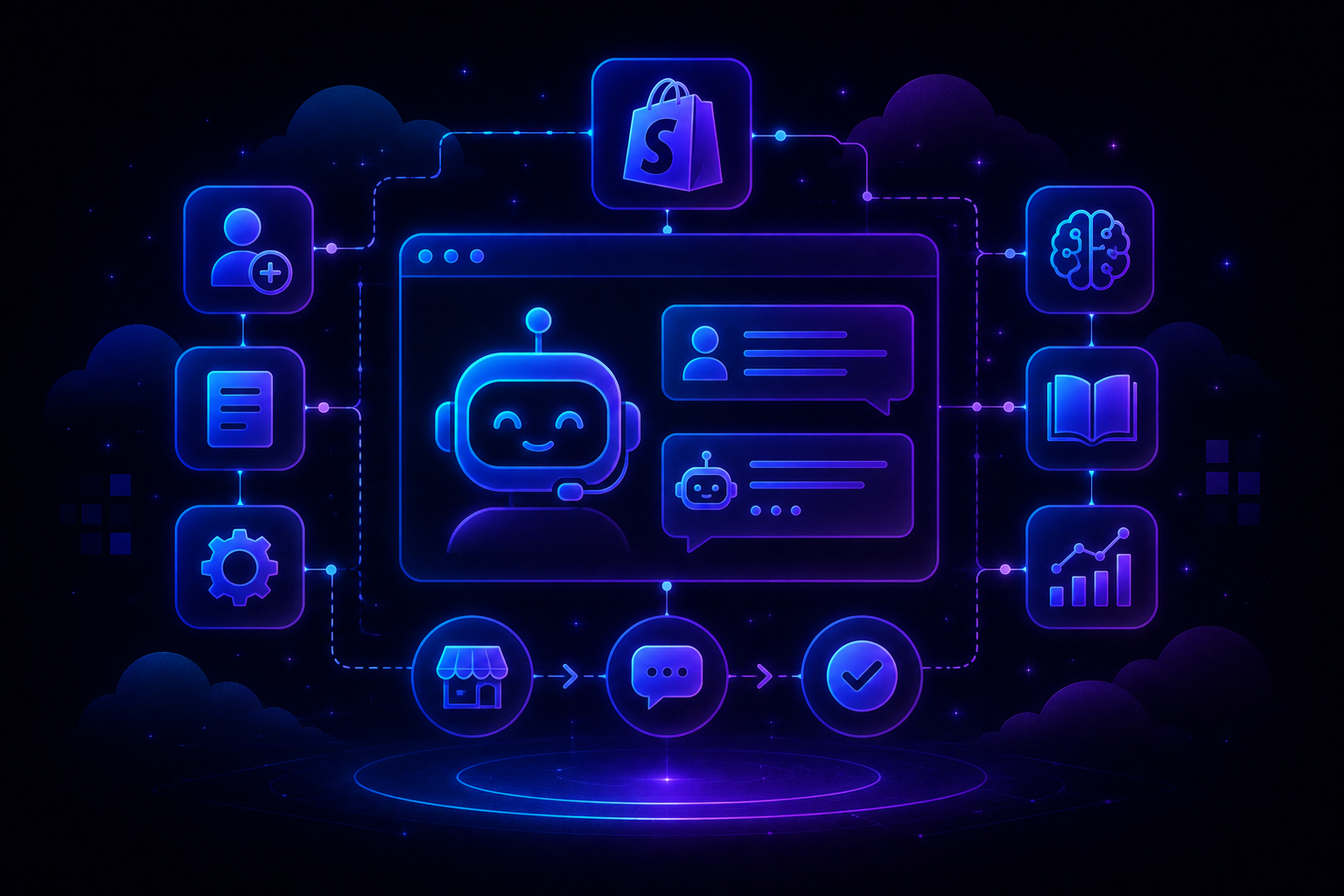
QuantumDesk is built with AI as the core engine. This enables active participation in every stage of the support process.
Standard ai chatbots for customer service respond to queries but lack the ability to resolve issues or take meaningful actions autonomously.
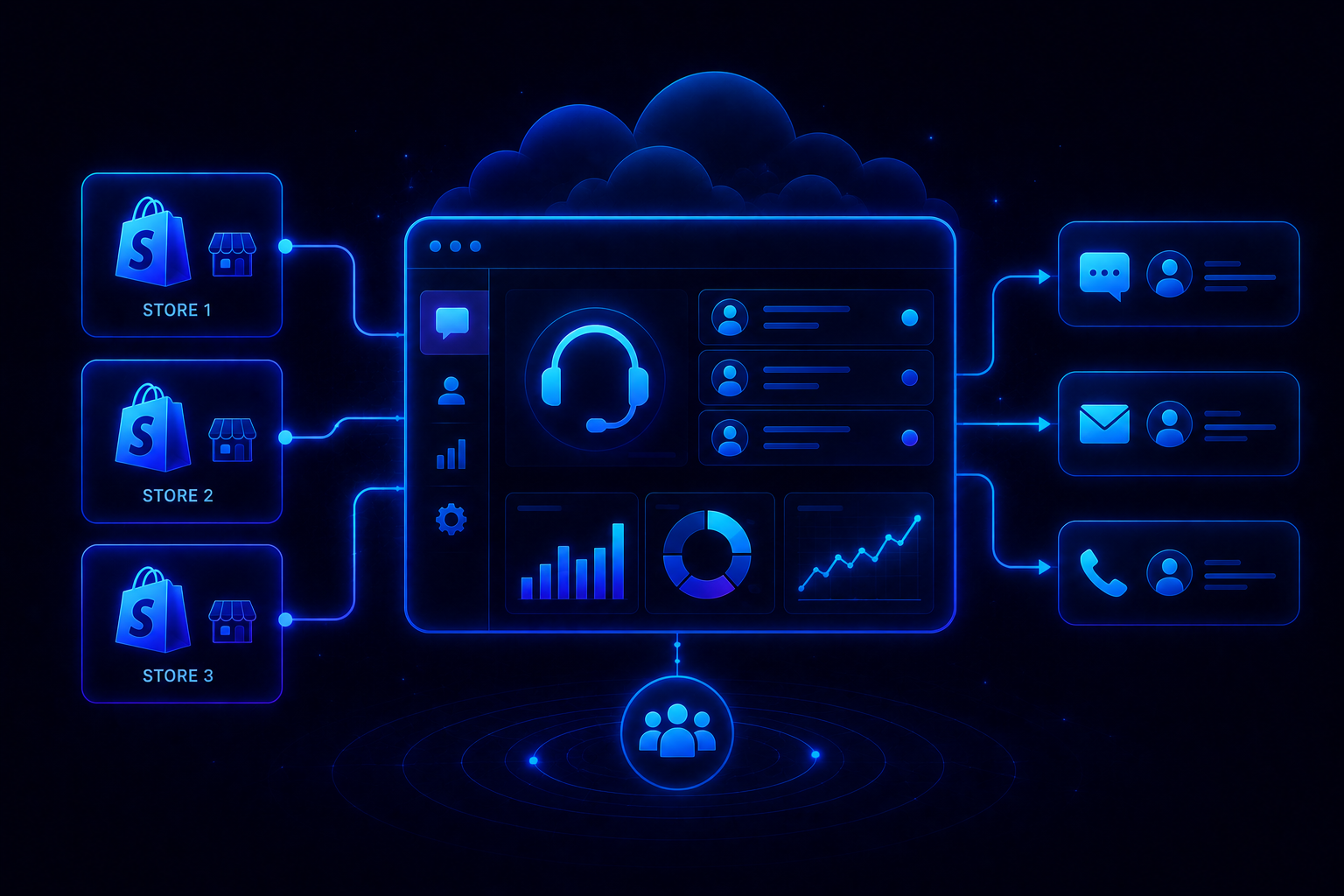
- Centralizes conversations across email, chat, WhatsApp, and social media into a unified workspace with full context
- Uses AI-driven prioritization and automation to organize and route tickets efficiently based on urgency and intent
- Provides real-time agent assistance with contextual suggestions, conversation summaries, and draft responses
- Supports resolution workflows beyond simple replies, enabling AI to assist in completing actions end-to-end
AI enables decision-driven support by understanding context, guiding actions, and reducing unnecessary back-and-forth. Human agents handle complex scenarios requiring judgment and empathy. This creates a balanced system where ai customer support accuracy complements human expertise.
Teams scale without proportional headcount growth. You can book a demo to explore how this works in practice.
Frequently Asked Questions
What are modern customer service expectations?
Modern expectations include fast responses, personalization, omnichannel consistency, and quick issue resolution without delays. Customers expect the same speed and convenience from support that they experience across digital-first platforms. 66% expect responses within minutes.
Why are customer expectations increasing?
Digital-first companies and instant services have raised standards for speed, convenience, and responsiveness. Customers now benchmark every support interaction against the best experience they have had anywhere, regardless of industry.
What is the biggest challenge in meeting these expectations?
Handling scale and complexity using outdated systems that cannot manage multiple channels efficiently. Fragmented tools, rising ticket volumes, and the difficulty of balancing speed with quality create structural barriers that hiring alone cannot solve.
How does AI improve customer service?
AI automates repetitive queries, prioritizes tickets, and enables faster responses across support interactions. Advanced systems provide real-time agent assistance, surface relevant context automatically, and can resolve routine issues without human involvement.
What is the difference between AI-powered and AI-native support?
AI-powered systems add automation as a feature on top of existing platforms. AI-native platforms embed AI directly into workflows for deeper efficiency and scalability, enabling autonomous resolution, intelligent routing, and continuous performance improvement from the ground up.



.avif)