
Summarize with AI
Key Takeaways
- AI copilots suggest responses and draft notes for human agents, who stay in full control of every action taken.
- AI agents operate autonomously, handling routine customer interactions end-to-end across systems without needing human input.
- Copilots suit sentiment-heavy, brand-sensitive, or complex troubleshooting tickets where human expertise and empathy still matter most.
- Agents work best for high-volume, standardized workflows like order tracking, password resets, and refund processing across predictable ticket types.
- A hybrid model works best: agents deflect routine requests while copilots help human agents resolve escalated, complex conversations faster.
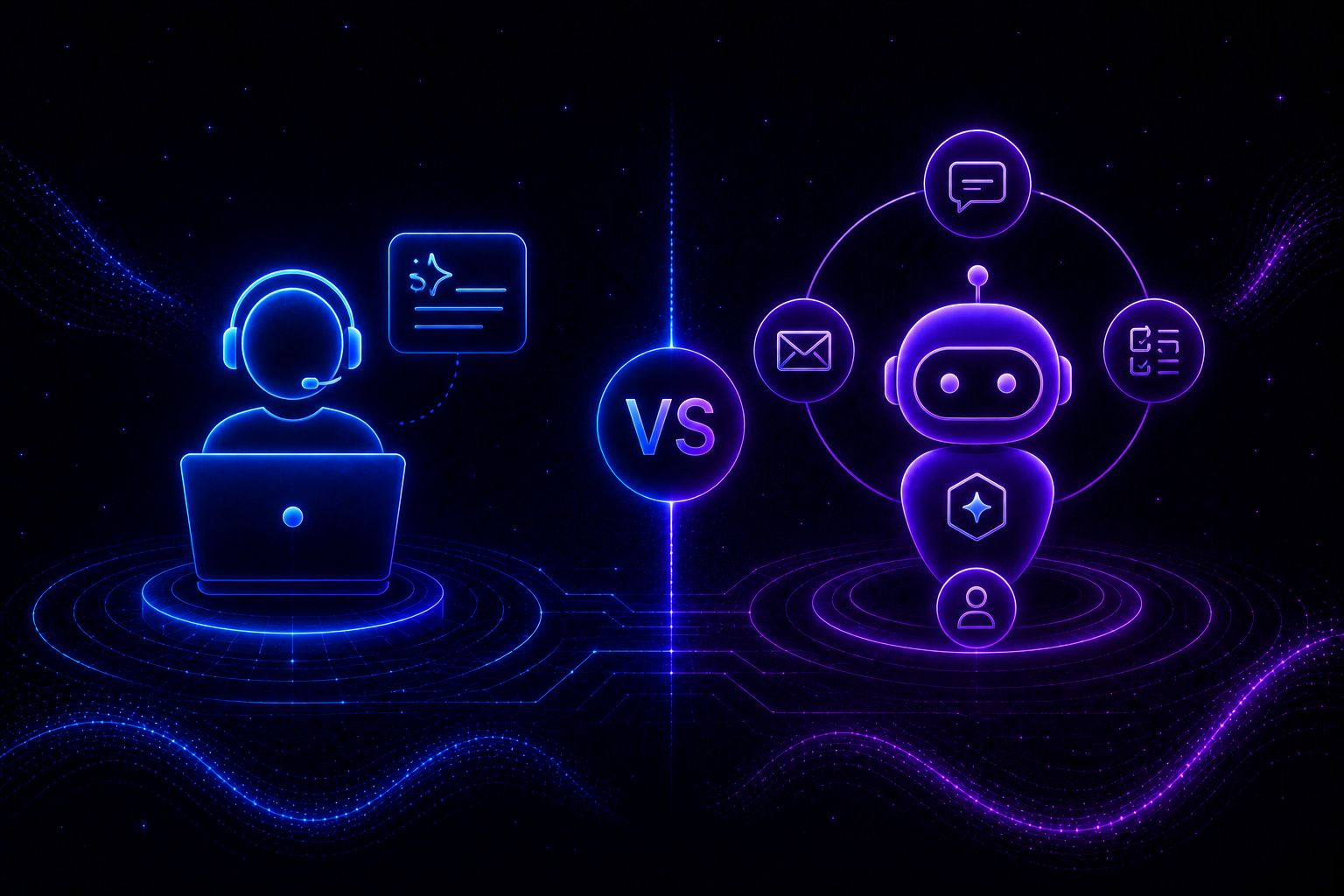
AI copilots and AI agents are changing customer support, but both solve different problems for growing support teams.
For D2C brands, Shopify stores, SMBs, and B2B SaaS companies, choosing the wrong AI in customer service approach can create inefficient workflows. Support teams need to understand whether they need AI assistance for agents or autonomous resolution for repetitive customer requests.
I asked about my delayed order → support agent searched multiple systems manually → waited 15 minutes for an update → another customer received instant tracking updates because AI handled the request automatically.
Common challenges support teams face before choosing AI:
- Agents spend hours answering repetitive customer questions
- Support teams struggle during sudden ticket volume spikes
- Customers wait longer for simple issue resolutions
- Teams lack clarity between AI assistance and automation
You will learn how to improve customer support workflows by understanding AI copilots, AI agents, and choosing the right approach for your team.
A Quick Comparison: AI Copilot vs AI Agent in Customer Support
What is an AI Copilot in Customer Support?
An AI copilot works alongside human support agents to make their daily workflows faster and more efficient. The agent remains in control while AI provides intelligent assistance.
How AI Copilots Support Customer Service Agents
AI copilots analyze customer conversations, understand context, and provide recommendations that help agents respond faster. Instead of replacing agents, copilots reduce repetitive manual work during support conversations, which is part of why AI customer support accuracy tends to be higher when a human reviews the suggestion before it reaches the customer.
Common AI copilot capabilities include:
- Summarizing long customer conversations
- Drafting personalized responses
- Finding relevant knowledge base articles
- Suggesting next-best actions
- Identifying customer intent and sentiment
For example:
A B2B SaaS customer reports an integration issue → agent opens the conversation → AI copilot summarizes previous tickets → suggests troubleshooting steps → agent reviews and sends the final response.
When Should Support Teams Use an AI Copilot?
AI copilots are useful when conversations require human understanding, decision-making, or approval.
Choose an AI copilot when:
- Customer problems are complex or sensitive
- Agents need faster access to information
- Response quality matters more than full automation
- Final decisions require human review
A copilot helps agents handle more conversations without removing the human judgment that customers expect.
What is an AI Agent in Customer Support?
An AI agent works as an autonomous system that can understand customer requests, make decisions, and complete specific support workflows without constant human involvement.
Unlike copilots that assist agents, AI agents directly handle customer problems when the request follows a predictable process.
How AI Agents Automate Customer Support Workflows
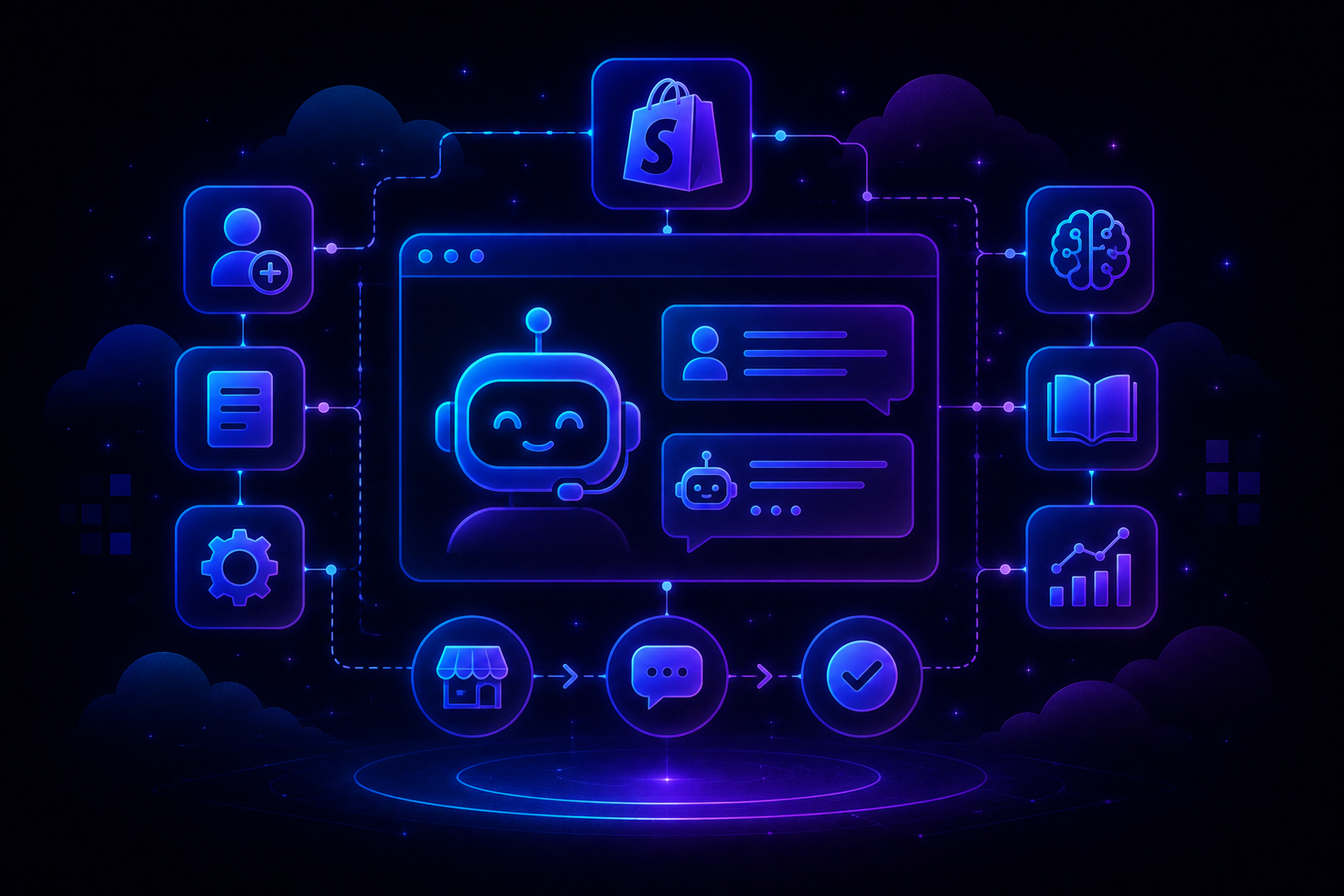
AI agents connect with business systems, retrieve information, and complete actions based on customer requests. This is the core idea behind agentic AI for customer service: the system does not just respond, it takes the next step on its own.
For example:
A Shopify customer asks, "Where is my order?" → AI agent checks order details → retrieves tracking information → shares the update instantly → closes the conversation without agent involvement.
AI agents commonly handle:
- Order tracking requests
- Refund status updates
- Password resets
- Account information changes
- Basic troubleshooting questions
When Should Support Teams Use an AI Agent?
AI agents work best when businesses receive large volumes of repetitive customer questions.
Choose an AI agent when:
- Agents repeatedly answer the same questions
- Customers expect instant responses
- Support volume increases faster than team growth
- Workflows can be automated with clear rules
For growing D2C and SaaS teams, AI agents are one of the most direct ways to scale customer support with AI without forcing teams to hire more agents.
AI Copilot vs AI Agent: How to Choose the Right Option for Your Support Team
Choosing between an AI copilot and AI agent depends on your customer requests, support complexity, and how much control your team wants AI to have.
1. Choose an AI Copilot When Human Judgment Matters
Some customer conversations cannot be solved through automation alone.
Examples include:
- Angry customer complaints
- Enterprise account issues
- Complex technical problems
- Special refund requests
In these situations, AI should assist agents instead of making decisions independently. Getting this split right is really a question of AI vs human customer support: the copilot provides information, but humans manage empathy, exceptions, and final resolutions.
2. Choose an AI Agent When Ticket Volume Becomes Repetitive
Many support teams spend most of their time answering predictable questions.
A D2C apparel brand may receive hundreds of daily messages:
- "Where is my order?"
- "How can I exchange my size?"
- "When will my refund arrive?"
An AI agent can resolve these conversations automatically by connecting with customer and order data, which is also one of the fastest ways to lower AI customer service cost per ticket. This allows human agents to focus on conversations where they create more value.
3. Consider Workflow Complexity and System Integration
AI agents become more valuable when support requires multiple connected steps.
Example workflow:
Customer asks for a refund → AI checks eligibility → verifies order information → processes request → updates customer automatically.
A copilot can help an agent complete these steps faster, but an AI agent can manage the entire workflow independently. Reviewing the best AI agents for customer support is a useful next step once you know a workflow is repetitive enough to automate end-to-end.
4. Combine AI Copilots and Agents for Better Support
The best customer support systems do not depend only on one AI approach.
AI agents handle repetitive conversations, while copilots help agents solve complex issues. This hybrid pattern shows up across most practical AI use cases in customer service.
Example:
AI agent resolves 70% of order questions automatically → difficult complaints move to agents → AI copilot provides summaries and recommended responses.
This creates a balance between automation and human support.
How QuantumDesk Combines AI Agents and Copilots for Smarter Customer Support
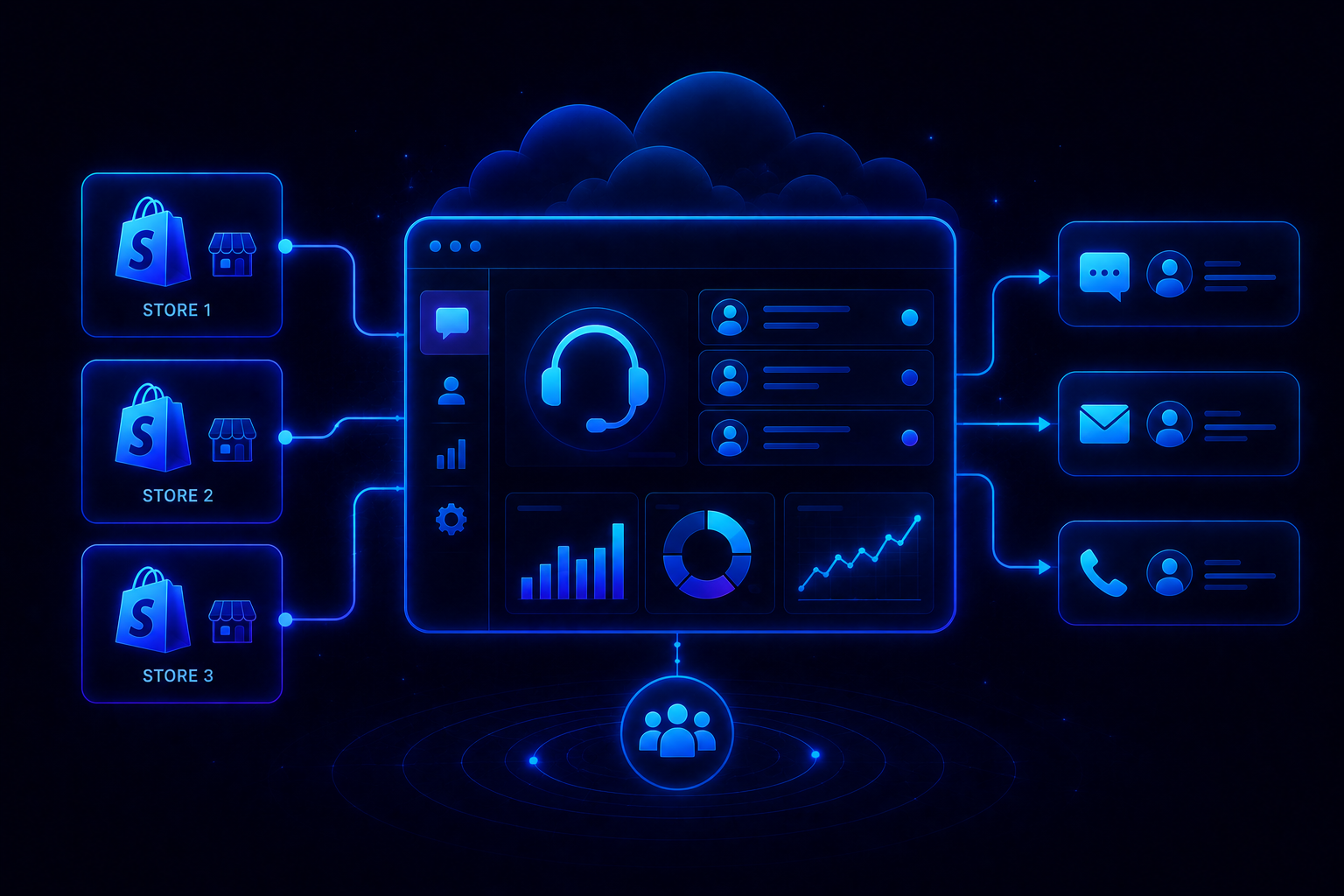
QuantumDesk is an AI-native customer service platform that helps teams combine intelligent automation with agent assistance to improve customer support operations, building on the same AI customer service benefits that come from AI and agents working from shared context.
Instead of treating AI as a separate feature, QuantumDesk integrates Quantum AI across the entire support workflow. It helps automate repetitive customer queries while giving agents the right context, recommendations, and assistance during complex conversations, which is where the ai native customer service benefits show up most clearly compared to AI bolted onto an existing helpdesk.
QuantumDesk helps support teams increase capacity by allowing AI and human agents to work together instead of depending only on manual ticket handling. For Shopify brands, this means Quantum AI can resolve a "where is my order" request the same way described earlier, pulling tracking details directly from Shopify without any agent lookup.
What Are QuantumDesk's Key Capabilities?
- Quantum AI resolves repetitive customer requests automatically while escalating complex conversations that require human support.
- Quantum AI Copilot assists agents with conversation summaries, suggested responses, customer intent, and next-best actions.
- Unified workspace brings email, WhatsApp, chat, and social conversations together with complete customer context.
- AI-curated inbox prioritizes customer conversations based on urgency, sentiment, and intent to improve response workflows.
- Admin analytics helps leaders understand AI resolution rates, escalations, ticket trends, and support performance.
Ready to see how it works? Book a demo to explore QuantumDesk for your team.
Frequently Asked Questions
1. What is the difference between AI copilot and AI agent in customer support?
An AI copilot assists human support agents with suggestions, summaries, and recommendations. An AI agent works more independently by resolving repetitive customer requests, completing workflows, and escalating complex issues when human support is required.
2. Should my support team choose an AI copilot or AI agent?
Choose an AI copilot when your team handles complex conversations requiring human decisions. Choose an AI agent when your team manages large volumes of repetitive queries that can be resolved through automation.
3. Can AI agents replace customer support agents?
AI agents are designed to automate repetitive support tasks, not replace entire teams. Human agents remain important for complex issues requiring empathy, decision-making, relationship management, and personalized customer conversations.
4. Can AI copilots and AI agents work together?
Yes. AI agents can resolve simple customer requests automatically, while AI copilots support human agents during complex conversations. Combining both approaches helps teams improve efficiency without reducing support quality.
5. Are AI agents better than AI copilots?
AI agents are not always better than copilots because they solve different problems. Agents focus on automation and scale, while copilots improve agent productivity, accuracy, and response quality during customer interactions.



.avif)