
Summarize with AI
Key Takeaways
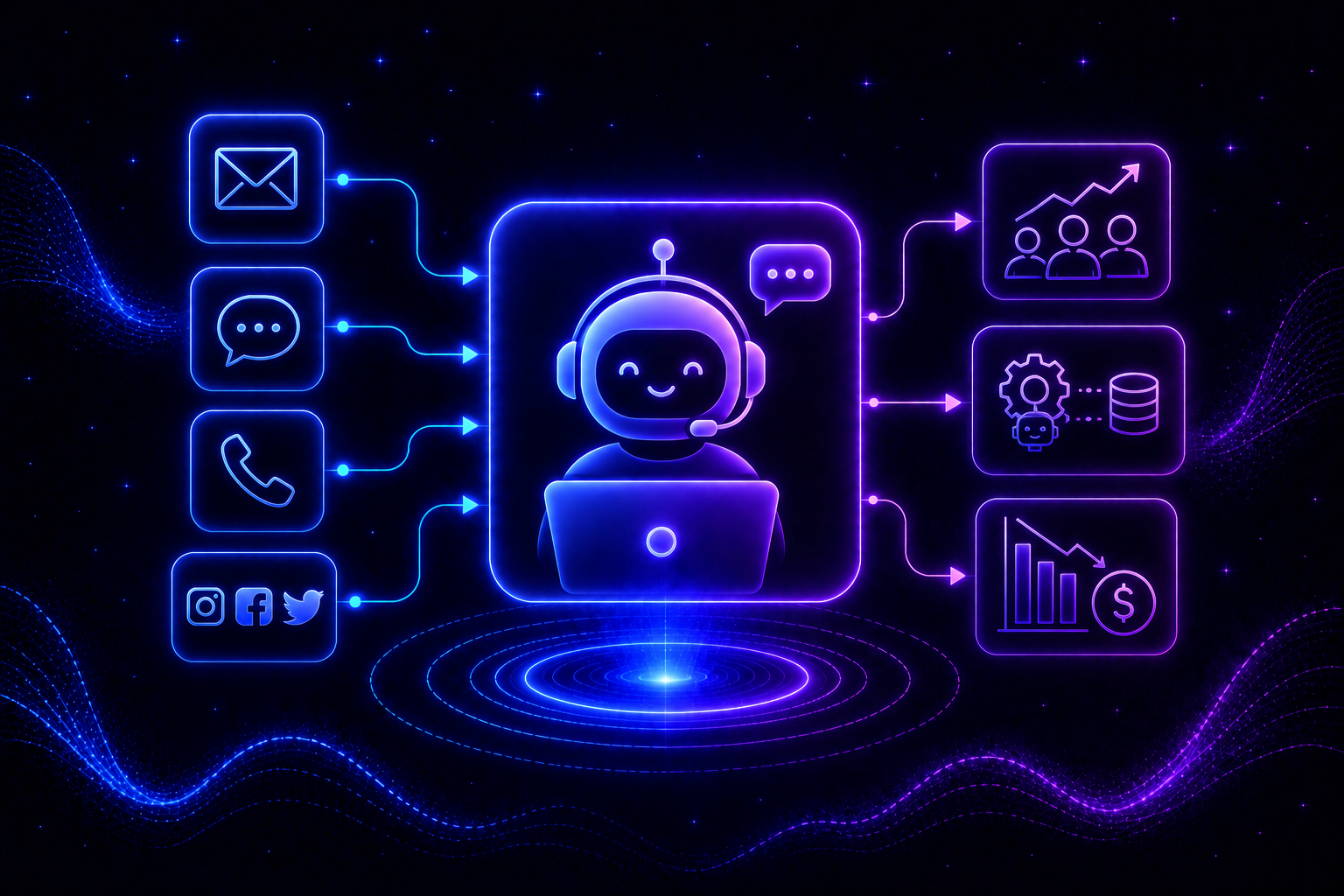
- Scaling customer support with AI means automating repetitive tier-1 inquiries so teams handle higher volumes without proportional increases in headcount or costs.
- AI agents autonomously resolve order tracking, password resets, and FAQs instantly across multiple channels and time zones without relying on human shift schedules.
- AI copilots reduce average handle time by automatically drafting replies, summarizing ticket threads, and surfacing knowledge base articles during live customer interactions.
- Intelligent routing and sentiment analysis direct urgent complaints to the right agents automatically, reducing escalations and improving first contact resolution rates significantly.
- Every customer interaction becomes training data that makes AI models more accurate and context-aware over time, continuously improving support quality at scale.
For D2C brands and SMBs, there comes a point where ticket volume grows faster than the team can hire, train, and retain agents. For a D2C brand processing 2,000 monthly orders, a flash sale can triple support volume overnight with no additional capacity to absorb it.
The standard response is to hire more agents. For an SMB running a four-person support team, one new hire is a 25 percent headcount increase overnight, before that person handles a single live conversation.
What overloaded support teams deal with before deploying AI:
- WISMO and order status queries arriving in bulk across WhatsApp, email, and Instagram, each handled individually by a human agent
- Ticket queues are building faster than agents can clear them during product launches, flash sales, or seasonal campaigns
- New agents require four to eight weeks to reach full productivity before they can handle live conversations independently
- Customer context is lost at every handoff, forcing customers to repeat the same issue to each new agent or channel
You will learn how to scale customer support with AI across D2C brands, SaaS teams, and SMBs without proportional headcount growth.
A Quick Comparison: Manual Scaling vs AI-Native Scaling
Why Traditional Support Models Break Under Growth Pressure
Adding people to solve a volume problem works until it does not. At a certain point, the cost of scaling through headcount outpaces the revenue being generated by the customer base, creating those tickets.
1. The Linear Headcount Problem
Without AI, every additional 500 monthly tickets requires roughly one more support agent to maintain service levels. For growing ecommerce customer service teams, this creates a model where operational expenses track revenue almost exactly, eliminating the efficiency gains that should come with scale. Contact center attrition running at 30 to 45 percent annually makes replacement a permanent, compounding cost.
2. Channel Fragmentation Multiplies Every Support Failure
Actual Scenario: I ordered a moisturizer during a seasonal sale → the product arrived damaged → I messaged on WhatsApp → received a 48-hour auto-reply → followed up on email → got a different agent with zero context from my WhatsApp conversation → repeated the full issue from the beginning → resolved on day four.
One damaged product. Two channels. Three agent interactions. Zero context shared between them. Without omnichannel customer service built on a unified workspace, agents switch between tools rather than solving problems. Each handoff without context transfer costs more to resolve than a clean first-contact query would have.
3. Seasonal Spikes Force Expensive Short-Term Staffing
Managing support during flash sales exposes the staffing model's biggest weakness. Ticket volume can triple within hours of a campaign going live. Temporary hires take weeks to onboard, cost full training overhead, and leave the team either understaffed the moment the spike ends or overstaffed through quieter periods, with neither outcome being cost-efficient.
How to Scale Customer Support with AI
AI scales support by removing the work that consumes the most agent time for the least customer value. The gains come from four mechanisms that operate across the entire support lifecycle.
1. Automate Tier-1 Queries to Remove the Highest-Volume Cost
Customer service automation starts with queries that arrive most frequently and require no judgment to resolve. AI customer service agents close these conversations with a confirmed outcome, not a redirect to a help page.
What tier-1 automation handles across D2C and SaaS operations
- Order tracking and WISMO queries are resolved automatically across WhatsApp, chat, and email without any agent involvement
- Return eligibility and refund status are checked and confirmed instantly, removing the most repeated D2C ticket category from agent queues
- Password resets and account access are handled in seconds, freeing agents from tasks that require no judgment to complete
- SaaS billing queries and subscription updates are managed by AI, preventing onboarding ticket spikes from overwhelming junior team members
2. Equip Agents with AI Copilots to Handle Complex Tickets Faster
Not every ticket should bypass agents. Escalations, disputes, and retention conversations still require human judgment. AI copilot for e-commerce support reduces the cost and time of those interactions without replacing the person handling them.
How copilots reduce handle time on every human-handled ticket
- Conversation summaries generated before an agent picks up a ticket, eliminating the diagnostic review that extends every interaction
- Contextual reply suggestions are drafted in real time so agents spend fewer minutes composing responses from scratch
- Knowledge base retrieval that surfaces the right article or policy mid-conversation instead of requiring manual search across disconnected systems
- Agentic AI for customer service takes direct action within conversations, initiating exchanges, processing updates, and pulling order data without tab-switching
3. Use Intelligent Routing to Direct Every Ticket to the Right Place
Misrouted tickets cost more than correctly routed ones. They escalate, generate repeat contacts, and in D2C contexts, often produce public reviews before a resolution arrives. AI use cases in customer service consistently identify routing as one of the highest-ROI starting points for teams scaling their first AI deployment.
What intelligent routing delivers at the operational level
- Sentiment and intent analysis detects frustrated customers automatically and surfaces their tickets before they escalate past the point of easy resolution
- Skill-based assignment routes each query to the most qualified agent based on expertise, current workload, and channel history
- Escalation triggers fire automatically on keywords like cancel, refund dispute, or account closure, routing those conversations before the customer has to repeat themselves
- Misrouted ticket volume drops 35 percent in teams that replace manual triaging with AI-driven routing logic across all channels
4. Keep Your Knowledge Base as Current as Your Product
AI performance depends entirely on the accuracy of the content behind it. An outdated return policy or missing product category in the knowledge base produces wrong AI responses, which cost more to recover from than the original query would have cost a human agent to handle.
How AI strengthens the knowledge base over time
- Content gap detection identifies recurring unanswered queries and flags articles that need updating based on live interaction data
- Auto-generated article drafts created from resolved tickets so documentation stays current without requiring manual writing cycles from the team
- Confidence scoring prevents AI from answering queries where it lacks sufficient content, routing those conversations to agents instead
- Training loops make AI more accurate with each interaction, meaning scaling quality improves rather than degrading as ticket volume grows
Common Mistakes to Avoid When Scaling Customer Support with AI
Deploying AI and watching deflection metrics improve is not the same as scaling support effectively. Several patterns consistently reduce the returns on AI scaling investments.
1. Automating Before Auditing Ticket Distribution
Teams that deploy AI without first mapping their actual ticket volume often automate low-frequency queries while leaving high-volume repetitive ones untouched.
Reviewing 90 days of support history reveals which ticket types account for 60 to 80 percent of volume. Those categories should be the first automation targets, not the ones that seem simplest to configure or demo well in a vendor presentation.
2. Setting No Clear Handoff Rules Between AI and Agents
When AI has no defined escalation triggers, it either over-escalates, sending routine queries to agents unnecessarily, or under-escalates, failing to pass genuinely complex situations to a person who can handle them. Both errors increase cost.
Clear triggers based on sentiment score, specific keywords, and consecutive unresolved replies protect customer satisfaction metrics from declining as automation scope expands over time.
3. Treating Deployment as a One-Time Setup
AI performance degrades if the knowledge base behind it is not maintained. Every product update, policy change, or new ticket type that is not reflected in the knowledge base generates wrong or incomplete responses. Those responses cost more to recover from than the original query would have cost a human agent to handle.
Weekly knowledge audits are the operational minimum for sustaining the gains from an AI scaling investment.
How QuantumDesk Helps You Scale Customer Support with AI
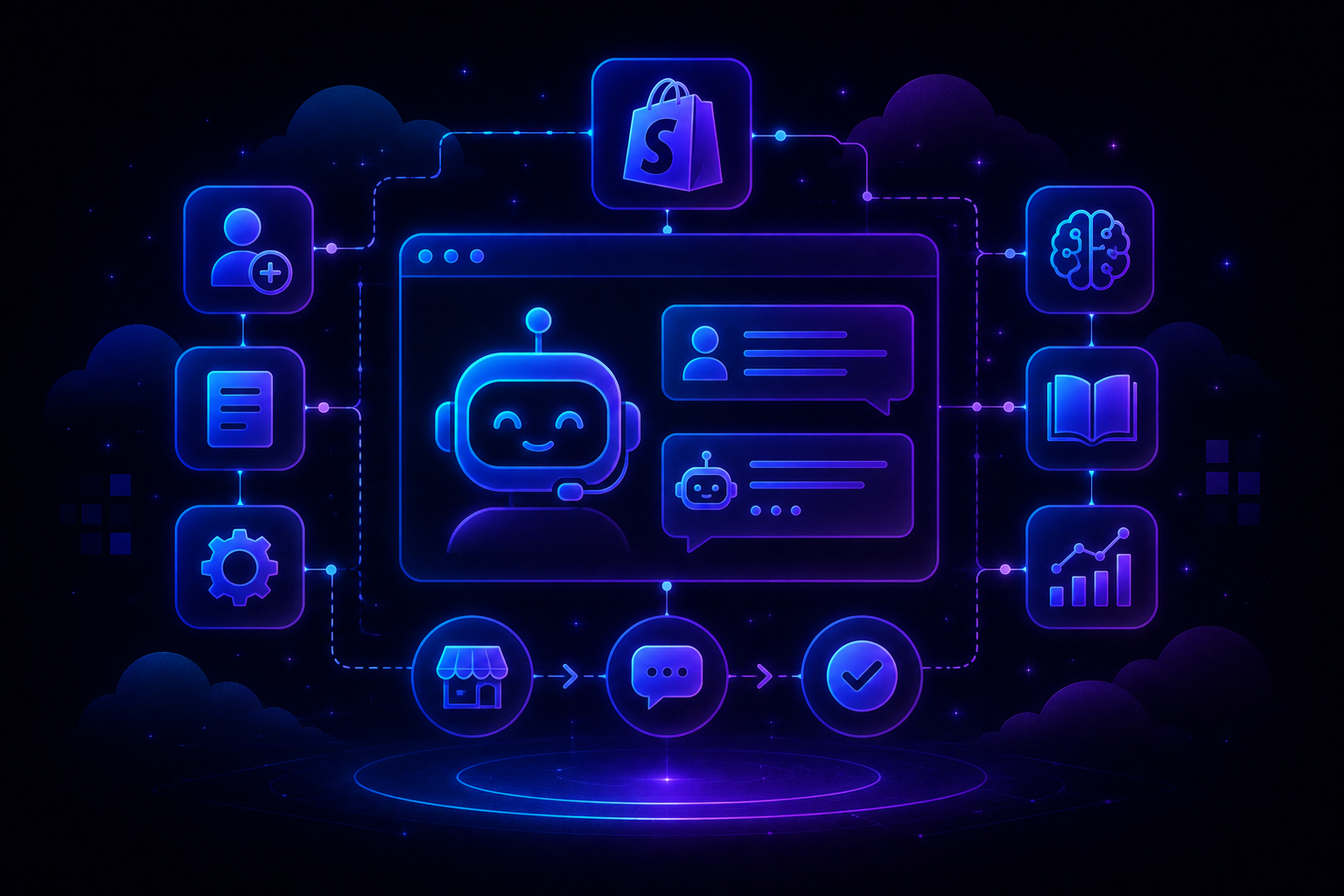
QuantumDesk is an AI-native customer service platform built for D2C brands, SaaS teams, and SMBs that need to handle significantly more support volume without adding headcount proportionally.
Rather than deploying AI as a standalone chatbot, QuantumDesk embeds intelligence across the full support lifecycle, from intake and routing through agent assistance and performance analytics. Understanding the ai native customer service benefits is clearest when AI operates as the platform's foundation rather than a module added onto manual workflows.
For teams deciding where to begin, the highest-impact starting point is always the ticket category that arrives most frequently with the least complexity. QuantumDesk makes that starting point identifiable, automatable, and measurable from day one.
How QuantumDesk's AI Capabilities Scale Your Support Operations
- Quantum AI resolves repetitive tier-1 queries automatically across WhatsApp, chat, email, and social, including order tracking, return eligibility, and account access, before they ever reach an agent queue.
- AI-curated inbox prioritizes incoming conversations by urgency, sentiment, and intent so agents address high-priority complaints first while routine queries are handled without human involvement.
- Quantum AI Copilot surfaces reply suggestions, conversation summaries, and full customer history inside the active workflow, reducing handle time on complex tickets and compressing new agent onboarding time simultaneously.
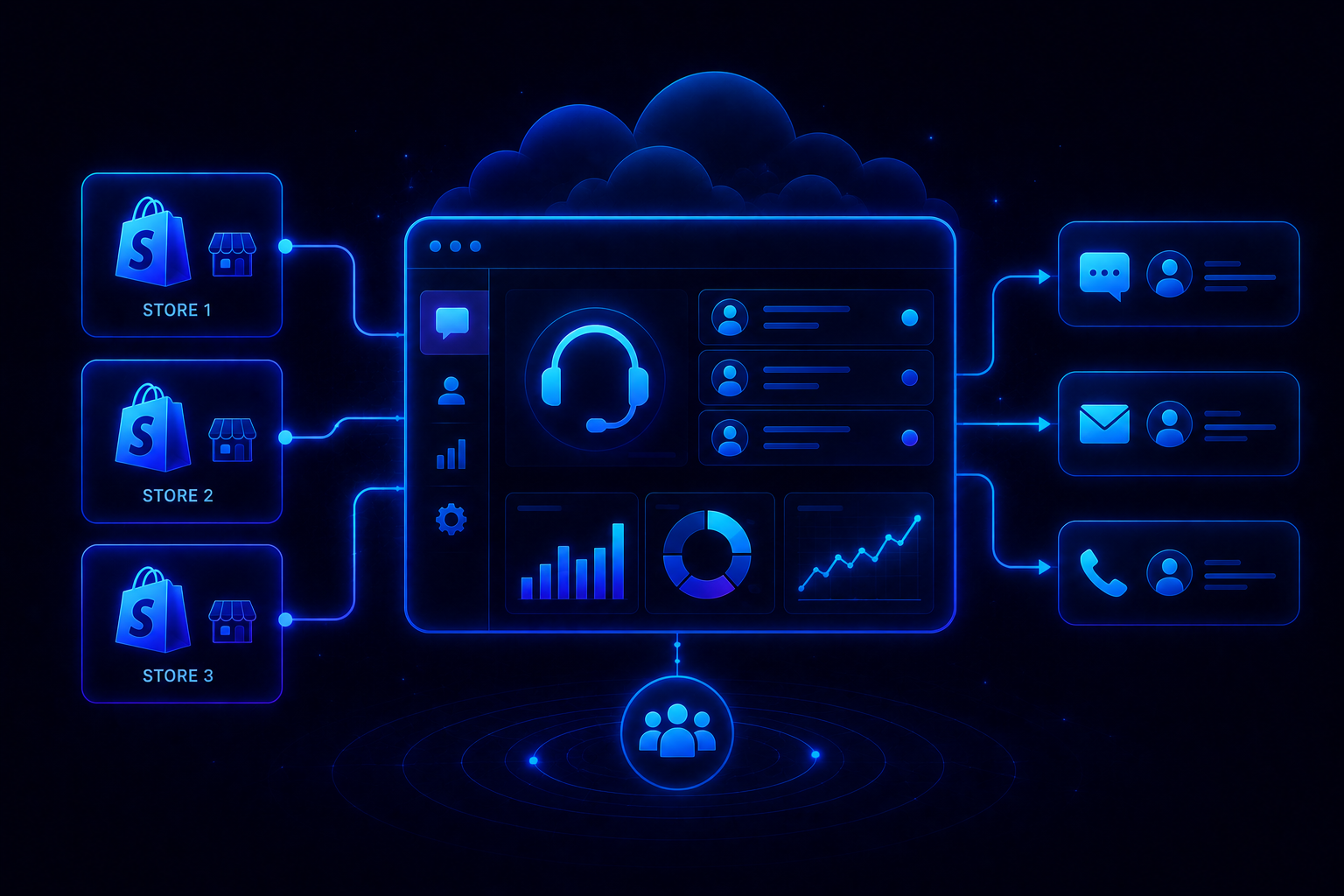
- Unified workspace consolidates every support channel into a single view so agents carry full conversation context into every interaction, eliminating the repetition that frustrates customers and inflates resolution time.
- Admin analytics surface AI resolution rates, escalation patterns, and channel-level performance so support leaders can identify exactly where automation is scaling volume and where knowledge gaps are limiting it.
Ready to see how it works? Book a demo to explore QuantumDesk for your team.
Frequently Asked Questions
How does AI help scale customer support without increasing headcount?
AI resolves tier-1 queries automatically, assists agents with real-time copilots, and routes tickets intelligently. Each agent handles more volume without proportional increases in team size, training overhead, or operational cost.
Which queries should be automated first when scaling with AI?
Order tracking, return eligibility, account access, password resets, and billing status. These account for 60 to 80 percent of total ticket volume and require no human judgment, making them the fastest path to measurable scaling gains.
How do D2C brands handle flash sale ticket spikes with AI?
AI absorbs the spike automatically without temporary hires. It resolves WISMO and policy queries instantly across channels while routing high-urgency complaints to agents before frustration escalates into public reviews or refund disputes.
What metrics confirm AI is actually scaling support effectively?
Track AI containment rate, cost per resolved ticket, first contact resolution, repeat contact rate within 48 hours, and CSAT separately for AI-handled and human-handled interactions. These together show whether scaling is sustainable.
How long before a business sees results from AI-based scaling?
Most teams see measurable improvements in first response time and ticket containment within the first few weeks of a well-scoped deployment. Break-even on the investment typically occurs within 60 to 90 days.



.avif)