
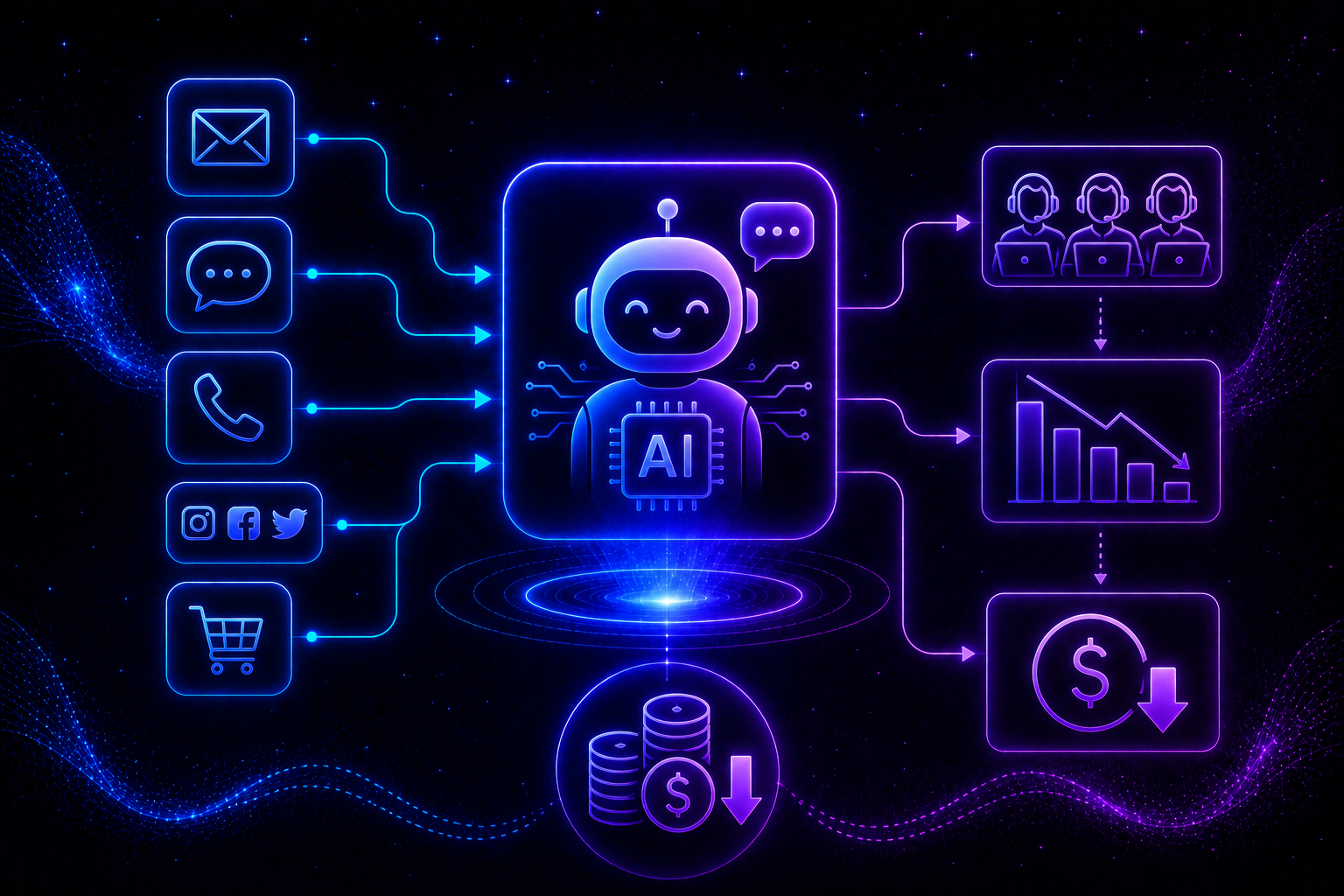
Summarize with AI
Key Takeaways
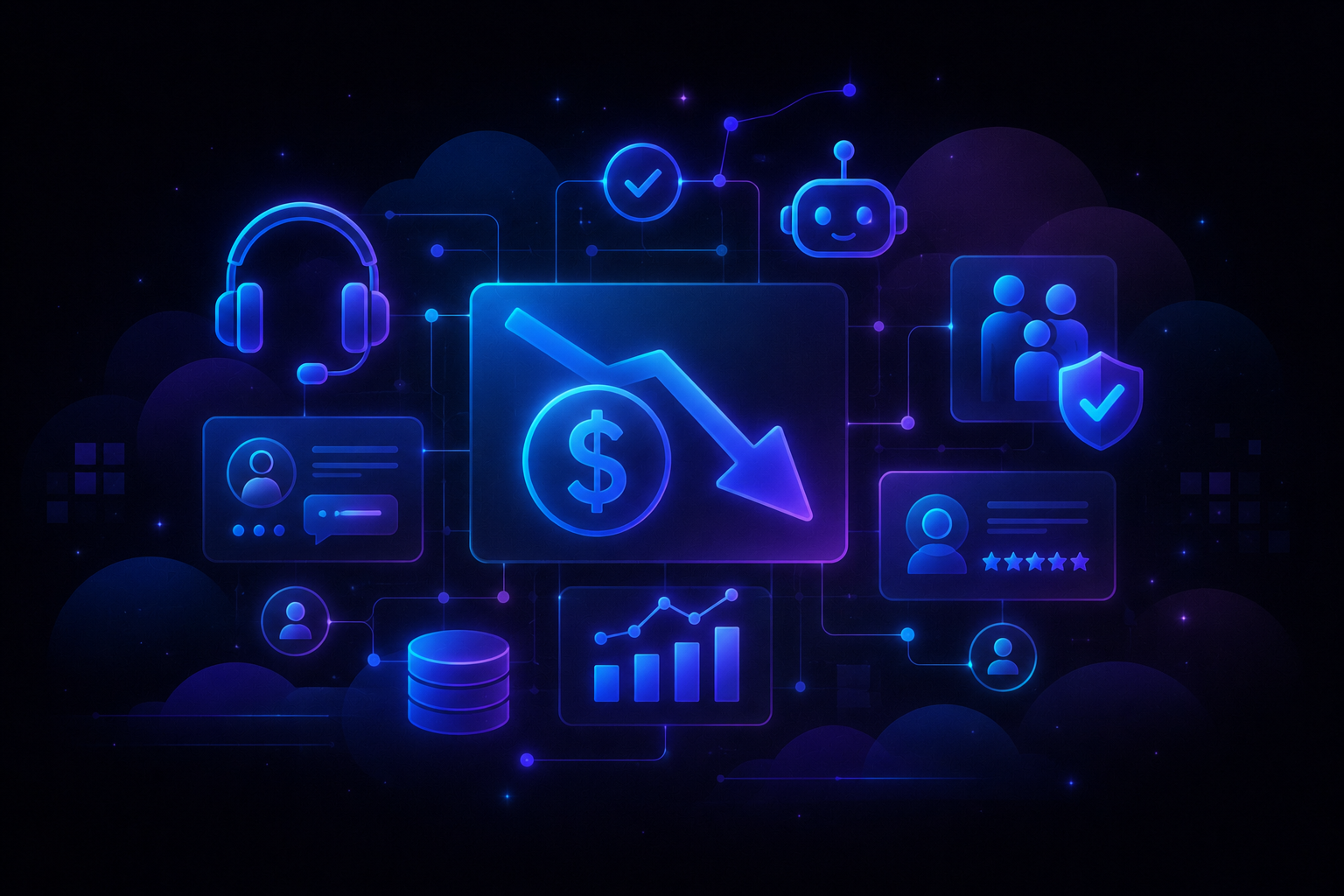
- AI reduces overall customer support costs by 30 to 50 % by automating repetitive workloads that consume the largest share of most support budgets.
- An AI-handled interaction costs $0.50 to $0.70, compared to $15 to $60 for a live human agent handling the same routine query.
- AI can autonomously resolve up to 80 percent of repetitive queries, including order tracking, password resets, account updates, and refund status checks.
- Brands that measure deflection instead of containment often report inflated savings that disappear within 90 days of going live with AI.
- Real cost reduction comes from five dimensions: direct labor savings, hiring avoidance, training efficiency, churn prevention, and agent retention improvement.
Does AI Actually Reduce Customer Support Costs? Yes, but the savings are more specific and more conditional than most vendor pitches suggest.
At the interaction level, the math is straightforward. A human agent handles a routine support query at $15 to $60. An AI resolves the same query for $0.50 to $0.70. Across 3,000 monthly tickets, where 60 percent are repetitive, that difference accumulates fast.
The challenge is that support costs do not fall automatically the moment AI goes live. The savings depend on scope, measurement, and sequencing.
Common cost drivers that support teams deal with before deploying AI:
- WISMO tickets are arriving in the hundreds each day, handled manually across WhatsApp, email, and chat
- Agents are spending 30 to 45 minutes per shift on ticket tagging and CRM updates instead of resolving queries
- Seasonal campaigns that double ticket volume overnight, forcing temporary hires at full onboarding cost
- Escalations are taking longer to close because agents have no context from the customer's previous interactions
You will learn how AI reduces customer support costs across D2C brands, SaaS teams, and SMBs, and what to measure to confirm the savings are real.
A Quick Comparison: Traditional Support vs AI-Native Support
Why Customer Support Costs Rise Faster Than Revenue
Customer support costs scale directly with order and customer volume. Every product launch, flash sale, or influencer campaign that drives new orders also drives a proportional number of support conversations. Without automation, the only response available is more people.
1. Repetitive Queries Consume the Largest Share of Agent Time
For most e-commerce customer service teams, 60 to 80% of daily ticket volume is the same category of questions: order status, refund timelines, return eligibility, and account access. Without automation, each one costs as much to handle as a complex complaint.
I ordered during a weekend flash sale → tracking stopped updating two days later → I messaged on WhatsApp → received a generic reply asking me to wait five business days → I followed up on email → got the same response → messaged again on Instagram → the agent had no context from my previous contacts → resolved on day seven.
One query. Three separate contacts. Three agent interactions billed at human-agent rates. That is not a slow resolution; it is three times the cost of a problem AI could have resolved in 90 seconds. B2B SaaS teams see the same pattern during onboarding spikes.
2. Scaling Headcount to Match Ticket Volume Is Expensive
Without AI, ticket volume and team size scale together. A support team growing at 30 percent annually needs six new agents per year at $60,000 to $80,000 per seat in fully loaded costs. Industry attrition runs 30 to 45 percent, making each seat cost significantly more than the wage bill alone.
Understanding how to scale customer support without proportionally growing the team is where most brands hit their operational limit under traditional models.
3. Fragmented Channels Increase Handling Time and Duplication
When a customer contacts support across WhatsApp, email, and Instagram for the same issue, each agent handles it without seeing the full picture. Context is lost, queries get duplicated, and managing multi-channel customer service without a unified workspace adds constant tool-switching overhead to every shift.
How AI Reduces Customer Support Costs
AI reduces support costs by targeting the highest-volume, highest-repetition work first. The cost reduction is real, but it operates across several mechanisms that compound over time.
1. Automating Tier-1 Queries Eliminates the Highest-Volume Cost
The clearest path to reducing AI customer service costs starts with automating queries that arrive most frequently and require no judgment to resolve. AI customer service agents handle these conversations autonomously with a confirmed outcome, not a redirect to a self-service page.
What tier-1 automation looks like in practice
- Order tracking and WISMO queries are resolved automatically across WhatsApp, chat, and email without any agent involvement
- Return and refund eligibility is checked and confirmed instantly, eliminating the most repeated ticket category in D2C operations
- Password resets and account access are handled in seconds, removing tasks that require no judgment from agent queues entirely
- Customer service automation at scale breaks the linear ratio between order volume growth and support headcount growth
2. AI Copilots Reduce Handle Time on Every Human-Handled Ticket
Not every query should be resolved by AI alone. Damaged deliveries, disputes, and retention conversations still need human judgment, but even those tickets cost less when agents have real-time AI assistance.
How copilots reduce cost per human-handled interaction
- Conversation summaries are generated automatically before an agent picks up a ticket, cutting diagnostic time on every interaction
- Contextual reply suggestions are drafted in real time, so agents spend fewer minutes composing responses from scratch
- Full interaction history surfaced across every channel, so agents stop re-discovering context the customer already shared
- Agentic AI for customer service takes direct action within conversations, initiating exchanges and updating records without any system-switching
3. Intelligent Routing Eliminates the Cost of Misrouted Tickets
When urgent complaints sit behind routine queries in an unmanaged inbox, they escalate. Escalations cost more to resolve, generate repeat contacts, and in D2C contexts, often produce public reviews before a resolution reaches the customer.
What AI routing delivers at the operational level
- Sentiment and urgency analysis automatically surfaces high-priority complaints before routine tickets reach the agent queue
- Intent-based routing directs each ticket to the right team without manual review, cutting misrouted interactions by 35 percent
- Cost per ticket drops by up to 50 percent in operations that replace manual triaging with AI-driven routing logic
- Escalation volume falls as the right agent handles the right query first, preventing repeat contacts from frustrated customers
4. Hiring Avoidance and Training Compression Reduce Long-Term Costs
Every avoided hire removes $60,000 to $80,000 in annual fully loaded cost from the payroll. AI containment at 40 to 60 percent of total volume changes how many agents a growing team actually needs to bring on.
Where the long-term cost savings compound
- Hiring avoidance means a team growing at 30 percent annually may bring on two agents instead of six
- AI copilots compress onboarding timelines significantly, reducing the period where new hires are only partially productive
- Attrition costs fall as agents handle more complex, varied work instead of answering the same queries repeatedly
- Capacity scales automatically during flash sales and seasonal spikes without temporary hires or overtime payroll
Where AI Cost Reduction Plans Might Go Wrong
Many support leaders deploy AI, watch deflection metrics improve, and report savings that disappear within a quarter. The issue is almost always measurement, not the technology.
1. Deflection Is Not the Same as Containment
A deflected interaction means the customer avoided a human agent. A contained one means the issue was actually resolved. When a customer returns with the same unresolved problem the next day, costs have increased.
Track containment, not deflection, to see where AI vs human customer support outcomes genuinely diverge.
2. Blended Satisfaction Scores Hide Quality Problems
When AI-handled and human-handled CSAT are averaged together, declining AI quality stays invisible for months. Human satisfaction may improve as agents focus on fewer repetitive tickets.
Meanwhile, AI-handled satisfaction drops quietly in the background. Measuring both scores separately is not optional; it is the only way to make accurate automation expansion decisions.
3. Counting Headcount Savings Before They Exist
A 20 percent reduction in average handle time creates capacity, but capacity is not a financial saving until it converts into avoided hiring or reduced overtime. Build projections only on hiring that was actually deferred or canceled.
Finance teams will scrutinize theoretical efficiency savings immediately and correctly.
How QuantumDesk Reduces Customer Support Costs
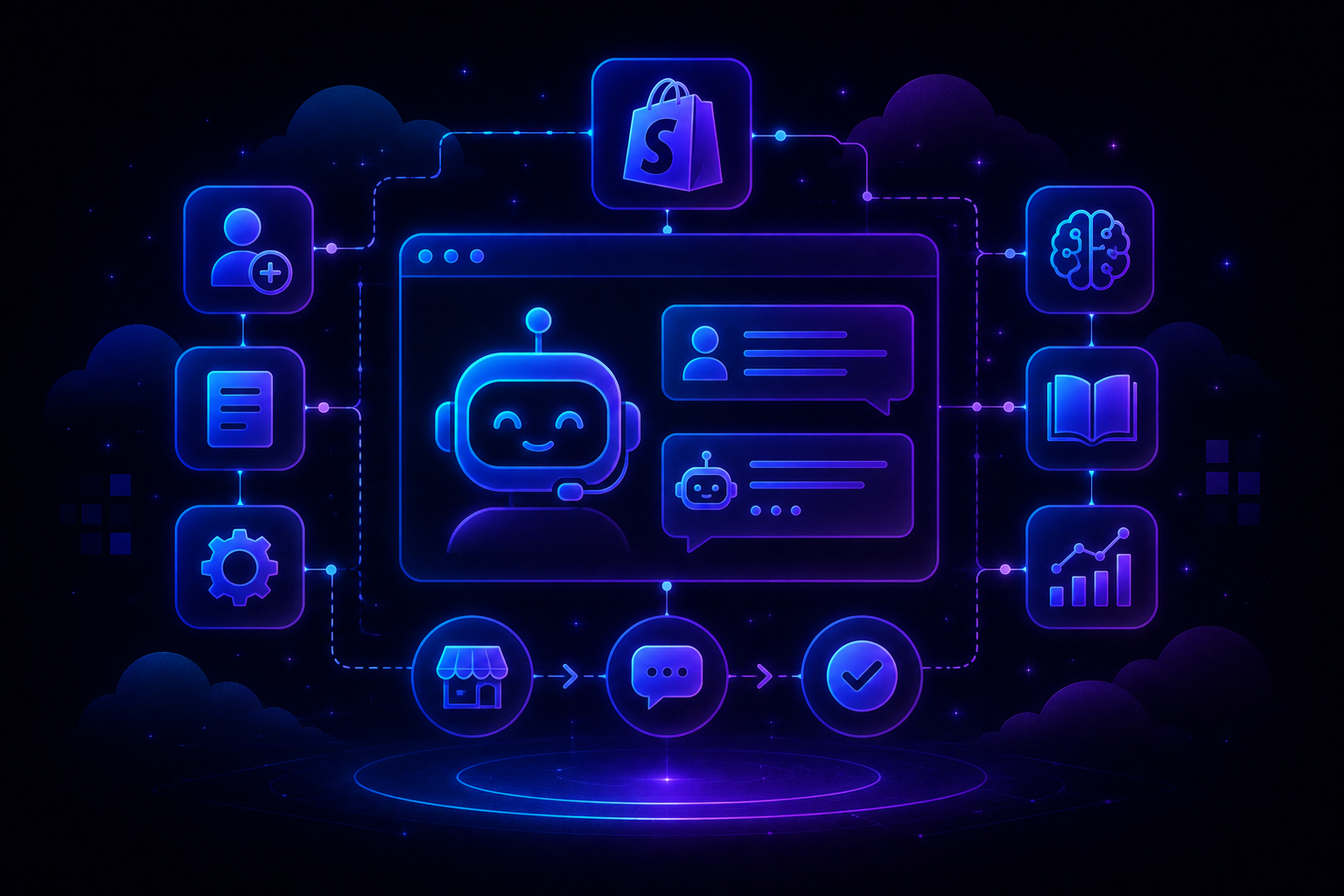
QuantumDesk is an AI-native customer service platform built for D2C brands, SaaS teams, and SMBs, reducing support costs without proportional headcount growth.
Rather than adding AI as a separate feature layer, QuantumDesk embeds intelligence directly into the support workflow from intake to resolution. Understanding the ai native customer service benefits is clearest in platforms built AI-first, where every stage of support operates from the same intelligence layer rather than isolated modules.
For teams evaluating the best customer service software for e-commerce brands, the cost reduction is most measurable when AI operates across routing, resolution, and agent assistance together rather than at a single point in the workflow.
How QuantumDesk's AI Capabilities Reduce Support Costs
- Quantum AI resolves repetitive tier-1 queries automatically across WhatsApp, chat, email, and social, including order tracking, refund status, and return eligibility, eliminating per-interaction labor cost before tickets ever reach an agent queue.
- AI-curated inbox prioritizes incoming conversations by urgency, sentiment, and intent so agents address high-priority complaints first, cutting the escalation overhead that drives cost per ticket upward.
- Quantum AI Copilot surfaces reply suggestions, conversation summaries, and full order history inside the active workflow, reducing average handle time on every human-handled ticket and compressing new agent onboarding time.
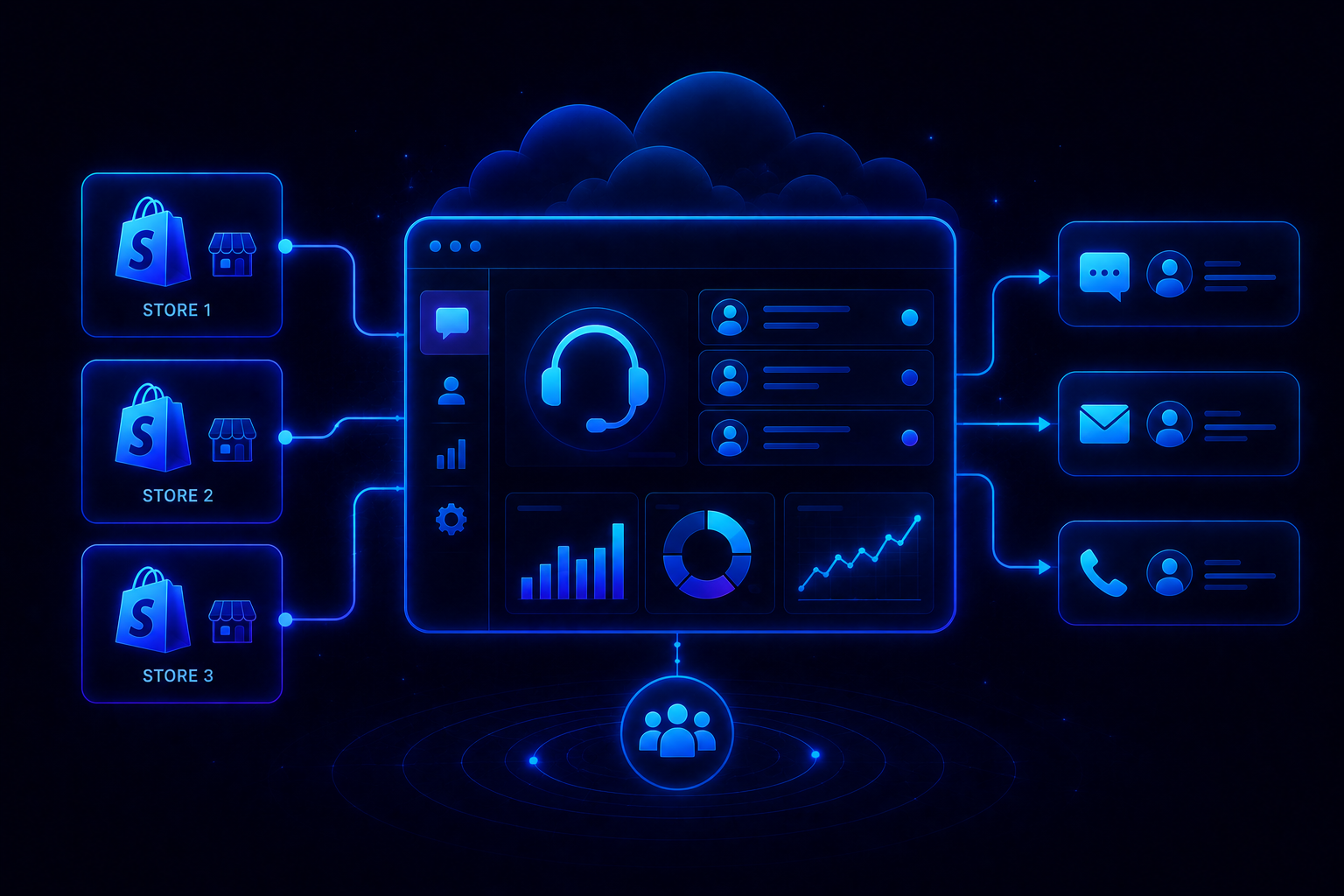
- Unified workspace consolidates email, WhatsApp, chat, and social into a single view, removing the channel-switching overhead that causes agents to process the same customer issue across multiple platforms.
- Admin analytics give support leaders visibility into AI resolution rates, escalation patterns, and cost-per-ticket trends so teams can identify exactly where automation is saving and where knowledge gaps are inflating costs.
Ready to see how it works? Book a demo to explore QuantumDesk for your team.
Frequently Asked Questions
How much can AI actually reduce customer support costs?
AI reduces support costs by 30 to 50 percent for most businesses. The biggest savings come from automating tier-1 queries at $0.50 to $0.70 per interaction versus $15 to $60 for human handling, plus hiring avoidance and faster agent resolution times.
Which support queries should businesses automate first?
Order tracking, refund status, return eligibility, and account access questions. These account for 60 to 80 percent of total ticket volume and require no human judgment, making them the fastest path to measurable, sustainable cost reduction.
What is the difference between AI containment and deflection?
Containment means the customer's issue was fully resolved by AI. Deflection means the customer avoided a human agent but may not have resolved their issue. Measuring containment gives an accurate picture of real savings; deflection metrics consistently overstate results.
Does AI customer support work for small businesses?
Yes. Small business customer service teams benefit most from AI scaling because headcount constraints are tightest. AI handles tier-1 volume without requiring new hires, making cost reduction proportionally more impactful than in larger operations.
How quickly can businesses expect ROI from AI customer support?
For well-scoped deployments with an accurate knowledge base, measurable operational improvements appear within the first few weeks. Break-even on the investment typically occurs within 60 to 90 days, depending on ticket volume, containment rate, and implementation scope.



.avif)