Summarize with AI
Key Takeaways
- AI is becoming a core part of customer service operations, not just a supplementary add-on feature
- Businesses are actively shifting from reactive ticket handling to proactive and predictive support models
- AI improves personalization, response speed, and operational efficiency across all customer interactions
- Human and AI collaboration is rapidly becoming the standard operating model for modern support teams
- AI-native platforms like QuantumDesk help teams scale support capacity and consistently improve outcomes
Customer expectations around speed, personalization, and consistent experiences continue to rise, pushing organizations to rethink how omnichannel support can be delivered at scale and with consistent quality.
For businesses selling directly to consumers (whether in apparel, cosmetics, or lifestyle categories) this pressure is immediate. Every delayed response or unresolved query has a direct line to lost revenue and reduced repeat purchases.
Traditional support systems struggle to keep up with the increasing volume and complexity of support tickets. AI is becoming essential to manage demand efficiently while maintaining consistent and high-quality customer interactions.
- Faster response expectations across all customer support channels
- Personalized interactions based on customer history and behavior
- Always-available support without dependency on business hours
- Better resolution quality with fewer back-and-forth interactions
Here we explore the key AI trends shaping customer service in 2026 and what businesses should focus on to stay competitive and efficient.
Why AI Is Becoming Core to Customer Service
Customer expectations are increasing faster than traditional support systems can handle. Manual workflows are no longer sufficient to manage rising ticket volumes, multiple communication channels, and the need for faster, more personalized responses across customer interactions.
This is particularly evident in direct-to-consumer businesses. When a customer reaches out about a wrong size delivered or a delayed shipment, how quickly and accurately that gets resolved determines whether they order again.
AI enables businesses to handle larger volumes efficiently by automating repetitive queries, assisting agents, and improving response times. It reduces workload while maintaining consistency and allows support teams to focus on complex and high-value interactions.
Understanding ai in customer service makes it clear why adoption is accelerating across industries.
- Growing number of customer queries makes it difficult for manual teams to maintain speed and consistency
- Need for faster responses across channels as customers expect immediate and accurate support interactions
- Cost of scaling support teams increases significantly without improving operational efficiency or response quality
- Demand for consistent experiences across channels requires better coordination and intelligent workflow management
AI is becoming the foundation of modern support systems, enabling businesses to scale operations, improve efficiency, and meet evolving customer expectations.
Key AI Customer Service Trends in 2026
1. AI-Powered Self-Service Becomes Standard
AI-powered self-service is becoming the default for handling common queries (L1) such as FAQs and order status. For a brand processing hundreds of daily queries around return eligibility or delivery timelines, self-service means customers get answers instantly without waiting in a queue.
This improves deflection rates, reduces dependency on agents, and enables customers to resolve issues quickly. Businesses leveraging ai chatbots for customer service are seeing measurable reductions in inbound ticket volume.
2. Hyper-Personalization in Real Time
AI uses customer data, behavior, and past interactions to deliver personalized responses in real time. A customer who previously raised a complaint about a product defect should not receive a generic reply the next time they reach out.
AI surfaces that history automatically, making every interaction feel relevant rather than transactional. This improves engagement while helping businesses create more meaningful and efficient support experiences.
3. Proactive and Predictive Support
Agentic AI is shifting support from reactive to proactive by identifying potential issues early. When a particular product SKU is generating a spike in size mismatch or quality complaints, AI can detect that pattern and trigger proactive outreach before the return requests pile up.
Businesses can resolve problems before customers reach out, reducing inbound queries and improving overall experience.
4. Human and AI Collaboration
Customer service is becoming a collaborative model where AI handles repetitive tasks while humans manage complex and sensitive issues. This redistribution of work improves efficiency while maintaining quality in decision-making and customer interactions.
5. Smarter Conversational AI
Conversational AI is becoming more natural and context-aware, enabling smoother interactions across channels. However, fully autonomous systems still require human support for complex scenarios and edge cases.
6. AI-Driven Insights and Analytics
AI helps analyze customer interactions to generate insights into behavior, trends, and performance. These insights enable better decision-making and continuous improvement in support operations. Teams using ai customer service software gain a structured advantage in identifying where support workflows can be optimized.
7. Focus on Data Privacy and Trust
As AI adoption grows, data privacy and transparency are becoming critical. Businesses must ensure secure data handling and build trust by clearly explaining how AI systems operate.
How These Trends Are Changing Customer Service Operations
Customer service is shifting from reactive ticket handling to proactive and automated workflows. AI enables faster responses and reduces the need for manual intervention across common support interactions.
By automating repetitive tasks and assisting agents, AI improves efficiency and allows teams to handle higher volumes without increasing workload.
Example: A support team that once needed five agents to manage peak season queries can now handle the same volume with AI absorbing the repetitive load, leaving agents free to handle escalations that genuinely need human judgment.
- Faster response times across channels improve customer satisfaction and reduce wait times
- Reduced workload for agents allows focus on complex and high-value customer interactions
- Better customer experience through consistent, accurate, and timely responses across channels
- Improved operational efficiency by automating repetitive workflows and optimizing support processes
Businesses are restructuring support teams around AI capabilities, focusing on collaboration between automation and human expertise to create scalable and efficient customer service operations.
Challenges Businesses Face When Adopting AI in Customer Service
While AI offers significant benefits, adopting it comes with challenges. Without proper implementation, businesses may struggle to achieve desired outcomes and fail to fully leverage its capabilities.
1. Lack of Proper Data
AI performance depends heavily on data quality. Poor or outdated knowledge bases lead to inaccurate responses and reduced effectiveness in handling customer queries. Maintaining ai customer support accuracy requires consistent investment in structured, up-to-date information.
2. Over-Reliance on Automation
Excessive automation can frustrate customers, especially when AI fails to handle complex or sensitive situations effectively.
3. Integration Issues
Integrating AI with existing systems can be difficult, particularly when tools are disconnected or not designed for automation.
4. Training and Adoption Gaps
Support teams often struggle to adopt AI tools effectively, limiting their ability to use automation and assistance features.
5. Trust and Transparency Concerns
Customers may question how AI decisions are made, making transparency and trust important for successful adoption.
What Businesses Should Focus on Customer Service in 2026
Businesses should focus on using AI strategically rather than chasing trends. The goal should be to improve conversation quality, address real customer problems, and enhance overall customer experience through well-structured systems and workflows.
- Use AI to solve real problems instead of implementing it without clear objectives or measurable outcomes
- Focus on customer experience by improving response quality, speed, and relevance across interactions
- Balance AI and human support to maintain efficiency while handling complex scenarios effectively
- Invest in data quality and structured knowledge bases to improve AI accuracy and performance
- Continuously improve systems by analyzing performance and optimizing workflows based on insights
Success depends on how well AI is implemented within workflows, not just adoption. Well-structured systems and clear processes determine the effectiveness of AI-driven customer support.
How QuantumDesk Simplifies Customer Service with AI Trends
Traditional tools add AI as a feature, limiting its effectiveness. QuantumDesk is built with AI at its core, enabling integration across workflows and improving support efficiency at every stage.
AI-native automation resolves repetitive queries instantly while supporting conversations across channels. The AI-curated inbox prioritizes tickets by intent, urgency, and sentiment, helping teams reduce response times and manage growing support volumes efficiently. These capabilities directly address the trends reshaping ai in customer service in 2026.
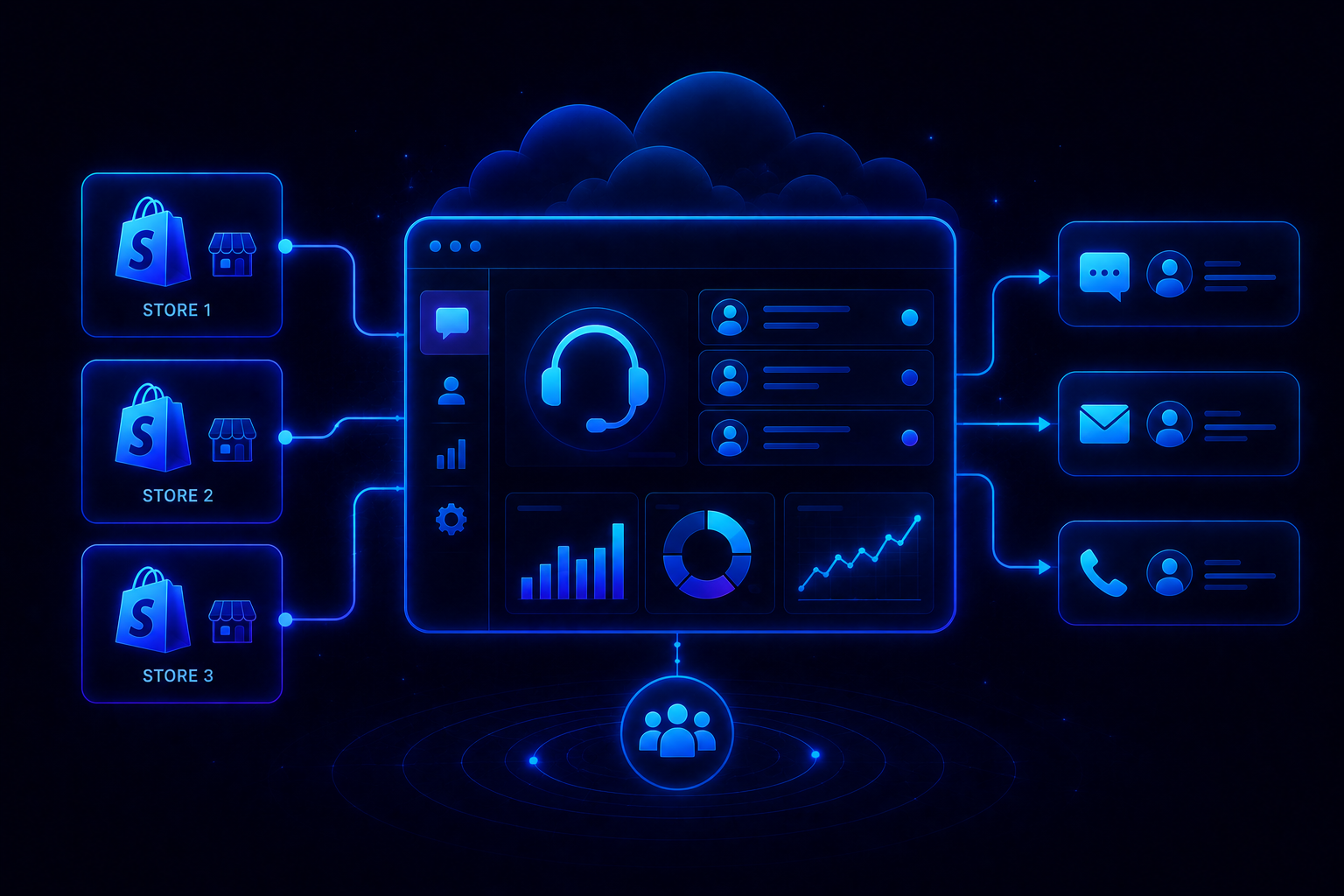
Quantum AI assists agents with context-aware replies, summaries, and next-best actions, improving consistency and speed. The unified workspace centralizes conversations, while analytics deliver insights into performance, enabling continuous optimization of support workflows.
- Unified platform that centralizes all customer conversations across support channels
- AI-driven automation and prioritization to improve efficiency and response speed
- Faster response and resolution through intelligent workflows and automation
- Better visibility into support operations with insights and performance tracking
This approach allows businesses to handle more conversations, improve efficiency, and deliver consistent customer experiences without increasing team size or operational complexity.
Discover how QuantumDesk helps you stay ahead of AI customer service trends. Improve response speed, automate repetitive tasks, and scale support efficiently. Book a demo or learn more to see how AI-native support transforms your operations.
Frequently Asked Questions
What are AI customer service trends?
AI customer service trends include automation, personalization, proactive support, and improved efficiency in handling customer interactions.
How is AI changing customer service?
AI automates repetitive tasks, improves response times, and enhances customer experience through better support interactions.
What are the benefits of AI in customer support?
Benefits include faster responses, reduced workload, improved efficiency, and the ability to handle higher volumes of customer queries.
What challenges come with AI adoption?
Challenges include data quality issues, integration complexity, over-automation, and difficulty in training teams effectively.
Why are AI-native platforms important?
AI-native platforms integrate AI into workflows, enabling better efficiency, scalability, and consistent customer experiences across all support operations.




.avif)