
Summarize with AI
Key Takeaways
- QuantumDesk leads AI-native e-commerce support for SMBs, resolving order queries automatically with resolution-based pricing and native Shopify integration.
- Gorgias remains the top pick for Shopify and DTC brands, pulling order context natively into tickets and processing refunds directly from the dashboard.
- Zendesk is the strongest choice for enterprise-scale e-commerce, with deep analytics and multi-brand management across global teams.
- eDesk leads for multi-marketplace sellers, consolidating Amazon, eBay, and Walmart messages with built-in auto-translation for cross-border shoppers.
- Fini AI stands out for autonomous action-taking support, executing refunds and order edits directly instead of just drafting replies for agents.
- Richpanel works well for teams wanting a self-service-first portal, backed by a resolution guarantee on common cancellations and subscription edits.
Choosing the right customer service software for e-commerce in 2026 directly affects how fast you resolve order issues, how much volume your team handles during peak sales, and whether shoppers come back.
A customer ordered a resistance band bundle for home workouts. It snapped on first use. They messaged on Instagram and got a generic apology back. Most e-commerce platforms never flag that complaint as urgent until a public review lands.
I tested 10 customer service tools for e-commerce across real store workflows: Shopify DTC brands, multi-marketplace sellers, and growing SMB stores. This roundup breaks down what each tool actually does, where it fits, and where it falls short, so you can shortlist faster.
If you want the broader category beyond e-commerce-specific tools, our best customer service software comparison covers that ground too.
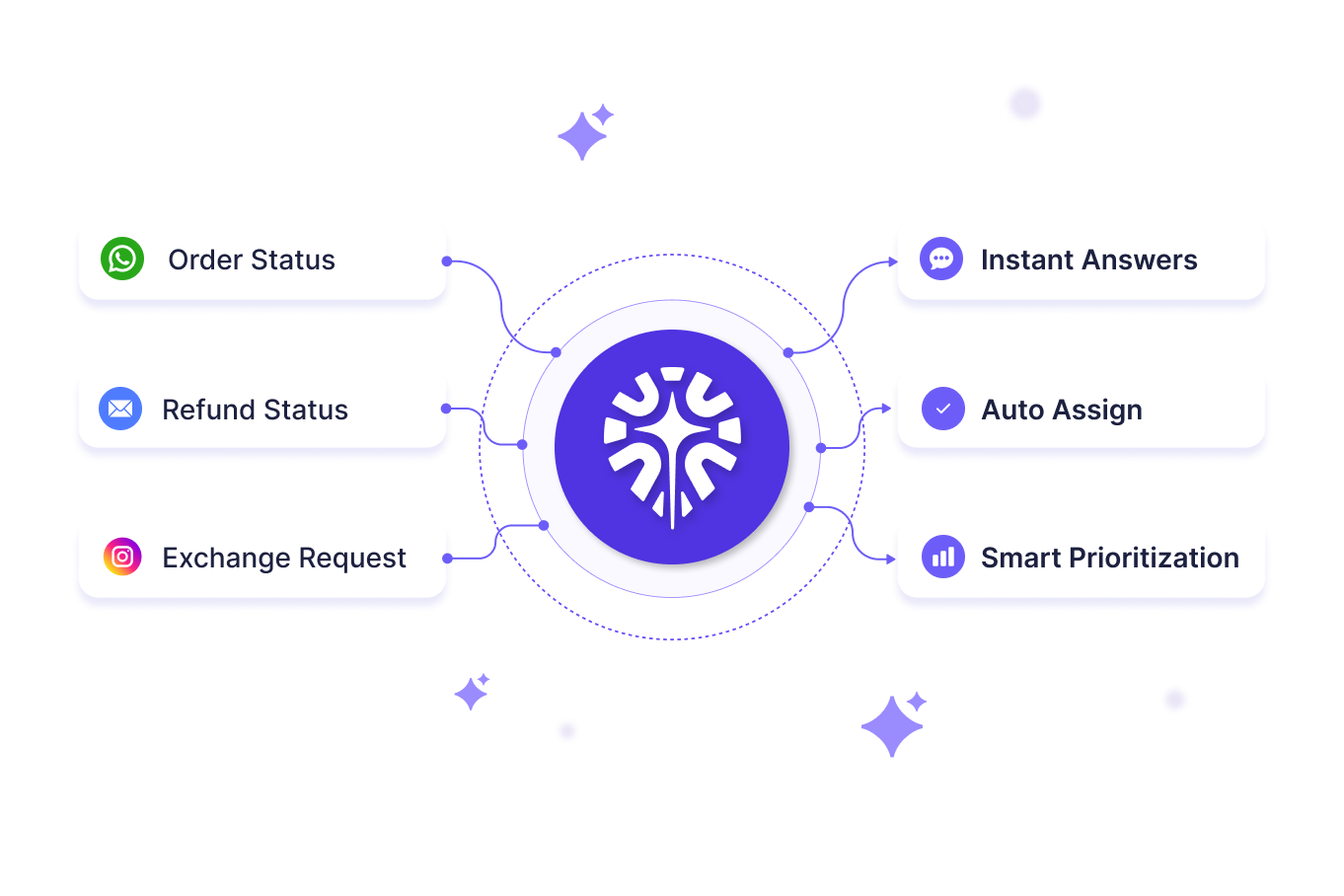
A Quick Comparison of the Top Customer Service Software for E-commerce in 2026
How I Chose These 10 Customer Service Tools for E-commerce
I chose these 10 customer service tools for e-commerce by testing each in real store workflows, talking to active brand operators, and benchmarking what teams actually rely on through peak sales periods like BFCM.
- I ran checks across G2, Capterra, and listing sites to verify real user ratings, review patterns, and store size fit.
- Direct conversations with e-commerce brand operators running active customer service today shaped how I weighed each platform.
- I benchmarked pricing models, AI capabilities, and channel coverage against what each vendor actually delivers, beyond the claims on their feature pages.
- I have read through Reddit and e-commerce community discussions on what holds up during Black Friday, BFCM, and flash sales.
- Hands-on product exploration filled several days, working through dashboards, AI features, automations, and ticketing flows on real stores.
- Pricing and scalability got weighed for teams handling 500 to 50,000 monthly orders, from SMB through enterprise e-commerce.
In-Depth Review of the Best 10 AI-Native Customer Service Software for E-commerce in 2026
1. QuantumDesk – Best AI-Native Customer Service Platform for SMB E-commerce
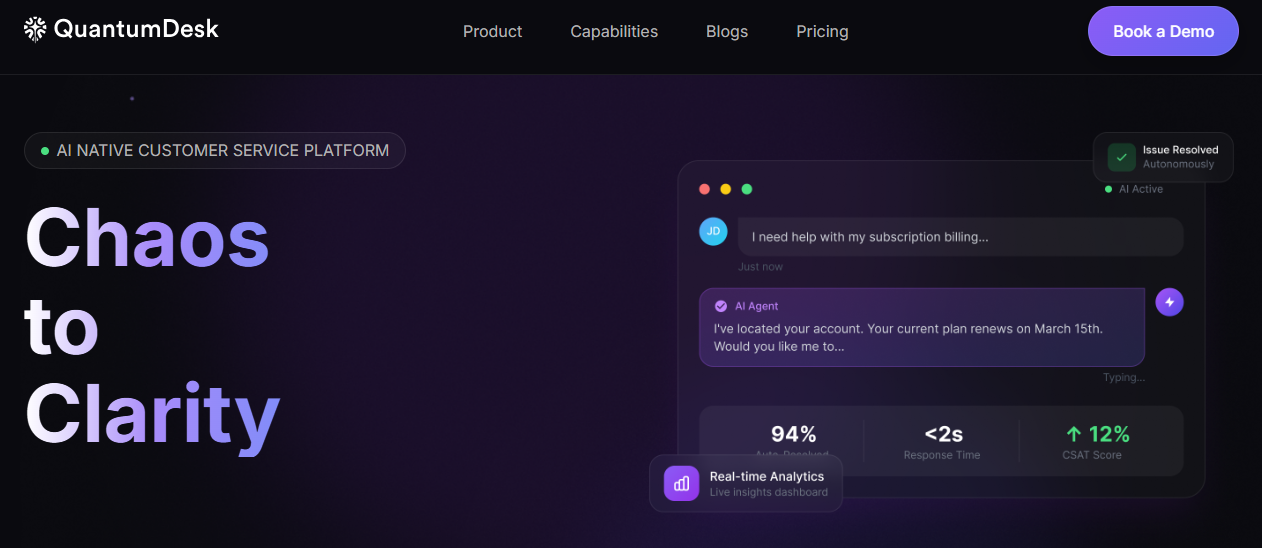
QuantumDesk is an AI-native customer service platform built for SMB e-commerce brands that automate L1 queries, unify channels, and grow support capacity without hiring more agents during peak sales.
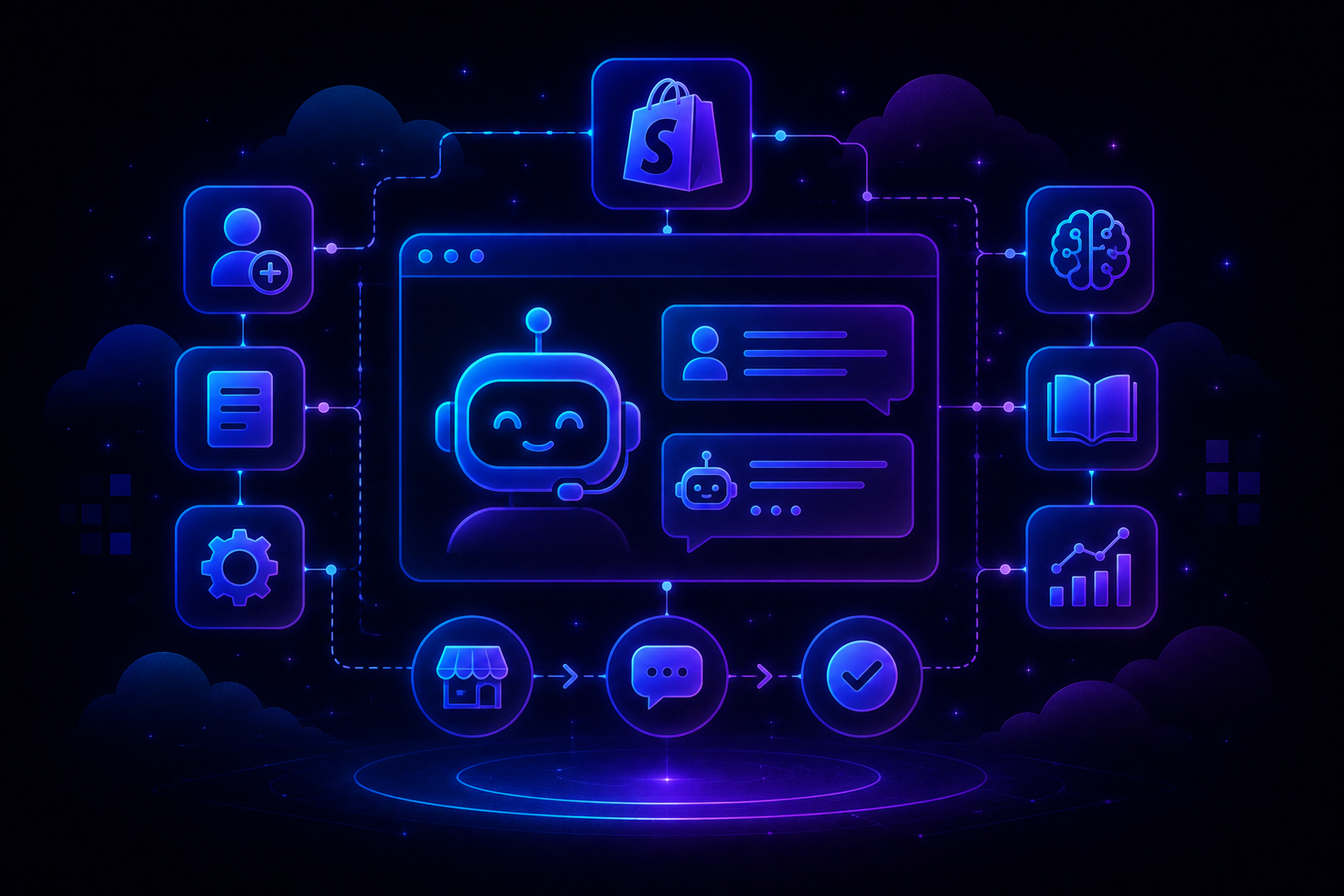
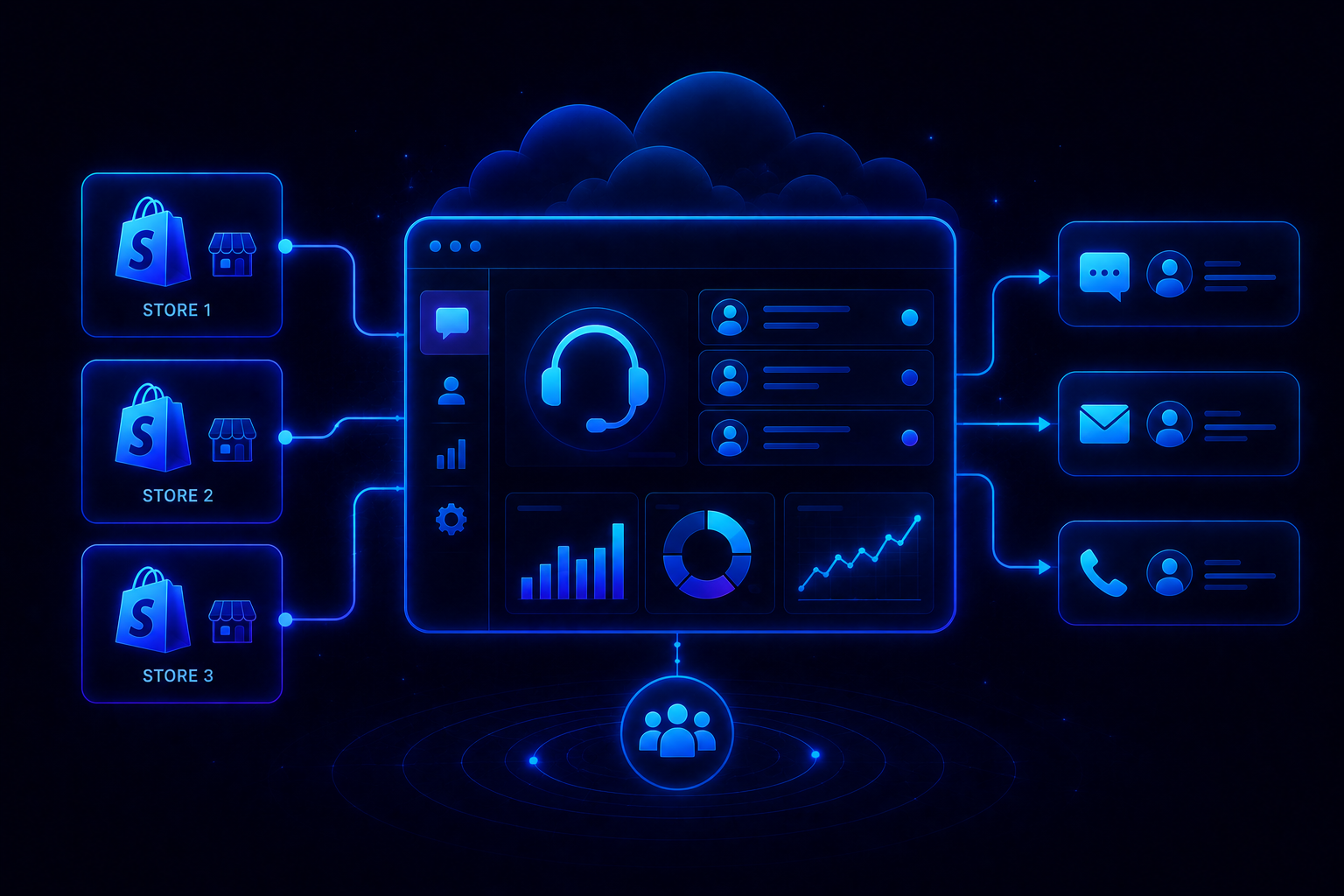
It centralizes WhatsApp, email, Instagram, and chat in one workspace, where Quantum AI resolves repetitive order tickets and routes the rest with full context preserved. Unlike Gorgias, which ties deeper automation to ticket-volume pricing, QuantumDesk builds AI into every workflow at no extra upfront cost.
Native Shopify integration pulls order status, order history, and customer profiles directly into the conversation the moment a Shopify customer reaches out, so agents skip the manual lookup entirely. Take a cosmetics brand handling 1,200 monthly tickets, most clustering around ingredient questions and sensitive skin reactions.
Quantum AI handles ingredient questions automatically, the AI-curated inbox flags reactions by sentiment for senior review, and Copilot surfaces past purchases so replies feel personal.
Key Features
- Quantum AI resolves repetitive e-commerce queries like order status, refund requests, and product questions without entering an agent's queue at all.
- Native Shopify integration surfaces order status, order history, and customer profiles directly into the conversation, live now for any Shopify-connected store.
- AI-curated inbox prioritizes incoming tickets by sentiment, urgency, and intent so agents handle the highest-impact issues first.
- Quantum AI Copilot drafts replies, summarizes long threads, and surfaces next best actions for agents inside every conversation.
- Resolution-based pricing means teams pay only for AI-resolved tickets instead of paying upfront for an AI add-on module.
Pros
- AI is built into every workflow from day one, not sold as a separate paid add-on that requires additional budget approval.
- Resolution-based pricing keeps costs aligned with actual value delivered, especially during peak sales when ticket volume spikes.
- Designed for SMB e-commerce scale, not a stripped-down version of an enterprise platform sold to smaller brands.
Cons
- Still in BETA, so feature depth and integrations are expanding fast but haven't caught up to decade-old category leaders yet.
- Integration library beyond Shopify and core channels is still growing, which can matter for brands running heavy ERP or OMS stacks.
Best Use Case
SMB e-commerce brands handling 500 to 5,000 monthly orders across WhatsApp, Instagram, email, and live chat without enterprise complexity.
When to Choose QuantumDesk
Choose QuantumDesk when AI-driven L1 resolution, multi-channel inbox unification, native Shopify integration, and resolution-based pricing matter more than enterprise feature depth.
Pricing
QuantumDesk follows a resolution-based pricing model where teams pay for AI-resolved tickets rather than paying upfront for an AI add-on or per-seat AI license. See the QuantumDesk pricing page for current plans, or contact the team directly for a tailored demo walkthrough.
Ready to Handle Peak Sales Without Adding Headcount? Book a demo with the QuantumDesk team and see how Quantum AI, resolution-based pricing, and native Shopify integration work together on your actual order volume → Book a Demo
2. Gorgias – Best for Shopify and DTC Stores
Gorgias is a customer service platform built for Shopify and DTC stores, offering deep e-commerce integrations, order context inside tickets, and automation workflows tuned for online retail.
It supports email, chat, social, SMS, and voice in one workspace, with native order management actions like refunds and edits inside tickets, so Shopify-first DTC brands get e-commerce-native workflows rather than general-purpose help desk capabilities.
Key Features
- Native Shopify integration with order details, customer history, and refund actions surfaced inside every customer ticket.
- Multi-channel ticketing across email, chat, SMS, Instagram DM, and Facebook Messenger for DTC store support.
- Auto-replies and macro automations for common e-commerce queries like order status, returns, and shipping delays at scale.
Pros
- Deepest Shopify integration in the category, with order context surfaced directly inside every ticket.
- Built for e-commerce workflows rather than retrofitted from general help desk or enterprise IT patterns.
- Strong automation library tuned for common DTC scenarios like refunds, exchanges, and shipping delays.
Cons
- Pricing scales aggressively with ticket volume, which can hurt SMB DTC brands during peak sales months.
- Less suited for non-Shopify platforms, IT support, or non-retail customer service use cases overall.
- AI capabilities are growing but still trail purpose-built AI-native platforms in autonomous resolution depth.
Best Use Case
Shopify and DTC brands handling 1,000 to 20,000 monthly tickets that need e-commerce-native workflows and order context inside support.
When to Choose Gorgias
Choose Gorgias when your store runs on Shopify, e-commerce-native order workflows are non-negotiable, and autonomous AI resolution is not your top priority yet.
Pricing
Gorgias's pricing starts around $10 per month for very small stores, with paid tiers scaling by ticket volume up to roughly $360 monthly for high-volume DTC brands.
3. Zendesk – Best for Large E-commerce Brands

Zendesk is one of the most established customer service platforms, used by large e-commerce brands running support across email, chat, voice, and social at high ticket volumes during peak sales.
It centralizes e-commerce conversations into a single ticketing system with deep automations and a marketplace of integrations covering Shopify, Magento, and major platforms, which large brands pick for omnichannel breadth and enterprise-grade scale rather than AI-first design.
Key Features
- Omnichannel ticketing across email, chat, voice, SMS, and social in one unified agent workspace.
- Macros, triggers, and automations let e-commerce teams build complex routing and SLA workflows at scale.
- Marketplace integrations with Shopify, Magento, BigCommerce, and Klaviyo support connected store workflows daily.
Pros
- Mature platform with proven scale, used by large e-commerce brands handling millions of tickets per year.
- Massive integration marketplace makes it easy to connect Zendesk to Shopify, Magento, and OMS systems.
- Strong omnichannel coverage with a consistent agent experience across email, chat, voice, and social DM.
Cons
- Pricing scales aggressively with seat counts and AI add-ons, which can hurt SMB e-commerce budgets quickly.
- AI capabilities sit on top of legacy ticketing rather than embedded into the core platform.
- Implementation and admin setup can feel heavy for small e-commerce brands wanting fast time-to-value.
Best Use Case
Large and enterprise e-commerce brands with high ticket volume, complex routing, and deep omnichannel needs across multiple regions.
When to Choose Zendesk
Choose Zendesk when omnichannel breadth, mature e-commerce integrations, and enterprise-grade scale matter more than AI-native design or fast lightweight setup.
Pricing
Zendesk's pricing starts around $19 per agent per month for basic support, with advanced tiers and AI add-ons increasing total cost as ticket volume grows.
4. eDesk – Best for Multi-Marketplace Sellers
eDesk is a customer support platform built for sellers running multiple marketplaces at once, pulling messages straight from Amazon, eBay, and Walmart into a single centralized workspace.
Its AI Agent auto-matches inquiries with order numbers across storefront architectures and includes built-in auto-translation, which makes it a strong fit for sellers serving cross-border shoppers across regions and languages.
Key Features
- Direct marketplace integrations pull customer messages straight from Amazon, eBay, Walmart, and TikTok Shop.
- Auto-matches incoming inquiries with order numbers across varying storefront and marketplace architectures.
- Built-in auto-translation helps sellers serve cross-border international shoppers without hiring multilingual agents.
Pros
- Marketplace consolidation is the deepest in the category, covering Amazon, eBay, and Walmart in one inbox.
- AI Agent is included on every plan, billed per automated resolution rather than as a flat add-on fee.
- Auto-translation removes language barriers for sellers scaling into new international markets.
Cons
- Per-agent pricing climbs quickly once teams move past the entry-level Essential plan.
- Less suited to Shopify-only DTC brands that don't sell across multiple marketplaces.
- Automated resolutions carry a per-resolution fee on top of the base per-agent subscription.
Best Use Case
Multi-marketplace sellers running Amazon, eBay, and Walmart storefronts who need one workspace and cross-border translation.
When to Choose eDesk
Choose eDesk when your orders come from multiple marketplaces rather than a single Shopify store, and cross-border translation matters.
Pricing
eDesk's pricing starts at $39 per agent per month for the Essential plan, with AI Agent resolutions billed separately at €0.99 each.
5. Fini AI – Best for Autonomous Action-Taking Support
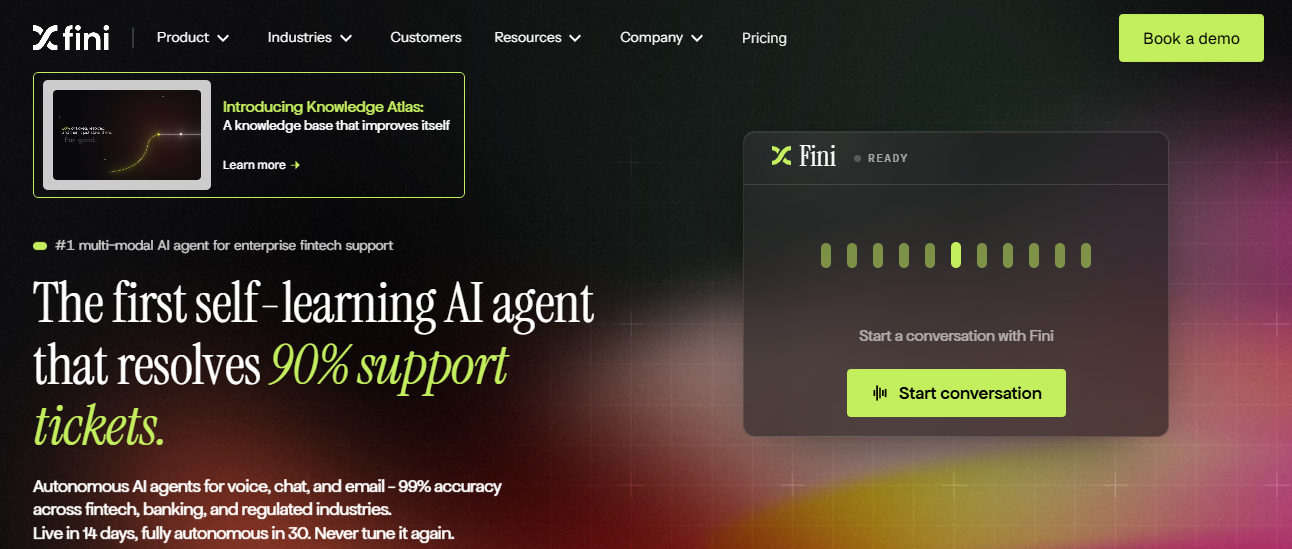
Fini AI is an AI-native resolution agent built to take action instead of only drafting replies, reading live store data to execute returns, tracking lookups, and order adjustments directly.
It uses a reasoning-first architecture designed to eliminate AI hallucinations, and it ships with an enterprise compliance stack including PCI-DSS Level 1, which matters for brands handling sensitive payment data at scale.
Key Features
- Reasoning-first architecture maintains a 98% accuracy rate, reducing the AI hallucinations common in scripted bot flows.
- Reads live store data to execute actions, including returns, tracking lookups, and order adjustments directly.
- Enterprise compliance stack includes PCI-DSS Level 1 for handling sensitive payment data securely.
Pros
- Genuinely autonomous resolution, executing actions instead of just suggesting replies for agents to approve.
- High accuracy reduces escalations caused by AI hallucinations or incorrect order information.
- Compliance depth suits brands handling higher transaction volumes and stricter payment data requirements.
Cons
- Narrower focus on autonomous resolution means less breadth in ticketing, reporting, or team collaboration tools.
- Best suited to brands with clean, structured store data, since reasoning quality depends on data access.
- Newer entrant with a shorter track record than decade-old e-commerce help desk platforms.
Best Use Case
E-commerce brands that want AI actually executing refunds and order adjustments instead of only drafting replies for agents to send.
When to Choose Fini AI
Choose Fini AI when autonomous, accurate action-taking matters more than broad ticketing features or team collaboration depth.
Pricing
Fini AI's pricing is quoted directly by their sales team based on order volume, automation scope, and compliance requirements.
6. Freshdesk – Best Budget-Friendly Entry Point
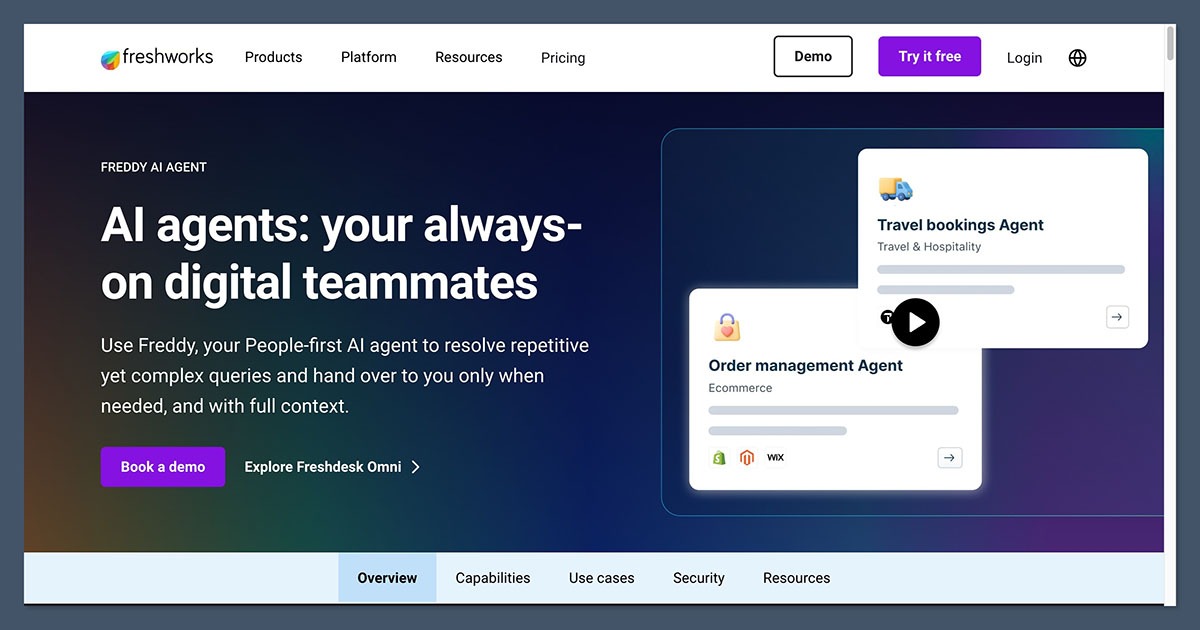
Freshdesk is a mid-market customer service platform that fits SMB e-commerce teams scaling beyond a shared inbox, offering multi-channel ticketing and a friendlier learning curve than enterprise platforms.
It supports email, chat, phone, and social in one workspace with team collaboration, SLA management, and a Freddy AI add-on layer, which SMB teams pick for its balance of features, setup ease, and price.
Key Features
- Multi-channel ticketing across email, chat, phone, and social with shared team inbox and collision detection.
- Built-in automations for routing and SLA tracking reduce manual triaging across the support team.
- Freddy AI offers reply suggestions and ticket categorization, available as an add-on intelligence layer.
Pros
- Easier to deploy than Zendesk, with a friendlier interface for SMB e-commerce teams scaling support.
- Solid balance of features and pricing for SMB stores that need more than a basic shared inbox.
- Strong automation library handles SLA tracking and routing without heavy admin lift.
Cons
- AI features sit behind a separate Freddy add-on, increasing cost for teams wanting AI built in.
- Reporting depth lags behind Zendesk for advanced custom analytics needs.
- Less e-commerce-specific than Gorgias or QuantumDesk for native Shopify and DTC ticket workflows. Read the Freshdesk reviews breakdown for more on real user experiences.
Best Use Case
Growing SMB e-commerce teams of 10 to 100 agents that need multi-channel ticketing without the complexity of Zendesk.
When to Choose Freshdesk
Choose Freshdesk when your team has outgrown a shared inbox, needs multi-channel coverage, and wants reasonable per-agent pricing.
Pricing
Freshdesk's pricing offers a free tier for small teams, with paid plans starting around $15 per agent per month and Freddy AI billed as an additional layer.
7. Yuma AI – Best for E-commerce Ticket Automation
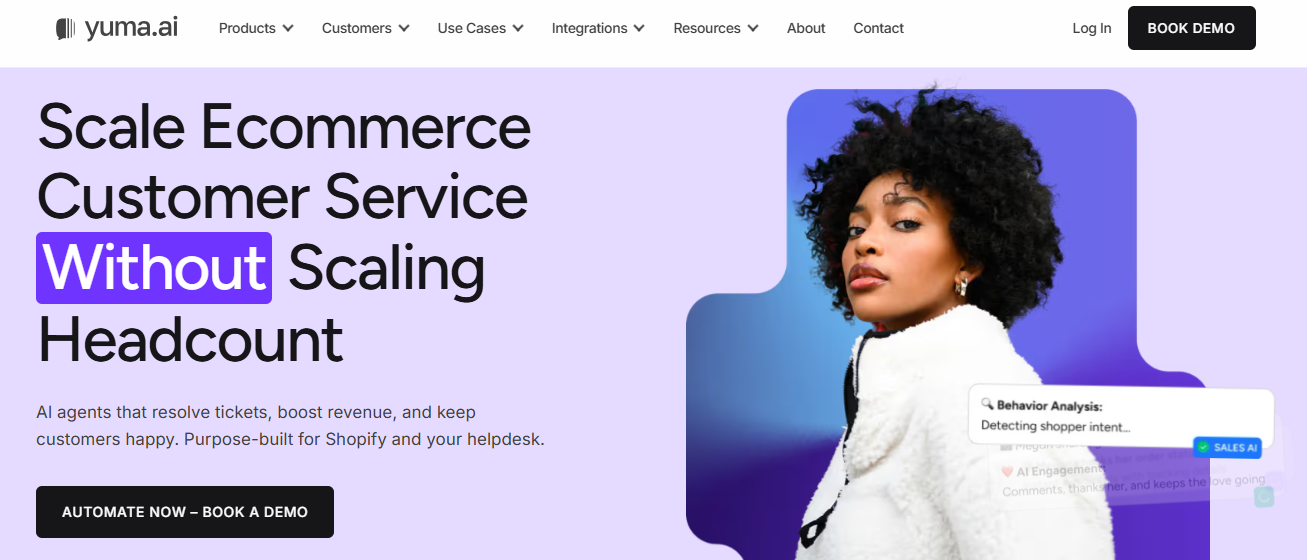
Yuma AI is a ticket automation platform built for e-commerce, layering AI agents on top of existing help desks like Gorgias, Zendesk, and Freshdesk to resolve repetitive queries automatically.
It connects to Shopify and Magento, pulls order context, and uses AI to draft, route, or fully automate ticket replies based on policy, so brands get automation without migrating off their existing help desk.
Key Features
- AI agents trained on e-commerce data resolve repetitive tickets like order tracking, returns, and product questions automatically.
- Native integrations with Gorgias, Zendesk, and Freshdesk layer AI on top of existing setups.
- Policy-based automation lets brands define when AI fully resolves versus when it drafts for human review.
Pros
- Layers AI on existing help desks without forcing brands to migrate or rebuild ticket workflows.
- Strong e-commerce-specific training with prebuilt automation flows for common DTC queries and policy responses.
- Pricing tied to AI resolutions rather than seat counts, aligning cost with actual value delivered.
Cons
- Adds another tool to maintain on top of an existing help desk, increasing integration overhead.
- Not a full customer service platform, so brands still need their underlying help desk for ticketing.
- Only as good as the underlying help desk, inheriting the limitations of Gorgias, Zendesk, or Freshdesk.
Best Use Case
Mid-market e-commerce brands already on Gorgias, Zendesk, or Freshdesk that want AI automation without replacing their help desk.
When to Choose Yuma AI
Choose Yuma when you already use Gorgias or Zendesk, want AI automation layered on top, and migrating isn't feasible yet.
Pricing
Yuma AI pricing is based on AI resolution volume, with tiered plans starting around $500 monthly and custom enterprise pricing available.
8. YourGPT – Best for Storefront AI Conversations
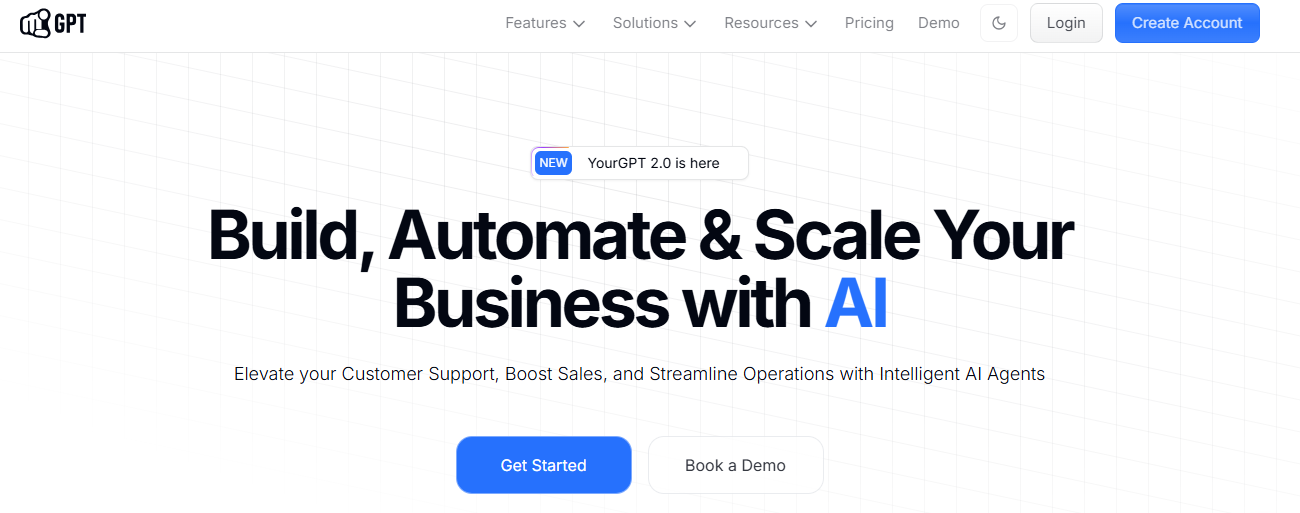
YourGPT is a custom AI chatbot platform that lets e-commerce brands train conversational agents on product catalogs, store policies, and content, deploying them across storefronts.
It supports custom training on PDFs, websites, and product feeds, with embeddable chat widgets across major e-commerce platforms, which brands pick when they want a custom-trained storefront chatbot rather than a full multi-channel platform.
Key Features
- Train custom AI chatbots on product catalogs, policies, and FAQs in a few clicks.
- Embed conversational AI directly on Shopify, WooCommerce, or BigCommerce storefront and product pages.
- AI agent handles product recommendations and order status queries before tickets reach human teams.
Pros
- Strong customization with brand-specific training data and tone matching for product-led conversations.
- Storefront-first design captures customer intent before tickets even enter the help desk queue.
- Quick deployment for brands wanting an AI conversation layer without rebuilding their stack.
Cons
- Not a full ticketing platform, so brands still need a help desk for human escalation.
- Free tier is limited, with most production-ready features sitting behind paid plans.
- AI accuracy depends heavily on training data quality, with thin product feeds hurting performance.
Best Use Case
E-commerce brands that want a custom-trained AI chatbot on product pages and storefronts before tickets hit the desk.
When to Choose YourGPT
Choose YourGPT when you need a chatbot trained on your product catalog to deflect queries before they hit the help desk.
Pricing
YourGPT pricing starts around $39 per month for small e-commerce stores, with paid tiers scaling by message credits and training sources.
9. LiveChat – Best for Conversion-Focused Chat
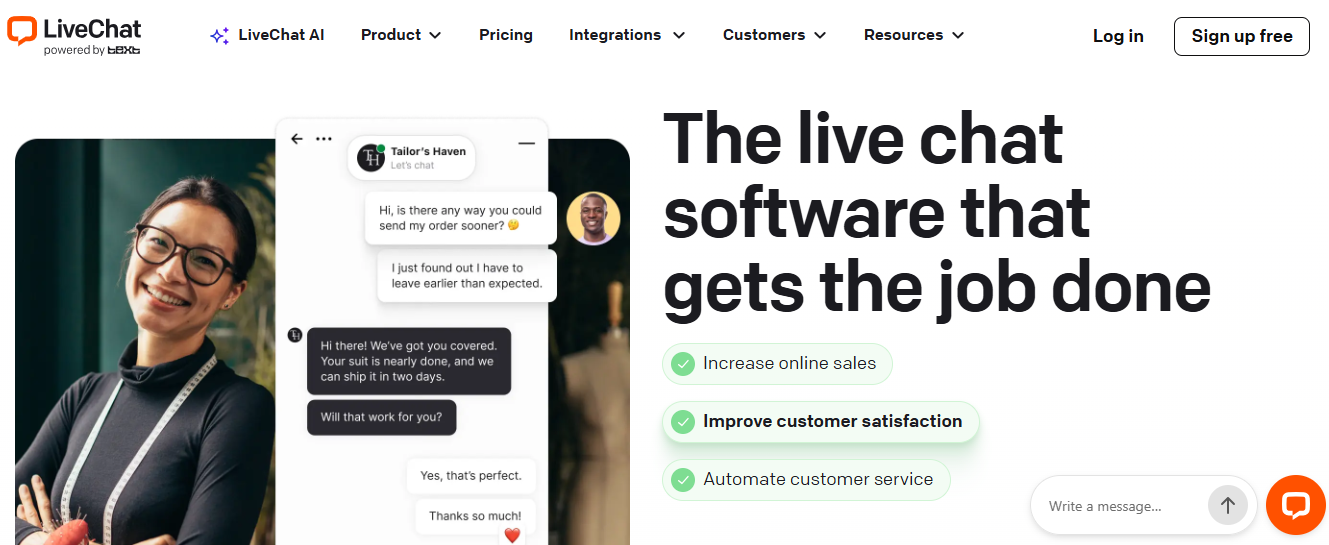
LiveChat is a chat-led platform built for e-commerce brands focused on conversion, offering proactive triggers and sales-driven workflows to turn site visitors into buyers.
It offers a chat widget, AI chatbot, and ticketing for handoffs, with integrations across Shopify, BigCommerce, and major analytics tools, which brands pick when conversion lift matters more than autonomous AI resolution.
Key Features
- Chat widget with proactive triggers based on cart value, page views, and exit intent.
- AI chatbot deflects FAQs and handles basic queries before handing conversations to human agents.
- Integrations with Shopify, BigCommerce, and Google Analytics support connected e-commerce workflows.
Pros
- Strong conversion-driven feature set with proactive chat that ties directly to store revenue lift.
- Mature platform with reliable performance during peak sale traffic and high-volume chat sessions.
- Easy to install on Shopify and other major e-commerce platforms within a single afternoon.
Cons
- AI capabilities trail purpose-built AI-native platforms in autonomous resolution depth.
- Less suited for D2C brands focused on WhatsApp, Instagram DMs, or social-first support.
- Pricing scales by agent seat, which can hurt smaller stores wanting a cheap entry point.
Best Use Case
E-commerce brands focused on conversion lift through proactive chat rather than autonomous AI resolution.
When to Choose LiveChat
Choose LiveChat when chat is your primary channel, conversion lift matters more than autonomous AI, and you prefer proven chat tooling.
Pricing
LiveChat's pricing starts around $19 per agent per month on the Starter plan, with higher tiers adding advanced reporting and AI features.
10. Tidio – Best for AI Storefront Live Chat
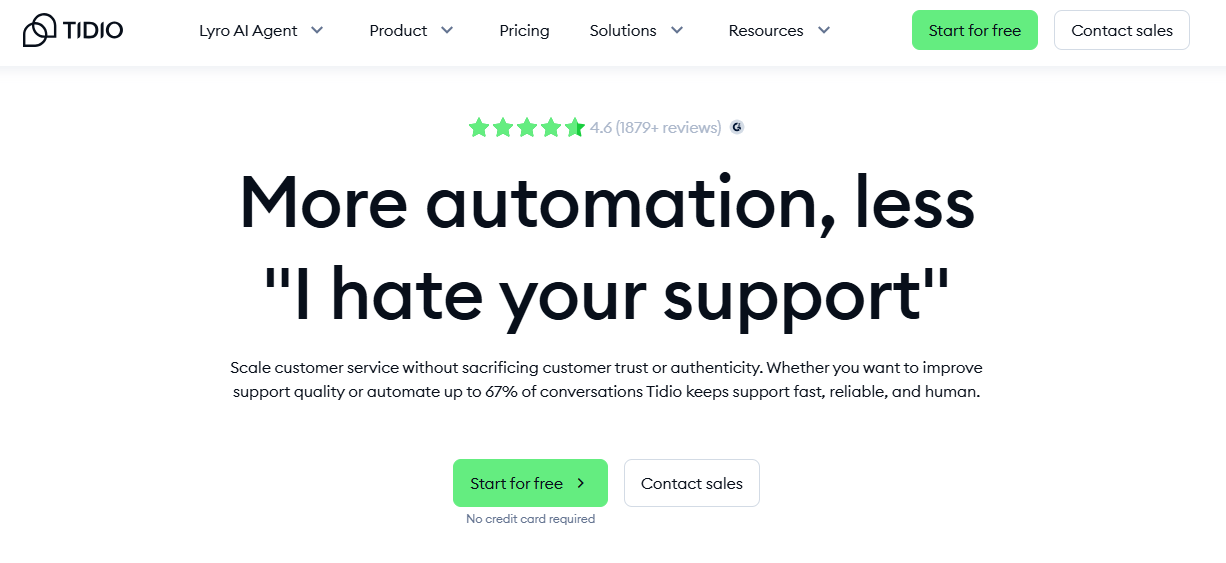
Tidio is a live chat and chatbot platform built for small e-commerce stores, offering Lyro AI for handling repetitive customer queries directly on storefronts.
It supports a chat widget, Lyro AI agent, and email inbox in one workspace, with prebuilt bot flows for cart abandonment, which small stores pick for chat-first AI deflection rather than unified multi-channel support at scale.
Key Features
- Live chat widget embeds easily on Shopify, WooCommerce, and BigCommerce site builders.
- Lyro AI agent handles repetitive product, order, and shipping queries directly on the storefront chat widget.
- Visual chatbot builder with prebuilt flows for cart abandonment and FAQ deflection scenarios.
Pros
- Easy installation on popular e-commerce platforms, often live within minutes for small stores.
- Lyro AI delivers automated chat resolution at relatively affordable pricing tiers for small brands.
- Clean modern interface that feels purpose-built for chat-led e-commerce support.
Cons
- Free plan caps conversations and AI replies, breaking down quickly once chat volume grows.
- Limited multi-channel coverage compared to QuantumDesk or Gorgias for WhatsApp or Instagram.
- Reporting and integrations are lighter than mid-market platforms for advanced analytics needs.
Best Use Case
Small e-commerce stores handling under 1,000 monthly chats that want Lyro AI deflection on storefronts at affordable pricing.
When to Choose Tidio
Choose Tidio when chat is your primary channel, your store is small or growing, and you want AI deflection without enterprise pricing.
Pricing
Tidio's pricing offers a free plan with 50 lifetime conversations included, with paid plans starting around $24 per month.
How to Choose the Best Customer Service Software for E-commerce?
A tool built for enterprise SaaS will sink a Shopify DTC brand running flash sales on Instagram and WhatsApp.
A platform built for IT service operations will frustrate an e-commerce team handling 5,000 monthly orders across email, chat, and social. Filter your shortlist with these six factors before signing a contract or running a proof of concept.
1. AI-Native vs AI Add-On
What it is: Some e-commerce platforms ship with AI built into every workflow, while others sell AI as a paid add-on capped by per-resolution fees and seat licenses.
Why it matters: An add-on layer usually means a second budget approval and AI that only touches part of the workflow instead of the full order-to-resolution journey. Our best help desk software comparison breaks down this same distinction across ticketing-first platforms.
2. E-commerce Platform Integration
What it is: A Shopify DTC brand needs deep order context inside tickets, while a Magento, BigCommerce, or marketplace seller needs different integration patterns and data sync requirements.
Why it matters: A tool that can't pull live order, refund, and shipping data into the conversation forces agents back into manual lookups, which slows down exactly the queries that matter most.
3. Channel Coverage for E-commerce Customers
What it is: A D2C apparel brand needs WhatsApp, Instagram, and email in one inbox, while a marketplace seller needs Amazon, eBay, and Walmart consolidated instead. Our guide to multi-channel customer service with AI covers how to unify these channels without losing context.
Why it matters: Matching channel coverage to where your customers actually message you matters more than feature count on a comparison sheet.
4. Peak Sale Scaling
What it is: A tool that handles 100 daily tickets must also hold up during Black Friday when volume can spike 4x to 10x overnight.
Why it matters: A platform that buckles during your highest-revenue week costs more in lost sales and damaged trust than the subscription itself.
5. Reporting Tied to Revenue
What it is: E-commerce support leaders need real visibility into ticket types, resolution rates, refund volume, and revenue impact, beyond basic CSAT and response time dashboards.
Why it matters: Support data that connects to revenue helps justify headcount and tooling decisions with numbers finance actually cares about.
6. Scalability Beyond Peak Sales
What it is: Scalability also covers steady month-over-month order growth, beyond seasonal spikes, including how pricing and automation hold up as your store scales from hundreds to tens of thousands of monthly orders.
Why it matters: A tool priced and automated for your current order volume can become unaffordable or under-automated within a year if it wasn't built to grow with you.
Why Is QuantumDesk the Best AI-Native Customer Service Software for E-commerce?
QuantumDesk fits SMB e-commerce brands that want AI customer service tools built AI-first from day one, solving fragmented channels, repetitive order queries, and rising agent costs without paying enterprise prices or Gorgias-style ticket-volume fees.
Its core strength is having AI embedded across the entire e-commerce customer service workflow with proven AI customer support accuracy, not bolted on as a paid module.
Native Shopify integration means Quantum AI already knows the order, the customer, and the purchase history the moment a message comes in, which is the same job Gorgias does well, minus the per-ticket pricing curve.
- Quantum AI resolves repetitive e-commerce queries like order status and refund requests automatically, freeing agents for high-value conversations.
- Unified inbox brings WhatsApp, Instagram, email, and live chat into one workspace with full conversation context preserved.
- Native Shopify integration pulls order and customer data directly into every conversation, live now for any store running on Shopify.
- Resolution-based pricing keeps cost aligned with outcomes instead of charging upfront for AI seats agents may rarely use.
- AI-curated inbox prioritizes incoming tickets by sentiment, urgency, intent, and channel so agents handle the highest-impact issues first.
- Quantum AI Copilot drafts replies, summarizes long threads, and recommends next actions inside every agent conversation in real time.
More on the AI-native customer service benefits shaping the platform, and how this agentic AI for customer service approach compares with what makes an AI customer service agent genuinely autonomous.
Pick the customer service software that fits your store size, channel mix, and monthly order volume, not the loudest brand on a vendor demo.
Frequently Asked Questions About Customer Service Software for E-commerce
What are the best customer service tools for e-commerce?
The best customer service tools for e-commerce in 2026 include QuantumDesk, Gorgias, Zendesk, eDesk, Fini AI, and Freshdesk, each fitting a different store profile and order volume.
From AI-native SMB e-commerce to Shopify-native DTC platforms, multi-marketplace consolidation, and autonomous action-taking AI, the right pick depends on your store platform, order volume, and channel mix. For a deeper look at AI depth specifically, our best AI help desk software guide compares automation quality across vendors.
Which customer service tool is best for Shopify stores?
Gorgias is the most e-commerce-native customer service tool for Shopify stores, with order context, refunds, and customer history surfaced inside every ticket.
QuantumDesk is the best choice for Shopify SMBs that want AI-native resolution and multi-channel inbox unification rather than paying Gorgias's ticket-volume-based fees for that same order context.
How do I choose the right customer service tool for e-commerce?
Start with the business: store size, channel mix, monthly order volume, and whether you need AI for autonomous resolution at peak.
Then evaluate e-commerce platform integrations, peak sale scaling, AI capabilities, and reporting tied to revenue before testing two or three shortlisted tools on real order volume, using AI chatbots for customer service workflows as a low-risk starting point.
Is there a free customer service tool for e-commerce?
Yes. Freshdesk, Tidio, and QuantumDesk all offer free or starter tiers suited to small e-commerce stores. These free plans usually cap agents, channels, AI features, or monthly conversations, making them ideal for businesses evaluating customer service software before upgrading to a paid plan as support needs grow.




.avif)