Summarize with AI
Key Takeaways
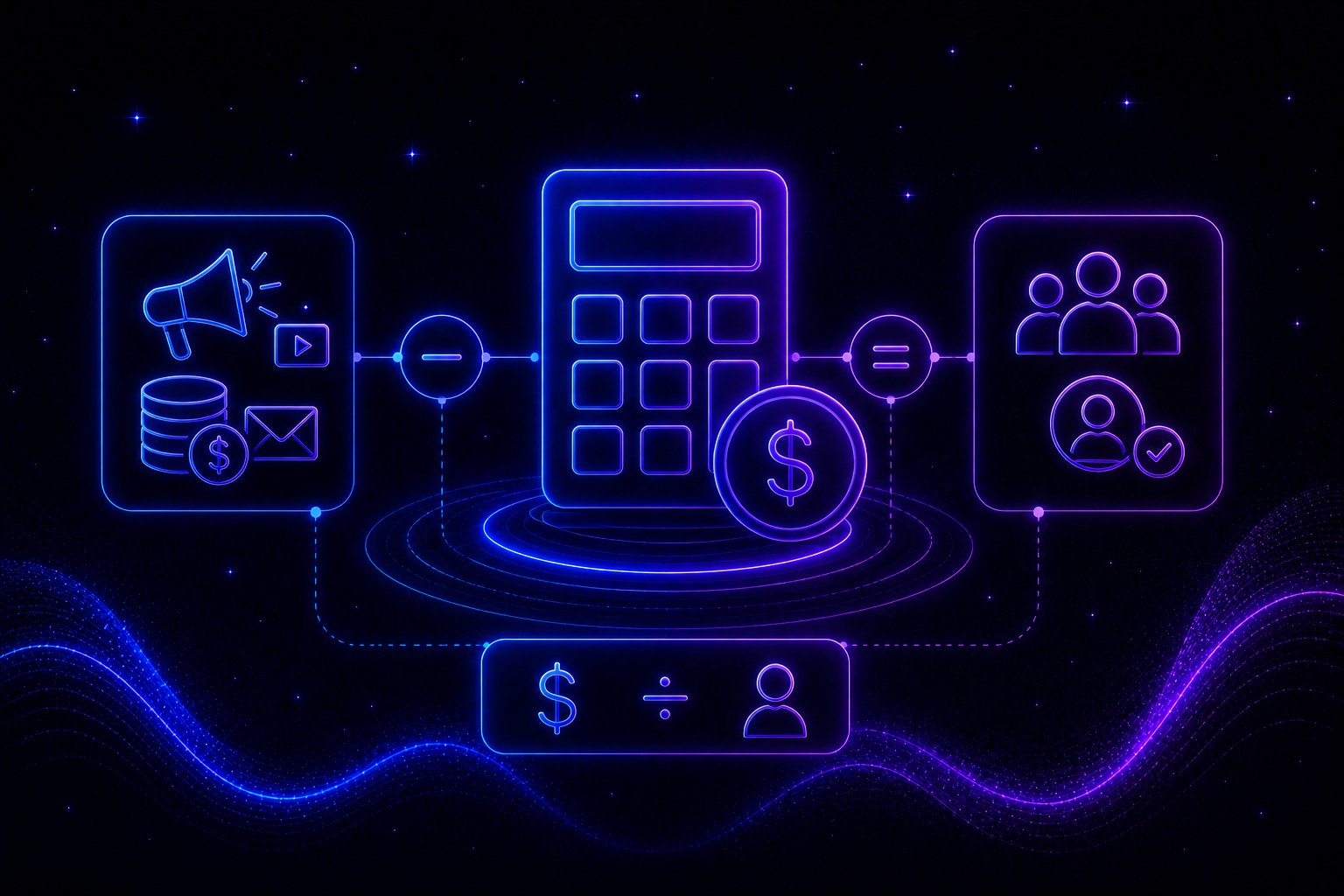
- CAC divides total sales and marketing expenses by the number of new customers acquired within a specific time period.
- Marketing costs include ad spend, content creation, events, and software, while sales costs cover salaries, commissions, and CRM tools.
- A brand spending $10,000 on marketing and $10,000 on sales to acquire 1,000 customers ends up with a $20 CAC.
- Comparing CAC against customer lifetime value shows whether acquisition spending is financially sustainable for long-term business growth.
- Businesses generally aim for an LTV to CAC ratio of three to one or higher to stay profitable.
Customer Acquisition Cost helps businesses understand how much they spend to convert prospects into paying customers through sales and marketing activities.
For D2C brands, Shopify businesses, and B2B SaaS companies, customer acquisition costs directly impact profitability. Studies show acquiring new customers can cost significantly more than retaining existing customers, making CAC optimization important for sustainable growth.
A customer discovers your brand → clicks an ad → compares products → contacts support → completes purchase. Every step adds cost before they become a customer.
Understanding CAC helps teams identify whether their acquisition strategy is generating profitable customers or increasing expenses without creating enough long-term value.
- Calculate acquisition costs using the standard CAC formula
- Understand which sales and marketing expenses should be included
- Compare CAC with customer lifetime value for profitability insights
- Identify opportunities to reduce customer acquisition costs
You will learn how to improve customer acquisition strategies by calculating CAC correctly, analyzing costs, and building sustainable growth workflows.
What is Customer Acquisition Cost (CAC)?
Customer Acquisition Cost (CAC) is the average amount a business spends to acquire one new paying customer during a specific period. It measures the efficiency of sales and marketing investments.
CAC includes every cost involved in attracting and converting new customers, including advertising campaigns, marketing software, sales activities, employee expenses, and other resources required during the acquisition process.
For example, if a Shopify brand spends thousands on ads but customers only purchase once, acquisition costs become difficult to recover without repeat purchases and stronger retention.
Why CAC is important for businesses:
- Helps measure the return generated from sales and marketing investments
- Shows whether customer acquisition strategies are financially sustainable
- Helps teams allocate budgets toward better-performing acquisition channels
- Provides insights into profitability when compared with customer lifetime value
- Supports better decisions around pricing, growth, and retention strategies
What is the Customer Acquisition Cost (CAC) Formula?
The customer acquisition cost formula calculates the average expense required to gain each new customer. Businesses calculate CAC by comparing total acquisition spending with the number of customers acquired.
Formula:
Customer Acquisition Cost (CAC) = Total Sales & Marketing Costs / Number of New Customers Acquired
Both values should be measured during the same time period, such as a month, quarter, or year, to get an accurate understanding of acquisition performance.
Total Sales and Marketing Costs
Sales and marketing costs include every expense directly connected to acquiring customers, not just the obvious ad spend. Missing hidden costs like software subscriptions or agency fees creates an inaccurate CAC and makes campaigns seem more profitable than they are.
Include:
- Paid advertising campaigns
- Marketing and sales salaries
- Software and CRM tools
- Agency and contractor expenses
- Content and campaign production costs
Number of New Customers Acquired
This includes only new paying customers gained during the selected period, since counting existing customers, renewals, or repeat purchases inflates the denominator and understates acquisition cost. Keeping this number accurate is what makes CAC comparable across campaigns, channels, and periods.
How to Calculate Customer Acquisition Cost Step-by-Step
Calculating CAC requires tracking the right expenses and customer data. Following a structured process helps businesses understand exactly how much they spend to acquire customers.
Step 1: Choose a Specific Time Period
Choosing the right time period first is the foundation of an accurate CAC calculation, since every cost and customer count that follows depends on this window.
- Match the period to your typical sales cycle so results reflect real buying behavior
- Use monthly tracking for fast-moving D2C brands and quarterly tracking for longer B2B sales cycles
- Keep the same period consistent across every CAC calculation to track trends accurately over time
- Align the period with your reporting cycle so CAC ties directly into broader growth reviews
Step 2: Add Sales and Marketing Expenses
Adding every relevant expense is what separates an accurate CAC from a misleadingly low number, since even small overlooked costs quietly distort the final overall result.
- Include paid advertising, agency fees, and content production costs tied directly to acquisition
- Add sales team salaries, commissions, and CRM or marketing software subscriptions
- Factor in freelance or contractor spend used specifically for acquisition campaigns
- Exclude retention, support, or product costs that are unrelated to new customer acquisition
Step 3: Count New Customers Acquired
Counting customers correctly is just as important as tracking expenses, since the wrong customer count can quietly inflate or shrink your final reported CAC each period.
- Count only new paying customers who completed a purchase within the chosen time period
- Exclude free trial sign-ups, leads, or demo requests that never converted to revenue
- Leave out renewals, upsells, or repeat purchases from existing customer accounts
- Cross-check customer counts with your CRM or billing system for accuracy
Step 4: Apply the CAC Formula
Applying the formula itself is the simplest part of the process, but the resulting number only becomes useful once you know what to compare it against.
- Divide total sales and marketing costs by the number of new customers
- Compare the result against customer lifetime value to check profitability
- Track CAC over multiple periods to spot rising or falling trends
- Benchmark your CAC against industry averages for your business model
Customer Acquisition Cost Calculation Example
A B2B SaaS company spends:
- Marketing campaigns: $150,000
- Sales activities: $100,000
- New customers acquired: 300
CAC = ($150,000 + $100,000) / 300
CAC = $833.33 per customer
This means the company spends an average of $833.33 to acquire every new customer through its sales and marketing activities. To stay healthy at a 3:1 LTV to CAC ratio, each customer would need to generate $2,500 in lifetime value.
Why Customer Acquisition Cost is Important for Businesses
CAC helps businesses understand whether their growth strategy is sustainable. A company may increase customers quickly, but high acquisition costs can reduce profitability.
1. Measures Marketing Performance
CAC helps teams identify which campaigns, channels, and strategies generate customers efficiently instead of only measuring clicks, traffic, or leads. A campaign that drives high engagement but low conversions can look successful on the surface while quietly increasing acquisition costs.
2. Improves Budget Decisions
Understanding acquisition costs helps businesses invest more in channels that generate profitable customers and reduce spending on ineffective campaigns. Instead of splitting budgets evenly across every channel, teams can redirect funds toward the sources that consistently deliver the lowest CAC.
3. Connects Acquisition With Customer Lifetime Value
CAC becomes more useful when compared with Customer Lifetime Value (LTV), which measures the total revenue a customer generates. A healthy business usually aims for an LTV:CAC ratio of 3:1 or higher, and tracking customer satisfaction metrics alongside this ratio often explains why some customers generate far more value than others.
4. Supports Long-Term Growth
Lower acquisition costs and higher customer retention help businesses grow without continuously increasing their marketing and sales spending. This combination lets revenue compound over time, since existing customers keep generating value long after the original acquisition cost has been recovered.
How to Reduce Customer Acquisition Cost
Reducing CAC does not only mean lowering advertising budgets. Businesses need to improve conversion rates, customer experiences, and retention strategies to increase acquisition efficiency.
1. Improve Conversion Rates
Optimizing websites, landing pages, and customer journeys helps businesses convert more visitors into customers without increasing marketing expenses. Checkout friction, like unclear shipping costs, quietly wastes ad spend, which is why steps to reduce cart abandonment deserve equal attention.
2. Focus on Customer Retention
Keeping existing customers engaged improves lifetime value and reduces dependency on constantly acquiring new customers through expensive marketing campaigns. Brands that increase customer engagement after the first purchase also see the clearest link between customer support and repeat purchases.
3. Improve Customer Support Experience
Fast and personalized support helps D2C, Shopify, and SaaS brands build stronger relationships. Better customer experiences increase repeat purchases and make acquisition investments more valuable, which is part of why customer service is important to a business beyond day-to-day ticket resolution. Teams that consistently improve customer satisfaction tend to recover acquisition spend faster.
4. Optimize Marketing Channels
Tracking CAC across different channels helps teams identify where customers come from and invest more in profitable acquisition sources. A channel with a low cost per click is not always cheaper if it brings in customers who churn early.
How QuantumDesk Helps Businesses Improve Customer Value After Acquisition
Reducing acquisition costs is not only about getting cheaper customers. Businesses also need to increase the value generated after acquisition, and ecommerce customer service is often where that value is won or lost.
QuantumDesk helps D2C, Shopify, and B2B SaaS teams improve customer experiences through an AI-native customer service platform. The ai native customer service benefits show up quickly once Quantum AI, an example of agentic ai for customer service, starts working across conversations to help brands increase retention, improve satisfaction, and strengthen customer relationships.
By automating repetitive support tasks and assisting agents, QuantumDesk helps teams reduce repetitive support questions and deliver faster responses while maintaining personalized customer conversations.
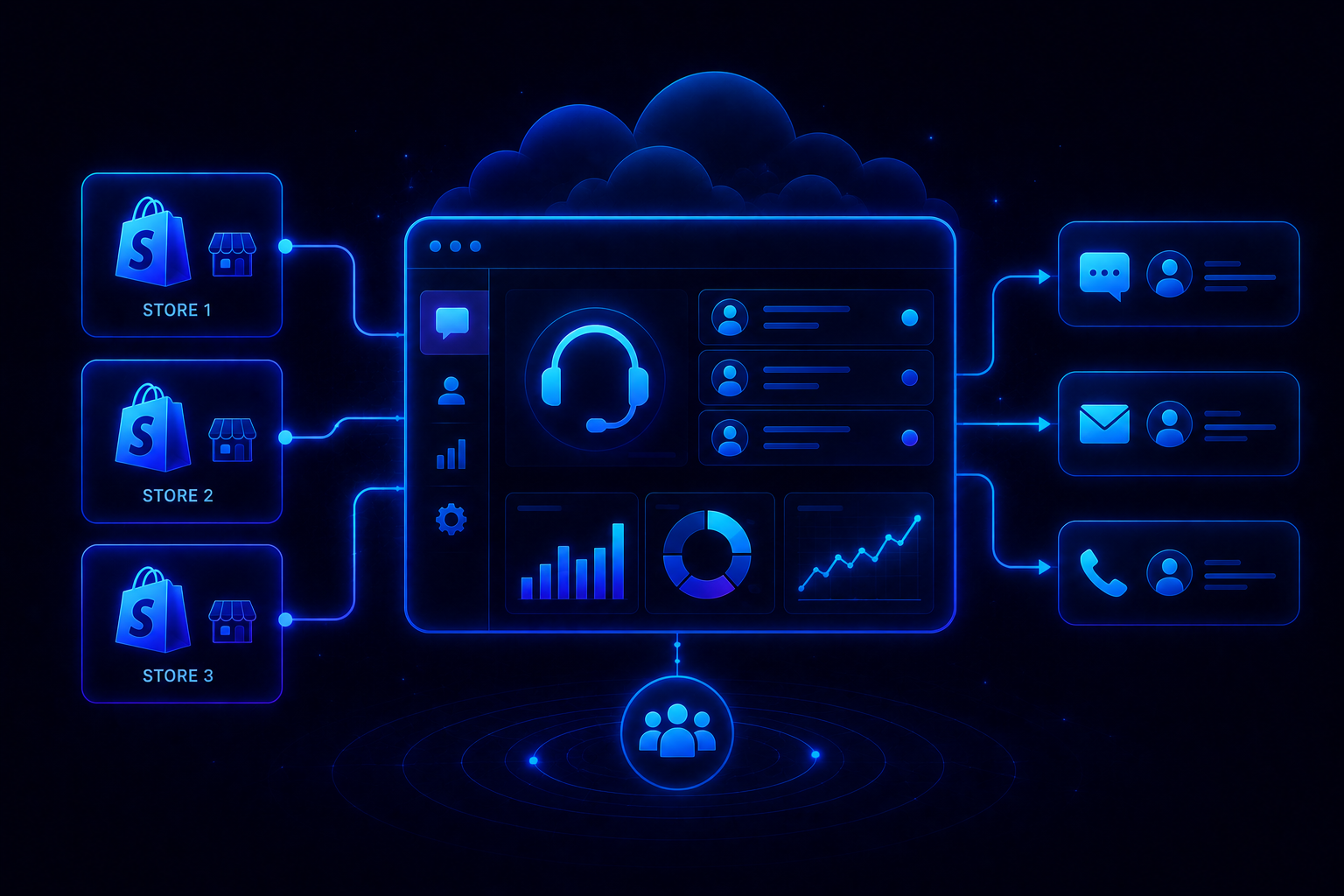
For Shopify brands specifically, native Shopify integration pulls order history and customer profiles directly into the conversation, so an agent never has to ask a hard-won customer to repeat information the store already has, right after acquisition spend has brought them in the door.
QuantumDesk Features That Improve Customer Experience
- Quantum AI resolves repetitive customer queries automatically, helping customers receive faster answers without unnecessary delays
- Unified Inbox connects conversations across WhatsApp, email, chat, and social channels in one workspace
- AI-Curated Inbox prioritizes important conversations based on urgency, sentiment, and customer intent
- Quantum AI Copilot helps agents respond faster with summaries, suggested replies, and next-best actions
- Native Shopify Integration provides customer and order context without agents switching between multiple tools
By improving customer experiences after acquisition, QuantumDesk helps businesses increase retention and create more value from every customer relationship.
Frequently Asked Questions
What is the customer acquisition cost formula?
The customer acquisition cost formula is total sales and marketing costs divided by the number of new customers acquired during a specific time period. Businesses calculate CAC monthly or quarterly and compare it against customer lifetime value to check sustainability.
What costs should be included in CAC?
CAC includes advertising expenses, sales and marketing salaries, software tools, agency costs, commissions, and other expenses directly connected to acquiring new customers. Leaving out smaller costs, like CRM subscriptions or contractor fees, makes acquisition spending look lower than it is.
What is a good CAC?
A good CAC depends on business model and customer value. Companies usually compare CAC with customer lifetime value to understand profitability. As a benchmark, many businesses aim for an LTV to CAC ratio of at least 3:1 to remain healthy.
How is CAC different from LTV?
CAC measures the cost required to acquire customers, while LTV measures the revenue customers generate throughout their relationship with a business. Together, these two metrics reveal whether a company is spending more to win customers than those customers are worth.
How can businesses reduce customer acquisition cost?
Businesses can reduce CAC by improving conversion rates, optimizing marketing channels, increasing retention, and delivering better customer experiences after acquisition. Small improvements in checkout flow, support quality, or channel targeting often lower CAC more effectively than cutting the marketing budget.





.avif)