Summarize with AI
Key Takeaways
- Ecommerce customer service supports shoppers before, during, and after a purchase.
- Strong customer service improves retention, repeat purchases, and customer satisfaction.
- Omnichannel support helps customers switch channels without repeating their issue.
- KPIs like CSAT, FRT, FCR, and Contact Rate measure support performance.
- AI and automation help ecommerce teams scale support without increasing headcount.
Great products attract customers. But customer service determines whether they come back, recommend your brand, or leave forever. As per research, customers increasingly choose brands based on service quality, responsiveness, and post-purchase experiences.
In crowded ecommerce markets, customer service has become one of the strongest drivers of retention and long-term revenue growth. A product can be replicated. A genuinely good support experience is harder to copy.
I ordered a T-shirt from an ecommerce platform and received it on time → the quality was not what I expected, so I wanted to return it → the website only offered replacements, not refunds → I contacted customer support for assistance. The support experience mattered more than the product issue itself. It determined whether I would purchase from that platform again.
For ecommerce businesses, customer service is often the deciding factor between a one-time buyer and a loyal repeat customer.
Here is what strong ecommerce support actually covers:
- Customers expect quick answers before, during, and after purchasing, not just when something goes wrong.
- Fast support helps reduce cart abandonment and customer frustration at critical decision points.
- Omnichannel experiences improve convenience and customer satisfaction across every channel a customer uses.
- AI helps support teams manage growing ticket volumes efficiently without proportionally increasing headcount.
You will learn how to improve ecommerce customer service, support customers throughout their journey, measure performance, and scale support effectively.
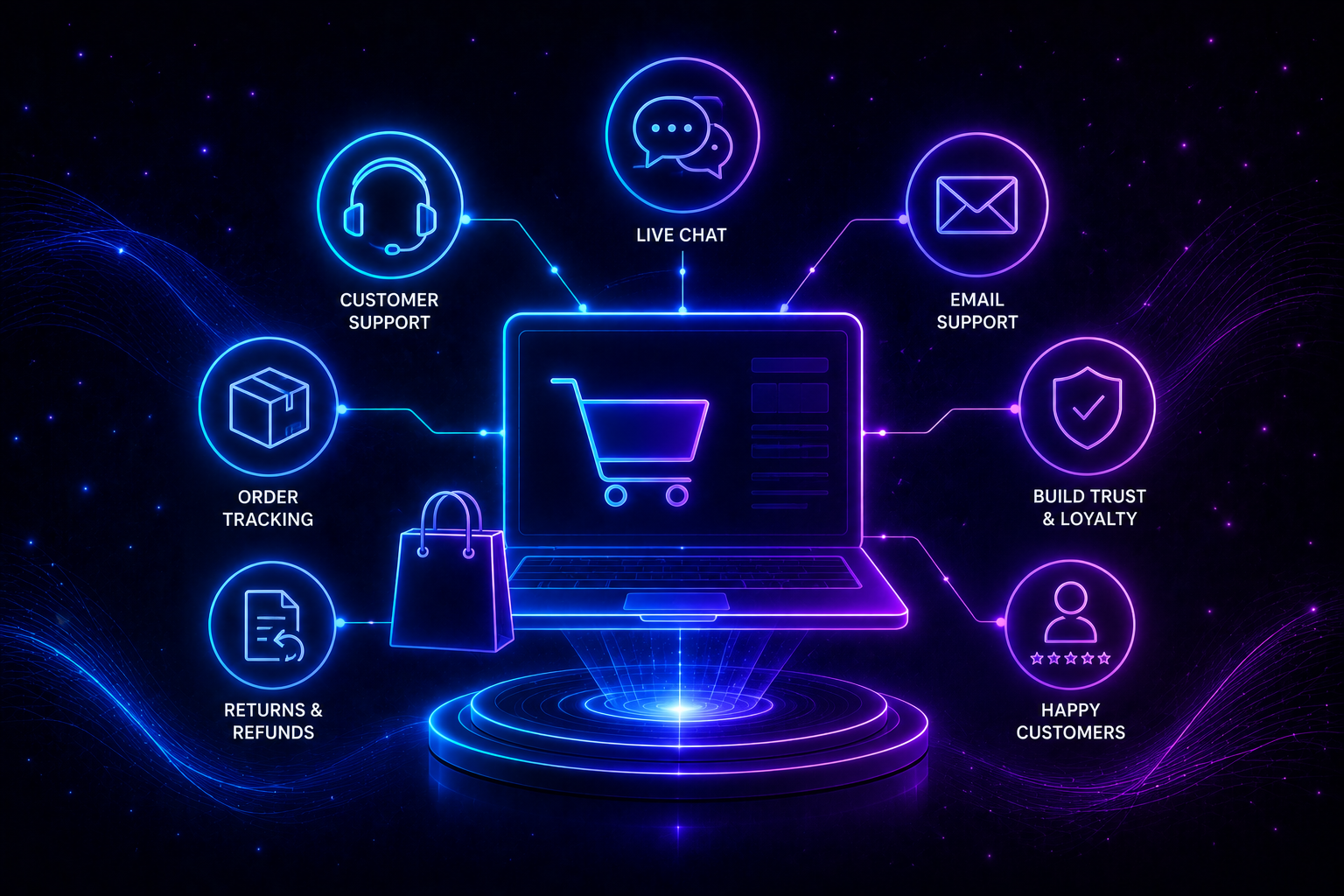
How Ecommerce Customer Service Impacts the Customer Journey
Ecommerce customer service influences every stage of the customer journey, from initial purchase decisions through to long-term customer retention.
What Is Ecommerce Customer Service?
Ecommerce customer service covers the tools, processes, and support teams that help customers before, during, and after online purchases. It replaces the in-store assistance customers traditionally receive in physical retail. There is no shop floor staff to approach, no fitting room attendant to ask, no cashier to flag a pricing issue with.
When something goes wrong online, or when a customer simply has a question before they buy, the support team is the only human presence the brand has. That responsibility is heavier than most ecommerce businesses treat it.
Customer expectations for speed, personalisation, and resolution quality have risen sharply. A brand that took 48 hours to respond to an email five years ago and got away with it will lose customers to a competitor that responds in under two hours today.
Understanding the difference between customer service and customer support is also worth clarifying here. Support is reactive, handling issues after they occur. Service is the broader experience the brand creates across every interaction.
The three stages of ecommerce customer service
1. Pre-purchase support
Before a customer places an order, they often have questions that a product page cannot fully answer.
Sizing guidance, material details, shipping timelines, stock availability, and returns policy clarity are common pre-purchase queries. Getting these right removes the hesitation that stops a purchase from completing. Missing them sends the customer to a competitor who answered faster.
2. During-purchase support
Checkout is where intent meets friction, and friction wins more often than most brands track.
Failed payments, discount codes that do not apply, address form errors, and unclear delivery estimates all generate drop-off at the point of purchase. Real-time support at this stage, through live chat or a visible help option, recovers orders that would otherwise be abandoned permanently.
. Post-purchase support
The transaction is complete. The relationship is just beginning.
Order tracking queries, delayed deliveries, wrong items, damaged products, exchange requests, and refund processing are the most common post-purchase contact reasons. How these are handled determines whether the customer buys again, leaves a review, or tells their network about the experience.
Why Is Ecommerce Customer Service Important?
In most ecommerce categories, product quality, pricing, and delivery speed are now broadly comparable across competing brands.
Customer service is what creates distance. A brand that resolves a damaged order on the first contact, without friction, without asking the customer to prove the damage, and without a three-day wait, has done something most competitors have not. That difference is what gets remembered, and what gets shared.
1. Helps increase customer retention
A customer who had a poor support experience rarely announces they are leaving. They simply do not come back.
According to Bain and Company, increasing customer retention by just 5% can increase profits by 25% to 95%. The economics of retention are well established. The less obvious part is how often a support failure is the actual cause of the churn.
Positive support experiences, especially after something goes wrong, are one of the few reliable ways to turn a frustrated buyer into a repeat customer.
2. Reduces cart abandonment
According to the Baymard Institute, the average cart abandonment rate across ecommerce is approximately 70%.
A meaningful portion of that abandonment is driven by unanswered questions at checkout: uncertainty about the return policy, confusion about delivery timelines, or a payment issue with no visible help option. Live chat at the checkout stage consistently reduces that drop-off. The customer gets an answer in seconds. The order completes.
3. Improves customer satisfaction
Speed and resolution quality are the two factors customers cite most consistently when rating a support experience.
When a customer reaches out and receives a fast, specific, accurate response, the satisfaction from that interaction often exceeds the satisfaction from the product itself. That is the kind of experience that drives five-star reviews, not the product arriving on time. Tracking and improving customer satisfaction metrics across support interactions gives teams a clear signal of where they are creating or destroying that experience.
4. Increases customer loyalty
Loyalty is built through repeated positive interactions, not a single good moment.
A customer who contacts support three times over twelve months and has a consistently good experience each time is unlikely to switch to a competitor even when a competitor offers a slightly lower price. The cost of switching is no longer just price. It includes the risk of worse support on the other side.
5. Supports revenue growth
Support quality has a direct line to revenue through repeat purchase rates, referral behaviour, and review scores.
A customer who repurchases generates revenue without acquisition cost. A customer who refers generates revenue from a new buyer who arrived with built-in trust. A review that mentions exceptional support influences purchase decisions from potential buyers who have never interacted with the brand.
For D2C brands where poor post-purchase support is reducing repeat orders, the revenue impact of fixing that gap is often larger than any marketing investment made in the same period.
Essential Ecommerce Customer Service Channels
Customers do not choose a single channel and stick to it. They use whichever is most convenient at the moment they need help.
That means the channels a brand offers are not a preference. They are a floor. Missing a channel a customer prefers creates friction before the conversation even starts. The goal is to be where customers already are, with consistent support quality on each.
1. Live chat and chatbots
Live chat is the closest ecommerce equivalent to a shop floor conversation.
Customers can ask a question mid-browse and get an answer in seconds, without leaving the page or switching to a different device. Chatbots handle the high-volume repetitive queries: order status, return timelines, stock availability. Human agents handle anything that requires judgement or context. The combination keeps response times low without requiring agents to handle queries that do not need them.
2. Email and help desk support
Email remains the primary channel for complex requests, escalations, and situations where a written record matters.
A customer disputing a charge, requesting a detailed return, or following up on an unresolved issue from a previous interaction will typically go to email. It gives them documentation. It also gives the support team a thread to work from rather than starting fresh. Connecting email to a central help desk is what keeps those threads from getting lost as volume grows.
3. Social media support
Customers who do not get a response on email or chat often go to social media next, and they do it publicly.
A complaint on Instagram or X that goes unanswered is not just one lost customer. It is a visible signal to every other customer who sees it. Monitoring social channels and responding quickly, even to route a customer toward the right resolution channel, prevents that kind of compounding reputational damage.
4. Self-service knowledge bases
A well-built knowledge base answers the questions a support team fields most often, before a ticket is ever raised.
Return policies, sizing guides, shipping timelines, product care instructions, and account management steps can all be documented clearly and made searchable. Customers who find the answer themselves are satisfied without requiring agent time. Brands that invest in self-service consistently see lower contact rates without any reduction in satisfaction scores.
5. Phone support
Most ecommerce brands do not need a full phone support operation. But some interactions genuinely need a voice conversation.
High-value customer complaints, escalated disputes, and situations where the written back-and-forth is making things worse are all candidates for a phone call. Knowing when to offer one, rather than routing everything through chat and email, is part of what distinguishes support teams that actually resolve issues from those that manage them.
Why omnichannel support matters
A customer who starts on WhatsApp and follows up on email should not have to re-explain their issue to a new agent who has no context from the previous conversation.
That handoff failure is not a minor inconvenience. It is one of the most common reasons customers describe a support experience as poor even when their issue was ultimately resolved. Managing multi-channel customer service with shared context across every channel is what separates a support operation that actually works from one that technically exists.
What Are the Best Practices of Ecommerce Customer Service?
Good ecommerce support does not happen by having the right tools. It happens when the right tools are paired with clear processes, trained teams, and a consistent commitment to how customers should be treated.
Most brands have at least two of those three. The one that gets skipped is usually process consistency.
1. Understand customer expectations
The fastest way to misalign support quality with customer expectations is to assume they are the same as last year.
Customer expectations around response speed, channel availability, and resolution authority shift continuously. Teams that survey customers regularly, read reviews for support-related feedback, and track repeat contact patterns will catch shifts in expectation before they show up as CSAT score drops.
2. Personalize every customer interaction
A customer who has ordered from a brand six times should not receive a support response that treats them like a first-time visitor.
Using order history, previous support interactions, and communication preferences to shape each response changes the quality of the experience significantly. It also changes how the customer interprets the brand. A response that references their past order without them having to mention it signals that the brand actually knows who they are.
3. Offer self-service options
Not every customer wants to contact support. Many prefer to find the answer themselves, faster.
A knowledge base, FAQ section, or automated order status tracker covers the most common queries without human involvement. For brands processing thousands of orders monthly, deflecting even 20% of inbound queries to self-service recovers meaningful agent capacity. That capacity goes toward the interactions that actually need a person.
4. Use automation for repetitive tasks
A support agent answering "where is my order?" for the fortieth time in a day is not delivering value to the customer or the business.
Customer service automation handles order status updates, return eligibility checks, shipping inquiry responses, and standard FAQ replies without agent involvement. The customer gets an immediate answer. The agent gets their time back for queries that require real judgement.
5. Create consistent support processes
Inconsistency is one of the most damaging things a support operation can produce.
When different agents give different answers to the same question, or when the tone shifts dramatically between chat and email, customers lose confidence in the brand. Standard response templates, clear escalation paths, and defined resolution authority for common scenarios give every agent the same starting point and keep the experience consistent regardless of who handles the ticket.
6. Collect and act on customer feedback
CSAT surveys, post-resolution ratings, and product reviews all contain information about where the support experience is working and where it is failing.
Collecting that feedback is easy. Acting on it is where most teams stop short. Teams that tag low-scoring interactions, identify the patterns behind them, and change specific processes as a result are the ones whose scores improve over time. The ones that collect feedback and file it away are collecting data without producing insight.
Ecommerce Customer Service KPIs to Track
Tracking the right metrics is what separates a support team that knows it is improving from one that assumes it is. Without measurement, response time improvements, training investments, and process changes produce no clear signal. With the right customer satisfaction metrics in place, every operational change becomes something a team can evaluate and adjust.
1. First response time (FRT)
FRT measures how quickly a customer receives an initial reply after making contact.
It is often the first thing a customer uses to form an impression of the support experience. A two-minute first response on live chat sets a very different tone than a six-hour wait. Industry benchmarks vary by channel, but most ecommerce brands aim for under one hour on email and under two minutes on chat.
2. Customer satisfaction score (CSAT)
CSAT measures how satisfied a customer felt after a specific support interaction, scored on a simple rating scale.
It is collected through a short post-resolution survey and expressed as the percentage of positive responses. For ecommerce teams, CSAT scores broken down by channel, query type, and agent reveal exactly where the experience is strong and where it needs attention.
3. First contact resolution (FCR)
FCR measures how often a customer's issue is fully resolved in a single interaction without requiring follow-up.
High FCR scores directly correlate with high customer satisfaction. When a customer reaches out once and leaves with their problem solved, the effort they experienced is low and the impression they formed is positive. Low FCR scores indicate either that agents lack the tools or authority to resolve issues, or that the issue itself is recurring in a way that should be addressed upstream.
4. Contact rate
Contact rate measures the percentage of orders that generate a support ticket.
It is one of the clearest signals of operational health in an ecommerce support team. A contact rate above 10% typically indicates a product, fulfilment, or communication issue that is generating avoidable inbound volume. Reducing contact rate through better order communication, proactive updates, and clearer policies reduces support cost without reducing support quality.
5. Additional ecommerce support metrics
Beyond the core four, teams tracking NPS, Customer Effort Score, Average Resolution Time, and total ticket volume by category have a more complete picture.
NPS captures long-term loyalty signals that CSAT alone misses. CES identifies where customers are working harder than they should to get help. Average resolution time surfaces bottlenecks in the escalation path. Ticket volume by category shows which product, policy, or fulfilment issues are generating the most inbound contacts.
KPI comparison table
What Are the Common Challenges in Ecommerce Customer Service?
As ecommerce businesses grow, support operations face increasing pressure from both sides.
Volume goes up. Expectations go up. Team size and budget do not always follow at the same pace. The brands that navigate that gap successfully are the ones that have built the right processes before the volume spike hits, not after.
1. Managing high ticket volumes
Seasonal sales, flash promotions, and new product launches can multiply inbound support volume overnight.
A team that handles 500 tickets per day normally may face 2,000 during a sale week. Without automation handling the repetitive queries and clear triage processes sorting the urgent from the routine, response times collapse and quality drops across the board.
Reducing customer support cost in ecommerce during these spikes requires preparation, not just headcount.
2. Meeting customer expectations
Customers compare their support experience across every brand they interact with, not just within a category.
A customer who gets a two-minute response from a large platform and then waits four hours for a reply from a smaller brand does not adjust their expectations based on company size. They experience the gap directly. Meeting those expectations consistently requires infrastructure that scales, not just goodwill and effort from individual agents.
3. Maintaining consistency across channels
When email, chat, WhatsApp, and social media each operate with their own queue, team, and data, consistency becomes structurally impossible.
A customer who receives a resolution offer on chat that differs from what they were told on email loses confidence in the brand entirely. Keeping responses consistent across channels requires a shared system of record, not just a shared tone of voice document.
4. Limited team resources
Most ecommerce support teams are lean by design.
The tension between keeping operational costs low and maintaining support quality at scale does not resolve itself. It requires making deliberate decisions about which query types should be handled by people, which should be automated, and where the investment in additional capacity generates the clearest return.
5. Scaling support operations
Adding agents is not the only way to scale support. It is also the most expensive way.
Brands that improve CSAT during high-volume periods without proportionally expanding their teams do it by making automation handle the repeatable work and giving agents the tools to resolve the complex work faster. The goal is not fewer agents. It is agents who spend their time on the interactions that actually require them.
How QuantumDesk Helps Ecommerce Teams Deliver Better Customer Service
Most ecommerce support teams are not struggling because of a lack of effort. They are struggling because the tools they use were not designed for the volume and channel complexity they are now managing.
Order status requests, return inquiries, delivery complaints, and exchange queries arrive simultaneously across WhatsApp, email, Instagram, and live chat.
Each channel operates separately. Agents switch between tools to piece together a single customer's history. Response times slow. Tickets pile up. Quality drops.
I ordered a fitness bundle → one product was missing from the shipment → I messaged the brand through WhatsApp → later followed up through email → then opened live chat. Instead of repeating the issue across three separate conversations, the support agent immediately saw my complete conversation history and resolved the missing item in a single response.
That is what the right infrastructure actually produces. Not heroic agent effort. A system that does not make the agent's job harder than it needs to be.
How QuantumDesk supports ecommerce customer service
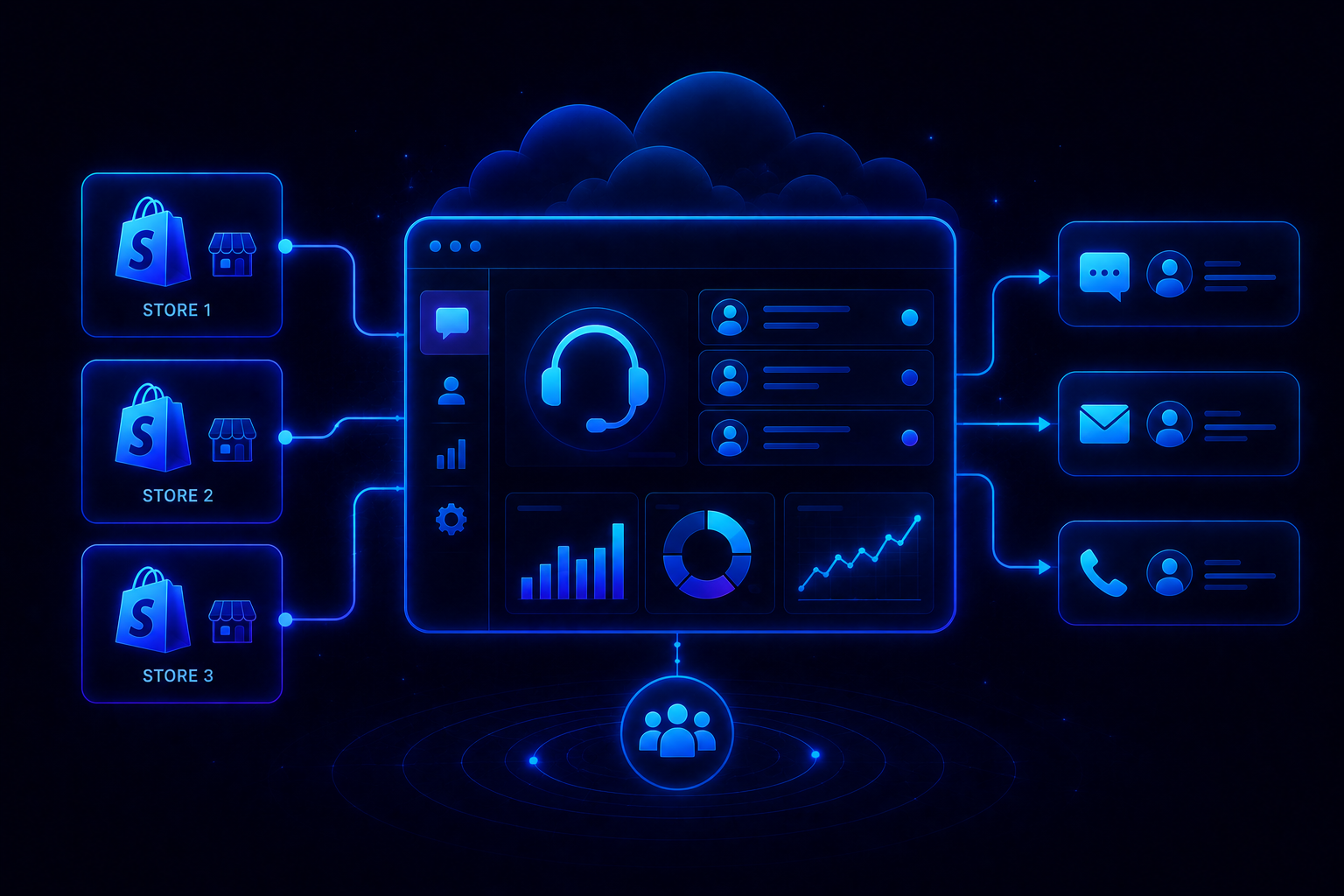
- Unified Inbox centralizes email, chat, WhatsApp, and social conversations into one workspace, giving agents complete visibility across every channel from a single place.
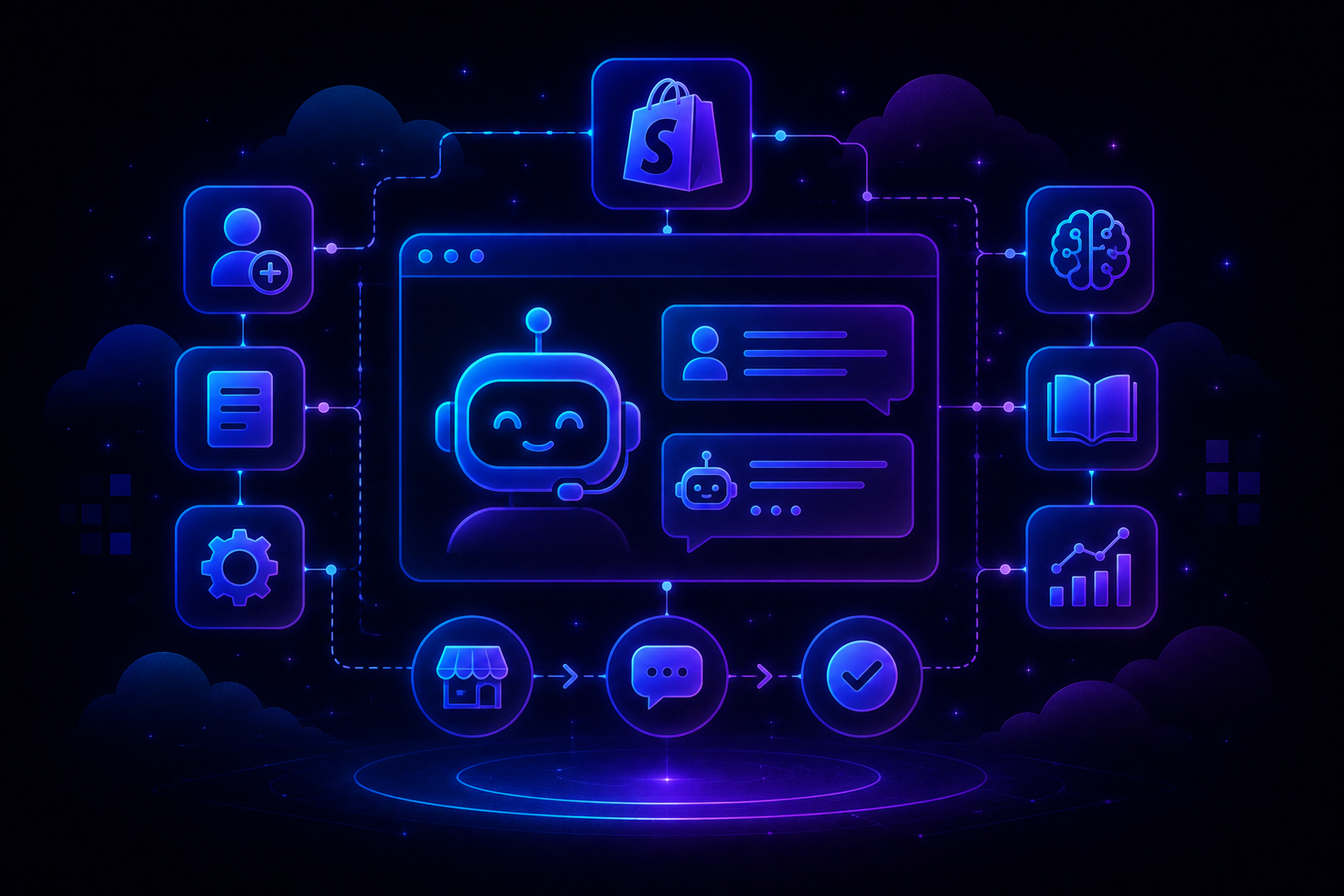
- Quantum AI automatically resolves repetitive ecommerce queries such as order status, return eligibility, and shipping timelines, without routing them to an agent's queue.
- AI-Curated Inbox reads incoming conversations for intent, urgency, and sentiment, then surfaces the ones that need immediate human attention before they escalate.
- Quantum AI Copilot gives agents the customer's full conversation history and suggested next responses before they type a word, cutting resolution time on every interaction.
- Shared customer history across all channels eliminates repeated explanations, giving every agent the same complete starting point regardless of which channel the customer used.
- Analytics provide visibility into satisfaction trends, ticket volume by category, and agent performance, giving support leaders the data they need to identify gaps and fix them.
QuantumDesk does not ask ecommerce teams to hire more agents to handle more tickets. It gives the team they already have the tools to handle significantly more, without the quality of each interaction declining as volume grows.
For brands relying on AI in customer service to close the gap between growing demand and fixed team capacity, that operational shift is where the business impact actually sits.
Frequently Asked Questions
What is ecommerce customer service?
Ecommerce customer service covers the support provided to online shoppers before, during, and after a purchase.
It includes answering pre-purchase questions, resolving checkout issues, handling returns and exchanges, and managing delivery complaints. It operates across channels including live chat, email, phone, social media, and messaging apps. Unlike in-store retail, ecommerce support is the only human touchpoint the brand has with the customer once they are on the website.
Why is ecommerce customer service important?
Strong customer service directly improves retention, repeat purchase rates, and long-term revenue.
Customers who receive fast, accurate, and genuinely helpful support are more likely to buy again, leave positive reviews, and refer others. Customers who experience slow, inconsistent, or dismissive support rarely return, regardless of how good the product was. For ecommerce brands managing growing support volumes, service quality is one of the few competitive advantages that is genuinely difficult to replicate quickly.
What channels are used for ecommerce customer service?
The most common channels are live chat, email, phone, social media messaging, WhatsApp, and self-service knowledge bases.
Most ecommerce brands operate across several of these simultaneously. The challenge is not selecting the right channels. It is maintaining consistent support quality and shared customer context across all of them.
What KPIs should ecommerce teams track?
The core metrics are First Response Time(FRT), Customer Satisfaction Score (CSAT), First Contact Resolution (FCR), and Contact Rate.
Beyond those, Net Promoter Score(NPS), Customer Effort Score(CES), Average Resolution Time, and ticket volume by category give a more complete view of where the support operation is performing well and where it has gaps.
How can AI improve ecommerce customer service?
Agentic AI handles the volume of repetitive queries that would otherwise consume agent capacity: order status, return eligibility, shipping updates, and standard policy questions.
It routes incoming conversations to the right team based on urgency, language, and intent. It surfaces full customer context to agents before the first response. The result is faster resolution, lower contact effort, and a support team that can scale with growing order volume without adding headcount at the same rate.




.avif)