

Summarize with AI
Key Takeaways
- Analyzing historical support tickets helps identify recurring size, fit, return, exchange, and policy questions before implementing automation workflows.
- AI-powered chatbots can answer repetitive customer questions instantly using knowledge base content, reducing manual workload for support teams.
- Contextual support content placed across product pages and checkout flows prevents customers from opening unnecessary support tickets.
- Self-service resources, canned responses, and intelligent routing help support teams manage repetitive inquiries more efficiently.
- Proactive support and AI automation resolve customer doubts before they become conversations that require agent involvement.
For growing D2C brands, repetitive size, fit, and policy questions can quickly overwhelm customer support teams and slow response times.
Most customers prefer finding answers themselves rather than waiting in a support queue. Yet apparel, beauty, lifestyle, and ecommerce brands still spend countless hours answering the same sizing, exchange, refund, and delivery-related questions every day.
I found a jacket I wanted to buy → wasn't sure about sizing → opened a chat for help → later returned to ask about exchange eligibility before placing the order.
Common repetitive questions support teams receive:
- Which size should I choose?
- Will this fit as expected?
- Can I exchange this item later?
- What is your return policy?
- Am I eligible for a refund?
You will learn how to improve self-service experiences, reduce repetitive support questions, and use AI to answer common customer inquiries automatically.
Quick Comparison: Traditional Support vs AI-Powered Support
Why Size, Fit, and Policy Questions Increase Support Volume
Most repetitive support questions are not customer problems. They are information-delivery problems that force customers to seek answers through support channels.
1. Customers Cannot Find Answers During The Buying Journey
Product pages often contain limited sizing guidance, unclear material details, or incomplete policy information, leaving customers no choice but to contact support at the moment they need to decide.
- Pre-purchase support contacts arrive during a window when the customer is still deciding whether to buy, making speed especially critical for conversion.
- A brand selling 2,000 items monthly where 20% of buyers have a sizing question faces 400 potential contacts per month that could have been answered directly on the product page.
- Missing fit details and material descriptions create the kind of uncertainty that delays purchasing decisions, increases cart abandonment, and generates avoidable support volume.
- Apparel support first response time suffers most during these moments, as sizing questions often arrive at peak traffic windows when agents are already stretched across multiple channels.
2. Return And Exchange Policies Are Easy To Misunderstand
Customers frequently ask about return eligibility, timelines, refund methods, exchange conditions, and shipping responsibilities because policy language is often written for legal clarity rather than customer understanding.
- Complex policy language creates uncertainty that quickly turns a simple post-purchase moment into a support conversation.
- Customers who cannot confirm exchange eligibility before placing an order often contact support proactively, creating pre-purchase workload that is entirely preventable.
- Policy confusion amplifies during promotions and seasonal sales when different eligibility rules apply and the standard FAQ no longer covers every scenario.
- A single ambiguous sentence in a return policy can generate dozens of identical clarification requests every week across email, chat, and WhatsApp.
3. Size And Fit Concerns Delay Purchasing Decisions
Apparel, footwear, beauty, and lifestyle brands regularly receive questions about sizing accuracy and product fit because customers want reassurance before committing to a purchase they may need to return.
- The cost of a wrong-size delivery goes beyond the refund. It generates a return request, an exchange conversation, and often a review that every future buyer will read.
- Customers who ask sizing questions in chat and receive slow responses are more likely to abandon the cart than wait, particularly during flash sales where inventory moves quickly.
- Brands that offer interactive fit tools, customer review filters by body type, and detailed measurement charts see measurable reductions in sizing-related support contacts over time.
- Automating apparel support workflows addresses exactly this pattern by turning size and fit guidance into a self-service experience rather than a support interaction.
4. Support Teams Answer The Same Questions Repeatedly
Agents often spend hours responding to identical inquiries across chat, email, WhatsApp, and social channels, reducing productivity and limiting their ability to focus on complex customer issues.
- A support agent answering 50 sizing questions a day is spending hours on work that a well-built FAQ or AI assistant could handle in seconds, at a fraction of the cost.
- The cumulative cost of manually answering repetitive queries is significant. At $5 to $15 per interaction, 500 repetitive tickets a month represents $2,500 to $7,500 in avoidable handling costs.
- How excessive customer conversations reduce support quality explains why this pattern is not just a productivity issue. It directly degrades the experience for customers who need genuine human assistance.
- Reducing agent burnout in apparel support teams becomes significantly harder when the majority of daily conversations consist of questions that agents have answered hundreds of times before.
5. Missing Information Creates More Customer Effort
When customers cannot find answers independently, they are forced to contact support for information that could have been available through product pages, FAQs, or self-service resources.
- Higher customer effort scores directly correlate with lower satisfaction and reduced likelihood of repeat purchase, even when the support interaction itself is handled well.
- Every avoidable support contact is a signal that something in the pre-purchase or post-purchase experience needs to be improved, not just resolved faster.
- Customers who find answers without contacting support convert at higher rates and return more often than those who had to ask, because the experience felt frictionless.
- Ecommerce customer service teams that track where tickets originate consistently identify product page and policy gaps as the single largest source of preventable support volume.
Reducing repetitive questions starts with understanding why customers are asking them repeatedly instead of simply increasing support capacity.
How to Build Self-Service Resources That Prevent Repetitive Questions
The fastest support ticket to resolve is the one that never enters the queue because customers find answers independently.
1. Audit Your Most Common Support Questions
Review ticket history to identify recurring themes across sizing, returns, exchanges, delivery expectations, and account management. These topics become the highest-priority areas for self-service content creation.
2. Create Clear And Searchable Help Center Content
Knowledge base articles should provide direct answers using plain language, measurement examples, and step-by-step guidance. Customers should reach accurate answers without contacting support, regardless of their familiarity with the product or brand. For practical guidance on where to start, how to improve online customer service covers the content structures that consistently reduce inbound volume fastest.
3. Turn Frequent Agent Replies Into Reusable Resources
Support teams write the same policy and sizing explanations dozens of times every week. Converting those responses into help center articles and canned replies creates consistency while eliminating repeated manual effort.
4. Place Support Content Where Customers Need It
Customers should not leave product pages to find sizing guides or exchange policy details. Contextual support content placed at the point of decision reduces friction and prevents avoidable support contacts before the question forms.
5. Continuously Improve Self-Service Content
Knowledge bases should evolve alongside products, policies, and seasonal campaigns. Reviewing new ticket trends each month helps identify content gaps and update existing articles before support volume begins to climb.
Self-service content examples by question type:
Strong self-service experiences reduce ticket volume while helping customers receive answers faster and with less effort.
How AI Helps Reduce Repetitive Support Questions Automatically
AI becomes valuable when it handles routine customer questions instantly while ensuring customers still receive accurate and relevant information.
1. Use AI Chatbots As The First Line Of Support
Modern AI chatbots understand customer intent rather than relying only on keywords, allowing them to answer policy, sizing, fit, shipping, and account-related questions using existing knowledge base content.
What AI chatbots handle at the front line:
- AI chatbots for customer service are most effective when connected to a well-maintained knowledge base, because the quality of their answers depends directly on the accuracy of the content they draw from.
- Customers who receive instant answers through a chatbot at 11pm during a sale are significantly less likely to abandon their cart than those directed to wait for an agent.
- AI chatbots handle the most frequent question categories including sizing, return eligibility, refund timelines, and delivery expectations, without adding to the agent queue at any hour.
- Deflection rates of 40 to 60% are achievable for D2C brands that deploy AI chatbots against their most common ticket categories within the first 90 days of deployment.
2. Deliver Context-Aware Answers Based On Customer Behavior
AI can display relevant support guidance depending on the page customers are viewing, because a customer on a product page has different needs than one standing at checkout.
Where context-aware AI makes the difference:
- Product page visitors benefit most from fit guidance, sizing comparisons, and material details surfaced proactively before they feel the need to open a support chat.
- Checkout visitors most often need policy clarity on returns, exchange windows, and payment options, which AI can surface without interrupting the purchase flow.
- Customers on order tracking pages typically want shipping timeline clarification, which AI can provide in real time using live carrier data without agent involvement.
- Context-aware delivery removes the need for customers to describe their problem before receiving a relevant answer, reducing the friction that most often pushes pre-purchase visitors toward abandonment.
3. Use Pre-Chat Qualification To Route Questions Faster
Simple intake questions help categorize customer requests before they reach support, and many inquiries can be resolved automatically without ever requiring direct agent involvement.
How qualification reduces unnecessary agent contacts:
- Pre-chat menus that ask customers to select a topic before starting a conversation allow AI to resolve common categories and route exceptions to the right team instantly.
- Customers who select sizing, returns, or policy as their query type can receive an immediate AI-generated response without entering an agent queue at all.
- Customer service automation at the intake stage is one of the fastest ways to reduce repetitive workload because it intercepts high-volume question types before they are counted as support tickets.
- Escalations that do reach agents arrive with a category tag and pre-filled context, reducing the time agents spend understanding the issue before they can begin resolving it.
4. Automate Common Questions With Reusable Responses
AI can instantly surface approved answers for recurring policy, sizing, shipping, refund, and exchange questions while maintaining consistency across channels and teams at any volume.
How reusable responses improve consistency at scale:
- Reusable response templates powered by AI ensure that a customer asking about the return window on WhatsApp receives the same accurate answer as one asking over email.
- Inconsistent answers across channels are one of the most damaging trust issues in D2C support. AI-managed responses eliminate this variability across every agent and every shift.
- AI Customer Service Tools that allow teams to manage approved response libraries centrally create a single source of truth for every frequently asked question across the operation.
- Agents reviewing AI responses before escalation also benefit from seeing the approved answer, which reduces correction time and improves quality consistency across the team.
5. Deflect Tickets Before They Enter The Queue
AI-powered ticket deflection resolves routine inquiries at the moment customers ask, before a ticket is created, so support queues fill with complex cases that actually need attention.
What deflection removes from agent queues:
- Size recommendation requests, return policy questions, exchange eligibility checks, and shipping timeline inquiries are the four highest-volume deflection opportunities in most D2C support operations.
- Every deflected ticket represents a conversation answered faster, at lower cost, and without requiring an agent to be available in that moment.
- Deflection rates improve as AI learns from interaction patterns. Brands that regularly update their knowledge base alongside product launches see sustained reductions in ticket creation rather than a short-term dip.
- Agents who previously spent most of their day on repetitive categories can now focus on exchanges gone wrong, emotionally frustrated customers, and post-purchase relationships that benefit from human care.
The goal of AI is not replacing support agents. It is removing repetitive work so teams can focus on customer relationships and complex customer needs.
How QuantumDesk Helps Teams Reduce Repetitive Support Questions
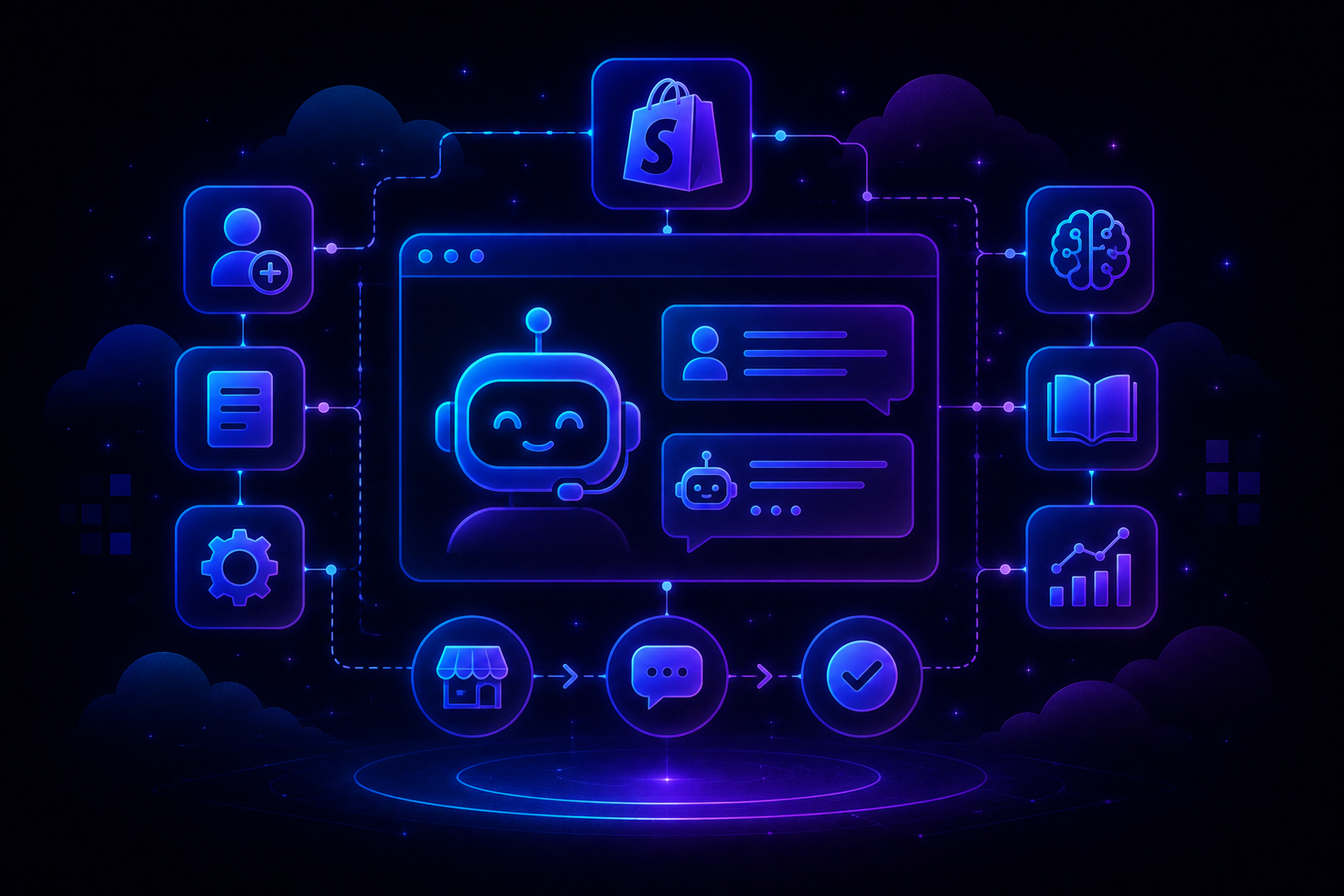
As support volume grows, answering repetitive questions manually becomes difficult to sustain. QuantumDesk helps businesses reduce ticket volume through AI-native automation, self-service experiences, and intelligent support workflows.
QuantumDesk enables organizations to resolve routine customer inquiries automatically while improving agent productivity and customer satisfaction across every channel.
The result is a support operation where sizing questions, policy clarifications, and delivery updates are handled before they become agent conversations.
The best customer service software for ecommerce brands shows this separation most clearly. Platforms built for manual workflows require proportional staffing increases as question volume grows. AI-native platforms resolve the volume before it reaches the queue.
How QuantumDesk Helps Teams Reduce Repetitive Questions
- Quantum AI instantly answers size, fit, shipping, refund, exchange, and policy questions using approved knowledge base content, resolving routine inquiries without agent involvement.
- AI-powered self-service experiences help customers find answers before creating support tickets, reducing inbound volume at the source.
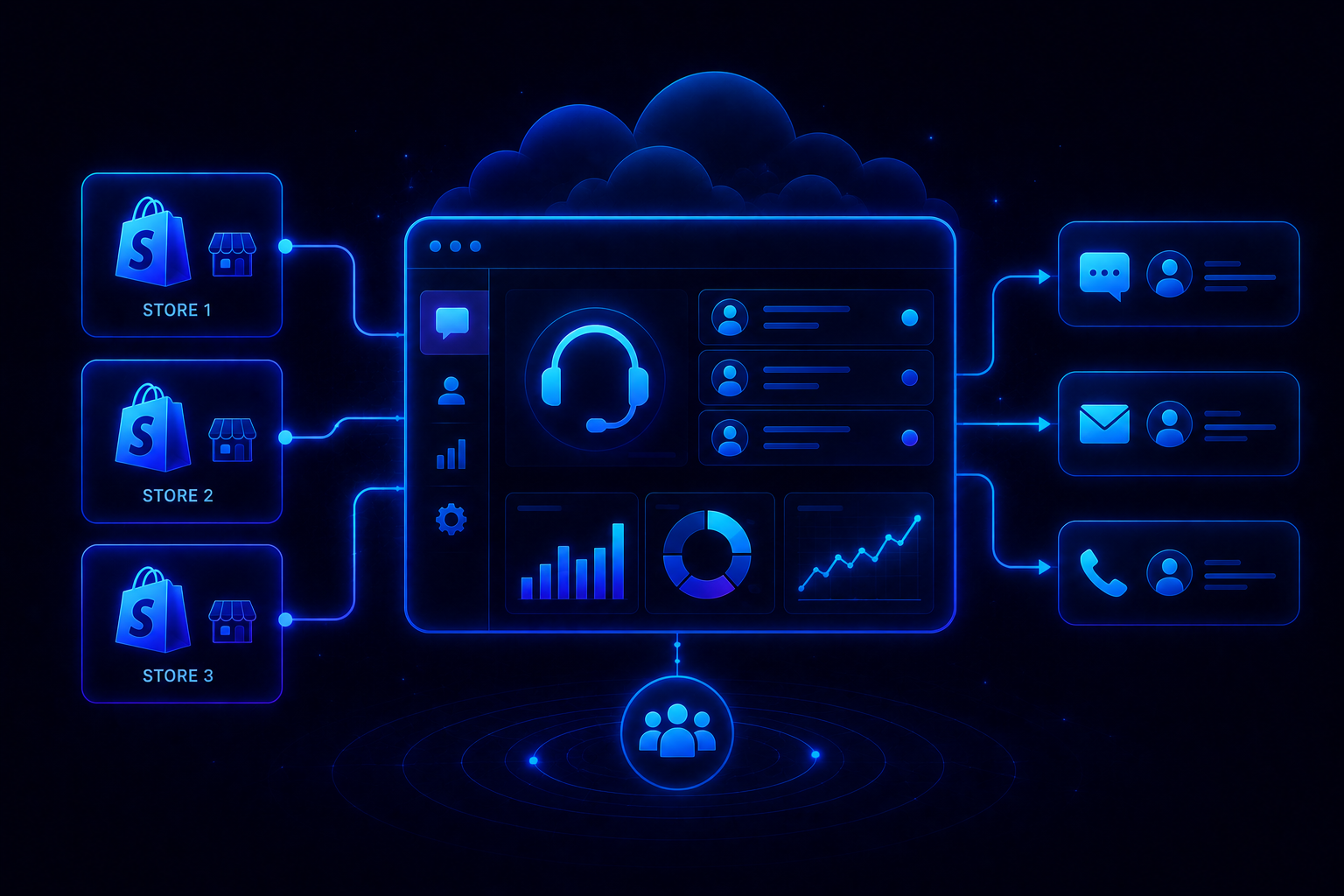
- Unified workspace gives agents complete customer context without switching between systems, so escalations that do arrive are resolved faster.
- Quantum AI Copilot recommends accurate responses and relevant knowledge articles during live conversations, reducing search time and improving response consistency.
- AI-curated inbox prioritizes conversations requiring human attention while routine requests are handled automatically, so agents always work on what matters most.
- Analytics identify recurring customer questions, helping teams improve documentation and reduce future ticket volume before it builds.
By combining automation, knowledge management, and AI assistance, QuantumDesk helps support teams reduce repetitive questions while delivering faster and more consistent customer experiences.
Ready to reduce repetitive questions? Book a demo with QuantumDesk.
Frequently Asked Questions
What are the most common repetitive support questions?
Size recommendations, fit concerns, return policies, exchange eligibility, refund questions, shipping updates, and account-related inquiries are among the most common support questions. For D2C apparel and lifestyle brands, sizing and return policy questions typically account for the largest share of repetitive contacts, followed by order tracking and delivery timeline requests.
How can a knowledge base reduce support tickets?
A searchable knowledge base helps customers find answers independently, reducing the number of repetitive questions that reach support teams. The impact is highest when knowledge base content is placed contextually, on product pages, at checkout, and within post-purchase communications, rather than requiring customers to search for a separate help center.
Can AI answer sizing and policy questions accurately?
Yes. When connected to approved knowledge sources, AI can deliver consistent and accurate responses to repetitive customer inquiries. Accuracy depends on the quality and completeness of the knowledge base the AI draws from, which is why auditing and updating support content is a prerequisite for effective AI deployment.
What is ticket deflection in customer support?
Ticket deflection occurs when customers receive answers through self-service resources or AI before a support ticket is created. Deflection is measured by comparing the number of customers who initiated a support interaction with the number who opened a formal ticket after engaging with self-service or AI-assisted tools.
How can D2C brands reduce repetitive support questions?
Brands can improve product information, create better self-service content, deploy AI chatbots connected to live knowledge bases, and proactively communicate common answers across the post-purchase journey. The most effective approaches combine upstream content improvements with AI that handles real-time inquiries, so customers receive answers whether they are browsing before purchase or following up after.




.avif)