
Summarize with AI
Key Takeaways
- Poor post-purchase support increases buyer regret, making fashion shoppers abandon brands instead of becoming repeat loyal customers.
- One negative customer service interaction can permanently damage trust and reduce future repeat purchase opportunities for ecommerce brands.
- Slow support responses, delayed shipping updates, and difficult returns increase customer frustration and amplify negative online brand reviews.
- Fashion brands that simplify returns and communicate proactively improve customer confidence, repeat purchases, and long-term customer retention significantly.
- AI-native post-purchase support helps ecommerce brands reduce churn through proactive communication, automation, and faster issue resolution across channels.
Fashion shoppers rarely leave after checkout problems alone. They leave when post-purchase support creates frustration, uncertainty, and broken trust afterward.
Delayed updates, sizing confusion, and difficult returns reduce repeat purchases while increasing cancellations and complaints. How excessive customer conversations reduce the support quality is a pattern that plays out across every high-return fashion category.
For fashion ecommerce brands, post-purchase support directly affects customer loyalty, lifetime value, reviews, referrals, and long-term repeat purchase growth.
Customer scenarios support teams encounter daily:
- I ordered a dress for an event, shipping stopped updating, and support never replied before the event date.
- I received the wrong size, return approval took three days, and I purchased from another fashion brand instead.
- I contacted support on Instagram and email. Both teams asked the same questions again repeatedly.
Refund timelines were unclear after delivery confirmation. I posted a negative review warning other shoppers publicly.
You will learn how to improve repeat purchases using proactive post-purchase support, AI automation, faster issue resolution, and customer retention workflows.
A Quick Comparison: Poor Vs Good Post-Purchase Support
What Fashion Shoppers Expect After Checkout Today
Modern Customer Service Expectations have moved well past reactive support. Fashion brands that fail to meet these expectations consistently struggle to convert first-time buyers into repeat customers.
- Proactive shipping updates through SMS, WhatsApp, and email replace manual tracking page checks, with automatic delay notifications sent before customers contact support during peak order periods.
- One-click return initiation with prepaid labels generated automatically removes friction from the return experience and increases the likelihood customers reorder within the same season.
- Clear refund timelines communicated at the point of return acceptance eliminate post-return follow-up contacts and reduce unnecessary ticket volume during high-volume periods.
- Full conversation history accessible across every channel means agents resolve issues faster without asking customers to repeat themselves across Instagram, WhatsApp, email, or live chat.
- Consistent policy answers regardless of which channel the customer uses builds trust and reduces confusion during post-purchase interactions across multi-channel customer service touchpoints.
- Fast resolution within 24 hours directly influences repeat purchase behavior, with first-contact resolution correlating strongly with higher post-issue reorder rates and long-term retention.
- Customers who contact support twice are far less likely to reorder regardless of outcome, making first-contact resolution one of the most underused retention tools in fashion ecommerce.
Why poor post-purchase support reduces repeat purchases in fashion eCommerce
Most fashion ecommerce brands focus heavily on acquisition and checkout optimization while ignoring post-purchase support. Customer frustration after payment directly impacts retention, reviews, repeat purchases, and long-term loyalty across competitive ecommerce markets.
1. Poor support increases post-purchase regret
Buyers question their purchase decision almost immediately after checkout. Delayed responses, unclear delivery timelines, and sizing uncertainty amplify that doubt significantly.
The anxiety is highest during time-sensitive purchases:
- Customers ordering festival outfits or occasion wear need reassurance that delivery will arrive before the event
- Sizing ambiguity after checkout creates anxiety that a slow response turns into regret
- A delayed reply during a return or exchange feels like confirmation the brand doesn't care
Fashion shoppers who don't feel supported after purchase don't become repeat buyers. They become one-time customers who warn others.
2. One bad support experience triggers immediate brand churn
Unresolved complaints, repetitive conversations, and slow responses break customer trust after a single purchase experience. Fashion shoppers have no shortage of alternatives.
The churn pattern typically follows a predictable path:
- Customer contacts support with a legitimate complaint, refund delay, or exchange request
- Agent response is slow, generic, or requires the customer to repeat details already provided
- Customer receives no follow-up after the initial reply
- Customer switches to a competing brand and does not return
Lost repeat purchases compound into lost lifetime value. For D2C fashion brands spending heavily on acquisition, a support failure at this stage erases margin fast.
3. Poor post-purchase communication increases returns and cancellations
Customers who lack shipping visibility don't wait patiently. They cancel, request refunds, or file disputes before the item even arrives. Unclear communication turns manageable delays into operational problems.
The situations that trigger this most often:
- No proactive notification when a shipment is delayed at a sorting facility
- Complicated return workflows that require multiple steps and agent involvement
- Delivery confirmation without any guidance on return eligibility or timelines
Customers ordering wedding outfits, birthday gifts, or seasonal occasion wear have zero tolerance for this ambiguity. When support fails to communicate clearly, the immediate cost is a return or cancellation. The longer-term cost is a customer who never comes back.
4. Negative experiences spread quickly through reviews and social media
Frustrated customers who don't get resolution go public. A single unresolved complaint shared across social media reaches potential buyers who haven't purchased yet.
Public complaints do measurable damage:
- Negative reviews reduce conversion rates for new visitors who research before buying
- Social media complaints about slow support or difficult returns influence peer recommendations
- Brands that respond poorly to public complaints reinforce the negative perception rather than containing it
Customer satisfaction metrics show consistently that poor post-purchase experiences generate more reviews than neutral or positive ones. In fashion ecommerce, reputation is a retention tool. Brands that lose control of it in public lose future buyers before those buyers ever contact support.
How fashion eCommerce brands can improve repeat purchases through better support
Improving repeat purchases requires fashion brands to reduce customer effort after checkout. Faster support, proactive communication, and AI-driven workflows help ecommerce brands build stronger customer relationships beyond the first order.
1. Automate repetitive post-purchase support queries
Order tracking requests, refund status checks, exchange eligibility questions, and delivery updates account for the majority of post-purchase contacts. None require agent judgment.
Customer service automation handles these conversations instantly through:
- AI-connected tracking queries that pull live status from OMS and logistics systems
- Return eligibility checks and label generation that complete automatically without queue time
- Consistent answers delivered during flash sales and peak return windows without delay
Teams handling less repetitive volume respond faster to conversations that actually need human involvement. That shift improves response times and support quality simultaneously, especially during seasonal spikes.
2. Use proactive communication to reduce anxiety
Proactive notifications reassure customers during warehouse delays, shipping issues, and exchange processing stages before frustration escalates into a support contact or a cancellation.
Here is how proactive communication prevents churn in practice:
- Customer orders a wedding guest dress three weeks before the event
- A courier delay occurs during transit
- A proactive WhatsApp update goes out the same day with an updated delivery estimate
- Customer stays, the order arrives in time, and a second purchase follows within six weeks
Proactive SMS, WhatsApp, and email updates reduce WISMO contacts significantly. They also change the customer's memory of the experience from waiting anxiously to feeling informed and looked after.
3. Simplify returns and exchanges with self-service workflows
Self-service return portals, instant label generation, automated approvals, and transparent refund tracking give customers control without requiring agent involvement. That control is what keeps customers from switching brands after a sizing problem.
Self-service improvements that reduce churn:
- Return portals that allow customers to initiate and track returns without contacting support
- Automated exchange flows that suggest alternative sizes based on the return reason provided
- Refund status updates accessible through WhatsApp or email without opening a support conversation
Frictionless returns protect loyalty even when the original order wasn't right. Customers who return items easily are more likely to order again, choosing a different size rather than a different brand.
4. Build loyalty through personalized retention workflows
Generic win-back emails don't move fashion shoppers. Customers who left after a poor return experience need different messaging than customers who simply haven't purchased in 60 days.
Personalized retention workflows that improve repeat purchase rates:
- Win-back emails triggered by specific exit behaviors, not standard inactivity thresholds
- Reorder reminders for occasion-based or seasonal items tied to previous purchase history
- Loyalty rewards that scale with purchase frequency rather than flat discount mechanics
Behavioral personalization creates a stronger connection than mass outreach. Customers who receive relevant, timely communication are significantly more likely to return after a difficult post-purchase experience.
How QuantumDesk Helps Fashion Brands Increase Repeat Purchases
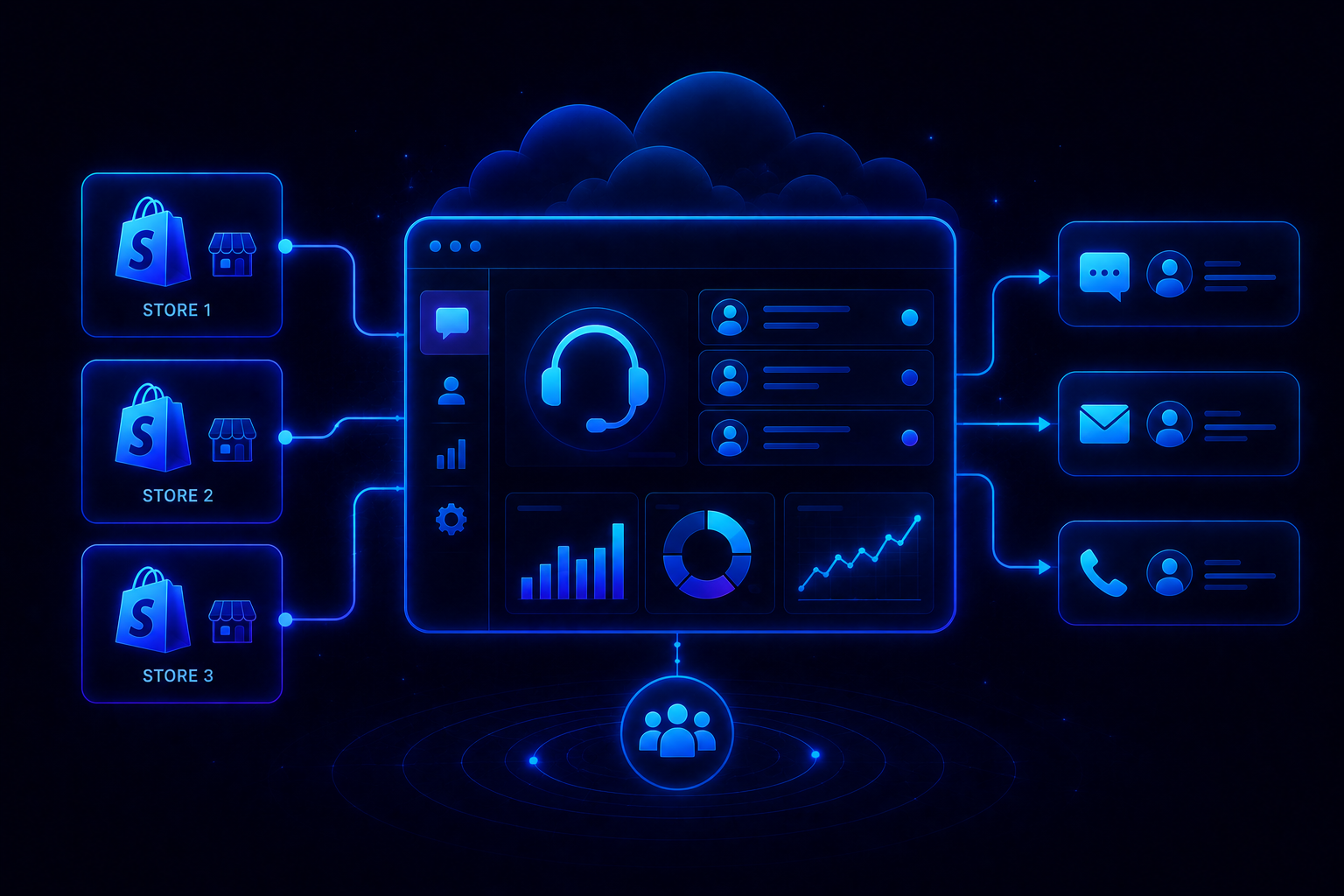
QuantumDesk is an AI-native customer service platform built for fashion ecommerce brands managing high-volume post-purchase support across multiple channels without expanding support headcount.
QuantumDesk turns post-purchase interactions into retention opportunities. Fashion brands resolve delivery and return queries faster, reduce repetitive support load, and build the post-purchase experience that gives customers a real reason to come back.
For fashion brands evaluating their options, the best customer service software for ecommerce brands shows where AI-native platforms consistently outperform disconnected tool stacks during seasonal campaigns and high-return periods.
What Are QuantumDesk's Key Capabilities?
- Quantum AI automatically resolves repetitive post-purchase conversations involving delivery tracking, return timelines, exchange eligibility, and refund status across WhatsApp, chat, email, and social without waiting for agent availability.
- AI-curated inbox prioritizes urgent complaints using sentiment, urgency, and intent detection so emotionally frustrated customers receive faster assistance before churn risk grows during seasonal campaigns.
- Quantum AI Copilot assists agents in real time with summaries, suggested replies, and next-best actions while the unified workspace centralizes WhatsApp, Instagram, live chat, and email into one view.
- Unified workspace reduces cognitive effort per interaction so agents resolve complex post-purchase situations faster without switching between disconnected tools mid-conversation.
Ready to see how it works? Book a demo to explore QuantumDesk for your team.
Frequently asked questions
1. Why does post-purchase support affect repeat purchases in fashion ecommerce?
Post-purchase support shapes customer trust after checkout. Poor delivery communication, delayed responses, and difficult returns reduce customer confidence and discourage future purchases. With over 50% of customers abandoning brands after one or two poor support experiences, the post-purchase window is where fashion brands win or lose long-term retention.
2. What causes customers to stop buying from fashion ecommerce brands?
Customers usually stop purchasing because of poor support experiences, delayed refunds, confusing returns, lack of shipping visibility, and unresolved complaints after their first order. In fashion ecommerce, where sizing uncertainty and delivery timing are already high-anxiety variables, slow or inconsistent support accelerates the decision to switch brands permanently.
3. How can fashion ecommerce brands improve customer retention?
Brands can improve retention through proactive communication, AI-powered support automation, self-service returns, personalized engagement workflows, and faster customer issue resolution. Removing friction from the post-purchase experience at every stage, from delivery tracking to return processing, directly increases the probability that first-time buyers become repeat customers.
4. Why are proactive shipping updates important for ecommerce retention?
Proactive shipping updates reduce customer anxiety during delivery delays and prevent repeated support contacts, cancellations, refund requests, and negative brand experiences. Customers who receive timely, accurate updates during a delay are far less likely to cancel or request a refund than customers left waiting without communication. For a more detailed breakdown, see AI vs Human Customer Support.
5. How does QuantumDesk help improve repeat purchases for fashion brands?
QuantumDesk automates repetitive post-purchase workflows, prioritizes urgent support conversations intelligently, and helps fashion brands deliver faster, more connected customer experiences across channels. Quantum AI resolves Tier-1 queries automatically, the AI-curated inbox surfaces high-risk conversations first, and the unified workspace gives agents full context across WhatsApp, email, Instagram, and live chat without any tab switching.



.avif)