Summarize with AI
Key Takeaways
- Fast-growing D2C brands expanding into new markets split support across time zones and languages, leaving after-hours customers waiting until the next day.
- QuantumDesk connects directly to Shopify order data to resolve shipping, customs, and refund queries instantly, in the customer's own language, at any hour.
- QuantumDesk's AI-curated inbox classifies and prioritizes conversations by urgency and sentiment across every market and channel, not agent availability.
- Quantum AI answers cross-border shipping, customs duty, and refund questions using live order data, without a dedicated agent stationed in each region.
- As AI resolution rate rises, D2C brands add new markets without adding a full shift of agents per time zone.
A D2C brand that cracks its home market rarely stalls out because demand runs dry. It stalls because a customer in a new market messages support at an hour when no agent is awake, waits days for a reply in the wrong currency and language, and never orders again.
QuantumDesk is an AI-native helpdesk platform that resolves order, shipping, and customs queries instantly, pulling live data directly from Shopify, in the customer's language, at any hour, without stationing an agent in every market.
You will learn about:
- Why global expansion breaks support first: New markets add time zones, languages, and shipping realities most support operations were never built around.
- How QuantumDesk supports global customers: By resolving shipping, customs, and refund queries instantly in the customer's language using live order data.
- What outcomes founders can expect: Consistent response speed across every market, lower follow-the-sun costs, and support that scales with revenue, not headcount.
This article focuses on the specific reasons global expansion strains D2C support teams, where the gaps actually show up, and what it takes to close them without hiring a team for every region.
Why Supporting Global Customers Becomes a Growth Problem for D2C Brands
Most D2C support operations are built around one time zone, one language, and one currency, because that is what the home market required. Global expansion breaks all three assumptions at once, often faster than the support team can adjust.
A brand shipping 3,000 monthly orders domestically might add the UK, the UAE, and Southeast Asia within a single year.
Order volume triples. Support headcount does not, since staffing every new region before a market proves itself rarely makes financial sense.
The structural reasons global support strains so quickly:
- A customer messaging at 11 pm in a market with no agents on shift waits until the next business day in the brand's home country, not their own.
- Customs duties, import taxes, and delivery windows vary by destination, and a generic policy answer written for the home market is often wrong elsewhere.
- Currency and language differences mean the same query needs a different answer depending on where the customer bought from and what they were quoted.
This is not just a support inconvenience. Poor post-purchase support directly reduces repeat purchase rates, and a first-time international customer who gets a slow, generic, or mistranslated response has little reason to give the brand a second chance.
Why This Problem Gets Worse as D2C Brands Scale Internationally
Customer expectations do not adjust downward because a brand is new to their market.
What international shoppers expect from a D2C brand by default:
- A response in their own language, not a translated version of a reply written for a different market.
- Accurate answers about customs duties and delivery timelines specific to their country, not a generic global policy.
- The same response speed a domestic customer gets, regardless of the time difference from headquarters.
A brand expanding into the GCC, for instance, enters a region where omnichannel support built around WhatsApp looks nothing like the email-first model that worked at home. The channels customers prefer, the questions they ask, and the hours they are active all shift with the region.
Every new market adds its own version of this problem, unless the underlying system, not just the headcount, is built to handle it.
What Is QuantumDesk and How Does It Help Fast-Growing D2C Brands Support Global Customers?
QuantumDesk is an AI-native helpdesk platform built to resolve conversations, not organize them into queues for agents to work through.
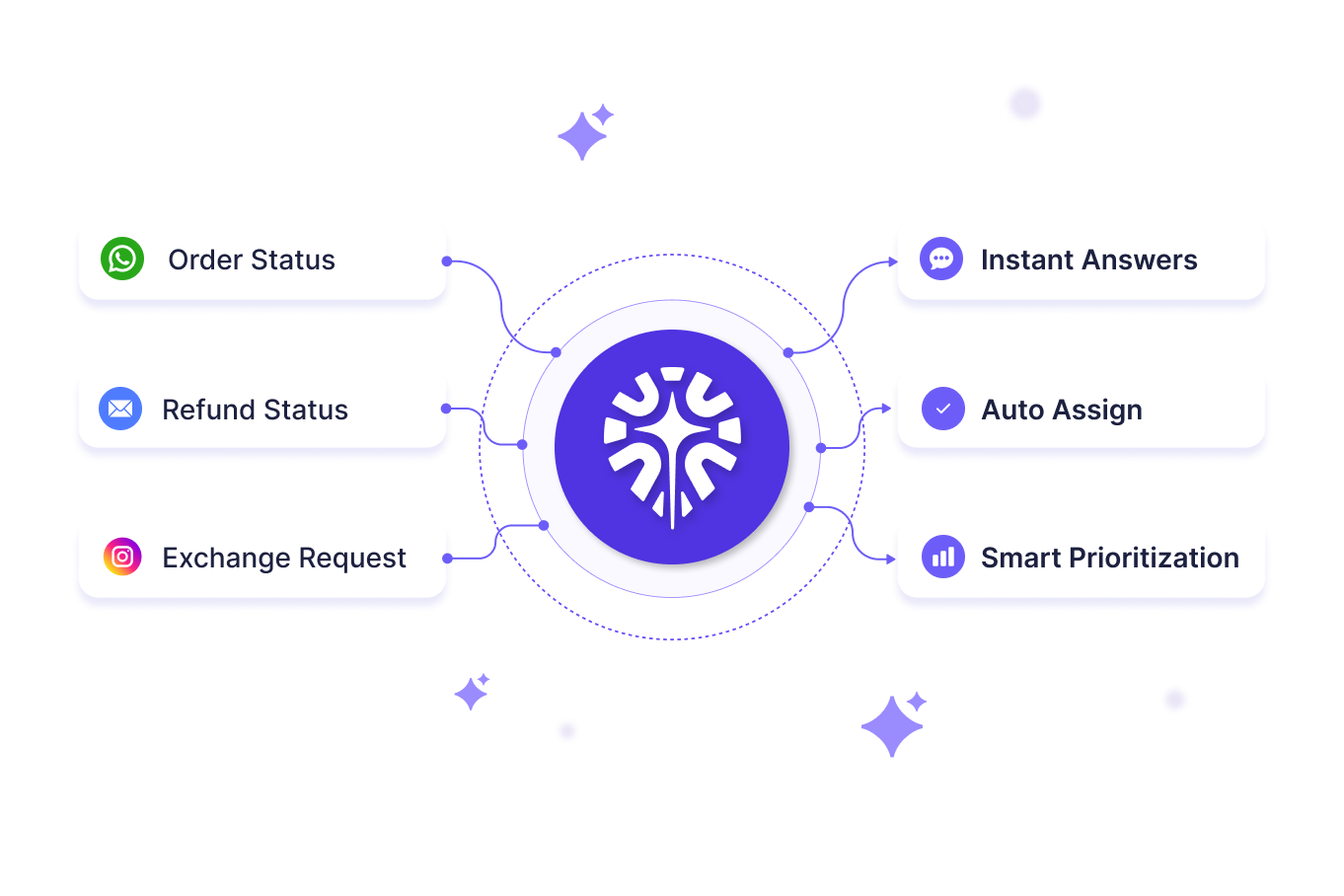
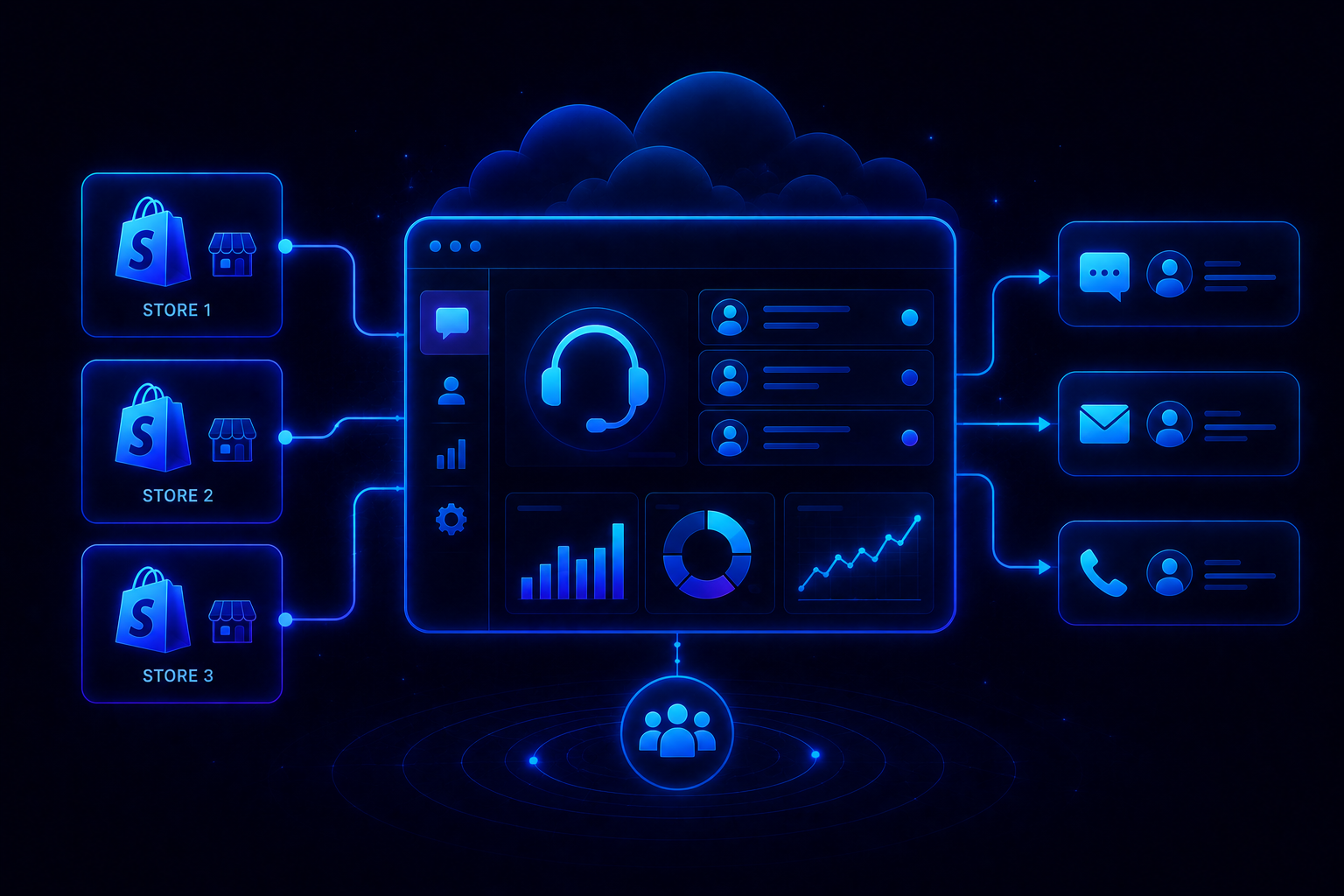
For fast-growing D2C brands, the clearest use case is global expansion. Instead of adding headcount for every new region, QuantumDesk connects directly to Shopify order data to resolve shipping, customs, and refund queries automatically, in the customer's language.
The platform combines three capabilities to support global customers:
- AI resolution answers shipping, customs, and refund queries instantly using live Shopify order and carrier data, in the language the customer wrote in.
- An AI-curated inbox classifies and prioritizes conversations across every region, so no market is deprioritized for having non-overlapping business hours.
- A unified workspace gives agents full regional context the moment a contact genuinely needs a human decision.
Where Global D2C Support Teams Spend Most of Their Time
A support queue for a brand selling into multiple countries looks chaotic on the surface. In practice, the volume concentrates around a few query types that repeat across every market, just with different specifics each time.
1. Cross-Border Shipping, Customs, and Duty Questions
International orders travel further and cross more borders than domestic ones. Every extra step is a new reason to ask where an order is.
What makes these contacts so persistent:
- Customs holds are common and unpredictable, and a tracking page frozen for days sends anxious customers straight to support.
- Import duty and tax rules differ by destination, so the same shipping question needs a different answer depending on where the order was sent.
- A shipment stuck at customs for a week often escalates into a cancellation or return request, the same pattern behind return support backlogs during any high-friction fulfillment window.
- Brands running multiple Shopify storefronts or markets for different regions often have order data split across stores, making one consistent answer harder to give.
2. Time Zone Gaps That Turn Into After-Hours Backlogs
A team staffed for one time zone is unavailable for most of the day everywhere else a brand sells.
What time zone gaps do to a growing support operation:
- Every contact sent outside home-team hours starts hours, sometimes a full day, behind where it should be.
- Customers in newer markets learn support is slow, and that perception spreads faster than a single new hire can fix it.
- Extending coverage with shifts or contractors adds cost immediately, well before a new market has generated enough revenue to justify it.
3. Language and Currency Mismatches at the Point of Contact
A customer writing in their own language expects a reply in that language, not a mistranslated response that misses tone.
What makes language and currency mismatches costly:
- Agents without native fluency default to English or manual translation tools, frustrating customers and slowing every reply.
- Multilingual support gets treated as optional until a growth-stage brand realizes new customers are messaging in a language no one on the team speaks.
- Currency mismatches on refunds and pricing generate follow-up contacts from the same customer chasing a straight answer.
These three patterns are structural. They come from expanding into markets support was never built for, and effort alone will not fix them.
How QuantumDesk Helps Fast-Growing D2C Brands Support Global Customers
QuantumDesk resolves global queries through three connected capabilities: multilingual AI resolution, region-blind prioritization, and live shipping data in every response.
- Quantum AI answers a customer in Manila, Dubai, or Berlin in their own language, using their actual order data, regardless of the hour at headquarters.
- For brands running Shopify Plus across multiple storefronts or markets, native Shopify integration pulls order, shipping, and customer data straight into the conversation, so a customer in Dubai never gets an answer meant for the US store.
- The AI-curated inbox ranks conversations by urgency and sentiment, not by which region's hours match an agent's shift. A customs delay in a new market surfaces ahead of a routine domestic question.
- Live shipping and customs data flows into every reply, so import duty and delivery answers reflect the customer's actual shipment, not a generic global policy.
How QuantumDesk Helps Agents Handle Complex Global Support Contacts
Not every international query resolves automatically. A customs dispute needing paperwork, a lost shipment, or a currency conversion error still needs a human judgment call.
QuantumDesk is designed to ensure those contacts reach agents with full regional context already surfaced:
- Agent Copilot surfaces order history and shipping status the instant a ticket opens, along with prior conversations and the currency the customer was quoted.
- AI-curated inbox ranks complex, high-urgency contacts from any market first, so a missing shipment competes on urgency, not on which hours it arrived.
- Unified inbox keeps every channel and region in one workspace, giving agents full history whether a contact came through WhatsApp, email, or chat.
When agents are not rebuilding regional context from scratch, they can focus entirely on the judgment calls international support actually requires.
Why Traditional Helpdesk Software Struggles to Support Global D2C Customers
Most helpdesk platforms assume one team working one set of business hours, an assumption that breaks the moment a brand sells internationally.
- Follow-the-sun staffing is expensive to sustain: hiring agents or running shift rotations per region adds payroll cost before a new market proves itself, and more agents rarely fix the underlying problem.
- Translation is bolted on, not built in: agents lean on their own language skills or generic plugins, neither producing accurate, context-aware replies.
- No native link to shipping, customs, or currency data: agents check Shopify or a separate system manually, producing slow, inconsistent answers across regions.
- Efficiency gains do not solve a coverage problem: faster macros help during a shift but do nothing for the hours no agent is working at all.
Closing these gaps means resolving contacts automatically across every time zone and language, not staffing harder against them.
AI Resolution Rate: QuantumDesk's Core Advantage for Global D2C Brands
First response time and shift coverage are useful, but for a brand expanding into new markets, they measure the wrong thing. A team can extend its hours and still leave most of the world uncovered for most of the day.
The metric that matters more is AI resolution rate: the share of conversations resolved automatically, regardless of time zone, language, or channel.
QuantumDesk centers on this metric because it determines whether a brand can scale support with AI as it enters new markets, rather than rebuilding staffing per region.
Why AI resolution rate matters more than shift coverage:
- A higher AI resolution rate means customers in any market get an accurate response instantly, not whenever a matching-language agent comes online.
- Coverage stops being a function of payroll, since Quantum AI runs continuously across every time zone without a shift assigned to it.
- New markets can be tested without a corresponding hiring plan, since routine queries do not need to be rebuilt per region.
Brands that expand successfully are not the ones hiring fastest. They are the ones whose support was never built around a single time zone.
What Fast-Growing D2C Brands Can Realistically Expect From QuantumDesk
Outcomes depend on how many markets a brand serves and how complete its shipping and customs data is.
1. Operational Outcome
Response speed becomes consistent across every market, not fastest at home and slowest everywhere else.
Agents spend time on genuine judgment calls, not repeating the same shipping answer in a dozen variations. For brands on Shopify Plus, this holds true across every connected storefront.
2. Customer Outcome
A shopper in a new market gets the same speed and quality as one in the founding market, in their own language. Shipping and refund answers reflect their actual order and destination, not a generic policy that was never quite accurate for their country.
3. Financial Outcome
Support cost per contact stays predictable as the brand adds markets, since AI absorbs routine volume that would otherwise need a new regional hire. Global expansion becomes a revenue decision again, not one quietly taxed by staffing costs for every new time zone.
Frequently Asked Questions About QuantumDesk and Global D2C Support
1. How does QuantumDesk help D2C brands support customers in different countries?
QuantumDesk resolves shipping, customs, and refund queries automatically using live order data, in the customer's own language, regardless of time zone.
Contacts needing a human reach agents with full regional context already surfaced, so international customers are never a lower priority than domestic ones.
2. Can QuantumDesk handle customer support in multiple languages?
Yes. Quantum AI responds in the customer's own language using live order data, so a query never waits for a bilingual agent to log on.
Complex contacts that reach agents include the original language and context, reducing translation errors in escalated replies.
3. Does QuantumDesk provide 24/7 coverage without hiring agents in every time zone?
Yes. Quantum AI runs continuously across every connected channel and market, so after-hours messages still get an accurate, immediate response.
Contacts needing a human are queued with full context for the next available agent, regardless of region.
4. Can QuantumDesk answer customs and import duty questions accurately?
QuantumDesk connects to live order and shipping data, so answers about customs status and delivery timelines reflect the customer's actual shipment and destination.
Disputes needing manual resolution route to agents with the relevant shipment and customs details already surfaced.
5. Does QuantumDesk replace the need for regional support teams?
No. QuantumDesk automates the high-volume, repeatable queries that dominate international support, so a smaller team can cover more markets.
Complex, region-specific judgment calls still reach a human agent, working with context already provided by the AI-curated inbox and copilot.
6. Does QuantumDesk work for D2C brands running multiple Shopify stores across regions?
Yes. QuantumDesk connects directly to Shopify order and customer data across storefronts, so Quantum AI always pulls the order details specific to the store and region a customer actually bought from.
Brands managing separate Shopify Plus markets or storefronts avoid the mismatched answers that come from support tools with no native connection to Shopify.



.avif)