
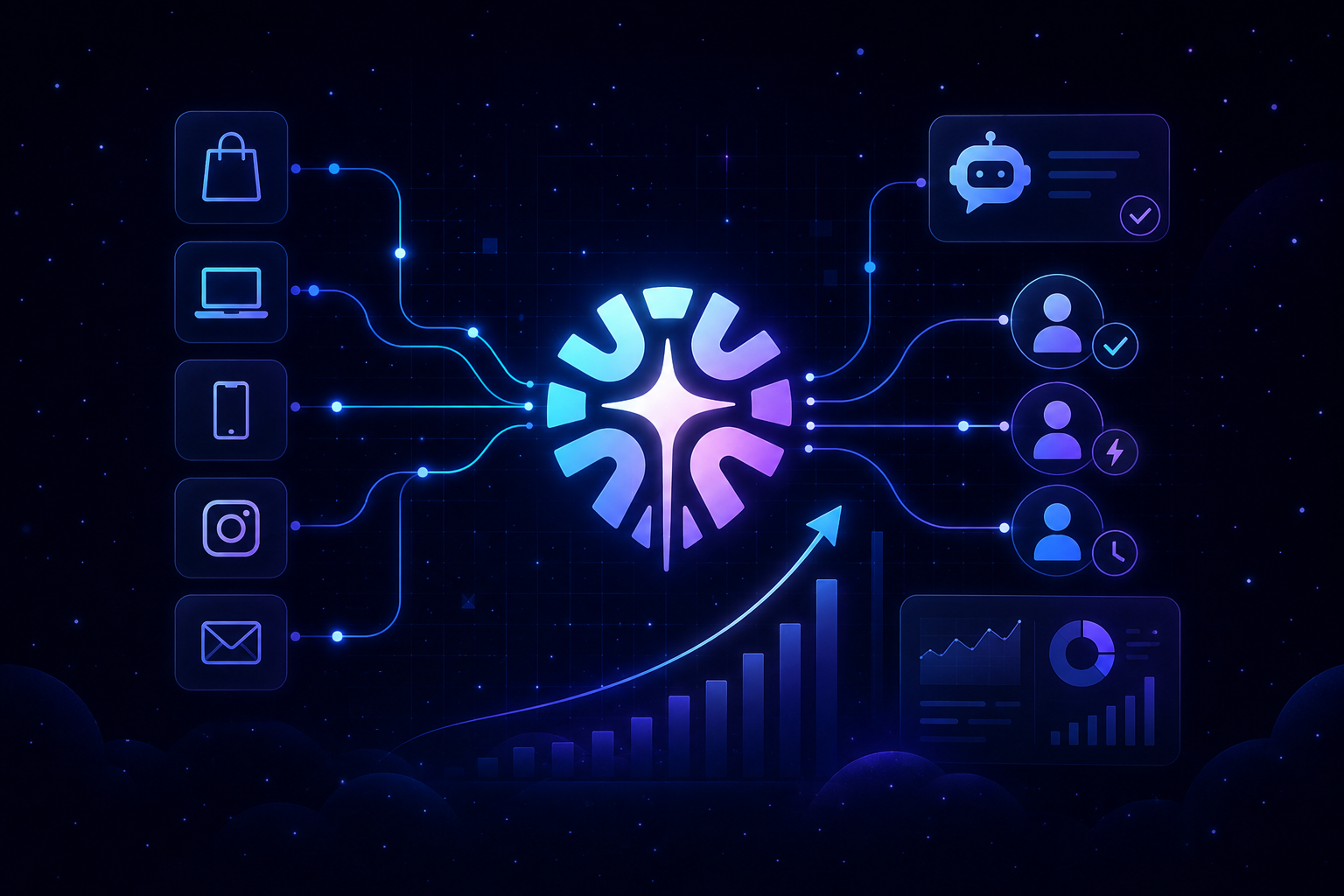
Summarize with AI
Key Takeaways
- Support volume outpaces order volume at scale, since repetitive tickets like WISMO and returns multiply faster than teams can hire.
- QuantumDesk's AI resolves WISMO, returns, and product questions instantly, improving response times by up to 75% before tickets reach agents.
- QuantumDesk automates end-to-end workflows like refunds and order changes, resolving over 80% of routine conversations without any agent involvement.
- AI resolution rate, not handle time, determines cost per resolution and how well support holds up during traffic spikes.
- QuantumDesk's agent copilot and unified inbox let teams handle more conversations per agent, scaling support capacity without expanding headcount.
Support teams at growing D2C brands often hit a wall around the same time: when order volume doubles but the queue triples, and suddenly every week feels like a Black Friday drill.
QuantumDesk is an AI-native helpdesk platform built to help support teams resolve more conversations automatically, so volume growth stops being a staffing problem.
From this article, you will learn about:
- Why support becomes difficult to scale: Repetitive ticket types multiply faster than teams can hire, train, and retain agents to handle them.
- How QuantumDesk addresses the problem: By resolving routine conversations through AI before they reach a human queue, not just routing them more efficiently.
- What outcomes teams can expect: More issues closed without agent involvement, lower cost per resolution, and a queue that no longer grows proportionally with the business.
The focus here is on the operational workflows support teams actually run, where capacity disappears, and what it takes to scale customer support without rebuilding your team from scratch every growth phase.
Why Customer Support Becomes a Growth Bottleneck for D2C Brands
A brand going from 1,000 to 10,000 monthly orders does not get ten times busier in a linear way. The support problem changes character. Customers contact you across more channels. Product lines expand. Shipping carriers vary by region. Promotions generate questions that did not exist before.
What was manageable with three agents and a shared inbox stops working entirely.
- Ticket volume does not track order volume one-to-one. During a sitewide sale or a delayed shipment wave, contacts can outpace orders by a significant margin.
- Agents spend a large share of each shift answering questions with predictable answers like order status, return eligibility, and estimated delivery that do not require human judgment to resolve.
- Each new hire requires weeks of onboarding before they can independently manage complex conversations in a fast-moving growth environment, where lag compounds quickly.
Hiring more agents rarely fixes the underlying problem. Every agent you hire needs to be trained, managed, and retained. During a slow quarter, they are a fixed cost. During a spike, there are still not enough.
Why This Problem Gets Worse as D2C Brands Grow
Customer expectations do not stay flat as a brand matures. Customers who tolerated a 24-hour response window early on expect something closer to immediacy once a brand reaches mid-scale.
Support complexity compounds as a brand scales. What starts as one product sold through one channel quickly becomes:
- 80+ SKUs across multiple product categories, each generating its own support questions
- Three or more sales channels, each carrying different customer expectations and communication habits
- Two or more fulfillment partners with varying delivery timelines and carrier policies
- A subscription product running its own billing and cancellation workflow entirely
Promotions add another layer. Managing support during flash sales and limited-edition drops is operationally different from steady-state support: the volume lands all at once, and agents are fielding questions they have never seen before. Standard processes written for steady-state operations tend to crack under that pressure.
At some point, the support function needs an operating model built for variability, not just additional capacity added to one that was never designed to scale.
What Is QuantumDesk and How Does It Help D2C Brands?
QuantumDesk is an AI-native helpdesk platform designed around one core question: how many customer conversations can be resolved without a human agent touching them? That is a different design objective than most helpdesk software, which is built to make ticket management faster rather than to reduce the number of tickets that require human work.
The brands that see the clearest results are D2C operations in categories where order-related inquiries dominate the queue: apparel, supplements, beauty, home goods, and any business shipping physical products to consumers at volume.
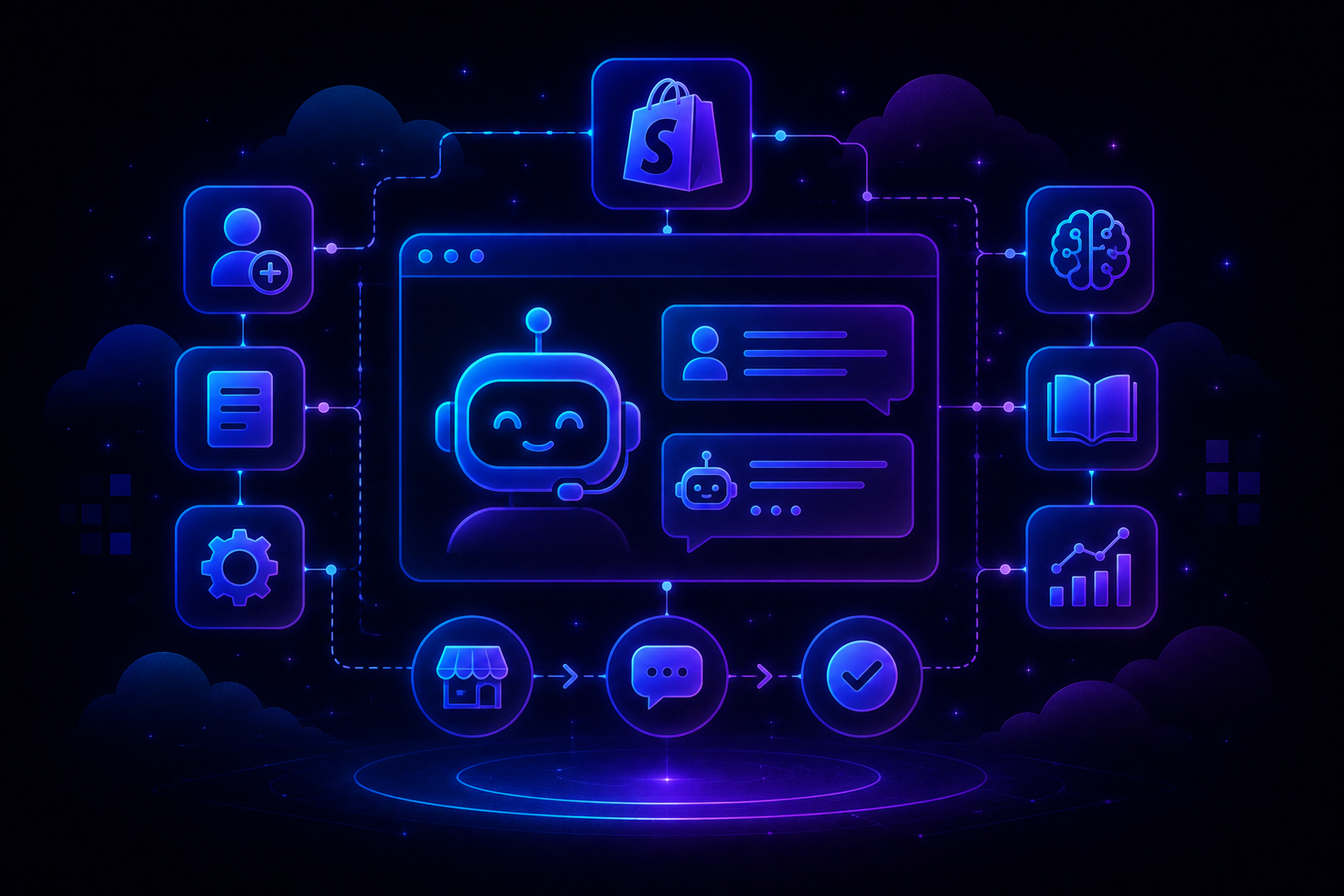
QuantumDesk combines three core capabilities to cut the share of conversations that need a person to respond:
- AI resolution that handles routine queries automatically, before they reach a human queue
- Automated support workflows that execute actions like returns and refunds end-to-end without agent involvement
- An agent copilot that equips human agents with full context and suggested responses for the conversations that genuinely need them
Ready to Scale D2C Support Without Hiring? Resolve more customer conversations automatically, reduce support costs, and scale your D2C support operations without expanding your support team - Book a Demo
Where D2C Support Teams Spend Most of Their Time
Most support queues in D2C ecommerce are not as diverse as they look. Strip out the one-off requests, and the majority of volume comes from a small number of repeating inquiry types that arrive in different wordings but require the same answers.
1. Order Status and Shipping Questions
WISMO ("Where is my order?") is the single largest ticket category for most D2C brands at scale. It survives every fulfillment improvement because demand for it is behavioral, not logistical.
Why WISMO keeps filling the queue despite better tracking:
- Some customers contact support first before checking their email or the tracking link, regardless of how prominently it is displayed
- Each contact requires individual handling from an agent who must pull the order, check the carrier, and write a response identical in substance to the last fifty sent
- Volume spikes independently of delivery performance — a delayed shipment wave generates more contacts per order, not fewer
2. Returns and Refund Requests
The return workflow is more time-consuming than most people outside support appreciate. A single return does not generate one ticket; it generates a sequence spread across days.
The full return sequence, step by step:
- A ticket is raised requesting the return
- A label request is processed and sent to the customer
- The system is updated to reflect the pending return
- A follow-up confirms the item was received
- A second contact often arrives when the refund takes longer than expected
The refund itself might process in 48 hours. The support work around it can span two weeks. Reducing return support backlog requires either more agents or a fundamentally different approach to how returns are handled.
3. Product and Inventory Questions
Pre-purchase and post-purchase product questions are harder to automate because accurate answers require up-to-date product knowledge that changes frequently.
Where agent time actually goes for product queries:
- Switching between the helpdesk, product catalog, and internal notes before any answer is possible
- Checking a Slack channel with the merchandising team to confirm real-time inventory or ingredient details
- Answering questions no FAQ covers, such as whether a supplement is safe during pregnancy or whether a jacket runs true to size
- Repeating the same answers because no single source of truth exists across the support workflow
What makes this pattern worth understanding is that none of these three categories requires genuinely complex judgment to resolve. They consume support capacity not because they are difficult, but because they are constant.
How QuantumDesk Uses AI to Resolve Repetitive Support Requests
A well-run support team can optimize workflows, improve macros, and train agents until response times drop significantly. And yet the queue keeps refilling.
The real problem in high-volume D2C support is not handling speed: it is handle rate. The work keeps coming regardless of how efficiently the team processes it.
1. AI-Powered Instant Responses
QuantumDesk's AI handles inbound questions immediately, pulling from live order data, shipping integrations, and configured policy settings to generate accurate responses without agent involvement. A customer asking about their shipment gets a real answer in seconds, not a ticket acknowledgment and a wait time.
2. Automated Support Workflows
For requests that require action beyond an answer, such as initiating a return, processing a refund, or modifying an order, QuantumDesk automates the full support workflow end-to-end. The conversation reaches a resolution without entering a queue, which means no wait, no agent time, and no follow-up ticket asking for a status update on the first ticket.
3. Knowledge-Based AI Resolution
Product questions, policy questions, and procedural questions are answered through a connection to the brand's knowledge base. Consistency improves because the AI does not rely on which agent picks up the ticket or how recently they were trained. The answer is the same every time, and it is retrieved in seconds.
Taken together, these capabilities shift the question from "how do we handle tickets faster?" to "how many of these tickets need to be handled at all?"
How QuantumDesk Helps Teams Handle More Conversations Without Hiring
There is a version of support efficiency that comes entirely from making agents faster: better tools, better macros, better triage. That matters, and QuantumDesk addresses it. But the bigger opportunity is reducing the number of conversations that ever require an agent in the first place.
1. AI Agent Copilot
For conversations that reach a human agent, QuantumDesk's AI copilot reduces the time spent gathering information before the conversation can progress.
What the copilot surfaces automatically:
- Order history and prior contacts, so agents understand the full customer context before responding
- Issue type and classification have already been identified, so agents can focus on resolution rather than diagnosis
- Suggested response options drafted from existing knowledge and conversation data, ready to review and send
2. Intelligent Routing
Manual triage is one of the quieter time sinks in support operations. At scale, the time spent reading and categorizing tickets before they reach the right agent adds up considerably.
How QuantumDesk handles routing differently:
- Conversations are classified by intent and complexity before any human touches them
- Agents receive pre-matched work already aligned to their skill set, removing the need for manual reassignment
- Routing adjusts automatically based on volume patterns, so the queue stays organized during spikes
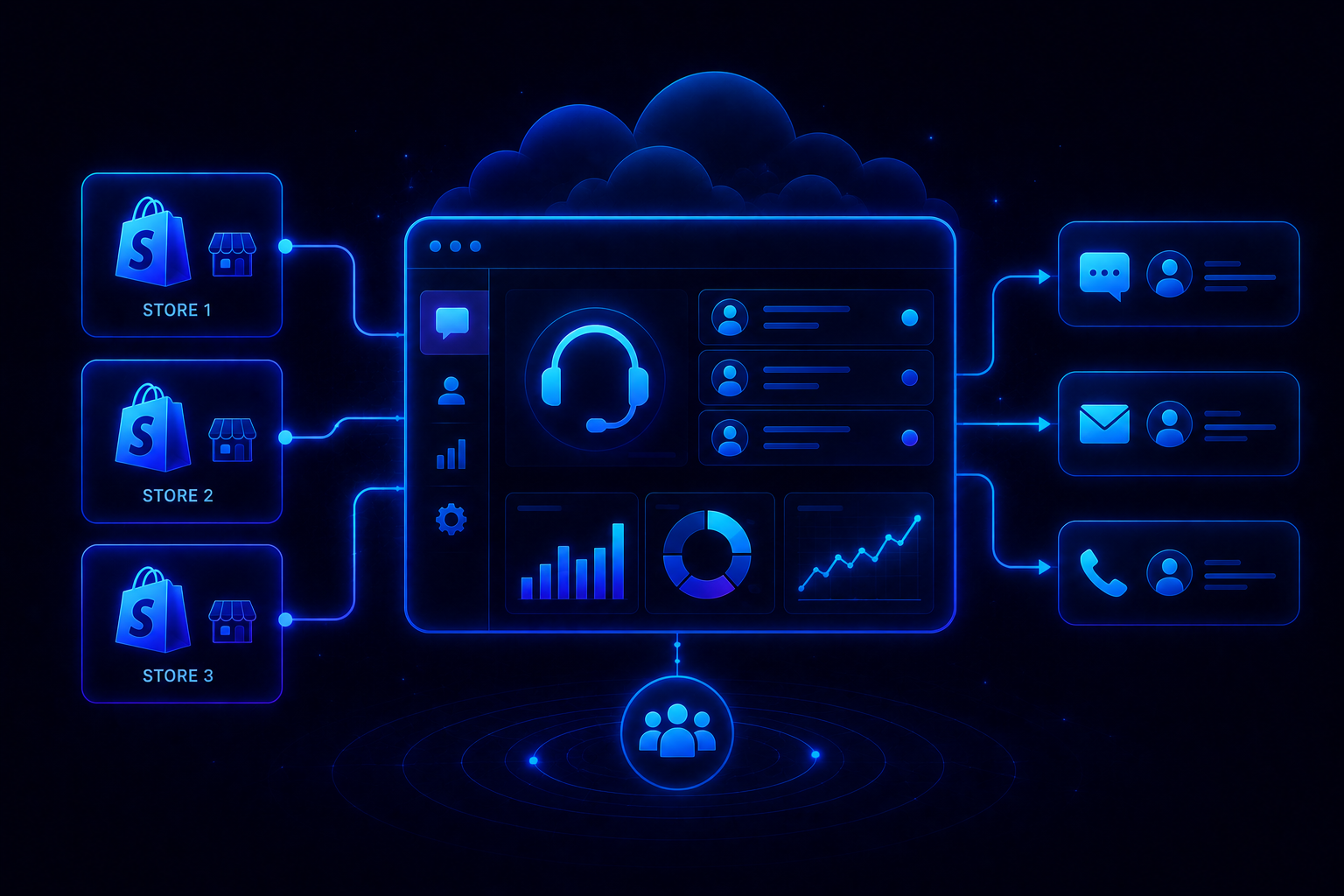
3. Unified Customer Context
One of the most common complaints from support agents is piecing together customer history across multiple systems before they can even start helping.
What agents see in a single workspace:
- Complete order history, including current shipment status and past purchases
- Channel history covering every prior conversation, regardless of where it started
- Prior interaction context, so agents never ask a customer to repeat information they have already provided
Support teams using these tools handle a larger share of volume per agent. That does not mean the team shrinks. It means the team you have can grow with the business for longer before you need to add headcount.
Why Traditional Helpdesk Software Struggles to Handle D2C Scaling Problem
The dominant design philosophy in traditional helpdesk software is queue management. Tickets come in, get categorized, get assigned to agents, and get tracked through to resolution. For D2C brands at scale, that design creates specific limitations worth understanding.
1. Built Around Tickets, Not Resolutions
Every traditional helpdesk is built to move tickets through a workflow more efficiently. It organizes, categorizes, assigns, and tracks. But none of that touches the underlying question: whether the ticket needed to exist in the first place.
2. Every Contact Assumes a Human Response
The core assumption in traditional helpdesk design is that every customer contact requires a human response. At low volumes, this worked. For D2C brands processing thousands of monthly orders, it creates a ceiling that only headcount can raise.
3. Efficiency Gains Have Diminishing Returns
Better macros, smarter assignments, and tighter SLAs can reduce handle time. But they cannot change the fundamental math. Once efficiency improvements are maxed out, the only remaining lever is headcount, which resets the problem at a higher cost.
4. Volume Spikes Expose the Structural Gap
Built for steady-state volume, traditional helpdesks have no structural answer to spikes. During a flash sale or a delayed shipment wave, the queue grows faster than agents can clear it. Temporary staffing is the only short-term fix.
- Traditional helpdesks optimize for how quickly tickets move through a workflow.
- QuantumDesk optimizes for how many conversations reach resolution without entering a workflow at all.
- A higher AI resolution rate means lower dependence on headcount as the primary variable in support capacity.
The distinction matters because it determines what the software is actually built to do. Better ticket management makes an existing process more efficient. Higher AI resolution rates change the economics of the process entirely.
If you are evaluating your options, this breakdown of customer service software for e-commerce brands covers the key differences in how platforms approach this problem.
AI Resolution Rate: QuantumDesk's Core Advantage
For years, support teams tracked first response time, handle time, and tickets closed per agent per day. These metrics measure how quickly work moves through the queue. They do not measure how much of that work is needed to happen at all.
QuantumDesk centers on a different metric: AI resolution rate, the percentage of conversations that reach a complete resolution without any agent involvement.
For D2C brands specifically, understanding what AI resolution rate looks like in apparel and ecommerce support makes it clear why this number matters more than handle time. It directly determines how many agents you need, what your cost per resolution looks like, and how well the support operation holds up under volume spikes.
Why the AI resolution rate is the right metric to track:
- A higher AI resolution rate means fewer conversations requiring agent time, which reduces cost per resolution without requiring process changes or headcount cuts.
- Lower cost per resolution allows the support operation to absorb order volume growth without a corresponding budget increase.
- Customers contacting about routine issues get answers immediately, without waiting for agent availability.
The real value of tracking this metric is that it shifts the conversation from "how do we handle tickets faster?" to "how do we need fewer tickets to be handled at all?" For a D2C brand at the growth stage, that is a more useful question to be asking.
What D2C Brands Can Realistically Expect From QuantumDesk
Outcomes vary by implementation, existing tooling, and the state of the brand's knowledge base and policy documentation. That said, the categories of impact are consistent.
1. Operational Outcome
Support teams handle a larger share of inbound volume without adding headcount. The ratio of conversations per agent improves as AI resolves more contacts before they reach the queue.
- AI resolves a growing percentage of contacts before they reach the agent queue, reducing per-agent workload without reducing team size
- The queue no longer grows proportionally with order volume, because AI absorbs the repeating workload before it reaches a human
- During peak periods such as sale events, product launches, and holiday shipping windows, the team maintains response standards without emergency staffing
2. Customer Outcome
Customers contacting about order status, return eligibility, or product questions receive accurate answers immediately, regardless of time zone or queue depth.
- Response accuracy improves because AI pulls from live order data and a consistent knowledge base, not agent memory or recent training
- Response consistency holds across every channel, since AI-handled conversations do not vary by which agent picks up the ticket
- Improving CSAT during high-volume periods becomes structurally possible when resolution does not depend on queue depth or shift coverage
3. Financial Outcome
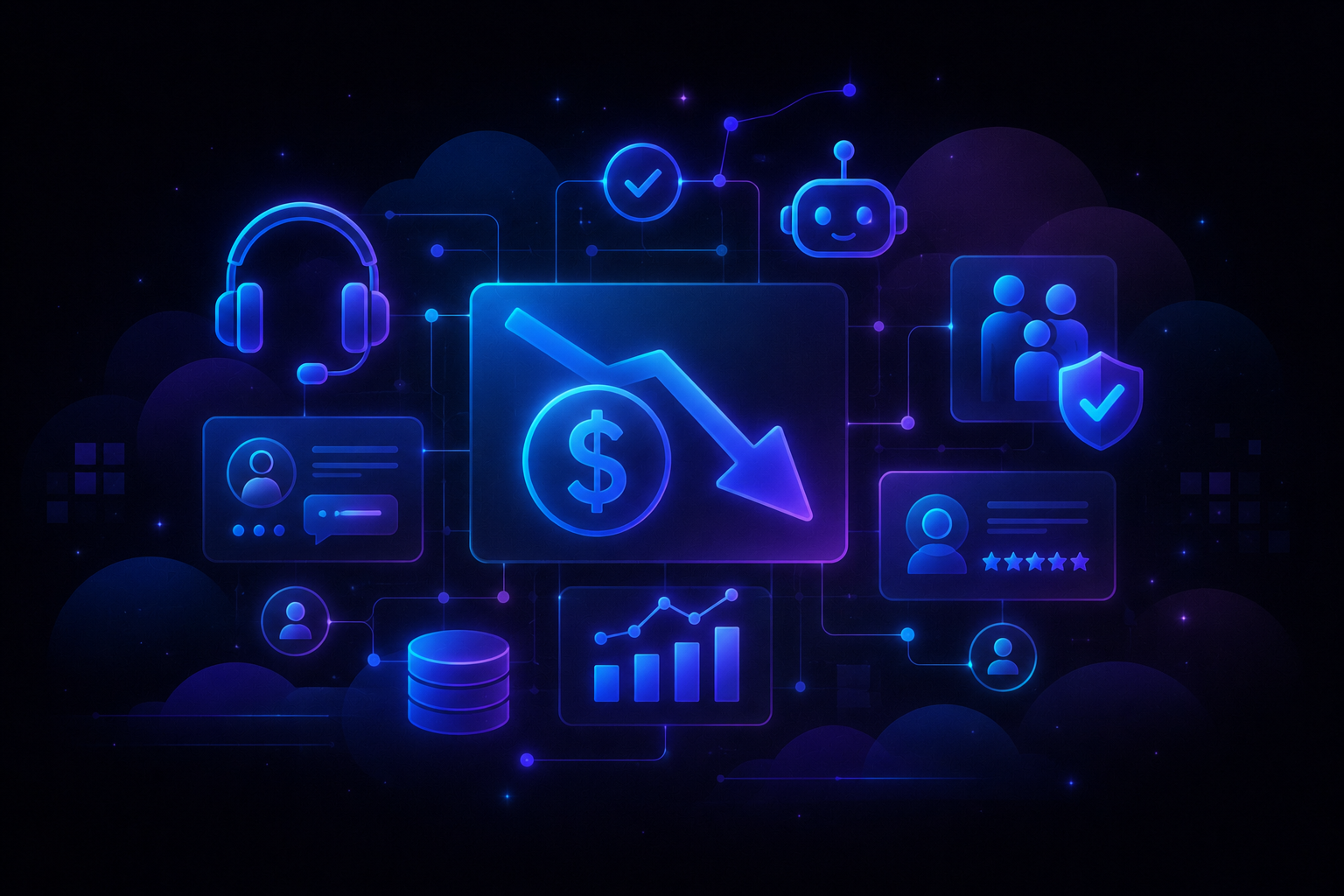
Support cost as a percentage of revenue decreases as the AI resolution rate increases. The cost structure shifts from one that scales with headcount to one that scales with AI capacity.
- Cost per resolution decreases without requiring process overhauls or team restructuring
- Support budgets become more predictable, easier to model against order volume growth for finance and operations leaders
- The cost curve flattens as AI absorbs a larger share of the repeating workload, decoupling support spend from order volume
Frequently Asked Questions About QuantumDesk for D2C Brands
1. How does QuantumDesk help D2C brands scale customer support?
QuantumDesk increases support capacity by resolving inbound conversations through AI before they reach an agent queue. It connects to order management systems, shipping data, and the brand's knowledge base to handle routine contacts automatically.
As order volume grows, AI resolution absorbs a larger share of that load, and the team's capacity scales with AI rather than headcount additions.
2. Can QuantumDesk reduce support costs?
Yes, primarily through AI resolution rate, the share of conversations closed without agent involvement. When that number increases, the cost per resolution decreases. Brands stop needing to hire ahead of growth phases or staff up for seasonal spikes.
Over time, support shifts from a cost that grows with order volume to one that grows more slowly as AI handles more of the repeating workload.
3. What makes QuantumDesk different from traditional helpdesk software?
Traditional helpdesk platforms are built to organize and route tickets more efficiently. The assumption is that a human agent resolves every contact. QuantumDesk is built to close conversations before they need a human. AI resolution rate is the primary performance metric, not ticket throughput or handle time.
For a full comparison of what differentiates platforms at this level, this list of the best AI help desk software covers the key criteria worth evaluating.
4. Does QuantumDesk replace support agents?
No. QuantumDesk handles the repeating, high-volume inquiry types that do not require human judgment, which frees agents to focus on conversations that do. The agent copilot also improves how agents handle the tickets that reach them, surfacing context, suggesting responses, and reducing the time spent gathering information. For a closer look at how this division of work plays out in practice, this breakdown of AI vs human customer support covers where each performs best.
5. How quickly can D2C brands see value from QuantumDesk?
Most teams see measurable changes in resolution rates and agent workload within the first few weeks. Speed depends on the quality of existing policy documentation, knowledge base completeness, and integration with order management systems.
Brands with clear, documented support workflows and accurate product information see faster initial results. Resolution rates continue to improve as the AI processes more conversation data and the knowledge base is refined over time.
6. Can QuantumDesk automate order status and return inquiries?
Yes. Both are among the highest-volume, most repeatable inquiry types in D2C support, and both are well-suited to full AI resolution. For order status, QuantumDesk pulls live shipping and order data to respond accurately without agent involvement.
For returns, automating refund and exchange status updates means the full workflow, from eligibility check to label issuance to customer communication, completes end-to-end without the agent needing to touch it.



.avif)