
Summarize with AI
Key Takeaways
- Hiring more agents often increases operational complexity because repetitive tickets and broken workflows continue generating support volume.
- Many D2C support tickets originate from website clarity, shipping visibility, and product information gaps rather than true support needs.
- Fragmented systems force agents to switch between tools, reducing productivity and increasing customer wait times.
- Agentic AI and proactive customer experience design reduce repetitive ticket volume before additional staffing becomes necessary.
- AI works best when handling repetitive requests while human agents focus on complex conversations that require empathy and judgment.
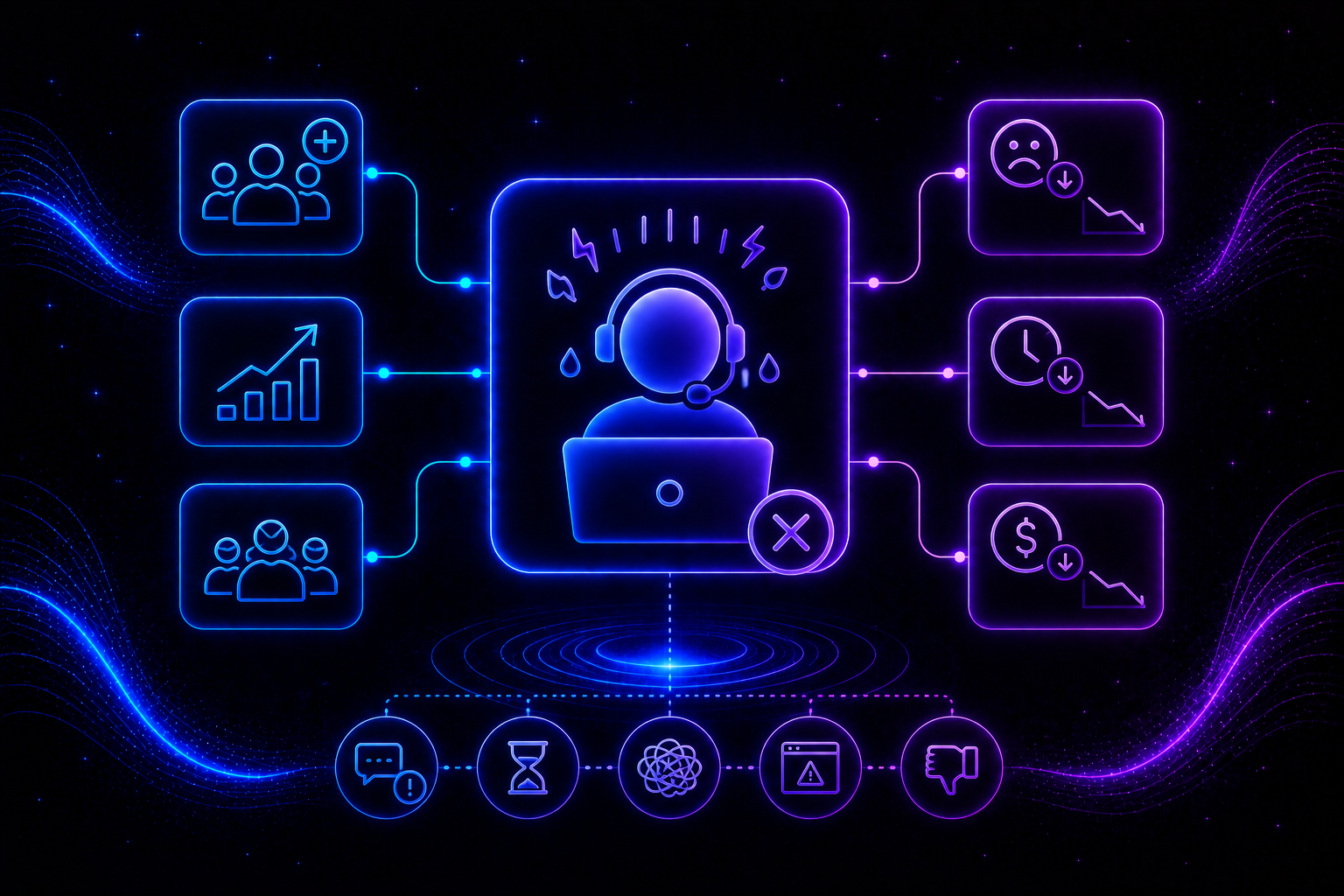
Many D2C brands respond to growing ticket volume by hiring more support agents, but operational problems often remain unchanged.
Customer support demand continues growing across ecommerce, D2C apparel, cosmetics, food and beverage brands, and SMBs. More than half of support agents regularly switch between multiple systems to resolve customer issues, creating inefficiencies that additional hiring cannot eliminate.
I ordered a limited-edition hoodie → tracking stopped updating for six days → contacted support through WhatsApp → received a generic reply → emailed support later → still waited days for a meaningful answer.
Common signs hiring more agents is not fixing operations:
- Ticket volume continues increasing despite adding support staff.
- Agents spend time answering the same questions repeatedly.
- Customers wait longer even as team size grows.
- Support teams switch between multiple disconnected systems.
You will learn how to improve D2C support operations by reducing repetitive tickets, fixing workflow bottlenecks, and combining AI with human expertise effectively.
Quick Comparison: Hiring More Agents vs Fixing Support Operations
Why Adding More Agents Often Creates New Support Problems
When support operations struggle, hiring feels like the fastest solution. However, adding people to inefficient workflows often increases complexity rather than improving customer experience outcomes.
1. Repetitive Tickets Continue To Enter The Queue
Many support teams respond to growing ticket volume by hiring more agents without investigating why those specific tickets are entering the queue at all.
- Questions about order status, delivery timelines, returns, and account issues continue flooding queues regardless of how many agents are on the team.
- The same queries that occupied five agents continue occupying ten, because the root cause of the volume was never addressed.
- D2C brands processing 3,000 monthly tickets where 60% are repetitive L1 queries add headcount but not resolution speed.
- Hiring without fixing the ticket source keeps the operation in a cycle where team size grows and productivity per agent stays flat.
2. Training Delays Slows Team Performance
New agents require onboarding, coaching, and product knowledge before becoming fully productive, and that ramp period creates a performance gap exactly when ticket volume is highest.
- As ticket volume grows, experienced agents spend more time mentoring new hires than resolving customer issues, reducing overall team output during the ramp period.
- Onboarding timelines for complex D2C products can extend several weeks beyond what the initial growth plan anticipated.
- Knowledge gaps in new agents lead to longer handle times and higher escalation rates during their first months on the team.
- Every new hire also requires ongoing quality assurance investment, adding management overhead to a team already under operational pressure.
3. More Handoffs Create More Friction
Larger support teams often introduce additional layers of escalation, ownership gaps, and coordination requirements that add friction to the resolution process without improving customer outcomes.
- Customers may interact with multiple agents before receiving a complete resolution, increasing frustration and repeat contacts with each additional touchpoint.
- Each handoff risks context loss, requiring the customer to repeat information they have already provided once or twice across the same issue.
- The multi-channel customer service problem compounds this further when handoffs also cross channels, fragmenting the customer experience in ways that are difficult to reverse.
- Internal coordination between team members adds resolution time that customers cannot see but directly feel through delayed or inconsistent responses.
4. Agents Spend Time on Searching Instead Of Solving
Support teams frequently switch between ecommerce platforms, CRMs, shipping systems, returns portals, and knowledge bases before they can accurately respond to a single customer request.
- More than half of agents regularly move between multiple systems to solve one inquiry, consuming time that could go toward resolving the next conversation in the queue.
- Each tool switch is an interruption that reduces focus and increases the chance of missing critical order or customer context mid-conversation.
- Adding more agents to this fragmented environment multiplies the inefficiency rather than containing it, because every new hire inherits the same broken workflow.
- The reduce support cost ecommerce impact of this inefficiency becomes visible within months, as handle time remains high despite the growing team.
5. Support Costs Grow Faster Than Efficiency
Adding headcount increases salaries, training costs, management overhead, and quality assurance requirements, while the underlying causes of ticket volume continue generating demand at the same rate.
- The ticket-per-agent ratio stays roughly consistent when new hires join, because volume grows alongside the team rather than decreasing.
- Seasonal spikes require temporary hiring that adds onboarding cost without adding long-term operational value.
- Support costs can grow 40 to 60% year-over-year for fast-growing D2C brands even when customer satisfaction stays flat or declines.
- Teams that focus on how to scale customer support through process and automation consistently outperform those that rely on headcount expansion alone.
The problem is rarely a lack of effort from support teams. More often, the systems generating tickets are creating demand faster than teams can scale.
What Is Actually Driving High Ticket Volume In D2C Support
Most growing D2C brands discover that customer support issues often originate long before a customer contacts the support team.
1. Customers Cannot Find Information Before Purchasing
Sizing questions, delivery timelines, and return policies frequently generate support requests because customers cannot find critical information on product pages before completing their purchase.
2. Shipping Anxiety Creates Repetitive WISMO Tickets
Where-is-my-order inquiries signal that post-purchase communication is falling short. Customers seek reassurance when tracking feels unclear or delivery timelines differ from what they expected at checkout. For ecommerce customer service teams, these are the highest-volume and most predictable tickets to eliminate.
3. Product And Policy Gaps Generate Preventable Tickets
Unclear exchange policies, missing product instructions, and limited FAQs force customers to contact support for answers that could have been provided before the purchase was completed.
4. Disconnected Systems Create Customer Context Gaps
When customer information is spread across multiple tools, agents manually assemble context before responding, slowing every resolution and increasing the chance of customers repeating themselves across contacts.
5. Every New Sales Campaign Creates More Operational Pressure
Flash sales, product launches, and seasonal promotions increase order volume quickly. If underlying support processes remain unchanged, ticket volume rises at the same pace without warning.
Common ticket sources driving D2C support volume:
The fastest way to reduce support volume is not always hiring. Often, it is removing the reasons customers need support in the first place.
How AI Workflows Help D2C Teams Scale Support
High-performing support teams focus on reducing avoidable tickets while helping agents work faster with better context, automation, and operational visibility.
1. Use Proactive Customer Experience Design
Adding delivery estimates, sizing guidance, onboarding content, and clearer policies helps customers find answers independently and reduces preventable support requests before they reach the queue.
Where proactive content reduces the most tickets:
- Embedding tracking updates directly into post-purchase communications removes the uncertainty that drives WISMO volume before customers feel the need to reach out.
- Clear return windows and exchange conditions displayed during checkout and in confirmation emails reduce post-purchase policy questions significantly.
- Product pages that include fit guides, usage instructions, and FAQ sections lower pre-purchase support contacts without any agent involvement.
- Every improvement to the customer experience upstream reduces support demand downstream, making the entire operation more efficient over time.
2. Automate Repetitive L1 Support Requests
AI can resolve order tracking requests, return initiation, delivery questions, and account updates instantly, reducing queue volume while allowing agents to focus on higher-value conversations.
What AI handles without agent involvement:
- Agentic AI for customer service goes further than answering questions by taking direct action, initiating returns, pulling tracking details, and updating records in real time.
- A team processing 2,000 monthly tickets where 60% are L1 queries can operate with significantly reduced agent load once automation handles the repetitive volume.
- Automated L1 resolution is available around the clock, which means customers receive answers during flash sales and late-night browsing windows without any agent being online.
- The agents who previously handled repetitive queries can now focus on complex, emotionally sensitive conversations that actually benefit from human judgment and relationship management.
3. Centralize Customer Context In One Workspace
When customer history, orders, conversations, and support records are accessible in one place, agents spend less time searching and more time resolving issues effectively.
Why a unified workspace changes performance:
- A unified view eliminates the tab-switching that currently accounts for a significant portion of handle time across most D2C support teams.
- Agents who can see a customer's full order history, previous contacts, and channel interactions in one timeline respond faster and make fewer errors.
- Centralized context also reduces escalations, because agents with complete information can resolve most issues on first contact without passing them to a senior team member.
- This advantage is especially significant during high-volume periods when fast, accurate responses separate a resolved conversation from a public complaint.
4. Let Human Agents Handle Complex Conversations
Customers still prefer human support for emotionally sensitive, high-value, or complex situations where empathy, context, and judgment matter more than raw response speed.
Where human agents create the most value:
- AI vs Human Customer Support is not a binary choice. The most effective support operations deploy each for what it does best rather than treating them as alternatives.
- Damaged product complaints, billing disputes, loyalty-related concerns, and de-escalation conversations are where human agents deliver the most customer value.
- When AI handles the repetitive volume, agents have the bandwidth to approach complex conversations with full attention rather than splitting focus across a crowded queue.
- The result is not a smaller team. It is a more capable one that handles significantly more volume with higher consistency and lower fatigue.
5. Use Support Data To Improve Operations
Support conversations reveal recurring customer pain points that can be used to improve product pages, policies, shipping communication, and onboarding experiences continuously.
How to act on support patterns:
- Support conversations as product insights is one of the highest-return applications of data that most D2C brands are already collecting but rarely acting on systematically.
- A cluster of questions about a specific product's sizing points to a product page gap, not a support staffing gap.
- Recurring shipping complaints often reveal a carrier or communication problem that can be fixed upstream rather than absorbed by the support team indefinitely.
- Teams that close the loop between support data and operational improvements reduce ticket volume over time rather than simply managing it at a higher level each quarter.
The goal is not replacing agents. The goal is helping teams handle more conversations efficiently without continuously increasing headcount.
How QuantumDesk Helps D2C Brands Scale Support Without Expanding Teams
Many D2C support teams reach a point where hiring additional agents no longer improves response times or customer satisfaction. QuantumDesk helps businesses scale support operations by reducing repetitive work and improving agent productivity.
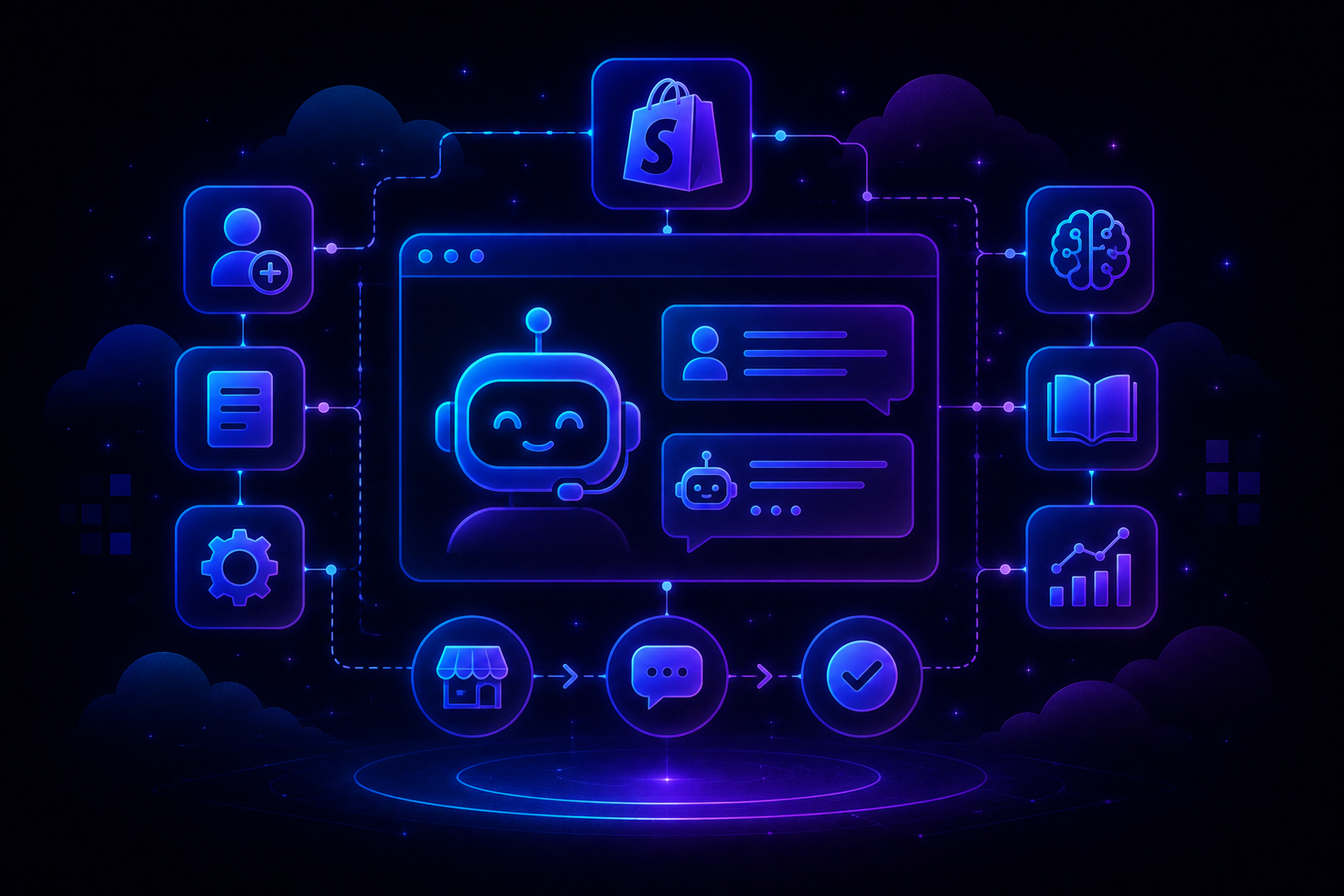
QuantumDesk combines AI-native workflows, customer context, automation, and intelligent prioritization to help support organizations handle higher conversation volumes efficiently.
For D2C brands managing growing ticket volumes across email, WhatsApp, and social channels, the difference between scaling through headcount and scaling through better infrastructure becomes most visible during campaign launches and seasonal peaks.
The best customer service software for ecommerce brands reflects this distinction clearly. Platforms built for manual workflows require proportional staffing increases as volume grows. AI-native platforms absorb the increase without adding to the team.
How QuantumDesk Helps Teams Reduce Operational Bottlenecks
- Quantum AI automatically resolves repetitive L1 requests such as order tracking, return status updates, and common customer questions, reducing queue volume before agents encounter it.
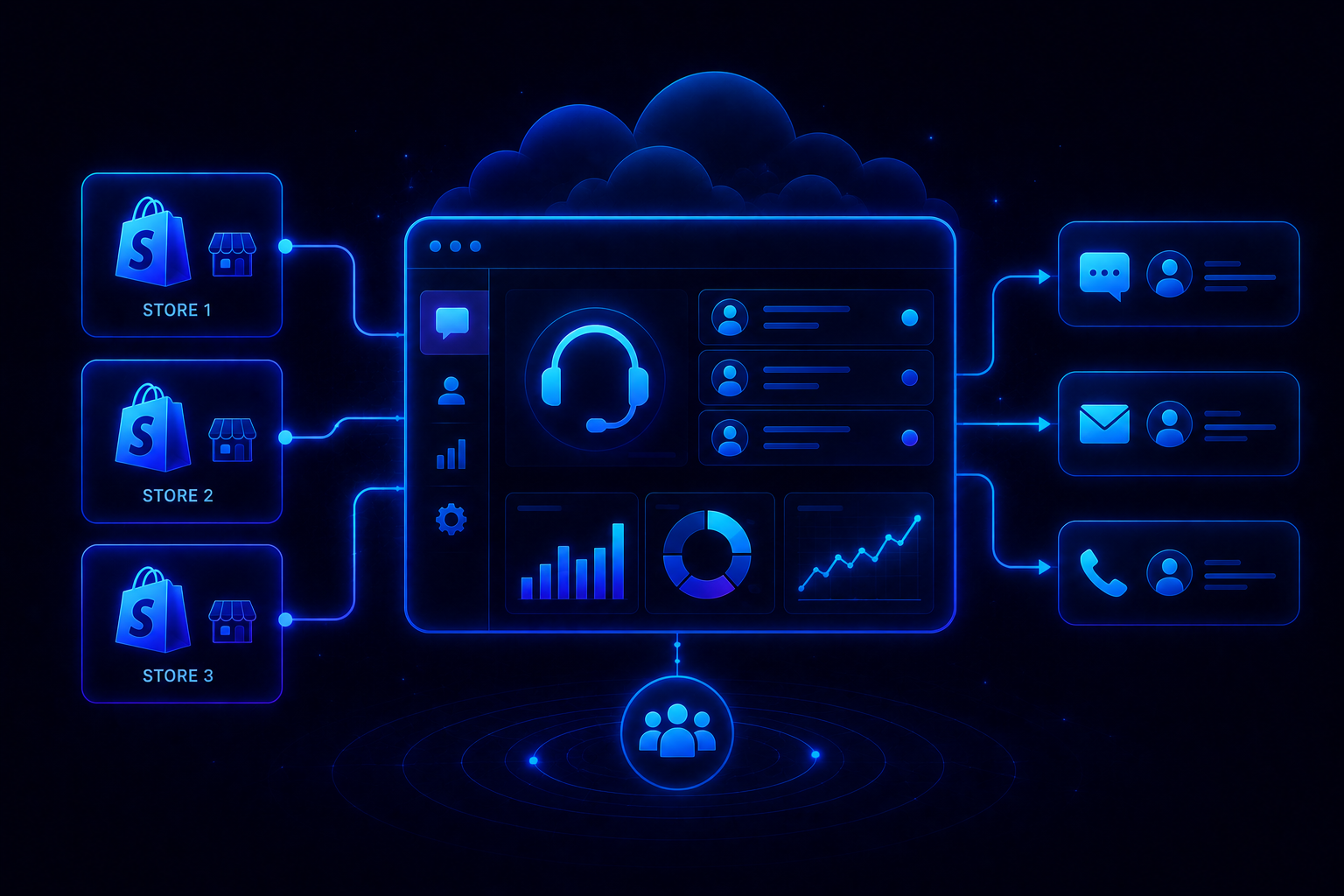
- Unified workspace centralizes customer conversations from email, WhatsApp, chat, and social channels into one complete timeline, giving agents full context without switching between tools.
- AI-curated inbox prioritizes conversations using urgency, intent, and sentiment so important customer issues receive attention first rather than surfacing after the queue clears.
- Quantum AI Copilot provides conversation summaries, response suggestions, and next-action recommendations that help agents resolve issues faster and more consistently.
By combining AI automation with human expertise, QuantumDesk helps D2C brands improve support capacity, reduce repetitive workload, and scale operations without continuously adding headcount.
Ready to scale support smarter? Book a demo with QuantumDesk.
Frequently Asked Questions
Why does hiring more support agents not solve support problems?
Hiring increases capacity temporarily, but repetitive tickets, unclear processes, and disconnected systems continue generating support demand, causing operational inefficiencies to persist at the same rate regardless of team size. The volume grows to meet whatever capacity is available when the root causes remain unaddressed.
What causes high support ticket volume in D2C businesses?
Common causes include shipping inquiries, unclear policies, product information gaps, return requests, and fragmented customer data spread across multiple systems. Many of these are preventable through better product page content, proactive post-purchase communication, and self-service tools connected to live order data.
Can AI replace support agents completely?
No. AI is most effective for repetitive requests such as order tracking, return initiation, and policy clarification, while human agents remain essential for complex issues requiring empathy, judgment, and relationship management. The strongest support operations deploy both, with AI handling volume and agents handling conversations that benefit from human care.
How can D2C brands reduce support tickets?
Brands can improve website clarity, automate repetitive inquiries, centralize customer information, and proactively communicate shipping and return updates before customers need to ask. Addressing the upstream gaps in information and visibility typically reduces specific ticket categories faster than adding agents to handle the same questions more quickly.
What is the biggest operational bottleneck for support teams?
Many teams struggle with fragmented systems that require agents to switch between tools, slowing resolutions and reducing productivity. When customer context is spread across a helpdesk, an ecommerce platform, a shipping tool, and a CRM, every conversation carries an invisible overhead cost that compounds across thousands of monthly interactions.



.avif)