Summarize with AI
Key Takeaways
- Help Scout is a highly-rated email-first platform praised for its clean, human-centric interface and ideal for growing startups and small teams.
- The dashboard feels like a regular email inbox, with internal notes and tagging helping teams collaborate and resolve tickets without agent collisions.
- The built-in Docs knowledge base and Beacon widget empower customer self-service, cutting down support volume for small to mid-sized teams.
- Help Scout's limited reporting and omnichannel constraints make QuantumDesk a stronger fit for teams needing AI-native support and multi-channel coverage.
- Users consider Help Scout the gold standard for small teams valuing high CSAT scores over ticket-heavy legacy platform experiences.
Help Scout has earned long-standing loyalty in the email-first customer support category. Many SaaS, healthcare, and SMB teams evaluate it before committing to a platform.
A D2C brand on Help Scout needing AI deflection pays $0.75 per resolved conversation on top.
Per-user costs triple from $25 to $75 as features unlock. Analytics fall short for support leaders. D2C brands on WhatsApp and Instagram find the email-centric design creates friction.
Reviews are mixed. They tend to depend on team size, channel mix, and how deeply AI is required.
You will learn about:
- What users consistently praise about Help Scout across verified review platforms
- Where users struggle or raise recurring complaints as team size, AI needs, and tier requirements grow
- When teams start considering alternatives like QuantumDesk as a more capable long-term fit
This review page is written based on public user feedback, verified review data, and market analysis.
Help Scout pros and cons at a glance
What is Help Scout and who uses it?
Help Scout is an email-first customer support platform. It is built around shared inboxes, a Docs knowledge base, the Beacon widget, and AI-assisted workflows for growing teams.
SaaS, healthcare, professional services, and SMB teams use it most often. These teams typically prioritise structured email-style support over bot-led chat experiences.
Day to day, support teams use Help Scout to manage customer email and chat conversations from one shared inbox. They deflect routine questions through Docs articles and speed up replies with AI Drafts, AI Summarize, and AI Answers.
The platform also connects to tools like Slack, HubSpot, Shopify, and Jira through its integration library.
How did we analyze Help Scout reviews?
The insights here are drawn from public user feedback, verified customer ratings, and observed usage patterns across multiple platforms, communities, and direct product assessment.
- Review platforms. Help Scout reviews on G2, Capterra, TrustRadius, and Shopify were analysed for ratings, written feedback, and recurring sentiment themes.
- Community research. User comments, discussions, and recommendations from SaaS founders, support leaders, and CX professionals across Slack groups, Reddit, LinkedIn, and SaaS forums were reviewed.
- Hands-on observations. Direct product testing and customer conversations were used to validate patterns identified across public review data and community discussions.
What do users like about Help Scout?
Most positive Help Scout reviews focus on its email-native experience, fast onboarding, strong knowledge base, and in-house customer support.
- Clean email-native customer experience. Reviewers consistently praise that replies look like normal email rather than ticket threads. This suits SaaS and professional services brands that want conversations to feel personal.
- Fast onboarding and time-to-value. Users report that most teams configure shared inboxes, Docs, and Beacon and go live within a week. No specialist implementation help is needed. Capterra reviewers call out the short ramp-up period for new agents.
- Docs knowledge base deflects meaningful volume. Teams report Docs articles deflect around 30 percent of inbound queries. That frees agents to focus on conversations requiring human judgement. The Docs report tracks popular articles and failed searches.
- Built-in AI Drafts and Summarize for agents. Reviewers value AI Drafts for quicker first replies. AI Summarize helps agents catch up on long threads without rereading entire conversations. These tools are included across all plans at no extra seat-based charge.
- Outstanding customer support from Help Scout. Verified reviews frequently call out Help Scout's own support team as one of the most responsive in the best help desk software category. Shopify app reviews describe their service as "really great."
Common Complaints and Limitations in Help Scout Reviews
Most critical Help Scout reviews emerge as teams add agents, layer AI Answers, push beyond email, or need deeper reporting at scale.
- AI Answers is sold as a pay-per-resolution add-on. Reviewers flag that autonomous deflection costs $0.75 per resolution on top of per-user fees. That makes AI in customer service economics hard to forecast. A brand handling 2,000 routine queries per month would add $1,500 in variable AI charges alone.
- Per-user pricing triples from Standard to Pro. Users consistently raise the jump from $25 on Standard to $45 on Plus to $75 on Pro. For scaling teams, this compounds fast. A 15-agent team moving to Pro faces $13,500 in annual seat cost before AI charges.
- Advanced features gated to higher tiers. Reviews note that unlimited workflows, multiple SLAs, SSO/SAML, HIPAA, and Salesforce/Jira integrations all require Plus or Pro upgrades. The HubSpot integration alone is excluded from Standard.
- Reporting depth is basic for support leaders. Support managers flag that dashboards cover the basics but fall short on customer satisfaction metrics trends, agent deep dives, and customisable views. Many export data to spreadsheets or BI tools.
- Email-first design strains chat-led D2C operations. Reviews from D2C brands operating on Instagram, WhatsApp, and live chat note that the email-centric workspace creates avoidable friction when multi-channel customer service is the priority.
Help Scout Reviews by Use Case
1. Help Scout for small SaaS and SMB teams
Small SaaS, professional services, and SMB teams give Help Scout its strongest reviews. The shared inbox, Docs, and Beacon deliver a clean email-native experience at low complexity. The free plan or Standard tier provides an accessible entry point.
Friction first appears when teams need AI Answers deflection. It is billed per resolution rather than bundled into the Standard plan.
2. Help Scout for growing or scaling support teams
As agent count grows and AI needs expand, reviews begin shifting. Users at this stage flag the jump from Standard at $25 to Plus at $45. Reaching Pro for SSO and HIPAA adds more cost pressure.
The compounding effect of AI Answers billed per resolution alongside per-user pricing makes budget forecasting harder.
3. Help Scout for advanced D2C and multi-channel support operations
Reviews become more critical at this stage. D2C brands running flash sales on WhatsApp and Instagram, and B2B SaaS teams needing deeper reporting and routing, note that Help Scout's email-first design and analytics depth do not match their channel mix.
Comparative analyses point to platforms with native omnichannel routing and built-in voice as stronger fits.
Real User Review Highlights
- Paraphrased from G2 (SaaS Customer Success Lead, 4.5 out of 5) Loves the email-native experience and Help Scout's own customer support. Flags that AI Answers per-resolution pricing becomes hard to predict as deflection scales.
- Paraphrased from G2 (SMB Support Manager, 4 out of 5) Praises Docs and Beacon for deflecting routine queries. Notes that SSO and advanced workflows requiring the Pro tier feel disproportionately expensive for a mid-sized team.
- Paraphrased from Capterra (D2C Operations Lead, 3.5 out of 5) Calls Help Scout stable and clean for email support. Says the email-first design feels constraining for Instagram and WhatsApp-led customer bases where chat speed matters most.
When can Help Scout be a good choice based on reviews?
Based on user feedback, Help Scout delivers clear value in specific contexts, particularly for email-led SaaS and SMB teams.
- Small SaaS and professional services teams. Companies running structured email-based support with predictable volume get strong value from shared inboxes, Docs, and Beacon out of the box. The clean interface and short learning curve keep onboarding fast.
- SMB teams prioritising customer experience over automation depth. Help Scout works well for businesses that want a clean, email-native small business customer service experience without aggressive chatbot-led deflection. Workflows and saved replies handle basic automation.
- Mission-driven brands aligned with Help Scout's B Corp positioning. Teams that value transparent pricing, a strong vendor support relationship, and a brand-aligned partner often cite this as a real differentiator in their buying decision.
When does Help Scout start falling short?
The majority of critical Help Scout reviews appear at a specific inflection point. When teams begin scaling agent headcount, layering AI deflection, expanding channel mix, or requiring deeper reporting, Help Scout's pricing structure and feature gating become harder to justify.
- AI economics become hard to forecast at scale. AI Answers is billed at $0.75 per resolution. A brand handling 2,000 routine queries adds $1,500 on top of seats. Seasonal spikes or marketing campaigns make monthly AI spend unpredictable.
- Per-user pricing tripling from Standard to Pro. The $25 to $75 jump means a 15-agent team scaling to Pro pays $13,500 annually at base seat cost alone. Teams often upgrade for a single gated feature like HIPAA or SSO.
- Reporting and customisation gaps for support leaders. Reviews flag that managers running structured operations export data to spreadsheets to answer basic questions about agent performance and customer service metrics. Built-in dashboards do not support the depth they need.
- Email-first design misaligned with D2C channel mix. WhatsApp and Instagram-led D2C brands find the email-centric workspace creates friction rather than reducing it. No native voice channel compounds the gap for best customer service software for ecommerce brands.
How does QuantumDesk address the gaps Help Scout users flag at scale?
QuantumDesk is an AI-native customer service platform built to address the limitations that appear most frequently in Help Scout reviews. Pay-per-resolution AI, per-user pricing cliffs, analytics gaps, and channel constraints are addressed without requiring costly add-ons or tier upgrades.
- Where Help Scout reviews flag AI Answers at $0.75 per resolution. QuantumDesk embeds Quantum AI into the core platform, resolving L1 queries autonomously without per-resolution billing stacked on top. AI customer service tools are part of the base, not a metered add-on.
- Where reviews cite the Standard-to-Pro pricing triple. QuantumDesk uses custom quote-based pricing aligned to usage. This removes the three-times per-user jump teams face on Help Scout.
- Where reviews mention basic analytics. QuantumDesk's Admin Analytics provides real-time dashboards covering AI vs human customer support resolution rates, escalation patterns, and CSAT trends out of the box.
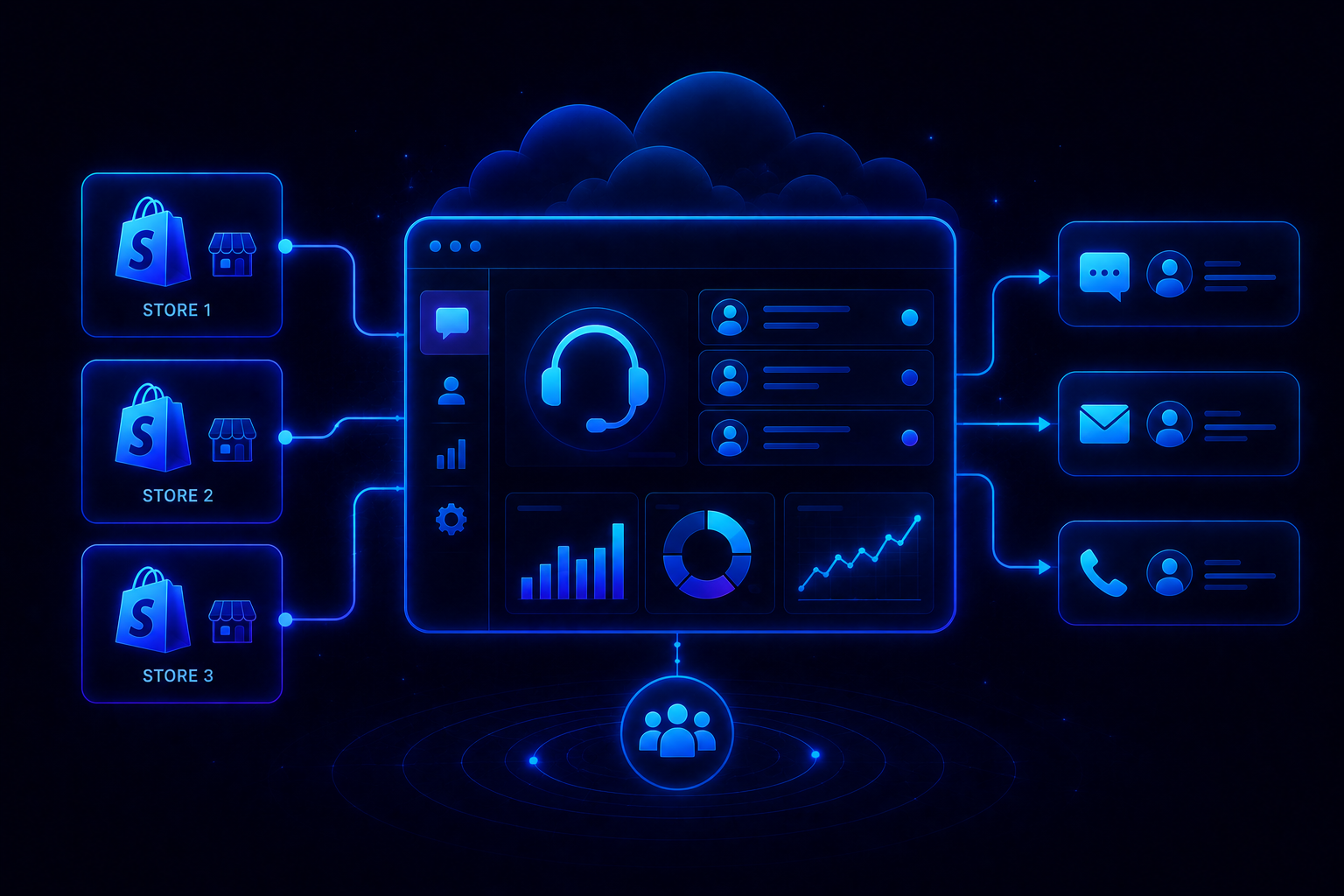
- Where reviews flag email-first constraints. QuantumDesk's Unified Inbox handles WhatsApp, Instagram, email, and chat with granular routing and brand-led workflow control across every channel.
Support teams actively evaluating Help Scout frequently shortlist QuantumDesk as the AI-native alternative that removes the ceiling Help Scout creates at scale.
Help Scout vs QuantumDesk: which is the better fit?
Here is how Help Scout and QuantumDesk compare across the dimensions that matter most for SaaS, D2C, and SMB support teams.
Final verdict on Help Scout reviews
Help Scout earns its strongest reviews from small SaaS, professional services, and SMB teams. The clean email-native experience, Docs knowledge base, Beacon widget, and outstanding in-house customer support deliver real value at this stage. This is particularly true for teams running structured email-led support.
Its core limitations consistently surface as teams scale. AI Answers billed per resolution, the Standard-to-Pro pricing triple, basic analytics, and email-first design are the recurring friction points.
QuantumDesk becomes the stronger long-term choice when teams outgrow Help Scout's tier structure and need AI-native customer service benefits with omnichannel support at scale.
Frequently asked questions about Help Scout reviews
Is Help Scout worth it based on reviews?
For small SaaS and SMB teams with structured email-led support, reviews suggest Help Scout delivers strong early-stage value and fast time-to-value.
However, teams that need autonomous AI deflection at predictable cost, multi-channel routing depth, or richer reporting at scale consistently rate the platform lower as usage matures. Whether Help Scout is worth it depends heavily on team size, channel mix, and AI requirements.
What do users dislike most about Help Scout?
The most consistently cited frustrations in Help Scout reviews are AI Answers billed per resolution and per-user pricing tripling from Standard to Pro.
Reviewers also flag that unlimited workflows, multiple SLAs, SSO/SAML, HIPAA, and Salesforce/Jira integrations are gated to higher tiers. Reporting depth is light on CSAT and agent performance. The email-first design constrains D2C brands operating primarily on WhatsApp and Instagram.
Is Help Scout suitable for scaling support teams?
Help Scout works well at small scale. Reviews indicate it creates increasing friction as agent headcount, AI deflection needs, and channel mix grow.
Scaling teams face a compounding cost structure. AI Answers is billed per resolution. Advanced workflows and compliance sit behind Pro at $75 per user. Reporting depth often forces support leaders to export data into spreadsheets to answer basic operational questions.
Why do teams switch from Help Scout to QuantumDesk?
Teams typically switch when Help Scout's pay-per-resolution AI, per-user tier triple, and email-first design begin to outpace the value received.
The most common switch triggers are needing AI that resolves L1 queries without per-resolution billing, requiring deeper analytics for support leaders, and wanting full omnichannel depth across WhatsApp and Instagram. QuantumDesk addresses all three through its AI-native architecture.
Are QuantumDesk reviews more positive than Help Scout?
QuantumDesk is an AI-native platform built specifically to address the gaps that appear most frequently in Help Scout reviews at scale.
While Help Scout receives strong reviews from email-led SaaS and SMB teams, QuantumDesk is consistently shortlisted by teams that have outgrown those constraints. Teams that need AI embedded at the core, omnichannel routing depth, and pricing that does not compound unpredictably as support operations grow find QuantumDesk a stronger fit.




.avif)