
Summarize with AI
Key Takeaways
- Customer service metrics measure support quality, operational efficiency, and customer satisfaction
- CSAT, NPS, and CES help businesses understand customer experience and customer loyalty clearly
- FRT, FCR, AHT, and resolution time measure support speed and operational effectiveness
- Retention, churn, and CLV connect customer service performance directly to business growth
- Combining operational and experience metrics improves customer support decisions and workflow optimization
Customer service metrics help businesses measure how effectively support teams resolve customer issues and improve the overall customer experience.
Modern customers expect faster responses, smoother support experiences, and personalized assistance across every communication channel. Businesses that fail to measure customer service performance often struggle with slow resolutions, customer frustration, rising churn, and inconsistent support quality.
Tracking the right customer service KPIs helps businesses improve support efficiency, satisfaction, retention, and long-term loyalty using measurable operational insights.
- Customer experience metrics measure satisfaction, loyalty, and customer effort during support interactions
- Operational metrics evaluate response speed, resolution efficiency, and support team productivity
- Retention metrics connect customer service quality directly with loyalty and revenue growth
- AI-native platforms simplify reporting, workflow visibility, and support performance optimization
Take a D2C food brand running a holiday campaign. CSAT and FRT swings during that two-week window predict whether repeat purchases hold up the following quarter.
You will learn the most important customer service metrics, how businesses calculate them, why they matter, and how AI-native platforms improve customer support visibility and performance.
Quick Comparison: Essential Customer Service Metrics
What are customer service metrics?
Customer service metrics are measurable KPIs businesses use to evaluate support quality, customer satisfaction, and operational performance across different communication channels.
These metrics help businesses understand how customers feel about support experiences. They also measure how efficiently support teams handle requests, escalations, and ticket resolution.
Most customer service metrics fall into two categories:
- Customer experience metrics
- Operational efficiency metrics
Businesses need both because operational speed alone cannot fully explain satisfaction, retention, or loyalty outcomes.
A support team noticed satisfaction scores declining despite resolving tickets faster. Deeper analysis revealed customers were repeatedly transferred between agents. Operational metrics looked healthy, but experience metrics exposed frustration clearly. Both data types together identified the actual service problem.
- Customer experience metrics measure satisfaction, loyalty, and support interaction quality from customer feedback
- Operational metrics evaluate support efficiency, response times, and ticket management performance
- Retention metrics help businesses understand how support quality impacts loyalty and recurring revenue
- Combining multiple metrics provides better visibility into customer support performance and improvement opportunities
Customer service metrics help businesses improve support quality strategically instead of relying on assumptions or isolated performance indicators.
What customer service metrics should every business track?
Different customer service metrics measure different parts of the customer experience. Some evaluate satisfaction and loyalty. Others focus on operational efficiency, support speed, and long-term business impact.
1. Customer satisfaction score (CSAT)
CSAT measures immediate customer satisfaction after a support interaction or ticket resolution. Customers usually rate their experience on a scale between one and five.
Formula:
( Positive responses (4-5 ratings) / Total responses ) x 100.
CSAT helps businesses measure short-term satisfaction and identify declining support quality quickly.
2. Net promoter score (NPS)
NPS measures long-term customer loyalty by asking how likely customers are to recommend the business. Customers respond on a scale between zero and ten.
Nine and ten indicate promoters. Zero through six indicate detractors.
Formula:
(Percentage of promoters) - (Percentage of detractors)
NPS helps businesses understand loyalty and long-term brand perception more effectively.
3. Customer effort score (CES)
CES measures how easy customers feel it was to resolve an issue or interact with support during service interactions.
Formula:
(Sum of all customer effort ratings) ÷ (Total number of respondents)
Lower customer effort strongly improves retention and satisfaction over time.
4. First response time (FRT)
FRT tracks the time between a customer submitting a request and receiving the first response from an agent or support team.
Formula:
(Total first response time) / Total customer interactions)
Faster response times reduce frustration and improve support experience quality.
5. First contact resolution (FCR)
FCR measures how many customer issues are resolved during the first interaction without requiring follow-up conversations or escalations.
Formula:
( Issues resolved during first contact / Total issues ) x 100.
Higher FCR improves efficiency and reduces repetitive support interactions.
6. Average handle time (AHT)
AHT measures how long support agents spend handling customer conversations. This includes discussion time, hold duration, and post-interaction tasks.
Formula:
( Total handle time ) / ( Total customer interactions )
AHT helps businesses understand agent productivity and workflow efficiency.
7. Average resolution time (ART)
ART tracks the complete time required to resolve a customer issue from ticket creation until final closure.
Formula:
( Total resolution time ) / ( Total resolved tickets )
Lower resolution times improve customer confidence and operational efficiency.
8. Customer churn rate
Customer churn rate measures how many customers stop using a product or service during a specific period.
Formula:
( Customers lost during period / Starting customers ) x 100
Higher churn often signals declining satisfaction or weak support experiences.
9. Customer retention rate (CRR)
CRR measures how effectively businesses retain existing customers over time through strong relationships and support quality.
Formula:
( Retained customers / total customers ) x 100
Strong retention indicates customers continue finding value in the business over time.
10. Customer lifetime value (CLV)
CLV estimates the total revenue a customer generates throughout their relationship with a business. It helps teams understand long-term profitability.
Formula:
( Average revenue per user ) x ( customer lifespan )
CLV connects customer support performance directly with long-term business growth and retention outcomes.
What mistakes do businesses make when tracking customer service metrics?
Many businesses track customer service metrics without understanding how different KPIs connect. Focusing only on isolated numbers often creates misleading performance insights and inconsistent customer experiences.
- Measuring only response speed while ignoring satisfaction creates incomplete performance visibility
- Tracking too many metrics at once often confuses support priorities and reporting workflows
- Ignoring customer feedback surveys prevents businesses from understanding why operational metrics decline
- Over-optimizing handle time sometimes pushes agents to rush conversations without resolving concerns properly
- Failing to connect retention metrics with support performance limits long-term experience improvements
- Using disconnected reporting tools creates fragmented data and inconsistent visibility across channels
- Not reviewing metrics regularly delays improvements and weakens support decision-making internally
Businesses improve support more effectively when they focus on balanced metrics connected to customer experience and operational improvement goals.
How do AI-native platforms improve customer service experience?
Tracking customer service metrics becomes difficult when conversations, ticket workflows, and reporting systems are spread across disconnected tools. Fragmented reporting often delays decisions, hides experience issues, and reduces visibility into performance trends.
A support team noticed rising ticket volumes but could not identify the reason quickly. Email, WhatsApp, and live chat reporting remained disconnected. Customers experienced longer wait times unexpectedly. Operational bottlenecks stayed hidden until satisfaction scores dropped across multiple channels.
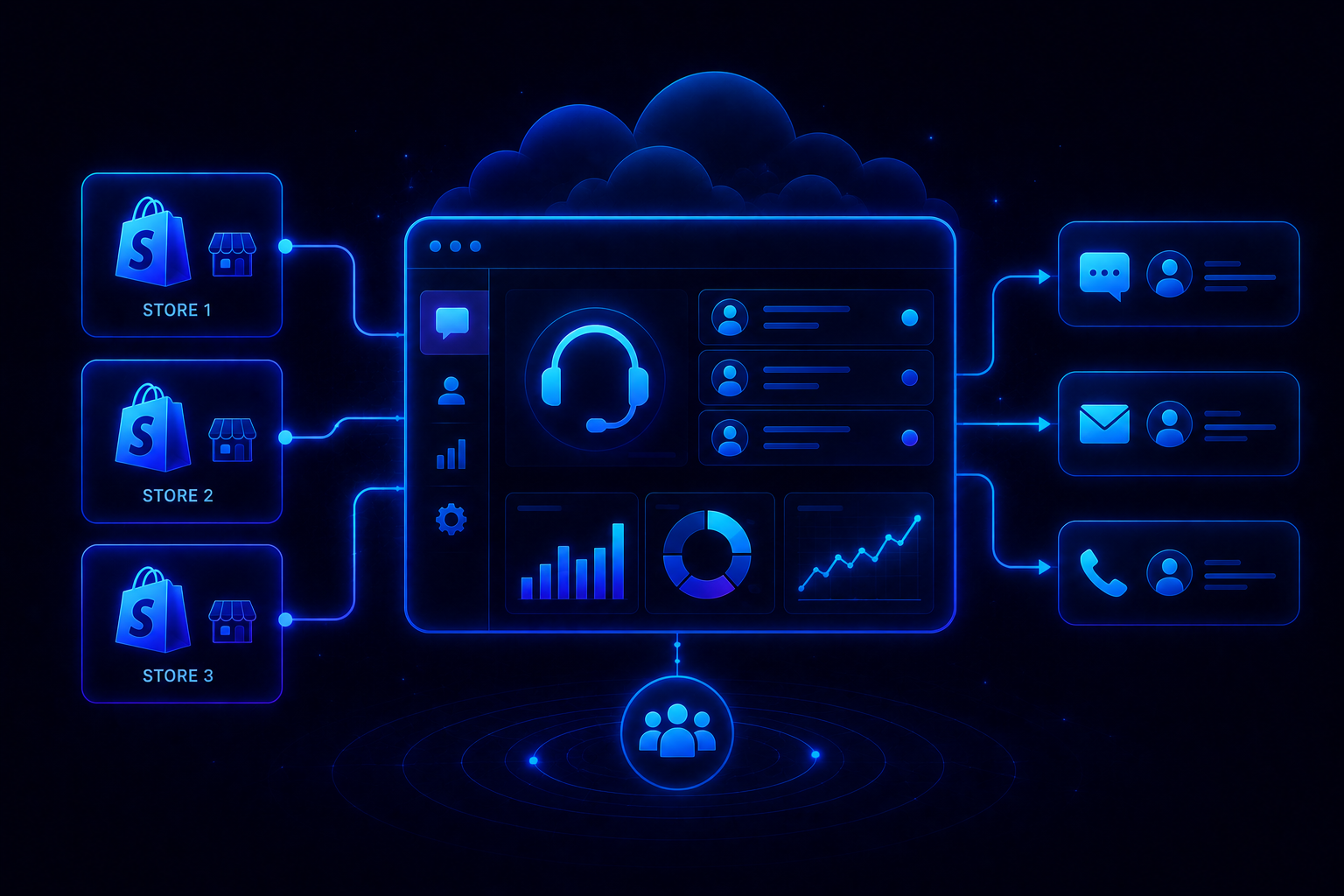
AI-native customer service platforms like QuantumDesk centralize conversations, reporting dashboards, and interaction data within one workspace. Instead of manually combining reports across tools, businesses gain real-time visibility into experience metrics, operational KPIs, and workflow performance automatically across all communication channels.
How does QuantumDesk improve customer service reporting?
- Unified dashboards centralize metrics across email, WhatsApp, live chat, and social support channels
- AI-curated inbox prioritizes conversations using urgency, sentiment, ticket volume, and customer intent automatically
- Real-time reporting helps teams identify workflow bottlenecks, rising backlogs, and response delays instantly
- Shared customer history improves escalation management and reduces fragmented reporting across support operations
AI-native customer support platforms help businesses improve reporting accuracy, optimize workflows, and make faster customer service decisions using centralized operational and experience insights.
Frequently asked questions
What are customer service metrics?
Customer service metrics are measurable KPIs businesses use to track customer satisfaction, support efficiency, and operational performance across service interactions. These metrics give teams specific data points to evaluate how well their support processes are working and where improvements are needed across different channels.
Which customer service metrics are most important?
CSAT, NPS, CES, first response time, first contact resolution, average resolution time, and customer retention rate are among the most commonly tracked customer service metrics. The right combination depends on your business model, support volume, and whether you prioritize speed, satisfaction, or long-term loyalty outcomes.
Why is customer effort score important?
Customer effort score helps businesses measure how easy it is for customers to resolve issues or receive support without unnecessary friction. Research from CEB (now Gartner) found that reducing effort is a stronger predictor of loyalty than exceeding expectations, making CES a practical metric for identifying process breakdowns that frustrate customers.
How does first contact resolution improve customer experience?
Higher first contact resolution reduces repeated conversations, minimizes escalations, and helps customers solve issues faster without contacting support teams multiple times. When customers get answers in a single interaction, their satisfaction increases and support teams free up capacity for more complex issues.
How do AI-native platforms improve customer service reporting?
AI-native platforms centralize customer conversations, reporting dashboards, and support workflows, helping businesses track customer service metrics more accurately and optimize performance faster. Instead of pulling data from disconnected tools, teams see unified reports that connect experience metrics with operational KPIs in one workspace.





.avif)