
Summarize with AI
Key Takeaways
- Self-service support reduces ticket queues during high-volume customer support periods.
- AI-powered routing improves response speed and customer satisfaction during support spikes.
- Macros and AI copilots help agents resolve tickets faster and more consistently.
- Clear wait-time communication improves customer trust during support delays.
- AI-native workflows help support teams maintain CSAT without expanding headcount.
Customer satisfaction often drops when support volume suddenly increases during sales campaigns, outages, seasonal demand spikes, or product launches.
Retail and ecommerce brands regularly experience up to 200% increases in support tickets during peak periods. Nearly two-thirds of customers abandon interactions after waiting longer than two minutes for a response or queue update.
I ordered a skincare bundle during a festive sale → delivery got delayed → support chat showed 48-minute wait time → I canceled my reorder.
Common problems that drag CSAT down during high-volume periods:
- Long queues frustrate customers during high-demand periods.
- Agents struggle to manage repetitive support conversations efficiently.
- Delayed responses increase refund requests and negative reviews.
- Fragmented support workflows reduce resolution speed and consistency.
You will learn how to improve CSAT during high-volume support periods using AI-driven workflows, faster ticket handling, and smarter customer support operations across growing teams.
A Quick Comparison: Traditional and AI-Native Support Workflows
Why Does CSAT Drop During High-Volume Support Periods?
Customer satisfaction drops quickly when support teams cannot manage rising ticket volume efficiently. Slow responses, repeated conversations, and long wait times create frustration across ecommerce, SaaS, and D2C support operations.
When support operations fail to deliver visible progress, customers typically:
- Abandon purchases and look for alternatives before a response arrives
- File chargebacks instead of waiting on a delayed refund process
- Leave negative reviews before any resolution reaches them
Tracking the right customer satisfaction metrics shows exactly where response time and queue depth start pushing satisfaction scores down.
1. Long wait times increase customer frustration
Customers become frustrated when they wait without updates during support interactions.
This is especially true during seasonal spikes when queues balloon without warning.
- Queue delays create uncertainty about whether the issue is even being handled.
- Customers repeatedly refresh support chats looking for any sign of movement.
- Delayed escalations compound frustration for customers already waiting on resolution.
- Generic automated responses reduce trust rather than buying goodwill.
A delayed response often creates more frustration than the original delivery or billing issue customers contacted support about.
2. Repetitive queries overload support teams
During flash sales and outages, repetitive conversations flood support queues across every channel simultaneously.
- Delivery update requests arriving in bulk within hours of any dispatch delay
- Refund timeline questions from customers who purchased during promotional periods
- Password reset requests consuming agent bandwidth during peak login periods
- Exchange eligibility conversations requiring the same answer hundreds of times daily
Agents spend most of their time repeating answers instead of resolving complex or sensitive issues. This is where excessive customer conversations reduce support quality becomes a direct CSAT problem, not just an operational one.
3. Fragmented workflows slow resolution speed
Support agents often switch between multiple systems before responding accurately during high-volume periods.
- CRM systems for customer history and account details
- Order management dashboards for shipment and tracking status
- Live chat tools for active customer conversations
- Email support platforms for pending ticket responses
This fragmented workflow increases handling time while reducing consistency across conversations managed by already overloaded support teams.
How to Improve CSAT During High-Volume Customer Support Periods
Improving CSAT during support spikes requires faster workflows, better prioritization, proactive communication, and systems that reduce customer effort across every support interaction.
1. Deflect repetitive queries with self-service support
Updated self-service workflows help customers resolve simple issues independently without entering overloaded support queues.
Customer service automation does the heavy lifting here, directing customers to relevant self-help content before a ticket is ever created.
- FAQ updates covering the most common questions per product category
- Troubleshooting guides with step-by-step resolution flows for known issues
- Return policy explanations that customers can access and verify independently
- Interactive order tracking that updates in real time without agent involvement
This reduces ticket creation while allowing agents to focus on urgent conversations requiring escalation and human judgment.
2. Use AI to prioritize and route conversations faster
AI-powered routing helps support teams identify urgent conversations before queues become overloaded.
- Refund complaints routed instantly to the right agent based on order type
- VIP customer conversations prioritized automatically based on purchase history
- Frustrated customers flagged using sentiment analysis before they escalate further
- Escalation risks identified early so critical tickets never get buried
This reduces queue delays while helping agents resolve critical issues before frustration turns into public complaints or cancellations.
Agentic AI for customer service takes this further by acting on tickets directly, not just routing them. Tracking updates, refund initiations, and exchange confirmations can all happen without any agent involvement.
3. Equip agents with faster support workflows
Macros, AI copilots, and conversation summaries help agents respond faster during overloaded support periods.
- Suggested replies for the most common query types, ready to send with one click
- Conversation summaries generated automatically when an agent picks up a ticket
- Customer history surfaced inside the active conversation window without manual lookup
- Faster internal collaboration through shared notes and tagging workflows
Support teams improve consistency and reduce handling time once agents have immediate access to operational context and response recommendations.
4. Set clear wait-time expectations
Customers become more patient when support teams communicate realistic wait times clearly.
Silence during queue delays does more damage than the delay itself.
- Queue notifications sent as soon as a ticket is logged
- Chat wait-time banners updated in real time as queue volume changes
- Callback options offered when estimated wait exceeds a set threshold
- Delay acknowledgment emails sent within minutes for email-based tickets
Proactive communication reduces frustration by eliminating uncertainty during delayed support interactions and rising ticket backlogs.
5. Improve the feedback process after resolution
Short CSAT surveys sent immediately after ticket resolution generate stronger feedback quality. The support experience is still fresh, and customers are more likely to respond.
- One-question CSAT surveys sent within minutes of ticket closure
- Follow-up workflows triggered automatically for customers who rate below threshold
- Detractor escalation handling so dissatisfied customers receive a personal response
- Immediate feedback collection across every channel, not just email
Following up quickly with dissatisfied customers often turns negative experiences into retention opportunities before frustration escalates publicly.
How AI-Native Customer Support Maintains CSAT During High-Volume Periods
Traditional support systems struggle during high-volume periods because manual workflows slow down routing, prioritization, and ticket resolution. AI-native customer service platforms reduce that operational pressure by embedding intelligence directly into workflows, not adding it as a disconnected layer on top.
- AI reduces queue pressure automatically AI-powered chatbots instantly resolve repetitive queries like delivery updates, password resets, and refund questions across every connected channel without agent involvement, freeing teams to focus on emotionally complex conversations that directly affect CSAT.
- AI helps agents resolve tickets faster AI copilots surface conversation summaries, customer history, and suggested replies before agents open a ticket, eliminating manual searching across disconnected tools and cutting handling time when response speed matters most.
- AI improves consistency across channels Unified conversation history across email, WhatsApp, chat, and social means agents always have full context with no repeated questions, no dropped threads, and consistent responses regardless of which channel the customer uses.
Platforms like QuantumDesk embed this intelligence directly into routing, automation, prioritization, and agent assistance, helping ecommerce, SaaS, and D2C brands handle seasonal spikes without scaling headcount.
Ready to see how AI-native support holds CSAT through your busiest periods? AI vs human customer support works best when the boundary is built in, not figured out manually → Book a Demo
How Does AI-Native Customer Support Maintain CSAT During High-Volume Periods?
Traditional support systems struggle during high-volume periods because manual workflows slow down routing, prioritization, and ticket resolution. AI-native customer service platforms reduce that operational pressure by embedding intelligence directly into workflows, not adding it as a disconnected layer on top.
What Are the Key Ways AI Helps?
- Automatically resolves repetitive queries like delivery updates, password resets, and refund questions without agent involvement, reducing queue pressure during high-volume periods.
- Surfaces conversation summaries, customer history, and suggested replies before agents open a ticket, cutting handling time when response speed directly affects CSAT.
- Maintains consistent responses across email, WhatsApp, chat, and social by centralizing conversations into one unified workspace.
- Intelligently prioritizes conversations using urgency, intent, and sentiment so critical issues never sit behind routine requests.
- Manages multi-channel customer service at scale by keeping full context accessible regardless of which channel the customer uses.
How Does QuantumDesk Help Teams Maintain CSAT During High-Volume Support?
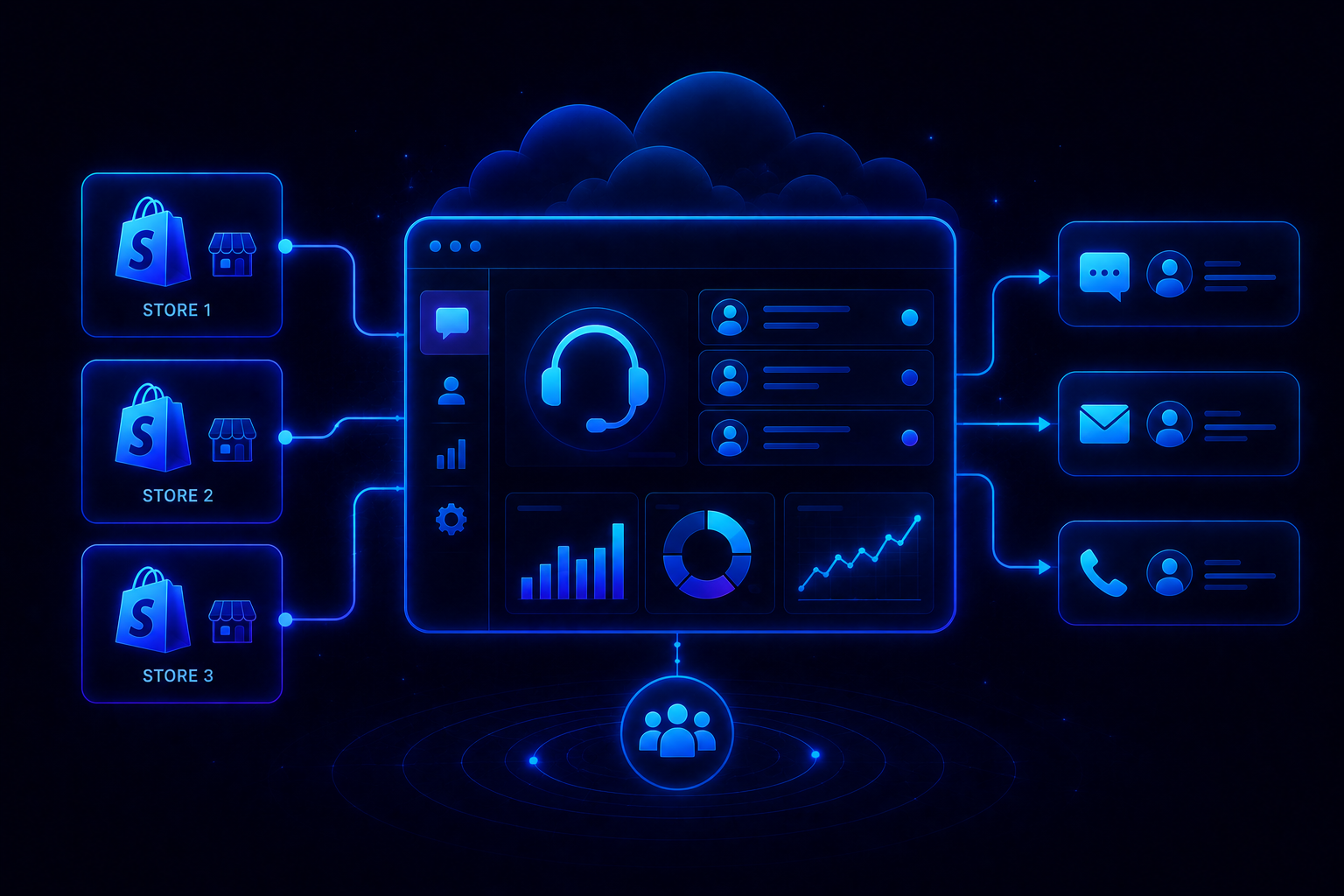
QuantumDesk is an AI-native customer service platform built for support teams managing rising ticket volume across multiple channels. It embeds intelligence directly into routing, automation, prioritization, and agent assistance workflows.
For ecommerce, SaaS, and D2C brands managing seasonal spikes, QuantumDesk creates faster support operations without continuously increasing staffing costs. Teams handle more conversations per agent without sacrificing resolution quality or CSAT.
Knowing exactly what AI vs human customer support should each handle is where most teams find the biggest CSAT improvement. QuantumDesk makes that boundary automatic.
What Are QuantumDesk's Key Capabilities?
- AI-curated inbox that prioritizes conversations using urgency, intent, and sentiment so critical issues are never buried behind routine requests.
- Unified workspace bringing every channel into a single operational view so agents never lose context across WhatsApp, email, Instagram, and live chat.
- Quantum AI Copilot that surfaces conversation summaries, customer history, and next-action recommendations inside the agent workspace to reduce handling time.
- Automation of repetitive queries through AI chatbots for customer service so queue pressure drops during high-volume periods without manual intervention.
Ready to see how it works? Book a demo to explore QuantumDesk for your team.
Frequently Asked Questions
Why does CSAT drop during high-volume support periods?
CSAT drops during high-volume periods because support teams are not set up to absorb sudden ticket spikes without performance degrading.
Response times increase, queue visibility decreases, and agents resort to generic replies when bandwidth runs out. Customers who expected fast answers receive delayed responses or no updates at all. The frustration compounds before the issue is even resolved. Tracking customer satisfaction metrics during peak periods shows exactly where response time, first-contact resolution, and queue depth start pushing scores down.
How does AI help improve CSAT during support spikes?
AI improves CSAT by automating repetitive conversations, prioritizing urgent tickets, and reducing response delays during high-volume periods.
Chatbots handle WISMO queries, refund policy questions, and password resets automatically so human agents focus on complex, emotionally sensitive issues. AI-powered routing flags frustrated customers using sentiment analysis and surfaces them before escalation. AI copilots provide agents with conversation summaries and suggested replies, cutting handling time without sacrificing accuracy. The combined effect is faster resolution, more consistent responses, and fewer customers left waiting without updates.
What support metrics affect CSAT the most?
First response time, resolution speed, queue wait time, and first-contact resolution rate are the strongest predictors of CSAT during high-volume periods.
First response time matters most because customers form their initial impression within the first two minutes of a support interaction. First-contact resolution matters because repeat contacts on the same issue reduce satisfaction significantly, even when the final resolution is accurate. Queue wait time affects perceived effort, which is one of the strongest indicators of whether a customer will return or leave a negative review.
Why are self-service workflows important during support spikes?
Self-service workflows reduce ticket volume by helping customers independently resolve simple issues like order tracking, refund policies, and password resets without entering overloaded support queues.
During peak periods, a well-structured FAQ, interactive order tracker, or return policy page can deflect 20 to 40% of incoming tickets before they reach an agent. Every deflected repetitive query frees agent bandwidth for urgent, high-impact conversations. Brands that build out self-service before a sale or seasonal campaign consistently see lower ticket creation rates and stronger CSAT during the spike itself.
How do AI-native support platforms improve customer experience?
AI-native support platforms improve customer experience by embedding automation, prioritization, routing, and agent assistance directly into workflows rather than treating them as separate features.
Traditional platforms add AI as an optional module that operates apart from core ticket management. AI-native platforms apply intelligence at every stage, from the moment a ticket is created to the moment it is resolved. Routing decisions, agent suggestions, and performance analytics all draw from the same layer. For ecommerce and D2C brands handling seasonal spikes, the difference shows in CSAT scores before and after high-volume periods end.



.avif)