
Summarize with AI
Key Takeaways
- Tidio's pricing jumps from $59 to $749 with no middle tier, making it structurally difficult for growing D2C teams to scale affordably.
- Lyro AI is sold as a separate add-on, meaning core Tidio plans do not include AI-powered query resolution by default.
- QuantumDesk is the strongest alternative for D2C and SMB teams, with AI resolution, omnichannel inbox, and native Shopify integration built into the core platform.
- Crisp is the best budget alternative for small teams, offering flat per-workspace pricing that removes Tidio's conversation-cap billing model.
- QuantumDesk's native Shopify integration pulls order and customer data directly into the support conversation, so agents resolve order queries without switching tabs.
Tidio has built a strong reputation among D2C and SMB teams for live chat, AI automation, and multichannel messaging.
But as support volumes grow and AI in customer service expectations rise, a familiar pattern emerges: a $59-to-$749 pricing cliff, Lyro AI sold separately, and analytics that leave support leaders exporting spreadsheets rather than reading dashboards.
For D2C and Shopify brands specifically, it also covers which platforms connect natively to Shopify order and customer data, and which rely on third-party connectors that add configuration overhead.
This guide compares the 10 strongest Tidio alternatives across AI capability, pricing, and omnichannel coverage.
A Quick Comparison: 10 Best Tidio Alternatives in 2026
What Is Tidio?
Tidio is an all-in-one customer service platform combining live chat, Lyro AI, helpdesk ticketing, and no-code automation flows for SMB and e-commerce support.
It is primarily designed for online retailers and growing mid-market businesses needing fast deployment, multichannel coverage, and conversion-focused automation. For a full breakdown of plan costs, see the Tidio pricing guide.
Key features of Tidio
- Live chat widget with typing indicators, visitor information, and operating-hours controls for website engagement.
- Lyro AI agent trained on FAQ sources, with vendor-cited resolution rates between 60 and 77 percent.
- Multichannel inbox centralising chat, email, Facebook Messenger, Instagram, and WhatsApp into one workspace.
- Flows automation builder with no-code triggers for proactive messages, lead capture, and offline follow-ups.
- Native connectors for Shopify, HubSpot, and over 120 apps via API and Zapier-style connections.
- Mobile and desktop apps for iOS, Android, Windows, and macOS.
Why People Are Looking for Tidio Alternatives?
1. The pricing gap between Growth and Plus is unworkable for scaling D2C teams
A D2C apparel brand running a flash sale and outgrowing the Growth plan at $59 per month hits a wall. The next tier, Plus, starts at $749 per month with no intermediate option. Teams are forced to either stay capped or absorb a cost jump that is operationally hard to justify mid-quarter.
As one reviewer summarised on G2: "The pricing jump from Growth to Plus felt like it was designed for enterprise brands, not growing small businesses. There's no middle ground and that is the biggest issue." (Source: G2)
2. Lyro AI is sold as a separate add-on, not embedded in the core platform
Lyro AI Agent is priced separately, starting around $39 per month on top of the base plan. A B2B SaaS team handling onboarding ticket spikes ends up stacking add-on costs across Lyro and Flows on top of the platform fee just to access AI at all.
From a discussion on r/ecommerce: "We were excited about Lyro but didn't realise it was an add-on until we were already set up. By the time we added everything, we were paying nearly double what we expected." (Source: r/ecommerce)
3. Conversation-based pricing creates unpredictable monthly bills
Tidio bills around billable conversations with hard monthly caps. Once usage exceeds the limit, teams either pay overage charges or upgrade to a much higher tier.
A reviewer on Capterra noted: "The conversation limits hit us during a promotional campaign and we got charged overage fees we hadn't budgeted for. We had no visibility into how close we were to the cap until it was too late." (Source: Capterra)
4. Analytics depth is limited for support leaders managing performance
Reviews consistently point to Tidio's reporting as light on agent performance, deep CSAT trends, and conversation analytics that scaling support teams need.
A verified G2 reviewer noted: "Analytics is the weakest part of Tidio for us. We can't get granular data on which agents are resolving vs escalating, or where conversation quality is dropping." (Source: G2)
5. Channel routing and customisation feel constrained at scale
Users specifically flag WhatsApp routing limitations, including no per-agent routing rules, alongside restricted widget customisation and branding controls. A D2C logistics brand handling tracking complaints across WhatsApp and Instagram needs granular routing logic that Tidio's current configuration does not fully support.
How We Evaluated the Best Tidio Alternatives
This evaluation goes beyond feature checklists. The goal was to assess how each platform performs in real D2C and B2B SaaS support environments.
- Review platform analysis. Studied verified ratings and written reviews on G2 and Capterra to identify real satisfaction levels and recurring pain points across use cases.
- Community and forum research. Analysed discussions from D2C founders, CX leaders, and SaaS support managers across Slack communities, Reddit, LinkedIn groups, and SaaS forums.
- SaaS directories and analyst reports. Cross-referenced tools listed across major SaaS directories to validate market presence and category positioning for each alternative.
- Capability comparison. Evaluated each tool against a consistent framework covering AI capabilities, omnichannel support, workflow automation, integrations, and pricing transparency.
- Shopify integration depth. For D2C and e-commerce brands, we assessed whether each platform connects natively to Shopify order and customer data, or relies on a third-party connector adding configuration overhead and sync delays.
- Hands-on testing. The top five shortlisted tools were directly tested to evaluate automation quality, usability, escalation handling, and support workflow experience.
10 Best Tidio Alternatives to Consider in 2026
The tools below were evaluated based on AI capability, channel coverage, ease of deployment, escalation design, and overall value for D2C, SMB, and B2B SaaS support teams.
1. QuantumDesk - Best AI-Native Support for D2C and SMB Teams

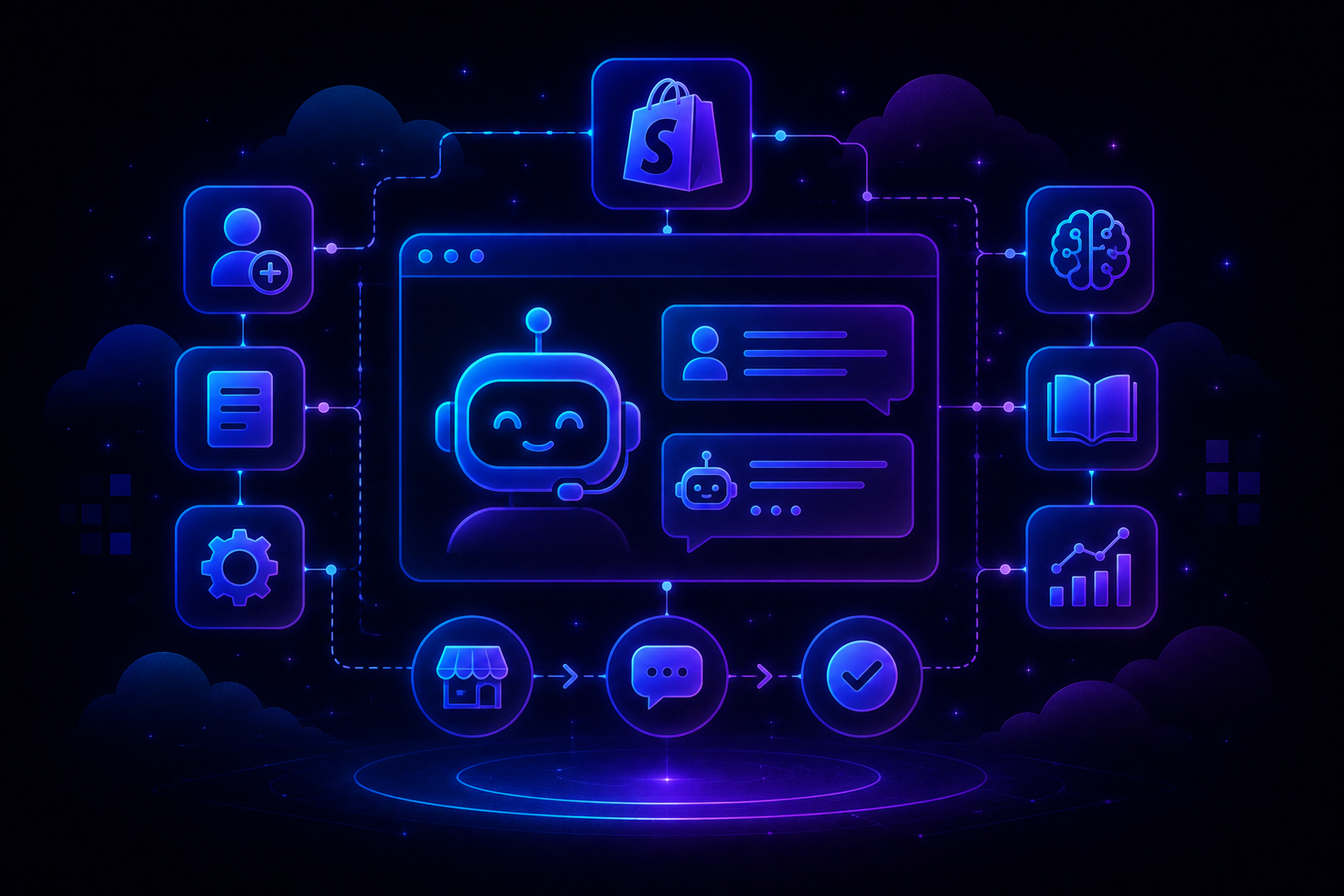
QuantumDesk is an AI-native customer service platform built to resolve high volumes of L1 queries automatically while keeping agents effective for complex escalations across every major channel.
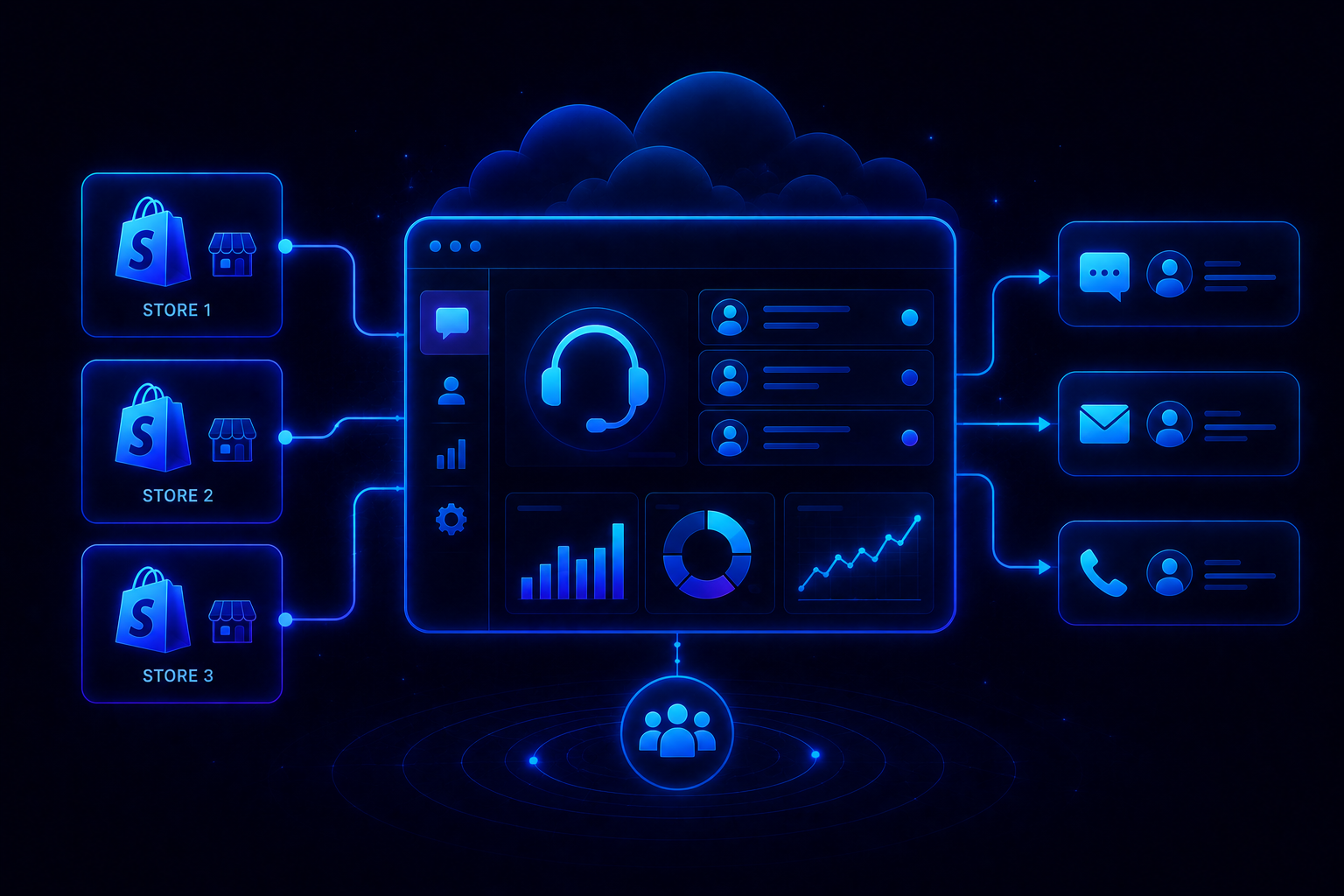
It includes native Shopify integration that pulls order status, history, and customer profiles directly into the support conversation, so agents resolve order queries without opening the Shopify admin in a separate tab.
It is built for D2C brands, e-commerce stores, and SMB to mid-market teams that need strong AI automation, full omnichannel coverage, and agent productivity tools.
Teams choose QuantumDesk over Tidio specifically because AI is embedded into the core platform rather than billed separately, and pricing scales predictably with ticket volume rather than jumping between rigid tiers.
Key features
- AI-native architecture. Resolution, agent assist, routing, and analytics are built into the core product, not sold as separate add-on modules.
- Quantum AI for L1 resolution. Resolves repetitive customer queries instantly, including reduce WISMO tickets workflows, with seamless escalation when complexity requires it.
- AI copilot for agents. Provides drafted responses, conversation summaries, intent identification, and next-action suggestions directly within the agent workspace.
- Unified omnichannel inbox. Manages email, live chat, WhatsApp, and Instagram conversations in a single workspace without separate tool subscriptions.
- Native Shopify integration. Connects directly to Shopify order and customer data, surfacing order status, history, and customer profile within the support conversation so agents resolve order and return queries without switching tools or tabs.
- Admin performance visibility. Delivers real-time insights on resolution rates, escalation patterns, and customer satisfaction metrics for team leaders.
Why choose QuantumDesk over Tidio?
- Tidio sells Lyro AI as a separate add-on starting at $32.50 per month. QuantumDesk includes AI resolution in the core platform at no extra charge.
- Tidio's pricing jumps from $59 on Growth to $749 on Plus with no middle tier. QuantumDesk offers custom pricing aligned to actual usage.
- Tidio's analytics are flagged as basic by reviewers. QuantumDesk delivers real-time dashboards covering resolution, escalation, and CSAT trends as standard.
- For Shopify brands specifically, Tidio requires third-party connectors to surface Shopify order data. QuantumDesk connects natively to Shopify from day one at no additional module cost.
Pros
- Deep AI handling of L1 tickets and agent workflows means per-ticket cost typically drops as support volume scales.
- Unified omnichannel inbox eliminates the need for separate tools or add-ons across email, chat, WhatsApp, and social.
- Custom pricing lets teams negotiate around usage and growth stage rather than being locked into rigid tiered bundles.
Cons
- Ecosystem and services partner network are newer than long-standing incumbents like Zendesk or Salesforce Service Cloud.
- Best value realised at mid-to-high ticket volumes. Very small teams may not fully use the AI depth available.
Customer review
"QuantumDesk handles our repetitive queries automatically. Our agents now focus almost entirely on complex escalations. Ticket resolution time dropped within the first month." Paraphrased from a verified customer reviewer.
Pricing
QuantumDesk uses custom (quote-based) pricing. Teams pay in line with ticket volume and complexity rather than rigid per-seat or per-conversation tiers.
2. Intercom - Best for SaaS In-Product Messaging
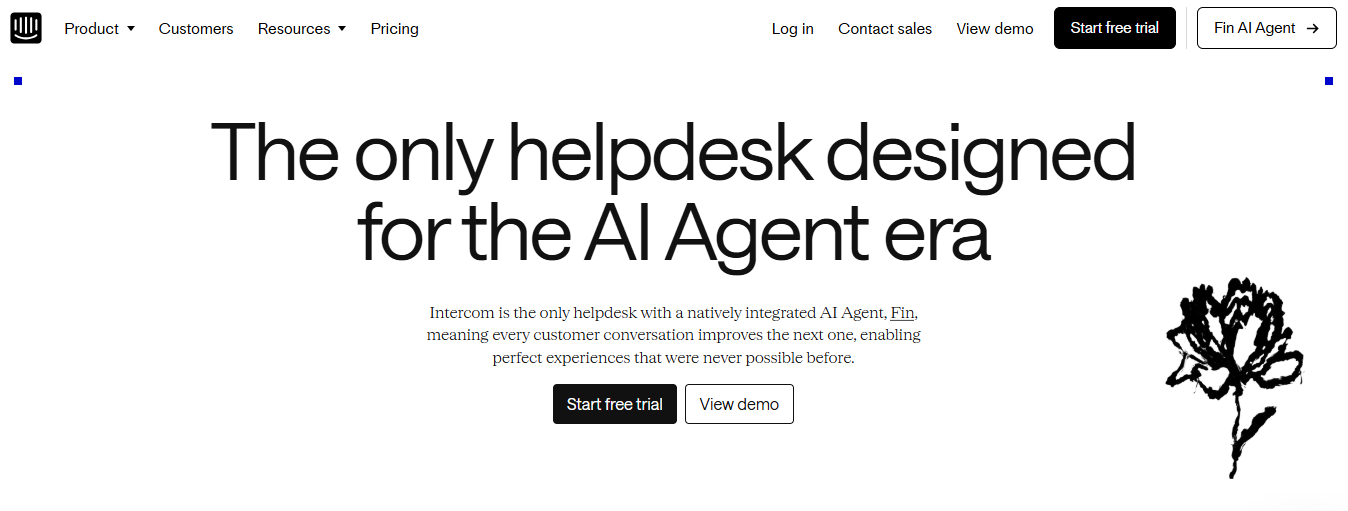
Intercom is a product-led support platform combining in-app chat, email, a help centre, and Fin AI bot for SaaS teams focused on embedded customer engagement.
It is built for B2B SaaS and digital-first companies that prioritise in-product messaging, proactive engagement, and lifecycle marketing alongside their support operations. For teams evaluating AI chatbots for customer service depth, Intercom's Fin bot is one of the most mature options in the category.
Key features
- In-app messaging. Embeds support and proactive messaging inside the product for a native end-user experience without redirecting customers externally.
- Fin AI bot. Deflects L1 queries when fully trained against your knowledge base and product documentation.
- Customer data platform. Builds segmented audiences from product behaviour for targeted lifecycle messaging and outreach.
Why choose Intercom over Tidio?
Intercom's Fin AI bot is more mature than Lyro for high-volume deflection in SaaS environments, and in-product messaging is purpose-built for product-led growth rather than e-commerce store engagement.
Pros
- Excellent in-product chat and proactive messaging make it a strong fit for product-led SaaS growth motions.
- Mature Fin AI bot deflects a significant share of L1 queries when configured with a well-maintained knowledge base.
- Deep customer data platform enables targeted, segment-based outreach beyond what most chat tools offer.
Cons
- Per-resolution AI pricing on top of seat licences causes bills to rise quickly as automation usage scales.
- Over-featured and expensive if the primary need is straightforward SMB or D2C support rather than lifecycle messaging.
- Steep learning curve for smaller teams; significant configuration is needed to unlock the platform's full value.
Customer review
"Intercom's Fin AI handles a solid chunk of our L1 volume. But the per-resolution billing adds up fast once you scale. Our monthly cost nearly doubled in six months." Paraphrased from a verified G2 reviewer. Read more Intercom reviews.
Pricing
Plans start at around $39 per seat per month on the Essential tier. Fin AI bot is billed additionally per successful resolution. View Intercom pricing.
3. Zendesk Suite - Best for Enterprise CX Operations
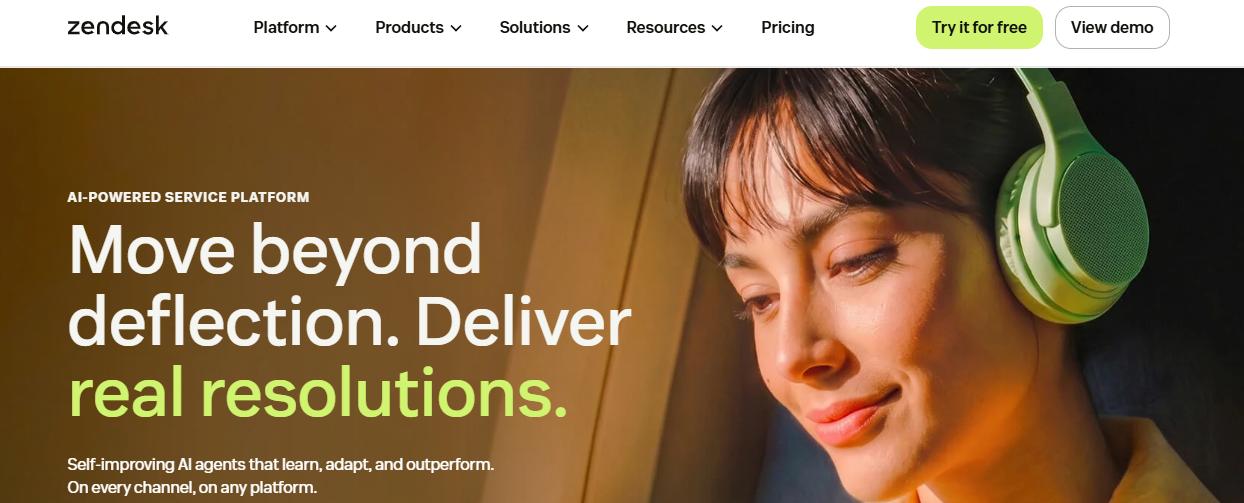
Zendesk Suite is an enterprise CX platform for large operations needing omnichannel ticketing, SLA management, and a broad integration marketplace.
It is built for mid-market and enterprise teams running complex, multi-region support operations where configurability and compliance are non-negotiable. Teams choose Zendesk over Tidio when they need enterprise routing depth, SLA management, and an ecosystem that goes well beyond what an SMB-focused chat platform can deliver.
Key features
- Omnichannel ticketing. Manages support across email, chat, voice, social, and messaging in a unified agent workspace.
- Advanced routing and SLAs. Supports complex conditional routing policies across multiple teams, regions, and escalation tiers.
- Zendesk AI. Built-in AI for ticket triage, agent assist, and intent detection across the agent workspace at higher plan tiers.
Why choose Zendesk over Tidio?
Zendesk's enterprise-grade routing, SLA management, and reporting depth go well beyond what Tidio's SMB-focused platform currently offers for complex, multi-team support operations.
Pros
- Highly configurable workflows, strong analytics, and a broad app ecosystem suit complex mid-market and enterprise operations.
- Trusted by large organisations needing advanced routing, SLA management, and compliance-intensive environments.
- Mature AI suite with deflection, agent assist, and intent detection across email, chat, and messaging.
Cons
- Per-seat pricing with AI and compliance add-ons pushes total cost significantly higher than initial expectations for most deployments.
- Requires dedicated administration and ongoing configuration, adding burden for lean SMB and D2C support teams.
- Overkill for very small D2C brands or e-commerce stores that need quick deployment rather than enterprise depth.
Customer review
"Zendesk's configurability is unmatched for large teams. But every time we needed a new feature, it came with another add-on cost we hadn't budgeted for." Paraphrased from a verified G2 reviewer. Read more Zendesk reviews.
Pricing
Suite plans start at around $55 per agent per month. Real-world deployments with AI and advanced tiers often reach $115 to $169 per agent. View Zendesk pricing.
4. Freshdesk - Best for Budget-Conscious SMB Helpdesk
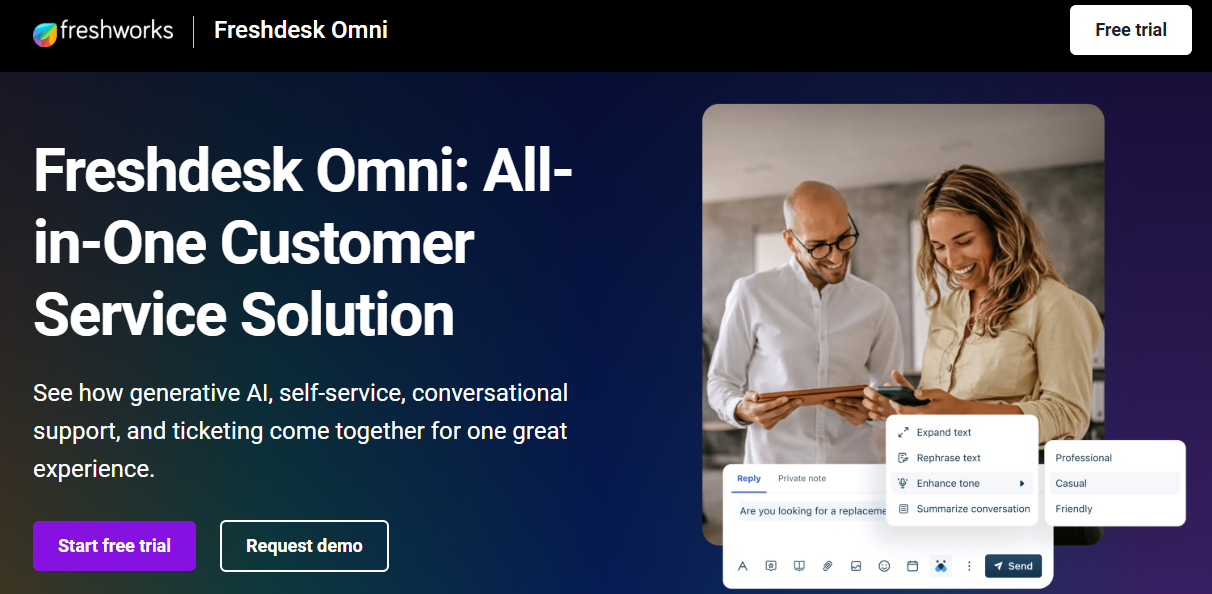
Freshdesk is a multichannel helpdesk for SMB and mid-market teams, offering email, chat, phone, and social ticketing at accessible price points across free and paid tiers.
It is built for small to mid-sized D2C and service teams that want a full helpdesk without enterprise-level pricing, particularly those needing phone support alongside chat. Teams choose Freshdesk over Tidio for its free plan, lower entry tiers, and native phone support that Tidio's chat-first model does not natively cover.
Key features
- Multichannel ticketing. Manages support from email, chat, phone, and social in a unified agent workspace.
- Freddy AI. Provides AI-assisted triage, suggested responses, and self-service deflection across higher plan tiers.
- Integrated phone support. Native Freshcaller integration for voice support alongside digital channels without third-party telephony.
Why choose Freshdesk over Tidio?
Freshdesk offers a meaningful free plan and lower-cost paid tiers, with no comparable $59-to-$749 pricing cliff and native phone support that Tidio's chat-first model does not cover.
Pros
- Free and low-cost entry plans make adoption easy for small D2C and SMB teams without high upfront commitment.
- Solid ticketing, phone integration, and a broad marketplace cover most SMB and mid-market support use cases.
- Smooth scaling from SMB to mid-market without a sudden, disproportionate cost jump between plan tiers.
Cons
- Freddy AI and Pro tier add-ons increase per-agent costs well beyond headline pricing expectations as teams grow.
- AI depth is rated behind newer AI-native platforms for sophisticated customer service automation workflows.
- Interface and configuration can feel dated compared to modern chat-first platforms like Tidio or Intercom.
Customer review
"Freshdesk was easy to set up and the free plan got us going quickly. But once we added Freddy AI and phone, the cost jumped faster than expected." Paraphrased from a verified G2 reviewer. Read more Freshdesk reviews.
Pricing
Free plan available. Paid plans start at around $15 per agent per month and scale to $79 on the Pro tier. View Freshdesk pricing.
5. HubSpot Service Hub - Best for CRM-Aligned Service
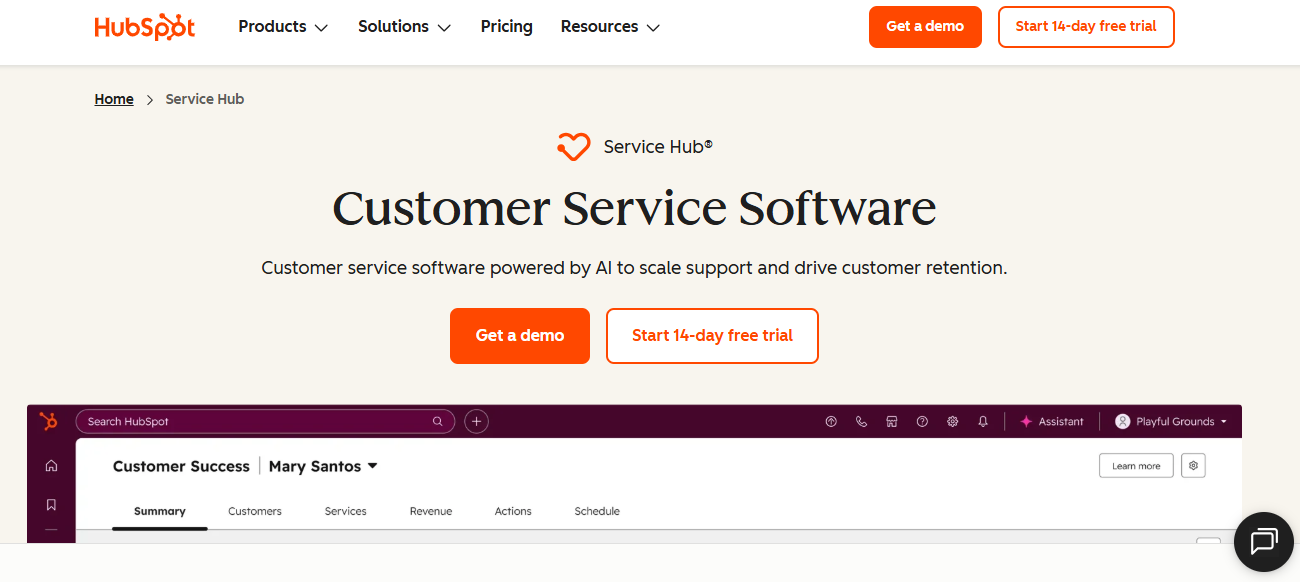
HubSpot Service Hub is a CRM-native platform connecting support conversations with sales and marketing data across the full HubSpot ecosystem.
It is built for B2B SaaS and D2C teams already on HubSpot CRM that want service tightly aligned with sales pipelines and marketing automation. Teams choose HubSpot over Tidio when they need service tied directly to CRM records, deal context, and unified cross-functional reporting across the customer lifecycle.
Key features
- Native HubSpot CRM integration. Connects every support interaction with contact, company, and deal records for full customer context.
- Help desk and ticketing. Structured ticketing with automation, SLA tracking, and team-based ownership across support workflows.
- Service reporting and CSAT surveys. Native dashboards covering ticket volume, response times, and customer satisfaction trends.
Why choose HubSpot Service Hub over Tidio?
HubSpot embeds service directly inside the CRM, giving agents account context and pipeline data that Tidio's standalone helpdesk cannot deliver, with reporting that spans sales, marketing, and service in one view.
Pros
- Deep native CRM integration provides unmatched customer context across sales, marketing, and service in one connected ecosystem.
- Strong reporting, automation, and ticketing workflows that scale with team growth and operational complexity.
- Free plan available for small teams already operating inside the HubSpot ecosystem.
Cons
- Most valuable only if your team is already committed to the HubSpot CRM ecosystem for sales and marketing.
- Higher tiers escalate quickly in cost, particularly when adding marketing and sales hubs alongside service operations.
- Live chat and bot capabilities feel less specialised than dedicated chat platforms like Tidio or Intercom.
Customer review
"The CRM integration is genuinely transformative if you're on HubSpot. Every support interaction includes full deal and account context. The cost scales quickly though." Paraphrased from a verified Capterra reviewer.
Pricing
Free plan available. Paid plans start at around $15 per seat per month, with Professional and Enterprise tiers scaling significantly higher. View HubSpot Service Hub pricing.
6. Zoho Desk - Best for Budget-Conscious Mid-Market Helpdesk
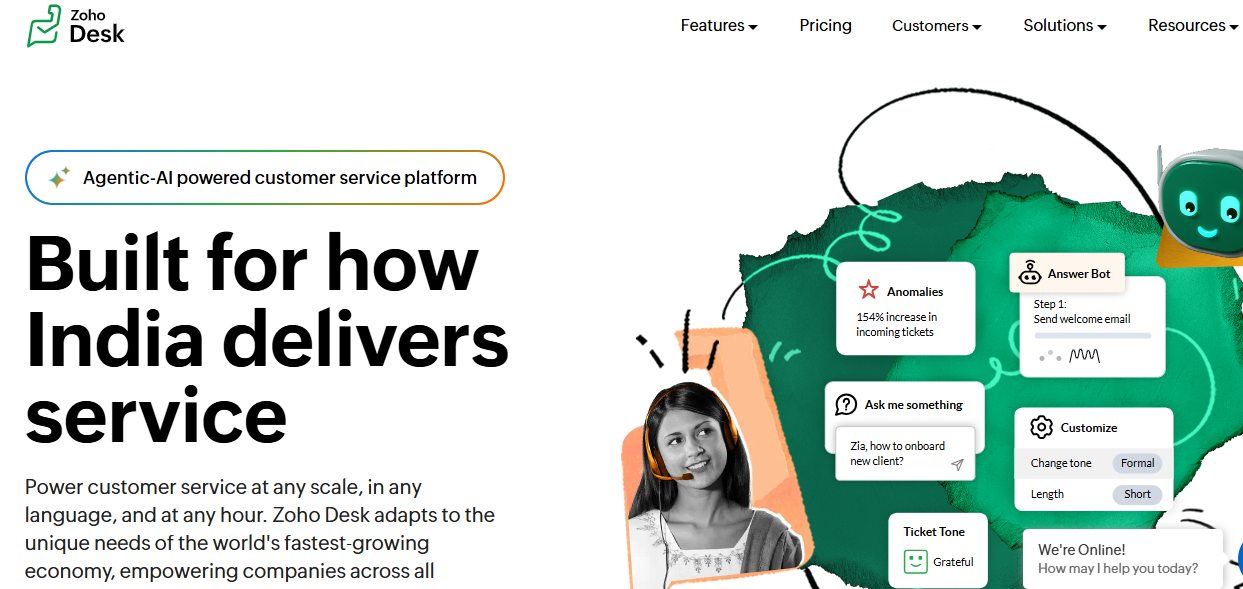
Zoho Desk is a context-aware helpdesk combining multichannel ticketing, workflow automation, and Zia AI for SMB and mid-market support teams.
It is built for growing teams, particularly those already inside the Zoho ecosystem, that need structured ticket management and CRM-connected support at a price that scales gradually. Teams choose Zoho Desk over Tidio when they need ticketing depth, automation rules, and CRM context that Tidio's chat-first model does not natively provide.
Key features
- Zia AI. Provides sentiment analysis, automatic ticket tagging, response suggestions, and anomaly detection across the support workflow.
- Multichannel ticketing. Manages email, live chat, phone, social media, and web forms from a unified agent workspace.
- Zoho CRM integration. Native two-way sync surfaces full customer and deal context alongside every support ticket without switching tools.
Why choose Zoho Desk over Tidio?
Zoho Desk's pricing scales gradually from a free plan through affordable paid tiers, avoiding the $59-to-$749 cliff that Tidio teams encounter when outgrowing the Growth plan.
Pros
- Very affordable pricing with a meaningful free plan and gradual tier scaling for growing SMB and mid-market teams.
- Native Zoho CRM integration gives agents full customer context without switching tools or configuring external connectors.
- Solid ticketing depth with SLA management, automation rules, and multichannel coverage at low per-agent cost.
Cons
- Zia AI capabilities are less mature than newer AI-native platforms for autonomous L1 query resolution at meaningful scale.
- Interface and setup can feel dated compared to modern chat-first platforms, with a steeper initial configuration curve.
- Most valuable within the Zoho ecosystem; teams without Zoho CRM lose significant integration value the platform is built around.
Customer review
"Zoho Desk delivers capabilities we had previously only seen on far more expensive platforms. The automation depth at the price point genuinely surprised us during evaluation." Paraphrased from a verified Capterra reviewer.
Pricing
Free plan available. Paid plans start at around $7 per agent per month on Standard, scaling to $14 on Professional and $40 on Enterprise. View Zoho Desk pricing.
7. Help Scout - Best for Email-First Small Teams
Help Scout is an email-first shared inbox platform combining a collaborative inbox, Beacon live chat, and a Docs knowledge base in one approachable tool.
It is built for small to mid-sized D2C and B2B SaaS teams that prioritise email support and want a clean, low-overhead alternative to feature-heavy helpdesks. Teams choose Help Scout over Tidio when email is the primary channel and they prefer a calm, content-focused interface over a chat-first workspace with layered add-on billing.
Key features
- Shared inbox. Collaborative email workspace where team members assign, comment on, and resolve conversations together without inbox clutter.
- Beacon live chat. Lightweight chat widget surfacing knowledge base articles for self-service before a live conversation begins.
- AI assist features. Drafts, summarises, and refines agent responses within the inbox at higher plan tiers without add-on purchases.
Why choose Help Scout over Tidio?
Help Scout's transparent per-seat pricing avoids Tidio's abrupt Growth-to-Plus pricing cliff entirely, making costs predictable for small teams that primarily handle email support.
Pros
- Simple, human-centric interface is easy for small teams to adopt without dedicated platform administration or technical configuration.
- Strong content-first culture and Docs knowledge base suit support-led D2C brands managing structured self-service content.
- Reasonable mid-market pricing for teams primarily handling email with modest chat and documentation requirements.
Cons
- Limited AI and automation depth makes it less competitive for teams managing high inbound chat volumes or complex workflows.
- Narrower channel breadth means complex omnichannel D2C setups quickly exceed what Help Scout is designed to handle.
- Chat experience via Beacon feels less polished than dedicated chat platforms like Tidio or Intercom.
Customer review
"Help Scout is the cleanest shared inbox we've used. Onboarding took hours, not weeks. It works great at our team size, but we'll need to move on as we scale." Paraphrased from a verified G2 reviewer.
Pricing
Standard plans run around $20 to $30 per user per month. Plus around $40 to $54. Pro around $65 to $90 per user with annual billing. View Help Scout pricing.
8. Crisp - Best for All-In-One SMB Chat
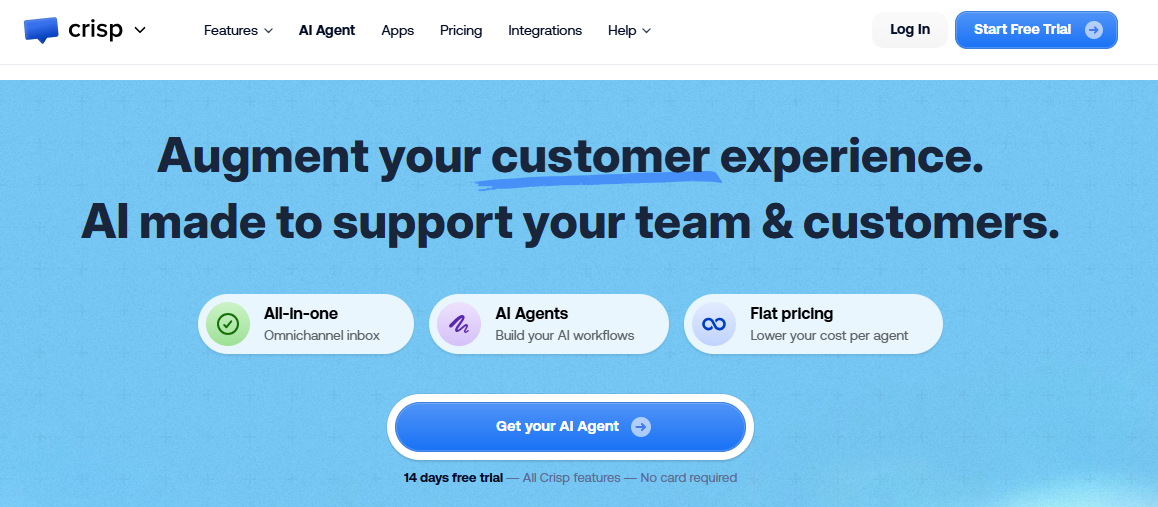
Crisp is an all-in-one customer messaging platform combining live chat, email, voice, and an AI chatbot for small businesses and growing teams.
It is built for small businesses, agencies, and early-stage D2C brands wanting broad channel coverage at a flat per-workspace price. Teams choose Crisp over Tidio for predictable per-workspace pricing rather than conversation-based billing that creates unpredictable overage costs during peak campaign periods.
Key features
- Multichannel inbox. Centralises chat, email, Messenger, Instagram, WhatsApp, and Twitter in a single shared workspace without channel add-ons.
- MagicReply AI. AI-powered response suggestions and chatbot capabilities for handling repetitive queries automatically.
- Live calls and screen sharing. Built-in voice and video calling alongside text-based chat for richer support interactions.
Why choose Crisp over Tidio?
Crisp uses flat per-workspace pricing rather than per-conversation billing, removing the unpredictable overage costs Tidio teams frequently report during product launches and peak sale periods.
Pros
- Flat per-workspace pricing creates predictable costs without conversation-based overage concerns for SMB teams managing variable volumes.
- Broad channel coverage including voice, video, and messaging apps in a single workspace at an accessible price point.
- Modern interface and quick setup make it easy for small businesses and agencies to get operational quickly.
Cons
- AI capabilities are less mature than Lyro or Fin for high-volume deflection at scale in complex D2C or SaaS environments.
- Limited advanced workflow automation compared to enterprise-focused helpdesks and AI-native platforms.
- Reporting and analytics depth lag behind mid-market and enterprise competitors as teams and ticket volumes grow.
Customer review
"Crisp covers everything we needed at a price we could actually afford. The flat workspace pricing was a huge advantage compared to Tidio's conversation billing model." Paraphrased from a verified G2 reviewer.
Pricing
Free plan available. Pro starts at around $25 per workspace per month, with Unlimited around $95 per workspace per month. View Crisp pricing.
9. LiveChat - Best for Straightforward Sales and Support Chat
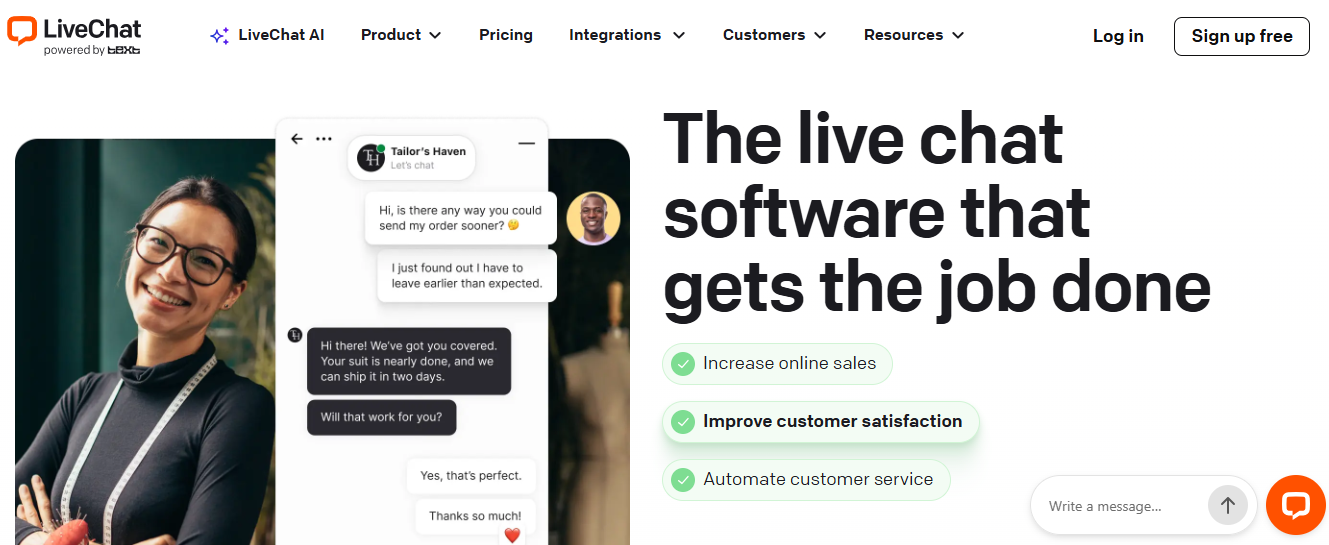
LiveChat is a dedicated live chat platform for sales and support teams, combining a customisable chat widget with HelpDesk ticketing and ChatBot AI as separate companion products.
It is built for D2C e-commerce stores, B2B SaaS teams, and service businesses wanting a reliable, specialist chat tool without all-in-one platform complexity. Teams choose LiveChat over Tidio for its superior widget customisation and modular pricing that lets teams pay only for the capabilities they actually need.
Key features
- Customisable chat widget. Highly configurable widget with product cards, transcripts, and visitor tracking for sales-oriented teams.
- HelpDesk ticketing. Companion product managing email and ticket-based support alongside live chat conversations in one workflow.
- ChatBot automation. Visual no-code bot builder for handling FAQs, lead capture, and qualification workflows without development resources.
Why choose LiveChat over Tidio?
LiveChat's widget customisation and sales-oriented features are more developed than Tidio's, and its modular pricing lets teams pay only for what they actually need rather than bundled tiers.
Pros
- Highly customisable chat widget with strong sales-oriented features like product cards and conversion tracking built in.
- Modular product family lets teams adopt chat, ticketing, and bots independently as support and sales needs evolve.
- Mature, well-documented platform with reliable uptime and a strong integration ecosystem across e-commerce tools.
Cons
- AI and bot capabilities require the separately priced ChatBot product, increasing total platform cost meaningfully at scale.
- All-in-one helpdesk experience requires bundling multiple LiveChat products rather than using a single unified platform.
- Less embedded AI capability compared to AI-native platforms built for autonomous query resolution at volume.
Customer review
"LiveChat's widget customisation is genuinely the best we've seen. But once we added HelpDesk and ChatBot, the bundled cost was higher than we anticipated." Paraphrased from a verified G2 reviewer. Read more LiveChat reviews.
Pricing
LiveChat starts at around $20 per agent per month on Starter. HelpDesk and ChatBot are priced separately as companion products. View LiveChat pricing.
10. Drift - Best for Sales-Led Conversational Marketing
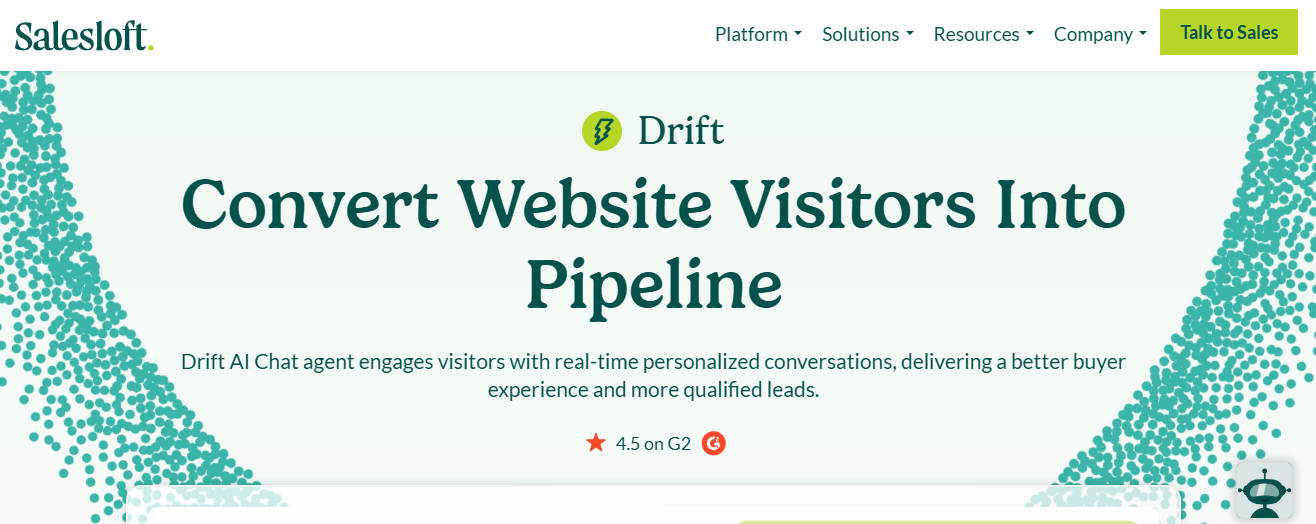
Drift is a conversational marketing and sales platform using AI chatbots and live chat to qualify leads, book meetings, and accelerate pipeline for B2B revenue teams.
It is built for B2B SaaS and mid-market sales teams that view chat primarily as a pipeline-generation channel rather than a customer support function. Teams choose Drift over Tidio when their primary goal is lead capture and pipeline acceleration, not ticket-based customer support workflows.
Key features
- AI chatbots for lead qualification. Automatically qualify visitors, route to sales reps, and book meetings within the chat experience.
- Conversational marketing playbooks. Pre-built playbooks for ABM, demand generation, and pipeline acceleration use cases across B2B accounts.
- Sales intelligence and routing. Identifies high-intent accounts and routes conversations to the appropriate sales team member automatically.
Why choose Drift over Tidio?
Drift is purpose-built for B2B revenue teams, providing sales-led conversational marketing capabilities that Tidio's support-first platform does not offer for pipeline generation and ABM workflows.
Pros
- Strong fit for B2B SaaS teams using chat as a primary pipeline-generation and lead qualification channel.
- Mature playbook library and integrations with major CRM and marketing automation platforms across the B2B stack.
- Account intelligence and ABM-oriented routing go beyond what support-focused tools offer in pipeline acceleration.
Cons
- Not designed as a primary customer support platform; ticketing and helpdesk capabilities are limited relative to dedicated alternatives.
- Custom enterprise pricing makes it expensive and harder to evaluate for SMB and D2C teams without a sales conversation.
- Overkill for D2C e-commerce businesses where chat is primarily a support and engagement channel rather than a sales tool.
Customer review
"Drift's playbooks and ABM routing are genuinely impressive for B2B pipeline work. But it's not a customer support tool, and we had to keep a separate helpdesk running alongside it." Paraphrased from a verified G2 reviewer.
Pricing
Drift uses custom quote-based pricing. Published plans historically started in the low-to-mid hundreds per month and scale significantly for enterprise deployments. View Drift pricing.
How to Choose the Best Tidio Alternative?
1. AI Capability and Whether It Is Embedded or Sold Separately
Evaluate whether AI is part of the core platform or an extra billing line. Look for autonomous L1 resolution and real-time agent assist. The difference between AI chatbots for customer service that resolve queries and those that only deflect them matters significantly at scale.
2. Pricing Predictability Across Growth Stages
Conversation-based pricing creates unpredictable bills during seasonal D2C sales or SaaS onboarding spikes. Evaluate whether AI is included in the base plan, how pricing scales between tiers, and whether mid-tier options exist between entry and high-end plans.
3. Channel Coverage and Routing Sophistication
Verify the alternative covers your full channel mix, particularly WhatsApp, Instagram, and email for D2C brands handling Multi-Channel Customer Service. For Shopify brands specifically, check whether the platform connects natively to Shopify order data or requires a third-party connector.
4. Analytics and Reporting Depth for Support Leaders
Support leaders need visibility into agent performance, escalation patterns, and CSAT trends. Confirm the alternative surfaces the right customer service metrics without forcing an upgrade to the highest tier just to access operational reporting.
5. Customisation and Brand Control
Widget customisation, branding, and workflow flexibility vary significantly across platforms. Tidio reviewers flag limited customisation for widget design and advanced automation logic. Evaluate whether the alternative gives you the brand control needed without requiring engineering effort or custom development work.
6. Migration Path, Integration Depth, and Scalability
Assess what migration involves: conversation history export, go-live timeline, and onboarding support quality. Evaluate whether the alternative integrates natively with your CRM, e-commerce stack, and billing tools, and how total cost scales as AI usage and team size grow together.
How QuantumDesk Helps D2C and SMB Teams Scale Beyond Tidio
QuantumDesk is best suited for D2C and SMB support teams that have outgrown Tidio's chat-first model and need AI embedded at the core of the platform, not billed as a separate add-on starting at $39 per month.
Core strengths of QuantumDesk:
- AI-native architecture - Quantum AI embedded across every plan with no separate billing for resolution, agent assist, or admin analytics, unlike Tidio's Lyro and Flows add-on structure.
- No double-billing for AI resolutions - Where Tidio charges for Lyro separately, QuantumDesk bundles AI resolution and agent copilot into the core platform from day one.
- Unified omnichannel inbox - Email, WhatsApp, Instagram, and web chat managed in one workspace without separate subscriptions or channel-specific add-ons.
- Native Shopify integration - Order status, history, and customer profiles surface directly in the conversation, so agents resolve Shopify order queries without opening a second tab.
- Admin Analytics - Real-time visibility into AI vs human resolution rates, escalation patterns, and CSAT trends, replacing the spreadsheet exports Tidio reviewers consistently describe.
- Custom pricing - Aligned to ticket volume and team size, avoiding the arbitrary conversation caps that penalise D2C teams during peak seasons and product launches.
QuantumDesk outperforms Tidio on AI depth, Shopify integration, and pricing predictability. The ai-native customer service benefits become clear when comparing total cost once Lyro, Flows, and overage fees are factored into Tidio's actual bill.
It fits D2C and e-commerce brands that need order context in the conversation and AI resolution without paying extra for every capability. Managing customer support during flash sales becomes operationally manageable when customer service automation is built into the platform rather than bolted on as a paid add-on.
Ready to move off Tidio without the add-on complexity? Book a Demo to see how QuantumDesk handles your actual support volume with AI and Shopify integration included from day one.
Frequently Asked Questions About Tidio Alternatives
What are the top Tidio alternatives?
The top Tidio alternatives include QuantumDesk, Intercom, Zendesk, Freshdesk, HubSpot, Zoho Desk, Crisp, LiveChat, and Drift.
The right choice depends on your team's AI requirements, channel needs, and budget. QuantumDesk is the strongest option for D2C teams needing AI-native architecture and native Shopify integration without the add-on billing Tidio introduces for Lyro and Flows.
Is Tidio suitable for large-scale use?
Tidio is primarily designed for SMB and e-commerce teams, not large-scale enterprise operations.
The jump from Growth at $59 to Plus at $749, alongside separately priced Lyro and Flows, means total costs at scale can exceed more enterprise-ready alternatives like Zendesk or QuantumDesk.
How does QuantumDesk compare to Tidio?
QuantumDesk embeds AI into the core platform; Tidio sells Lyro and Flows as separate add-ons on top of base subscriptions.
QuantumDesk also offers native Shopify integration, deeper analytics, more flexible routing across WhatsApp and Instagram, and custom pricing that avoids Tidio's $59-to-$749 gap, making it better suited for scaling D2C teams.
What is the best free alternative to Tidio?
Freshdesk, HubSpot Service Hub, and Crisp all offer functional free plans for small teams managing basic support.
For teams expecting meaningful growth, QuantumDesk's custom pricing is worth evaluating early. Crisp's free workspace tier is the strongest zero-cost option for early-stage D2C teams needing broad channel coverage without conversation-cap billing.
Which Tidio alternative is best for Shopify brands?
QuantumDesk and Gorgias are the strongest Tidio alternatives for Shopify brands specifically.
Gorgias offers deep Shopify-native order-aware macros and refund capabilities. QuantumDesk pairs native Shopify integration with a unified WhatsApp and Instagram inbox for brands needing full omnichannel coverage alongside order context. See Best Help Desk Software for Shopify Stores for a full comparison.




.avif)