
Summarize with AI
Key Takeaways
- AI help desk software automates ticket routing, triage, and repetitive support requests so agents focus on complex conversations.
- AI assists support agents with conversation summaries, context-aware draft replies, and relevant knowledge articles to reduce resolution time.
- Intelligent automation improves customer response times and reduces operational workload without requiring businesses to expand their support teams.
- AI-native platforms combine intelligent automation with human agent expertise to deliver faster, more consistent customer experiences at scale.
- Predictive insights help support teams identify recurring issues and customer frustration trends before they significantly impact satisfaction scores.
Customers expect immediate answers, but support teams still spend hours managing repetitive tickets, manual routing, and disconnected customer conversations.
Whether supporting Shopify customers, SaaS users, or D2C shoppers during peak sales, AI helps automate routine requests while allowing agents to focus on complex conversations requiring human judgment.
I ordered a size M jacket as a birthday gift → received size XL → messaged on WhatsApp → got a bot asking me to raise a ticket → followed up after 5 days → birthday had passed → left a review and never returned.
One avoidable delay became a lost customer. The product issue was a simple warehouse error. The delay was entirely a system failure. A support team without intelligent automation spent six days on a query that should have been closed in a single conversation.
- Automates repetitive customer requests before agents become involved.
- Routes tickets using customer intent, urgency, and sentiment.
- Assists agents with summaries and context-aware responses.
- Improves customer experience while reducing operational workload.
You will learn how AI help desk software works, its essential features, business benefits, common use cases, and how AI-native platforms improve customer support.
A Quick Comparison of Traditional Help Desk vs AI Help Desk
What Is AI Help Desk Software?
AI help desk software is a customer support platform that uses artificial intelligence to automate repetitive tasks, assist agents, and improve customer support efficiency.
Unlike traditional help desk systems that mainly organize tickets, AI help desk software understands customer intent, prioritizes requests, automates repetitive resolutions, and continuously learns from interactions to deliver faster, more consistent support across multiple communication channels.
Key Features of AI Help Desk Software
- Autonomous ticket resolution: Resolves repetitive customer requests like order tracking, password resets, and account updates without requiring agent intervention.
- Intelligent ticket routing: Classifies conversations using intent, urgency, and sentiment before assigning them to the most suitable support queue.
- AI agent assistance (Copilot): Summarizes conversations, drafts context-aware replies, and recommends relevant knowledge articles to improve agent productivity.
- Knowledge base integration: Retrieves accurate answers from company documentation to deliver consistent responses across customer conversations.
- Predictive analytics: Identifies recurring issues, customer frustration trends, and support bottlenecks before they significantly impact customer experience.
- Omnichannel support: Brings email, live chat, WhatsApp, social media, and other customer conversations into one unified workspace.
Key Differences Between AI Chatbots and AI Help Desk Software
Although both technologies automate customer interactions, they serve different purposes. AI chatbots for customer service mainly answer customer questions, while AI help desk software manages complete support workflows by automating routing, assisting agents, resolving repetitive tickets, and providing operational insights.
How Does AI Help Desk Software Works
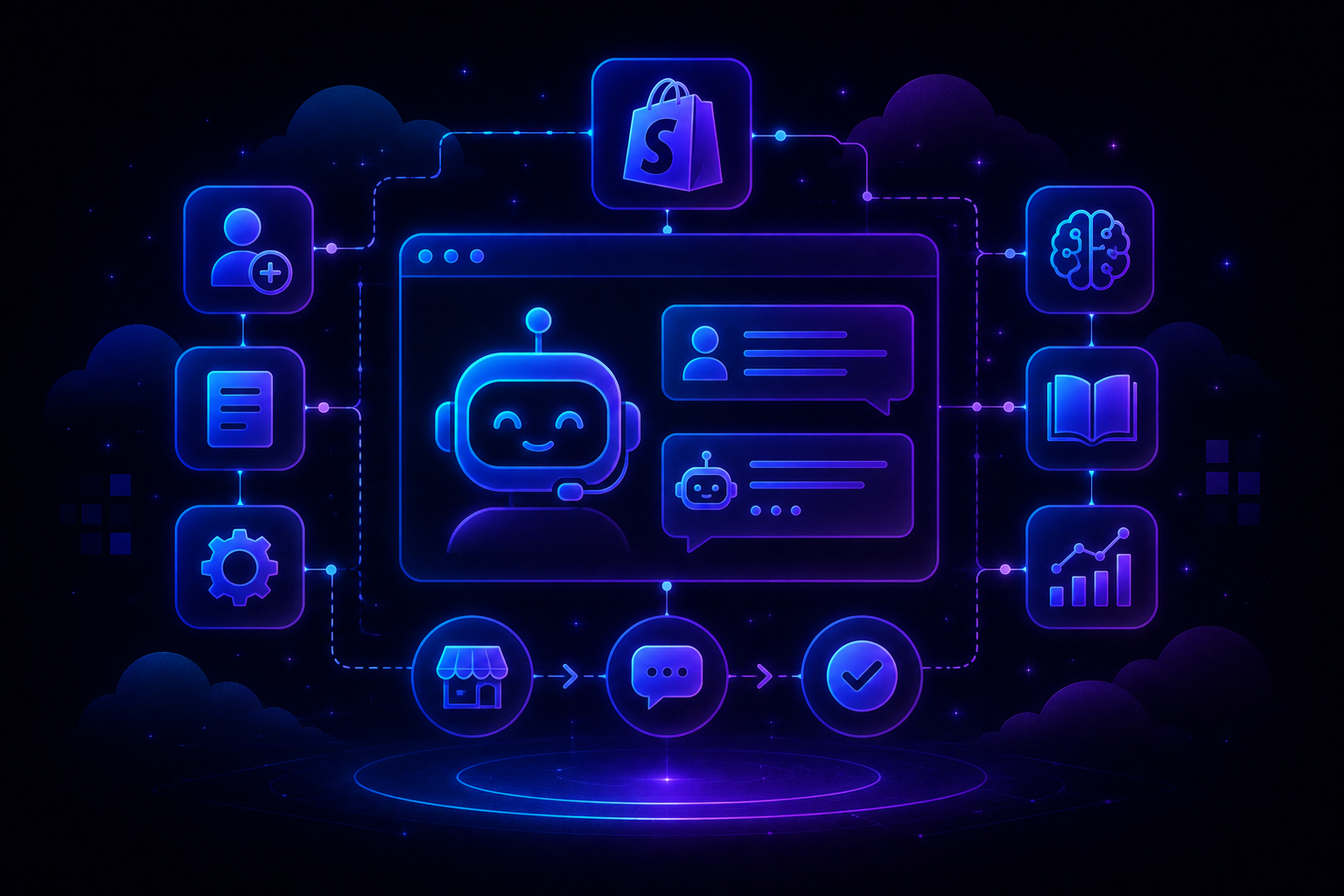
AI help desk software follows a structured workflow that begins when a customer submits a request and continues through intelligent analysis, automated resolution, human collaboration, and continuous learning to improve future support experiences.
Step 1: Understand Customer Intent
AI analyzes customer messages across email, chat, WhatsApp, or social media to understand intent, urgency, language, and the overall context before any human touches the request.
This analysis happens in real time and forms the foundation of everything that follows.
- AI reads intent signals like urgency, tone, and topic from the first message before the request enters any queue.
- Language is detected automatically so multilingual queries are routed and handled without manual sorting or reassignment.
- Previous interaction history is pulled in alongside the new message, giving the system full context from the very first step.
Step 2: Classify and Prioritize Requests
The system automatically categorizes tickets based on issue type, sentiment, priority, and customer value before assigning them to the appropriate support queue.
This removes the manual triage work that typically consumes hours of an agent's day.
- High-urgency complaints flagged by sentiment analysis surface at the top of the queue, not buried under low-priority requests.
- Tickets are routed to the right team based on issue type, so billing queries go to billing and technical issues go to technical, without manual assignment.
- Customer value and account history factor into priority so high-value accounts consistently receive the response speed they expect.
Step 3: Resolve Repetitive Requests Automatically
AI handles common requests like order tracking, refund status, password resets, and account updates without agent involvement, helping businesses reduce repetitive support questions and deliver faster resolutions without increasing team size.
- The same query answered 300 times by human agents, like "where is my order," is handled automatically once AI is trained on it, permanently removing it from the agent queue.
- Customers receive accurate, immediate responses on the channels they already use, whether that is WhatsApp, email, or live chat, without waiting for availability.
- Agents only see tickets that genuinely require their judgment, not the repetitive volume that previously consumed the majority of their shift.
Step 4: Assist Human Agents
When human support is required, AI summarizes conversations, suggests responses, retrieves relevant knowledge articles, and preserves customer context for faster issue resolution. Agents arrive at every conversation prepared rather than starting from scratch.
- A full conversation summary means agents never need to scroll back through a long thread to understand what happened before they joined.
- Suggested responses drafted by AI are grounded in the knowledge base, so agents start from accuracy rather than composing replies without reference.
- Intent signals surfaced by AI tell the agent exactly what the customer needs before they read a single line of the original message.
Step 5: Learn and Improve Continuously
AI continuously learns from customer interactions, identifies knowledge gaps, improves routing accuracy, and enhances future recommendations to deliver better customer support over time.
This is what separates a static help desk tool from a platform that compounds value with scale.
- When customers ask questions the knowledge base does not yet cover, AI flags those gaps so the team can address them before they generate repeat tickets.
- Routing accuracy improves over time as AI learns which queue and agent type produces the fastest resolution for each issue category.
- Recurring complaint patterns that emerge across hundreds of conversations become visible in analytics before they affect CSAT scores or generate public reviews.
What are the Benefits of AI Help Desk Software
Modern AI help desk software combines automation, intelligent assistance, and operational insights to improve customer support. Instead of simply answering questions, it helps businesses resolve issues faster while improving agent productivity and customer satisfaction.
1. Autonomous Ticket Resolution
AI automatically resolves repetitive Level-1 customer requests, reducing ticket queues and allowing agents to spend more time handling complex customer conversations.
For a D2C apparel brand processing 2,000 monthly tickets where 60% involve order status or return queries, agentic AI for customer service can resolve that entire category without a single agent interaction.
2. Intelligent Ticket Routing
Customer conversations are automatically prioritized and routed based on urgency, sentiment, intent, and predefined business rules.
A Shopify brand receiving 500 daily messages across WhatsApp, email, and Instagram no longer needs agents to manually triage and assign tickets before resolution work begins.
3. AI Copilot for Agents
AI assists support agents by summarizing conversations, drafting replies, identifying customer intent, and recommending relevant knowledge articles for faster decision-making.
An agent handling a billing dispute for a B2B SaaS account receives the full conversation history, account context, and a suggested response before typing the first word.
4. Omnichannel Support
Support teams can manage customer conversations across email, live chat, WhatsApp, and social media from one centralized workspace. Omnichannel customer service eliminates the fragmentation that forces customers to repeat themselves every time they switch channels.
5. Knowledge Base Integration
AI retrieves accurate answers from internal documentation to provide consistent customer responses while continuously improving self-service capabilities.
A cosmetics brand that documents return policies, ingredient FAQs, and skincare guidance sees those resources surface automatically in both agent replies and customer-facing chat responses.
6. Predictive Analytics
Support leaders can identify recurring issues, customer frustration patterns, and operational trends before they significantly affect customer experience. If a delivery delay complaint appears 80 times within one week, analytics surfaces the pattern before it escalates into a public reputation issue.
7. Faster Response and Resolution
Customer service automation reduces response times and enables customers to receive accurate answers without waiting for agent availability. Routine queries that previously waited 24 hours for an agent are resolved in under two minutes.
8. Lower Operational Costs
Businesses reduce repetitive workloads, improve efficiency, and scale support without increasing team size. A support team processing 3,000 monthly tickets where AI handles 65% of the repetitive volume can operate at the same headcount while delivering faster resolutions across every channel.
9. Better Agent Productivity
AI eliminates repetitive tasks, enabling agents to focus on complex conversations where empathy, judgment, and problem-solving create greater customer value. SMBs managing growing ticket volumes without the budget to expand headcount find that AI-powered assistance multiplies what each agent can handle without adding a single hire.
Common Use Cases of AI Help Desk Software
AI help desk software delivers the greatest value when businesses automate repetitive, high-volume customer interactions while allowing agents to focus on conversations requiring deeper expertise and personalized support.
1. Customer Support for D2C Brands
A customer orders the wrong shoe size during a flash sale, requests an exchange through WhatsApp, and AI initiates the exchange before an agent joins the conversation.
For D2C brands, the ai native customer service benefits show up most clearly during peak periods when ticket volume doubles overnight and team size stays constant. A 48-hour resolution becomes a 5-minute one.
2. Shopify Customer Support
AI helps Shopify merchants answer order status, returns, delivery updates, and customer account questions instantly while reducing repetitive support workloads. With native Shopify integration, AI pulls order and customer data directly into the conversation so agents never need to open a second tab to look up what the customer is referencing.
A Shopify brand handling 1,500 monthly orders stops losing customers to support delays the moment that order data is available at the point of contact.
3. B2B SaaS Customer Support
AI assists SaaS companies by resolving onboarding questions, API documentation requests, billing inquiries, and account-related issues while supporting technical teams.
For a SaaS business with 500 active accounts, AI handles the predictable L1 queries so customer success managers stay focused on retention conversations and renewal risks instead of password resets.
4. Internal IT Help Desk
Employees receive immediate support for password resets, software access, account provisioning, and routine IT requests through AI-powered self-service. Internal IT teams that previously spent 60% of their time on routine access requests redirect that capacity toward infrastructure, security, and higher-value initiatives.
How QuantumDesk Helps Teams Resolve More Support Requests with AI
QuantumDesk is an AI-native customer support platform where artificial intelligence is built into every support workflow instead of being added later.
Quantum AI automates repetitive customer requests, intelligently prioritizes conversations, and assists agents with summaries, suggested replies, and contextual recommendations. This enables support teams to improve response quality while resolving significantly more customer conversations.
Whether supporting Shopify brands, D2C businesses, or SaaS companies, QuantumDesk centralizes customer conversations and preserves complete context across every support interaction. For SMBs looking to scale customer support with AI without a proportional increase in headcount, an AI-native platform makes that a realistic outcome rather than a trade-off.
Key QuantumDesk Capabilities:
- An AI-native platform automates repetitive customer support requests across the entire support workflow.
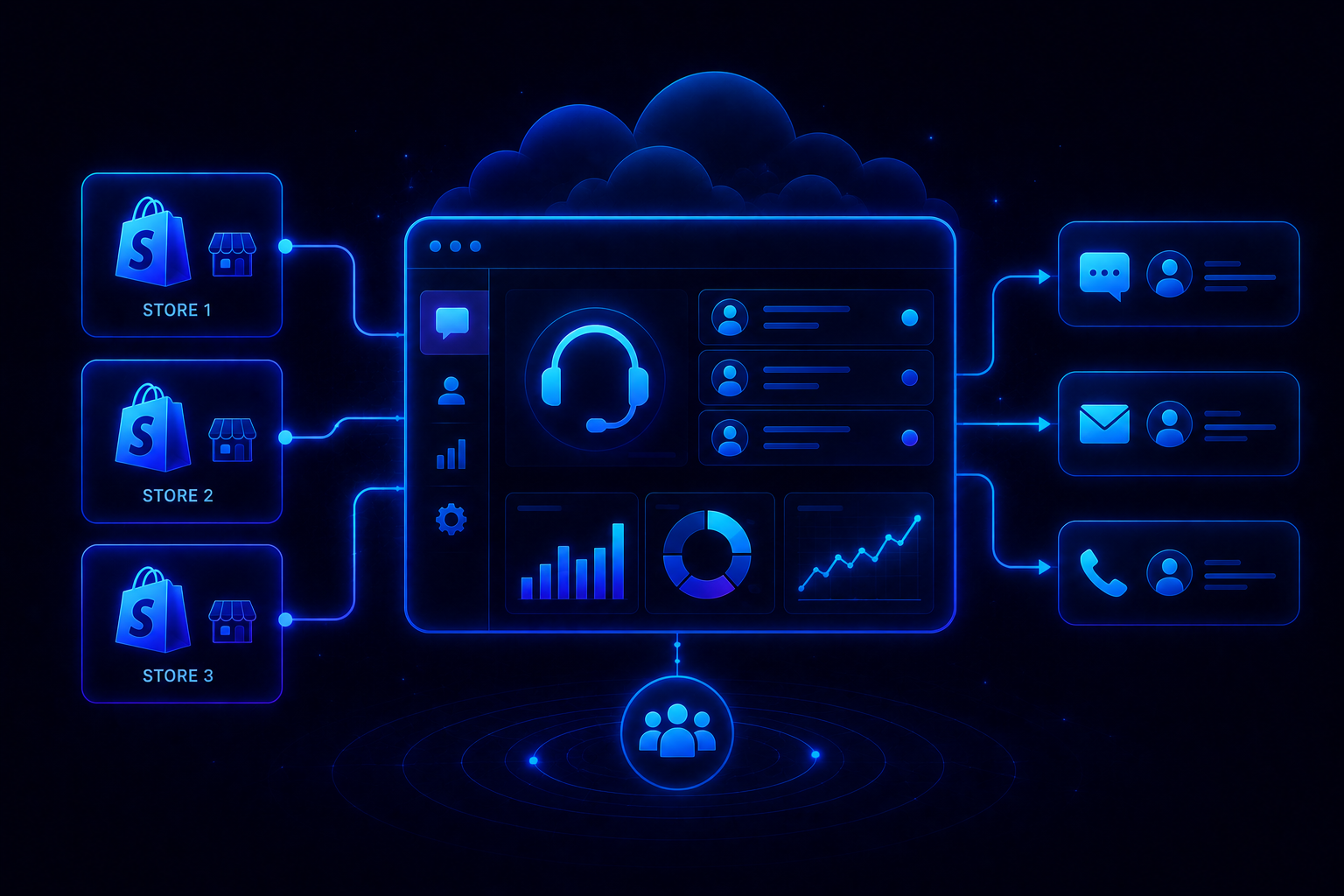
- Unified inbox centralizes email, chat, WhatsApp, and social media conversations in one workspace.
- AI-curated inbox prioritizes tickets using customer intent, urgency, and sentiment automatically.
- Quantum AI Copilot summarizes conversations and recommends context-aware replies for faster agent resolutions.
- Native Shopify integration gives agents instant access to order details and customer information without switching between multiple tools.
- Admin analytics provide visibility into AI resolution rates, ticket trends, and customer satisfaction for continuous support optimization.
By combining intelligent automation with human expertise, QuantumDesk helps businesses improve customer experiences, increase agent productivity, and scale customer support operations without expanding their support teams.
Frequently Asked Questions
What is AI help desk software?
AI help desk software uses artificial intelligence to automate ticket management, resolve repetitive customer issues, assist agents, and improve support efficiency across multiple communication channels.
How is AI help desk software different from traditional help desk software?
Traditional help desks organize tickets manually, while AI help desk software understands intent, automates workflows, routes conversations intelligently, and assists agents throughout the customer support process.
Can AI help desk software replace support agents?
No. AI handles repetitive customer requests and routine workflows, while human agents focus on complex conversations, emotional situations, and issues requiring judgment or personalized assistance. The full picture of AI vs Human Customer Support shows the two work best as complements, not substitutes.
Which businesses benefit most from AI help desk software?
D2C brands, Shopify stores, SaaS companies, and growing support teams benefit by automating repetitive customer requests while improving response speed and operational efficiency.
What features should businesses look for in AI help desk software?
Look for AI-powered routing, autonomous resolution, agent assistance, omnichannel support, predictive analytics, knowledge base integration, CRM connectivity, and native commerce integrations that support long-term business growth. Reviewing the Best AI help desk software options alongside your specific channel mix and ticket volume helps narrow the decision quickly.



.avif)