Summarize with AI
Key Takeaways
- Omnichannel customer service connects every support channel into one continuous customer conversation.
- Unlike multichannel support, omnichannel preserves context across every interaction.
- Unified customer data helps agents resolve issues faster and improve customer satisfaction.
- AI and automation make omnichannel support easier to scale across growing teams.
- A successful strategy combines technology, processes, customer data, and consistent experiences.
Customers no longer interact with businesses through a single channel. They expect connected support wherever they engage, and most businesses are not built for that.
When a customer moves from WhatsApp to email to a phone call, each agent starts from scratch. That gap between modern customer service expectations and what most teams deliver is where trust breaks down.
I ordered a jacket online → checked delivery status through WhatsApp → followed up through email → later called support for help. Each agent asked me to explain the issue again. A simple inquiry took three days and four separate conversations to resolve.
Here is what connected support actually requires:
- Customers expect conversations to continue across channels without repeating what they have already explained.
- Support teams need full customer context to resolve issues on the first or second contact, not the fifth.
- Connected experiences across channels directly reduce churn and improve satisfaction scores.
- AI and automation give growing teams the capacity to maintain that consistency at scale.
You will learn what omnichannel customer service is, how it works, why it matters, and how to implement it.
A Quick Overview: Disconnected vs Omnichannel Support
The biggest advantage of omnichannel customer service is continuity. Customers receive connected support without repeating information every time the channel changes.
What Is Omnichannel Customer Service?
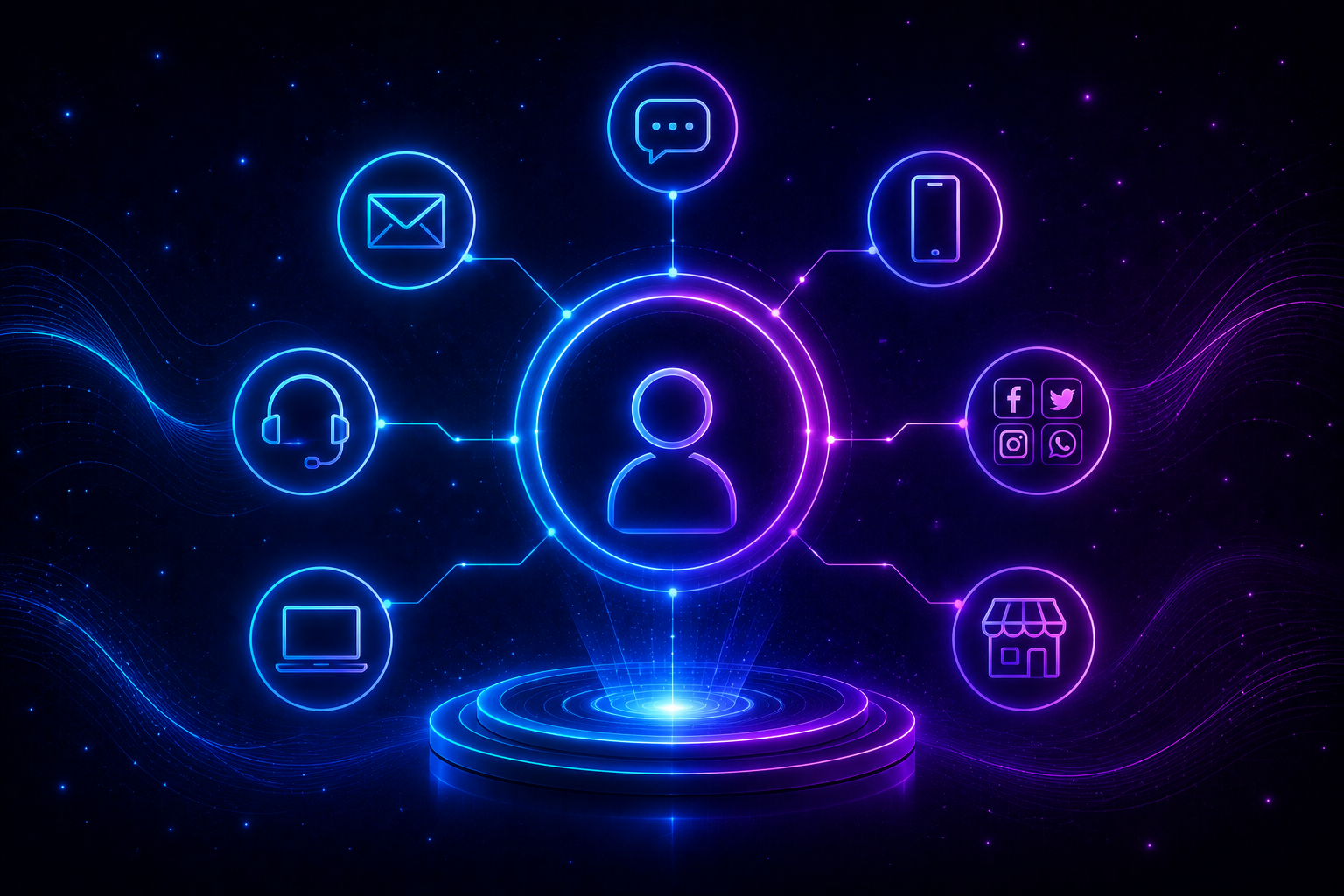
Omnichannel customer service is a support model where every channel a customer uses is connected to a single shared conversation record. When a customer starts a conversation on Instagram and follows up on email, the agent sees the full history. No repetition. No reintroduction of the issue.
It is not about offering more channels. Most businesses already do that.
Omnichannel is about what happens when a customer moves between those channels. Does the conversation continue, or does it reset? The goal is continuity. A customer should pick up exactly where they left off, regardless of which channel they use next.
What channels are included in an omnichannel strategy?
Most omnichannel strategies connect the channels where customers are already reaching out.
- Email support for detailed queries, order confirmations, and follow-up communications.
- Live chat and chatbots for real-time support directly on a website or app.
- Phone support for high-urgency issues or customers who prefer voice.
- WhatsApp and SMS for conversational support and order status updates.
- Social media messaging across platforms like Instagram, Facebook, and X.
- Self-service knowledge bases for customers who prefer to resolve issues without contacting support at all.
Omnichannel Support vs Multichannel Support
Many businesses use omnichannel and multichannel as if they mean the same thing. They do not. Both involve offering more than one way to reach support. That is where the similarity ends.
Multichannel means channels exist. Omnichannel means those channels share data, conversation history, and customer context with each other.
A Quick Comparison: Multichannel Support vs Omnichannel Support
Multichannel support treats each channel as a standalone operation. The email team handles email. The chat team handles chat. Each has its own queue, its own data, and its own view of the customer.
When a customer crosses from one to another, nothing follows them. Omnichannel treats the customer as the constant, not the channel. The record of who the customer is, and what they need, travels with them regardless of where the next message comes from.
Here is what that looks like in practice:
A customer contacts a D2C food brand through Instagram about a wrong item. The agent asks them to follow up by email. On email, a different agent asks: what was the issue with your order? The customer re-explains everything before anything gets resolved.
In an omnichannel environment, the email agent opens the conversation and sees the Instagram message, the order details, and the customer's history. They skip the recap and go straight to the fix.
Why Is Omnichannel Customer Service Important?
Customer expectations around support have moved faster than most support operations have kept up. A customer who had a great support experience on WhatsApp last month expects the same quality on email today. They also expect the agent to already know them.
When that recognition is missing, it signals the brand does not track the relationship beyond the transaction. Managing multi-channel customer service without a unified system turns that gap into a structural problem.
1. Reduces customer effort
When a customer's conversation history is preserved, they do not have to re-explain the issue, re-submit their order number, or re-justify their complaint.
Research by CEB, now part of Gartner, found that reducing customer effort is a stronger driver of loyalty than delighting customers. Fewer steps to resolution means less friction. Less friction directly changes the outcome.
2. Improves customer satisfaction
Frustration in support interactions rarely comes from the issue itself. It comes from what the customer has to go through to get it resolved.
When an agent already has the context, the tone of the conversation shifts. The customer does not need to advocate for themselves or prove their situation. That shift shows up in customer satisfaction metrics within the same reporting period the change is made.
3. Increases customer retention
A single frustrating support interaction can end a customer relationship that took months and real acquisition spend to build. According to PwC's Experience is Everything report, 32% of customers will stop doing business with a brand they love after just one bad experience.
Customers who consistently receive fast, contextual support are far more likely to repurchase and refer. For D2C brands where repeat purchase rate directly determines profitability, that gap is a revenue question.
4. Improves agent productivity
Agents without full customer context spend a meaningful portion of each conversation gathering information that already exists somewhere in the business. When that history surfaces automatically, agents skip the recap.
They handle more conversations in the same time without the quality of each one suffering. That is not about working faster. It is about removing work that should not exist.
5. Supports business growth
Better support experiences reduce cost per interaction, lower churn rates, and produce higher CSAT scores that feed back into acquisition through reviews and referrals.
For brands managing omnichannel customer support across GCC markets, where customers span multiple languages and communication preferences, the business case is especially direct.
The brands that grow fastest are not the ones with the most channels. They are the ones with the most connected channels.
What are the Benefits of Omnichannel Customer Service?
The business case for omnichannel support runs in both directions as customers get a better experience and support teams get a more workable operation.
The two are not separate. Agents who can actually do their jobs are the ones who deliver the better experience.
1. Faster resolution times
When an agent opens a conversation knowing the customer's order history, previous contacts, and the issue raised on another channel yesterday, the conversation starts at a different point.
Instead of four messages establishing context, those four messages resolve the problem. On a team handling 3,000 tickets per month, shaving two messages per conversation compounds quickly into hours of recovered capacity every day.
2. More personalized customer experiences
Unified customer data means agents know who they are talking to before the first reply.
They can see what the customer ordered, how long they have been a customer, and what their previous interactions looked like. That information shifts responses from generic to specific. Specific responses feel personal. And customers who have experienced impersonal support elsewhere notice the difference.
3. Better team efficiency
Agents switching between five tools to piece together a customer's history are not being inefficient by choice. They are working within a system not designed for how customers actually communicate.
A unified workspace removes that switching. Agents see everything in one place. No missed context. No gaps in the record because someone was on the wrong tool.
4. Higher customer satisfaction scores
Connected support and CSAT scores move together. When customers do not repeat themselves, when responses arrive quickly, and when agents clearly understand the situation, satisfaction ratings go up.
For teams actively working to improve CSAT during high-volume periods, omnichannel infrastructure is often the missing variable.
5. Better customer insights
Disconnected channels produce disconnected data. A brand running email through one tool, WhatsApp through another, and live chat through a third cannot see patterns across the full experience.
A unified system surfaces those patterns: which channel escalates most, which query types take longest, which segments churn fastest. That data exists in every business. Most just cannot access it.
6. Proactive customer support
When a business has visibility across all channels in real time, it can act before the customer reaches out. A spike in "where is my order?" messages after a logistics delay is a signal, not noise.
Brands with that visibility send a proactive update before inbound volume doubles. That responsiveness is the kind of thing customers remember positively.
How to Build an Omnichannel Customer Service Strategy
Building omnichannel customer service is not a technology decision followed by implementation.
It is a structural decision about how the business relates to its customers, followed by the technology, process, and training that make it real.
Done in the wrong order, businesses end up with a unified inbox and the same disconnected processes running inside it.
Step 1: Understand how customers move across channels
Before connecting anything, map how customers actually move through a support interaction. Start with the most common complaint types and trace each one. Where do customers first reach out? What makes them switch channels? Where do they give up?
That exercise usually surfaces two or three transitions creating the most friction. Fix those first.
Step 2: Centralize customer data
A unified support experience is only possible when customer data is also unified. That means one customer profile combining order history, previous support contacts, communication preferences, and channel activity, regardless of where those interactions happened.
Without that shared profile, agents on the same platform still see different partial views of the same customer.
Step 3: Connect all customer support channels
Integrating email, chat, phone, social media, and messaging apps into one platform makes shared data useful at the point of interaction. Most businesses underestimate the scope of this step.
Connecting channels also means deciding how conversations are assigned across them, how escalations move between them, and who owns the record when a customer is active on two channels at once.
Step 4: Create consistent customer service processes
A unified platform does not automatically produce consistent support quality. Response time standards, escalation paths, resolution authority, and tone all need to be defined, both at the channel level and across channels.
A customer who gets a fast response on chat and a templated one on email does not experience one connected brand. They experience two operations with the same logo.
Step 5: Use AI and automation to scale support
Customer service automation is what allows omnichannel support to scale without adding headcount proportionally. AI handles repetitive queries that would otherwise back up agents across every channel simultaneously.
It routes conversations to the right team based on language, intent, and urgency. It surfaces customer context before the first reply. Without automation, managing five channels at scale hits a ceiling fast.
Step 6: Measure performance and continuously improve
No omnichannel implementation is finished at launch. The gaps appear once real customers are moving through it. Track first response time by channel, resolution time by interaction type, CSAT by channel, and escalation rates between channels.
Reviewing customer service metrics at that granularity is what separates omnichannel as a real capability from a marketing claim.
Common Challenges in Omnichannel Customer Service
Omnichannel support is worth building. It is also genuinely hard to build well.
Most businesses that struggle with implementation run into the same problems. Most of those problems come from decisions made before the technology was ever selected.
1. Disconnected systems and data silos
The most common obstacle is not a lack of channels. It is a lack of shared data between them. When the CRM does not sync with the helpdesk, and the helpdesk does not connect to WhatsApp, agents are manually reconstructing context that should be automatic.
The technical fix is integration. The harder fix is agreeing on what a shared customer record looks like and who owns it.
2. Inconsistent customer experiences
Offering the same channels is not the same as delivering the same experience across them.
A customer who uses live chat on a weekday and WhatsApp on a weekend may hit different agents, different templates, and different escalation paths. If those interactions feel like two different companies, the promise of connected support falls apart. Inconsistency erodes trust faster than no omnichannel offering at all.
3. Scaling across multiple channels
Adding channels without adding process is where omnichannel becomes a liability. Each new channel brings its own message volume and failure modes.
A brand that opens Instagram DMs without clear queue management will have agents missing messages while focused on email. The result is not omnichannel support. It is multichannel support with an omnichannel label.
4. Balancing automation and human support
The risk of over-automating is real. Customers who hit an AI response when they expected a human on a high-urgency issue do not just feel ignored. They escalate harder.
Repetitive, data-heavy questions like order status and return eligibility suit automation well. Complaints and emotionally charged interactions need a person. Getting that routing right is one of the highest-leverage decisions in the entire implementation.
5. Agent training and adoption
A unified platform delivers nothing if agents do not know how to use it. Training cannot be a one-time onboarding session.
Agents need to know how to read a full conversation history quickly, how to pick up where another agent or an AI left off, and how to keep the customer record accurate for whoever handles the next touchpoint.
Teams that skip this end up with a unified platform each agent uses in their own disconnected way.
Omnichannel Customer Service Examples
1. D2C apparel example
I ordered a dress for an upcoming wedding → checked delivery status through Instagram → received tracking updates through WhatsApp → later contacted support through live chat regarding a size issue. Because every interaction was connected, the agent already knew my order history and resolved the exchange without asking me to repeat a single detail.
One conversation. Four touchpoints. No repetition. The agent spent the entire live chat on the resolution, not the setup.
For a brand competing with dozens of similar options, that experience is what makes a customer choose them again. The purchase that follows a fast, connected resolution is what poor post-purchase support costs when it goes wrong.
2. B2B SaaS example
A customer starts with an onboarding question through live chat → receives follow-up documentation through email → later joins a support call about an API integration issue. The engineer on the call has the full conversation history. No recap needed. They start where the email left off and resolve the issue in one session.
For a SaaS business where onboarding success predicts renewal, that efficiency matters beyond the individual ticket.
A customer who clears integration quickly and feels supported during it is more likely to expand usage, advocate internally for the product, and renew without the sales team needing to intervene.
How QuantumDesk Simplifies Omnichannel Customer Service
Most businesses wanting to deliver omnichannel support are not starting from zero. They already have channels. What they do not have is a way to make those channels share information with each other. The result is a support operation that looks omnichannel from the outside and functions like multichannel from the inside.
Agents work across five tools. Customers repeat themselves. The excessive conversations that reduce support quality pile up because no single conversation reaches resolution without multiple touches.
I start with a WhatsApp message about a delayed order → follow up through email the next day → later open a live chat conversation. Instead of repeating my issue each time, the agent sees the full thread from the first message. They pick up exactly where the conversation left off and resolve it in that session.
That is what the infrastructure shift actually produces. Not a feature list. A different experience on the customer's end, and a different workload on the agent's end.
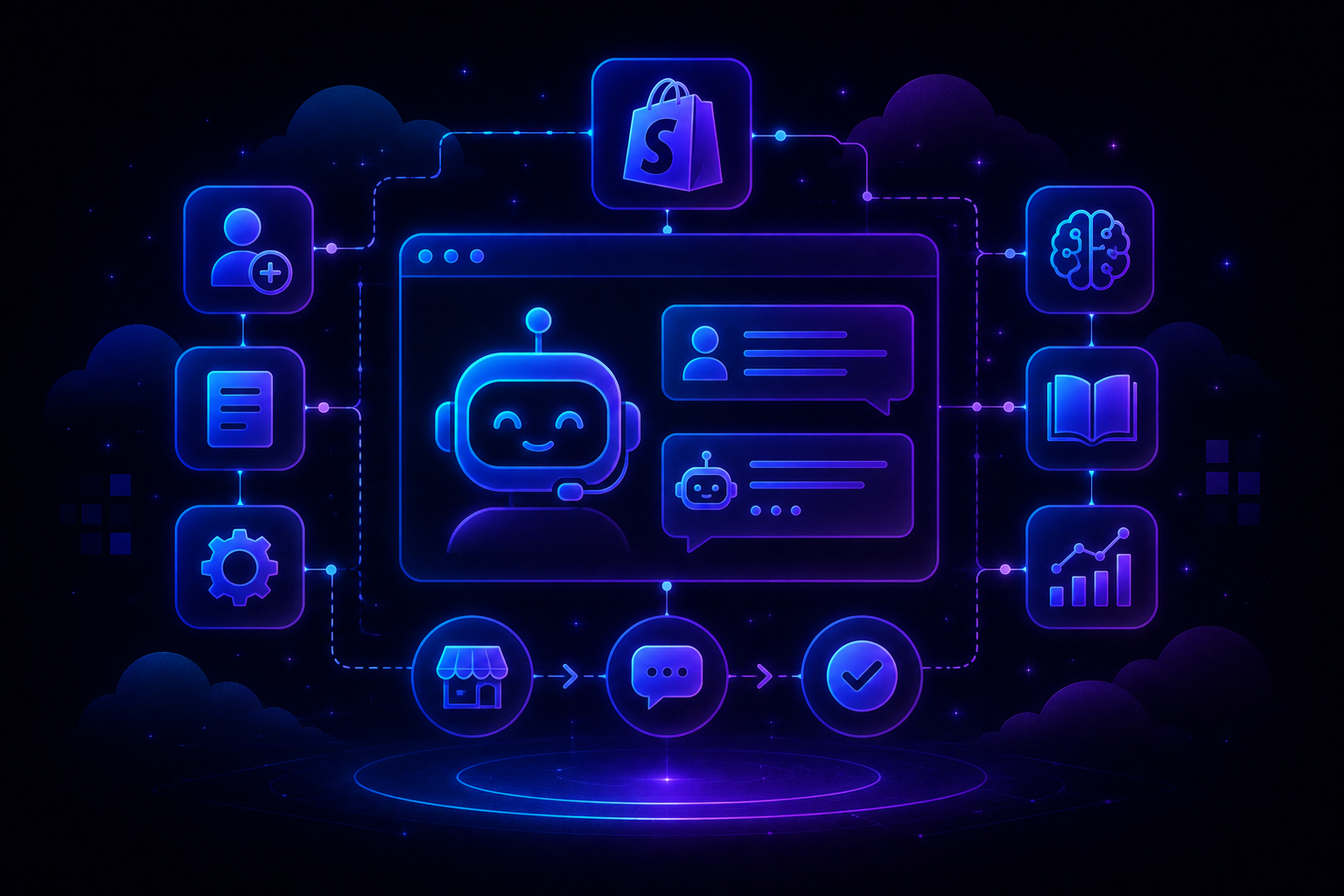
How QuantumDesk helps deliver omnichannel support
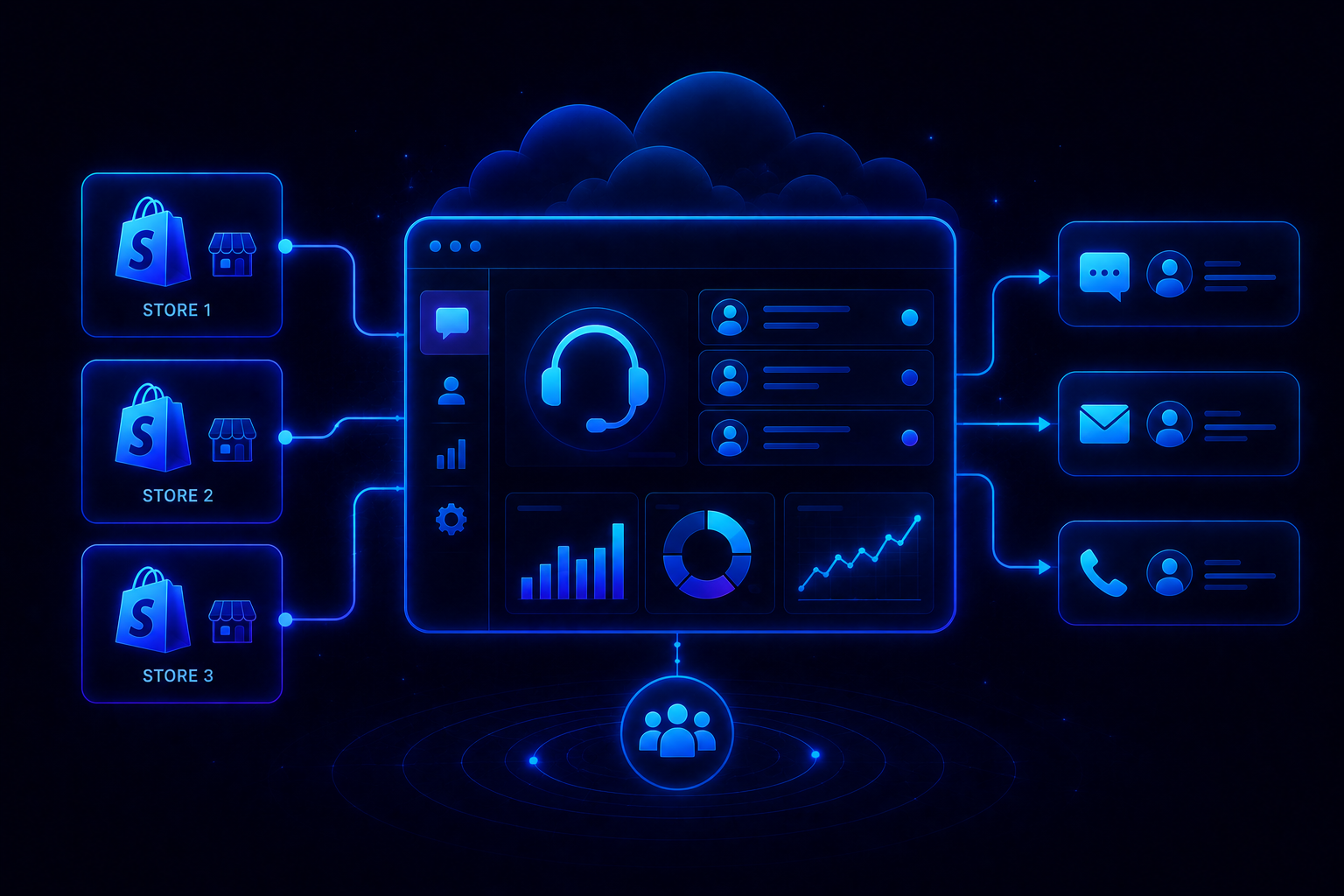
- Unified Inbox centralizes email, chat, WhatsApp, and social conversations into one workspace, giving agents a single place to manage every active conversation regardless of channel.
- Quantum AI automatically handles repetitive customer questions across all connected channels, resolving order status, return policy, and account queries without touching an agent's queue.
- AI-Curated Inbox reads incoming conversations for sentiment, intent, and urgency, then surfaces the ones needing immediate attention before they escalate into public complaints.
- Quantum AI Copilot gives agents the customer's full conversation history and recommended next actions before the first reply, cutting context reconstruction time to zero.
- Shared customer history across every channel eliminates repeated explanations, giving every agent the same complete starting point regardless of which channel they are working on.
- Analytics give support leaders a cross-channel view of where conversations take longest to resolve, which channels produce the most escalations, and where experience gaps are pulling satisfaction scores down.
QuantumDesk does not ask businesses to rebuild their support operation. It connects what already exists. Every agent, on every channel, works with the same complete information.
For teams scaling AI in customer service without losing the quality of the human interactions that matter, that shared foundation is what makes it possible.
Frequently Asked Questions
What is omnichannel customer service?
Omnichannel customer service is a support model where every channel a customer uses connects to a shared conversation record.
When a customer moves from WhatsApp to email to live chat, their history travels with them. Agents do not ask the customer to repeat themselves because they already have the full picture. The defining feature is not the number of channels. It is the continuity between them.
What is the difference between omnichannel and multichannel customer service?
Multichannel means offering customers multiple ways to reach support: email, chat, phone, social. In a multichannel setup, a customer switching from chat to email starts over with an agent who has no record of what came before.
Omnichannel means those channels share data, conversation history, and customer context with each other. In an omnichannel setup, the email agent sees the full chat history and continues from where the previous conversation ended.
Why is omnichannel customer service important?
Customers who switch channels and have to repeat their issue are not just frustrated. They are deciding whether the brand values their time.
Omnichannel support removes that friction. It reduces customer effort, improves satisfaction, and increases the likelihood of repeat purchases. For businesses where retention is a core revenue driver, connected support infrastructure has a direct and measurable return.
What tools are needed for omnichannel customer service?
The core requirements are a unified inbox that centralizes all channel conversations, a shared customer profile that captures interaction history, and an analytics layer tracking performance across channels.
AI customer service tools add the ability to handle repetitive queries automatically, route conversations intelligently, and surface context to agents at the moment of interaction. The platform matters less than whether the tools share data with each other.
Can AI improve omnichannel customer service?
Yes. Agentic AI handles the volume of repetitive queries that would otherwise consume agent capacity across every channel simultaneously. It routes conversations to the right team based on language, urgency, and intent. It surfaces full customer history before the agent types the first response.
Without AI, managing six channels at scale requires proportionally more headcount. With AI handling the repetitive load, the same team maintains quality across higher volumes without the experience degrading.



.avif)