
Summarize with AI
Key Takeaways
- Customer success metrics measure how effectively customers achieve value by tracking adoption, retention, revenue growth, and long-term loyalty.
- Revenue, product usage, and customer experience KPIs work together to surface patterns that predict sustainable long-term business growth.
- Customer health scores combine usage, engagement, and sentiment data to identify churn risks well before renewal conversations begin.
- Tracking the right KPIs gives customer success teams the visibility to improve retention, reduce churn, and accelerate account expansion.
- Customer success metrics replace assumptions with data, enabling proactive decisions that strengthen customer relationships and drive measurable business outcomes.
Growing customer relationships requires more than solving support issues. Success depends on helping customers consistently achieve value from your product.
A B2B SaaS company tracked support tickets but never measured product adoption → login frequency dropped for 8 weeks → no one flagged it → the renewal call came and the customer had already shortlisted alternatives → the account churned.
One avoidable loss. A customer health score built on the right metrics would have surfaced that risk weeks before the renewal conversation.
Instead of relying on assumptions, customer success teams use measurable KPIs to understand customer health, product adoption, loyalty, and business performance.
- Measure customer retention and recurring revenue growth.
- Track product adoption and engagement.
- Identify churn risks before renewals.
- Improve customer satisfaction using measurable data.
You will learn how to measure customer success using the most important KPIs, understand their formulas, and improve customer retention and business growth.
What Are Customer Success Metrics?
Customer success metrics measure how effectively customers achieve their goals while using your product and indicate whether your business delivers long-term value.
Unlike customer service metrics that measure individual interactions, customer success metrics evaluate customer retention, adoption, engagement, loyalty, and revenue growth throughout the customer lifecycle.
What Customer Success Metrics Actually Measure
- Customer retention and recurring revenue growth.
- Product adoption and feature usage.
- Customer health and engagement.
- Customer satisfaction and loyalty.
- Expansion opportunities.
- Early warning signs of churn.
Key Differences: Customer Success Metrics vs Customer Service Metrics
Customer service metrics measure support performance, while customer success metrics determine whether customers continue achieving value, renewing subscriptions, expanding accounts, and recommending your business over time. Understanding the distinction is the foundation of any proactive CS strategy.
Benefits of Tracking Customer Success Metrics
Customer success metrics provide visibility into customer behavior beyond support interactions. They help businesses understand customer health, improve retention, reduce churn, and identify opportunities for long-term revenue growth.
1. Identify Churn Risks Early
Monitor customer behavior before renewals to proactively engage accounts showing declining adoption, satisfaction, or customer health. For B2B customer service best practices, this means building metric-driven check-ins into the account lifecycle rather than waiting for customers to signal dissatisfaction directly.
2. Improve Customer Retention
Understand why customers stay or leave and improve onboarding, adoption, and engagement accordingly. Retention gaps rarely appear overnight. Metrics make them visible weeks or months before they turn into renewal conversations that go the wrong way.
3. Make Better Business Decisions
Use measurable customer data to improve business strategies, prioritize resources, and strengthen customer relationships. Teams that track customer satisfaction metrics alongside revenue data make investment decisions grounded in evidence rather than assumptions.
4. Increase Expansion Opportunities
Healthy customers adopt more features, renew subscriptions, and create opportunities for upselling and cross-selling. A customer showing strong product adoption and a high NPS is a natural candidate for an expansion conversation, and the data tells you exactly when to have it.
5. Measure Team Performance
Track customer success initiatives using measurable KPIs instead of assumptions to improve customer satisfaction and improve customer outcomes continuously. Without consistent measurement, teams have no way to know whether their interventions are working or just keeping people busy.
Top 12 Customer Success Metrics to Track
The best customer success teams track multiple KPIs instead of relying on a single metric. Together, these measurements reveal customer health, product adoption, customer loyalty, and recurring revenue performance.
1. Net Revenue Retention (NRR)
Measures revenue retained from existing customers after accounting for renewals, upgrades, downgrades, and customer churn.
How to Measure: (Starting MRR + Expansion − Downgrades − Churn) ÷ Starting MRR × 100
Why It Matters: Shows whether existing customers generate sustainable revenue growth without depending entirely on acquiring new customers. A top-quartile SaaS benchmark sits between 115% and 120%, meaning existing customers alone are expanding the revenue base.
2. Customer Churn Rate
Measures the percentage of customers who stop using your product or fail to renew during a specific period.
How to Measure: Lost Customers ÷ Customers at Start of Period × 100
Why It Matters: Helps businesses identify customer retention issues before they significantly impact recurring revenue. Even a 1% monthly churn rate compounds into a 12% annual loss that no acquisition budget can fully absorb.
3. Customer Lifetime Value (CLV)
Estimates the total revenue a customer generates throughout their entire relationship with your business.
How to Measure: Average Revenue Per User ÷ Customer Churn Rate
Why It Matters: Helps prioritize valuable customer segments while improving long-term retention and expansion strategies. Tracking CLV alongside the customer acquisition cost formula tells you whether growth is actually profitable or simply expensive.
4. Product Adoption Rate
Measures how actively customers use your product and adopt important features after completing onboarding.
How to Measure: (Monthly Active Users ÷ Total Signups) × 100
Why It Matters: Higher adoption leads to stronger customer retention and increased expansion opportunities. Customers who do not use the product do not renew it. Low adoption rates are one of the clearest early signals of impending churn.
5. Time to Value (TTV)
Measures how quickly customers begin achieving meaningful value after purchasing or implementing your product.
How to Measure: Calculate the average time between onboarding completion and the customer's first successful outcome.
Why It Matters: Shorter implementation times improve customer confidence and reduce early-stage churn risks. Customers who reach their first meaningful result within 30 days are significantly more likely to renew than those still in setup at the 60-day mark.
6. Customer Health Score
Combines customer usage, engagement, support activity, and sentiment into a single score predicting account health.
How to Measure: Create a weighted score using product usage, support tickets, customer feedback, and engagement levels.
Why It Matters: Helps customer success teams identify at-risk accounts before renewal conversations begin. A health score that drops two weeks before renewal is far easier to act on than a churn notification that arrives the day after.
7. Net Promoter Score (NPS)
Measures customer loyalty by evaluating how likely customers are to recommend your business to others.
How to Measure: % Promoters − % Detractors
Why It Matters: Indicates customer advocacy and predicts future customer retention and business growth. High promoters are also the most likely candidates for referrals, case studies, and upsell conversations, making NPS a revenue signal as much as a satisfaction signal.
8. Customer Satisfaction Score (CSAT)
Measures customer satisfaction following a specific interaction with your product, service, or support team.
How to Measure: (Positive Responses ÷ Total Responses) × 100
Why It Matters: Provides immediate customer feedback for improving products, services, and support quality. Unlike NPS, which measures long-term loyalty, a CSAT score captures real-time satisfaction at the moment that matters most to the customer.
9. Customer Effort Score (CES)
Measures how easy customers find it to complete a task or resolve a problem.
How to Measure: Collect customer effort ratings through post-interaction surveys and calculate the average response score.
Why It Matters: Lower effort improves customer loyalty, satisfaction, and long-term retention. Customers who have to work hard to get help remember it. Customers who get help effortlessly come back without a second thought.
10. Renewal Rate
Measures the percentage of customers who renew subscriptions or contracts during a specific renewal period.
How to Measure: (Renewed Customers ÷ Customers Eligible for Renewal) × 100
Why It Matters: Shows whether customers continue receiving value from your product over time. Renewal rate is arguably the most direct measure of whether the value promised during the sales process is actually being delivered post-purchase.
11. Expansion Revenue
Measures additional recurring revenue generated through customer upgrades, cross-sells, and upsells.
How to Measure: Track recurring revenue generated from existing customers through account expansion during the reporting period.
Why It Matters: Shows how customer success contributes directly to recurring revenue growth. Companies with strong expansion revenue can grow without adding a single new customer, which is one of the healthiest positions a SaaS business can be in.
12. Feature Adoption Rate
Measures how frequently customers use newly introduced or high-value product capabilities.
How to Measure: Calculate the percentage of customers actively using a specific feature during a defined period.
Why It Matters: Identifies whether customers realize the complete value of your product and feature investments. Low feature adoption often signals a communication gap rather than a product gap. Teams that track this metric and act on it through targeted customer engagement campaigns consistently see stronger renewal rates downstream.
Best Practices to Improve Customer Success KPIs
Tracking customer success metrics is valuable only when teams consistently review performance and take action. Following proven best practices helps businesses improve customer outcomes while making KPI reporting more meaningful.
1. Focus on the Most Important KPIs
Prioritize metrics directly connected to retention, customer satisfaction, product adoption, and recurring revenue instead of measuring everything. A team tracking 20 metrics equally is effectively tracking none of them with the attention each deserves.
2. Align KPIs with Business Goals
Ensure every customer success metric supports measurable business objectives such as reducing churn or increasing customer retention. A metric with no connection to a business decision is a reporting exercise, not a management tool.
3. Define Consistent Measurement Methods
Standardize formulas and reporting methods so every team measures customer success consistently across the organization. When NRR is calculated differently by finance than by the CS team, every performance conversation starts from a different baseline.
4. Use Real-Time Dashboards
Monitor customer health, engagement, and renewals continuously instead of relying only on monthly reports. By the time a monthly report surfaces a declining health score, the renewal conversation may already be heading in the wrong direction. The right Customer Success Software makes it practical to surface these patterns automatically rather than waiting for a CS manager to pull the data manually.
5. Review Customer Trends Regularly
Analyze customer behavior over time to identify opportunities and early warning signs before they affect retention. A single metric in isolation tells you very little. Patterns across multiple metrics over multiple weeks tell you what to act on.
6. Combine AI with Human Expertise
Use customer service automation to identify trends while customer success teams interpret insights and build stronger customer relationships. AI flags the signal. The CS manager decides what to do with it.
7. Continuously Improve Customer Success Processes
Refine onboarding, product adoption, and engagement strategies using customer feedback and measurable performance data. Metrics tell you what is happening. Regular retrospectives with the CS team determine why it is happening and what to change next.
How QuantumDesk Helps Teams Improve Customer Success Metrics
QuantumDesk combines AI-powered customer support with actionable insights that help businesses improve customer experiences throughout the customer lifecycle.
Quantum AI automates repetitive requests, prioritizes conversations intelligently, and equips agents with contextual recommendations, enabling faster resolutions while improving customer satisfaction, retention, and overall customer health.
Unified conversations and operational insights help support leaders identify trends, reduce customer effort, and deliver consistent experiences across every communication channel. The ai native customer service benefits connect directly to the metrics that matter most: lower churn, higher CSAT, faster resolution, and a healthier renewal pipeline.
Key QuantumDesk Capabilities:
- AI-native automation reduces repetitive customer requests while improving response quality and operational efficiency.
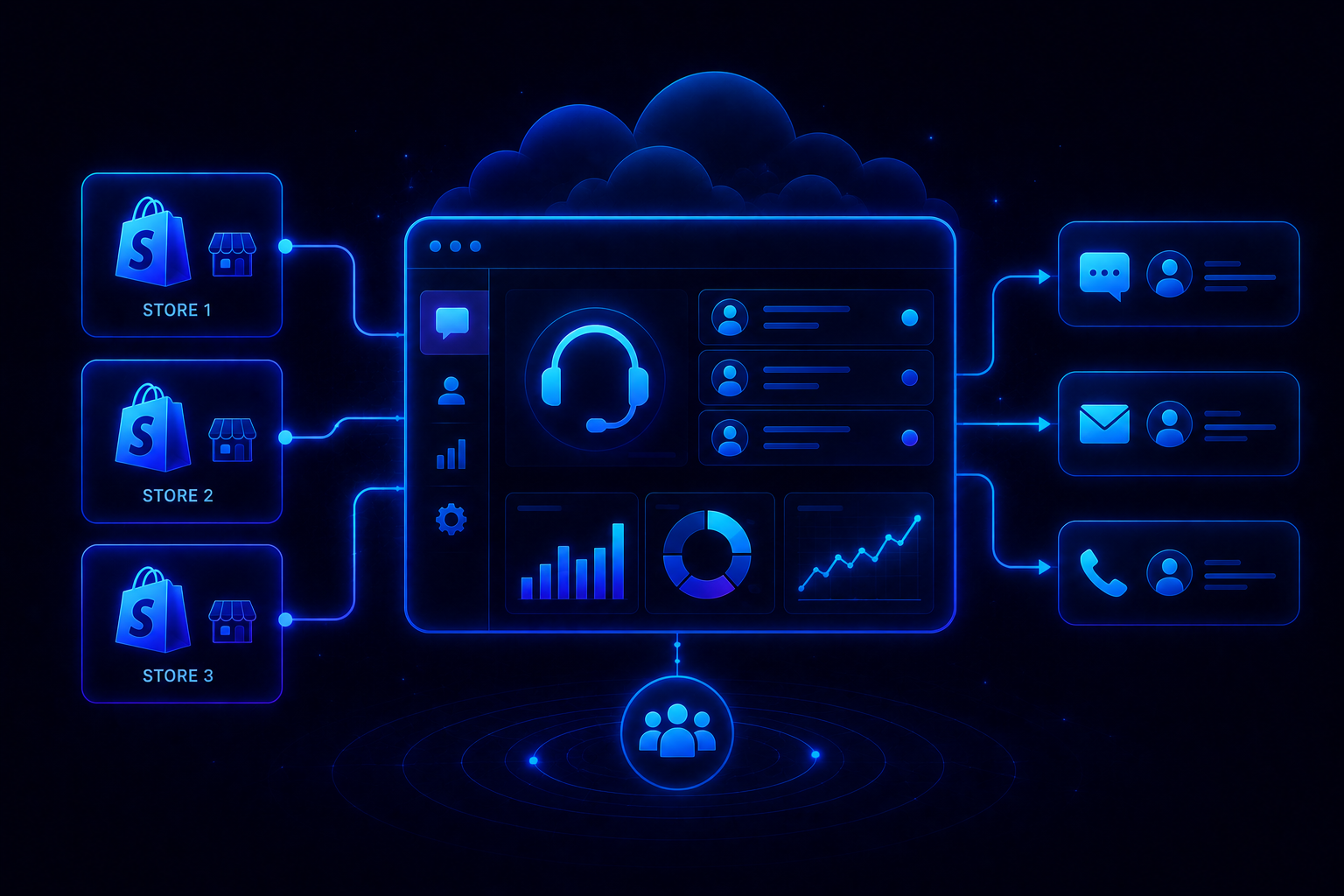
- Unified inbox centralizes email, WhatsApp, live chat, and social media conversations in one workspace.
- AI-curated inbox prioritizes conversations using urgency, sentiment, and customer intent automatically.
- Quantum AI Copilot summarizes conversations and recommends context-aware responses for faster issue resolution.
- Native Shopify integration connects customer conversations with order and account information without switching between multiple tools.
- Admin analytics provide visibility into AI resolution rates, ticket trends, and customer satisfaction for continuous improvement.
By combining intelligent automation with human expertise, QuantumDesk helps businesses improve customer satisfaction, strengthen retention, and support long-term customer success without expanding support teams.
Frequently Asked Questions
What are customer success metrics?
Customer success metrics measure how effectively customers achieve value from your product while helping businesses improve retention, adoption, loyalty, and recurring revenue.
Which customer success metric is the most important?
Net Revenue Retention is widely considered the most important because it measures renewals, expansions, downgrades, and churn from existing customers all in a single number.
How are customer success metrics different from customer service metrics?
Customer service metrics evaluate support performance, while customer success metrics measure long-term customer value, adoption, retention, and business growth.
How often should customer success metrics be measured?
Operational metrics should be reviewed weekly, while revenue, retention, and customer health metrics are typically monitored monthly or quarterly.
How can businesses improve customer success metrics?
Improve onboarding, increase product adoption, monitor customer health proactively, resolve issues quickly, and use customer feedback to strengthen long-term customer relationships.





.avif)