Summarize with AI
Key Takeaways
- Help desk software for D2C brands has evolved beyond ticketing to AI-native platforms connecting directly to order and shipping data.
- QuantumDesk leads the list as an AI-native platform for D2C brands, B2B SaaS, and SMBs, with native Shopify integration built directly into its support workflows.
- Gorgias is a strong choice for D2C brands managing high volumes of orders, returns, and subscription queries.
- Kustomer and Gladly are strong choices for premium D2C brands wanting full customer timeline visibility and personalized omnichannel service.
- The right platform depends on Shopify integration depth, AI automation, omnichannel coverage, and whether the team needs simple or enterprise-scale infrastructure.
Help desk software for D2C brands needs to go beyond basic ticketing. The best platforms connect directly to ecommerce systems like Shopify, surface order and customer data inside the support conversation, and automate high-volume repetitive queries so agents focus on revenue-sensitive interactions rather than switching tabs to look up what the customer already told them.
D2C brands, B2B SaaS teams, and SMBs face pressure from rising ticket volumes tied directly to order and fulfillment cycles. I followed up on a delayed order across three channels, got three different responses, and stopped shopping with that brand.
You will find 10 help desk platforms evaluated on Shopify integration depth, AI automation, omnichannel coverage, and fit for growing D2C operations.
How tools were evaluated:
- Hands-on testing across real D2C support workflows
- Customer conversations and direct user feedback
- Review platforms like G2 and Capterra
- Insights from Reddit and D2C support communities
- Competitive positioning analysis across ecommerce integration and automation depth
Whether you run a lean two-person support team or a high-volume D2C operation, this comparison helps you find the right fit for your brand.
A Quick Comparison: 10 Best Help Desk Software for D2C Brands
How We Evaluated These Help Desk Tools for D2C Brands
We evaluated these platforms by analyzing D2C-specific support workflows, comparing Shopify integration depth and AI resolution capability, and assessing how effectively each tool connects order data to support conversations at scale.
- G2, Capterra, and listing site analysis to verify ratings, review patterns, and D2C-specific fit across brand sizes and support volumes
- Customer feedback and real user inputs from D2C support teams managing order-linked queries across email, WhatsApp, and social channels
- Competitive benchmarking across ecommerce integration depth, AI resolution capability, and omnichannel coverage in 2026
- Reddit and D2C community discussions for unfiltered feedback on daily operational performance, Shopify integration quality, and pricing surprises
- Hands-on product exploration of ticket workflows, order data surfacing, and AI automation depth with common ecommerce platforms
- Pricing and scalability considerations for D2C brands at launch, growth, and high-volume stages including flash sale and seasonal spike scenarios.
Top 10 Help Desk Software for D2C Brands in 2026
1. QuantumDesk – Best AI-Native Help Desk Platform for D2C Brands

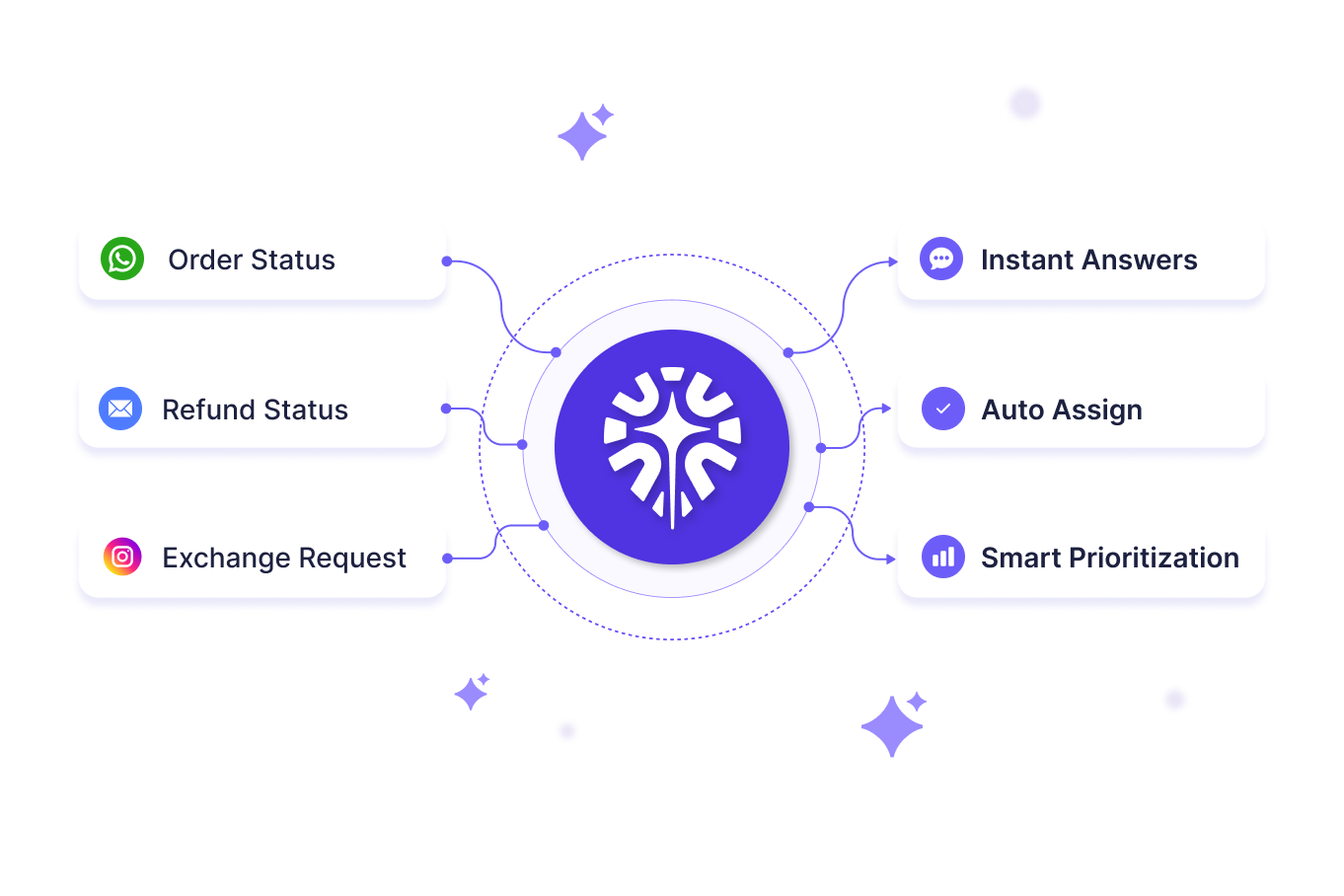
QuantumDesk is an AI-native help desk platform built for D2C brands, B2B SaaS teams, and SMBs that need autonomous resolution, not improved ticket organization.
Unlike platforms that layer automation onto legacy helpdesk infrastructure, QuantumDesk embeds AI into every stage of the support workflow, from first ticket intake through final resolution, delivering AI-native customer service benefits without per-resolution fees that compound as ticket volume scales.
For Shopify brands, this includes a native Shopify integration that pulls live order status, return eligibility, and customer history directly into the AI layer, so Quantum AI resolves order and account queries without an agent opening the Shopify admin in a separate tab.
D2C brands scaling order volumes fast, B2B SaaS teams managing onboarding queues, and SMBs running lean support operations find QuantumDesk designed specifically around their operational constraints and current growth stage.
Key Features
- Quantum AI resolves D2C tier-1 queries automatically including WISMO, return eligibility, and refund status across WhatsApp, chat, email, and social before they reach an agent queue
- AI-curated inbox prioritizes incoming conversations by urgency, sentiment, and customer impact so flash sale escalations and high-value order issues always surface immediately for agents
- Quantum AI Copilot surfaces conversation summaries, AI copilot for ecommerce support reply drafts, and order context so agents resolve complex D2C escalations faster without switching between tools
- Native Shopify integration connects live order status, return eligibility, and customer history directly to every incoming conversation so Quantum AI resolves order queries with Shopify data already visible, without agents switching tools or tabs mid-conversation
- Unified conversational workspace preserves complete customer history across every channel switch so agents always enter conversations with full cross-channel context already visible
- Admin analytics track AI resolution rates, escalation patterns, and CSAT trends in real time so support leaders optimize automation performance before problems appear in reviews
Pros
- AI is embedded natively across the full support workflow rather than sold as a separately priced add-on that inflates cost as D2C ticket volume grows
- Omnichannel context preservation means D2C customers never repeat themselves when switching between WhatsApp, chat, and email across different support interactions
- Built for D2C brands scaling support capacity without proportionally increasing agent headcount or operational complexity at each growth stage
Cons
- Newer platform compared to established help desk providers with longer deployment histories and more extensive legacy system integration ecosystems
- Less recognized among enterprise procurement teams currently evaluating platforms already embedded in their standard vendor shortlists and approval frameworks
Best Use Case
D2C brands, B2B SaaS teams, and SMBs needing autonomous tier-1 resolution with full omnichannel context and AI embedded from day one.
When to Choose QuantumDesk
Choose QuantumDesk when D2C support volume exceeds manual capacity, AI-native resolution is a priority, and per-resolution billing is not a sustainable cost model at your projected ticket volume.
Pricing
Custom pricing based on business size and support volume. Contact the QuantumDesk team for current plans and a tailored demo.
2. Gorgias – Best Shopify-Native Help Desk for D2C Brands
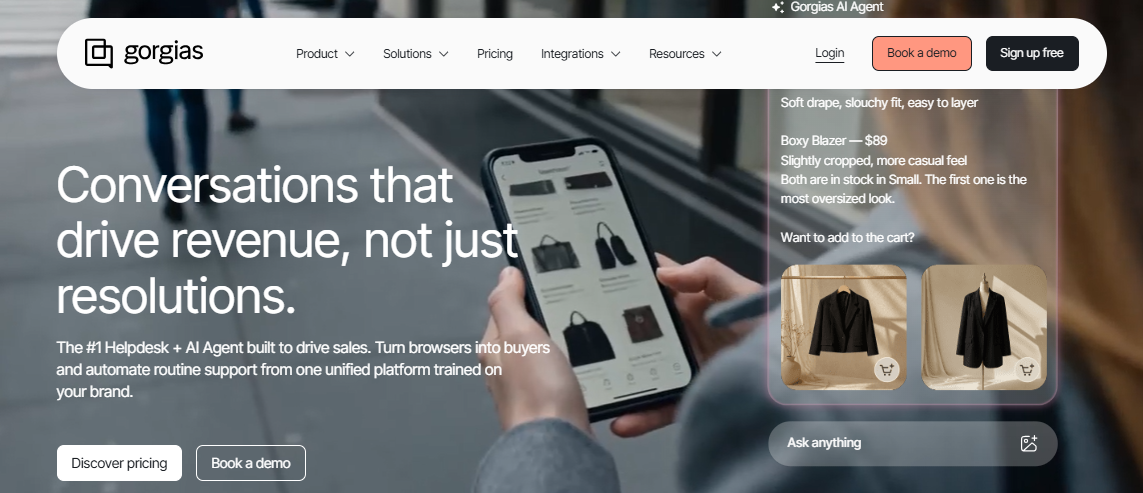
Gorgias is a Shopify-native help desk platform built for e-commerce brands managing support tied directly to orders and fulfillment.
D2C teams choose Gorgias for deep ecommerce integration and action-based automation rather than broad enterprise support infrastructure or AI resolution depth outside order-specific workflows.
Key Features
- Native Shopify and BigCommerce integration surfaces order status, return eligibility, and fulfillment data inside every ecommerce customer service conversation without switching platforms
- Action-based automation executes refunds, order edits, and subscription modifications directly from the ticket without routing to a human agent for routine requests
- Revenue-generating automation triggers personalized discount offers and upsell messages during support conversations based on live purchase history and customer lifetime value
Pros
- E-commerce-native design connects every support conversation to live order data, enabling resolution of the most common D2C queries without leaving the support workspace
- Social commerce coverage including Instagram, TikTok, and Facebook is stronger than most general-purpose platforms for D2C brands managing social-first customer interactions
- Automated return and refund workflows reduce handling time for high-frequency D2C requests across every connected channel simultaneously without agent involvement
Cons
- Primarily tailored to Shopify environments, making it a poor fit for non-retail or non-ecommerce businesses needing general-purpose support automation at scale
- AI resolution depth for complex or non-order-related queries is shallower than platforms built specifically for AI-powered automation at broader query scope
- Pricing based on ticket volume can scale unpredictably for D2C brands running high-frequency campaigns or seasonal flash sales across multiple channels
Best Use Case
D2C brands and Shopify merchants needing action-based support automation tied directly to live order, return, and subscription data.
When to Choose Gorgias
Choose Gorgias when your store runs primarily on Shopify, your team handles high volumes of order and return queries, and ecommerce-native action automation matters more than broad AI resolution depth.
Pricing
Gorgias pricing is based on ticket volume rather than agent seats, with plans starting around $10 per month for small stores and scaling with monthly support interaction volume.
3. Intercom – Best for AI and Chat-First D2C Support
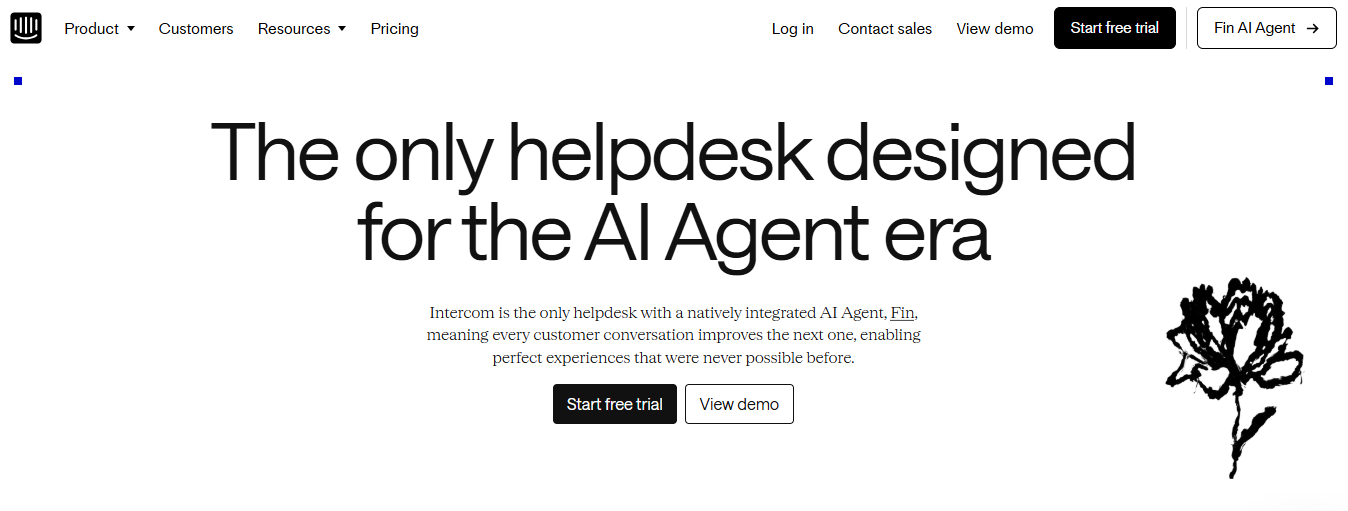
Intercom is a customer messaging platform used by D2C companies needing AI bots and real-time chat for repetitive support queries.
D2C teams choose Intercom for conversational AI deflection and in-app messaging depth rather than for traditional ticketing infrastructure or predictable pricing at high volume.
Key Features
- Fin AI Agent ingests live documentation and historical tickets to automatically answer WISMO queries, return policy questions, and common product inquiries without human involvement
- In-app and proactive messaging reaches D2C shoppers inside the product experience at key moments before issues escalate into reactive support tickets
- Account-aware routing identifies high-value accounts by order history and routes their conversations to specialized queues with appropriate priority treatment
Pros
- Best-in-class conversational UX creates a chat experience that feels native to the D2C brand rather than routing customers to an external generic support portal
- Fin AI resolves complex queries using live product and policy data, going beyond static FAQ deflection to provide accurate, contextual answers at scale
- Proactive messaging enables D2C brands to reach customers before post-purchase anxiety creates support tickets across all connected channels
Cons
- Per-resolution pricing at $0.99 compounds quickly for high-volume D2C brands running flash sales or seasonal campaigns with elevated chat volumes
- Traditional SLA management and structured ticketing depth are less developed than dedicated platforms for tiered enterprise support operations
- Base seat pricing combined with per-resolution fees creates a cost model that surprises D2C teams as they scale into growth-stage volumes
Best Use Case
D2C brands with a strong digital or app experience where conversational AI deflection and proactive chat support are the primary support motion.
When to Choose Intercom
Choose Intercom when chat-first support is the priority, your D2C shoppers engage primarily through in-app or website messaging, and AI customer service agents resolving queries at point of contact matters more than traditional ticketing depth.
Pricing
Intercom plans start at $29 per seat per month with Fin AI billed at $0.99 per successful resolution on top of base seat costs.
4. Zendesk – Best for High-Volume Multi-Brand D2C Operations
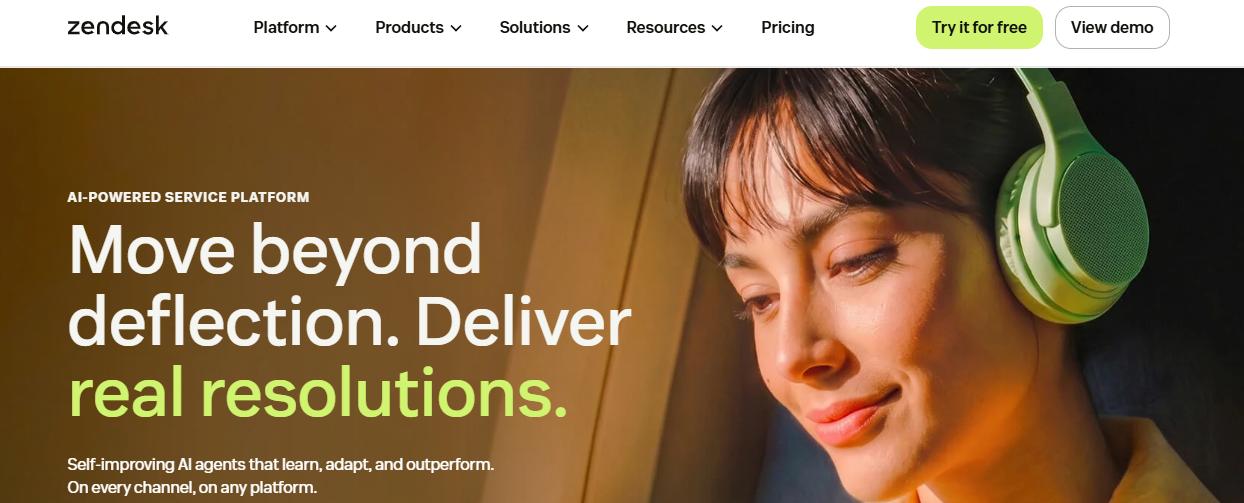
Zendesk is an enterprise help desk platform used by high-volume, multi-brand D2C operations needing deep customization and scalable support infrastructure.
Large D2C operations choose Zendesk for routing depth, multi-brand customization, and omnichannel scalability rather than AI-native design or cost efficiency at mid-market scale.
Key Features
- Omnichannel ticketing consolidates email, chat, voice, WhatsApp, and social media into one unified agent workspace with full conversation history and SLA tracking across all channels
- Advanced workflow automation covers multi-brand routing, skills-based assignment, SLA enforcement, and escalation triggers across complex D2C support portfolios at enterprise volume
- AI-powered triage classifies and routes incoming tickets by intent, urgency, and sentiment to surface the highest-priority D2C cases without manual sorting by support leads
Pros
- Proven at enterprise scale with large D2C organizations managing millions of tickets annually across multiple brands, geographies, and distributed support teams
- Extensive integration library connects Zendesk to Shopify, BigCommerce, CRM platforms, and virtually every ecommerce tool D2C support teams rely on
- Mature SLA enforcement covers multi-tier routing requirements that growing D2C operations with complex brand structures cannot manage on simpler platforms
Cons
- Zendesk Copilot AI costs an additional $50 per agent per month on top of base licensing, making total AI-enabled cost significantly higher than natively embedded platforms
- Setup and configuration require meaningful admin time and often dedicated implementation resources, a barrier for lean D2C support operations
- Base Suite pricing at $55 per agent per month scales quickly with seats and add-ons, creating budget challenges for mid-market D2C brands
Best Use Case
High-volume D2C operations managing multiple brands, complex omnichannel routing, strict SLA requirements, and broad ecommerce integration needs.
When to Choose Zendesk
Choose Zendesk when multi-brand scale, enterprise routing depth, and proven deployment history matter more than AI-native design. D2C teams that also need to manage support during flash sales at high volume will find Zendesk's SLA enforcement and routing capabilities particularly relevant.
Pricing
Zendesk Suite plans start around $55 per agent per month, with Copilot AI available as a $50 per agent per month add-on that increases total cost further.
5. Kustomer – Best for Customer Profile-Based D2C Service
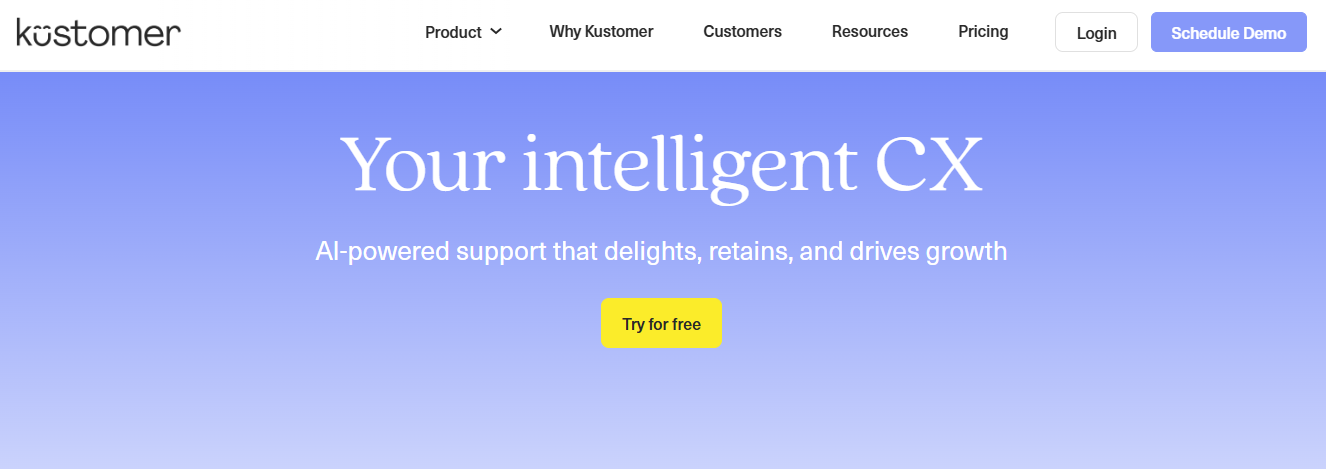
Kustomer is a CRM-focused help desk platform used by D2C brands needing full customer timeline visibility before responding.
D2C teams choose Kustomer for unified customer timeline visibility rather than for lightweight ticketing, AI-native resolution, or entry-level pricing at smaller support operations.
Key Features
- Unified customer timeline aggregates every order, conversation, and interaction across channels into one chronological view that agents see the moment a new ticket arrives
- Lifetime value and order history surfaced alongside every incoming conversation so agents understand the full customer relationship before composing their first response
- Intelligent routing directs tickets based on customer tier, purchase history, and sentiment signals so high-value D2C accounts receive appropriately prioritized treatment
Pros
- Full customer context before every reply means agents never ask a repeat D2C customer to re-explain their history across previous orders or interactions
- CRM-level visibility into customer lifetime value helps D2C support teams identify and prioritize retention-critical conversations among high-spend shoppers
- Omnichannel timeline captures interactions from email, chat, SMS, WhatsApp, and social into one view without fragmented channel-by-channel history
Cons
- Enterprise-focused pricing makes Kustomer less accessible for smaller D2C brands that need full timeline visibility without a large platform investment
- AI resolution depth is shallower than purpose-built AI-native platforms for D2C teams prioritizing autonomous query handling at meaningful ticket volumes
- Implementation complexity requires dedicated onboarding resources that lean D2C support teams cannot always absorb during peak seasons or rapid growth phases
Best Use Case
Higher-touch D2C brands where agents need complete customer order history and lifetime value context before responding to every support conversation.
When to Choose Kustomer
Choose Kustomer when your D2C brand prioritizes high-touch, personalized service and agents need full customer history in one view before every reply, over lightweight ticketing or entry-level automation costs.
Pricing
Kustomer pricing is available on request and tailored to team size and support volume. Contact the Kustomer team for current enterprise plans and a demo.
6. Gladly – Best for Personalized Omnichannel D2C Service
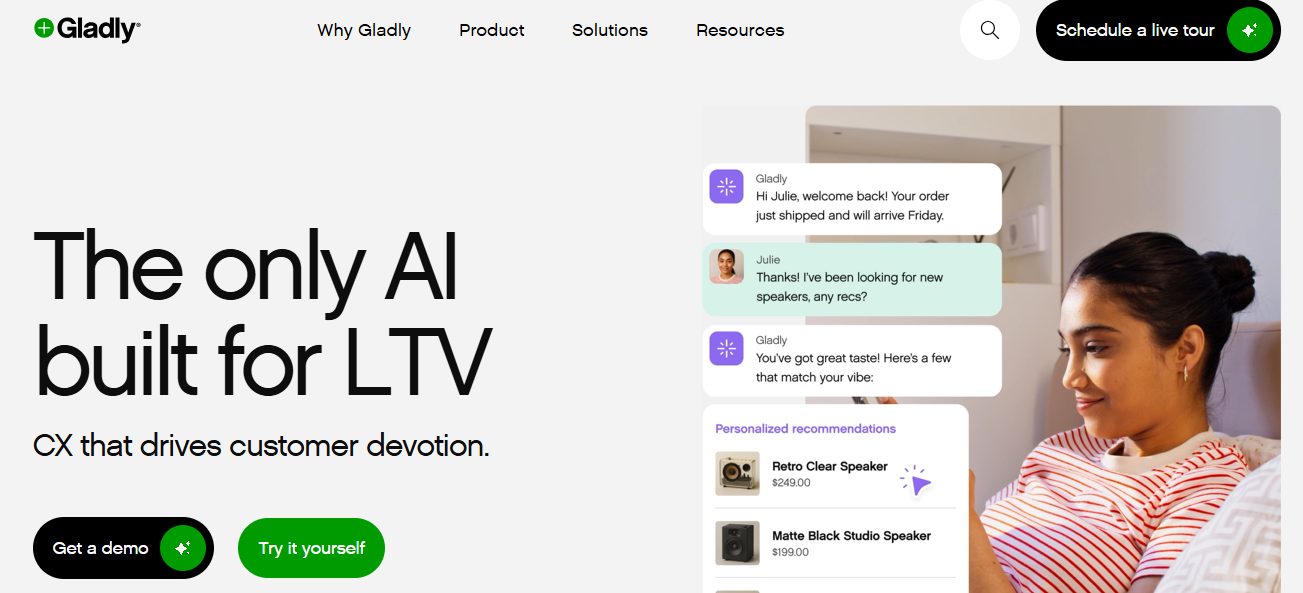
Gladly is a personalization-first help desk that treats every customer as one ongoing conversation across all support channels.
Premium D2C brands choose Gladly for its lifelong customer conversation model and omnichannel personalization rather than traditional ticket-based workflows or entry-level automation depth.
Key Features
- The people-centered conversation model replaces ticket numbers with a lifelong customer thread, so every agent sees the full history of every previous interaction before responding
- All-channel unification merges email, SMS, voice, social, and chat into one ongoing conversation rather than treating each channel as a separate isolated ticket
- Voice and messaging integration allows D2C brands to deliver high-touch phone and messaging support from the same agent view as every other channel simultaneously
Pros
- No ticket numbers or fragmented threads means D2C customers receive a genuinely personal support experience rather than bouncing between disconnected ticket queues
- Lifelong conversation history visible across all channels builds the relationship continuity that premium D2C brands use to differentiate service quality from competitors
- All-channel conversation unification eliminates the context gaps that frustrate customers who switch between email, phone, and chat during a single unresolved issue
Cons
- Premium pricing puts Gladly beyond the budget of most early-stage or mid-market D2C brands that are not yet at high-touch, relationship-driven support scale
- AI automation depth is shallower than platforms built specifically for autonomous tier-1 resolution, making it less suited for high-volume WISMO deflection at D2C scale
- Best suited for premium brands, making it less relevant for D2C operations where cost efficiency and automation depth matter more than a curated service experience
Best Use Case
Premium D2C brands focused on building high-touch brand loyalty through omnichannel customer service that treats every shopper as a person, not a ticket number.
When to Choose Gladly
Choose Gladly when your D2C brand competes on service quality and customer retention, every shopper interaction is a brand-building opportunity, and the platform investment is justified by the premium segment you serve.
Pricing
Gladly pricing is available on request and tailored to brand size and support volume. Contact the Gladly team for current plans based on your D2C support operation.
7. Salesforce Service Cloud – Best for D2C Brands Inside the Salesforce Ecosystem
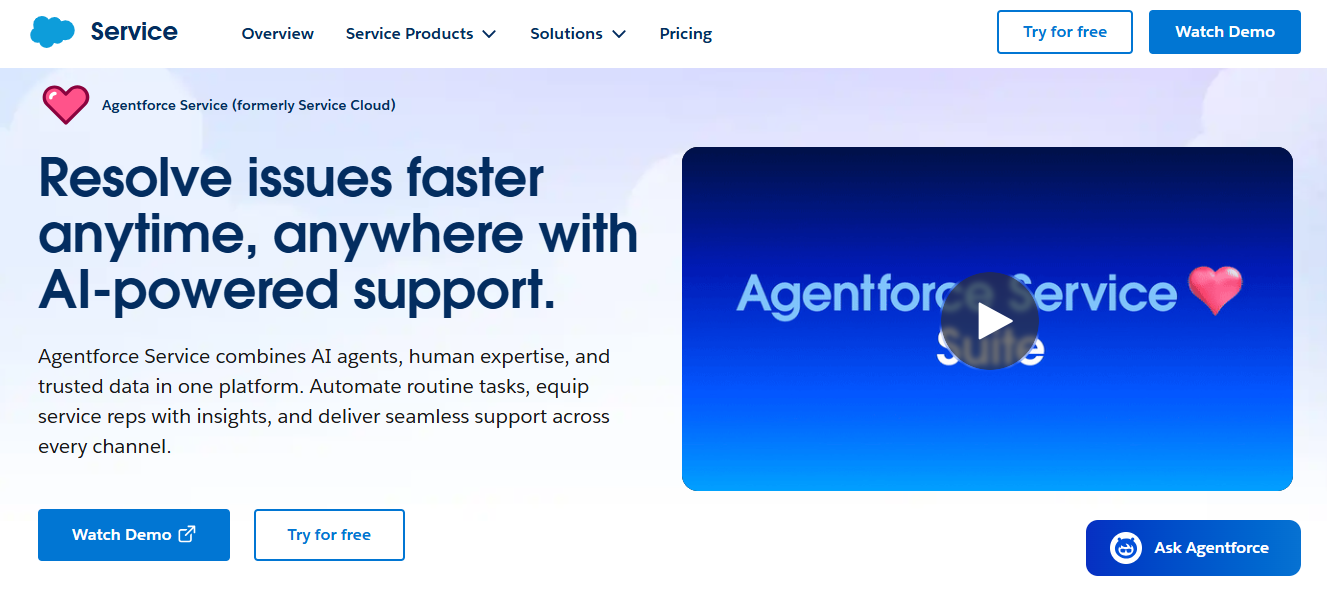
Salesforce Service Cloud is an enterprise CRM platform used by D2C brands needing service connected to sales, marketing, and commerce.
D2C teams choose Salesforce for full CRM ecosystem depth and agentic AI for customer service agents rather than deployment simplicity or cost efficiency at mid-market scale.
Key Features
- Agentforce autonomous agents handle complex D2C support queries end-to-end using live Salesforce data, escalating to humans only when defined confidence thresholds are not met
- Einstein AI classifies tickets, surfaces account health signals, and suggests next-best-actions from CRM data alongside every incoming D2C support conversation
- Full ecosystem integration connects service to Salesforce Sales Cloud, Marketing Cloud, and Commerce Cloud so every support interaction draws from the same customer record
Pros
- Agentforce represents the most advanced autonomous AI capability for D2C teams already running full Salesforce infrastructure with rich transactional and CRM data
- Cross-cloud customer context means support agents see marketing engagement, order history, and sales pipeline data alongside every incoming ticket simultaneously
- Near-unlimited customization through AppExchange allows D2C brands to configure support workflows for the most complex omnichannel service requirements
Cons
- Implementation complexity requires Salesforce administrators and extended deployment timelines that lean D2C teams cannot absorb without significant dedicated resource investment
- Total cost scales significantly for enterprise configurations, and full Agentforce requires Salesforce Data Cloud investment that substantially raises per-user costs
- Primary value is within Salesforce, making it a poor fit for D2C brands not already standardized on Salesforce across sales, marketing, and commerce operations
Best Use Case
D2C brands fully standardized on Salesforce that need autonomous AI agents and support automation embedded in the same CRM data driving sales and marketing.
When to Choose Salesforce Service Cloud
Choose Salesforce Service Cloud when your D2C brand runs on Salesforce, service needs to connect to sales and commerce data, and the implementation investment is justified by organizational scale and long-term ecosystem commitment.
Pricing
Salesforce Service Cloud plans start at $25 per user per month, with Enterprise and Unlimited tiers adding Agentforce at significantly higher per-user costs.
8. Freshdesk – Best for Growing D2C Teams Wanting Balanced Automation
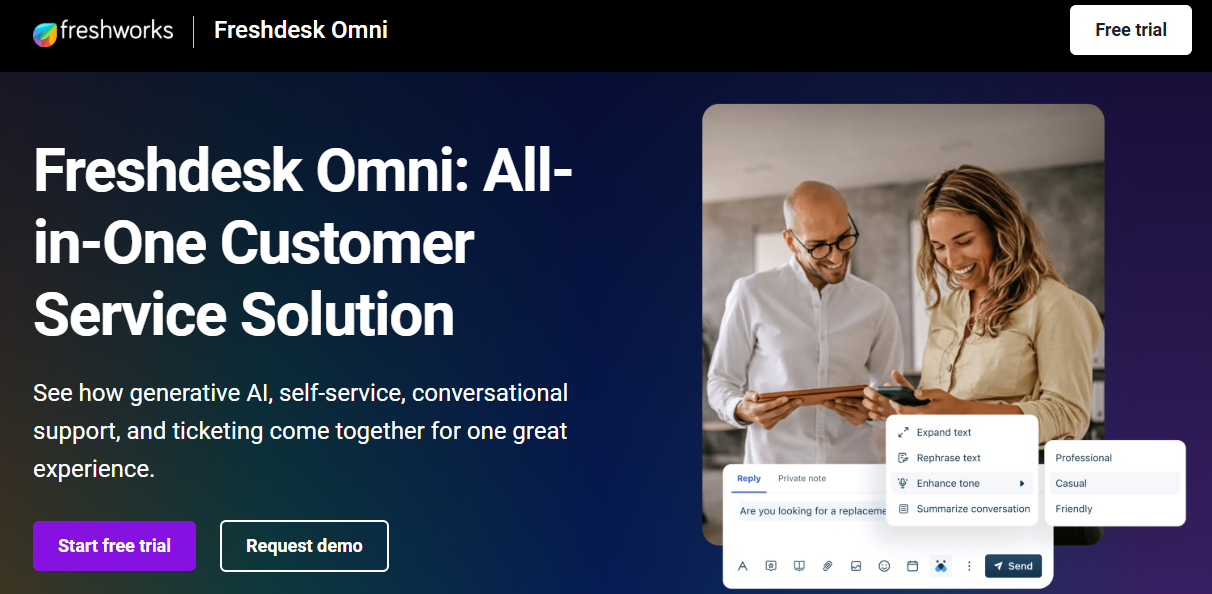
Freshdesk is a customer support platform from Freshworks used by growing D2C teams needing omnichannel automation and SLA management at accessible pricing.
D2C teams choose Freshdesk for fast deployment and practical automation depth rather than natively embedded AI resolution or deep ecommerce context integration at scale.
Key Features
- Freddy AI automates ticket summaries, suggests context-aware replies, and handles repetitive D2C queries including order status and return policy questions before they reach agents
- Multichannel ticketing captures conversations from email, chat, WhatsApp, phone, and social media into one unified workspace with full thread history and SLA tracking
- Self-service portal with AI-powered search that deflects common D2C questions including shipping timelines, return windows, and product availability before tickets are ever created
Pros
- Fast deployment means D2C teams can configure omnichannel automation and start handling tickets within hours without extended onboarding or IT department involvement
- Entry pricing around $15 per agent per month delivers solid automation depth that growing D2C teams need without Zendesk-level investment at comparable coverage
- Free plan available for small D2C teams testing basic ticketing and email support before committing to paid automation features as order volume grows
Cons
- Freddy AI Copilot is a paid add-on rather than natively embedded, meaning meaningful automation depth requires additional budget beyond the core platform subscription
- Ecommerce integration depth is shallower than Gorgias for D2C teams needing direct order actions and Shopify-native context inside every ticket
- Reporting depth at lower tiers is limited compared to platforms offering custom dashboards and cross-channel performance tracking for scaling D2C operations
Best Use Case
Growing D2C teams that need accessible omnichannel automation and fast deployment, and are ready to add deeper AI capabilities as order volume and support complexity increase.
When to Choose Freshdesk
Choose Freshdesk when speed of setup and accessible pricing are the priority, ecommerce context integration is a secondary need, and you are comfortable accessing deeper automation as a paid add-on rather than expecting it to be natively embedded.
Pricing
Freshdesk plans start around $15 per agent per month, with higher tiers and Freddy AI Copilot available as a paid add-on for deeper automation coverage.
9. HubSpot Service Hub – Best for CRM-Connected D2C Support Teams
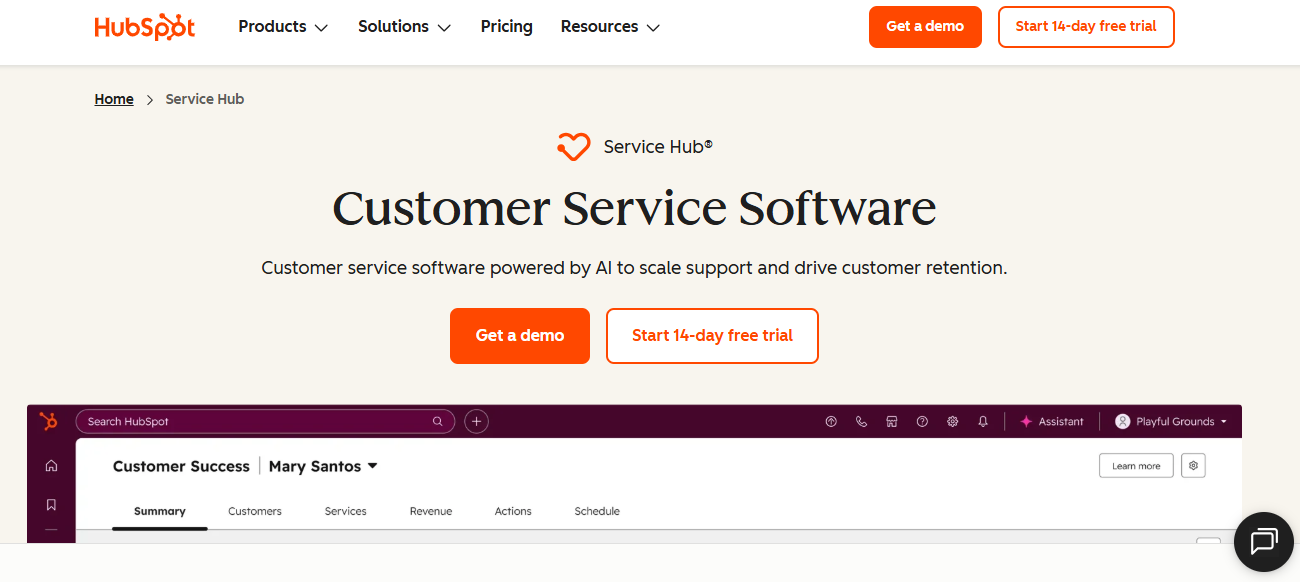
HubSpot Service Hub is a customer service platform used by D2C teams already standardized on HubSpot CRM for connected support workflows.
D2C teams choose it for CRM data alignment across support, sales, and marketing rather than standalone automation depth or AI resolution capabilities at scale.
Key Features
- CRM-aligned ticketing links every D2C support conversation to the customer's full HubSpot profile including order history, marketing engagement, and previous service interactions
- Breeze AI handles account-aware priority routing, drafts context-aware responses, and automates follow-up workflows based on customer lifecycle stage and support patterns
- Customer feedback tools including NPS, CSAT, and customer effort scoring built directly into the support workflow alongside ticketing and conversation management
Pros
- Complete data alignment across support, sales, and marketing gives D2C teams a unified customer view that eliminates blind spots from running support on a disconnected platform
- Breeze AI routing surfaces high-value customers to senior agents automatically rather than letting them enter the same queue as first-time routine product inquiries
- Unified platform reduces tool sprawl for D2C brands managing customer communications, relationships, and support from one connected HubSpot ecosystem
Cons
- Value is primarily within HubSpot, limiting appeal for D2C brands with CRM and sales tools outside the HubSpot platform
- Plans start around $90 per seat per month for Service Hub Professional, pushing total cost beyond mid-market alternatives for growing D2C teams
- Ecommerce integration depth is shallower than Gorgias or Zendesk for D2C teams needing deep Shopify-native order data flowing into every support conversation
Best Use Case
D2C brands fully committed to HubSpot CRM that need support automation connected to marketing campaign and customer lifecycle data in one unified platform.
When to Choose HubSpot Service Hub
Choose HubSpot Service Hub when your D2C brand is standardized on HubSpot, every support interaction needs to connect to CRM and marketing data, and the unified customer view across all functions justifies the per-seat investment.
Pricing
HubSpot Service Hub plans start around $15 per seat per month for Starter, with Professional at $90 per seat and Enterprise tiers adding full Breeze AI automation and advanced reporting.
10. Help Scout – Best for Small D2C Teams Wanting Inbox Simplicity
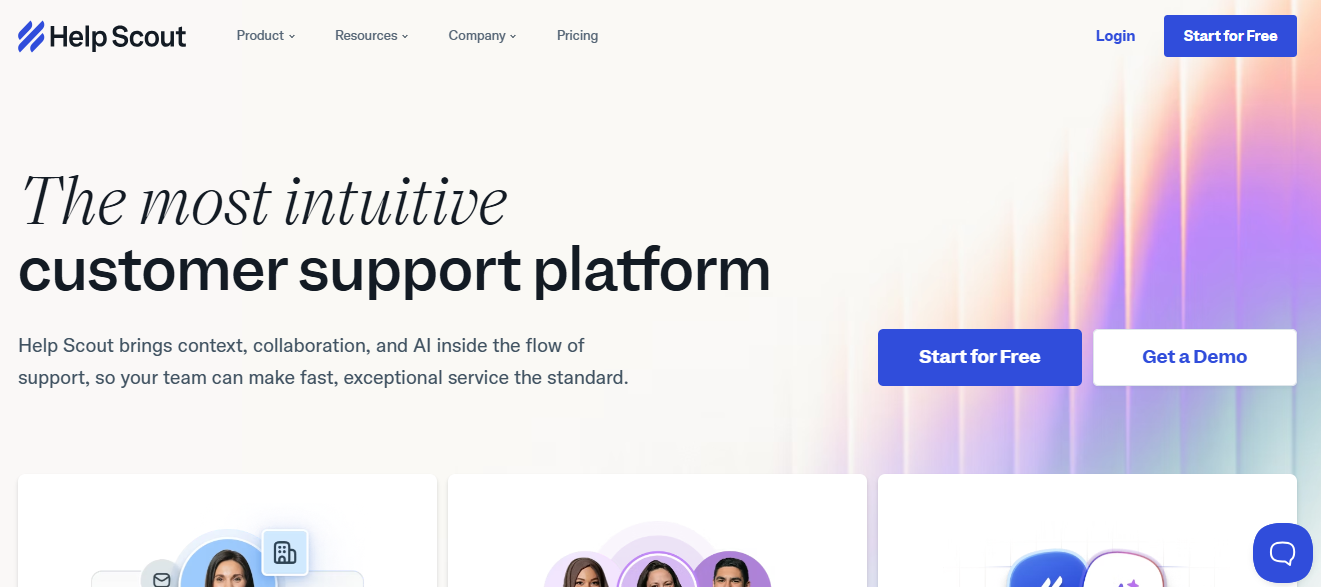
Help Scout is a customer support platform used by small D2C teams wanting a clean shared inbox without enterprise complexity.
Small D2C teams choose Help Scout for its simple shared inbox and collaborative workflows rather than sophisticated routing, autonomous resolution, or high-volume queue management.
Key Features
- Shared inbox with customer profiles surfaces past conversations, order context, and interaction history alongside every new message so agents respond with full relevant background
- AI drafting and summarization included across base plans without a premium add-on, giving small D2C teams meaningful automation assistance without additional budget approval
- Beacon live chat widget delivers knowledge base suggestions, live chat, and contact forms from one embeddable tool without requiring third-party integrations or custom development
Pros
- AI drafting included at base pricing avoids the add-on cost structure that makes Zendesk and Freshdesk AI more expensive for lean D2C teams needing basic assistance
- Clean, intuitive interface minimizes onboarding time for new agents joining a small D2C support team without formal training programs or dedicated IT setup support
- Unlimited users on every plan makes Help Scout cost-predictable for small D2C brands where multiple team members touch support without per-seat billing penalties
Cons
- Channel coverage lags behind full omnichannel platforms, with stronger depth in email and live chat than in WhatsApp, Instagram, or voice channels
- Limited ecommerce integration compared to Gorgias and Gorgias for D2C teams needing Shopify order data and action-based automation inside every ticket
- Not suited for high ticket volumes requiring sophisticated triage, SLA enforcement, and skills-based assignment across multiple support queues simultaneously
Best Use Case
Small business customer service teams and early-stage D2C brands that prioritize inbox simplicity, conversation quality, and clean collaboration over automation depth or high-volume throughput.
When to Choose Help Scout
Choose Help Scout when your D2C team is small, email-first, and agents need rich customer context in a clean shared inbox rather than a complex triage infrastructure that takes weeks to configure.
Pricing
Help Scout plans start around $20 per user per month for the Standard plan, with higher tiers adding advanced reporting, expanded documentation limits, and additional collaboration features.
Factors to Consider When Choosing the Help Desk Software for Your D2C Brand
1. Shopify and E-commerce Integration Depth
The most critical factor for D2C support is whether the platform connects to Shopify or BigCommerce so agents and AI can surface order status, tracking, and return eligibility inside the support view without switching tools.
2. AI Automation and Resolution Capability
For D2C brands handling high WISMO volume, the distinction between AI that deflects queries and customer service automation that actually resolves them determines whether the platform reduces cost or simply reroutes it to a different queue.
3. Omnichannel Coverage Across D2C Channels
Evaluate whether the platform covers Instagram DMs, WhatsApp, email, and live chat with shared customer context, since D2C customers rarely stay on one channel when following up on an unresolved order issue across multiple touchpoints.
4. Customer Order Data in Every Conversation
Support tools that pull order status, shipping updates, and return eligibility into every conversation eliminate the repeated-information problem that drives D2C customers toward negative reviews before a resolution ever arrives.
5. Pricing Model and Scalability for D2C Growth
D2C brands experience volume spikes around launches and flash sales. Evaluate total platform cost at realistic peak scenarios rather than the base price shown during a standard sales conversation or demo.
How QuantumDesk Simplifies Help Desk Workflows for D2C Brands
QuantumDesk is built for D2C brands managing growing support volume across WhatsApp, email, chat, and social, where every unresolved WISMO query and return request is a potential churn risk that reaches a public review before it reaches a resolution.
Its AI-native design means routing, resolution, and agent assistance operate from one intelligence layer, delivering measurably better containment without per-resolution fees that compound as D2C order volumes and campaign traffic grow.
For Shopify brands specifically, native Shopify integration means Quantum AI enters every order conversation with live order status, return eligibility, and customer history already loaded, so the resolution happens inside the conversation rather than after three tab switches and a manual lookup.
Core Capabilities Built for D2C Support
- Quantum AI resolves WISMO, return eligibility, and refund status automatically across all channels before they reach an agent queue
- AI-curated inbox prioritizes conversations by urgency, sentiment, and order impact so agents address the highest-value D2C interactions first
- Quantum AI Copilot surfaces reply suggestions, order context, and summaries so agents can resolve escalations with complete information already visible
- Unified workspace consolidates email, WhatsApp, chat, and social into one view so no channel switch loses the D2C customer interaction thread
- Native Shopify integration pulls live order status, return eligibility, and customer history directly into every conversation so Quantum AI resolves order queries with Shopify data already in the workflow, no admin tab required
- Admin analytics track AI resolution rates, escalation patterns, and CSAT so support leaders can optimize D2C workflows before problems appear in reviews
Whether you are managing flash sale spikes or daily order queries, this comparison helps you find the right D2C support platform for your brand's current stage and growth trajectory.
Frequently Asked Questions About Help Desk Software for D2C Brands
What are the best help desk software options for D2C brands in 2026?
Leading options include QuantumDesk, Gorgias, Intercom, Zendesk, Kustomer, Gladly, Salesforce Service Cloud, Freshdesk, HubSpot Service Hub, and Help Scout.
The right choice depends on Shopify integration depth, AI automation, omnichannel coverage, and whether the D2C order context needs to flow automatically into every support conversation. Teams exploring the broader best help desk software landscape will find similar evaluation patterns applicable across these categories.
Which help desk software is best for Shopify and e-commerce brands?
Gorgias is the strongest Shopify-native option, letting agents process refunds, order edits, and return updates directly inside the support conversation without switching tools.
QuantumDesk is well-suited for D2C brands needing autonomous omnichannel resolution across WhatsApp, chat, and social with full conversation context preserved across every channel the shopper uses.
How do I choose the right help desk software for my D2C brand?
Start by identifying your primary bottleneck: Shopify integration depth, WISMO automation, omnichannel context loss, or inability to scale support without growing the team proportionally.
Then compare ecommerce integration depth, AI resolution versus deflection, pricing at realistic peak volume, and total cost at twice your current team size before shortlisting two or three platforms for hands-on evaluation. QuantumDesk is worth evaluating early if autonomous resolution without per-ticket billing is a key requirement for your brand.
Is there free help desk software available for D2C brands?
Freshdesk and HubSpot Service Hub offer free plans with basic ticketing and automation functionality suited to early-stage D2C teams testing core support workflows.
Free tiers suit initial evaluation. Growing D2C brands at meaningful order volume will need a paid plan to access the best help desk software capabilities that handle WISMO automation, ecommerce context, and omnichannel coverage at the scale their support operation requires.



.avif)