
Summarize with AI
Key Takeaways
- Poor sizing experiences, delayed support replies, and difficult returns are major reasons apparel shoppers stop purchasing repeatedly.
- AI-powered post-purchase support helps apparel brands reduce churn by resolving repetitive delivery and return queries automatically.
- Self-service returns and proactive shipping updates reduce customer frustration during exchanges, refunds, and delayed delivery situations.
- Personalized loyalty campaigns and win-back flows increase repeat purchases and improve long-term apparel customer retention rates.
- AI-native customer service platforms help apparel brands scale support quality without increasing support team workload or operational costs.
Apparel brands lose repeat buyers quickly when post-purchase support creates frustration during returns, exchanges, refunds, and delivery delays.
Apparel ecommerce brands experience nearly 71% annual churn. And 73% of shoppers switch brands after a single poor support experience. High return rates, sizing complaints, and delayed responses directly impact retention, repeat purchases, and long-term customer lifetime value for growing D2C brands.
For apparel brands, poor post-purchase support is no longer just a service problem. It affects loyalty, reviews, retention, and repeat revenue. Modern Customer Service Expectations have shifted significantly, and brands still relying on reactive support are the first to see churn rise.
Customer scenarios support teams encounter daily:
- I ordered a hoodie during a flash sale, the wrong size arrived, support replied after two days, and I never reordered.
- Tracking stopped updating for six days, support repeated generic responses, and I opened a dispute instead of waiting longer.
- I requested an exchange before a family event, the return approval took too long, and I bought from another apparel brand.
Refund timelines were unclear after my return reached the warehouse. I contacted support three times through different channels.
You will learn how to improve apparel customer retention using AI-native post-purchase support, automated workflows, proactive communication, and personalized retention strategies.
Quick Comparison: Traditional vs AI-native Post-Purchase Support
Why poor post-purchase support increases apparel customer churn
Most apparel churn happens after checkout, not before purchase. Delayed responses, confusing returns, and repetitive customer effort create frustration that directly impacts repeat purchases and long-term loyalty for D2C apparel brands handling high post-purchase ticket volume.
1. Delayed return and refund support damages trust
Return delays hit hardest during peak periods. Slow refund approvals, unclear timelines, and multi-step exchange processing push customers toward frustration during the moments they most need reassurance.
Gifting seasons and flash sales make this worse:
- Customers expect fast resolutions when sizing issues occur after time-sensitive purchases
- Refund delays during festive seasons create emotional frustration that generic replies cannot fix
- Exchange processing that spans multiple days without updates increases the likelihood of abandonment
How excessive customer conversations reduce the support quality is a well-documented pattern in these situations. When customers don't get timely answers, they contact support again. Each additional touchpoint reduces confidence and increases churn risk.
2. Repetitive delivery queries overwhelm support teams
WISMO tickets are the single most common post-purchase contact type in apparel. Missing proactive updates force customers to reach out through WhatsApp, Instagram, and email, often without resolution on the first attempt.
Support teams absorb this volume manually:
- Agents respond to identical shipment delay questions across multiple channels simultaneously
- No proactive outreach means customers contact support before any delay is formally acknowledged
- During seasonal campaigns, WISMO volume compounds faster than teams can respond consistently
Repetitive manual responses reduce the time agents have for complex or retention-sensitive conversations. That tradeoff accelerates churn by lowering the overall quality of support during the periods it matters most.
3. Poor sizing support leads to repeat return cycles
Inaccurate fit expectations create a cycle that is hard to break. Customers order, receive an ill-fitting item, return it, and either try another size or move to a different brand entirely.
Each failed sizing experience adds to the friction:
- Exchanges without fit guidance often result in a second incorrect size
- Repeated returns signal low confidence in the brand's product accuracy
- Customers who return twice are significantly less likely to purchase a third time
Without proactive sizing support during the purchase or post-purchase window, apparel brands lose customers to competitors who offer better guidance. The support load from repetitive sizing complaints also reduces team capacity for more complex conversations.
4. Fragmented support across channels creates friction
Customers don't stay on one channel. They start on Instagram, follow up by email, and contact again on WhatsApp when they haven't heard back. Effective Multi-Channel Customer Service depends on a unified view of all these interactions.
When that view doesn't exist:
- Agents ask customers to repeat issue details already provided on another channel
- Resolution timelines extend because no single agent has full conversation context
- Inconsistent answers across channels reduce trust and increase escalation frequency
Fragmented workflows don't just frustrate customers. They slow agents down and make consistent support quality nearly impossible during high-volume return periods.
How AI-Native Support Reduces Apparel Churn
AI-native customer service reduces apparel churn by automating repetitive support workflows, improving response speed, and helping agents resolve emotionally sensitive issues faster without increasing operational complexity during high-volume return periods.
1. AI automates repetitive return and refund queries
Customer service automation instantly handles return eligibility checks, refund status updates, exchange confirmations, and tracking requests across WhatsApp, email, and chat without agent involvement, freeing teams for damaged product complaints and retention-sensitive situations.
2. Proactive delivery updates reduce customer anxiety
Proactive SMS, WhatsApp, and email notifications send order updates before delivery windows close, cutting off WISMO contacts before they become tickets and allowing agents to focus on genuine problems rather than repetitive reassurance.
3. AI helps reduce return volume at the source
AI analyzes historical conversations to surface high-return SKUs, fit complaints in specific size ranges, and sizing gaps on product detail pages, helping brands reduce avoidable returns and prevent churn from repeat failed orders.
4. AI improves agent efficiency during high-volume periods
AI Customer Service Tools auto-generate summaries, automate ticket tagging, and surface next-best-action suggestions, helping agents handle more conversations per shift without additional cognitive load while improving response consistency during flash sales and festive spikes.
What apparel brands should improve to increase repeat purchases
Reducing churn requires more than faster replies. Apparel brands must improve the complete post-purchase experience across returns, personalization, loyalty, and proactive customer engagement after every order.
1. Make returns and exchanges effortless
A difficult return is often the last interaction a customer has with a brand. Self-service return portals, automated exchange approvals, and instant return label generation remove the friction that turns a single sizing issue into a lost customer.
Key improvements that reduce return-driven churn:
- One-click return initiation without requiring customers to contact support first
- Automated exchange approval based on return eligibility rules set at the product level
- Real-time return status updates so customers aren't left guessing after dropping off a package
When returns feel easy, customers are more willing to order again despite a sizing problem. The return experience becomes a retention moment rather than a churn trigger.
2. Build personalized retention workflows
Generic win-back emails don't work for apparel. Customers who churned after a poor sizing experience need different messaging than customers who simply haven't purchased in 90 days.
Personalized retention workflows address this by:
- Triggering win-back campaigns based on specific exit behavior, not just inactivity timelines
- Sending reorder reminders with size recommendations based on previous exchange history
- Surfacing browsing-based product suggestions that account for stated fit preferences
AI-driven personalization reduces the marketing fatigue that comes from one-size-fits-all outreach. Customers who feel recognized are more likely to give the brand another chance.
3. Reward repeat buyers with loyalty benefits
Loyalty programs create switching resistance. Customers who have earned status, accumulated points, or received early access to new collections have a concrete reason to return that goes beyond the product itself.
Retention programs that reduce apparel churn typically include:
- VIP tiers with exclusive early access to seasonal launches
- Birthday and anniversary rewards that feel personal rather than transactional
- Free shipping thresholds or expedited return options for repeat buyers
These benefits raise the cost of leaving. In a saturated apparel market where competitors are one click away, even modest switching friction has measurable impact on repeat purchase rates.
4. Use customer feedback to improve support operations
Complaints, reviews, and post-support surveys are operational data. Brands that analyze this feedback systematically find gaps that customer satisfaction metrics alone often miss.
Feedback loops worth building:
- Post-resolution surveys sent automatically after return or exchange conversations
- Review monitoring that flags product-specific complaints at scale
- Monthly analysis of top complaint categories to identify recurring support gaps
Customers who see their complaints lead to visible improvements are significantly more likely to stay. Continuous feedback improves experience consistency across delivery, returns, and support over time.
How QuantumDesk Helps Apparel Brands Reduce Churn
QuantumDesk is an AI-native customer service platform built for apparel brands managing high return volume, repetitive delivery queries, and multi-channel post-purchase conversations across fast-growing ecommerce operations.
QuantumDesk treats every post-purchase interaction as a retention opportunity. Apparel brands resolve return and delivery queries faster, reduce repetitive support load, and build the post-purchase experience that keeps customers purchasing again.
For apparel brands evaluating their options, the best customer service software for ecommerce brands shows where AI-native platforms consistently outperform disconnected tool stacks during high-volume return periods.
What Are QuantumDesk's Key Capabilities?
- Quantum AI automatically resolves repetitive post-purchase conversations involving return timelines, order tracking, refund status, and exchange eligibility across WhatsApp, chat, email, and social without waiting for agent availability.
- AI-curated inbox prioritizes urgent complaints using sentiment, urgency, and intent detection so emotionally frustrated customers receive faster assistance before churn risk grows during seasonal demand spikes.
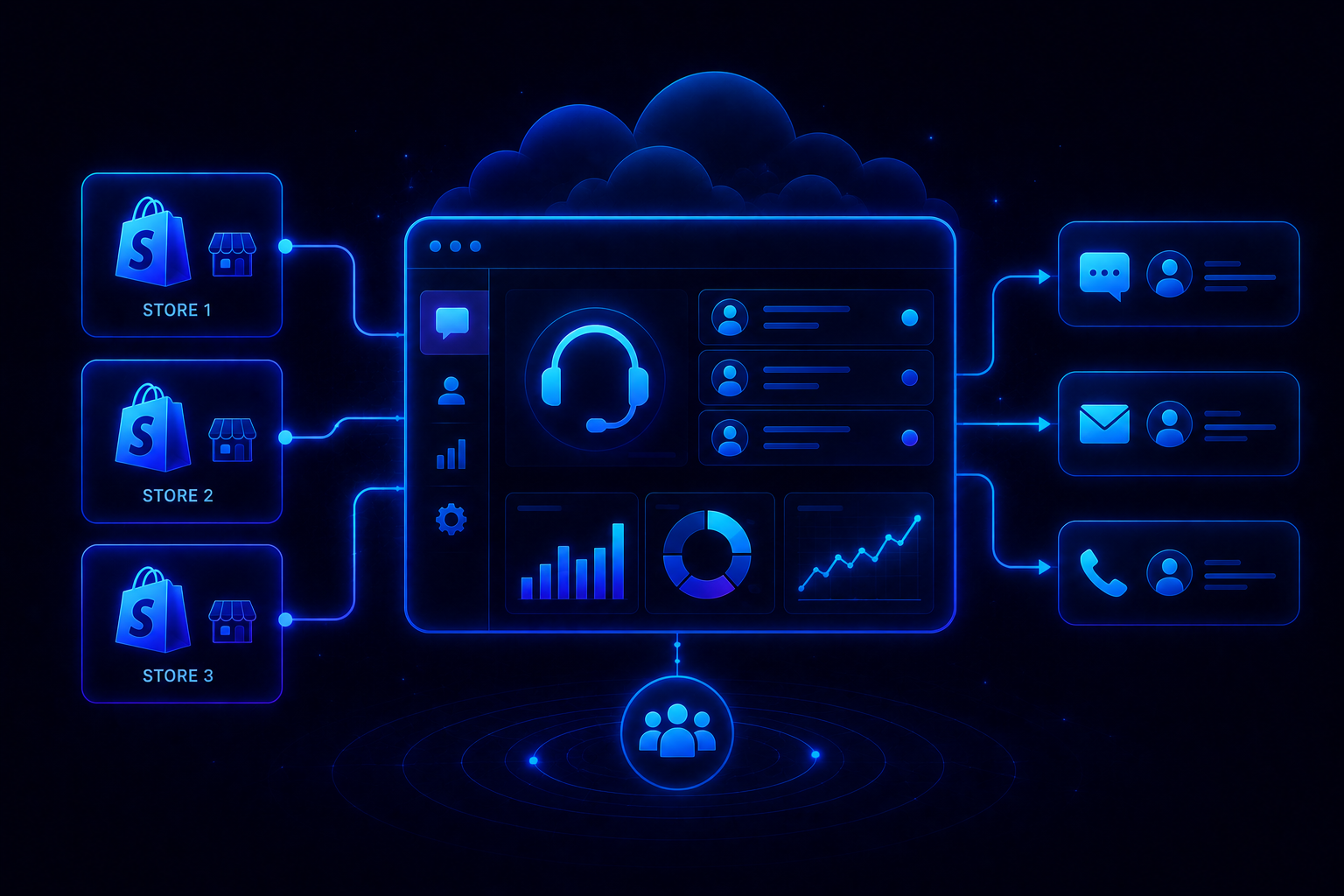
- Unified workspace centralizes WhatsApp, Instagram, email, and live chat into one view so agents always have full conversation context without switching between disconnected tools mid-interaction.
- Quantum AI Copilot assists in real time with summaries, suggested replies, and next-best actions reducing resolution time and operational pressure during high-volume return periods.
Ready to see how it works? Book a demo to explore QuantumDesk for your team.
Frequently asked questions
1. Why do apparel brands experience high customer churn?
Apparel brands face high churn because sizing problems, delayed delivery updates, poor return experiences, and slow support responses reduce customer trust after purchase. With 73% of shoppers switching brands after a single poor support interaction, the post-purchase window is where most retention is won or lost for D2C apparel operations.
2. How does post-purchase support affect apparel customer retention?
Post-purchase support directly affects whether customers reorder. Poor experiences during returns, refunds, exchanges, or delivery delays push shoppers toward competitors after a single issue. Brands that resolve these interactions quickly and consistently see measurably higher repeat purchase rates and lower support escalation volume across seasonal campaigns.
3. How can AI reduce churn for apparel ecommerce brands?
AI reduces churn by automating repetitive support queries, improving response speed, personalizing customer engagement, and proactively resolving post-purchase friction before frustration escalates. Return status updates, exchange eligibility checks, and refund timelines are all resolvable instantly through AI without requiring agent involvement during peak return periods.
4. What support workflows should apparel brands automate first?
Brands should first automate order tracking, refund timelines, exchange eligibility checks, return approvals, and repetitive sizing-related support conversations. These conversation types arrive in the highest volumes during return spikes and require information retrieval rather than judgment, making them the fastest wins for reducing queue pressure and agent workload.
5. How does QuantumDesk help apparel brands improve retention?
QuantumDesk helps apparel brands automate repetitive post-purchase workflows, prioritize urgent conversations intelligently, and improve support consistency across every customer communication channel. Quantum AI resolves Tier-1 queries automatically, the AI-curated inbox surfaces high-risk conversations first, and the unified workspace gives agents full context across WhatsApp, email, Instagram, and live chat simultaneously.



.avif)