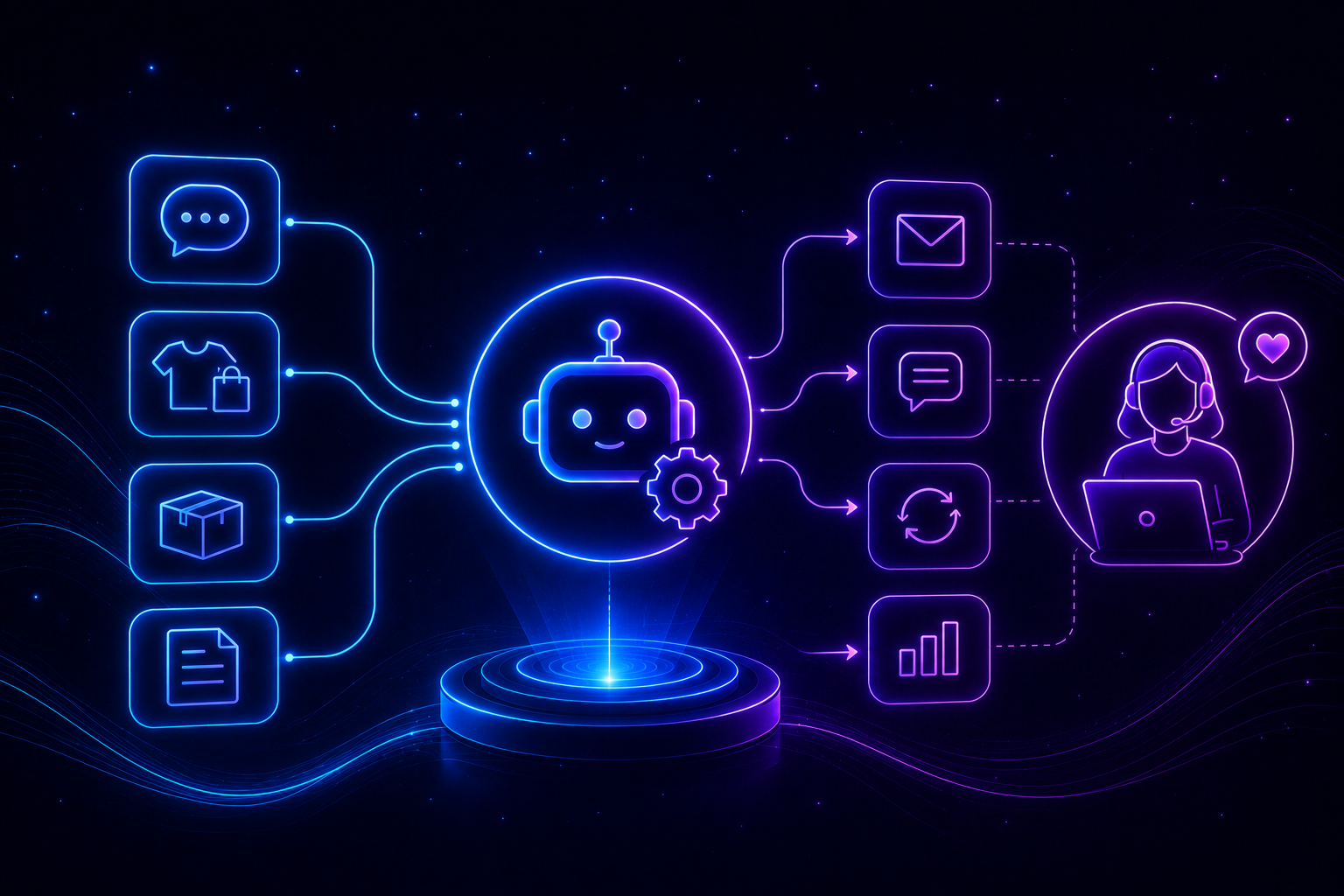
Summarize with AI
Key Takeaways
- AI chatbots automatically resolve repetitive apparel support queries like order tracking, returns, and sizing without agent involvement.
- Intelligent routing analyzes conversation intent and urgency so every ticket reaches the correct agent without manual categorization.
- Automated workflows eliminate manual ticket categorization, acknowledgments, and status updates, reducing response delays during high-volume periods.
- Proactive order updates and shipping notifications reduce follow-up contacts and keep customers informed throughout every interaction.
- Automation handles repetitive workflows so agents can focus on escalated complaints and emotionally sensitive customer interactions.
Apparel brands need faster support operations, but replacing human agents completely often creates poor customer experience and operational gaps.
Modern customer support automation helps apparel businesses reduce repetitive work, improve response speed, and manage higher ticket volumes without dramatically increasing headcount.
D2C apparel brands, SMB retailers, and fashion ecommerce teams regularly struggle with repetitive support questions related to orders, returns, shipping delays, and sizing concerns.
Common problems that appear without workflow automation:
- Agents repeatedly answer identical order-status questions
- Manual ticket routing delays urgent customer conversations
- Support teams waste time updating systems manually
- Customers expect faster omnichannel support responses
I requested an exchange through Instagram → support team manually created a ticket → warehouse never received the update → I followed up through email → multiple agents handled the same issue separately → resolution took days longer than it should have.
Without workflow automation, apparel support teams spend excessive time managing repetitive operational tasks instead of solving complex customer problems efficiently.
You will learn how to improve apparel support workflows using AI automation, intelligent routing, proactive notifications, and workflow integrations without replacing human support agents.
A Quick Overview: Manual Support Vs Automated Support Workflows
Why Do Apparel Brands Need Support Workflow Automation?
Apparel support teams manage thousands of repetitive customer interactions daily, especially during seasonal launches, flash sales, returns periods, and promotional campaigns across multiple support channels.
Without automation, agents lose valuable time performing repetitive operational tasks instead of resolving customer issues that require human judgment and personalized assistance.
1. Repetitive support tasks reduce team productivity
Most apparel customer support conversations involve repetitive actions including order lookups, refund requests, and exchange updates.
Shipping timelines, discount-code troubleshooting, and return-policy explanations across email, chat, and social media also repeat constantly throughout the day.
- "Where is my order?"
- "Can I exchange this size?"
- "Why is my refund delayed?"
- "Can you resend my shipping details?"
When agents repeatedly perform identical workflows manually, response times increase while support teams experience operational fatigue and reduced productivity.
Understanding how excessive customer conversations reduce support quality shows exactly where repetitive work starts affecting both team performance and customer experience simultaneously.
2. Manual processes create operational delays
Many apparel brands still depend on agents to manually tag tickets, assign conversations, update statuses, notify warehouses, and send follow-up emails across disconnected operational systems.
These delays increase ticket backlogs because customer conversations remain dependent on repetitive manual actions rather than automated support workflows.
I requested return approval → support agent manually updated spreadsheets → warehouse team never received the update → I waited days for confirmation → the support team handled multiple follow-up messages that automation could have prevented entirely.
3. Automation helps agents focus on high-value support
Workflow automation removes repetitive operational work so apparel support teams can focus on complex customer concerns. Damaged orders, payment disputes, loyalty retention, and high-value customer conversations all benefit from undivided agent attention.
This creates better customer experiences because agents spend more time solving problems rather than performing repetitive administrative tasks.
- Complex return disputes require empathy and judgment
- Loyalty retention conversations need personalized handling
- Payment and fraud issues demand focused agent attention
- VIP customer interactions are better served by humans, not automation
How D2C Brands Can Automate Support Workflows Effectively
The most effective automation strategies focus on repetitive workflows first while keeping human agents involved for sensitive, emotional, or complex support interactions.
Customer service automation delivers the highest productivity gains when it is deployed against the highest-volume, lowest-complexity ticket categories first.
1. Use AI chatbots for tier-1 support questions
AI chatbots help apparel brands automate repetitive customer conversations instantly. Order tracking, store policies, shipping timelines, exchange eligibility, and sizing guidance are all handled without human agent intervention.
- Order-status requests resolved across WhatsApp, chat, and email
- Return-policy explanations served immediately based on purchase type
- Exchange eligibility guidance without agent involvement
- Promo-code troubleshooting steps for common failure causes
This reduces ticket volumes significantly because customers receive immediate answers instead of waiting for human support teams to respond manually.
AI chatbots for customer service work best when they are given the repetitive L1 conversations and given clear escalation paths for everything else.
2. Automate ticket routing and prioritization
Intelligent ticket routing systems automatically analyze customer intent, categorize support requests, prioritize urgent conversations, and assign tickets to the correct apparel support teams without manual intervention.
This improves operational speed because high-priority conversations related to payment failures or order cancellations immediately reach specialized agents faster.
How automated routing handles an incoming refund request:
Customer sends message about a missing refund → AI detects billing intent automatically → ticket gets tagged as "Refund Issue" → finance support team receives priority notification instantly → customer receives automated acknowledgment while the agent prepares resolution.
3. Automate follow-ups and customer notifications
Automated follow-up workflows help apparel brands keep customers informed throughout support conversations. Email, SMS, or messaging notifications are sent without requiring manual updates from support agents repeatedly.
Customers automatically receive updates regarding refund progress, exchange approvals, shipping delays, or unresolved ticket reminders across multiple communication channels.
- Refund-status notifications sent at each processing stage
- Ticket escalation updates so customers never wonder what is happening
- Delivery-delay alerts before customers contact support about them
- Automated satisfaction surveys sent immediately after ticket closure
4. Connect support systems across multiple tools
Workflow automation platforms help apparel brands synchronize customer support operations across CRMs, payment systems, warehouse platforms, and ticketing tools automatically through workflow integrations.
This prevents operational silos because teams no longer depend on manual coordination between disconnected systems during customer support workflows.
Understanding how multi-channel customer service creates compounding inefficiencies shows why system connectivity matters as much as response speed.
- CRM records updated automatically after every support interaction
- Warehouse systems notified instantly when exchange or return is approved
- Payment platforms synced when refund decisions are made
- Internal team alerts sent through Slack or equivalent without manual steps
How AI Improves Apparel Support Without Replacing Agents
AI in customer service creates the most measurable impact when it handles the repetitive and agents handle everything that actually needs a person. The goal is improving operational efficiency while allowing human teams to focus on conversations requiring empathy, decision-making, and relationship management.
1. AI handles repetitive tasks faster than humans
AI processes repetitive requests instantly, follows predefined logic consistently, and operates continuously without delays. This helps apparel teams maintain faster response times and meet first-response SLAs automatically during high-volume periods and campaign launches.
2. Human agents still handle complex customer issues
Damaged products, escalated complaints, retention cases, and emotional interactions still require human agents. Automation collects information and prepares full context before escalation so agents resolve issues faster without asking customers to repeat themselves. Knowing exactly what AI vs human customer support should each handle is where most apparel brands find their clearest path to faster resolution.
3. AI copilots improve agent productivity
AI copilots generate replies, summarize conversations, suggest next actions, and retrieve customer context directly inside support platforms. Agentic AI for customer service goes further by processing exchanges, refunds, and order modifications without any agent involvement.
4. Automation creates better customer experiences
Customers receive instant acknowledgments, proactive updates, and fewer repetitive verification questions. Automation improves efficiency while preserving meaningful agent interactions for high-value conversations where empathy and relationship management directly affect retention.
How QuantumDesk Automates Apparel Support Workflows
QuantumDesk helps apparel brands automate customer support workflows using AI-driven automation, unified inbox management, intelligent routing, and conversational AI without removing human support teams from the process.
Its AI-native platform reduces repetitive operational tasks while helping agents focus on high-value customer interactions across live chat, email, WhatsApp, and social channels.
For apparel teams evaluating where to start, the best customer service software for ecommerce brands shows where AI-native workflow automation pulls ahead of manual processes during periods of real operational pressure.
What Are QuantumDesk's Key Capabilities?
- Quantum AI automates repetitive workflows including ticket classification, customer acknowledgments, routing, and proactive notifications so order tracking, return policy, and sizing queries are resolved before reaching an agent's queue.
- Quantum AI Copilot recommends responses, surfaces customer context, and summarizes conversations in real time so agents spend less time searching across disconnected systems and more time resolving issues that need a person.
- AI-curated inbox prioritizes conversations using urgency, sentiment, and intent so high-value concerns never get buried beneath routine requests during seasonal launches and flash sale periods.
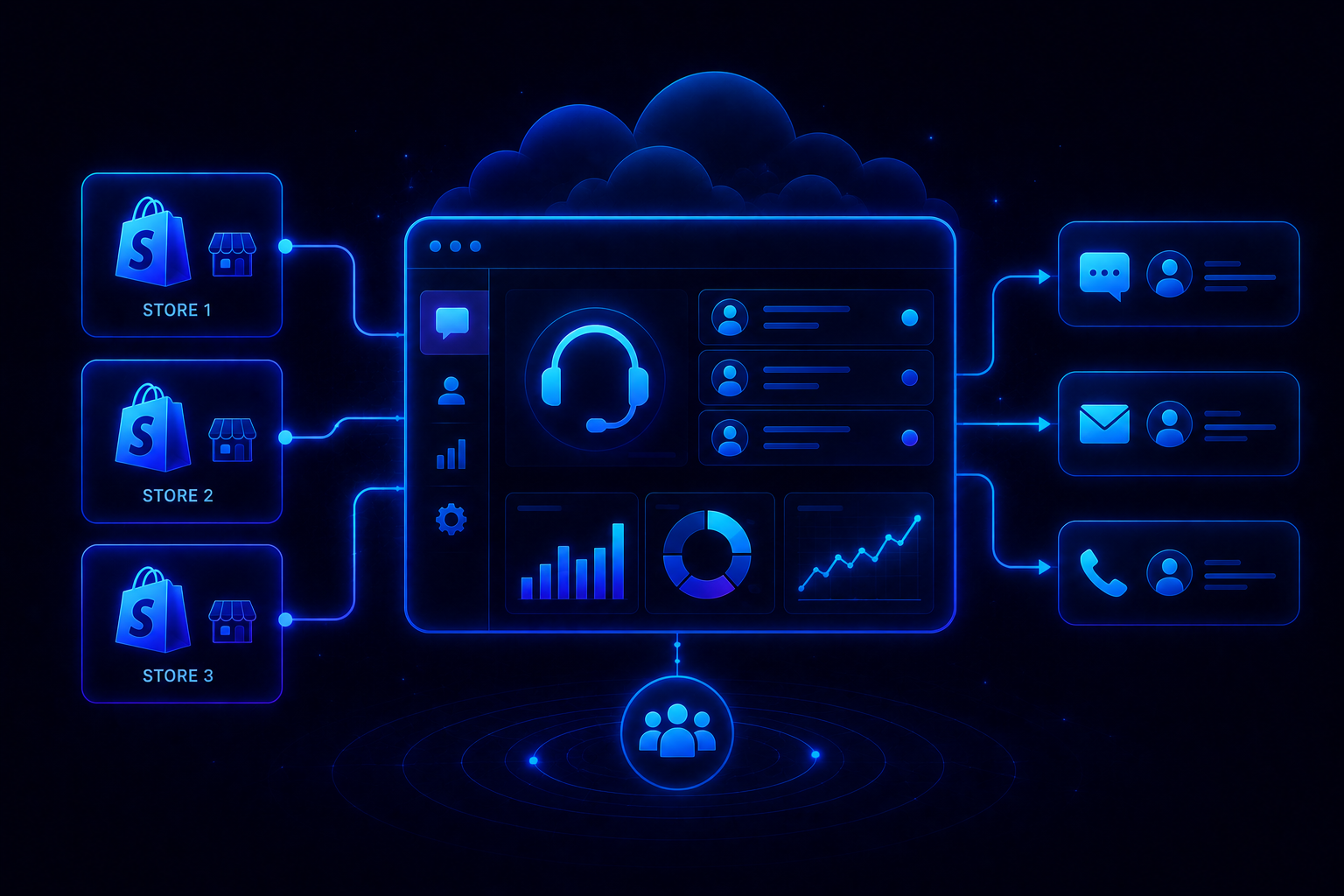
- Unified workspace centralizes live chat, email, WhatsApp, and social into one operational view so agents maintain complete context across every interaction without switching between tools.
Ready to see how it works? Book a demo to explore QuantumDesk for your team.
Frequently Asked Questions
What does automating apparel support workflows mean?
It means using AI and automation tools to manage repetitive support tasks like routing tickets, answering FAQs, and sending customer notifications automatically. The goal is reducing manual operational work so agents can focus on complex, high-value customer conversations instead.
Will automation replace apparel customer support agents?
No. Automation handles repetitive workflows while human agents continue managing complex, emotional, and high-value customer interactions requiring personalized support. AI increases team capacity rather than reducing headcount by removing the repetitive work that consumes agent bandwidth daily.
What support tasks should apparel brands automate first?
Brands should automate repetitive workflows like order tracking, refund updates, ticket routing, return policies, and proactive customer notifications first. These categories typically represent 60 to 80% of total ticket volume and require no human judgment to resolve accurately.
How do AI chatbots help apparel support teams?
AI chatbots instantly answer repetitive customer questions, reduce ticket volumes, collect support details, and escalate complex issues to human agents automatically. For apparel brands, the highest-impact starting point is automating WISMO queries, sizing questions, and return eligibility checks.
Why is ticket routing important in support automation?
Intelligent routing sends conversations to the correct teams faster, reducing delays, improving resolution speed, and preventing operational bottlenecks during high-volume support periods. Without it, urgent payment and checkout issues wait behind lower-priority requests in the same undifferentiated queue.




.avif)