

Summarize with AI
Key Takeaways
- Automating refund status updates connects e-commerce, payment, and communication systems to provide customers with real-time progress notifications automatically.
- AI-powered self-service tools reduce repetitive "Where is my refund?" and exchange-status tickets by providing instant order-specific updates.
- Automated workflows trigger notifications when refunds move between initiated, processing, failed, and completed stages without agent involvement.
- Proactive refund and exchange communication improves customer trust, reduces follow-up contacts, and lowers support workload during peak periods.
- AI-native support platforms like QuantumDesk combine automation, intelligent routing, and omnichannel communication to scale refund operations without increasing headcount.
Refund and exchange requests are some of the highest-volume customer support conversations, especially for growing ecommerce businesses.
For D2C apparel brands, cosmetics companies, food and beverage businesses, and SMBs, refund-related inquiries often account for a significant share of support tickets. Customers expect real-time updates, but many businesses still rely on manual emails, spreadsheets, and status checks.
I returned a hoodie last week → received no refund confirmation → checked my email repeatedly → contacted support twice → opened WhatsApp for an update → joined hundreds of customers asking the same question.
Common signs your refund status process is creating unnecessary tickets:
- Customers repeatedly ask when refunds will reach their bank accounts.
- Agents manually check payment systems before responding to every request.
- Exchange updates arrive inconsistently across email, chat, and WhatsApp.
- Customers contact multiple channels for the same refund inquiry.
You will learn how to improve refund and exchange communication using automation, AI-powered workflows, proactive notifications, and self-service tools that reduce support workload significantly.
A Quick Comparison: Manual Refund Updates vs Automated Refund Updates
Why Refund and Exchange Status Requests Drive High Ticket Volumes
Refunds involve customer money, which makes them one of the most sensitive support interactions. Without clear updates, customers naturally seek reassurance through repeated support contacts.
1. Customers Want Certainty About Their Money
Unlike delivery updates, refund requests directly affect a customer's finances. Without clear progress updates, customers turn to support for reassurance multiple times before the refund clears.
- Generic responses such as "please allow 5 to 7 business days" give no indication of where the refund actually is in the process.
- A customer waiting on a refund for a jacket returned two weeks ago will follow up daily until they see the credit in their account.
- Each follow-up generates a new ticket, adding to a queue that already carries unresolved conversations from earlier in the week.
- No news is not good news when it comes to refunds. Silence reads as a problem, not a process.
2. Refund Information Is Spread Across Multiple Systems
Support agents often need to switch between ecommerce platforms, payment gateways, warehouse systems, and helpdesk tools before they can respond accurately to a single refund question.
- For a team processing 2,000 monthly tickets where 30% are refund-related, that context-switching consumes hours of productive capacity every week without resolving a single underlying problem.
- Each platform switch adds cognitive load and increases the risk of miscommunication when relaying status information to customers.
- Agents spend more time verifying refund status than they do resolving the actual customer concern.
- This fragmentation means the same refund may be described differently across email, chat, and WhatsApp depending on which system an agent checked last.
3. Customers Contact Multiple Channels for the Same Update
A customer may start with email, follow up through WhatsApp, and then contact live chat when no response arrives, generating multiple tickets for one unresolved issue.
- Without centralized visibility, support teams answer the same refund question multiple times across disconnected channels.
- This is where the multi-channel customer service problem amplifies workload far beyond what raw ticket numbers suggest.
- Each duplicate contact is counted as a separate interaction rather than a single unresolved issue, inflating volume metrics.
- Support leaders reviewing daily ticket counts often cannot distinguish between new customer issues and repeat contacts from the same frustrated customer.
4. Exchange Requests Create Similar Visibility Problems
Customers want to know whether replacement products have shipped, whether inventory is available, and when new items will arrive. Delayed communication drives unnecessary follow-up conversations.
- An exchange request that could close in one interaction instead generates three or four contacts simply because no proactive update was sent after the return was approved.
- Customers rarely know the difference between a warehouse delay and a system error, so any silence reads as something going wrong.
- Without automated exchange status updates, agents field progress questions that could have been resolved through a single notification sent at the right moment.
- High exchange volumes during promotional return periods compound this further, creating sustained follow-up pressure across teams.
5. Manual Updates Do Not Scale During Peak Periods
Holiday sales, seasonal campaigns, and flash-sale events can increase return volume dramatically, overwhelming support teams that depend entirely on manual status checks and agent communications.
- Managing support during flash sales makes this breakdown visible in real time, as refund queues from one campaign can still be open when the next one begins.
- Agents have no capacity to send individual status updates during high-volume windows while also managing incoming contacts.
- Temporary staffing cannot solve a workflow problem. Hiring more agents to send manual refund updates is an expensive and slow response to a systems issue.
- Without automation, peak return periods create a backlog that can take weeks to clear, affecting customer satisfaction long after the sale ends.
Most refund-related tickets exist because customers lack visibility. Solving that visibility problem is often more effective than simply hiring additional support agents.
How to Automate Refund and Exchange Status Updates at Scale
Successful refund automation starts by connecting the systems responsible for returns, payments, exchanges, and customer communication into one coordinated workflow.
Step 1: Connect E-commerce and Payment Systems
Integrating ecommerce and payment platforms creates the data foundation every automated refund workflow depends on, allowing status changes to flow across systems without manual input.
- Platforms such as Shopify, WooCommerce, BigCommerce, Stripe, Razorpay, and PayPal each have APIs that can be connected to trigger refund status events automatically.
- For ecommerce customer service teams managing hundreds of monthly returns, this single integration step eliminates the manual lookups that currently consume the most agent time per refund ticket.
- Without this connection, refund events happen inside the payment system but never flow to the tools customers and agents actually use.
- Once the integration is in place, every status change becomes a data point the rest of the automation workflow can act on immediately.
Step 2: Define Refund and Exchange Triggers
Create status milestones that represent every meaningful stage in the refund and exchange lifecycle, then configure each milestone to trigger a customer notification automatically.
- Core milestones to define include refund initiated, refund processing, refund completed, refund failed, exchange approved, exchange shipped, and exchange delivered.
- Without clearly defined triggers, the automation has no events to act on and the workflow remains as manual as before.
- Each milestone should map to a specific event in the payment or warehouse system, not a time-based delay.
- The milestone structure also gives support teams a shared vocabulary for discussing where any refund stands, which reduces miscommunication during escalations.
Step 3: Sync Status Changes Across Systems
When payment processors update refund status, the information should automatically sync with your helpdesk, CRM, and customer communication channels to maintain consistency across every touchpoint.
- Inconsistent data across systems is one of the most common reasons customer service automation workflows fail to deliver the expected reduction in ticket volume.
- A customer who receives a "refund completed" email but sees a different status in their order portal will contact support to reconcile the discrepancy.
- Use webhooks or real-time API connections rather than scheduled syncs, which can introduce delays that create exactly the kind of uncertainty customers follow up about.
- Establish one system as the source of truth for refund status and have all other platforms read from it rather than maintaining independent records.
Step 4: Automate Customer Notifications
Customers should receive proactive updates whenever refund or exchange status changes occur, delivered through their preferred channel without requiring agent involvement at any stage.
- Notifications can be sent through email, WhatsApp, SMS, or in-app messaging depending on where the customer originally contacted the brand.
- A refund that moves from initiated to processing to completed, with a notification at each stage, rarely generates a follow-up contact.
- The customer already has the information they came to support to find, which means the ticket never needs to exist.
- Notification messages should include specifics: which item is being refunded, the amount, the payment method being credited, and an expected timeline based on the processor's actual clearing schedule.
Step 5: Create Self-Service Status Tracking
Allow customers to check refund and exchange progress independently through a portal, chatbot, or AI assistant connected directly to live transaction records and order data.
- Self-service tools that pull real data rather than generic status messages reduce inbound volume significantly because they answer the specific question the customer is asking.
- Customers who can look up their refund status at any hour, without waiting for an agent, are far less likely to generate support contacts.
- Connect the self-service tool to the same source of truth used for automated notifications to ensure consistency across every channel.
- For brands with high return volumes, self-service status tracking removes the single largest category of repetitive contact from the support queue entirely.
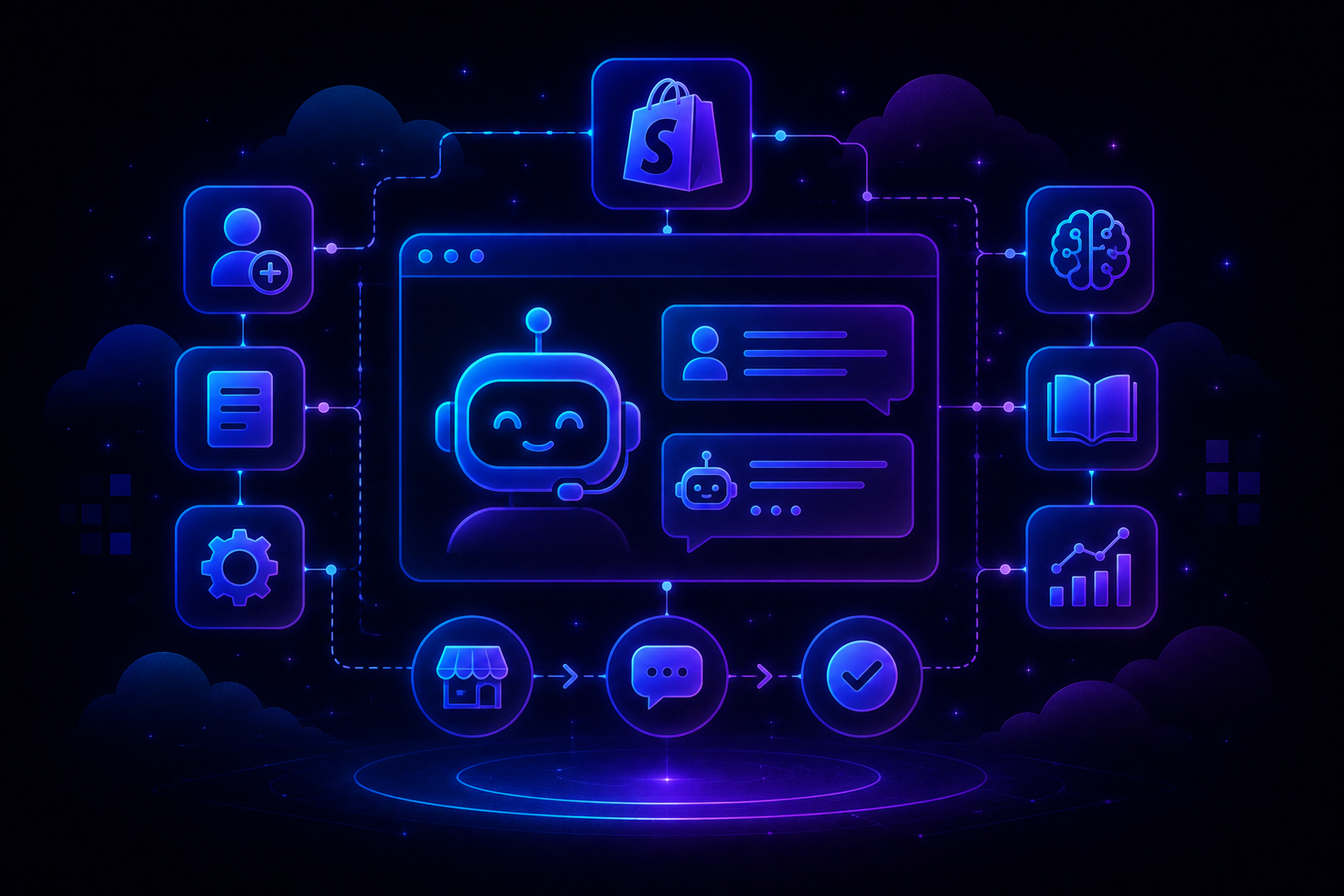
Automated Refund Communication Flow:
Implementation Checklist:
- Use APIs or webhooks to sync refund status changes automatically.
- Connect payment systems directly to customer communication channels.
- Standardize refund stages across all platforms before building notifications.
- Test notification workflows thoroughly before deployment.
- Maintain a single source of truth for refund data across all systems.
When refund events automatically trigger updates, customers stay informed throughout the process, and support teams spend significantly less time answering repetitive status questions.
How AI Reduces Refund and Exchange Support Workload
Automation sends updates automatically. AI further reduces support volume by providing customers with instant answers whenever they request refund or exchange information.
1. AI Answers "Where Is My Refund?" Instantly
AI assistants retrieve live refund status from payment systems and explain exactly what stage the refund is in, eliminating many repetitive inquiries without agent involvement.
- For brands processing hundreds of refunds weekly, an AI Customer Service Agent handling these lookups automatically removes one of the most predictable and recurring drains on support capacity.
- The AI does not need to be briefed on order history before responding. It pulls current data from the connected payment system in real time.
- Customers receive an accurate, personalized status update in seconds rather than waiting for an agent to check three separate tools and write a reply.
- This single capability alone can handle 20 to 30% of total support volume for D2C brands with high monthly return rates.
2. AI Explains Processing Timelines Clearly
Instead of providing generic estimates, AI explains when refunds were initiated, which payment method is being credited, and expected posting timelines based on live transaction data.
- "Your refund was initiated on June 14th and typically posts to Visa cards within 3 to 5 business days" is a complete answer.
- "Please allow 5 to 7 business days" is an invitation to follow up. That difference determines whether the conversation closes or reopens two days later.
- Specific timeline explanations reduce escalations because customers who understand the process are less likely to interpret a normal delay as a failure.
- AI can be configured to flag refunds that have exceeded the expected processing window and route them to agents before the customer contacts support.
3. AI Supports Exchange Tracking
Customers can check exchange shipment status, inventory availability, and delivery timelines without needing to wait for a support agent to investigate manually across disconnected tools.
- The same conversation that previously required an agent to check three systems and compose a custom reply can close in seconds through a connected AI assistant.
- For brands managing high exchange volumes, the impact on return support backlog compounds quickly because every exchange conversation handled by AI is one fewer ticket that carries over into the following week.
- AI can confirm whether the correct replacement item has been dispatched, which addresses one of the most common anxiety points in the exchange process.
- When inventory is unavailable, AI communicates alternatives or estimated restock timelines rather than leaving customers without a response.
4. AI Identifies Exceptions That Need Human Review
Refund disputes, double-charge complaints, failed transactions, policy exceptions, and suspected fraud cases require human judgment and are best handled when escalated with full context attached.
- AI recognizes when a conversation falls outside standard refund parameters and routes it to the appropriate team automatically.
- This is where AI use cases in customer service become particularly valuable, because the system identifies which conversations require human judgment before frustration has a chance to build.
- Escalated tickets arrive with a conversation summary, order details, and flagged anomalies, so agents can respond immediately without spending time gathering background.
- Without this routing intelligence, high-urgency exceptions sit in the same queue as routine status checks and surface only after a significant delay.
5. AI Scales During Seasonal Return Spikes
When return volume increases after holidays or flash sales, AI handles thousands of refund-status conversations simultaneously without increasing support staffing requirements or response time.
- A team of ten agents cannot meaningfully scale overnight. An AI layer that handles the top 60% of refund queries by volume can.
- AI maintains consistent quality regardless of how many conversations are open at the same time, unlike a stretched human team during peak windows.
- Brands that rely entirely on agents during seasonal return spikes often see response time and satisfaction scores drop in tandem. AI absorbs the volume before that degradation occurs.
- For apparel brands specifically, post-sale return windows create predictable spikes. Deploying AI before those windows open is far more effective than reacting after queues build.
AI reduces refund-related support demand by providing immediate answers, preserving customer confidence, and allowing agents to focus on disputes and complex exceptions.
How QuantumDesk Automates Refund and Exchange Communication
Refund and exchange requests often generate multiple follow-up conversations because customers lack visibility into what happens after a return is approved. QuantumDesk helps businesses automate those updates while keeping customers informed throughout the process.
QuantumDesk removes the dependency on agents manually checking payment systems, warehouse records, and exchange workflows by centralizing customer conversations and operational data into one AI-native support environment.
For growing D2C brands handling hundreds of monthly returns across email, WhatsApp, and live chat, the operational difference is measurable. Automated notifications and AI-powered self-service work together to reduce follow-up contacts before they reach the queue, not after.
The best customer service software for ecommerce brands shows this gap most clearly when refund volumes spike and the margin between a managed queue and an overwhelmed one narrows fast.
How QuantumDesk Helps Teams Automate Refund and Exchange Updates
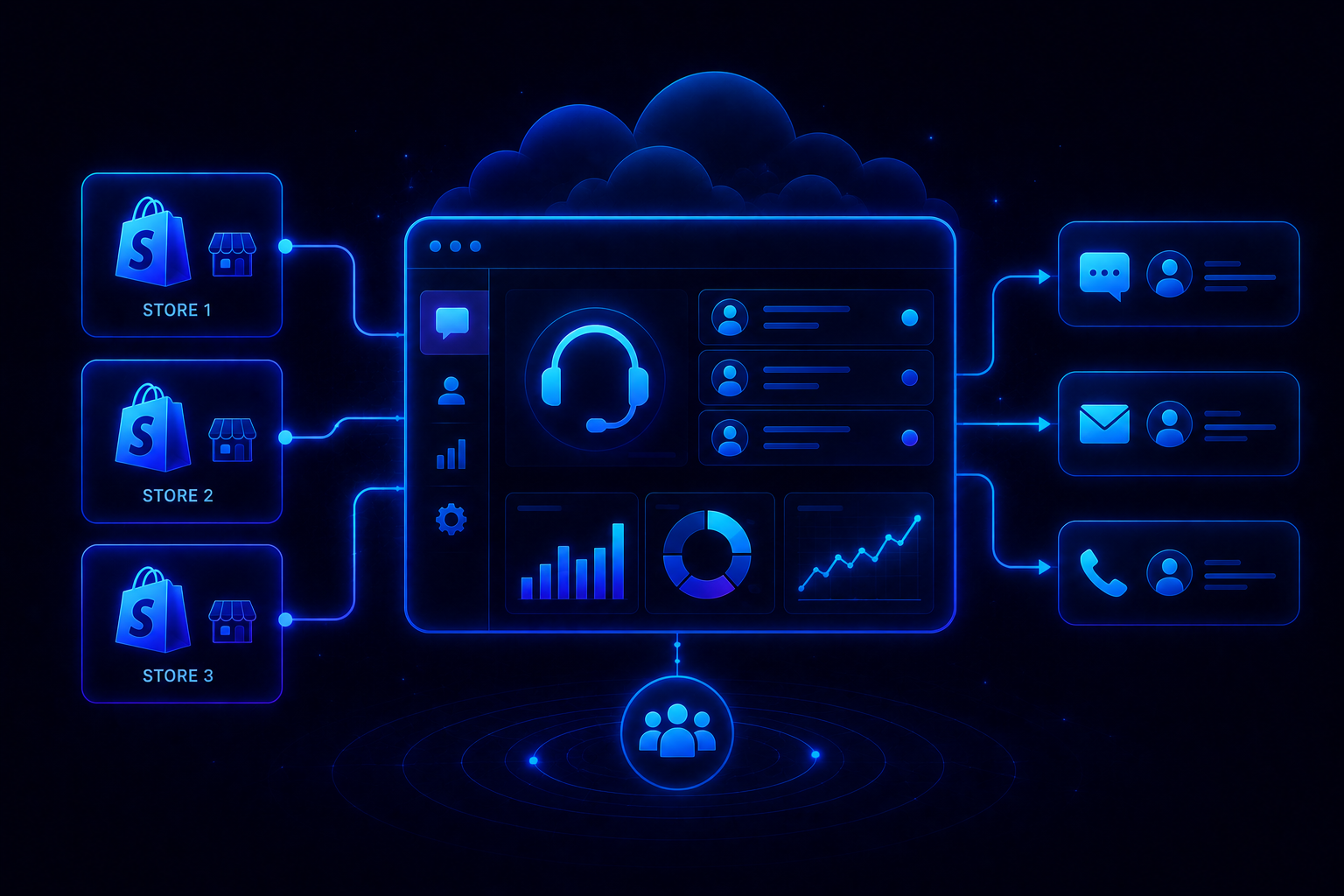
- Unified workspace centralizes email, WhatsApp, live chat, and social conversations into a single customer timeline, giving agents complete visibility into every refund and exchange interaction without switching between tools.
- Quantum AI provides instant answers to refund and exchange status questions, resolving repetitive "Where is my refund?" inquiries before they reach agent queues.
- AI-curated inbox prioritizes failed refunds, urgent complaints, and escalation requests automatically using intent, urgency, and sentiment signals so critical cases surface before routine queries.
- Quantum AI Copilot generates conversation summaries, suggests responses, and recommends next actions to help agents resolve refund disputes faster without switching between systems.
By combining AI automation, centralized customer conversations, and intelligent prioritization, QuantumDesk helps businesses manage refund and exchange communication at scale without increasing support headcount.
Ready to automate refund communication? Book a demo with QuantumDesk.
Frequently Asked Questions
What are automated refund status updates?
Automated refund status updates notify customers whenever a refund moves between stages such as initiated, processing, completed, or failed, without requiring manual agent involvement. The system tracks refund events in connected payment and ecommerce platforms and triggers customer notifications through email, WhatsApp, SMS, or other configured channels automatically.
How do automated refund status updates work?
Refund systems trigger notifications whenever a refund changes status. Customers automatically receive updates through email, WhatsApp, SMS, or other connected communication channels. The workflow depends on integration between your ecommerce platform, payment processor, and customer communication tools so that status changes in one system flow to the others without manual steps.
What refund stages should businesses automate?
Most businesses automate refund initiated, refund processing, refund completed, refund failed, exchange approved, exchange shipped, and exchange delivered notifications. Adding a return received confirmation at the start of the process significantly reduces early follow-up contacts from customers who want confirmation that their item reached the warehouse before the refund cycle begins.
Can AI answer refund-status questions automatically?
Yes. AI can access live transaction records, retrieve refund status information, explain processing timelines, and provide customers with accurate updates instantly. The accuracy of those answers depends on the AI being connected to live payment and order management data rather than a static knowledge base. For a closer look at what determines reliability, AI customer support accuracy covers the key factors that affect AI response quality in live support environments.
Can automated refund updates reduce support tickets?
Yes. Proactive notifications and AI self-service tools significantly reduce repetitive refund inquiries by keeping customers informed without requiring agent involvement. Brands that implement both proactive notifications and AI-powered status lookups typically see the largest reductions, because notifications address customers who are waiting passively while AI handles those who reach out actively.




.avif)