Summarize with AI
Key Takeaways
- Customer service software for D2C brands needs direct e-commerce integration to surface order, shipping, and return data within every active support conversation.
- QuantumDesk leads this list as an AI-native platform resolving D2C queries autonomously for B2B SaaS teams, SMBs, and growing ecommerce brands.
- Gorgias is the top Shopify-native option for D2C brands prioritizing order management automation and direct refund handling inside the agent ticket view.
- eDesk and Richpanel serve distinct D2C needs: marketplace sellers wanting channel unification and budget-conscious brands wanting customer self-service resolution.
- The right platform depends on Shopify integration depth, AI automation capability, omnichannel coverage, and how your D2C brand intends to scale.
Customer service software for D2C brands has to do more than manage tickets. The best platforms connect to order and fulfillment systems, surface shipping data automatically, and resolve repetitive queries before they reach the agent queue.
D2C brands, B2B SaaS teams, and SMBs face the same pressure: rising ticket volumes tied directly to order and return cycles.
I contacted support about an unshipped order, got a bot that could not pull my tracking number, and switched to a competitor brand the same week.
You will find the 10 best customer service platforms evaluated on e-commerce integration, AI automation, omnichannel coverage, and fit for D2C teams at different growth stages.
How we evaluated these platforms:
- G2 and Capterra ratings from verified D2C and ecommerce users across brand sizes and volumes
- Shopify and marketplace integration depth and how order data surfaces automatically within active support conversations
- AI automation capability across WISMO, returns, refunds, and repetitive tier-1 D2C support workflows at scale
- Omnichannel coverage across email, WhatsApp, social, and live chat for all post-purchase D2C interactions
Whether you run a high-volume D2C brand or a lean SMB support operation, this comparison covers the tools worth evaluating in 2026.
A Quick Comparison: 10 Best Customer Service Software for D2C Brands
How We Evaluated These D2C Customer Service Software Platforms
We evaluated these 10 platforms by analyzing D2C ecommerce support workflows, comparing ecommerce integration quality and AI resolution capability, and reviewing how well each tool connects order and customer data to active support conversations.
- G2 and Capterra review analysis focusing on D2C and ecommerce-specific ratings and feedback from support teams managing high order volumes daily
- D2C community and forum research from Shopify user groups, Reddit threads, and ecommerce operator discussions on platform strengths and real-world limitations
- Hands-on product evaluation assessing onboarding speed, Shopify integration depth, AI automation configuration, and omnichannel coverage across all ten platforms
- Pricing and scalability benchmarking to assess cost-per-seat, conversation-based models, and how pricing holds up as D2C order volumes scale significantly
- Ecommerce operator feedback from D2C support leads managing between 500 and 10,000 monthly support interactions across different brand sizes and verticals
10 Best Customer Service Software for D2C Brands
1. QuantumDesk – Best AI-Native Customer Service Platform for D2C Brands

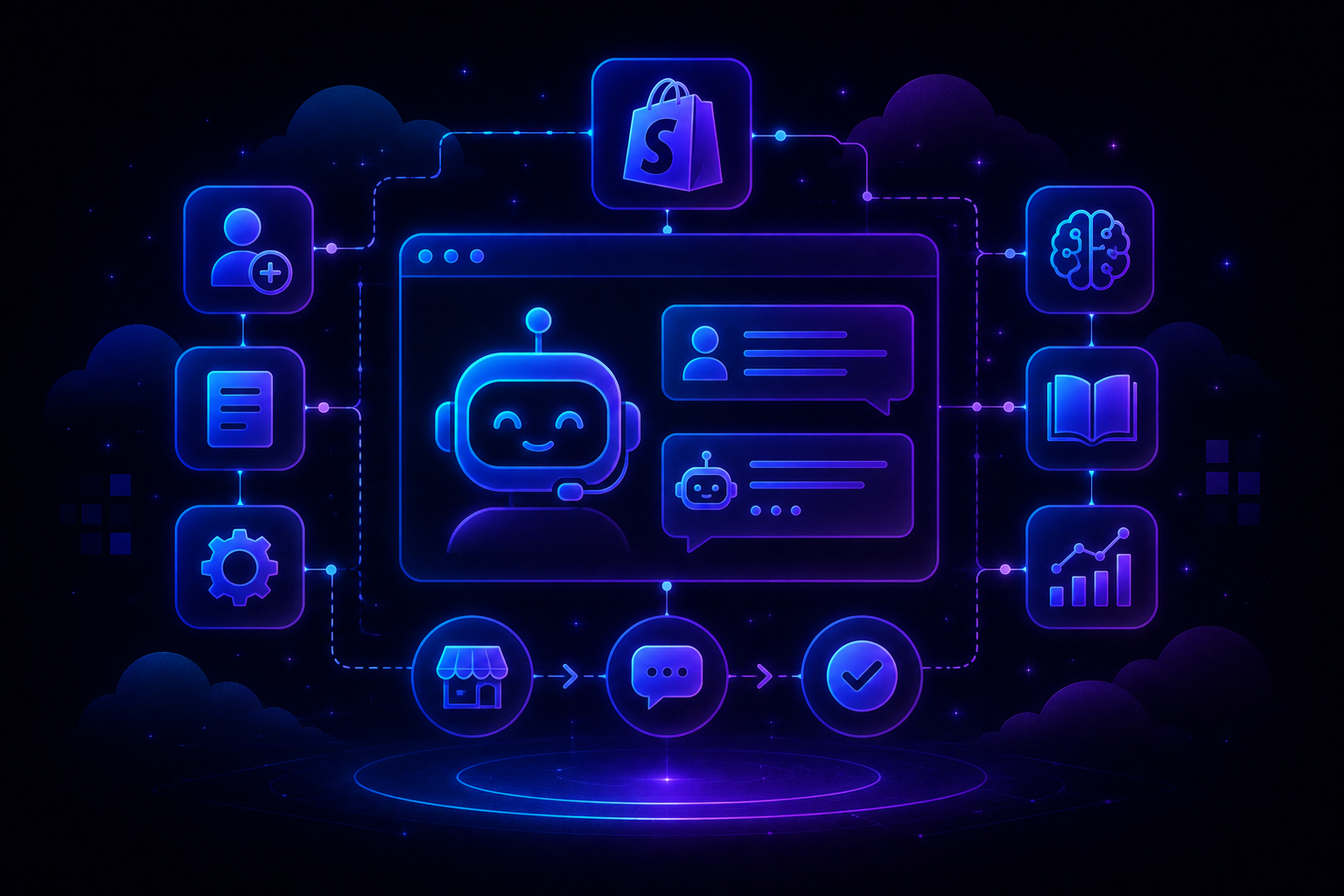
QuantumDesk is an AI-native customer service platform built for D2C brands, B2B SaaS teams, and SMBs that need autonomous resolution, not improved ticket organization.
Unlike platforms that retrofit AI onto legacy helpdesk infrastructure, QuantumDesk embeds AI into every stage of the support workflow from intake through final resolution, delivering ai native customer service benefits without per-resolution fees that increase as D2C ticket volume scales.
D2C brands scaling order volumes, B2B SaaS teams managing onboarding and renewal queues, and SMBs running lean support operations find QuantumDesk purpose-built around their specific operational constraints and growth requirements.
Key Features
- AI copilot for ecommerce support drafts contextual replies and surfaces full order history inside every active conversation without agents switching between tools
- Quantum AI resolves WISMO, return eligibility, refund status, and account access queries across email, WhatsApp, chat, and social automatically
- AI-curated inbox routes conversations by urgency, sentiment, and order impact so agents focus on the interactions that need them most
- Unified workspace consolidates every channel including email, WhatsApp, chat, and social into one view with full cross-channel customer and order history
- Admin analytics tracks AI resolution rate, escalation patterns, CSAT trends, and team performance so support leaders can continuously improve operations
Pros
- AI resolves repetitive tier-1 queries at scale without per-ticket fees compounding alongside D2C order growth
- Single unified workspace eliminates context switching between tools and channels for every agent interaction
- Admin analytics give clear visibility into AI performance, escalation patterns, and team productivity from initial deployment
Cons
- Best suited for teams ready to operate with AI-first workflows rather than traditional ticket-by-ticket agent setups
- Onboarding calibration needed to tune Quantum AI against your specific D2C product catalog, policies, and return workflows
- Advanced analytics designed for teams with dedicated support operations leads rather than one-person support setups
When to Choose QuantumDesk
QuantumDesk is worth evaluating when your D2C or SMB support team needs AI resolving tier-1 queries from day one rather than just assisting agents after tickets have already formed.
Customer Review
"We moved from Zendesk to QuantumDesk and saw first response time drop from four hours to under 30 minutes within the first month. Quantum AI handles the majority of WISMO and return queries automatically. The unified inbox across WhatsApp, email, and chat was the feature we did not know we were missing." — Head of Customer Experience, D2C Apparel Brand, G2
Pricing
Custom pricing based on business size and support volume. Contact the QuantumDesk team for current plans and a tailored demo.
Ready for AI-Native D2C Support? Explore how Quantum AI resolves WISMO, return, and refund queries automatically, unifies your channels, and scales support without growing your agent team → Book a Demo
2. Gorgias – Best Shopify-Native Platform for D2C Order Support
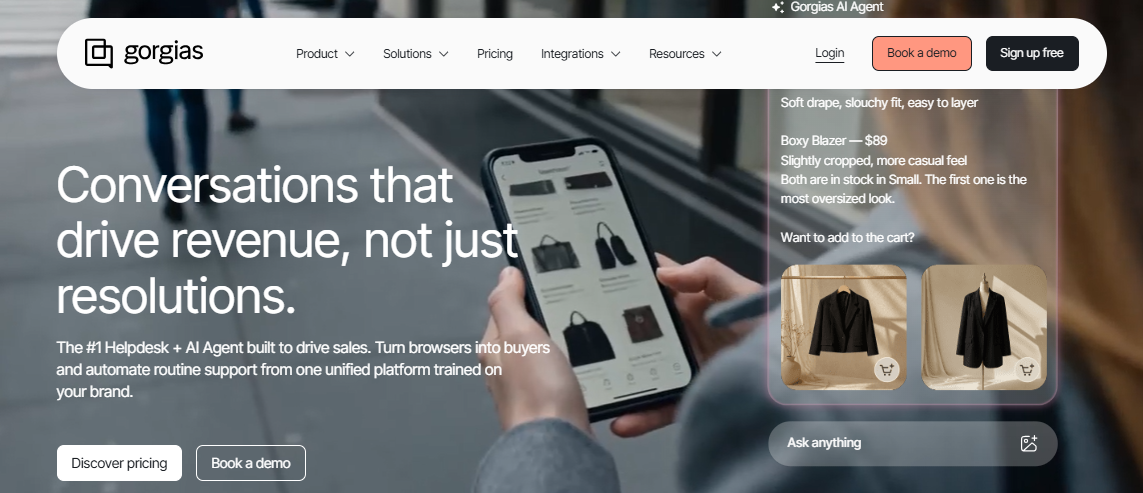
Gorgias is a Shopify-native customer service platform for D2C brands managing support tied directly to ecommerce order and fulfillment data.
D2C teams choose Gorgias for its Shopify integration depth and order-based automation rather than AI resolution capability or enterprise-scale infrastructure outside core ecommerce workflows.
Key Features
- Shopify order actions including refunds, edits, and cancellations directly from the ticket view without switching tools
- Social commerce support across Instagram, TikTok, and Facebook DMs alongside core email and chat channels
- Action-based macro automation for common D2C ecommerce query types like WISMO, subscription changes, and return requests
Pros
- Shopify integration depth is unmatched for D2C brands processing high order volumes with order data inside every conversation
- Social commerce channel coverage useful for Instagram and TikTok-native D2C brands acquiring customers through social platforms
- Revenue-tied reporting connects support performance to ecommerce outcomes rather than just ticket resolution metrics
Cons
- Per-ticket pricing compounds during flash sales and peak seasons when D2C order and return volumes spike
- AI capabilities require careful setup and do not resolve queries autonomously without significant configuration effort
- Less suited for non-Shopify ecommerce stacks or D2C brands selling across multiple platforms simultaneously
When to Choose Gorgias
Gorgias is worth evaluating when your D2C brand runs on Shopify and agents need to take direct order actions including refunds, edits, and cancellations from within the support view.
Pricing
Gorgias pricing is based on ticket volume, with plans starting at $10 per month for small stores and scaling with monthly support interaction count.
3. eDesk – Best for Multi-Channel and Marketplace D2C Sellers
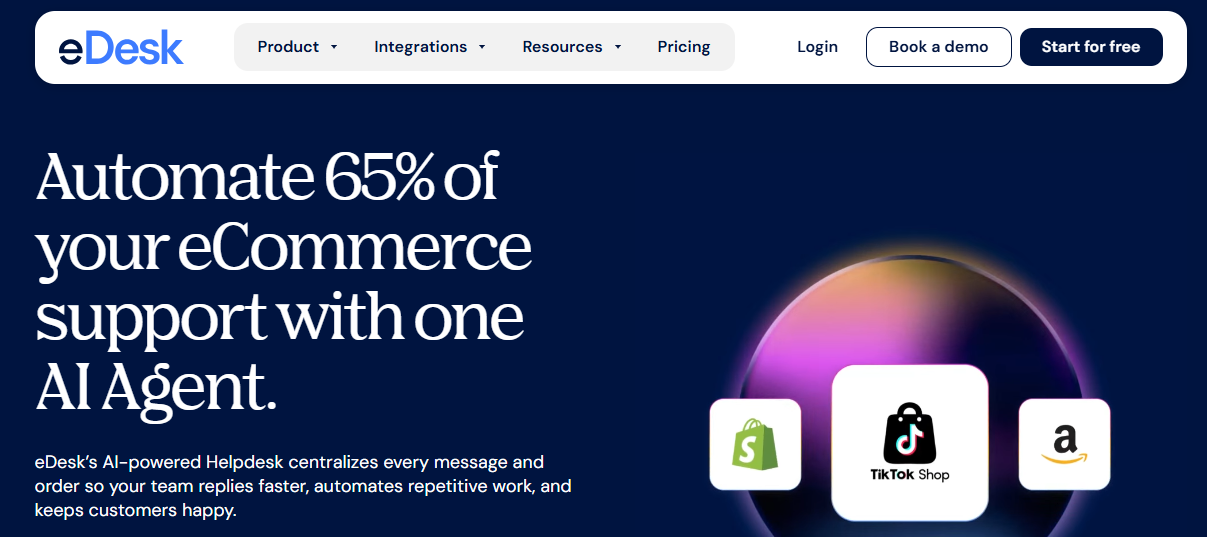
eDesk is a multi-channel customer service platform for D2C brands and marketplace sellers managing support across multiple storefronts.
Marketplace sellers choose eDesk for native integrations across Shopify, Amazon, eBay, and Walmart rather than AI-native design or resolution depth outside ecommerce customer service channel consolidation.
Key Features
- 300+ native integrations, including Shopify, Amazon, eBay, Walmart, and TikTok Shop for unified multi-channel support management
- E-commerce-trained AI handling WISMO, returns, and shipping queries across marketplace and owned store channels
- Marketplace SLA and feedback management tools designed for sellers managing response time requirements across multiple platforms
Pros
- Widest native marketplace coverage for D2C brands selling across Amazon, eBay, Walmart, and Shopify simultaneously
- E-commerce-specific AI trained on order and shipping patterns relevant to D2C and marketplace support workflows
- Competitive pricing relative to enterprise alternatives for marketplace sellers managing multi-platform support volumes
Cons
- Not AI-native as AI sits on top of channel aggregation infrastructure rather than embedded throughout the platform
- Interface is less refined than Gorgias for Shopify-first D2C brands focused exclusively on owned-channel support
- Advanced automation requires setup effort for non-standard D2C workflows outside common WISMO and return patterns
When to Choose eDesk
eDesk is worth evaluating when your D2C business sells across Amazon, eBay, Shopify, and Walmart and needs all those channels consolidated into a single support queue.
Pricing
eDesk pricing scales based on channel count and monthly support volume. Contact the eDesk team for current plan options suited to your marketplace setup.
4. Richpanel – Best for Budget-Conscious D2C Teams Wanting Self-Service
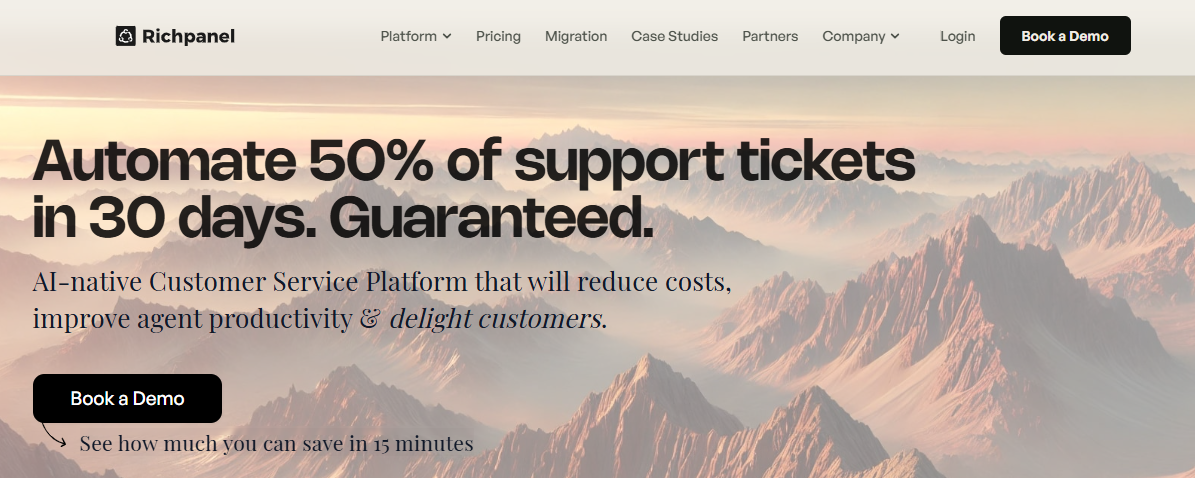
Richpanel is a D2C customer service platform with a self-service portal that lets customers resolve returns, exchanges, and cancellations independently.
Budget-conscious D2C brands choose Richpanel for small business customer service self-service depth that deflects inbound ticket volume rather than for AI-native design or enterprise-scale automation capability.
Key Features
- Self-service portal for returns, exchanges, and order cancellations that customers can complete without agent involvement
- Shopify integration surfacing full order history, tracking, and return eligibility within the agent support view
- Live chat and AI chatbot alongside the self-service flow for escalations that require agent assistance
Pros
- Self-service portal meaningfully reduces inbound ticket volume for D2C brands handling high return and exchange request rates
- Shopify order data surfaces natively in every conversation, so agents have full context before responding
- Accessible pricing relative to Zendesk and Salesforce for early-stage D2C brands, formalizing their support operations
Cons
- AI resolution depth is less advanced than Gorgias or QuantumDesk for autonomous handling of complex D2C query types
- Less suited for D2C brands requiring enterprise-grade reporting, multi-brand routing, or complex escalation workflows
- Self-service portal design flexibility is limited compared to fully custom-built portal options for larger brands
When to Choose Richpanel
Richpanel is worth evaluating when your D2C brand wants to reduce inbound ticket volume through customer self-service without investing in a full enterprise customer service platform.
Pricing
Richpanel pricing scales based on monthly support interactions and self-service portal volume. Contact the Richpanel team for current plan details and a product walkthrough.
5. Zendesk – Best for High-Volume Enterprise D2C Operations
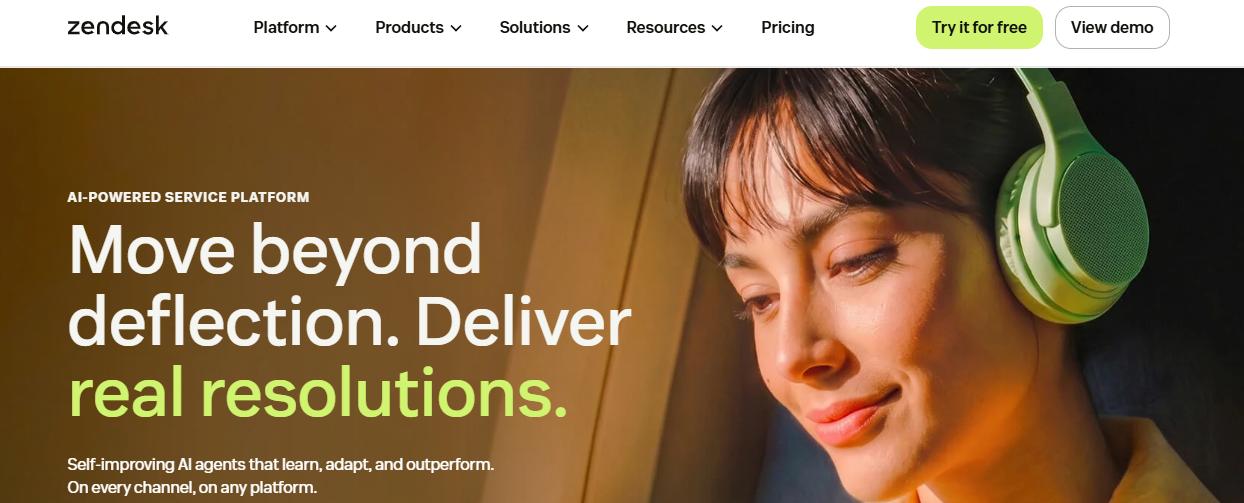
Zendesk is an enterprise customer service platform used by high-volume D2C brands needing deep workflow customization and scalable omnichannel infrastructure.
Large D2C operations choose Zendesk for workflow depth, SLA management, and multi-brand routing rather than AI-native design or cost efficiency at mid-market scale.
Key Features
- Enterprise omnichannel ticketing with SLA tracking, enforcement, and breach alerts across all active support channels
- Custom workflow automation for complex multi-brand D2C portfolios with distinct routing, escalation, and resolution paths
- Advanced reporting and analytics dashboards with configurable business metrics and exportable performance data
Pros
- Enterprise-grade scalability for D2C brands managing millions of annual support interactions across global markets
- Extensive integration ecosystem covering ecommerce, CRM, analytics, and logistics platforms used by large D2C operations
- Proven reliability and uptime at high volume across international brands with complex multi-channel support requirements
Cons
- Zendesk pricing is among the highest in the category, creating a cost challenge for mid-market D2C brands
- Implementation complexity requires IT resources or specialist agency support to deploy and maintain at full capability
- AI capabilities are add-ons rather than native to the core Zendesk platform architecture
When to Choose Zendesk
Zendesk is worth evaluating when your D2C brand processes high ticket volumes across multiple countries or storefronts and needs enterprise-grade workflow customization to manage support during flash sales and high-season volume spikes.
Pricing
Zendesk Suite starts at $55 per agent monthly with AI Copilot available as an additional paid add-on. Visit Zendesk pricing for current plan breakdowns.
6. Gladly – Best for Personalized Omnichannel Service at Premium D2C Brands
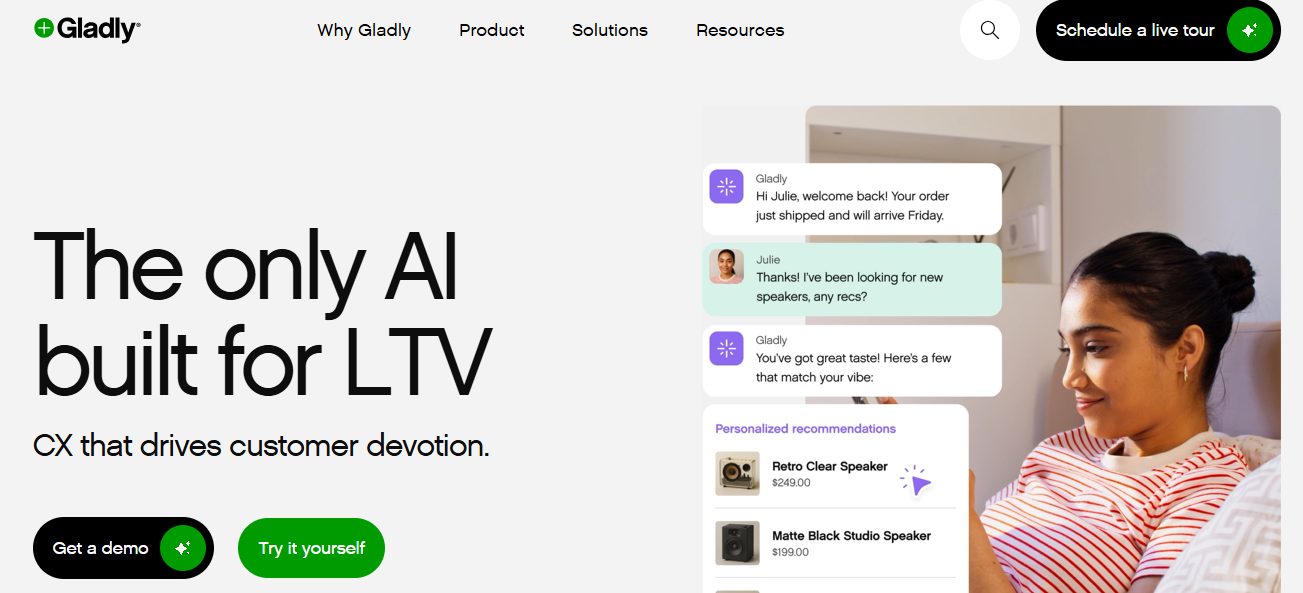
Gladly is a customer service platform built around lifelong conversations rather than tickets, used by premium D2C and retail brands.
Premium D2C brands choose Gladly for its omnichannel customer service model, treating every customer as one continuous conversation rather than traditional ticket-based workflows or automation depth.
Key Features
- Lifelong customer conversation timeline across all channels with no ticket numbers and no context gaps between interactions
- Agent-facing customer profile with full purchase history, previous interactions, and real-time order and account details
- Omnichannel support across email, SMS, voice, chat, and social DMs in a single unified agent view
Pros
- Personalization model genuinely differentiates high-touch D2C brands whose competitive advantage depends on relationship quality
- Agent experience is designed around customer relationships and context rather than ticket resolution speed metrics
- Strong brand fit for premium or luxury D2C brands with high-value, repeat customers who expect recognized service
Cons
- Pricing is among the highest in the category, limiting accessibility for mid-market and growth-stage D2C brands
- AI automation depth is less suited for high-volume repetitive query handling at the standard e-commerce ticket scale
- Implementation and onboarding complexity is higher than Shopify-native or mid-market customer service alternatives
When to Choose Gladly
Gladly is worth evaluating when your D2C brand competes on high-touch customer relationships, and every conversation needs a full cross-channel history available to agents in real time.
Pricing
Gladly pricing is customized to your team size, channel count, and monthly support volume. Reach out to the Gladly team for current plan details and a demo.
7. Intercom – Best for AI Chat Deflection and Proactive D2C Messaging
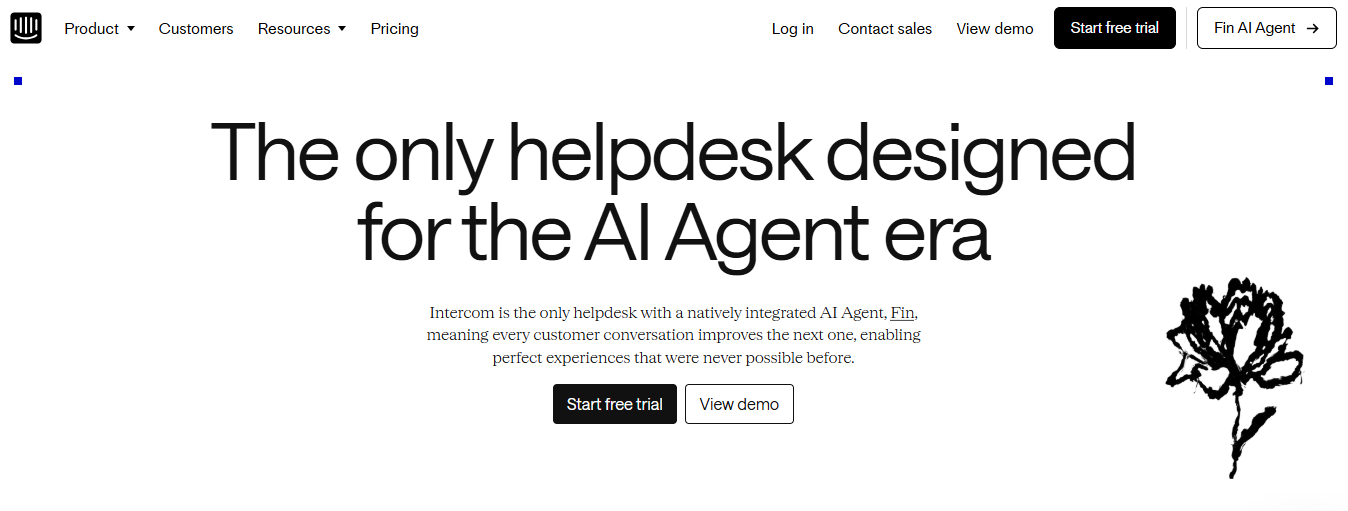
Intercom is a customer messaging platform used by D2C brands needing AI-powered chat, proactive messaging, and in-app support automation.
D2C teams choose Intercom for messaging-first AI deflection and proactive customer outreach rather than traditional ticketing infrastructure or predictable pricing at high conversation volume.
Key Features
- Fin AI Agent for autonomous chat resolution across common D2C query types, including WISMO, returns, and account access
- Proactive in-app and email messaging to reach customers before queries form and reduce inbound support volume
- Conversation routing based on customer tier, purchase history, and account value for personalized support experiences
Pros
- Fin AI chat deflection meaningfully reduces live agent handling on high-volume repetitive D2C queries
- Proactive messaging reduces inbound volume by addressing common post-purchase queries before customers initiate contact
- Product analytics integration useful for D2C teams using in-app engagement data to identify and resolve friction points early
Cons
- Intercom pricing scales with conversation volume, compounding cost as D2C order volumes and contact rates grow
- Less suited as a standalone solution for email-heavy D2C support operations without significant chat volume
- Fin AI performs best on queries with clear resolution paths and is less reliable on complex order disputes or exceptions
When to Choose Intercom
Intercom is worth evaluating when your D2C brand needs AI customer service agents deflecting chat queries and proactive messaging, reducing inbound contact volume before support tickets form.
Pricing
Intercom plans start at $29 per seat monthly, with Fin AI resolution charged additionally at $0.99 per conversation. Visit Intercom pricing for the full breakdown.
8. Salesforce Service Cloud – Best for D2C Brands Inside the Salesforce Ecosystem
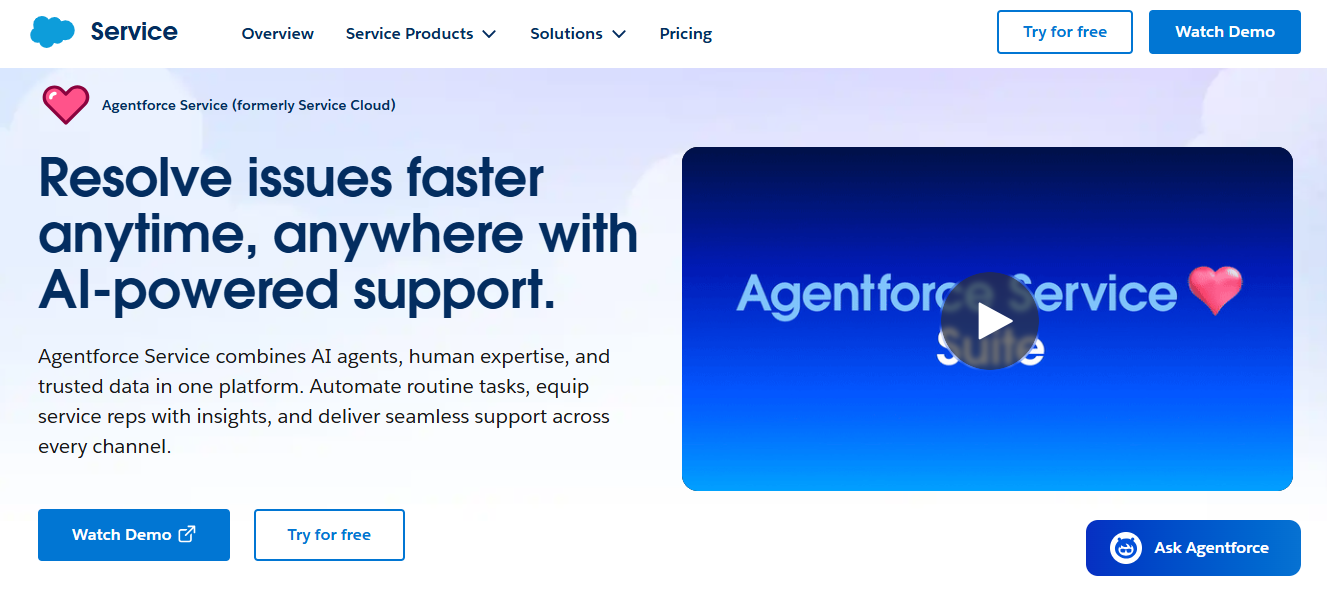
Salesforce Service Cloud is an enterprise CRM platform used by D2C brands needing service connected directly to sales, marketing, and commerce workflows.
Enterprise D2C brands choose Salesforce for full CRM ecosystem integration and agentic AI for customer service autonomous agents rather than deployment simplicity or cost efficiency at mid-market scale.
Key Features
- Agentforce autonomous AI agents handling D2C support queries using live CRM, order, and customer data in real time
- Einstein AI for ticket classification, next-best-action recommendations, and reply drafting across all support channels
- Full ecosystem integration across Sales Cloud, Marketing Cloud, and Commerce Cloud for unified customer lifecycle management
Pros
- CRM data integration gives AI agents and human agents full customer, commerce, and order context within every interaction
- Agentforce autonomous resolution among the most advanced AI agent capabilities available in the enterprise service category
- Scalable architecture for complex D2C portfolios managing multiple brands, geographies, and product lines simultaneously
Cons
- Salesforce pricing and implementation cost is prohibitive for mid-market and growth-stage D2C brands
- Time to value is longer than purpose-built D2C customer service platforms designed for faster onboarding
- Full capability requires existing Salesforce ecosystem investment across sales, commerce, and marketing infrastructure
When to Choose Salesforce Service Cloud
Salesforce is worth evaluating when your D2C brand is already invested in the Salesforce ecosystem and needs customer service data connected directly to CRM, commerce, and marketing workflows.
Pricing
Salesforce Service Cloud starts at $25 per user monthly, with Agentforce available on Enterprise plans at a significantly higher per-user cost. Visit Salesforce pricing.
9. HubSpot Service Hub – Best for CRM-Connected D2C Support Teams
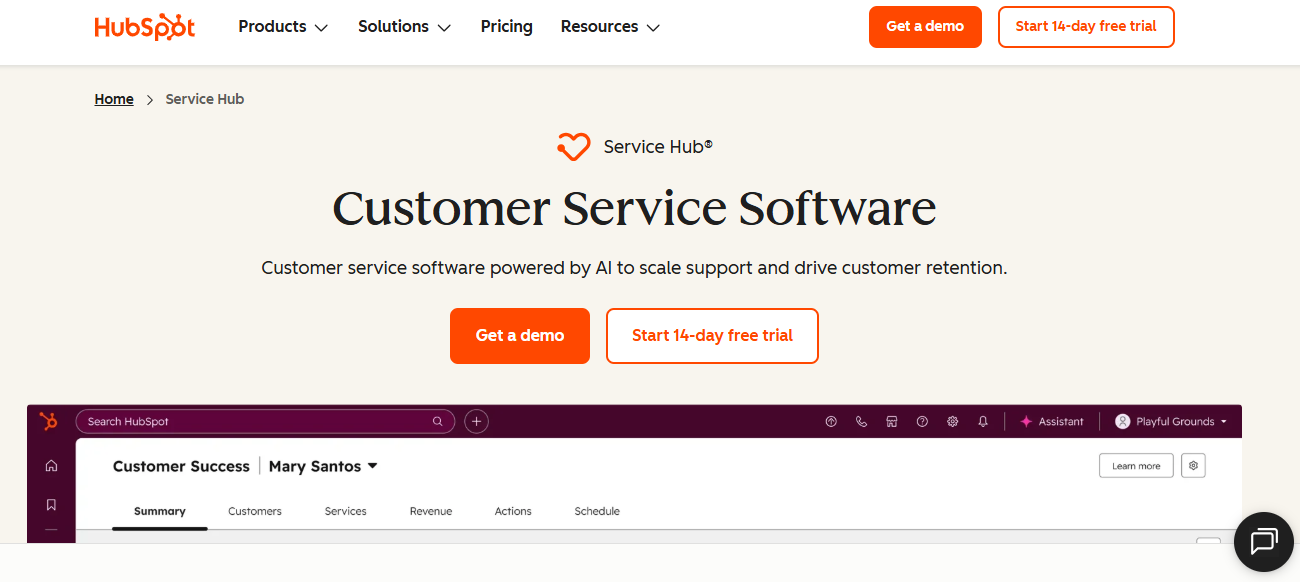
HubSpot Service Hub is a customer service platform used by D2C teams already standardized on HubSpot CRM for cross-functional connected workflows.
D2C teams choose HubSpot for CRM alignment across support, sales, and marketing rather than standalone automation depth or AI resolution capability at scale.
Key Features
- CRM-linked ticketing is tied directly to the full HubSpot customer profile, lifecycle stage, and purchase history
- Breeze AI routing using lifecycle stage, recent purchase activity, and contact history for intelligent conversation assignment
- CSAT, NPS, and CES feedback tools are built directly into the support workflow without requiring third-party survey integrations
Pros
- CRM alignment useful for D2C brands tracking post-purchase journeys and support interactions inside HubSpot
- Free starter tier allowing small D2C teams to implement basic ticketing without upfront platform commitment
- Integrated feedback tooling for measuring support quality without adding separate survey or feedback tools
Cons
- HubSpot pricing for advanced AI and automation scales significantly beyond the free starter tier for growing D2C teams
- AI resolution capability less advanced than purpose-built AI-native platforms for autonomous handling at scale
- Best value only for D2C teams already running HubSpot across sales and marketing functions
When to Choose HubSpot Service Hub
HubSpot is worth evaluating when your D2C team already uses HubSpot for sales and marketing and wants support for data connected to the same customer lifecycle and CRM records.
Pricing
HubSpot Service Hub plans start at $15 per seat monthly for Starter and $90 for Professional. Visit HubSpot pricing for the full tier breakdown.
10. Freshdesk – Best for D2C Teams Wanting Fast Omnichannel Setup
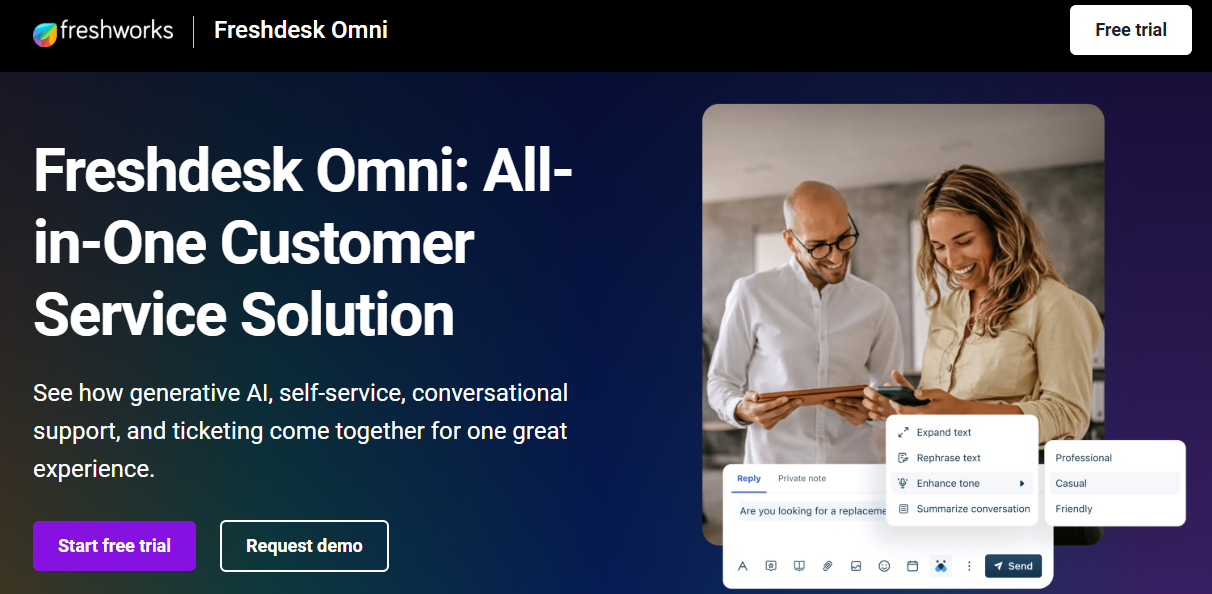
Freshdesk is a customer support platform from Freshworks used by D2C teams wanting fast implementation and practical omnichannel automation.
D2C teams choose Freshdesk for fast setup and practical omnichannel automation rather than natively embedded AI resolution or deep ecommerce order context at scale.
Key Features
- Freddy AI for ticket triage, agent assist summaries, and reply suggestions across inbound D2C support channels
- Multichannel ticketing across email, chat, phone, WhatsApp, and social in a single consolidated support interface
- Self-service portal with AI-powered search for D2C customer knowledge base access and common query deflection
Pros
- Fast onboarding with accessible pricing makes Freshdesk practical for lean D2C support teams, formalizing their operations
- Multichannel coverage handles email, chat, phone, and social without requiring additional third-party integrations
- Freshdesk pricing includes a free tier for teams beginning to structure customer service workflows
Cons
- E-commerce integration less deep than Gorgias or eDesk for Shopify and marketplace D2C brands managing order-heavy workflows
- Freddy AI assists agents but does not resolve queries autonomously at the depth of AI-native platforms
- Reporting and analytics less advanced than Zendesk or Salesforce for complex, multi-brand D2C support operations
When to Choose Freshdesk
Freshdesk is worth evaluating when your D2C or SMB team needs a fast, affordable path to organized multichannel support without complex enterprise setup or ecommerce-first customization requirements.
Pricing
Freshdesk starts at $15 per agent monthly, with a free tier available for small teams. Visit Freshdesk pricing for current plan options and costs.
How to Choose the Best Customer Service Software for Your D2C Brand
The right customer service software depends on how your ecommerce stack is built, what you need AI to handle, and how your support operation scales alongside order volume.
1. Evaluate Shopify and E-commerce Integration Depth Before Shortlisting
If your D2C brand runs on Shopify, ecommerce integration depth is the first filter. Gorgias and eDesk connect directly to order data so agents can act on refunds inside the ticket. Platforms without native Shopify integration require switching between tools to access the same context.
2. Assess AI Automation Depth Against Your Tier-1 Query Volume
AI automation in D2C customer service ranges from agent copilot tools to fully autonomous resolution. If your brand processes high WISMO and return volumes, customer service automation depth at tier-1 determines whether AI actually reduces cost or just adds another layer of infrastructure to manage.
3. Verify Omnichannel Coverage Across Every Active D2C Channel
D2C customers contact brands across email, WhatsApp, Instagram, live chat, and SMS. Confirm the platform covers every active channel before committing to a tool. Missing one creates a separate queue and support split that compounds rather than reduces the operational load.
4. Check Whether Order and Customer Data Surface Automatically in Conversations
The difference between a generic tool and a D2C-specific platform is whether order data appears automatically in every conversation. Platforms that surface order status and return eligibility within the support view eliminate manual lookup that slows agents and increases handle time per interaction.
5. Model Pricing Against Two to Three Times Your Current Ticket Volume
Per-ticket pricing models compound during seasonal peaks and flash sales. Evaluate whether the platform charges per seat, per conversation, or per resolution before committing, and model cost at two to three times your current monthly volume to avoid surprises as your D2C order load scales.
How QuantumDesk Simplifies Customer Service Workflows for D2C Brands
QuantumDesk is built for D2C brands managing growing support volume across WhatsApp, email, chat, and social, where every unresolved WISMO query and return request is a potential churn risk that reaches a public review before it reaches a resolution.
Its AI-native design means routing, resolution, and agent assistance operate from one intelligence layer, delivering measurably better containment without per-resolution fees that compound as D2C order volumes and campaign traffic grow.
QuantumDesk’s Core Customer Service Capabilities for D2C
- Quantum AI resolves WISMO, return eligibility, and refund status queries across WhatsApp, chat, email, and social without agent involvement.
- AI-curated inbox routes conversations by urgency, sentiment, and order impact so D2C agents always handle the highest-priority interactions first.
- Quantum AI Copilot drafts replies, surfaces order history, and summarizes conversation threads so agents resolve escalations without switching between tools.
- Unified workspace consolidates email, WhatsApp, chat, and social channels into one view with complete cross-channel order and customer history.
- Admin analytics track AI resolution rate, CSAT trends, and escalation patterns so support leaders can continuously improve D2C support operations.
Whether you process 500 or 5,000 monthly D2C support interactions, the right platform scales alongside order volume without requiring you to switch tools again.
Frequently Asked Questions
What is the best customer service software for D2C brands in 2026?
The best options for D2C brands in 2026 include QuantumDesk for AI-native autonomous resolution, Gorgias for Shopify-native order automation, and eDesk for multi-channel marketplace brands. The right fit depends on your ecommerce stack, ticket volume, and how much AI autonomy your team needs from day one.
See also: best customer service software for ecommerce brands for a broader comparison across ecommerce use cases.
What customer service software works best for Shopify D2C brands?
Gorgias is the strongest Shopify-native option for D2C brands where agents need to take direct order actions from the ticket view. QuantumDesk is worth evaluating if your Shopify brand needs AI to resolve WISMO and return queries autonomously before they reach the agent queue, without per-resolution fees that scale alongside order volume.
How do I choose between Gorgias and QuantumDesk for my D2C brand?
Choose Gorgias when your D2C brand runs on Shopify and agents need to take direct order actions, including refunds and cancellations, from within the support view. Choose QuantumDesk when your D2C or SMB team needs AI to resolve queries autonomously across email, WhatsApp, and chat without per-ticket pricing that compounds as order volume grows.
Is there any free customer service software for D2C brands?
Freshdesk and HubSpot Service Hub offer free starter tiers for small D2C teams setting up basic ticketing workflows. These free tiers have feature limitations that require upgrading as ticket volume and automation needs grow. For D2C teams ready to invest in AI-native resolution, paid platforms typically deliver faster ROI as order volumes scale past the early stage.



.avif)