Summarize with AI
Key Takeaways
- Scaling support requires systems and automation, not just hiring more agents.
- Self-service and AI help reduce repetitive support volume.
- Omnichannel support improves efficiency and customer experience.
- Tracking support KPIs helps maintain quality during growth.
- AI-powered support teams can scale faster without increasing headcount.
Customer support becomes harder as businesses grow, especially when ticket volumes increase faster than support team capacity. Many growing companies struggle to maintain fast response times and consistent service quality.
As customer expectations rise, support teams must handle more conversations across more channels without significantly increasing operational costs.
Your customer base doubles within a year → ticket volume grows even faster → response times slip from hours to days → customer satisfaction starts falling. Growth becomes a support challenge instead of a business advantage.
Here is what makes scaling support different from simply growing a team:
- More customers often mean more tickets, more channels, and more operational complexity, all at once.
- Hiring alone is rarely the most scalable solution, and it is almost never the fastest.
- AI helps support teams resolve more conversations without proportionally increasing headcount or cost.
- Strong systems and workflows maintain service quality as demand increases, not just during calm periods.
You will learn how to scale customer support effectively using AI, automation, self-service, workflows, and performance measurement.
A Quick Comparison: Growing Support Team vs Scaling Support Operations
Scaling customer support is not about adding more people. It is about increasing support capacity while maintaining quality and consistency.
What Does Scaling Customer Support Actually Mean?
Scaling customer support means increasing a team's ability to handle growing customer demand without sacrificing response times, resolution quality, or customer satisfaction. It is different from simply expanding team size.
Hiring more agents increases capacity linearly. Every new hire covers a fixed volume of tickets. Scaling improves the system itself so that the same team handles a larger share of incoming volume with better outcomes.
Support requirements grow in multiple directions as a business scales.
- More customers generate more tickets.
- More products create more query types.
- More markets add language and timezone complexity.
- More channels multiply the workload for agents who are still working from disconnected tools.
Without systems designed for that kind of growth, ticket queues expand, agents become overloaded, and the customer experience starts declining before leadership notices the pattern.
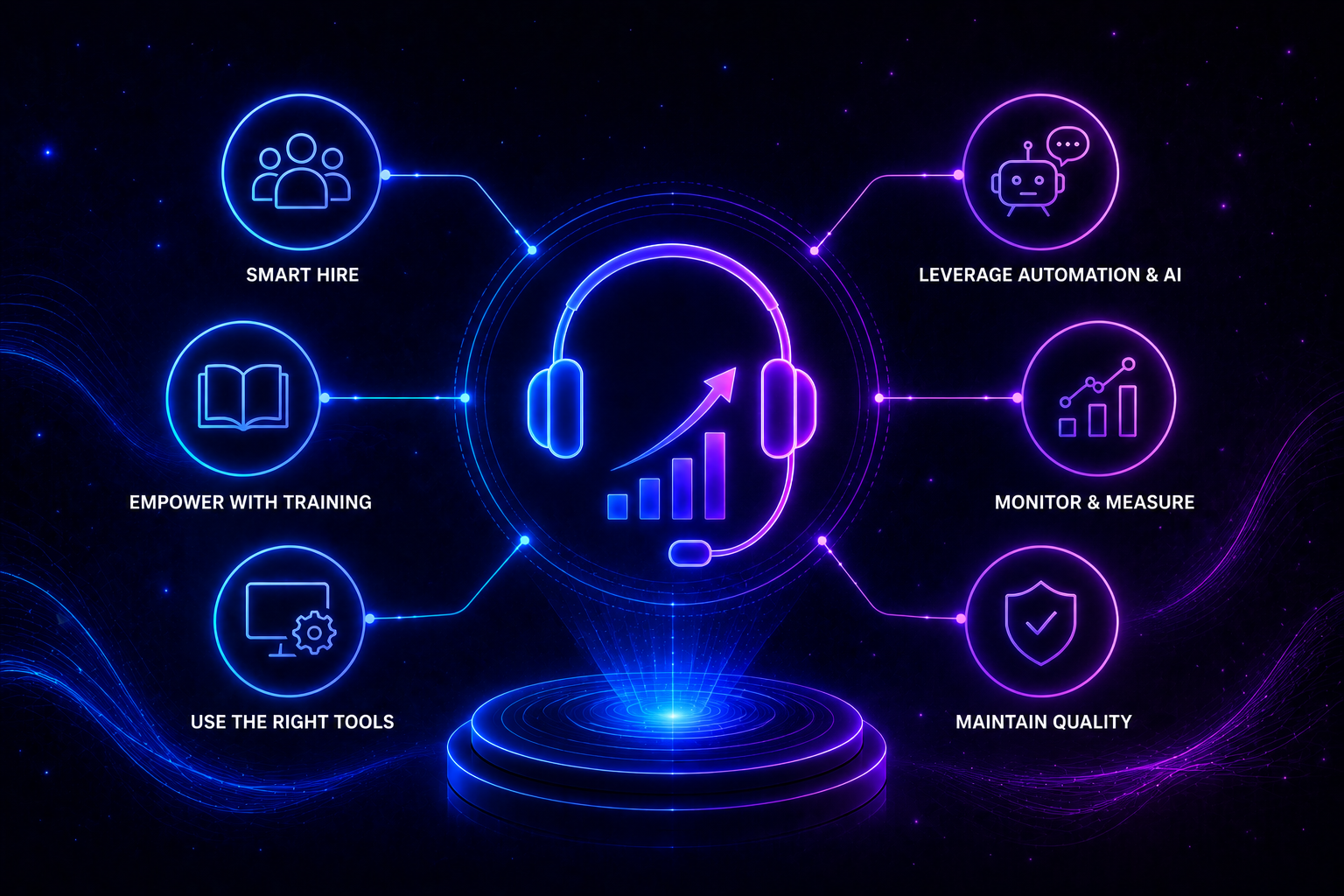
The modern approach combines: self-service, automation, AI, omnichannel support, and performance tracking. Scaling customer support successfully means building systems that grow with demand while maintaining the quality customers expect.
Why D2C and B2B Teams Need to Scale Customer Support
Support demand grows faster than support capacity in most growing businesses.
Both D2C and B2B companies face this eventually. The specific triggers differ. The outcome is the same: a team that was working well at one volume stops working at the next.
1. Customer expectations continue to increase
Customers now expect faster responses, more personal interactions, and support across the channels they already use.
A response time that felt acceptable two years ago no longer clears the bar. Customers compare their experience across every brand they interact with, not just within a product category. A two-hour email response feels slow to someone who got a live chat answer in ninety seconds last week.
That expectation gap does not close through effort alone. It requires infrastructure.
2. Support volumes grow faster than teams
Every new customer, product line, and sales channel generates additional support requests.
A D2C brand processing 5,000 orders per month handles a fundamentally different support operation than the same brand at 50,000 orders. The query types are similar. The volume is not. And the growth between those two points rarely comes with an equivalent increase in support headcount, budget, or tooling.
Teams that do not plan for that gap end up closing it reactively, with burnt-out agents and declining CSAT scores.
3. Poor support directly impacts revenue and retention
I purchased a T-shirt from an ecommerce platform and received it on time → the quality was not what I expected, so I wanted to return it → the website only offered replacements, not refunds → I contacted support for help. The support experience ultimately influenced whether I would continue shopping on that platform.
Delayed responses, unresolved issues, and poor handoffs do not just frustrate customers. They drive churn, negative reviews, and lost future revenue from buyers who quietly leave without explaining why.
When excessive conversations reduce support quality at scale, the business impact is direct and measurable, in repeat purchase rates, CSAT scores, and public review sentiment.
4. Support teams are already under pressure
Repetitive questions, multiple channels, and growing ticket volumes are a reliable formula for agent burnout.
An agent spending 60% of their day answering "where is my order?" is not building expertise, improving at complex resolutions, or staying engaged with the work. That pressure compounds as volume grows. Quality drops. Turnover follows.
Reducing agent burnout during high-return periods requires removing the repetitive load before it reaches the agent, not managing it through motivation programs after the fact.
7 Strategies to Scale Customer Support with AI in 2026
The most effective support teams do not rely on hiring alone.
They build systems that reduce workload, improve efficiency, and give agents more time for interactions that actually need them. The 7 strategies below address different parts of that system. Used together, they create the kind of support operation that handles 3x the ticket volume with the same core team.
Strategy #1: Build a self-service knowledge base
Most support teams answer the same thirty questions thousands of times a year. A knowledge base addresses that at the root.
The articles that deflect the most tickets are the ones tied to the queries agents handle most often:
- Return and refund policies
- Sizing guides and product specifications
- Shipping timelines and carrier information
- Password reset and account access instructions
- Product troubleshooting and usage guides
The key is quality over quantity: A knowledge base with fifty clear, accurate articles deflects more tickets than one with three hundred articles that are hard to navigate or out of date. Reducing inbound volume through self-service is not a secondary benefit. It is immediate support capacity, created without hiring anyone.
Strategy #2: Create customer portals and self-service experiences
A customer portal extends self-service beyond articles into actual account management. When customers can handle routine tasks themselves, they do not need to contact support.
Tasks that belong in a portal:
- Checking real-time order status and tracking
- Downloading invoices and order history
- Managing or cancelling subscriptions
- Updating delivery addresses before dispatch
- Viewing previous support tickets and resolutions
A portal handling 20% of what would otherwise be inbound tickets removes a substantial operational burden. For D2C brands processing thousands of orders monthly, reducing that customer support cost through self-service is one of the fastest-returning infrastructure investments available.
The goal is to make the information customers need available directly, without an agent retrieving and relaying it every time.
Strategy #3: Automate repetitive support workflows
Manual ticket categorization, routing, tagging, and escalation take time away from the work that actually requires human judgment.
Customer service automation handles all of it without anyone touching the ticket manually:
- Classifying tickets by query type on arrival
- Tagging by product, issue category, or customer segment
- Assigning to the right team based on language or expertise
- Detecting urgency signals and escalating before things worsen
- Sending status update notifications to customers automatically
That operational overhead is invisible when volume is low. At scale, it becomes the single biggest drag on team efficiency. Removing it is not about replacing agent judgment. It is about making sure agent judgment is applied to the right conversations.
Strategy #4: Use AI chatbots to handle L1 queries
A meaningful share of every support team's inbound volume is answerable without a human. AI in customer service resolves these instantly, at any hour, across any channel.
The queries that belong in the AI queue:
- Order status and delivery tracking
- Return and exchange eligibility
- Refund policy and timelines
- Password reset and account access
- Billing queries and invoice requests
That is not a theoretical efficiency. An ecommerce brand with a 10% contact rate processing 20,000 orders per month fields 2,000 support contacts monthly. If 60% of those are L1 queries, AI handling them directly removes 1,200 tickets from the agent queue every month. Agents then focus on the 800 that genuinely need a person.
Strategy #5: Unify customer conversations across channels
Customers do not respect channel boundaries. They use whichever is fastest at the moment they need help. Most support teams still operate channels as separate operations.
The result is predictable:
- Email has its own queue and team
- Chat has different agents with no email history
- WhatsApp messages arrive with no connection to previous tickets
- Social DMs go unnoticed while agents focus on email
- Every channel switch forces the customer to re-explain their issue
Unifying those channels into one workspace gives every agent the full conversation history regardless of where the customer first reached out. It removes the handoff failures that generate the most frustration, and it makes managing multi-channel customer service operationally viable as the number of active channels grows.
A support team managing five channels from one platform is not doing five times the work of a team managing one.
Strategy #6: Improve agent productivity with AI assistance
The time between an agent opening a ticket and sending the first response is often longer than it needs to be.
Without AI assistance, a single complex ticket follows this sequence:
- Read the ticket and identify the issue
- Search for the customer's order history in a separate tool
- Review previous support interactions manually
- Draft a response from scratch
- Review and send
On a complex ticket, that process can take ten minutes before the customer receives anything.
An AI customer service agent compresses it significantly. It surfaces the customer's full history, summarizes the conversation thread, and drafts a context-aware first response before the agent has finished reading the ticket.
The agent reviews, adjusts if needed, and sends. Resolution time drops. Macro libraries for common response types and AI-suggested next actions for complex cases extend that productivity gain further across the team.
Strategy #7: Track KPIs and continuously improve
A support team that does not measure performance cannot tell whether it is scaling successfully or just absorbing more volume with declining quality.
The core customer satisfaction metrics every scaling team should track:
- First Response Time (FRT): Is response speed holding as volume grows, or quietly slipping?
- First Contact Resolution (FCR): Are agents resolving issues in one interaction, or creating follow-up cycles?
- CSAT by channel and query type: Where is the experience strong? Where is it losing customers?
- Contact Rate: What percentage of orders are generating a support ticket? Is it trending up or down?
- Average Resolution Time: Where are tickets stalling, and why?
When a metric starts declining, it points directly to the part of the system under the most strain. Catching those signals early is far less expensive than addressing the downstream consequences after they compound.
Scaling customer support strategy at a glance
Benefits of Scaling Customer Support
When support scales successfully, the improvements run across the entire operation simultaneously.
Customers notice faster responses. Agents notice lighter workloads. Leadership notices lower cost per ticket. These outcomes reinforce each other rather than trading off against one another.
1. Faster response and resolution times
Automation handles the routing, AI handles the repetitive queries, and agents arrive at each conversation with the context they need already surfaced.
The result is that time from ticket creation to resolution compresses significantly without requiring agents to work faster. The system does more of the preparation. Agents do more of the resolution.
2. Higher customer satisfaction
Faster, more consistent support experiences directly move CSAT scores in the right direction.
Customers who receive a response within minutes and a resolution in the same conversation rate that experience differently from customers who waited a day and had to follow up twice. The quality of the outcome matters. The effort to get there matters at least as much.
Teams that actively work to improve CSAT during high-volume periods find that scaling infrastructure is the most durable lever available.
3. Lower support costs
Every ticket resolved through self-service or automation costs a fraction of one handled by a human agent.
A team that reduces agent-handled ticket volume by 40% through knowledge bases, portals, and AI does not need to hire proportionally as the business grows. That cost efficiency compounds as volume scales.
4. Better agent productivity
Agents freed from repetitive tier 1 queries do not just handle more tickets. They handle better tickets.
They develop expertise in complex scenarios. They build stronger customer relationships on difficult calls. They stay more engaged in the work because the work is more varied and requires genuine skill. Retention improves as a side effect.
5. More consistent customer experiences
Standardized workflows, shared response templates, and AI-assisted drafting reduce the variance between how different agents handle the same query type.
A customer who contacts support and receives a consistently high-quality response regardless of which agent picks up the ticket is experiencing a system that scales. One where the experience depends entirely on which agent is available is one that does not.
6. Sustainable business growth
Support operations that scale through systems rather than headcount can grow alongside the business without creating proportional cost increases.
A brand at 10,000 monthly orders and a brand at 100,000 monthly orders can operate with surprisingly similar team sizes if the right automation, AI, and self-service infrastructure is in place. The team that built those systems early is the one that grows without the support operation becoming a bottleneck.
How QuantumDesk Simplifies Customer Support Scaling with AI
As ticket volumes grow, most support teams hit the same wall.
- Repetitive questions consume agent time.
- Channels are disconnected.
- Manual workflows slow everything down.
The pressure to hire more people builds, even when the existing team is capable of handling more with better tools.
A D2C apparel brand launches a seasonal sale → support volume doubles within days → customers ask about order tracking, exchanges, returns, and shipping delays → agents become overwhelmed and response times increase. Instead of hiring immediately, the team uses AI and automation to handle repetitive conversations while agents focus on the more complex issues that genuinely need them.
That is the operational shift that changes the economics of scaling support. Not headcount. Not heroic agent effort. A system that handles what does not need a human so agents can actually do what only a human can.
The benefits of AI-native customer service are not theoretical at that point. They show up in response times, CSAT scores, and the agent attrition numbers that stop climbing.
How QuantumDesk helps teams scale efficiently
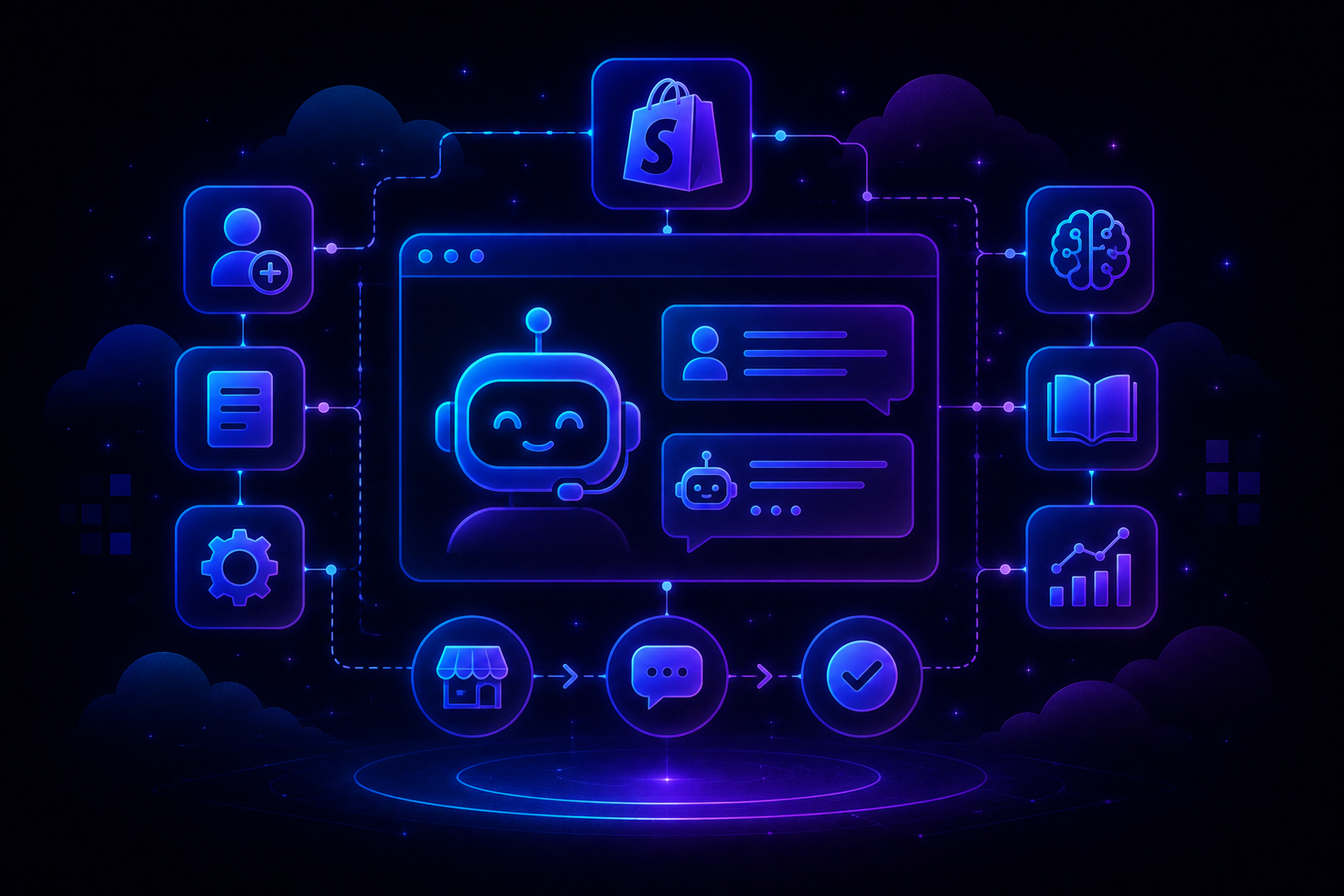
- Quantum AI automatically resolves repetitive customer questions before they reach an agent's queue, cutting the inbound volume that does not require human judgment.
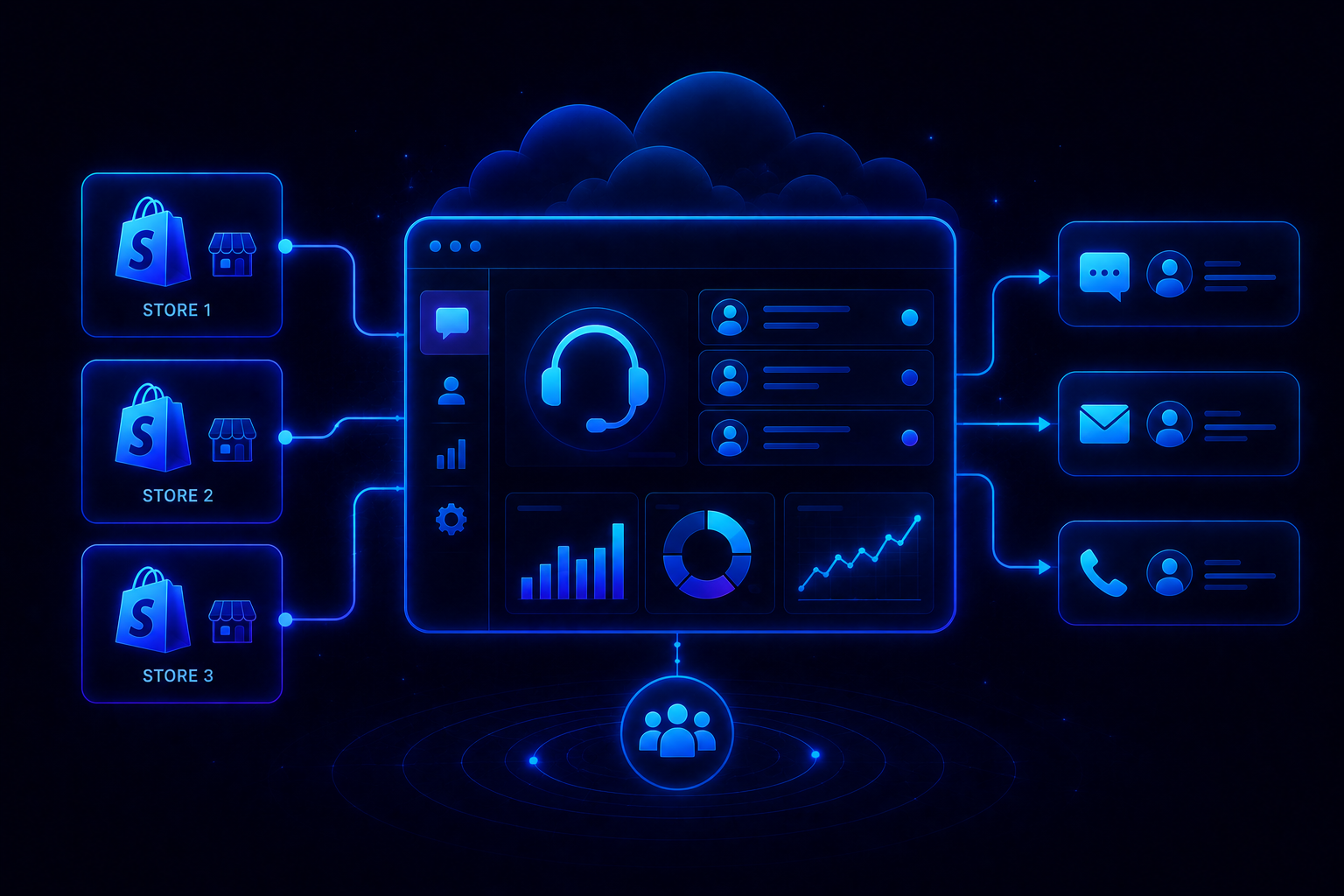
- Unified Inbox centralizes email, chat, WhatsApp, and social conversations into one workspace, giving agents complete context across every channel from a single place.
- AI-Curated Inbox reads incoming conversations for urgency, sentiment, and customer intent, then surfaces the interactions that need immediate human attention first.
- Quantum AI Copilot summarizes conversation history and drafts context-aware responses, reducing the time from ticket open to first reply on every interaction.
- Automated workflows handle ticket routing, categorization, tagging, and escalation without manual intervention, removing the operational overhead that slows teams down at scale.
- Analytics give support leaders a real-time view of response times, resolution rates, satisfaction trends, and ticket volume by category, so performance gaps are caught early.
QuantumDesk does not ask support teams to work harder to keep up with growing demand. It changes what the team is doing. Repetitive volume is absorbed by AI. Complex interactions get agents who have the full context and the tools to resolve them on the first contact.
For support leaders trying to scale without a proportional budget increase, that shift is where the argument for AI customer service tools moves from interesting to necessary.
Frequently Asked Questions
What does scaling customer support mean?
Scaling customer support means increasing a team's capacity to handle growing customer demand while maintaining service quality, response times, and operational efficiency.
It is different from simply hiring more agents. Hiring increases capacity linearly. Scaling improves the system itself so the existing team handles more with better outcomes. That typically involves self-service, automation, AI, and workflow improvements working together rather than any single solution.
How can companies scale customer support without hiring more agents?
Self-service knowledge bases and customer portals handle the queries customers can resolve themselves.
AI chatbots and agentic AI resolve the repetitive tier 1 questions that would otherwise reach the agent queue. Automation handles ticket routing, tagging, and escalation without manual effort. Omnichannel platforms give agents the context to resolve faster on the first contact. Each of these reduces the per-ticket workload without adding headcount.
What role does AI play in customer support scaling?
AI handles the high-volume, low-complexity work that consumes the most agent time: order status queries, return eligibility checks, password resets, shipping timelines, and standard policy questions.
It also assists agents on complex tickets by surfacing customer history, summarizing long conversation threads, and suggesting context-aware responses. That combination, AI handling the repetitive and AI assisting on the complex, is what allows a team to scale its effective capacity significantly without expanding its size.
Which customer support metrics should teams track?
First Response Time and First Contact Resolution measure the speed and efficiency of the support operation.
Customer Satisfaction Score reflects how the experience feels to the customer. Contact Rate, measured as tickets per order, reveals whether operational or product issues are generating avoidable inbound volume. Average Resolution Time and ticket volume by category complete the picture by showing where specific bottlenecks are forming as volume grows.
When should a business start scaling customer support?
The right time is before the signs of strain are obvious.
By the time response times are visibly slipping, CSAT scores are declining, and agents are consistently behind on queues, the business is already managing the consequences of not scaling early enough. Teams that begin building self-service resources, automation workflows, and AI-assisted tooling at a moderate volume find the transition far less disruptive than those who wait for a crisis to force it.




.avif)