
Summarize with AI
Key Takeaways
- AI reduces repetitive refund-status and return-tracking conversations that overwhelm apparel support teams during high-volume return periods.
- Automated ticket tagging, AI summaries, and workflow automation reduce admin work and lower daily operational fatigue for agents.
- AI-powered sizing guidance and unified workspaces help agents resolve exchange conversations faster with lower mental workload.
- AI analyzes return trends and sizing complaints to reduce support volume before tickets reach queues.
- AI-native support platforms help apparel brands scale return operations without increasing burnout, overtime pressure, or agent attrition during seasonal spikes.
Apparel support teams burn out fast during return-heavy periods. Repetitive conversations dominate queues, leaving agents with little room for anything else. Return rates across D2C apparel brands average 20–30%. During peak periods, refund-status tickets can account for 40% of daily support volume.
Flash sales and post-holiday windows make it worse. Customers arrive frustrated, and agents field the same questions hundreds of times a week across every channel.
Customer scenarios support teams encounter daily:
- I ordered two hoodie sizes during a flash sale, returned one, the refund tracking stopped updating, and I contacted support three times.
- I requested a size exchange and received conflicting answers across WhatsApp and email. I became frustrated and canceled my next purchase.
- I contacted support about a delayed refund, waited two days for replies, and posted publicly about the poor experience.
One repetitive support queue. One overwhelmed agent team. One negative experience customers remember before every future purchase.
You will learn how to improve apparel support workflows, reduce repetitive operational pressure, and use AI in customer service to lower burnout without replacing support agents.
A Quick Comparison: Traditional Support vs AI-Assisted Support
Why burnout increases in high-return apparel support teams
Repetitive return conversations, fragmented workflows, and emotionally frustrated customers create sustained pressure inside apparel support teams. During seasonal spikes, this pressure compounds daily. Without structural changes, the workload becomes unmanageable for most support operations.
1. Repetitive return tickets drain agent energy
Refund-status checks, return eligibility questions, and exchange requests dominate queues during return-heavy periods. During peak seasons, support teams process hundreds of near-identical conversations each day.
Agents handle the same questions across:
- Chat, email, WhatsApp, and social channels, often simultaneously
- Disconnected platforms with no consolidated view of order or return status
- High-volume windows with no reduction in ticket frequency between interactions
This repetition accumulates quickly. Agents managing identical conversations all day gradually disengage. Error rates climb, response quality drops, and attrition becomes harder to avoid.
2. Manual admin work increases operational fatigue
After every customer interaction, agents manually update CRMs, tag tickets, document conversations, and manage exchange workflows. This overhead extends shifts well beyond active customer time.
The fragmentation compounds the load:
- Helpdesks, Shopify, warehouse systems, and logistics platforms rarely share data automatically
- Agents switch between tabs to verify refund status, confirm return shipments, and update records
- Every switch adds cognitive load that builds across a full shift
The result is slower productivity during exactly the periods when speed matters most. Customer service automation addresses this directly by removing the manual steps agents repeat hundreds of times each week.
3. Emotional return conversations increase stress levels
Sizing complaints, refund delays, damaged deliveries, and exchange disputes require consistent empathy and de-escalation. These conversations demand far more cognitive effort than standard informational queries.
Here is how escalation typically unfolds:
- Customer orders a jacket, the wrong size arrives, the return request fails, and the refund sits unresolved for eight days
- Customer contacts support across WhatsApp, email, and Instagram
- Frustration escalates with each delayed or inconsistent reply
- A one-star public review follows
Sustained exposure to these conversations wears agents down. Attrition in apparel support teams often tracks directly to return volume spikes.
How AI Reduces Burnout in High-Return Apparel Support
AI reduces repetitive workload, lowers operational pressure, and helps apparel support teams handle high ticket volume without growing headcount. For a broader look at where AI use cases in customer service deliver the most measurable impact, return management consistently ranks at the top.
1. AI automates repetitive return conversations
AI Customer Service Agent tools automatically resolve refund-status, return-label, and delivery-tracking tickets across chat, email, and WhatsApp without agent involvement, freeing teams from Tier-1 queries that consume the most time during peak return periods.
2. AI removes manual documentation work
AI Customer Service Tools auto-generate conversation summaries, handle ticket tagging by return type and urgency, and update CRM records without manual input, reducing backend workload and lowering end-of-shift cognitive fatigue measurably.
3. AI reduces system switching during return handling
Effective multi-channel customer service depends on reducing fragmentation. AI-powered unified workspaces surface order details, return status, exchange eligibility, and customer history inside the active conversation, keeping agents focused on the customer rather than switching between tools.
4. AI provides real-time sizing and return guidance
AI retrieves size charts, exchange policies, return eligibility rules, and suggested next actions instantly during live conversations, reducing manual search interruptions and helping agents resolve complex sizing and exchange situations faster with more confidence.
5. AI helps reduce return volume at the source
AI analyzes historical return data by SKU, common fit complaints, and product description gaps to identify recurring return drivers, helping brands reduce avoidable tickets at the source rather than absorbing the workload each season.
How QuantumDesk Reduces Burnout in Customer Support
QuantumDesk is an AI-native customer service platform built for growing ecommerce brands managing high conversation volume across multiple channels. Its workflows reduce repetitive workload without requiring headcount expansion.
Apparel brands using QuantumDesk move through seasonal return spikes without adding workload to their support teams. The platform multiplies what agents can handle; repetitive return workflows get absorbed by AI while complex, emotionally demanding conversations stay with the people best equipped to handle them.
For apparel brands evaluating where to start, the best customer service software for ecommerce brands shows where AI-native platforms consistently outperform disconnected tool stacks during periods of real operational pressure.
What Are QuantumDesk's Key Capabilities?
- Quantum AI resolves repetitive Tier-1 queries automatically across WhatsApp, chat, email, and social, including refund status, return labels, and exchange confirmations, clearing queue volume before agents ever see it.
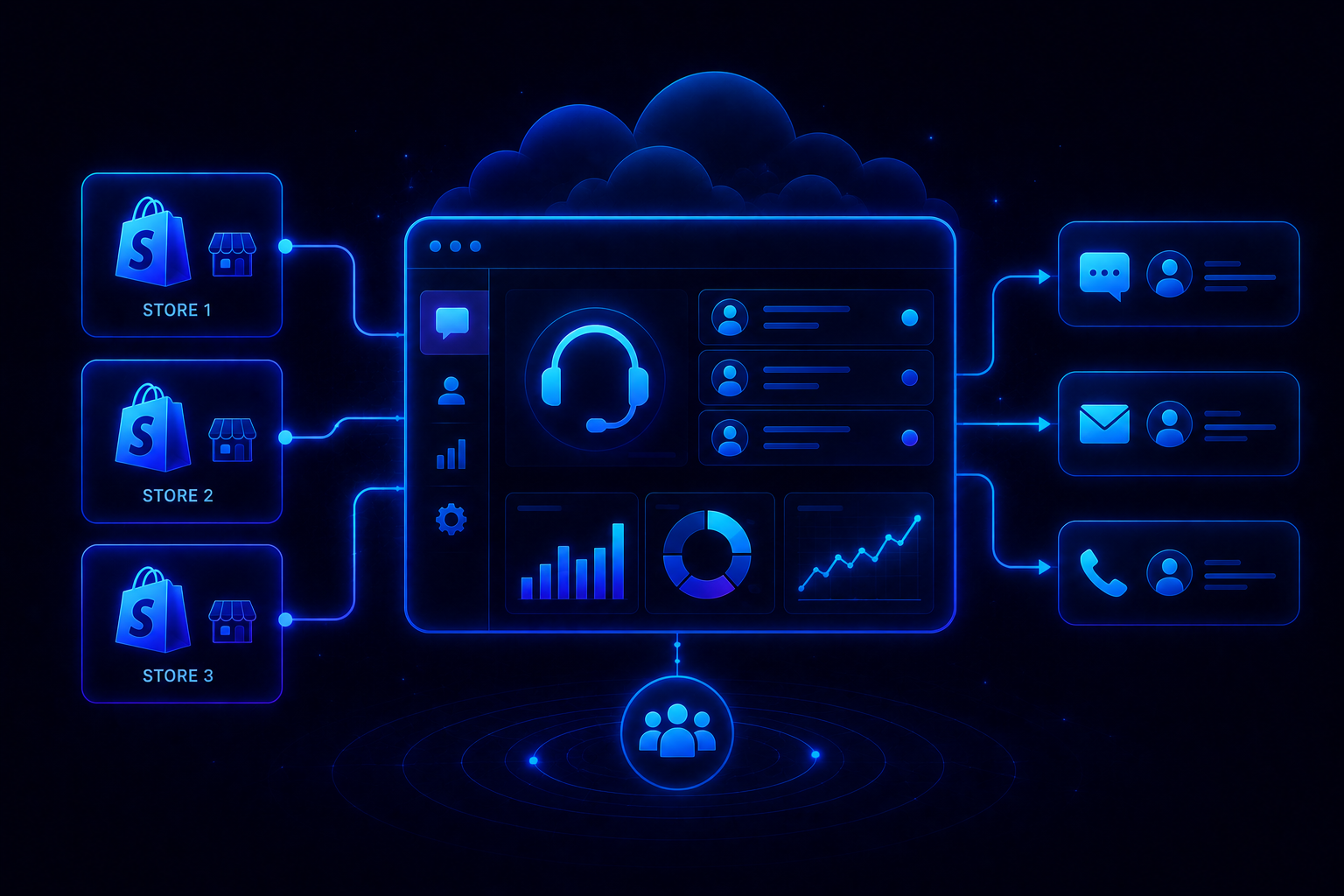
- Unified workspace centralizes conversations, order history, and customer context from Instagram, WhatsApp, email, and Shopify into one AI-assisted environment so agents stop switching tabs and stay focused mid-interaction.
- AI-curated inbox prioritizes conversations using urgency, sentiment, and intent so delayed refund complaints and repeated contacts surface at the top before frustration escalates publicly.
- Quantum AI Copilot surfaces suggested replies, sizing guidance, and conversation history directly inside the active workflow, reducing handle time and the stress of manual information retrieval.
Ready to see how it works? Book a demo to explore QuantumDesk for your team.
Frequently asked questions
1. How does AI reduce burnout in apparel support teams?
AI reduces burnout by automating repetitive return conversations, generating post-interaction summaries, and auto-tagging tickets by category. During high-volume return periods, AI absorbs Tier-1 query volume across chat, email, and WhatsApp, removing the repetitive operational pressure that most directly drives support exhaustion. Agents focus on complex situations requiring empathy and judgment instead of fielding the same refund questions all day.
2. Which apparel support workflows should brands automate first?
Start with refund-status tickets, return-label generation, exchange eligibility checks, and repetitive sizing queries. These conversation types arrive in the highest volumes during return spikes and require information retrieval rather than judgment, making them the fastest wins for reducing agent workload and queue pressure without requiring large-scale operational changes.
3. Can AI help apparel support teams during seasonal return spikes?
Yes. AI absorbs repetitive ticket volume during flash sales, holiday returns, and post-purchase surges without requiring temporary hiring or overtime. AI handles Tier-1 return conversations automatically while agents focus on escalations and complex situations, giving teams the flexibility to scale through seasonal spikes without proportionally scaling headcount or burnout.
4. Does AI replace apparel support agents?
No. AI handles repetitive operational work including refund-status queries, return tracking, label generation, and policy clarification. Agents focus on conversations requiring empathy and contextual judgment. The result is higher capacity per team member, not a reduction in the human support function that builds long-term customer relationships and repeat purchase rates. For a detailed breakdown, see AI vs Human Customer Support.
5. Why do apparel support teams experience high burnout rates?
Repetitive return conversations dominate daily queues, fragmented workflows increase cognitive overhead, emotional complaints require sustained de-escalation, and seasonal spikes create volume pressure without proportional operational support. These factors compound into long-term fatigue that reduces both agent performance and retention, and the problem worsens during the exact periods when apparel brands need their support teams most.



.avif)